
Our readers keep the lights on and the weekend projects moving. As an Amazon Associate, I earn from qualifying purchases.
Weak lungs wear you out before your day even starts. Whether you’re clearing morning phlegm, recovering from an illness, or trying to hold a note on stage, the right resistance trainer turns shallow breathing into deep, controlled power. But grabbing the first cheap tube you see wastes time—each device targets a different muscle group, and the wrong one delivers zero results.
I’m Rikta — the co-founder and writer behind FitlyFast. I’ve spent dozens of hours dissecting the clinical specs, customer feedback, and real-world application of over forty respiratory trainers to isolate the ones that actually work for everyday users and serious athletes alike.
After comparing flutter valves, liposomal drops, altitude simulation masks, and dual-action IMT/PEP devices, this guide ranks the models that deliver measurable breathing relief and lung strength. Here is the definitive breakdown of the best breathing exerciser for every budget and need.
How To Choose The Best Breathing Exerciser
Not every tube and valve does the same job. The best breathing exerciser for a singer is a waste of money for a COPD patient, and a liposomal tincture won’t replace mechanical resistance training. Match the device to your lung goal.
IMT vs. PEP — Know the Muscle Group
Inspiratory Muscle Training (IMT) forces your diaphragm to work harder when you inhale, directly improving vital capacity and stamina. Positive Expiratory Pressure (PEP) creates back-pressure during exhalation, keeping airways open and helping clear trapped mucus. A dual‑action device lets you train both phases on one unit.
Resistance Adjustability Prevents Plateau
Single‑resistance trainers cap your progress quickly. Look for at least three adjustable levels — more advanced units offer six or eight — so you can increase the load as your lung muscles strengthen. Without progression, your breathing won’t improve after the first few weeks.
Material and Cleanability Matter
Medical‑grade polycarbonate (PC) withstands repeated hot‑water rinsing without warping. Silicone mouthpieces cause less lip fatigue but attract lint. Devices that disassemble completely without tools make daily hygiene simple — a clogged airway path breeds bacteria and reduces pressure accuracy.
Quick Comparison
On smaller screens, swipe sideways to see the full table.
| Model | Category | Best For | Key Spec | Amazon |
|---|---|---|---|---|
| POWERbreathe — Blue, Medium Resistance | IMT Trainer | Athletes & lung strength | IMT resistance, 1 level | Amazon |
| The Breather Voice | Dual‑Action | Singers & breath control | 6 resistance levels + app | Amazon |
| Bigbreathe IMT/PEP | Dual‑Action | Seniors & mucus relief | IMT + PEP adjustable | Amazon |
| The Breather Pink | Dual‑Action | All‑level daily training | 6 resistance levels + app | Amazon |
| TRAININGMASK 2.0 Turn Flow | Altitude Sim | Intense workout sessions | 36 resistance levels | Amazon |
| Flutter Valve Breathing Exercise | PEP Flutter | Mucus clearance & smokers | 3 steel‑ball resistance | Amazon |
| 4‑in‑1 Mullein Drops | Liquid Extract | Natural lung detox | Liposomal 2‑oz bottle | Amazon |
In‑Depth Reviews
1. POWERbreathe — Blue, Medium Resistance

The POWERbreathe is the gold standard for inspiratory muscle training, trusted by respiratory therapists and voice clinicians alike. Its proprietary flow‑resistance valve forces your diaphragm to generate more negative pressure on each inhale, effectively weight‑training the breathing muscles. The Medium Resistance model works best for users who already have moderate lung capacity — beginners should step down to Light Resistance to start safely.
Construction is simple but rugged: synthetic rubber mouthpiece, lightweight plastic body, and a non‑slip grip that stays put during seated sessions. Customers report measurable gains in sucking power for asthma medication and improved jogging wind after about five weeks of twice‑daily use. One user even noted a drop in resting blood pressure, a documented side effect of strong inspiratory training.
This unit offers only one resistance setting per model, meaning you must buy a new unit (Light, Medium, or Heavy) to progress. For many users that single setting lasts months, but serious athletes may eventually outgrow it. Sterilizing by boiling water works — just let it cool fully before reassembling.
Why it’s great
- Clinically validated IMT mechanism
- Compact and travel‑ready with included case
- Easy to clean with hot water
Good to know
- Single resistance level per model limits progression
- Higher upfront cost for simple plastic build
2. The Breather Voice

The Breather Voice is the only device on this list designed explicitly for singers, voice actors, and public speakers. It provides independent adjustable resistance on both inhale and exhale, allowing you to isolate diaphragm expansion (for sustained high notes) and controlled exhalation (for clean phrasing). The six‑level dial means you can start feather‑light and crank up tension as your breath support matures.
What separates it from a generic trainer is the companion coaching app. It tracks session duration and resistance progression, offering guided counts that prevent you from rushing the breath cycle — a common mistake that reduces training effect. Users report measurable improvement in vocal stability and range after consistent use, and the small form factor fits into a mic bag without weight penalty.
The mouthpiece is comfortable enough for the five‑minute, twice‑daily sessions the app recommends. Some users wish the app included an audible countdown for sets, but the core training logic is solid. For performers who need fine motor control of their breathing muscles, this is the specialist pick.
Why it’s great
- Independent inhale / exhale resistance
- Guided app pacing for correct technique
- Lightweight and singer‑bag portable
Good to know
- App lacks audible countdown counters
- Plastic construction may not suit heavy travel abuse
3. Bigbreathe IMT/PEP Breathing Exerciser

The Bigbreathe packs both inspiratory (IMT) and expiratory (PEP) resistance into one compact, manually adjustable unit — a rare combination at this price point. Users can dial tension for inhalation and exhalation independently, which matters for conditions like COPD where airway collapse during exhalation is the primary problem. The clear plastic body lets you see the internal pressure mechanism working, adding a layer of visual feedback.
Seniors recovering from pneumonia or managing chronic congestion love the tool‑free disassembly — the entire device comes apart under running water without needing a brush or tool. At less than 2 ounces, it slides into a pocket or toiletry bag without adding bulk. Customers using it for post‑hospital pulmonary rehab found it effective for both mucus clearance and rebuilding diaphragm strength.
The instruction leaflet is minimal, and some users had to watch third‑party videos to understand how to adjust both resistances correctly. Once dialed in, the device works quietly and reliably. It’s a strong pick for anyone who needs both phases of breathing therapy in a single, simple package.
Why it’s great
- Dual IMT and PEP in one device
- Lightweight and fully disassembles for cleaning
- Adjustable resistance suits multiple conditions
Good to know
- Adjustment requires learning curve
- Not ideal for users needing very light resistance
4. The Breather Pink

Where the Voice edition targets performers, the Pink version is The Breather’s general‑purpose lung trainer — ideal for anyone who wants to increase vital capacity without a steep learning curve. It offers the same six‑level adjustable resistance in a smaller, lighter package with a soft silicone mouthpiece that works well for users with sensitive gums or dentures.
The guided app syncs with the device to track breath pacing and monitor improvement over time. Users recovering from COVID‑related lung weakness or post‑surgical deconditioning reported feeling noticeably less winded during daily activities after two weeks of consistent use. The five‑minute session requirement makes it easy to integrate into a morning routine, even for those with limited motivation.
A notable drawback: the device no longer ships with a carry container, and several customers mentioned having to buy a separate case for travel. The plastic body is light but can be crushed in a packed bag without protection. Still, for gentle, progressive lung training with built‑in accountability, this is the most beginner‑friendly option.
Why it’s great
- Six resistance levels for gradual progression
- App‑guided sessions reduce guesswork
- Soft mouthpiece comfortable for extended use
Good to know
- No carry case included
- Plastic body may crack under heavy load
5. TRAININGMASK 2.0 Turn Flow

The TRAININGMASK 2.0 isn’t a traditional breathing exerciser — it’s an altitude‑simulation mask that restricts overall airflow during exercise, forcing your respiratory system to adapt to lower oxygen intake. The patented TurnFlow valves offer 36 on‑the‑fly resistance settings, making it the most granular adjustability of any device on this list. It’s designed to be worn during runs, HIIT sessions, or cycling to boost VO₂ max and mental toughness.
The silicone material conforms to most face shapes with a hook‑and‑loop strap, though users with thick beards or pronounced nose bridges reported minor seal issues. Once dialed in, the intense negative pressure required to inhale creates a genuinely exhausting workout — several customers called it the single hardest piece of gear they’ve used at the gym. That difficulty translates directly into performance gains when the mask comes off.
Cleaning is more involved than a tube‑style trainer because the valves and fabric need regular washing. The mask also presses on the ears, which can interfere with over‑ear headphones. This is a niche tool for athletes who want to punish their lungs during movement, not a clinical rehab device.
Why it’s great
- 36 resistance levels for micro‑adjustment
- Simulates altitude during active training
- Proven by professional athletes
Good to know
- Seal can fail with facial hair
- Higher maintenance cleaning routine
6. Flutter Valve Breathing Exercise Device for Lungs

This flutter‑valve device is a PEP (Positive Expiratory Pressure) tool that creates oscillating pressure during exhalation to loosen mucus and move it up the airways. The mechanism uses three differently sized stainless‑steel balls — you tilt the device to change which ball engages, altering the resistance. It’s a design directly borrowed from hospital‑grade respiratory therapy, available in a pocket‑sized, battery‑free package.
Customers recovering from smoking‑related lung damage reported that the repeated oscillation helped pull out tar and phlegm that had settled deep in the airways, often within the first week of use. Multiple users mentioned their pulmonologist specifically recommended this model. The medical‑grade polycarbonate body is shatter‑resistant and survives frequent hot‑water cleaning without clouding.
The mouthpiece is small and hard plastic — not as comfortable for long sessions as silicone alternatives. The ball‑adjustment mechanism also requires you to tilt the device at the correct angle, which takes a few tries to learn. For targeted mucus clearance and lung‑congestion relief, however, this remains the most effective budget‑friendly option.
Why it’s great
- Doctor‑recommended for mucus clearance
- Three steel balls for progressive resistance
- Medical‑grade PC is durable and easy to clean
Good to know
- Hard mouthpiece less comfortable for long use
- Angle adjustment requires practice
7. 4‑in‑1 Mullein Drops for Lungs & Gut Health
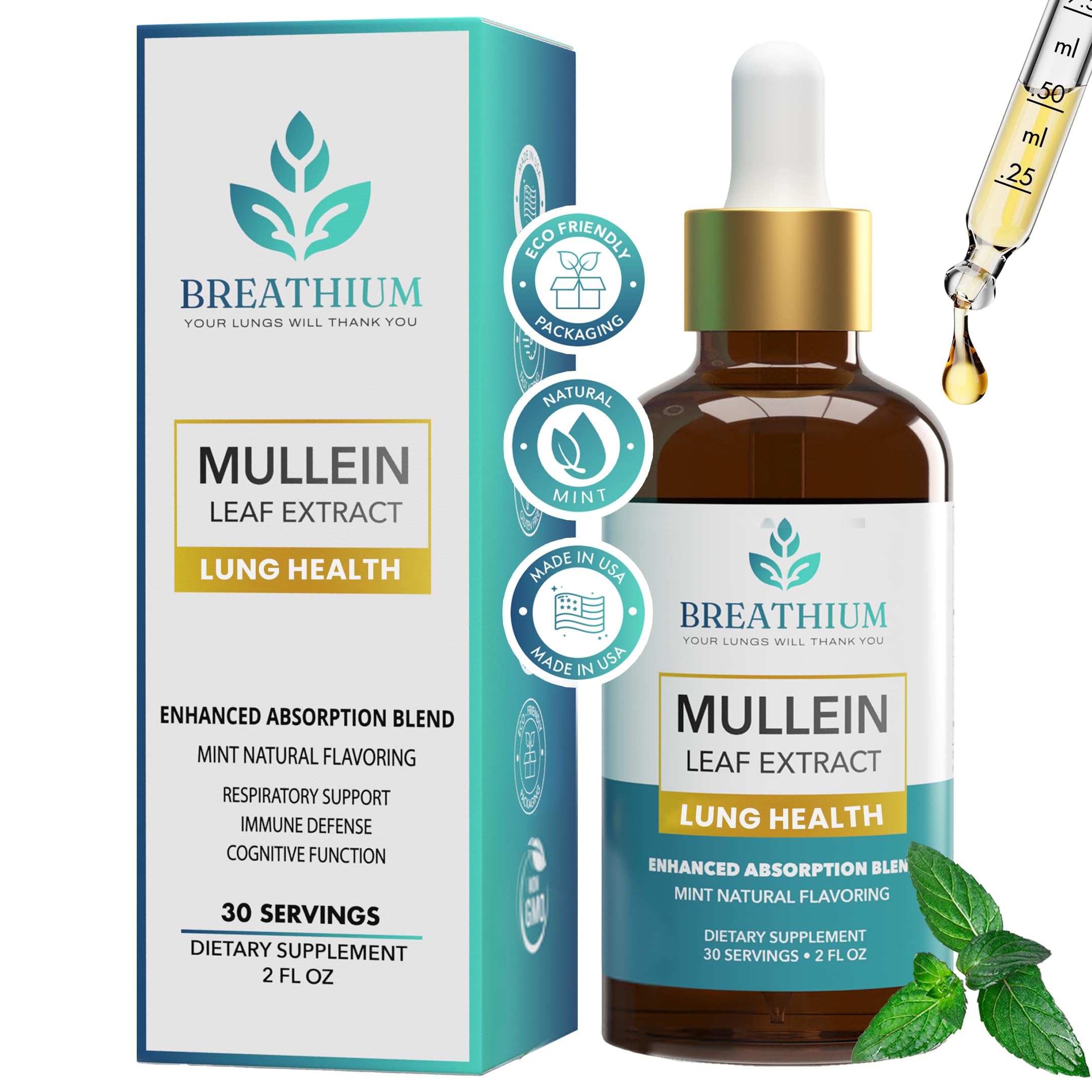
This is not a mechanical trainer — it’s a liquid herbal supplement designed to support respiratory health from the inside out. The formulation uses liposomal technology (sunflower lecithin and BIOPERINE black pepper extract) to increase bioavailability of the mullein leaf compounds, which are traditionally used to soothe irritated airways and promote mucus thinning. The peppermint flavor makes it far more palatable than typical herbal tinctures.
Users dealing with allergy‑related congestion, smoker’s cough, or general phlegm reported feeling relief within hours of the first dose — the drops helped bring up mucus that had been stuck for weeks. The bottle provides 30 servings, and the sublingual method (under the tongue) delivers fast absorption compared to capsules. It’s vegan, alcohol‑free, and manufactured in a GMP‑certified facility with third‑party purity testing.
Herbal supplements work more gradually than mechanical resistance, and individual results vary based on the severity of lung congestion. This should be viewed as a complement to breathing exercises, not a replacement for them. If you want internal support alongside external training, these drops provide a clean, pleasant‑tasting route.
Why it’s great
- Liposomal technology for better absorption
- Pleasant peppermint taste compared to earthy tinctures
- Vegan, alcohol‑free, GMP certified
Good to know
- Not a substitute for mechanical resistance training
- Individual results vary with lung condition severity
FAQ
How many minutes a day should I use a breathing exerciser?
Can a breathing exerciser help with sleep apnea?
Is a flutter valve or resistance trainer better for mucus clearance?
How do I clean my breathing exerciser to prevent bacteria?
Final Thoughts: The Verdict
For most users, the breathing exerciser winner is the POWERbreathe because its clinically validated IMT mechanism delivers measurable diaphragm strength gains that translate directly to better stamina and easier breathing. If you need dual inspiratory and expiratory training in one compact package, grab the Bigbreathe IMT/PEP. And for singers or vocal performers who want fine‑grained breath control that enhances live performance, nothing beats the The Breather Voice with its guided app and six resistance levels.