
Our readers keep the lights on and the weekend projects moving. As an Amazon Associate, I earn from qualifying purchases.
Wheezing after a flight of stairs or feeling winded during a workout isn’t just about fitness—it’s a sign your respiratory muscles need their own training. A targeted resistance device works these muscles the same way a dumbbell works your biceps, directly improving oxygen exchange and your daily energy ceiling.
I’m Rikta — the co-founder and writer behind FitlyFast. I’ve analyzed the engineering and clinical evidence behind over three dozen respiratory trainers, comparing airflow resistance mechanisms, build materials, and real-world user outcomes to separate effective tools from gimmicks.
This guide cuts through the noise to identify the top-performing models, helping you find the best breathing trainer to match your lung strength goals, whether for athletic performance or daily respiratory wellness.
How To Choose The Best Breathing Trainer
Respiratory trainers are not one-size-fits-all. Some target your inhale muscles (inspiratory), some focus on exhale strength (expiratory), and dual-action models work both. Your choice depends on whether you are an athlete seeking VO₂ max gains, a singer needing breath control, or someone managing mucus clearance after respiratory illness. Always match the device’s resistance type and adjustability to your specific starting lung strength.
Resistance Type: Inspiratory vs. Expiratory vs. Dual-Action
Inspiratory trainers create resistance when you breathe in, forcing your diaphragm to work harder and expand lung capacity. Expiratory trainers resist your exhale, which helps clear mucus and strengthen the muscles that push air out. Dual-action devices like Expand-A-Lung and TrainingMask work both phases, offering more comprehensive conditioning. If your main goal is feeling less winded during cardio, prioritize inspiratory or dual-action models.
Adjustability and Resistance Range
A dial or valve that permits graduated resistance, ideally with 6 to 10 levels, is essential for progressive overload. Without adjustability, you plateau quickly. Devices like The Breather Pink and Tilcare’s trainer offer clear numbered settings, while the POWERbreathe uses spring-loaded valves that require choosing a specific resistance tier at purchase. For most users, a mid-range adjustable model provides the longest useful lifespan as lung strength builds.
Build Quality, Portability, and Hygiene
Look for medical-grade or food-grade materials like PC, silicone, or synthetic rubber that resist bacterial buildup and survive daily cleaning. Devices that disassemble for boiling or washing are easier to maintain long-term. Weight and size matter if you travel: compact models like the Tilcare or The Breather fit in a pocket, while the TrainingMask is bulkier but doubles as a training mask for workout use.
Quick Comparison
On smaller screens, swipe sideways to see the full table.
| Model | Category | Best For | Key Spec | Amazon |
|---|---|---|---|---|
| POWERbreathe Medium Resistance | Premium | Clinical lung strength & athletic baseline | Spring-loaded inspiratory valve; 3 tier options | Amazon |
| The Breather Voice | Premium | Singers & vocal breath control | Dual inhale/exhale resistance; app-guided | Amazon |
| The Breather Pink | Premium | General wellness & rehab | 6-resistance levels; guided coaching app | Amazon |
| TRAININGMASK 2.0 TurnFlow | Mid-Range | High-intensity workout & altitude simulation | 36 adjustable levels; head-strap wear | Amazon |
| Expand-A-Lung (3 Pack) | Mid-Range | Dual-action athletes & families | Dual inhale/exhale; food-grade silicone | Amazon |
| Tilcare Breathing Trainer | Budget | Entry-level & COPD support | 6-level dial; food-grade materials; pocket size | Amazon |
| Flutter Valve Breathing Exerciser | Budget | Mucus clearance & post-nasal drip | 3 steel ball resistance; medical-grade PC | Amazon |
In‑Depth Reviews
1. POWERbreathe Medium Resistance

The POWERbreathe is the most clinically validated inspiratory muscle trainer on this list, using a proprietary spring-loaded valve that creates consistent resistance throughout each inhalation. Its Medium Resistance tier is designed for recreational athletes and active adults looking to push past plateaus, and users often report measurable lung strength gains within a few weeks of daily use. The compact design comes with a carrying case, making it easy to pack for consistent travel use.
Unlike dial-based trainers, the POWERbreathe requires you to select a fixed resistance tier (Light, Medium, or Heavy) at purchase. This means you cannot micro-adjust mid-session, but the spring mechanism delivers precise, repeatable resistance that’s ideal for tracking progress month over month. The synthetic rubber mouthpiece is dishwasher-safe, and the entire unit is built for years of high-frequency training without wear.
User feedback over years of use emphasizes its dual benefit: improving lung capacity for cardiovascular performance and helping lower resting blood pressure through respiratory muscle conditioning. It is slightly pricier than most competitors, but its proven track record with voice therapists, pulmonologists, and competitive athletes justifies the investment for those serious about measurable respiratory gains.
Why it’s great
- Clinically proven spring-valve gives consistent, repeatable resistance.
- Compact with carrying case promotes daily use anywhere.
- Positive feedback on lowering blood pressure alongside lung gains.
Good to know
- Resistance is fixed at purchase (choose Medium carefully) — not adjustable on the fly.
- The plastic body feels simple for the premium price point.
2. The Breather Voice

The Breather Voice is specifically engineered for singers, public speakers, and voice actors who need controlled diaphragm expansion and sustained breath support for long phrases. Its adjustable resistance works on both inhalation and exhalation independently, with six distinct levels that let you fine-tune the load for warm-ups versus high-resistance stamina drills. The included guided coaching app provides real-time pacing and set tracking, which is rare at this price point.
Unlike the generalist Breather Pink, the Voice model’s mouthpiece geometry and airflow path are tuned for the precise demands of vocal projection. Users consistently report smoother transitions between vocal registers and longer sustain on high notes after several weeks of five-minute daily sessions. The lightweight build disappears into a pocket, so it’s practical for tour bags or backstage warm-ups.
Some users note the companion app could improve its archive of past workout videos and add an audible countdown between sets, but the core hardware is robust and effective. If your primary goal is vocal strength rather than general respiratory wellness, this targeted tool outperforms broader dual-action trainers.
Why it’s great
- Independent inhale/exhale resistance settings for precise vocal control.
- Guided app helps maintain correct rhythm and measure progress.
- Very portable for singers and presenters on the move.
Good to know
- The app lacks video review history and audible set countdowns.
- Premium pricing may feel steep for recreational vocalists.
3. The Breather Pink

The Breather Pink takes a gentle, accessible approach to respiratory training, making it ideal for seniors, post-illness recovery, or anyone new to lung exercise. Its six adjustable resistance levels start very low, so users can gradually build strength without feeling overwhelmed. The guided app provides a simple five-minute session structure (inhale and exhale through the device) that helps new users establish a consistent habit.
Unlike the more demanding TrainingMask or POWERbreathe, this device prioritizes ease over intensity. The resistance mechanism is smooth and predictable, and the mouthpiece is comfortable for extended sessions. It has been well-received by those managing asthma, COPD recovery, or simply wanting to improve daily energy through better oxygen intake without the intimidation of a clinical-looking device.
The main drawback is that the Pink model does not come with a storage case, and some users find it overpriced given its plastic construction and lack of included accessories. However, for those who specifically need a low-resistance entry point with app-based coaching, it delivers consistent, user-friendly results.
Why it’s great
- Very low entry resistance is perfect for beginners and rehab.
- Companion app paces sessions and tracks improvements.
- Independent inhale/exhale control with clear numbered dial.
Good to know
- No carrying case included — easy to lose or dirty when traveling.
- App feels basic compared to standalone training platforms.
4. TRAININGMASK 2.0 TurnFlow

The TRAININGMASK 2.0 TurnFlow is a wearable mask that simulates moderate altitude conditions during exercise, making it a unique entry in this category. Its patented flux valve system offers 36 different resistance levels that can be adjusted on the fly mid-workout, allowing users to progressively increase inspiratory load as their session intensity rises. The silicone face piece and hook-and-loop strap create a secure seal essential for consistent oxygen deprivation simulation.
This is not a passive training tool — it genuinely makes every breath harder, which translates to improved cardiovascular endurance and lung capacity over time. It has been studied in sports science contexts and is trusted by competitive athletes across multiple disciplines. The mask is washable and durable, though users with beards may struggle to maintain a perfect seal for the maximum negative pressure effect.
The head strap has been criticized for pulling on ears and interfering with earbuds during workouts, and the nose bridge can press uncomfortably during high-rep sets. It is the least subtle device on this list to wear in public, but for those seeking simulated altitude training integrated into their gym routine, the TRAININGMASK delivers a level of resistance and immersion that handheld trainers cannot replicate.
Why it’s great
- 36 on-the-fly adjustable levels for progressive altitude simulation.
- Wearable design allows hands-free use during intense workouts.
- Clinical studies back its effectiveness for VO₂ max improvement.
Good to know
- Head strap can pinch ears and interfere with earbuds.
- Nose bridge may cause pressure discomfort during long sessions.
5. Expand-A-Lung (3 Pack)
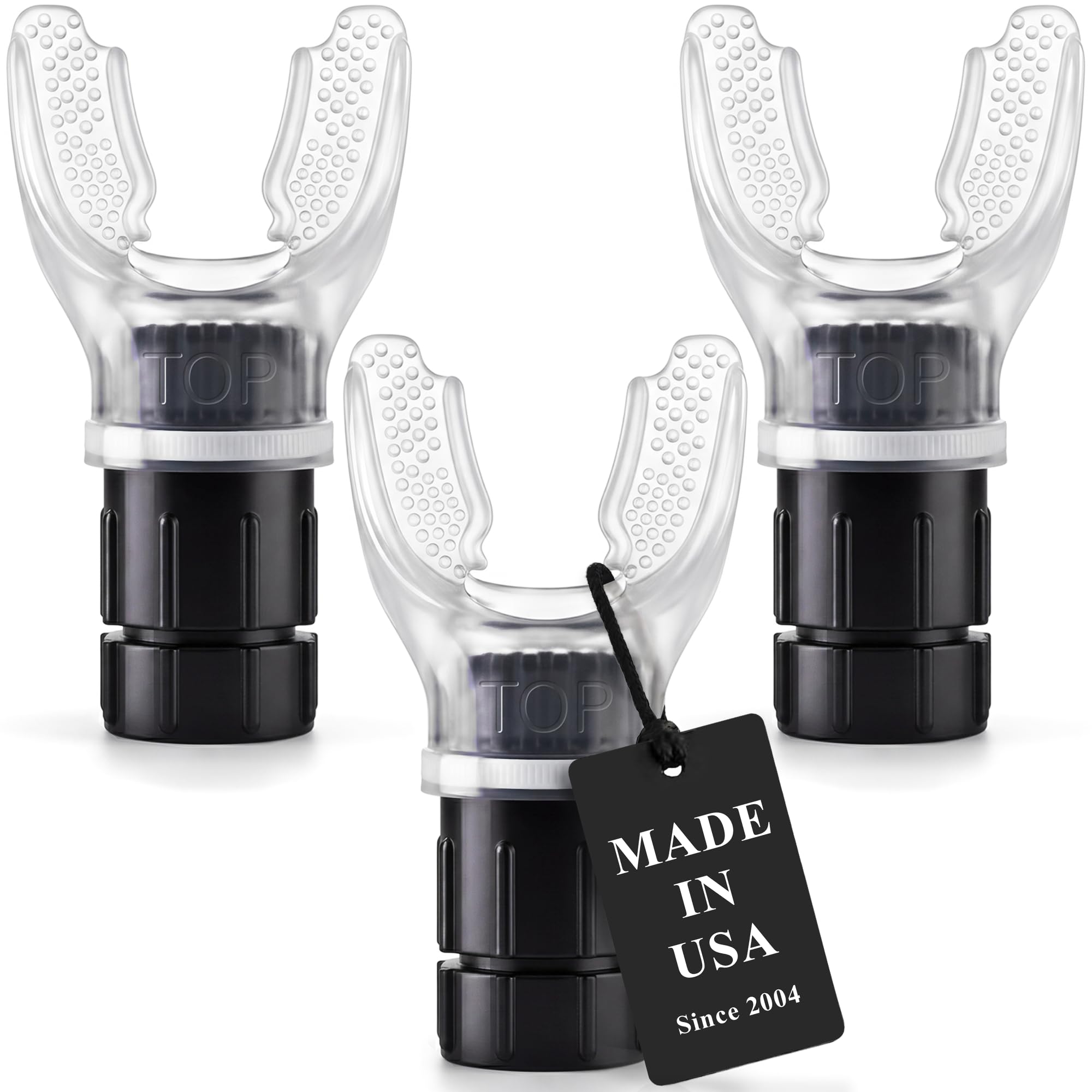
Expand-A-Lung has been a staple in respiratory training since 2004, and its three-pack bundle offers exceptional value for families or athletes who train multiple times a day. The single-knob adjustment controls both inhalation and exhalation resistance, meaning one twist changes the load for both phases of breathing. The pure silicone mouthpiece is comfortable, food-grade, and holds up to repeated boiling without degrading.
The device is markedly small at just four inches long, fitting into a gym bag or pocket without any bulk. Users report noticeable improvements in diaphragm strength and the ability to clear latent mucus from conditions like vaping or post-nasal drip. The dual-action design is particularly effective for athletes who want to improve both oxygen intake and carbon dioxide expulsion efficiency.
One common criticism is that the single-knob system can feel like it only offers two or three distinct resistance levels despite marketing claims of more, making it less granular than dial-based competitors like The Breather. Additionally, the lack of included instructions means users must intuit the correct resistance setting. If you can work around these quirks, the three-pack price per unit is hard to beat.
Why it’s great
- Dual-action resistance trains both inhale and exhale effectively.
- Three-pack offers great value for family or frequent use.
- Food-grade silicone mouthpiece is hygienic and durable.
Good to know
- Single knob feels like only 2-3 distinct resistance levels in practice.
- No instructions included — requires experimentation to find the right setting.
6. Tilcare Breathing Trainer
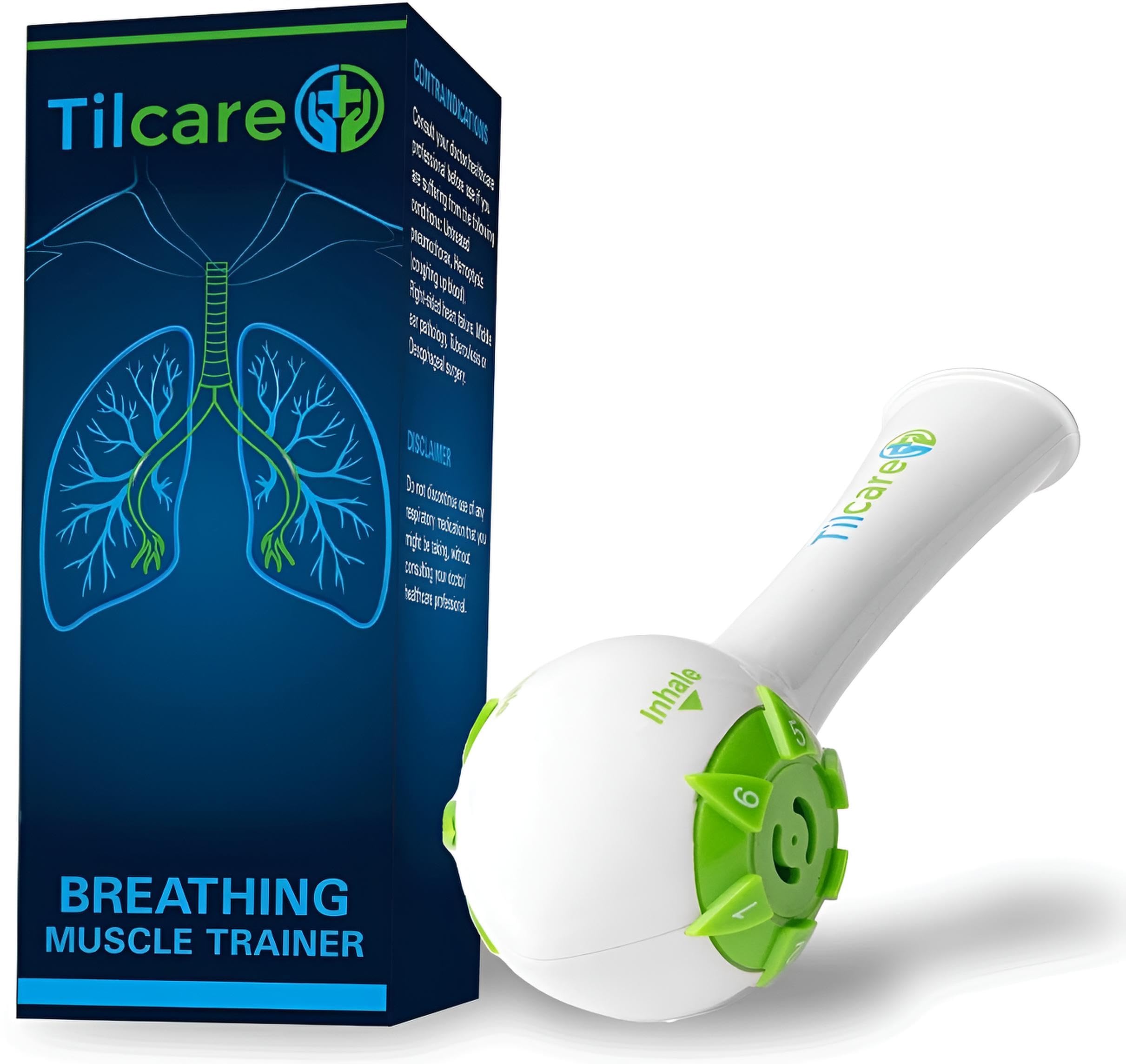
Tilcare’s Breathing Trainer delivers a surprisingly robust feature set at a budget-friendly price, including a six-level dial that adjusts resistance independently for inhalation and exhalation. The body is made from food-grade materials that withstand regular washing, and the compact design is small enough to slip into a pocket for training on the go. It is particularly popular among users managing COPD who need a gentle way to strengthen their lungs without complex instructions.
Despite its low price point, the device does not feel flimsy, and many users report it works just as well as brands costing significantly more. The clear resistance levels make it easy for beginners to start on level one and gradually work up. It also works effectively for clearing chest congestion, with several COPD patients noting better breathing and less mucus after consistent use.
The primary reliability concern is that some units develop an obstruction in the inhalation pathway within the first week of use, effectively breaking the device. This appears to be a batch quality issue rather than a design flaw, but it is worth noting if you plan to rely on it daily. For the price, the risk is low, but buying a backup or choosing a more robust option may be prudent for long-term training.
Why it’s great
- Six-level independent inhale/exhale dial offers great adjustability.
- Very compact and portable for daily carry.
- Works well for COPD patients needing gentle strengthening.
Good to know
- Some units have reported inhale obstruction within the first week.
- Plastic build feels less premium than mid-range competitors.
7. Flutter Valve Breathing Exerciser
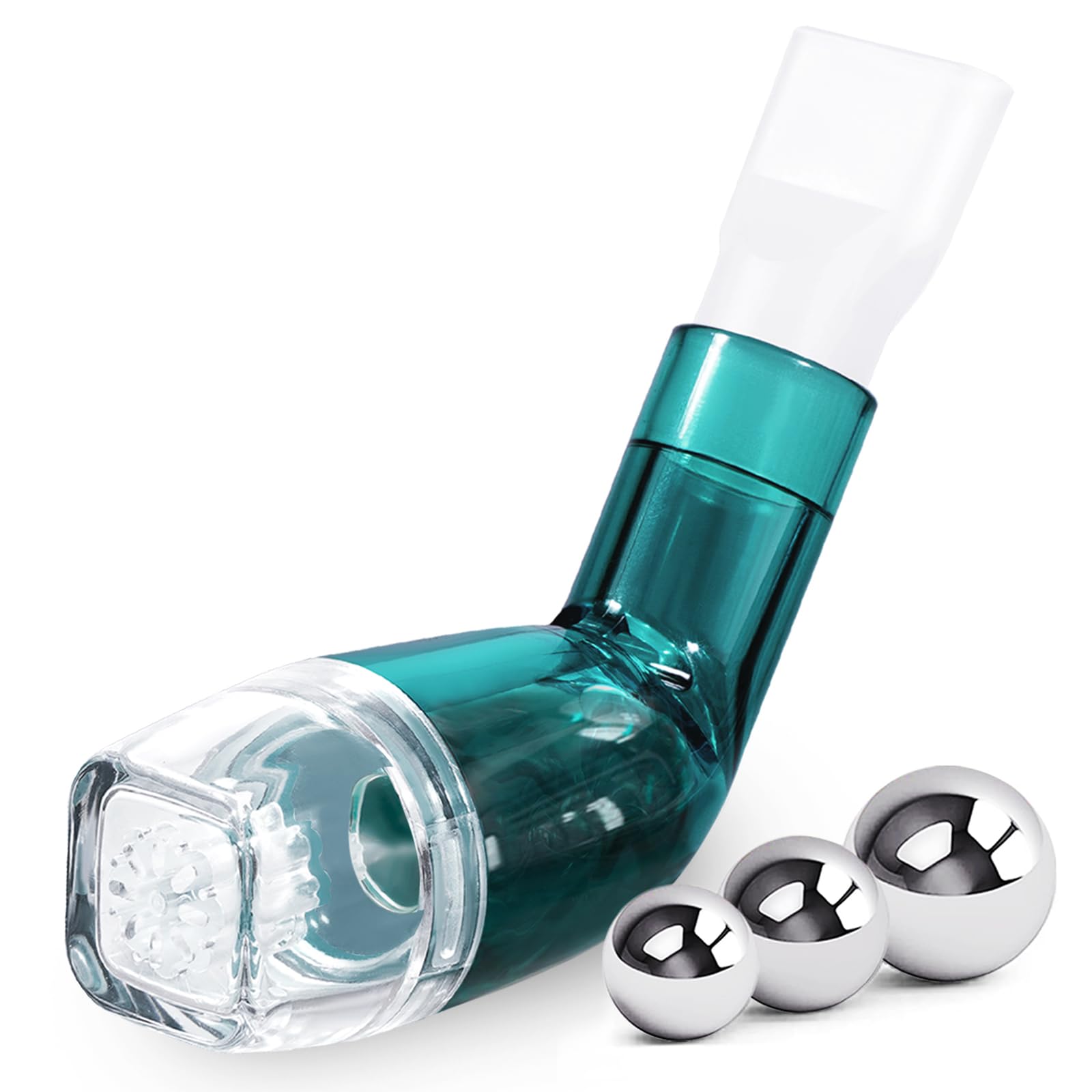
This Flutter Valve Breathing Exerciser is a specialized tool designed primarily for mucus clearance, using three different-sized steel balls that create a flutter vibration during exhalation. That vibration helps loosen thick mucus in the airways, making it easier to cough up and clear out. It is constructed from durable, medical-grade PC material that feels solid and can withstand frequent disassembly for cleaning with boiling water.
The device is not about building raw inspiratory strength like a typical trainer — its mechanism works almost exclusively on exhalation resistance to create the flutter effect. It has been recommended by pulmonologists for managing post-nasal drip allergies and chronic bronchitis. Users consistently report that their normally quiet voice becomes stronger after using the device, which suggests improved expiratory muscle engagement.
It is a simple, no-battery design that works immediately, and the clear plastic casing lets you watch the steel balls bounce during use, which helps with rhythm. The primary limitation is that it does not target inspiratory muscles at all, so those looking for comprehensive lung conditioning will need a separate device for the inhale phase. For its intended purpose of mucus management, however, it works effectively and reliably.
Why it’s great
- Proven flutter-valve mechanism effectively loosens airway mucus.
- Medical-grade PC construction is durable and easy to sterilize.
- Visible steel balls help maintain correct breathing rhythm.
Good to know
- Only works on exhalation — does not train inspiratory muscles.
- Fixed resistance from three balls limits progressive overload.
FAQ
How many minutes per day should I use a breathing trainer?
Can a breathing trainer help with COPD or asthma symptoms?
What is the difference between a flutter valve and a resistance trainer?
Final Thoughts: The Verdict
For most users, the best breathing trainer winner is the POWERbreathe Medium Resistance because its clinically validated spring valve delivers consistent, measurable inspiratory gains that translate directly to better endurance and lung strength. If you want a versatile dual-action device with app guidance for general wellness, grab the The Breather Pink. And for athletes who want to integrate altitude simulation directly into their gym workout, nothing beats the TRAININGMASK 2.0 TurnFlow.