
Our readers keep the lights on and the weekend projects moving. As an Amazon Associate, I earn from qualifying purchases.
You spot a warbler flitting through dense undergrowth, raise your camera, and the autofocus hunts uselessly while the bird vanishes. That split-second failure defines the real challenge of birding photography — not just reach, but locking on fast enough to capture the moment. A proper bridge camera for birding must deliver both immense optical zoom and responsive autofocus to turn fleeting glimpses into frame-filling shots.
I’m Rikta — the co-founder and writer behind FitlyFast. Over the past month I’ve combed through thousands of customer reviews and spec sheets, analyzing autofocus point counts, maximum focal lengths, stabilization methods, and low-light performance specifically for birding use cases to build this guide around real-world field performance.
The right bridge camera for birding balances extreme telephoto reach with fast contrast-detection or hybrid autofocus, optical stabilization that works at full zoom, and a sensor that handles dawn-light noise without destroying feather detail.
How To Choose The Best Bridge Camera For Birding
Birding demands a specific blend of specs that general-purpose camera buyers rarely prioritize. You need zoom reach that brings distant treetop inhabitants into view, autofocus that tracks through cluttered branches, and stabilization that compensates for the natural shake of handheld telephoto shooting. Understanding these factors separates cameras that deliver sharp warbler portraits from those that produce disappointing blur.
Optical Zoom Range — The Non-Negotiable Spec
Optical zoom, measured in millimeters of 35mm-equivalent focal length, determines how close a small bird at 50 feet will appear in your frame. Entry-level options start around 60x (1200mm), while premium models extend to 125x (3000mm). Digital zoom only crops and enlarges pixels, degrading image quality — always prioritize optical reach. A 3000mm lens lets you capture a kingfisher perched across a pond with feather-level detail, while 1200mm may require heavy cropping that reveals sensor noise.
Autofocus System — Speed and Locking Precision
Birds rarely pose still. Contrast-detection autofocus, common in budget bridge cameras, can hunt noticeably in low contrast or backlit foliage. Hybrid systems that add phase-detection pixels, or cameras with higher autofocus point counts (50, 100, or 399 points), offer faster acquisition and better subject tracking. For birds in flight, look for a camera that supports continuous autofocus with a dedicated tracking mode — this reduces the frustration of losing focus the moment the bird lifts off.
Image Stabilization — Keeping Your Telephoto Shots Sharp
At focal lengths above 1000mm, even subtle hand tremors translate into significant blur. Optical image stabilization (OIS) using lens-shift or sensor-shift technology dampens that shake in-camera. Panasonic’s POWER O.I.S., Nikon’s Dual Detect VR, and Canon’s 5-axis stabilized video all compensate for handheld movement. For extreme zoom cameras like the Nikon P1000, stabilization makes the difference between a usable handheld shot at 3000mm and a motion-blurred mess that must be discarded.
Sensor Resolution and Low-Light Capability
A 16-20 megapixel 1/2.3-inch sensor is standard in this category, but not all sensors perform equally in dim dawn or dusk light. Some cameras deliver usable images up to ISO 1600 before noise becomes intrusive, while others show visible grain at ISO 800. Raw shooting capability (NRW or CR2 format) gives you latitude to recover shadow detail and reduce noise in post-processing — a meaningful advantage when your best shot of a rare warbler was taken under a forest canopy.
Quick Comparison
On smaller screens, swipe sideways to see the full table.
| Model | Category | Best For | Key Spec | Amazon |
|---|---|---|---|---|
| Nikon COOLPIX P1000 | Superzoom | Maximum Reach | 125x (3000mm) Optical Zoom | Amazon |
| Nikon COOLPIX P950 | Superzoom | Pro-Level Reach | 83x (2000mm) Optical Zoom | Amazon |
| Canon PowerShot SX70 HS | Superzoom | Raw Capture | 65x Optical Zoom | Amazon |
| Panasonic LUMIX FZ80D Bundle | Bridge | Starter Kit | 60x (1200mm) Optical Zoom | Amazon |
| Panasonic LUMIX FZ80D | Bridge | 4K Photo Extraction | 60x (1200mm) Optical Zoom | Amazon |
| Panasonic LUMIX ZS99 (Black) | Compact Zoom | Pocket Portability | 30x (720mm) Optical Zoom | Amazon |
| Panasonic LUMIX ZS99 (White) | Compact Zoom | Travel Birding | 30x (720mm) Optical Zoom | Amazon |
| Canon PowerShot SX740 HS | Compact Zoom | Pocket Superzoom | 40x (960mm) Optical Zoom | Amazon |
| Panasonic DMC-ZS40S | Compact Zoom | Viewfinder Preference | 30x (720mm) Optical Zoom | Amazon |
| Kodak PIXPRO AZ653 | Bridge | Entry-Level Value | 65x (1560mm) Optical Zoom | Amazon |
| Minolta MN67Z | Bridge | Budget Bundle | 67x Optical Zoom | Amazon |
In‑Depth Reviews
1. Nikon COOLPIX P1000
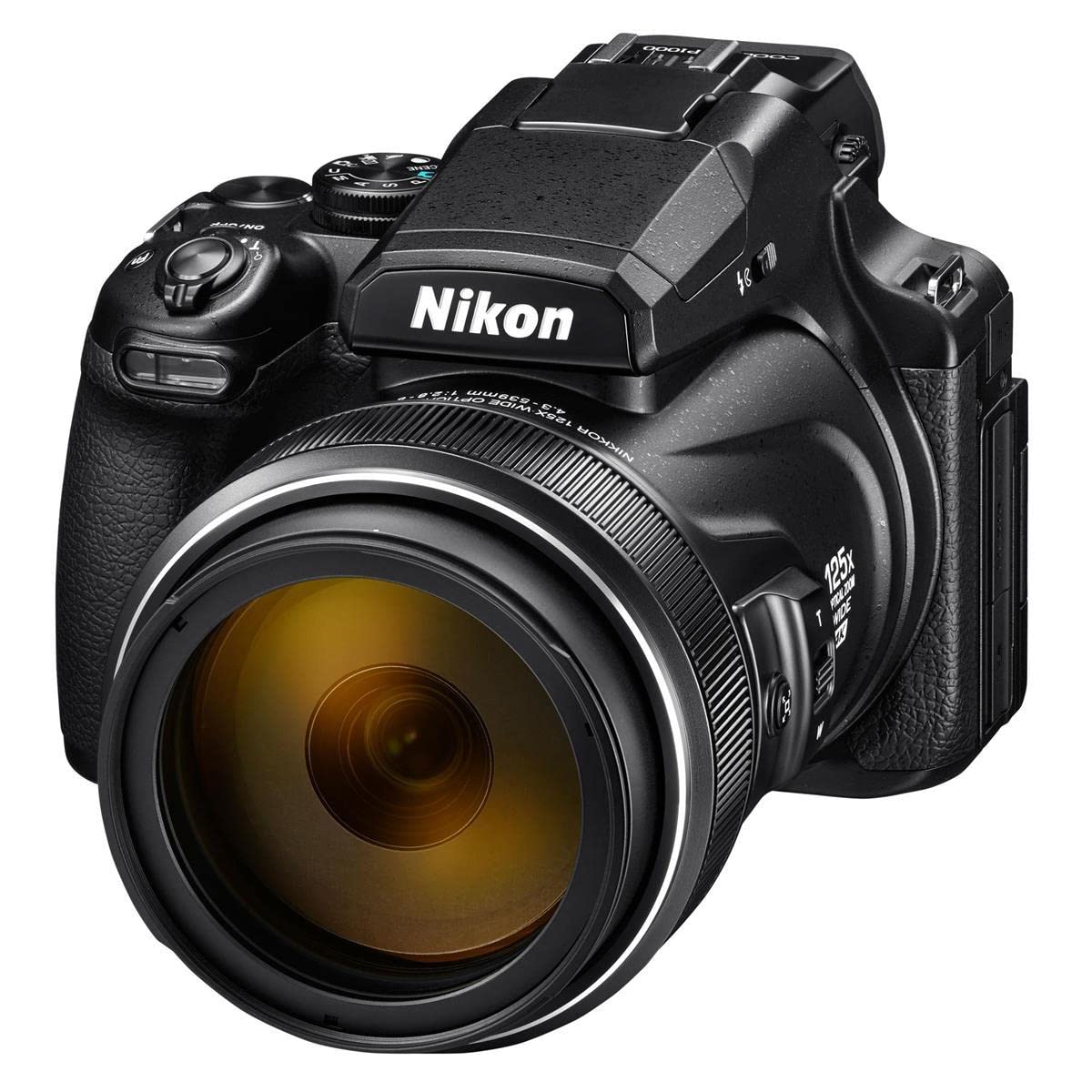
The Nikon P1000 holds the crown for absolute optical reach — a 125x lens delivering 3000mm equivalent focal length that lets you photograph a heron’s eye from across a lake. The Dual Detect image stabilization keeps handheld shots usable through roughly 1500mm, though beyond that point a tripod becomes necessary for sharp results. Its 16MP sensor captures Raw (NRW) files for post-processing flexibility, a feature that matters when you need to recover feather detail from shadowed underbellies.
Contrast-detection autofocus with 100 points works well for perched birds but struggles with fast flyers against bright sky backgrounds. The electronic viewfinder and vari-angle 3.2-inch LCD give you flexible composition angles whether you’re shooting low to the ground or above a reed bed. Battery life is limited — expect around 250 shots per charge with heavy zoom use — so carrying spares is essential for a full morning in the field.
At roughly 3.1 pounds, the P1000 is the heaviest bridge camera on the list, and its lens extends significantly when powered on, creating an unbalanced feel without a tripod mount plate. However, for birders whose priority is identifying and capturing distant species without carrying interchangeable lenses, the P1000 delivers possibilities no other all-in-one can match.
Why it’s great
- Unrivaled 3000mm optical zoom captures distant birds that other cameras cannot reach
- Dual Detect VR stabilization makes handheld shooting usable at extreme focal lengths
- Raw capture gives editing latitude for shadow and highlight recovery
Good to know
- Autofocus struggles with fast-moving birds in flight against bright skies
- Heavy body (3.1 lbs) and extended lens require careful handling and a tripod for maximum zoom
- Battery drains quickly; plan for multiple spare batteries on long outings
2. Nikon COOLPIX P950

The P950 refines Nikon’s proven superzoom formula with an 83x optical zoom (24-2000mm equivalent) and dedicated Bird Mode and Moon Mode scene presets that automatically optimize shutter speed, aperture, and ISO for feathered subjects or lunar detail. The built-in 16MP sensor and 4K UHD video recording at 30fps make it a dual-purpose tool for both stills and video documentation of bird behavior.
With 399 contrast-detect autofocus points, the P950 offers the highest point count in this roundup, theoretically improving tracking across the frame. In practice, reviewers note that autofocus still hunts on small, backlit birds in cluttered branches, though the dedicated manual focus ring provides a tactile workaround. The Dual Detect Optical VR keeps the 2000mm end reasonably steady for static subjects when bracing against a tree or fence.
The rotating LCD screen and built-in Wi-Fi/Bluetooth enable quick image transfer to your phone for sharing or field identification apps. The P950 is lighter than the P1000 at roughly 2.3 pounds, making it more practical for long hikes. Photographers expecting DSLR-level sharpness at full zoom will need to manage expectations; the small sensor and variable-aperture lens (f/2.8-f/6.5) require good light for optimal feather detail.
Why it’s great
- 83x optical zoom reaches 2000mm equivalent, covering most birding scenarios
- Bird Mode and Moon Mode presets simplify settings for beginners
- 399 AF points provide dense frame coverage for tracking
Good to know
- Autofocus can hunt on small birds in low-contrast or backlit foliage
- Small 1/2.3-inch sensor limits image quality in low light
- Electronic viewfinder has lower resolution than the P1000
3. Canon PowerShot SX70 HS

The Canon SX70 HS packs a 65x optical zoom (21-1365mm equivalent) into a body that handles more like a traditional DSLR, with an articulated 3-inch LCD and a built-in electronic viewfinder. Its 21.1MP sensor is a slight resolution bump over the 16-20MP competition, giving you a bit more cropping flexibility for distant birds. Hybrid autofocus combines contrast and phase-detection elements for faster acquisition than pure contrast systems.
Raw shooting in Canon’s CR2 format is a standout here — it allows you to push exposure and recover shadows from under-canopy shots where birds perch in dappled light. The 4K video mode at 24fps includes 5-axis stabilization for smooth handheld footage of feeding behavior. However, the autofocus system with only 11 points feels dated compared to the P950’s 399-point array, and tracking erratic movement like a swooping swallow is hit or miss.
Weighing just over 1.5 pounds, the SX70 is one of the lighter superzoom bridge options, which matters for all-day birding treks. The lens retracts flush into the body when powered off, making it easier to stow than the protruding Nikon models. The biggest drawback is the single-point AF zone — you’ll need to manually position the focus point or rely on center-lock-and-recompose for perched birds.
Why it’s great
- 21.1MP sensor and CR2 Raw capture offer post-processing headroom
- Hybrid autofocus provides faster acquisition than pure contrast systems
- Light weight (1.5 lbs) and retracting lens are ideal for long hikes
Good to know
- Only 11 AF points limit tracking precision for birds in flight
- Maximum aperture narrows to f/6.5 at full telephoto, requiring good light
- No built-in Wi-Fi for instant sharing; Bluetooth transfer is slower
4. Panasonic LUMIX FZ80D Bundle

The FZ80D bundle packages the 18.1MP camera with a 60x optical zoom (20-1200mm equivalent), a slinger shoulder bag, a 32GB SanDisk memory card, and essential accessories — so you step into the field ready to shoot. The lens covers everything from wide-angle landscapes (20mm) to distant treetop birds, and the POWER O.I.S. stabilization keeps 1200mm handheld shots reasonably steady for static subjects.
Panasonic’s Post Focus feature lets you shoot a quick sequence and select the focus point after capture, which is genuinely useful for birds in tangled branches where the camera might lock onto the wrong plane. The 4K Photo mode extracts 8MP stills from video at 30fps, giving you a second chance to grab a sharp frame from a burst when the bird takes off unexpectedly. The contrast-detect autofocus with one point is basic but works reliably in good light on non-moving subjects.
The included bag is sturdy for day trips, and the shoulder strap reduces fatigue. Image quality is best at base ISO in bright conditions; the 1/2.3-inch sensor shows noticeable noise above ISO 1600, and the 20-1200mm lens is slow at the telephoto end (f/5.9), which limits shutter speed in overcast conditions. For beginners wanting a complete kit without separate purchases, this bundle delivers practical value.
Why it’s great
- Complete kit includes bag, memory card, and accessories for immediate use
- Post Focus and 4K Photo features help capture sharp shots in challenging scenarios
- POWER O.I.S. stabilization makes 1200mm handheld shooting viable
Good to know
- Single-point AF system is very basic; no subject tracking for moving birds
- Image quality degrades above ISO 1600 with visible noise
- Slow aperture at telephoto end (f/5.9) limits performance in low light
5. Panasonic LUMIX FZ80D

The standalone FZ80D offers the same core 60x optical zoom, 18.1MP sensor, and POWER O.I.S. stabilization as the bundle version, minus the extra accessories. Its 2,360K-dot electronic viewfinder (0.74x equivalent) provides a bright, glare-free composition tool in direct sunlight — a major advantage when scanning treetops at midday. The 3-inch LCD tilts for low-angle shooting near ground-level bird baths.
Reviewers consistently praise its stabilization at 1200mm, noting that handheld shots of perched birds come out sharp with good technique. The contrast-detect autofocus with 39 points offers wider frame coverage than the basic single-point system, though it still hunts on fast-moving subjects. The camera records 4K UHD video (3840×2160) at 30p, and the 4K Photo burst mode extracts frames at 30fps for capturing wing-flap moments.
The biggest complaints center on low-light performance — the sensor and lens combination produces grainy images past ISO 800, and there is no built-in Wi-Fi, meaning you need a card reader for image transfer. The menu system is also less intuitive than competitors, with settings buried in nested layers. For birders prioritizing zoom reach and stabilization quality over connectivity and low-light ability, the FZ80D remains a solid mid-range option.
Why it’s great
- High-resolution EVF (2,360K-dot) provides clear composition in bright conditions
- Excellent POWER O.I.S. stabilization at 1200mm for handheld telephoto shooting
- 4K Photo mode at 30fps helps capture fast wing movement
Good to know
- Poor low-light performance with visible noise above ISO 800
- No built-in Wi-Fi for wireless image transfer
- Menu system is less intuitive than Panasonic’s own ZS series
6. Panasonic LUMIX ZS99 (Black)

The ZS99 redefines portability with a body that slides into a jacket pocket while still delivering a 30x Leica zoom (24-720mm equivalent). For birders who hike light and prioritize having a camera always accessible rather than one left in the car, this trade-off in zoom reach is often worth it. The 20.3MP sensor and 5-axis HYBRID O.I.S.+ stabilization produce sharp handheld shots at 720mm, though you’ll need to crop for distant birds.
The tiltable 1,840K-dot touchscreen supports intuitive focus point selection, and the Bluetooth 5.0 with dedicated Send Image button makes field sharing effortless — useful for uploading to Merlin Bird ID or iNaturalist. 4K video records at 30fps, and the high-speed 120fps HD mode enables slow-motion playback of a chickadee’s wing flutter. However, the ZS99 lacks an electronic viewfinder, making it difficult to compose in bright sunlight.
4K recording is limited to 15-minute clips before thermal shutdown, and the small 1/2.3-inch sensor produces noisy images in twilight conditions. Birders who only photograph at suburban feeders or on well-lit trails will find the ZS99’s image quality adequate; those chasing warblers in dense forest canopies will miss the extra reach and EVF of larger bridge cameras.
Why it’s great
- Pocket-sized body encourages carrying on every hike
- Leica 30x zoom with 5-axis HYBRID O.I.S.+ for stabilized 720mm shots
- Dedicated Send Image button with Bluetooth 5.0 for quick field sharing
Good to know
- No electronic viewfinder; LCD composition is difficult in bright sunlight
- 4K recording limited to 15 minutes due to thermal management
- Modest 720mm zoom requires cropping for distant birds
7. Panasonic LUMIX ZS99 (White)

Identical in specs to the black ZS99 but offered in white, this variant appeals to birders who want a camera that stays cooler under direct sun and is less likely to be mistaken for a professional rig in sensitive nature reserves. The 30x Leica lens (24-720mm) with 5-axis HYBRID O.I.S.+ provides the same stabilization and reach, and the 20.3MP sensor supports 4K video at 30fps and 120fps HD slow motion.
The tiltable 1,840K-dot touchscreen makes low-angle shooting comfortable, and the 1-point contrast-detect autofocus is adequate for static subjects but struggles with birds moving through branches. The USB-C charging is convenient for topping up via a power bank in the field. The white finish shows dirt more readily than black, which may matter for mud-prone birding environments.
Reviewers praise the build quality and Leica lens sharpness up to ISO 1600, but the lack of a viewfinder, the 15-minute 4K recording limit, and the modest zoom range mean this is a supplement to a primary bridge camera for serious birders, not a replacement. For casual backyard birding or travel where weight and size are the primary constraints, the white ZS99 is an attractive compromise.
Why it’s great
- White finish stays cooler and looks less obtrusive in nature settings
- USB-C charging enables field top-ups with a portable power bank
- Leica lens delivers sharp images up to ISO 1600 with good color accuracy
Good to know
- Lacks electronic viewfinder; bright-light LCD glare is a problem
- Single-point AF struggles with moving birds in cluttered backgrounds
- White body shows dirt and scratches more easily than black
8. Canon PowerShot SX740 HS
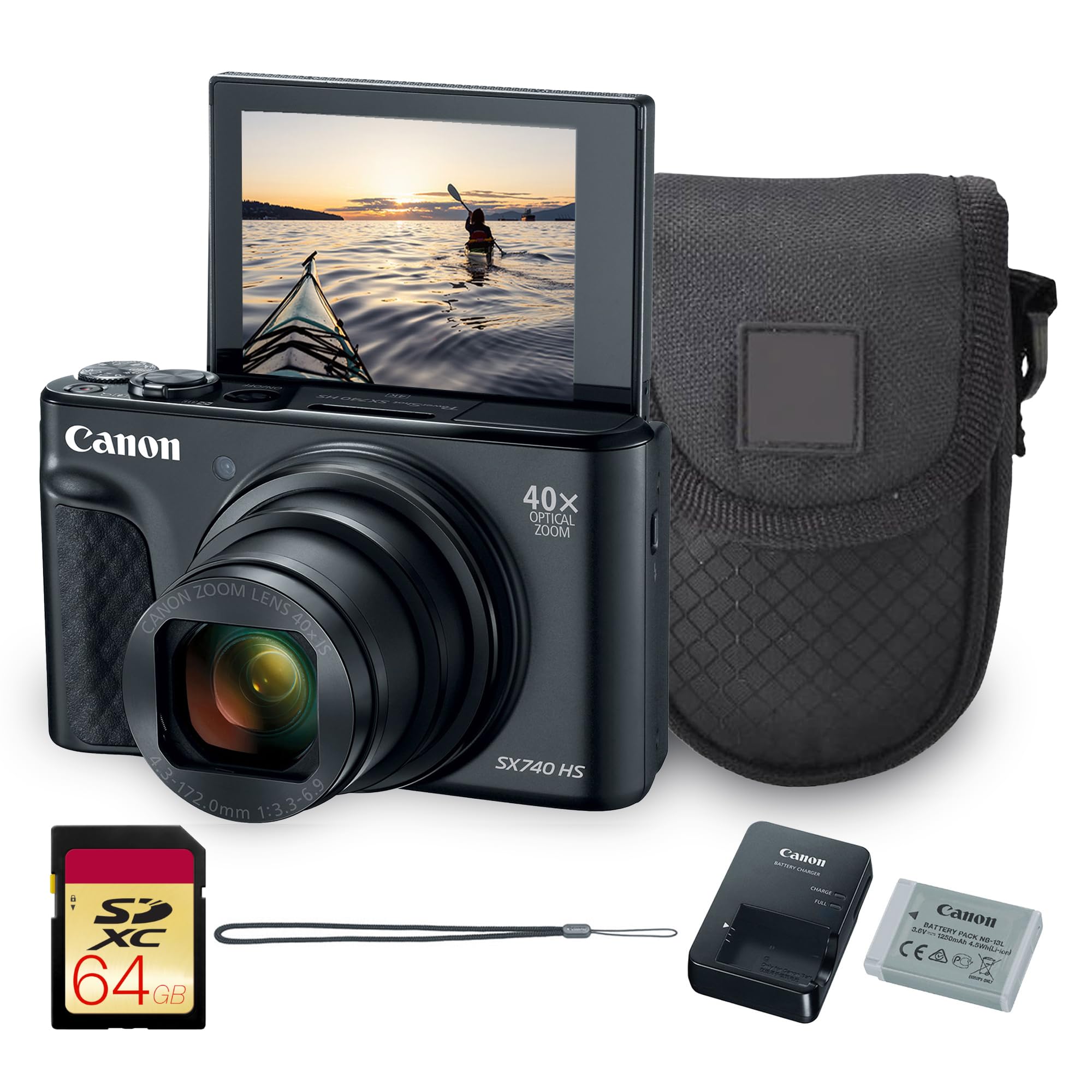
Canon’s SX740 HS squeezes a 40x optical zoom (24-960mm equivalent) into a compact body weighing under half a pound, making it the most pocketable superzoom on this list for birders who prioritize discretion and portability. The 20.3MP CMOS sensor paired with the DIGIC 8 processor delivers fast start-up and responsive menu navigation, and the 4K UHD video at 30p includes 5-axis digital stabilization for smooth footage of feeding stations.
The hybrid autofocus system combines contrast and phase detection for quicker focusing than older Canon compacts, though it’s still not as fast as the tracking systems on larger bridge cameras. The built-in Wi-Fi and Bluetooth with Canon Camera Connect app enable easy image transfer for sharing rare sightings. The bundled 64GB card and carrying bag add immediate value for beginners setting up their first birding kit.
The SX740’s main limitation is the zoom range — 960mm is sufficient for large birds like herons or geese at moderate distances, but you’ll struggle with small warblers beyond 30 feet. The lack of a viewfinder is a notable omission for bright-day shooting, and the small battery rated for about 265 shots per charge means you’ll need a spare for full-day outings. This camera works best for casual birders who want a capable backup camera for general outdoor use.
Why it’s great
- Ultra-compact body (under 0.5 lbs) fits in any pocket for spontaneous birding
- DIGIC 8 processor enables fast start-up and responsive controls
- Built-in Wi-Fi/Bluetooth with Canon app for quick social sharing
Good to know
- 960mm zoom is insufficient for small or distant birds in open habitats
- No electronic viewfinder; LCD composition suffers in bright sun
- Battery life (~265 shots) requires carrying spares for all-day field use
9. Panasonic DMC-ZS40S

The DMC-ZS40S distinguishes itself from modern pocket zooms by including a built-in electronic viewfinder, giving you a bright-eye composition option that is increasingly rare in compact bodies. Its 30x Leica zoom (24-720mm equivalent) with POWER O.I.S. stabilization covers moderate birding distances, and the 18.1MP sensor supports 1080p video at 60fps for smooth playback of wing movement. The lens-mounted control ring provides quick manual adjustment of zoom or aperture.
Built-in GPS geotags your images, which is genuinely useful for birders who track their sightings to specific trails or habitats. Wi-Fi with NFC enables one-tap pairing for image transfer. The autofocus system with 23 points is dated by current standards but performs reliably on perched birds in good light. Reviewers highlight the metal body construction as more premium-feeling than plastic competitors, and the 30x zoom range fits a compact shirt pocket.
The biggest caveat is the age of this model — the older sensor produces softer images compared to modern 20MP sensors, and low-light performance is noticeably worse than newer cameras. The proprietary battery charger is inconvenient, and the tiny power button is easy to press accidentally. For birders wanting an EVF in a compact body and not needing extreme zoom, the ZS40S remains a capable niche choice if found at a budget-friendly price.
Why it’s great
- Built-in electronic viewfinder enables bright-light composition in a compact body
- GPS geotagging adds location data to birding records automatically
- Metal body construction feels more durable than typical plastic compacts
Good to know
- Older 18.1MP sensor produces softer images than modern 20MP alternatives
- Proprietary battery charger is less convenient than USB-C charging
- Low-light performance is poor compared to newer models
10. Kodak PIXPRO AZ653
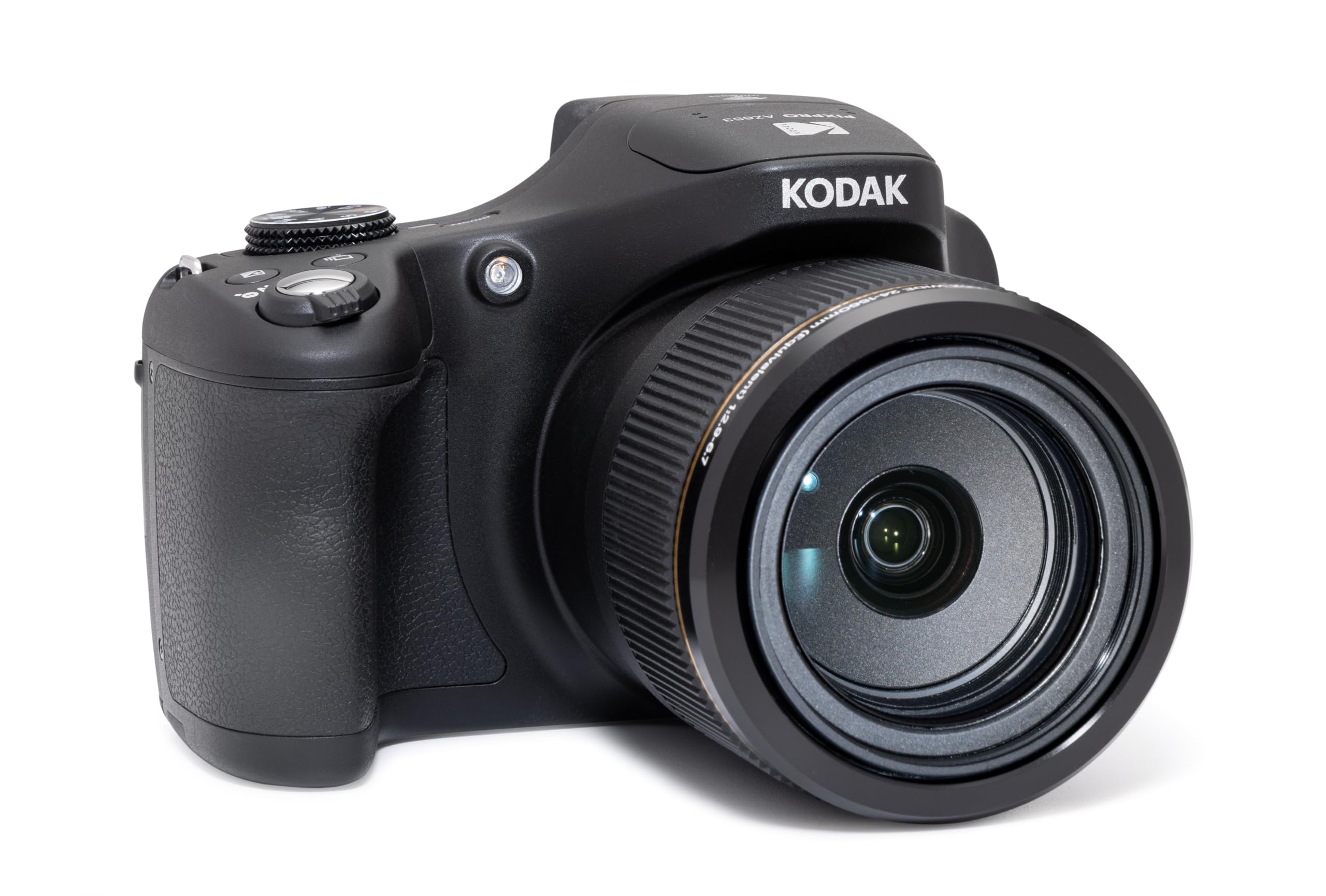
The Kodak PIXPRO AZ653 punches well above its price tier by offering a 65x optical zoom (24-1560mm equivalent) with a 20MP BSI CMOS sensor and RAW file support — specifications that would have commanded premium pricing just a few years ago. The 24mm wide-angle end captures habitat context, while the 1560mm telephoto brings medium-distance birds into filling the frame. Optical image stabilization keeps handheld results usable at intermediate zoom settings.
The 3-inch LCD and diopter-adjustable electronic viewfinder provide dual composition options, though both are lower resolution than premium competitors. The contrast-detect autofocus (f/2.9-f/6.7 aperture range) works reliably in bright conditions on stationary subjects but struggles with fast motion and low contrast. USB-C charging is a welcome modern convenience for field charging with power banks. 1080p video at 30fps meets basic documentation needs but lacks 4K detail for feather definition.
Reviewers note that the camera feels like a circa-2010 design with its button layout and menu system, and the Kodak branding ironically makes it less likely to be stolen than big-name cameras. The zoom quality degrades noticeably beyond 1000mm due to reduced focus accuracy, and burst shooting at 5fps is slow for capturing birds in flight. For budget-conscious birders who need extreme reach on a budget and accept the trade-offs in speed and low-light performance, the AZ653 offers remarkable value.
Why it’s great
- 65x optical zoom (1560mm) at a budget-friendly price point
- 20MP BSI CMOS sensor with RAW file support for editing flexibility
- USB-C charging enables convenient field recharging from power banks
Good to know
- Autofocus struggles with fast-moving subjects and low-contrast scenes
- Zoom quality degrades past 1000mm, limiting effective reach
- 5fps burst rate is too slow for capturing birds in flight
11. Minolta MN67Z
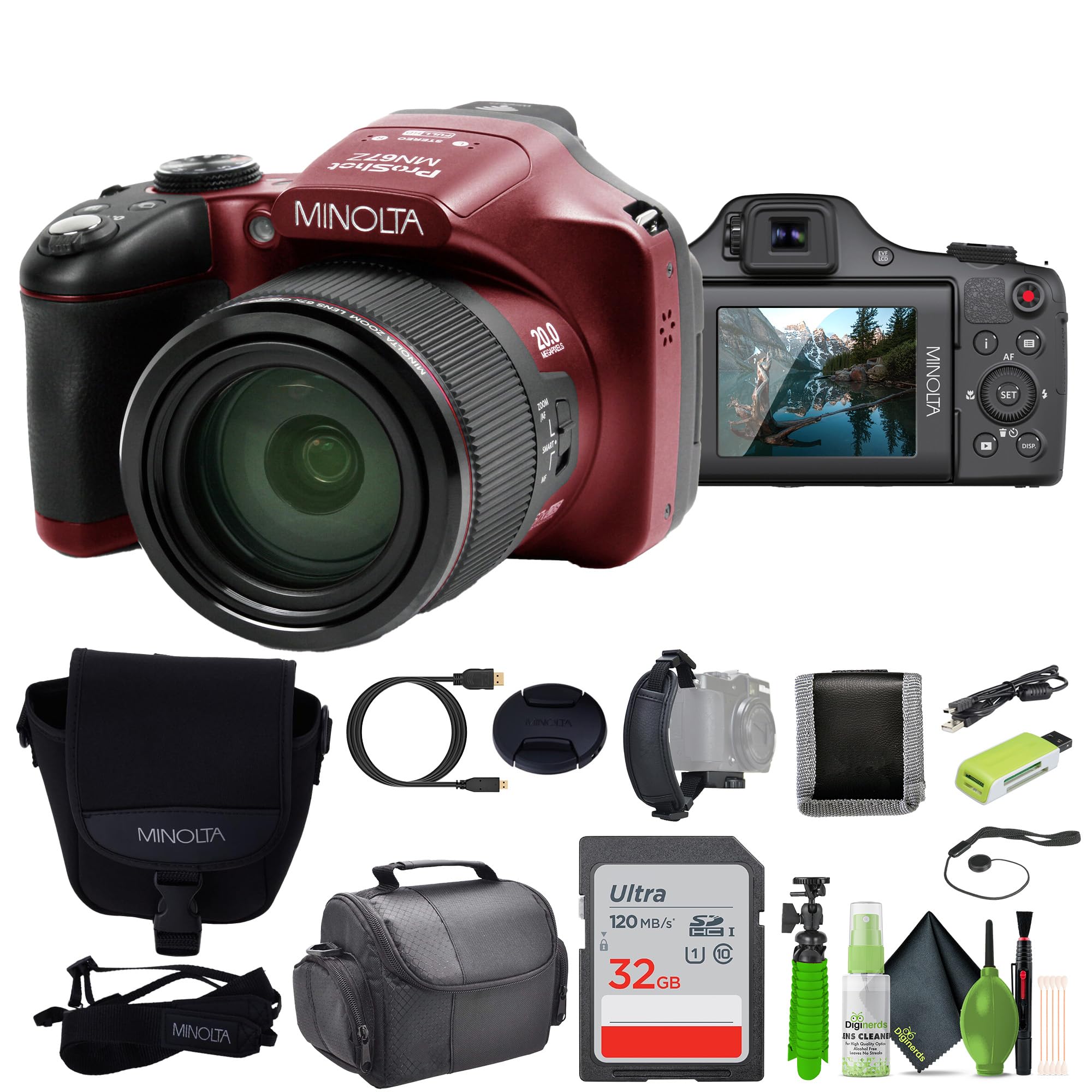
The Minolta MN67Z enters the market as a budget-focused alternative with a 67x optical zoom, a 20MP sensor, and 1080p FHD video recording, bundled with a 32GB SD card, bag, cleaning kit, small tripod, and additional accessories. The hybrid autofocus system with 50 points offers more coverage than many entry-level bridge cameras, and the f/2.8-f/5.6 aperture at wide-angle lets in more light than typical kit lenses. The articulating 3-inch LCD supports selfie and vlogging angles.
The bundle contents provide immediate value for beginners who lack camera accessories, though the included small tripod is too light for stable telephoto shooting. Reviewers report that picture quality in Auto mode is surprisingly good for the price tier, with warm color rendering that flatters bird plumage without excessive saturation. The built-in Wi-Fi enables wireless transfer to your phone for quick field identification checks.
However, the MN67Z has notable limitations: slow autofocus, degraded image quality at full zoom distances, and poor low-light performance. The battery included in the bundle works adequately, but spare batteries reportedly have short life spans. The camera is bulkier than competitors for its feature set, and the included instructions for the Wi-Fi app are unclear. For absolute beginners who want a complete starter kit with long zoom reach and do not demand professional-grade image quality or speed, the MN67Z bundle is a practical entry point.
Why it’s great
- Complete bundle with SD card, bag, tripod, and accessories for immediate use
- 50-point hybrid AF offers more frame coverage than entry-level rivals
- Warm color rendering enhances bird plumage in Auto mode
Good to know
- Slow autofocus reduces keep rate for moving or skittish birds
- Image quality drops noticeably at full zoom extension
- Poor low-light performance; bundled tripod is too light for telephoto stability
FAQ
Can a bridge camera replace a DSLR for bird photography?
What is the minimum zoom I need for bird photography?
Why does my bridge camera take blurry photos of birds at full zoom?
Final Thoughts: The Verdict
For most users, the bridge camera for birding winner is the Nikon COOLPIX P1000 because its 125x optical zoom reaches birds no other all-in-one can capture, and RAW support gives you editing latitude for the feather detail that defines a great bird photograph. If you want long reach in a lighter, more affordable package, grab the Nikon COOLPIX P950. And for pocket-friendly birding where portability is the primary constraint, nothing beats the Panasonic LUMIX ZS99 in terms of accessible reach that fits any bag.