
Our readers keep the lights on and the weekend projects moving. As an Amazon Associate, I earn from qualifying purchases.
A whole brisket demands constant heat over a twelve- to eighteen-hour stretch — the wrong smoker turns that marathon into a battle against temperature swings, bark that won’t set, and a stall you can’t push through with patience alone. Finding gear that manages fire management and airflow well enough to produce a proper smoke ring and tender flat every time is the difference between a passable cook and a memorable one.
I’m Rikta — the founder and writer behind FitlyFast. I’ve spent years researching how offset baffle design, gravity-fed charcoal systems, and PID pellet controllers affect moisture retention and bark formation on full packer briskets.
Whether you prefer the hands-on ritual of managing a live fire or the precision of a digital controller, this roundup breaks down the strongest performers to help you find the right brisket smoker for your style of cooking.
How To Choose The Best Brisket Smoker
A brisket cook places unique demands on a smoker — the long duration, the narrow window of ideal cooking temperature, and the importance of clean smoke all separate a capable brisket machine from a general-purpose grill. Understanding the key differences between fuel types, airflow design, and heat retention will save you from fighting your equipment on cook day.
Fuel Type: The Foundation of Flavor and Effort
Charcoal offsets (stick burners) deliver the most authentic smoke flavor but require constant attention to fire management — you’ll be adding wood splits every forty-five minutes to an hour. Pellet smokers offer set-and-forget convenience with programmable temperature curves, though the smoke intensity is generally milder unless the unit includes a dedicated wood chunk smoke box or Super Smoke feature. Gravity-fed charcoal smokers split the difference, providing charcoal flavor with digital temperature control. Ceramic Kamado-style cookers retain heat so well that they excel at long, fuel-efficient cooks, but they have a smaller cooking surface than many offsets.
Airflow Design: Reverse Flow vs. Traditional Offset
In a traditional offset smoker, the firebox sits on one side and heat travels in a straight line to the exhaust, creating a pronounced hot spot near the firebox. Reverse flow designs route the heat and smoke under a baffle plate to the far end, then back across the cooking surface — evening out the temperature across the entire chamber. For brisket, where you want the entire flat to cook at roughly the same rate, reverse flow gives you more consistent results without having to rotate the meat constantly.
Heat Retention and Build Quality
Thicker steel retains heat better and holds temperature more steadily when you add cold wood or when the wind picks up. Offset smokers from premium brands use 1/4-inch or thicker plate steel; entry-level models use thinner gauge metal that loses heat faster and may require more fuel. Ceramic and double-wall insulated smokers hold temperature with remarkable stability but take longer to preheat. For brisket, where you’ll hold 225°F to 275°F for many hours, thermal mass and insulation directly affect how much babysitting you need to do.
Cooking Capacity for a Full Packer
A whole packer brisket typically weighs twelve to eighteen pounds before trimming. The cooking surface needs to accommodate that length and width without the meat touching the walls or hanging over the edges. On an 18-inch diameter cooker, you may need to fold the thin end of the flat. On a 24-inch or larger offset, a full brisket fits flat. Consider the primary cooking grate dimensions, not just the total square inches, when evaluating capacity for brisket specifically.
Quick Comparison
On smaller screens, swipe sideways to see the full table.
| Model | Category | Best For | Key Spec | Amazon |
|---|---|---|---|---|
| Weber Smokey Mountain 18 | Charcoal Bullet | Hands-on learning | 18.5-inch cooking grates | Amazon |
| Oklahoma Joe’s Longhorn Reverse Flow | Offset Reverse Flow | Even chamber temps | 1060 sq in total cooking | Amazon |
| Oklahoma Joe’s Highland Offset | Traditional Offset | Classic stick burner | 900 sq in total cooking | Amazon |
| Traeger Woodridge Pro | Pellet | WiFi monitoring | 970 sq in cooking area | Amazon |
| Masterbuilt Gravity Series 1050 | Gravity Charcoal | Digital charcoal control | 1050 sq in cooking area | Amazon |
| Kamado Joe Classic Joe II | Ceramic Kamado | Fuel-efficient cooks | 250 sq in cooking area | Amazon |
| Camp Chef Woodwind Pro WiFi 24 | Pellet with Smoke Box | Real smoke flavor | Wood chunk smoke box | Amazon |
| Traeger Ironwood 885 | Pellet | Super Smoke mode | 885 sq in cooking area | Amazon |
| recteq Flagship 1600 | Pellet | Large capacity cooks | 1667 sq in cooking area | Amazon |
In‑Depth Reviews
1. Weber Smokey Mountain Cooker 18-Inch

The WSM 18 has been the standard recommendation for entry-level brisket work for decades, and the reason is simple: it holds temperature with a consistency that defies its price point. The porcelain-enameled steel body, paired with a water pan and two adjustable dampers, lets you dial in 225°F and walk away for hours if you use the Minion Method. The bullet shape creates a natural convection current that wraps the meat in even heat, and the two 18.5-inch nickel-plated grates give you enough room for a trimmed packer brisket if you position it diagonally.
Real-world owners report rock-solid temps for fourteen-plus hours with minimal vent adjustments — one user documented running 210°F for eleven hours straight on pork butts and found the lid thermometer accurate at 212°F. At altitude, the design still works; a Colorado owner modified the door with a spring fastener for more airflow and reached 250°F without issue. The water pan acts as a heat sink that smooths out temperature spikes during cold wind gusts or when adding fresh charcoal.
Assembly takes about thirty minutes, and the device weighs only thirty-nine pounds, making it easy to move. The 18-inch model is compact — a full packer may need the thin end of the flat folded — but the 22-inch version solves that if you cook multiple briskets regularly. The community support is enormous, with guides for gasket upgrades, hinge kits, and fan controllers if you want to automate later.
Why it’s great
- Proven temperature stability for long cooks without automated controllers
- Affordable entry point with a massive online knowledge base and upgrade ecosystem
- Lightweight and portable enough to take camping or tailgating
Good to know
- 18-inch grate may require folding the thin end of a large packer brisket
- Porcelain finish can chip if handled roughly during transport
- Water pan needs regular refilling on cooks longer than twelve hours
2. Oklahoma Joe’s Longhorn Reverse Flow Offset

The Longhorn Reverse Flow takes the classic offset design and adds a baffle plate that forces heat and smoke to travel under the cooking grates before rising, then flow back across the food toward the smokestack. The result is a temperature differential of less than 10°F from firebox side to chimney side — unheard of in traditional offsets at this price. The 751-square-inch primary grate plus a 309-square-inch secondary grate gives you enough real estate for a full packer on the main rack and a second brisket, several pork butts, or a batch of ribs above.
Owners consistently note that the unit needs some post-purchase work: high-temp RTV silicone on the firebox-to-cook chamber joint, gasket tape on the doors, and clamp-style handles to stop smoke leaks. The steel is heavy-gauge but not thick-plate, so heat management requires attention in windy conditions. The reverse flow baffles are difficult to clean without removing them, so covering them with foil during the cook is a common workaround. The large wagon wheels make moving the 226-pound rig manageable.
The versatility of switching between reverse flow and traditional offset by moving the smokestack damper is a genuine advantage — you can run reverse flow for brisket to even out the cooking zone, then switch to traditional mode for grilling. Owners who invested in mods consistently rate the flavor output as competitive with offset smokers costing twice as much.
Why it’s great
- Nearly even temperature across the entire cooking chamber due to reverse flow baffle design
- Switchable smokestack lets you run reverse flow or traditional offset configuration
- Large secondary cooking rack adds flexibility for multiple meats or sides
Good to know
- Requires aftermarket gaskets, latch clamps, and RTV silicone to seal properly
- Paint on firebox may blister and peel during first burns — high-temp paint recommended
- Baffle plates are hard to clean without disassembly; foil wrap helps
3. Oklahoma Joe’s Highland Offset Smoker

The Highland Offset is the most popular entry into stick-burning for a reason: it gives you a traditional offset firebox, 619 square inches of primary cooking space, and a 281-square-inch secondary grate at a price that undercuts most dedicated smokers. The porcelain-enameled grates resist rust better than bare steel, and the professional temperature gauge is positioned at grate level on the cooking chamber, giving a reasonable reading of the environment right where the brisket sits.
In practice, owners report a 75°F temperature difference between the firebox side and the chimney side — typical for traditional offsets that lack a reverse flow baffle. Managing that hot zone means positioning the brisket toward the chimney end and rotating halfway through, or using a water pan as a heat sink near the firebox. The firebox door makes adding wood splits simple without opening the main chamber. The thin gauge steel means you need to feed the fire more frequently in cold or windy weather to maintain a steady 250°F.
Packaging damage is the most common complaint, with bent legs and scraped paint occurring during shipping. Straightening bent components is usually doable with basic tools. Owners who season the smoker inside and out with bacon grease or cooking oil report minimal rust issues over multiple seasons. The cooking results — genuine offset smoke flavor with a mahogany bark — justify the effort for anyone committed to learning fire management.
Why it’s great
- Authentic offset smoke flavor at a budget-friendly price point
- Firebox door provides easy access for adding wood without losing chamber heat
- Wagon-style wheels make positioning on the patio manageable
Good to know
- Significant temperature gradient (up to 75°F) between firebox and chimney sides
- Thin steel loses heat quickly in wind or cold, requiring more frequent fuel refills
- Packaging damage during shipping is common; inspect on delivery
4. Traeger Woodridge Pro Electric Pellet Grill
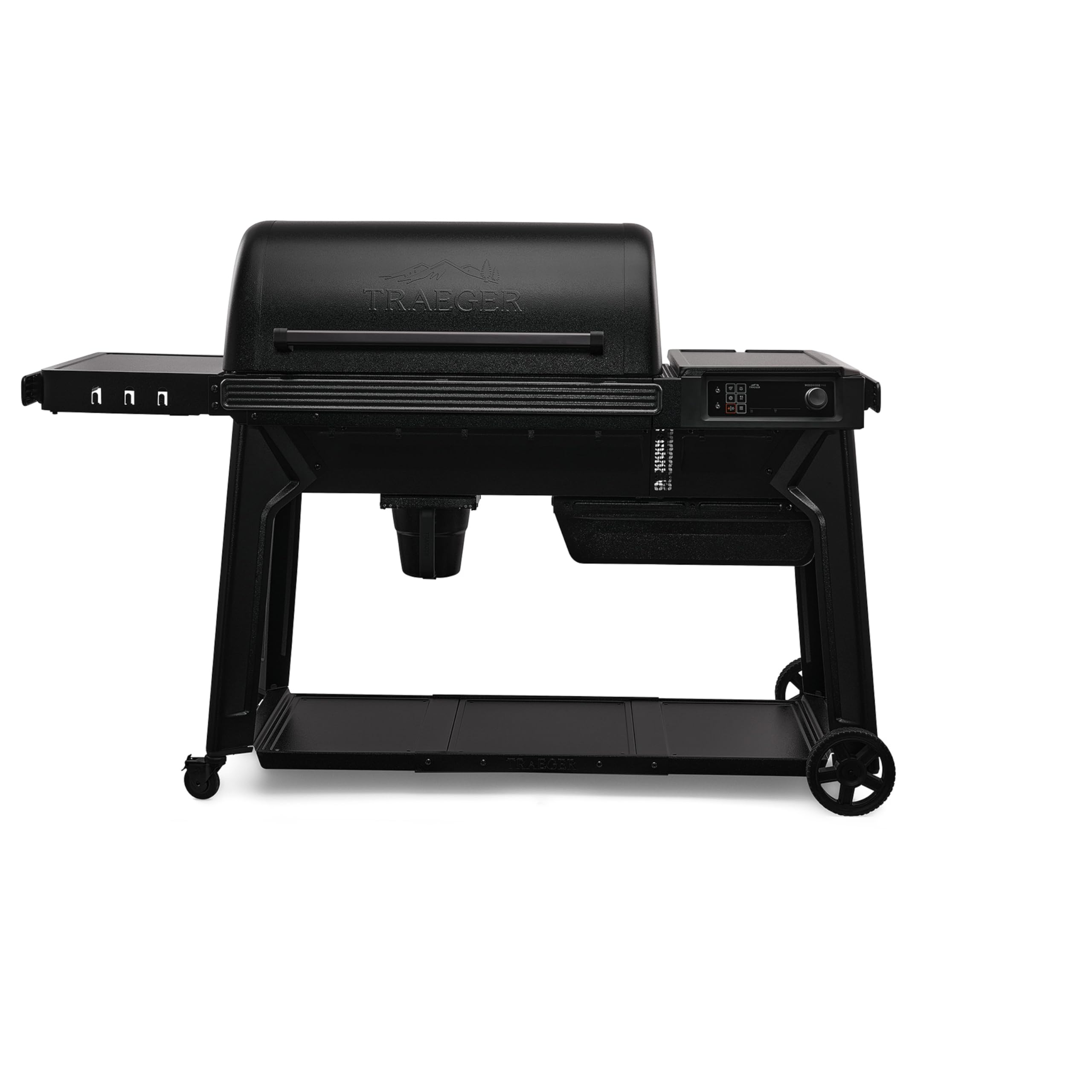
The Woodridge Pro is Traeger’s latest effort to bring more smoke flavor to the pellet format, adding Super Smoke Mode that augments the standard pellet feed for a denser smoke output at cooking temperatures between 165°F and 225°F — ideal for brisket. The 970-square-inch cooking surface holds up to seven pork butts or an entire packer brisket with room for a rack of ribs on the upper shelf. WiFIRE connectivity lets you monitor probe temperatures and pellet level from the Traeger app while you’re away from the grill.
Owners transitioning from charcoal note that pellet smoke is less intense than a stick burner, but the Woodridge Pro narrows the gap considerably. The digital pellet sensor tracks how much fuel remains, which eliminates the anxiety of running out mid-cook. The EZ-Clean Grease & Ash Keg collects drippings and ash in a single removable container, making post-cook cleanup faster than traditional foil tray systems. The folding side shelf adds useful prep space.
A few owners reported finicky touchpad buttons, especially the ignite control, and some noted that the app connection occasionally drops. These are software-dependent issues that may vary by firmware version. The unit runs on wood pellets exclusively, so you trade the hands-on experience of a stick burner for the convenience of setting your target temperature and walking away for hours.
Why it’s great
- Super Smoke Mode provides enhanced smoke flavor at low cooking temperatures
- WiFIRE app control enables remote temperature monitoring and pellet level tracking
- EZ-Clean Grease & Ash Keg simplifies post-cook cleanup
Good to know
- Pellet smoke is still milder than charcoal or offset stick burners
- Touchpad buttons can be unreliable on some units
- App connectivity may experience intermittent drops
5. Masterbuilt Gravity Series 1050
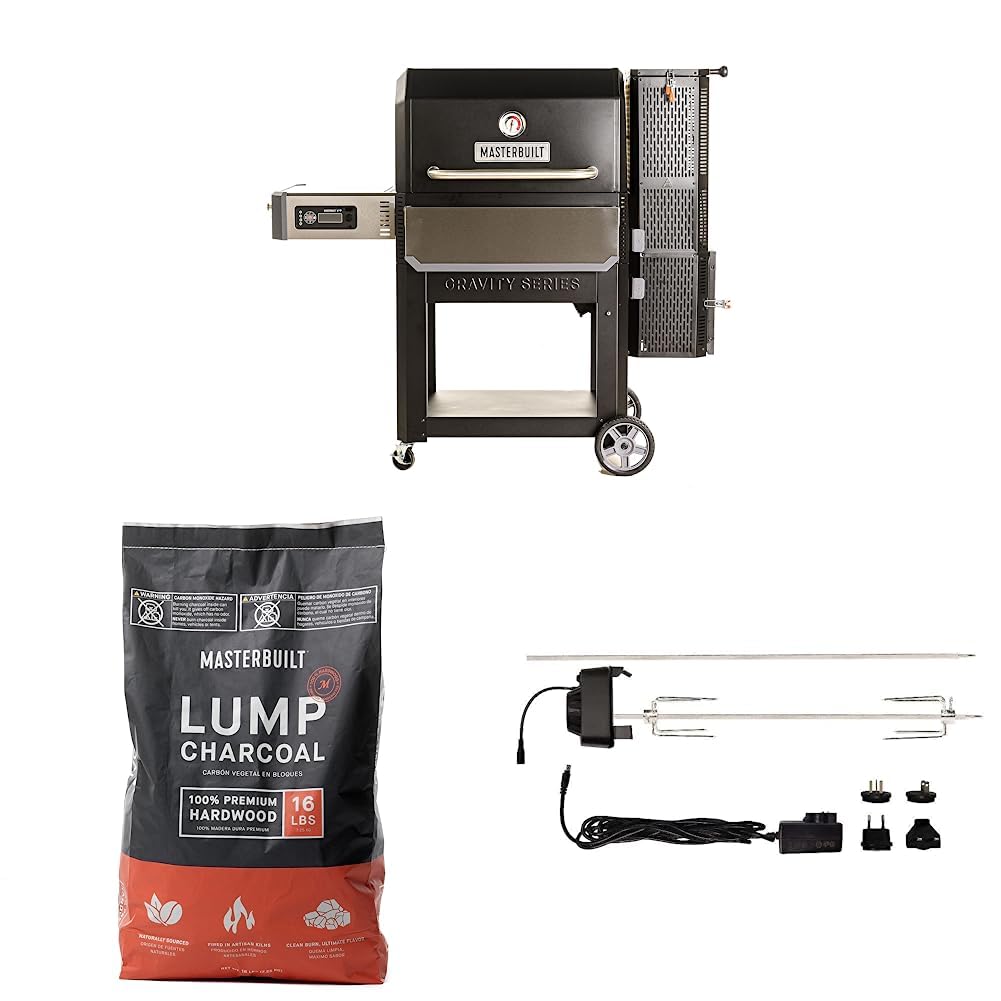
The Gravity Series 1050 fills a specific niche: it runs on lump charcoal or briquettes for genuine charcoal flavor, but uses a digital fan controller to hold your target temperature automatically. You fill the charcoal hopper, adjust the temperature via the digital panel or the app, and the fan modulates airflow to maintain that heat. The 1050 can hit 225°F in about ten minutes and can sear at 700°F — a range that covers both low-and-slow brisket and high-heat reverse searing.
Owners report excellent temperature consistency once the initial learning curve of the controller is mastered. The main complaint is assembly — the grill ships flat-packed and the instructions are dense. Multiple owners reported six-hour assembly times, and a few received units with dented components or marred screw holes. The digital control panel is not weather-sealed; users who left the grill uncovered in rain experienced display malfunctions and had to rely on the app for temperature control.
The bundled rotisserie kit and lump charcoal are a nice bonus. The gravity-fed system burns through charcoal faster than a Kamado or offset because the fan forces constant airflow. For brisket, the digital control removes the need to manage dampers manually, but the charcoal consumption means you need a full hopper and possibly a refill for very long overnight cooks.
Why it’s great
- Genuine charcoal flavor with digital temperature control through WiFi or Bluetooth
- Fast preheat — reaches 225°F in about ten minutes
- Includes rotisserie kit and lump charcoal for added value
Good to know
- Assembly is time-consuming and instructions are dense
- Digital display not fully weather-sealed; cover recommended
- Charcoal consumption is high due to the forced-air fan system
6. Kamado Joe Classic Joe Series II 18-Inch

The Classic Joe II represents the sweet spot in ceramic cooking: the 18-inch diameter gives you 250 square inches of primary cooking space, and the thermal mass of the ceramic retains heat so well that a single charcoal load can run for eighteen hours at 225°F. The Air Lift hinge makes opening the heavy dome effortless — you can lift it with one finger. The Kontrol Tower top vent is rain-resistant and maintains its setting when you open the dome, which prevents temperature surges during the cook.
The Divide & Conquer flexible cooking system uses half-moon grates at two levels, allowing you to cook a brisket low and slow on the lower grate while roasting vegetables or baking bread on the upper level. The ceramic body holds steady temperature even in freezing conditions; owners report consistent performance at 225°F in sub-zero weather. The unit can also reach 750°F for searing, making it the most versatile single cooker in this roundup.
Ceramic is heavy — the grill weighs over 200 pounds and requires two people to move safely. The included cart has locking casters, but the weight means you choose a permanent location. Some owners experienced cosmetic paint peeling on the Kontrol Tower cap and replaced it with a stainless steel aftermarket version. The firebox features a six-piece panel design that reduces breakage risk, though the ash grate can rust eventually.
Why it’s great
- Exceptional heat retention enables all-day cooks with a single charcoal load
- Two-tier Divide & Conquer grates let you cook at different temperatures simultaneously
- Versatile temperature range from 225°F smoking to 750°F searing
Good to know
- Heavy ceramic body requires two people for transport
- Limited cooking space compared to offset smokers — full brisket may need trimming
- Paint on Kontrol Tower cap may peel; stainless steel replacement recommended
7. Camp Chef Woodwind Pro WiFi 24

The Woodwind Pro solves the long-standing complaint about pellet grills — weak smoke flavor — by adding a dedicated smoke box inside the cooking chamber where you place wood chunks, chips, or even lump charcoal. The smoke box smolders independently of the pellet system, producing thick smoke at any temperature setting without burning through pellets faster. Owners report that this design produces a smoke ring and flavor profile comparable to an offset stick burner, even at cooking temperatures as high as 300°F.
The down-and-out ventilation system distributes heat evenly throughout the chamber, and the PID controller holds the set temperature within tight margins. The unit comes with four temperature probes, making it easy to monitor both the brisket and the ambient temperature. The stainless steel construction means no paint to peel or rust to manage. The firebox cleanout dumps ash into a removable cup, and the grease management system routes drippings to a bucket for easy disposal.
The app interface has been reported to have occasional connectivity issues, though the onboard control panel is straightforward. The Sidekick compatibility adds flexibility for griddling, searing, or artisan oven cooking. The smoke box does need to be refilled during very long cooks, but that trade-off is far less demanding than managing an offset firebox.
Why it’s great
- Dedicated smoke box delivers authentic wood chunk flavor at any cooking temperature
- PID controller maintains temperature within a few degrees for consistent results
- Stainless steel build with no painted surfaces to peel or rust
Good to know
- App and WiFi connectivity can be inconsistent
- Smoke box needs refilling during extended overnight cooks
- Sidekick attachment for searing is sold separately
8. Traeger Ironwood 885

The Ironwood 885 is Traeger’s mid-range flagship, packing 885 square inches of cooking space across two tiers and featuring the D2 controller that maintains temperature with a more aggressive PID algorithm than the entry-level Pro series. The Super Smoke Mode engages at temperatures between 165°F and 225°F, pulsing the auger to increase smoke output during the critical early hours of a brisket cook. The double-wall insulation keeps the chamber stable even in cold climates — owners in northern states report no temperature loss at 20°F ambient.
Real-world feedback from owners highlights the excellent brisket results with noticeable smoke ring and flavor, particularly when running Super Smoke for the first three hours and then finishing at a higher temperature. The WiFIRE app works reliably for remote monitoring. The large hopper (about 18 pounds of pellets) with a built-in light and pellet sensor gives peace of mind for overnight cooks. The textured grip door handle and fireproof rope seal around the lid are upgrades over older Traeger models.
Pellet consumption is the biggest operational cost — a single brisket cook can use two to three bags of pellets. The foil drip pan liners are overpriced, but reusable alternatives exist. The grease collection system can leak if the bucket isn’t seated properly. Some owners noted that the lid doesn’t close with the solid feel of a welded steel lid, though the rope seal compensates for any gap.
Why it’s great
- Super Smoke Mode significantly boosts smoke output for better bark and smoke ring
- Double-wall insulation maintains temperature stability in cold weather
- Large hopper with built-in light and pellet sensor for overnight cooks
Good to know
- Pellet consumption is high — expect two to three bags per brisket cook
- Grease bucket can leak if not seated properly
- Lid feels less solid than welded alternatives, though rope seal compensates
9. recteq Flagship 1600
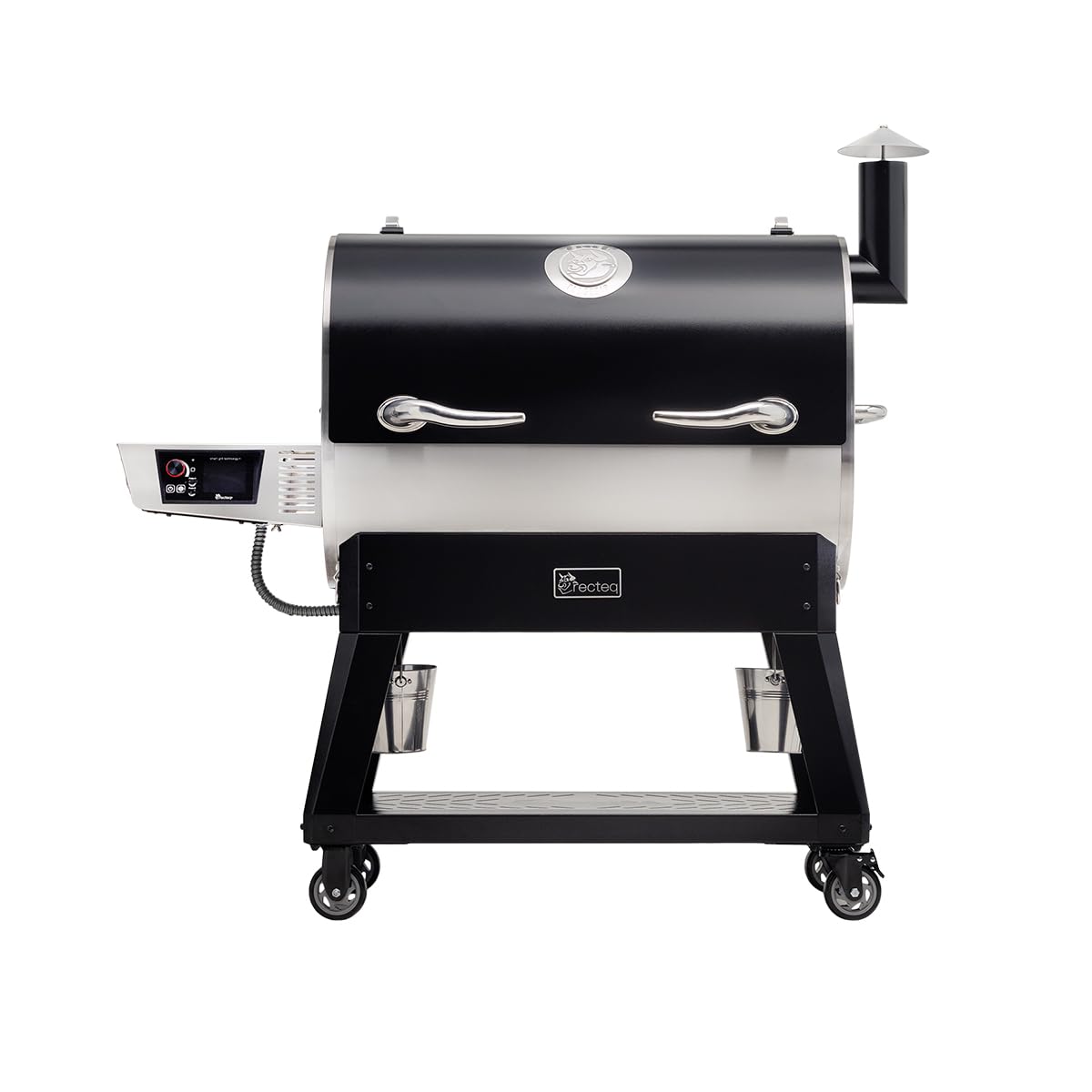
The Flagship 1600 is built for volume — 1667 square inches of cooking space and a 40-pound hopper capacity that can run continuously for forty hours without refilling. That makes it the strongest option in this roundup for cooking multiple briskets simultaneously or running long overnight smokes without worrying about fuel management. The PID temperature controller maintains the set point within 5°F consistently, and the 180°F to 700°F range covers every technique from cold smoking to hot searing.
Construction is all stainless steel except for the fire pot — no painted panels to peel, no rust-prone corners. The recteq warranty is among the longest in the industry, covering the entire grill bumper-to-bumper. Owners report flawless temperature tracking from the first cook, with pork butts and wings coming off perfectly on the first attempt. The large capacity does come with a physical footprint that demands dedicated patio space — the unit weighs 230 pounds.
A minor heat management note: the cast iron griddle included with some bundles doesn’t reach searing temperatures (topping out around 450°F), and the temperature ramp from 225°F to maximum takes time because of the massive cooking chamber volume. These are trade-offs inherent to the size, not design flaws. Customer support is consistently praised for responsiveness when parts arrive damaged during shipping.
Why it’s great
- Massive 40-pound hopper supports up to forty hours of continuous operation
- All-stainless steel construction with no painted surfaces to degrade
- Industry-leading bumper-to-bumper warranty provides long-term confidence
Good to know
- Size and weight (230 pounds) require a permanent patio or deck position
- Large chamber volume means slow temperature ramp between extremes
- Cast iron griddle included with some bundles doesn’t reach searing temperatures
FAQ
What makes a smoker specifically good for brisket versus other meats?
Is a pellet smoker good enough for competition-grade brisket?
How important is the water pan for brisket cooks?
Can you use wood chips in a gravity-fed charcoal smoker?
Final Thoughts: The Verdict
For most users, the brisket smoker winner is the Weber Smokey Mountain Cooker 18-Inch because it delivers proven temperature stability and excellent smoke flavor at a reasonable cost — the best balance of performance and value for brisket. If you want authentic offset smoke flavor with even chamber temperatures, grab the Oklahoma Joe’s Longhorn Reverse Flow Offset. And for set-and-forget convenience with near-stick-burner smoke quality, nothing beats the Camp Chef Woodwind Pro WiFi 24.