
Our readers keep the lights on and the weekend projects moving. As an Amazon Associate, I earn from qualifying purchases.
Specs are compiled from manufacturer listings and verified buyer reviews and can change over time — please confirm the key details on the product page before buying.
A 40-inch TV is the balance for a bedroom, a dorm room, or a kitchen counter where a bigger screen just wouldn’t fit. But on a tight budget, you might wonder if you have to settle for a dim, slow, or unreliable set — the answer is no, but you do have to pick carefully between a great picture and a smooth operating system.
I’m Rikta — the founder and writer behind FitlyFast. This guide is built by comparing the manufacturers’ published specifications and the patterns across verified customer reviews, so you get each pick’s real strengths and trade-offs instead of marketing spin.
Here is the straight truth on the top contenders for the best budget 40 inch tv, from the color-rich Hisense Hi-QLED to the fast-loading Element, with every key spec and owner experience laid out so you can buy with total confidence.
Our Picks at a Glance

How To Choose The Best Budget 40 Inch TV
Picking a TV under means deciding which compromises you can live with. The big three areas to look at are the display technology, the refresh rate, and the smart platform, because each one directly affects your daily viewing.
Display Tech: Hi-QLED vs. Standard LED
A standard LED backlight is fine for basic shows. Hi-QLED (a form of quantum dot) is a more advanced layer that boosts color vibrancy and brightness — making everything from a nature documentary to a video game look far richer. If you watch mostly news or talk shows, standard LED is fine. If you watch movies or play games, the QLED upgrade is worth the extra dollars.
Refresh Rate: 60 Hz vs. 120 Hz
The refresh rate is how many times per second the image refreshes. A standard 60-hertz (Hz) screen handles movies and casual TV just fine. A 120 Hz screen smooths out fast motion — think sports, car chases, or first-person shooters — making it look less blurry. Most budget 40-inch models are 60 Hz, but a few in this list hit 120 Hz, which is a real advantage if you watch a lot of action content.
Quick Comparison
| Model | Best For | Display Technology | Refresh Rate | Smart Platform | Amazon |
|---|---|---|---|---|---|
| Hisense 40QD4SR (Roku)★ Best Overall | Best Overall Value | Hi-QLED | 60 Hz | Roku TV | Amazon |
| Hisense 40QD4QF (Fire TV)QLED Power | QLED + Alexa | Hi-QLED | 60 Hz | Fire TV | Amazon |
| Amazon Ember 2-SeriesBest for Speed | Fastest OS & Wi-Fi 6 | Standard LED | 60 Hz | Fire TV (2026) | Amazon |
| Element E300AE40CG | High Refresh Rate | Standard LED | 120 Hz | Xumo | Amazon |
| FPD CG40-P3 | Google TV Convenience | Standard LED | 60 Hz | Google TV | Amazon |
| INSIGNIA F40 Series | Lowest Entry Price | Standard LED | 60 Hz | Fire TV | Amazon |
| Westinghouse Roku TV | Classic Roku Experience | Standard LED | 60 Hz | Roku TV | Amazon |
| Westinghouse Xumo 4K | 4K Upgrade | Standard LED | 60 Hz | Xumo | Amazon |
| TOSHIBA M450 | QLED 4K & Gaming | QLED 4K | 60 Hz | Fire TV | Amazon |
In‑Depth Reviews
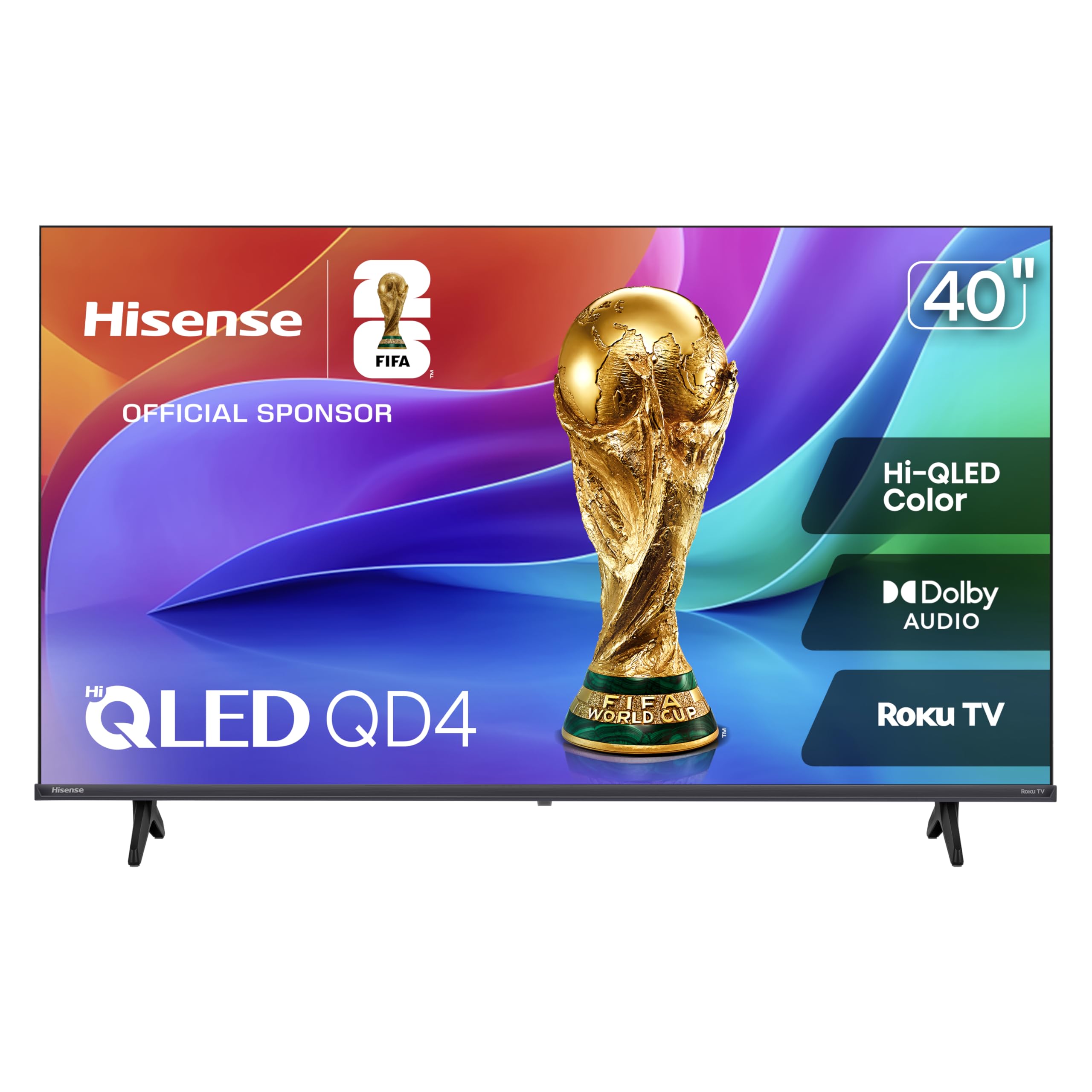
1. Hisense 40-Inch Class QD4SR Series (40QD4SR)
The budget champ that delivers rich QLED color without making you pay for a 4K panel you might not need.
This Hisense is the crowd favorite because it uses Hi-QLED technology—a quantum dot layer—to make every shade and skin tone look unexpectedly vivid for a 1080p set. Owners consistently say the quality and picture for the price are excellent. You get a crisp Full HD (1080p) image with a Full Array LED backlight, which keeps brightness even across the screen, so dark scenes don’t look washed out.
The Roku operating system is a huge part of its appeal. It is widely considered the simplest smart TV platform, with an intuitive grid layout and fast access to thousands of streaming channels. One reviewer noted that setup for their first Roku TV took only a few minutes. You also get Dolby Audio for sound that is a cut above the tinny speakers on many budget sets.
The 60 Hz refresh rate is standard for this price tier, handling movies and casual TV well. If you are a competitive gamer, you might want a higher refresh rate, but for 95% of buyers, this is a perfectly smooth experience. The value-for-money figure is the highest positive aspect owners mention, followed closely by the vibrant picture quality — a strong sign that this TV nails the two things most people care about most.
What Wins Owners Over
- Hi-QLED delivers richer, more vibrant colors than a standard budget LED panel, making movies and shows pop.
- The Roku interface is simple, responsive, and constantly updated with new apps automatically.
- Sharp 1080p resolution with a Full Array LED backlight provides even, clear brightness across the whole screen.
The Trade-Offs
- The 60 Hz refresh rate is not ideal for fast-paced competitive gaming where every millisecond matters.
- Built-in speakers are decent for the price but a soundbar will improve the Dolby Audio experience significantly.
Reach for this if: you want the best all-around picture and simplest streaming experience for a bedroom, guest room, or kitchen.
Look elsewhere if: you are a serious gamer needing a 120 Hz refresh rate or if you absolutely need a voice assistant built into the remote (this model uses the standard Roku remote).
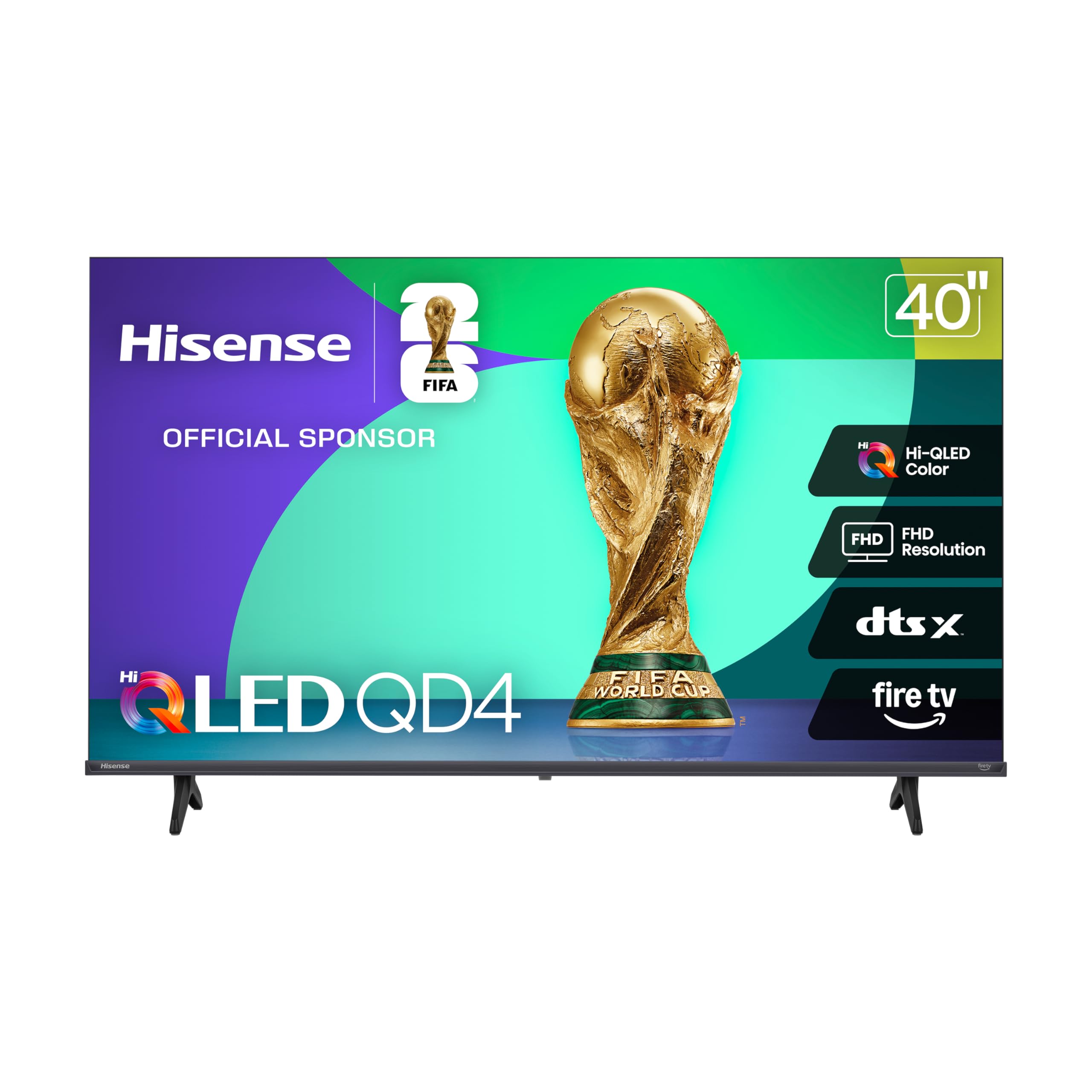
2. Hisense 40-Inch Class QD4 Series (40QD4QF)
Same stunning quantum dot panel but with Alexa on the remote for hands-free control and deep Fire TV integration.
Think of this as the Roku version’s sibling with a different operating system. You get the same Hi-QLED technology, delivering rich, true-to-life color, and a 1080p Full HD resolution. The key difference is the Fire TV platform and the inclusion of an Alexa Voice Remote. Press and ask Alexa to launch Netflix, change the volume, or even check the weather — all without navigating a single menu.
What owners praise most is the picture quality — it is bright, colorful, and perfect for Full HD streaming from Prime Video, Netflix, or Hulu. The sound uses DTS Virtual:X, which creates a more rich, room-filling audio effect from the TV’s own speakers. This is a noticeable step up from basic stereo sound on other budget sets. The Game Mode cuts input lag to just 16 milliseconds (ms), which is excellent for a TV in this price range, making it a solid secondary screen for a gaming console.
The value-for-money is a major plus here. While the sound quality gets mixed feedback — some find it “too low” — the general consensus is that at this price, the picture and smart features are a steal. One owner summed it up simply, calling it a “bright, colorful QLED picture” that works great in a garage or guest room.
What Stands Out
- Game Mode reduces input lag to 16ms, making it much more responsive for gaming than typical budget TVs.
- DTS Virtual:X sound technology creates a wider, more three-dimensional audio field from the built-in speakers.
- Alexa voice control is built right into the remote, allowing for easy hands-free searching and control.
The Downsides
- Some owners note the sound quality is only decent and recommend a soundbar for fuller audio, especially at higher volumes.
- The remote is quite small, and a few buyers have mentioned it can be easy to misplace.
Grab this if: you want the color-rich Hi-QLED panel and prefer the Fire TV ecosystem with Alexa voice commands for daily streaming and smart home control.
Think twice if: you dislike the Fire TV interface or have a history of losing small remotes — the Roku version might be a better fit for your living room.
3. Amazon Ember 40″ 2-Series
The TV that treats its operating system like the star of the show, with a new quad-core processor and Wi-Fi 6.
Most budget TVs skimp on the processor to save costs, leading to laggy menus and slow app launches. The Amazon Ember 2-Series takes the opposite approach. It features a new quad-core processor and Wi-Fi 6 support, meaning apps open and load noticeably faster, and streaming stays smooth even on busy networks. The picture is crisp Full HD 1080p, and for the price, it is a perfectly good display for a secondary room.
The new Fire TV experience (a 2026 release) has a modern design that gets you to your content faster. Owners consistently praise the ease of setup and the sharp, clear picture. Its “Room-friendly” size makes it a popular pick for apartments, dorms, and kids’ rooms. The Alexa Voice Remote Enhanced includes preset buttons for popular apps, so you are one click away from Netflix or Prime Video.
The biggest fan favorite feature here is the raw speed. The responsiveness — or “Instantly On” feel via Omnisense technology — is top-notch. However, mixed feedback highlights that the built-in speakers are poor; a soundbar or external speakers are almost a necessity. Also, the reliability is a mixed bag, with some units reportedly freezing or stopping work over time. It is the fastest TV on this list, but not the most reliable one.
Why It’s Fast
- Wi-Fi 6 connectivity ensures faster, more stable streaming, even when multiple devices are online.
- The quad-core processor makes app navigation and loading feel snappy and responsive, avoiding lag.
- Omnisense technology wakes the display instantly when you enter the room, reducing wait time to zero.
Where It Falls Short
- The onboard speakers are weak; most owners recommend a soundbar for decent audio quality.
- Reliability is a concern — a portion of users report the unit freezing or developing issues over time.
Best for: someone who values a fast, modern interface and strong Wi-Fi over sheer picture quality — perfect for a tech-savvy bedroom or a dorm.
Skip if: you want the best possible picture or you are worried about long-term reliability; the Hisense QLED models are more consistent.
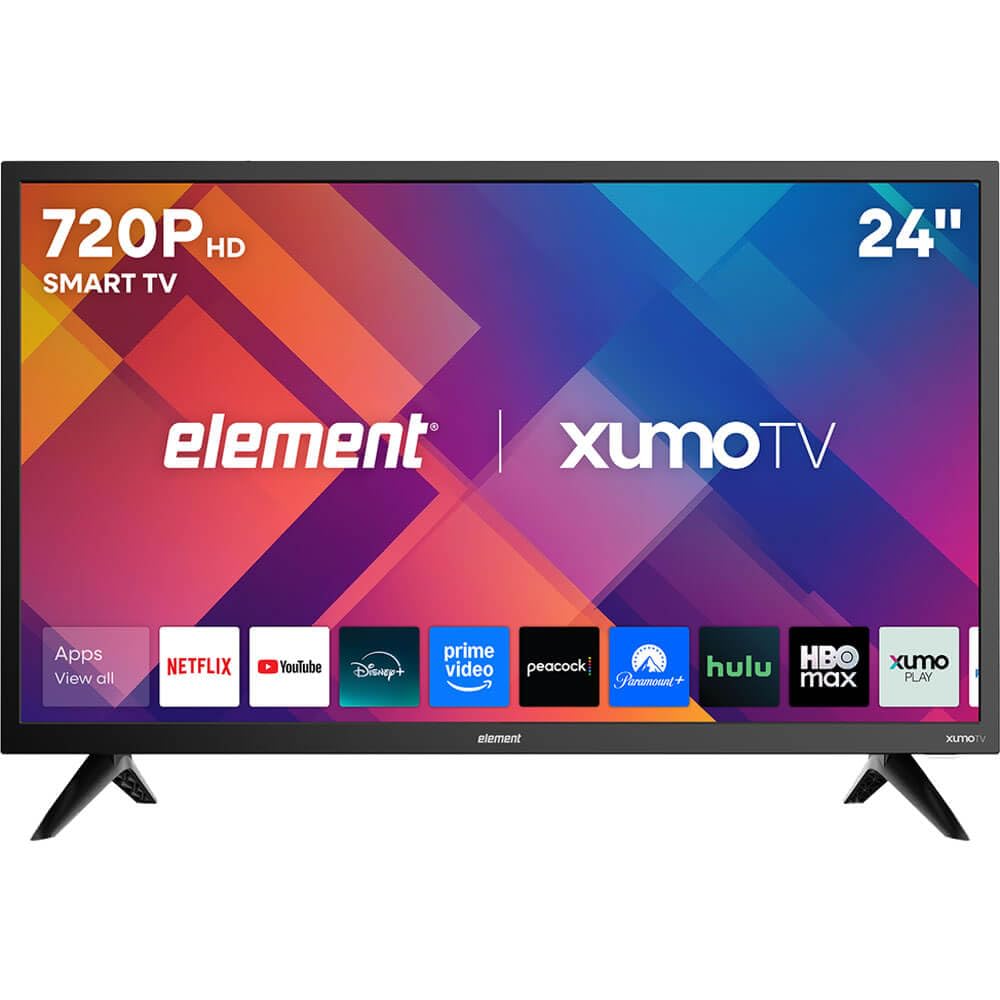
4. Element E300AE40CG 40″ Genesis Series
A rare beast in the budget zone: a 120 Hz refresh rate that makes sports and action look fluid without the stutter.
This Element is the dark horse of the list because it offers a 120 Hz refresh rate, which is a massive upgrade over the standard 60 Hz you find everywhere else. This is a big deal for watching fast-moving sports, high-octane action movies, or playing console games—the motion is simply smoother and less blurry. Buyers report a very fast response and load time with a handy remote that includes a keypad.
The screen itself is a standard 1080p LED panel with a Direct LED backlight. The trade-off for that refresh rate is the picture quality: owners describe the colors as a bit “washed out” compared to a QLED set, though still perfectly watchable for everyday use. It also features Dolby Audio, which for a budget set, provides surprisingly good sound that “exceeded expectations,” as one happy buyer noted.
Where this TV stumbles is its operating system. The Xumo platform has been a source of frustration for some. A number of owners mention that the Xumo startup site had technical issues, preventing them from even completing the initial setup. If you buy this TV for its 120 Hz screen, be prepared that the smart interface might be buggy—you can always add a streaming stick if needed.
The Killer Feature
- The 120 Hz refresh rate provides much smoother motion for sports and gaming than the standard 60 Hz found on other budget sets.
- Built-in Bluetooth and Apple AirPlay make it easy to stream audio and video directly from your phone.
- Dolby Audio delivers decent built-in sound that often exceeds expectations for a budget TV.
The Catch
- The Xumo smart platform is the least reliable of the bunch, with reports of technical issues blocking setup and a less refined app store.
- The standard LED screen has “washed-out” color and resolution compared to the richer Hi-QLED sets on this list.
Pick this for: sports fans or gamers on a strict budget who need a 120 Hz refresh rate and are okay with a less-polished smart system.
Pass if: you want a simple, reliable smart TV from the start — the Xumo OS issues make the Hisense or Amazon Ember a safer choice.
5. FPD 40-inch Smart TV (CG40-P3)

The Google TV champion with HDR10 support, giving you modern smart features and a sharp picture at a great price.
If you prefer Google’s ecosystem over Roku or Fire TV, this is your pick. The FPD runs Google TV, which offers a highly personalized home screen with recommendations from all your subscribed apps. It supports HDR10, which means it can handle a wider range of brightness and color than a standard HDTV, resulting in more dynamic-looking movies and shows. The 1080p resolution is crisp, and the contrast ratio of 5000:1 helps blacks look deeper.
Owners are very happy with the beautiful sound and quick setup. You get a Google Assistant voice remote for hands-free navigation, and Chromecast is built right in, so you can cast content from your phone instantly. With two HDMI 1.4 ports and two USB 2.0 ports, it offers solid connectivity for a soundbar and a game console.
The biggest complaint is the remote control—it is unreliable, working only intermittently. Several customers note you have to use the physical power button on the TV itself to turn it on, and then use a phone app for control once the TV is on. This pretty much defeats the purpose of a smart TV’s convenience. The picture and sound are great, but the remote issue is a genuine hassle that many owners find irritating.
What’s Good
- Google TV interface offers a clean, personalized experience with Google Assistant voice control.
- HDR10 support provides better contrast and color depth than basic 1080p TVs, making movies look more dynamic.
- Built-in Chromecast allows for easy, wireless streaming of content from your phone or tablet to the big screen.
The Flaw
- The included remote control is very unreliable, often failing to respond or work at all, forcing you to use the TV’s physical button or a phone app.
- Some reviewers point out a slow setup process and occasional connectivity issues with the remote, leading to frustration.
Choose this if: you are deep into the Google ecosystem, use Android phones, and primarily control your TV via voice or your phone.
Avoid it if: you want a simple, reliable remote control that just works — the spotty remote is a constant point of user frustration.
6. INSIGNIA 40″ Class F40 Series

The super popular entry-level Fire TV that balances a sharp picture and DTS Virtual:X sound with a rock-bottom price.
The Insignia F40 is among the most-reviewed TVs in this category, and for good reason: it delivers a solid 1080p Full HD picture, built-in Fire TV with Alexa, and DTS Virtual:X sound that creates a more rich audio experience from the TV’s speakers. It is incredibly easy to set up, and owners love the sharp, clear picture and vivid color. The size is perfect for a bedroom, and the voice remote works smoothly to search across apps.
With 2 HDMI ports, a USB port, and a digital optical output, you can connect a soundbar, game console, and a streaming device without needing a switcher. The parental controls are a nice touch for families, blocking content based on ratings.
The catch is reliability. A significant number of shoppers say issues, like the TV “glitching” and making a weird noise before restarting after about 30 minutes of use. The most common complaint is about stability — with a very high negative count for that aspect — and the sound quality is polarizing, with many calling it too low or crackly. While many units are perfect, a worrying percentage has defects.
The Good Side
- DTS Virtual:X sound creates a wide, three-dimensional soundscape that sounds bigger than the TV’s small speakers.
- Sharp and clear 1080p picture with good color reproduction at a very low entry price.
- Fire TV platform with Alexa is feature-rich and offers access to the entire Amazon ecosystem.
The Risky Side
- Reliability is a major concern — a high number of buyers report units glitching, making noise, or failing after 30 minutes of use.
- Sound quality is a mixed bag; many find it adequate, but a large group reports it being too low or having crackling issues.
Best for: a very tight budget where any picture and smart features are better than none, and you are willing to gamble on a relatively new unit.
Be cautious if: you need a TV that you can rely on for years — the high number of defect reports makes the Hisense options a much safer bet.
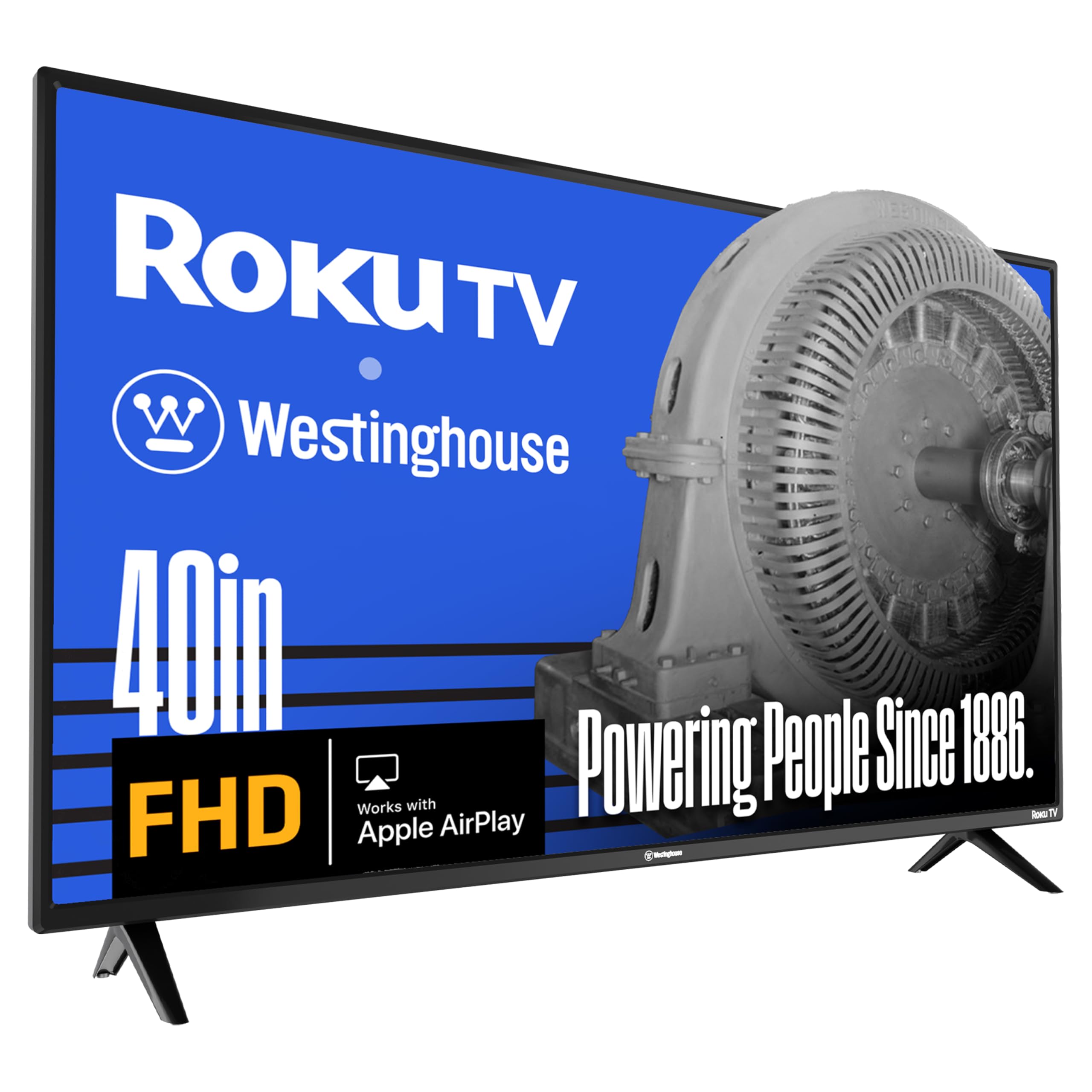
7. Westinghouse 40″ Roku TV
A straightforward 1080p Roku TV with excellent sound for the price and a classic, easy-to-use interface.
If you are looking for a no-frills Roku experience, the Westinghouse delivers. It runs the same popular Roku platform as our top pick, giving you access to thousands of streaming channels and free live TV. The 1080p picture is clear and bright with a 1000:1 contrast ratio, and owners regularly call the picture quality excellent for the money. A standout surprise is the sound — praised as “outstanding” and better than many competitors at this price.
It is compatible with Apple AirPlay 2, Google Assistant, and Alexa, so you can use whichever voice assistant you prefer.
The dark cloud over this Westinghouse is reliability. A concerning number of owners mention the TV completely dying within four months of purchase — a “black screen” after just one day is a recurring complaint. The remote control also gets mixed feedback, with some finding it unresponsive. For the price, the picture and sound are great, but the risk of early failure is the highest on this list.
What You Get
- Excellent sound quality for a budget TV, often described as “outstanding” by owners, making dialogue clear.
- Solid connectivity with 3 x HDMI inputs, giving it an edge over the 2-port competition for complex home setups.
- Full Roku TV platform with Apple AirPlay 2 and multi-assistant compatibility (Alexa, Google).
The Biggest Risk
- Reliability is a significant concern, with multiple reports of the TV losing the screen completely (black screen) within days or months of purchase.
- The remote control is a weak point, with owners reporting mixed feedback on its overall responsiveness and build quality.
Ideal for: a secondary TV in a guest room or workshop where its great sound and picture are a boon, and its potential lifespan is less critical.
Not for: a primary living room TV where you need guaranteed long-term reliability — the Hisense Roku model is a much safer investment.
8. Westinghouse 43-inch 4K UHD Xumo TV
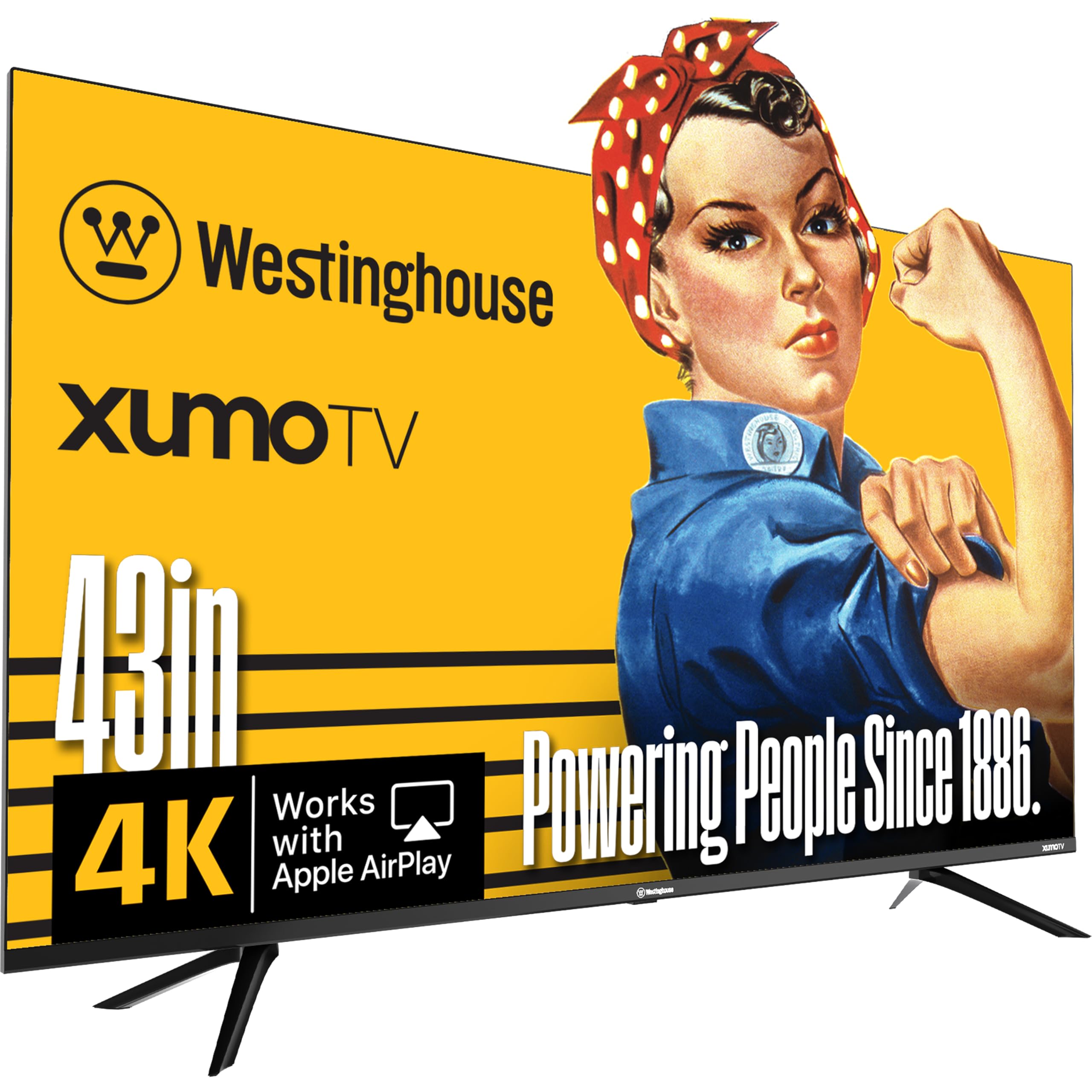
A surprising 4K entry with Dolby Vision and Dolby Atmos that offers a premium viewing experience at a mid-range price.
Most budget lists are capped at 1080p, but this Westinghouse breaks the mold with a 43-inch 4K UHD display. It delivers four times the resolution of HD, making details razor-sharp. It also supports Dolby Vision HDR and HDR10+, which adjust the brightness and contrast scene-by-scene for a much more dynamic and cinematic look. The built-in speakers are surprisingly good, with one owner describing the stereo separation as better than some soundbars.
It runs the Xumo Play platform, which offers over 350 free live channels and 70,000 on-demand movies and shows — no subscriptions needed. You get a voice remote for universal search, Bluetooth 5.1 for wireless audio, and Apple AirPlay for casting from your iPhone. With 3 HDMI inputs and a USB port, you can connect your gaming console and soundbar easily.
The Xumo operating system, while free, is slower than Roku or Fire TV, and some owners worry about its long-term support and potential to become obsolete. The remote control and connectivity are also a mixed bag — some work great, others have issues. The most severe risk is screen damage during shipping; a single but effective complaint notes receiving two units with cracked screens.
The 4K Advantage
- True 4K UHD resolution combined with Dolby Vision and HDR10+ for a vastly superior picture to any 1080p model.
- Excellent built-in speakers that often surprise viewers with their sound quality and stereo separation.
- Apple AirPlay 2 and Bluetooth 5.1 for versatile wireless streaming from phones, tablets, and headphones.
The Compression
- The Xumo operating system is slower than Fire TV or Roku, and its future app support is questionable.
- Remote control and connectivity are inconsistent, with some users reporting pairing and responsiveness problems.
Best for: the buyer who absolutely wants 4K resolution and Dolby Vision on a tight budget and is willing to accept a slower smart platform.
Stay clear if: you need a fast, reliable smart experience — the Xumo OS and its potential obsolescence are genuine drawbacks.
9. TOSHIBA 43″ Class M450 Series QLED 4K
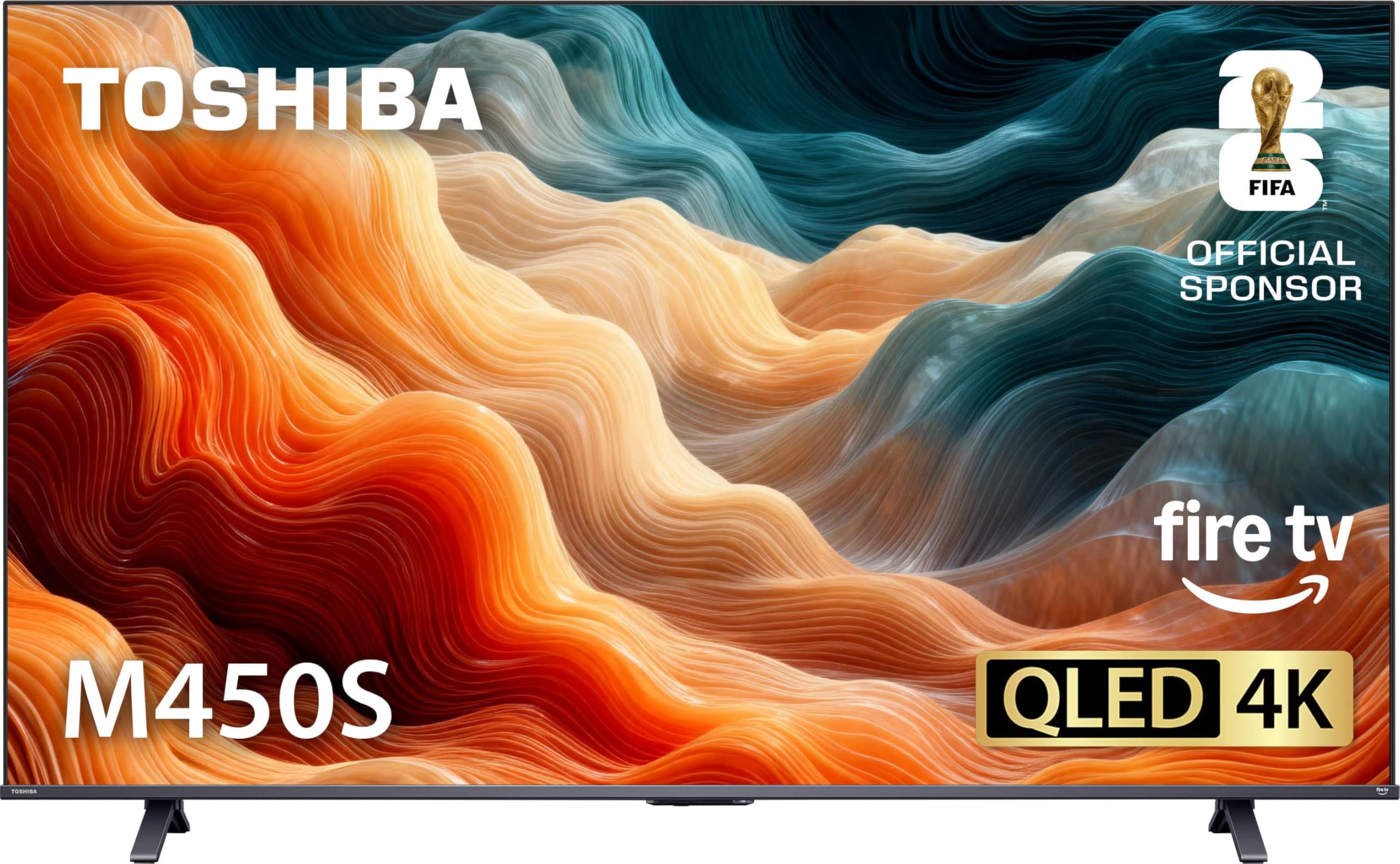
The highest-spec panel here, with QLED 4K, Dolby Vision, and gaming-friendly features like ALLM and VRR.
This Toshiba is the premium outlier. It packs a QLED 4K panel, which delivers the richest, most lifelike color of any TV on this list. It is powered by the REGZA AI Engine ZRi Gen3, which fine-tunes the picture to look more natural and detailed. You also get Dolby Vision and HDR10+ for dynamic contrast, and Dolby Atmos for a three-dimensional sound experience. This is a genuinely good TV, not just a good “budget” TV.
For gamers, it is a revelation. It supports Auto Low Latency Mode (ALLM) and Variable Refresh Rate (VRR), which sync the screen with your console to eliminate screen tearing and stuttering. The “sharp picture and sound” are consistently praised by owners, who find the setup simple and the value exceptional. The REGZA Power Audio with ‘clear direct speakers’ provides a well-balanced sound that fills a small room.
The biggest caveat is the Fire TV interface. While it offers great features, some owners find it “sluggish and unintuitive” compared to Roku. The reliability is also a mixed bag — a few users report WiFi connectivity issues or a buggy initial setup where the remote fails to connect. It is the best picture on the list, but it is not the most user-friendly.
Top Tier Specs
- QLED 4K panel with REGZA AI Engine provides the best color accuracy and picture detail on this list by a wide margin.
- Supports ALLM (Auto Low Latency Mode) and VRR (Variable Refresh Rate) for a smooth, stutter-free gaming experience.
- Dolby Vision HDR and Dolby Atmos sound create a true cinematic experience that rivals much more expensive TVs.
The User Experience
- The Fire TV interface is not as smooth as the Roku experience; some users find it sluggish and the initial setup confusing.
- Reliability is mixed, with a noticeable number of owners reporting WiFi connectivity problems and remote pairing issues.
Choose this for: the best possible picture and gaming features — this is the screen for a primary bedroom or family room where you watch 4K movies or play on a PS5/Xbox.
Pass on it if: you want the simplest, most reliable smart TV from the start — the Hisense Roku is easier and more reliable for daily use.
Understanding the Specs
Refresh Rate (Hz)
The refresh rate, measured in hertz (Hz), tells you how many times per second the TV screen refreshes the image. A standard 60 Hz rate is perfectly fine for movies, TV shows, and YouTube. A higher 120 Hz rate, which is rare at this budget, makes fast-paced content like sports and action games look smoother and less blurry. It reduces that stuttery feeling you get on a 60 Hz screen during a panning shot of a football game.
Hi-QLED / QLED
QLED stands for Quantum Dot LED. It is a special layer of nano-sized crystals inside the screen that produces purer, more vibrant colors than a standard LED backlight. Hi-QLED is Hisense’s name for this same technology. It means the TV can show a much wider range of colors, making a red apple look more vividly red and a sunset look deeper. It is the biggest single upgrade in picture quality you can get for a modest price increase.
HDR (High Dynamic Range)
HDR formats like HDR10, HDR10+, and Dolby Vision tell the TV how to handle the brightest whites and the darkest blacks in a scene. A TV with HDR support can show more detail in shadows (like a detective hiding in a dark alley) and more clarity in bright highlights (like sunlight glinting off a car). Dolby Vision is the most advanced standard, adapting the picture scene-by-scene for the best look.
Smart TV Platform
This is the operating system of your TV — the interface you use to launch apps like Netflix, Hulu, or Prime Video. The main ones are Roku TV (known for being simple and fast), Fire TV (great for Alexa and Amazon content, but can be slower), Google TV (highly personalized, good for Google Assistant), and Xumo (free, but has the least reliable apps and support). The platform is as important as the picture quality for your daily experience.
FAQ
What is the difference between a 60Hz and a 120Hz refresh rate in a budget 40-inch TV?
Is a 1080p HD TV good enough for a 40-inch screen, or do I need 4K?
Does a budget 40-inch TV need a soundbar?
Which smart TV platform is the most reliable and easiest to use?
Can I use a budget 40-inch TV as a computer monitor?
How important is HDMI ARC for a budget TV?
What is the difference between standard LED and QLED in a TV?
How long should a budget 40-inch TV last?
Is the Hisense 40QD4SR (Roku) better than the 40QD4QF (Fire TV)?
Can I watch free TV on a budget 40-inch smart TV without cable?
Final Thoughts: The Verdict
For most buyers, the best budget 40 inch tv is the Hisense 40-Inch QD4SR (Roku) because it delivers the most impressive Hi-QLED picture quality and the most reliable, user-friendly Roku smart platform for a price that is tough to top. If you want the same great picture with Alexa voice control, grab the Hisense 40QD4QF (Fire TV). And for those who need 4K resolution and gaming features, the TOSHIBA 43″ M450 QLED is the one to reach for, even if it requires a bit more patience with the Fire TV interface.
How We Picked
We do not accept paid placement. Every pick is matched to a real buyer and a real use-case; we do not hands-on test units.
Sources & Methodology
Specifications: manufacturer listings and product documentation. Review insights: verified customer reviews, as of July 2026. Pricing: not shown on this page (it changes often); check the current price via the retailer link.
As an Amazon Associate, FitlyFast earns from qualifying purchases. This does not affect which products we feature.