
Our readers keep the lights on and the weekend projects moving. As an Amazon Associate, I earn from qualifying purchases.
Specs are compiled from manufacturer listings and verified buyer reviews and can change over time — please confirm the key details on the product page before buying.
You want a drone that won’t end up in a tree or a neighbor’s yard on your first flight. The real battle for a beginner isn’t about specs — it’s about finding a model with safety nets like auto-return and altitude hold that forgive your shaky thumbs. This guide breaks down nine budget-friendly options, focusing on which features actually prevent crashes and which ones are just marketing noise.
I’m Rikta — the founder and writer behind FitlyFast. This guide is built by comparing the manufacturers’ published specifications and the patterns across verified customer reviews, so you get each pick’s real strengths and trade-offs instead of marketing spin.
We’ve matched every drone to a specific beginner scenario, from indoor practice to outdoor adventure, so you can pick the right budget drone for beginners with confidence and get flying the same day it arrives.
Our Picks at a Glance


How To Choose The Best Budget Drone For Beginners
The smartest way to pick a first drone is to shop for the safety features that will save your investment, not just the camera spec on the box. A beginner drone should forgive mistakes, hover steadily when you let go of the sticks, and know how to come home if the signal drops.
GPS and Auto-Return Are Your Insurance Policy
This is the single biggest decision you’ll make. A drone with GPS can lock its position in the sky and automatically fly back to you when the battery is low or the signal is lost. Without it, you’re relying purely on your own reflexes and the wind. For a first drone, a geo-fenced model with a return-to-home button is worth the small price premium because it prevents the heartbreaking fly-away that ends most beginner drone stories.
Flight Time: What the Number Really Means
A listing might say “32 minutes,” but that’s almost always the total across two batteries, not one. You typically get 10 to 16 minutes of actual flight per battery. Budget for two batteries minimum and a charging habit — you’ll want to buy a spare set early so your practice sessions aren’t cut short.
Camera Quality vs. Flying Experience
On a budget drone, the “4K” label often means the camera can capture a 4K still photo but records video at a lower resolution. The bigger question is whether the camera is mounted on a stabilized gimbal or just fixed to the body. For a first drone, prioritize stable hovering and easy controls over the camera spec — a shaky camera that captures 4K is less fun than a stable one that captures crisp 1080p.
Quick Comparison
| Model | Best For | Flight Time | Camera | GPS Return | Amazon |
|---|---|---|---|---|---|
| BLINORY HK55★ Best Overall | Best Overall Safety Nets | 32 mins (2 batteries) | 2K HD | Yes | Amazon |
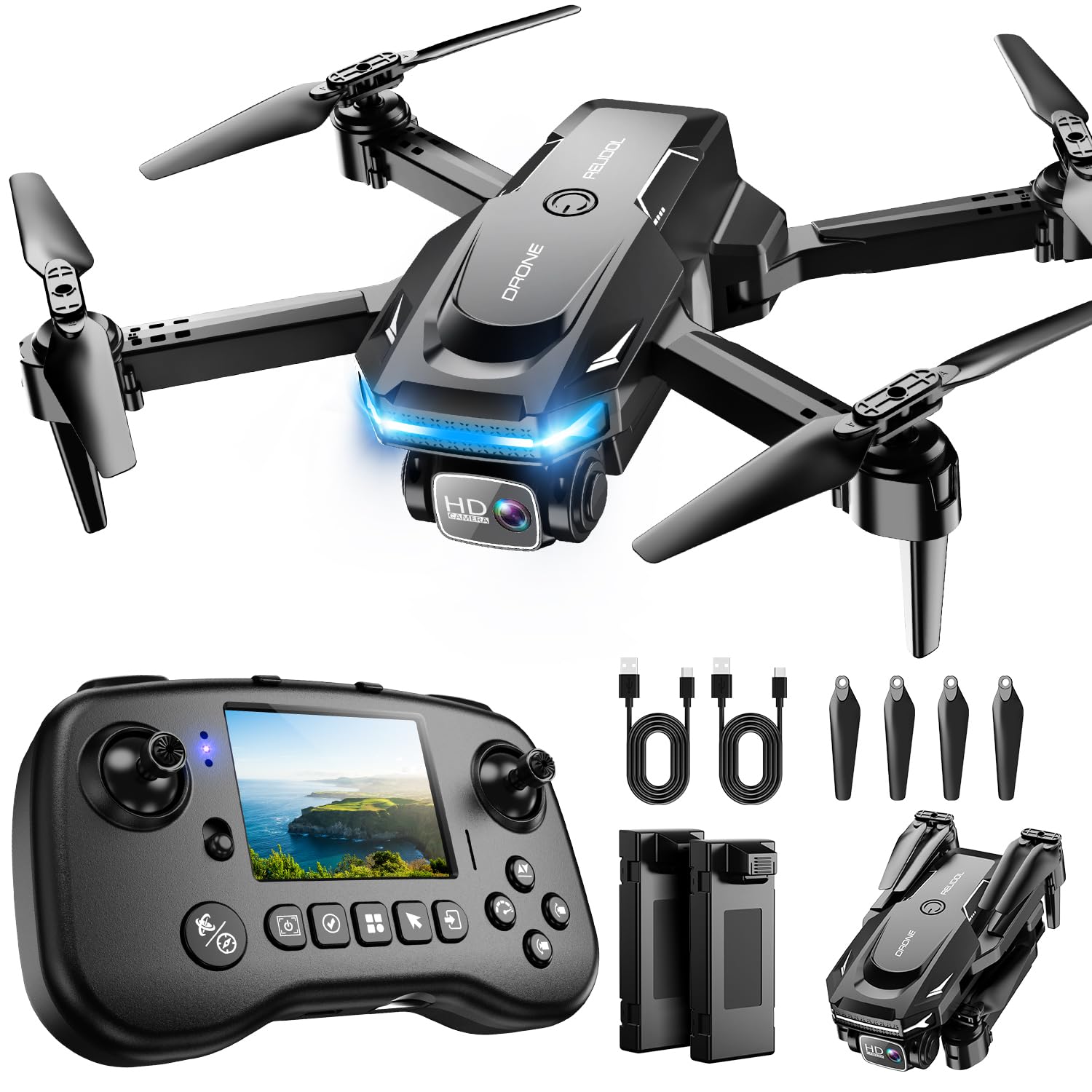
| RELIDOL PK01Screen-on-Remote | Screen on Controller | 25 mins (2 batteries) | 1080P HD | No | Amazon |
| Holy Stone HS420Pocket Fun | Indoor Pocket Play | 3 batteries | 1080P HD | No | Amazon |
| JSDOOGOO G818 | 4K Camera on a Budget | 32 mins (2 batteries) | 4K / 110° | Yes | Amazon |
| Holy Stone HS110D | Proven Track Record | 20 mins (2 batteries) | 1080P / 120° | No | Amazon |
| MSMV 4K HD | Gift for Kids | 2 batteries | 4K HD | No | Amazon |
| Ameta S20 Lite | Premium Beginner Experience | 36 mins (2 batteries) | 4K UHD (12MP Sony) | No | Amazon |
| WeFone WF31 | Longest Flight Time | 50 mins (2 batteries) | 4K / 100° | Yes | Amazon |
| Hocany HK99 | Long-Range Video Feed | 48 mins (2 batteries) | 4K / 110° | Yes | Amazon |
In-Depth Reviews
1. BLINORY HK55 GPS Drone
GPS auto-return brings the HK55 home automatically when the signal drops or battery runs low, so your first flight stays safe.
You get confidence from the HK55’s GPS auto-return (a system that uses satellite positioning to fly the drone back to you automatically). If you lose signal or the battery runs low, it comes back to you instead of drifting away — so your first flight stays fun, not nerve-wracking. The camera is 2K (about 2560×1440 pixels, sharper than standard 1080p HD), and it’s clear enough for beginners. You can also tilt the lens down 90° electrically, so you get that classic top-down aerial view without banking the whole drone.
Owner feedback is consistently positive across every major category, with quality being the thing that wins people over. The brushless motors stay quiet and smooth compared to cheaper brushed alternatives.
The catch is the app. Buyers report the “HK55 DRONE GO” app can lag slightly during live video, and strong wind will push this lightweight bird around. But for learning, it handles light breezes fine and the included carrying case makes it easy to take to an open field.
GPS precision pick
- GPS auto-return prevents fly-aways — the #1 beginner fear
- 2K camera with electric tilt gives you sharp shots
- Two batteries: 32 minutes total flight
battery life watch
- App video feed can lag when you’re far away
- Light weight means wind affects hovering
smart start: Perfect for anyone who wants a real GPS drone with return-home safety and a decent camera for learning.
fair warning: If you plan to fly in strong coastal winds, you’ll want a heavier drone that can hold its position.
2. RELIDOL PK01 Drone with Screen
No phone required — watch your live HD feed right on the remote in your hands.
This is the drone for people who don’t want to fiddle with a phone mount or an app just to see what the camera sees. The PK01’s remote has a built-in screen that displays live HD footage and flight stats the moment you power up, making it the most straightforward FPV (first-person view) experience on this list. The 1080P camera with an 80° adjustable lens is solid for checking your roof or grabbing a quick selfie from the sky.
For a beginner, the 30-meter maximum range is a deliberate limitation — it keeps you close enough to stay safe while you learn. Owners mention it’s “easy to use, the quality is great, and it works very well. The camera and features are really nice, and it is fun to fly.” Two batteries give you 25 minutes of flight, and the built-in emergency stop plus propeller guards add a layer of safety for younger pilots.
The trade-off is that you need an SD card to save photos and videos — one isn’t included. And with no GPS, there’s no auto-return; you’ll need to bring it back yourself every time. That’s fine for a learning drone, but it requires more attention than a GPS model.
screen convenience win: The screen on the controller is the standout — it removes the phone-app headache entirely.
range reality check: Buy an SD card on day one, and add a spare battery for longer sessions.
3. Holy Stone HS420 Mini Drone
Toss the HS420 into the air and it stabilizes itself, turning any afternoon into instant fun.
Holy Stone’s HS420 is all about instant fun, and its “Toss to Launch” feature is the perfect entry point for a nervous beginner — you literally toss it in the air and it stabilizes itself. The 1080P camera with a manually adjustable angle captures decent footage for such a tiny flyer, and the altitude hold lets you take your thumbs off the sticks while it hovers in place.
This is the lightest and most portable pick here at just 31 grams, which means it can zip around indoors without worrying about damaging furniture. There are no GPS or return-home functions, so it’s strictly a line-of-sight toy rather than a serious photography tool. The 3 modular batteries are its best feature — you can keep flying while one charges, and you’ll want all three because each battery gives roughly 8 to 10 minutes of flight.
The fun factor is what owners rave about, and it’s genuinely a great value for a quick indoors-and-outdoors play drone for kids or adults who just want to fly, not film. But if you want GPS safety nets for outdoor flights, look at the HK55 instead.
grab this: Quick indoor fun, kids first learning to fly, and anyone who wants a drone that fits in a pocket.
look past it: You need GPS auto-return or a serious camera for outdoor landscape shots.
4. JSDOOGOO G818 GPS Drone
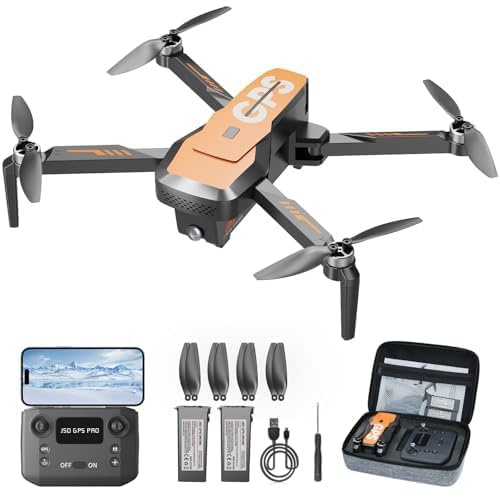
A feature-rich GPS drone that packs 4K video into a beginner-friendly frame.
The G818 challenges the idea that you need to spend a lot for GPS and 4K. It combines a 110° wide-angle 4K camera with a 90° adjustable lens, GPS auto-return, Follow Me, and waypoint flight — the kind of feature list you’d expect on a much more expensive quadcopter. At just 69 grams, it’s light enough to skip FAA registration, making it an easy grab-and-go drone for a family outing.
With two batteries providing up to 32 minutes of flight, you get a full practice session without constantly swapping packs. The brushless motors are quieter and longer-lasting than brushed versions, and the optical flow positioning helps it hover steadily indoors where GPS can’t reach. For a beginner, the one-key takeoff and landing takes the stress out of the trickiest moments.
Here’s the honest trade-off: it has a smaller owner base compared to the list’s veterans, and a couple of owners ran into app instability that made the drone “do her own thing.” The software is still maturing. One reviewer noted they thought it would be bigger — don’t expect a huge quadcopter here, it’s a foldable mini. For the price, it’s a solid first video drone if you’re patient with app quirks.
GPS value choice: Impressive specs per dollar if you’re willing to work through occasional app glitches.
build quality doubt: Anyone who wants a boring, perfectly reliable experience — a more proven model suits you better.
5. Holy Stone HS110D FPV Drone

Tens of thousands of owners learned to fly on this exact model — and it’s still going strong.
With an enormous base of owners backing it, the HS110D is the most battle-tested beginner drone on this list. The 1080P FPV camera with a 120° wide-angle lens gives you a distortion-free view on your phone, and the altitude hold locks its height so you can focus on lining up a shot. Buyers consistently walk away impressed with its video and picture quality.
The HS110D’s real strength is durability. The plastic body has survived hard crashes and even tree impacts, and the prop guards take the brunt of beginner mistakes. It supports voice control, gesture control, and trajectory flight through the app — all features that make it more forgiving and more fun as you learn.
Two modular batteries give you around 20 minutes of flight, though owners note they often buy extras because each charge goes by quickly. The honest caveat is that it’s a barometer drone — no GPS — so it’s wind-sensitive and won’t return home on its own. It’s also larger than a mini drone, so it’s better for outdoor flying than indoor rooms.
best for: Beginners who want a proven, durable flying lesson that can survive a few hard knocks.
not for: Anyone flying in breezy conditions — without GPS, wind will push it around.
6. MSMV 4K HD Drone

Built with a bendable, crash-resistant body that survives a kid’s first hard landings.
If you’re buying for a child aged 8 to 12, this MSMV drone is designed with forgiveness in mind. Young pilots described it as “sturdy and bendable,” which is exactly what you want from a first drone that will hit walls and trees. The headless mode and one-button return simplify operation dramatically, and the emergency stop gives a parent quick control.
The 4K HD camera records aerial photos and videos that are good enough for a kid’s first drone photography, and the 360° flip stunts reward practice with immediate fun. Two batteries extend the session, and the included carrying case keeps it organized.
Be realistic about expectations: this is a wireless RC toy, not a serious camera platform. Quality feedback is mixed — some units impress, others feel like a toy. Buyers call it a great value, and kids genuinely love it. If your goal is a fun, safe gateway drone for a child, this fits the bill.
4K budget option: A sturdy, playful first drone for kids that handles crashes gracefully.
stability issues: You want a GPS-assisted drone that can fly far and return home automatically.
7. Ameta S20 Lite 4K Drone
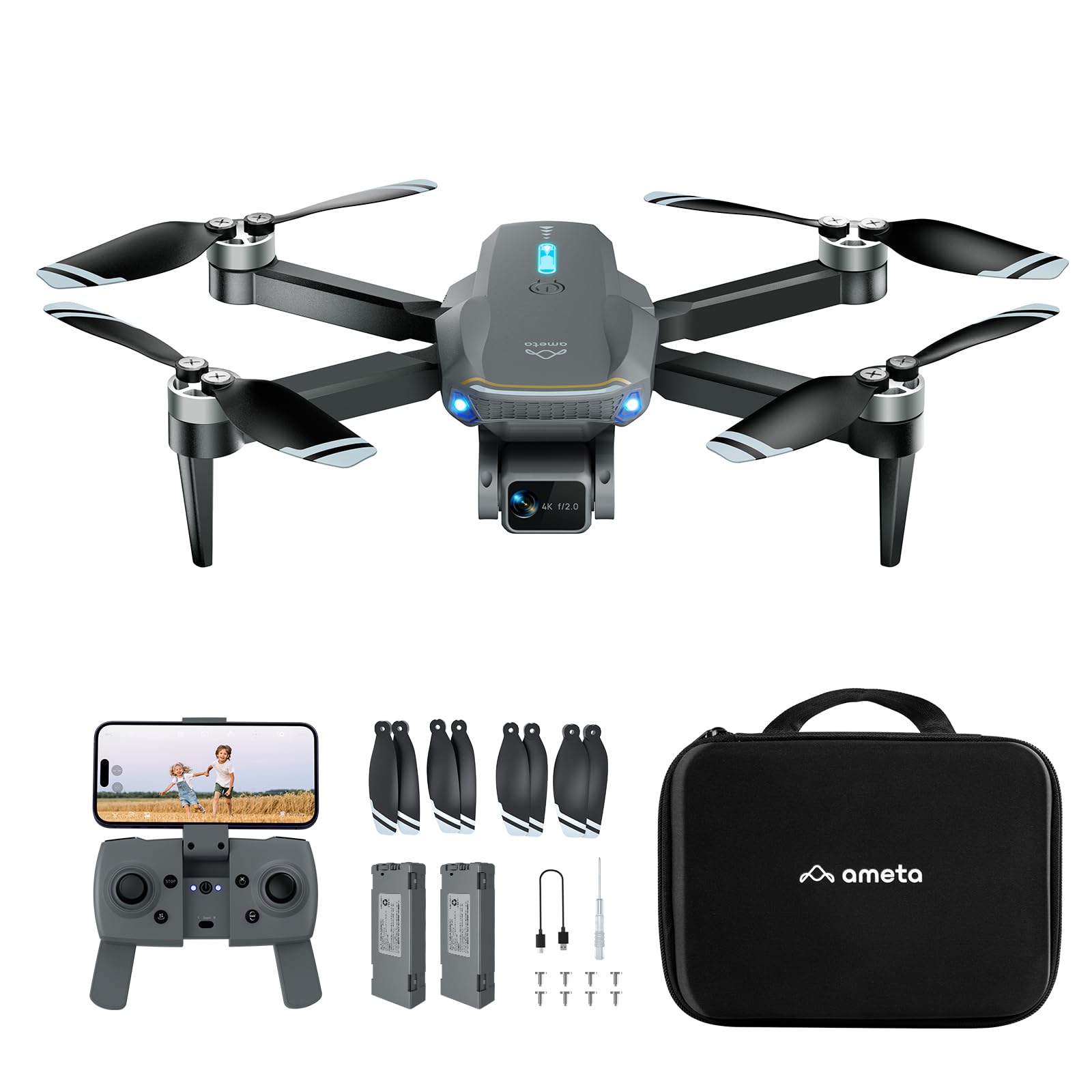
A 12MP Sony sensor and 90° adjustable lens deliver near-professional image quality on a budget.
The Ameta S20 Lite steps up the camera game with a 12MP SONY CMOS sensor and a 90° adjustable lens, capturing 4096 x 3072 resolution images that genuinely impress. The 5G FPV transmission keeps the live video feed smooth with virtually no delay, so you see what the drone sees in near-real-time. For beginners, the beginner mode and optical flow positioning make learning easy.
Two batteries deliver up to 36 minutes of flight, and the built-in buzzer with a “Find My Drone” function is a real lifesaver if you land it in tall grass. The brushless motors keep it stable, and at under 249 grams, there’s no FAA registration needed. The foldable design and carrying bag mean it travels well.
The main caveat: stability feedback is split. Some customers note rock-steady hovering while others call it highly unstable in certain conditions. One owner found the image quality closer to 720p than true 4K. Approach it as a very good camera drone for the price, not a professional tool. Find My Drone and the 36-minute runtime are the standout features for a casual flyer.
reach for: You want the best camera quality on a budget — the 12MP Sony sensor beats most rivals here.
be aware: Read the manual twice; some reviewers point out the drone drifts in zero wind until you set it up.
8. WeFone WF31 GPS Drone
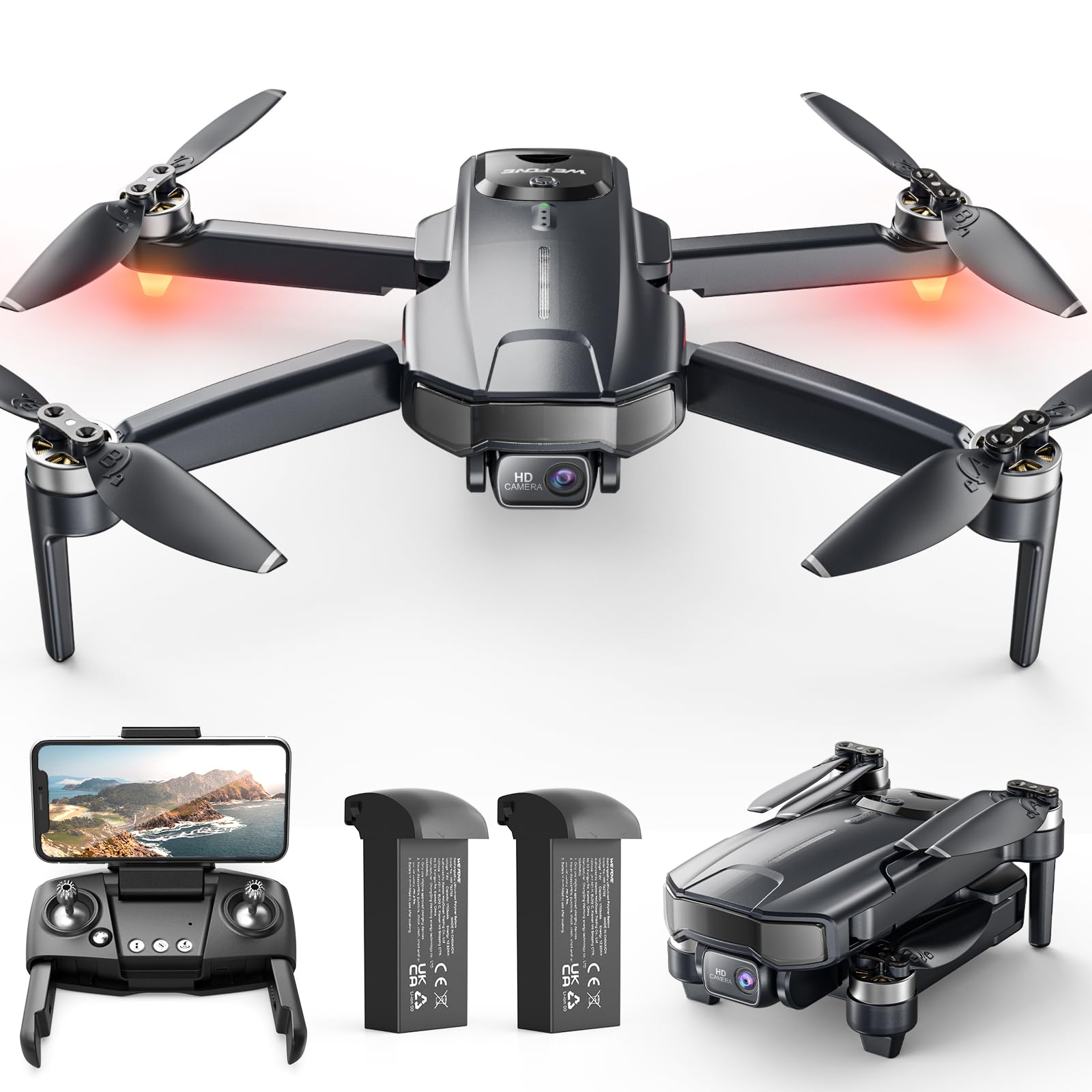
Two batteries deliver 50 minutes of total flight, giving beginners ample practice time per session.
The WeFone WF31 wins on pure endurance, offering up to 50 minutes of flight across two batteries (2 x 25 mins). For a beginner, that extra flight time is everything — it means more practice before you have to sit through a recharge. The 4K camera with a 100° wide-angle and 90° adjustable lens captures crisp footage, and the 5GHz FPV transmission keeps the live feed smooth.
Shoppers say this drone is easy to set up through the app, with beginner and advanced modes to match your skill level. The GPS auto-return, Follow Me, and waypoint flight features rival far more expensive models. The rear leg lights are a thoughtful touch — they flash red and white to indicate direction and mode, so you always know what the drone is doing.
The honest trade-offs: owners say the landing can feel flimsy, with some side-to-side wobble, and the battery charges slowly at around 3 hours for a 20-minute flight. Value for money gets mixed feedback — some say it’s a steal, others say save for a bigger brand. If 50 minutes of airtime per battery set is your priority, this is your drone.
aerial time: 50 minutes of total flight across two batteries is the longest on this list.
know first: Expect a long 3-hour charge cycle and a slightly wobbly landing.
9. Hocany HK99 GPS Drone
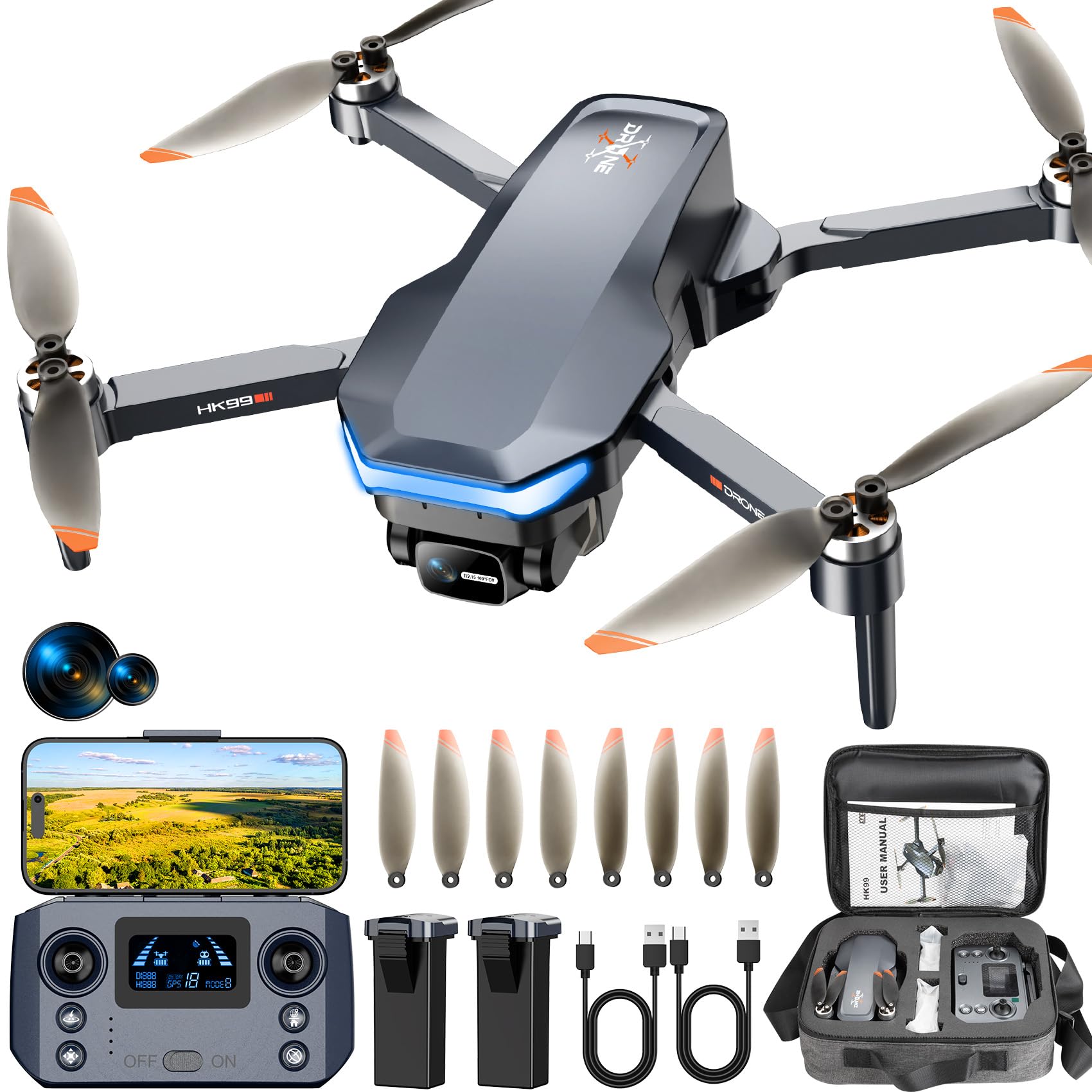
A 1640ft video transmission range lets you fly across open fields or inspect roofs from a safe distance.
If you want to grow without buying a new drone soon, the Hocany HK99 gives you a 1640ft video transmission range (the distance the live video feed stays connected to your remote). That means you can fly across an open field or inspect your gutters and roof from a safe spot on the ground — one owner calls it “practical for roof inspection.” Its 4K camera (about 3840×2160 pixels, four times the detail of 1080p HD) has a 110° wide-angle lens and a 90° adjustable tilt, so you capture broad, clear aerial video without spending much.
Two batteries deliver up to 48 minutes of flight, and the GPS auto-return brings it home when the signal drops or the battery runs low. The gesture mode lets you pose and snap a photo without touching the remote. Buyers specifically praise the beginner mode, which prevents accidental crashes while you build confidence.
The return-to-home system also draws mixed opinions — it works, but you should test it in an open area first. At 248 grams, it’s just under the FAA registration threshold. For the money, it packs premium features into a beginner-friendly package.
range standout: The 1640ft video feed is genuinely useful for roof checks and open-field flying.
reliability gamble: Put the auto-return through its paces near you before relying on it at a distance.
Understanding the Specs
GPS & Auto-Return
GPS (Global Positioning System) lets the drone know exactly where it is and where it took off from. Auto-return means it flies back to that takeoff point if the battery runs low or the signal drops. This is the single most important safety feature for a beginner — it prevents the drone from flying away and getting lost forever.
Brushless vs. Brushed Motors
Brushless motors use magnets to spin without physical contact, making them quieter, more powerful, and longer-lasting than brushed motors. Brushed motors are cheaper but wear out faster and generate more noise. For a first drone, brushless is worth the small price bump because it means smoother, more reliable flights and less chance of a motor dying mid-air.
Flight Time Realities
Listed flight times almost always combine multiple batteries. A drone that says “32 minutes” usually means two 16-minute batteries. Real-world flight is often less due to wind, speed, and camera use. Always plan for shorter sessions than advertised and consider buying spare batteries immediately.
FPV Transmission
FPV (First-Person View) sends a live video feed from the drone’s camera to your phone or remote screen. It’s what lets you see what the drone sees in real-time. Budget drones use Wi-Fi, which has shorter range and more lag than expensive digital systems. A good FPV feed is crucial for lining up shots and flying safely at a distance.
FAQ
Do I need to register a beginner drone with the FAA?
What does auto-return actually do if I lose signal?
How long does a beginner drone battery really last?
Is a 4K camera worth it on a budget drone?
What is altitude hold and why does it matter?
What’s the difference between headless mode and normal mode?
Can a beginner drone fly indoors?
Should I get a drone with a screen on the controller or use my phone?
What’s the real difference between a budget drone and a mid-range drone?
Final Thoughts: The Verdict
Across the board, the budget drone for beginners winner is the BLINORY HK55 because it pairs GPS auto-return with a 2K camera and 32 minutes of flight — the complete beginner safety package. If you want the simplest experience with a screen on the remote, grab the RELIDOL PK01. And for the longest airtime at the best value, the WeFone WF31 with its 50-minute total flight is the one to reach for.
How We Picked
We do not accept paid placement. Every pick is matched to a real buyer and a real use-case; we do not hands-on test units.
Sources & Methodology
Specifications: manufacturer listings and product documentation. Review insights: verified customer reviews, as of August 2026. Pricing: not shown on this page (it changes often); check the current price via the retailer link.
As an Amazon Associate, FitlyFast earns from qualifying purchases. This does not affect which products we feature.