
Our readers keep the lights on and the weekend projects moving. As an Amazon Associate, I earn from qualifying purchases.
Specs are compiled from manufacturer listings and verified buyer reviews and can change over time — please confirm the key details on the product page before buying.
You need a budget monitor for graphic design that shows accurate colors — not a different palette on someone else’s screen. The real challenge is a panel that gives you true color, sharp detail, and enough working space, without draining your project budget on features you will not use for design.
I’m Rikta — the founder and writer behind FitlyFast. This guide is built by comparing the manufacturers’ published specifications and the patterns across verified customer reviews, so you get each pick’s real strengths and trade-offs instead of marketing spin.
Whether you edit photos, build vector illustrations, or lay out a brochure, the right display makes the difference between guessing and knowing. These budget monitors for graphic design deliver accurate color and sharp detail without breaking your budget.
Our Picks at a Glance


How To Choose The Best Budget Monitor For Graphic Design
Choosing a budget design monitor requires prioritizing color accuracy and panel type over extra features. Focus on color gamut, panel type, and resolution to ensure your on-screen work matches the final output.
Color Accuracy and Gamut
Color accuracy is the most critical specification for graphic design work. Look for a monitor that covers at least 100% of the sRGB color space — sRGB is the standard for most web and digital work. A wider gamut like DCI-P3 (commonly used for video and high-end print) is a bonus, but full sRGB coverage is the baseline you need. A Delta E (a measurement of color drift from the true standard) of less than 2 means your monitor is extremely accurate from the start, so what you see is what you get.
Panel Type
An IPS panel is the standard for graphic design due to consistent color and wide viewing angles. It gives you consistent brightness and color across the entire 178-degree viewing angle, so you do not get washed-out colors when you lean back or look from the side. VA panels (Vertical Alignment) may have deeper blacks, but they shift color and contrast when viewed off-center, which is a problem for design work.
Resolution and Screen Size
A 4K UHD (3840 x 2160) resolution on a 27-inch monitor gives you a high pixel density — about 163 pixels per inch — so you see fine details without pixelation. This makes editing small text and high-res photos far more comfortable. A 27-inch screen provides ample space for toolbars and palettes alongside your canvas in a single-monitor setup.
Quick Comparison
| Model | Best For | Resolution | Color Gamut | Stand Adjustability | Amazon |
|---|---|---|---|---|---|
| Samsung ViewFinity S7★ Best Overall | Best Overall Color Value | 4K UHD | 99% | Tilt Only | Amazon |
| ViewSonic VA2756-4K-MHDBright & Sharp | Brightness & Clarity | 4K UHD | 93% | Tilt Only | Amazon |
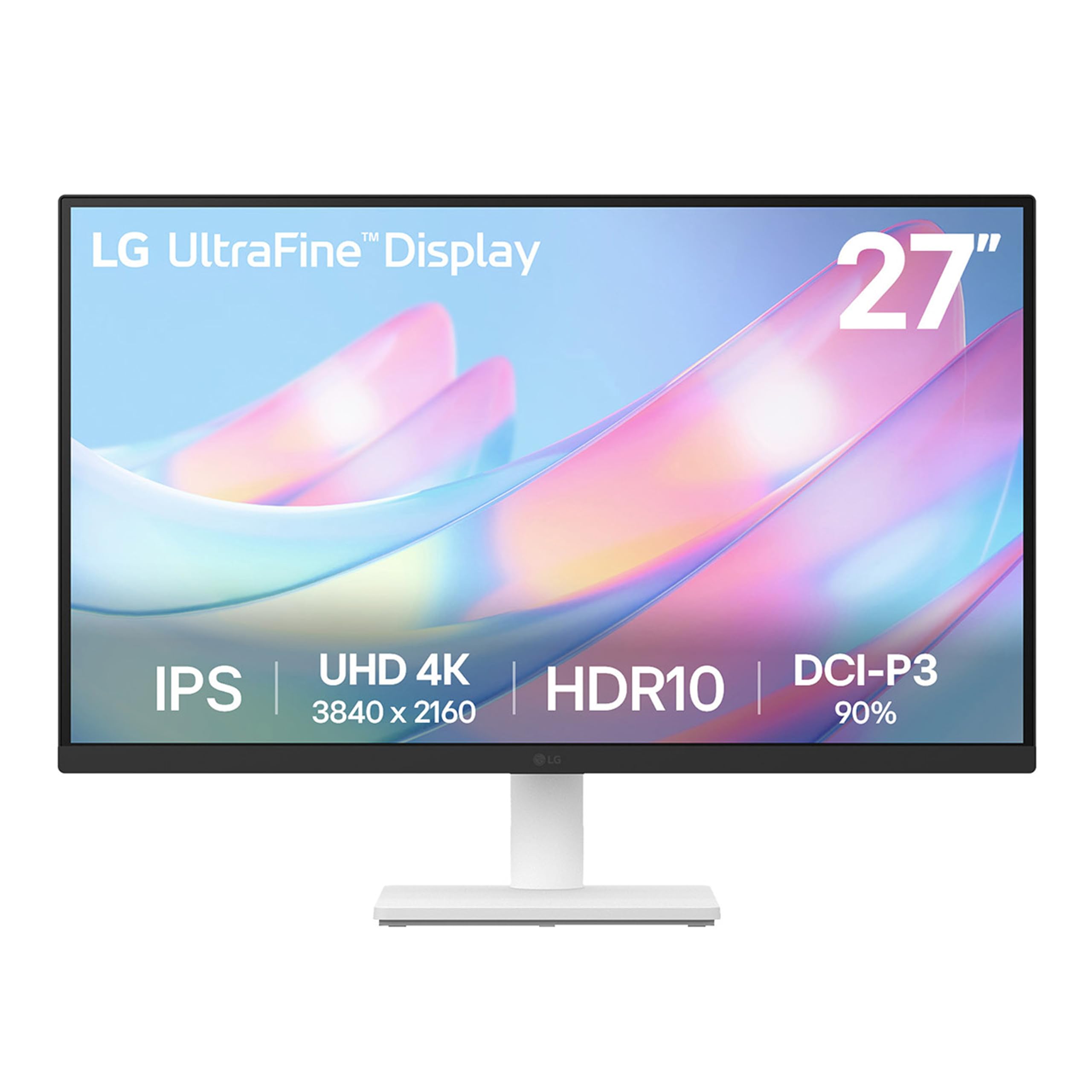
| LG 27US500-WBudget Champion | Budget 4K Starter | 4K UHD | 90% DCI-P3 | Tilt Only | Amazon |
| LG 27UP650K-W | Best Adjustability | 4K UHD | 95% DCI-P3 | Height/Pivot | Amazon |
| ASUS ProArt PA278CV | Reliable Pro Standard | QHD | 100% sRGB | Full Ergonomic | Amazon |
| Dell S2725QS | High-Refresh 4K Design | 4K UHD | 99% sRGB | Height/Pivot | Amazon |
| Dell S2725QC | USB-C Simplicity | 4K UHD | 99% sRGB | Height/Pivot | Amazon |
| ASUS ProArt PA279CV | Top-Tier 4K Color | 4K UHD | 100% sRGB | Full Ergonomic | Amazon |
In-Depth Reviews
1. Samsung 27″ ViewFinity S7 (S70H)
The Samsung ViewFinity S7 delivers 99% sRGB accuracy at a budget-friendly price.
The ViewFinity S7 covers 99% of the color gamut, making it a top choice for budget-conscious designers. This means the greens, reds, and blues you choose in Photoshop or Illustrator will look the same when you export them, which is vital for web and digital design. The 4K UHD (3840×2160) resolution on a 27-inch IPS panel gives you crisp text and fine detail, so you can edit high-resolution photos without constantly zooming in.
The 178-degree wide viewing angle keeps brightness and color stable when you lean sideways to show a colleague your work. It also features TÜV-certified Eye Comfort technology with an Eye Saver Mode that reduces blue light to prevent eye strain during long sessions. The main trade-off is the stand — it only offers tilt, with no height, swivel, or pivot adjustment. The rear joystick control is awkward to reach, but buyers report it does have a 3.5mm headphone jack. It includes DisplayPort and HDMI ports, plus VESA mount compatibility for an aftermarket arm.
Buyers consistently praise the “excellent brightness, contrast, and text clarity,” with one calling it a “beautiful little 4K monitor” thanks to its “excellent color and clarity.” The fixed stand is the recurring weak point — plan to use a VESA mount from day one.
What Wins Designers Over
- Near-perfect 99% color gamut for accurate design work
- Sharp 4K UHD resolution on a 27-inch IPS panel
- TUV-certified eye care for all-day comfort
The Physical Compromise
- Stand is tilt-only with no height or swivel adjustment
- Rear joystick control is awkward to reach
- No built-in speakers
Best for: Designers who want the most accurate sRGB color possible without paying a premium, and who can mount the monitor on an arm for better ergonomics.
2. ViewSonic VA2756-4K-MHD 27 Inch 4K Monitor
A bright 4K panel at 400 nits that makes HDR content pop — noticeably brighter than the 300-nit Samsung ViewFinity S7 above.
With a brightness of 400 nits (a measure of screen luminance), this ViewSonic is significantly more luminous than most budget monitors. That extra brightness is a genuine asset in a well-lit room, where it maintains contrast and prevents the image from looking washed out. The IPS panel and a 1200:1 contrast ratio (compared to the 1000:1 on the LG 27US500-W) deliver deeper blacks and richer detail in shadows, which helps when evaluating the dynamic range of your photos or renders.
The SuperClear IPS technology provides consistent color across the 178-degree viewing angle. It also includes built-in speakers, a feature missing from many competitors at this level. The ViewSonic offers “Game,” “Movie,” “Web,” “Text,” and “Mono” presets, and its Blue Light Filter reduces eye fatigue. The catch: the refresh rate is locked at 60Hz at 4K resolution. This is a non-issue for still image work but limiting if you also edit video or game on the side.
Owners say the VA2756-4K-MHD delivers “stunning clarity” and is a “must see” for picture quality. One buyer reports using it at 2560×1440 for “better type size,” noting the display is “sharp” and the HDR10 is “natural.” The recurring note is the 60Hz lock at 4K — it is a pure productivity panel, which is exactly what a designer on a budget needs.
Our Take: The brightest panel in its price class and built-in speakers make this a standout for designers working in bright spaces. skip it if you need a fully adjustable stand, as this only offers tilt.
3. LG 27US500-W Ultrafine Monitor 27-Inch 4K UHD
The cheapest 4K UHD IPS gateway that still delivers wide DCI-P3 color coverage.
The LG 27US500-W is the entry-level champion: it delivers 4K UHD resolution on an IPS panel with a 1000:1 contrast ratio for deeper blacks, all at a very low price point. It is particularly valued by the Linux community — owners mention it fixes font-rendering problems on Ubuntu, where text becomes “perfectly clear and good size” at 200% scaling. That clarity is directly helpful for any designer reading small guide text or code.
The monitor covers up to 90% of the DCI-P3 color gamut (a wider color space than sRGB, used in video production), so it can display more vibrant reds and greens than an sRGB-only monitor. It includes LG’s Onscreen Control software for splitting the screen into zones. The stand, however, is the most common criticism — buyers describe it as “wobbly” and “a bit unstable.” It only offers tilt, and the power adapter has a short 4-foot cable that may require a power strip extension.
The consensus is that image quality and value are undeniable for the entry price. The hardware reliability gets mixed reports — some units reportedly stop working after a month — and one owner calls the connectivity panel a “major con” due to the bulky power brick. The stand is the clear weak link; factor in a VESA mount from day one.
Value Verdict: If your budget is absolute and you need 4K IPS for design, this is the lowest-cost way in. Confirm the wobbly stand is acceptable or plan to replace it with a VESA arm.
4. LG 27UP650K-W 27-inch Ultrafine 4K UHD IPS

The monitor that fixes the biggest frustration of budget models: a fully adjustable stand with 95% DCI-P3 color.
The LG 27UP650K-W steps up with a full ergonomic stand that offers height, tilt, and pivot adjustment — so you can rotate the screen into portrait mode for coding, long documents, or full-page layout design. This is the most important physical difference from the 27US500-W. It uses a 4K UHD IPS panel with a 1200:1 contrast ratio and up to 95% DCI-P3 color gamut coverage, which is a noticeable jump in color vibrancy for creative work.
The monitor is VESA DisplayHDR 400 certified (it meets specific brightness and color standards for high dynamic range content), so it handles HDR content better than standard monitors. The Black Stabilizer feature brightens dark scenes in video content, and Dynamic Action Sync reduces input lag for a responsive feel. It includes both HDMI and DisplayPort cables in the box. The missing features are USB ports and built-in speakers — the design is strictly display-focused.
Buyers praise the “excellent build quality” and “great out-of-box brightness/contrast” with “no adjustments needed.” One reviewer calls it a “great value 4K60Hz HDR10 monitor” and notes the “crisp text, vibrant colors” make it ideal for work. The honest downside is the lack of USB-C connectivity — it uses HDMI and DisplayPort only, which may be an issue for newer MacBooks without a dongle.
Reach for it if: you need a proper fully adjustable stand combined with wide DCI-P3 color coverage. Look elsewhere if: you need a USB-C connection for a single-cable laptop setup, as this model lacks that port.
5. ASUS ProArt PA278CV

A QHD workhorse backed by nearly a thousand owners — Calman verified with 100% sRGB and a 5-year warranty.
The PA278CV is the most trusted budget ProArt monitor. It is Calman Verified and factory-calibrated for Delta E of less than 2, covering 100% of the sRGB and 100% of the Rec. 709 color spaces (Rec. 709 is the standard for high-definition television and video). That consistency is exactly what you need for video editing and print graphics — where a color shift of two degrees means the difference between a correct logo and one that needs fixing.
The 27-inch QHD (2560 x 1440) IPS panel offers a sharp workspace for multitasking. The USB-C port delivers 65W Power Delivery, enough to charge most ultrabooks and laptops while sending display data through a single cable. The ergonomic stand includes a 90-degree pivot for portrait mode, plus tilt, swivel, and height adjustment. DisplayPort daisy-chaining lets you connect up to four monitors for a multi-monitor setup. It also comes with a 5-year warranty (3+2 with registration).
The “picture quality” and “vibrant colors” are the top praises. One buyer calls it a “steal” with “accurate colors and high resolution” for photo and video editing. A MacBook user describes the color accuracy as “perfect” for graphic design. The catch is the 75Hz refresh rate, which is fine for design but not for gaming, and some users would like improved contrast for shadow detail.
Reliable Choice: The safest bet for a designer who wants proven, Calman-verified color accuracy with a single-cable USB-C setup and full ergonomic control. The 75Hz refresh is fine for still work, but video editors should consider the 144Hz PA278CGRV instead.
6. Dell 27 Monitor S2725QS

A 4K monitor at 120Hz — cursor movements and window transitions feel significantly smoother than the 60Hz standard.
Most budget 4K design monitors are locked to 60Hz, but the Dell S2725QS delivers 4K at 120Hz. This means scrolling through a high-res asset library or a long timeline is a more fluid experience. It uses a 4K UHD IPS panel with a 1500:1 contrast ratio, which is a meaningful step up from the common 1000:1 — delivering deeper blacks and a more dynamic image for your designs.
It covers 99% of the sRGB color space, making it suitable for web and digital design. The ComfortView Plus feature reduces harmful blue light emissions to 35% or less without introducing a yellow tint like older blue light filters. The stand offers height, swivel, and pivot adjustments, and the build quality is what Dell is known for. It includes built-in speakers that owners describe as “incredibly loud” — a rare compliment for a monitor.
The image quality and build are the top two most-discussed aspects. One owner calls it an “affordable, bright, crisp 120hz, 4k display!” and highlights the “nice adjustable stand.” The trade-off: the 120Hz refresh rate shows “noticeable ghosting” in fast-paced competitive games due to a higher response time. This is a non-issue for design work.
Our Verdict: The best choice for a designer who wants a fluid high refresh rate with genuine 4K resolution and excellent contrast. it’s not for you if 99% sRGB is not enough and you need wider DCI-P3 coverage for video work.
7. Dell 27 Monitor S2725QC
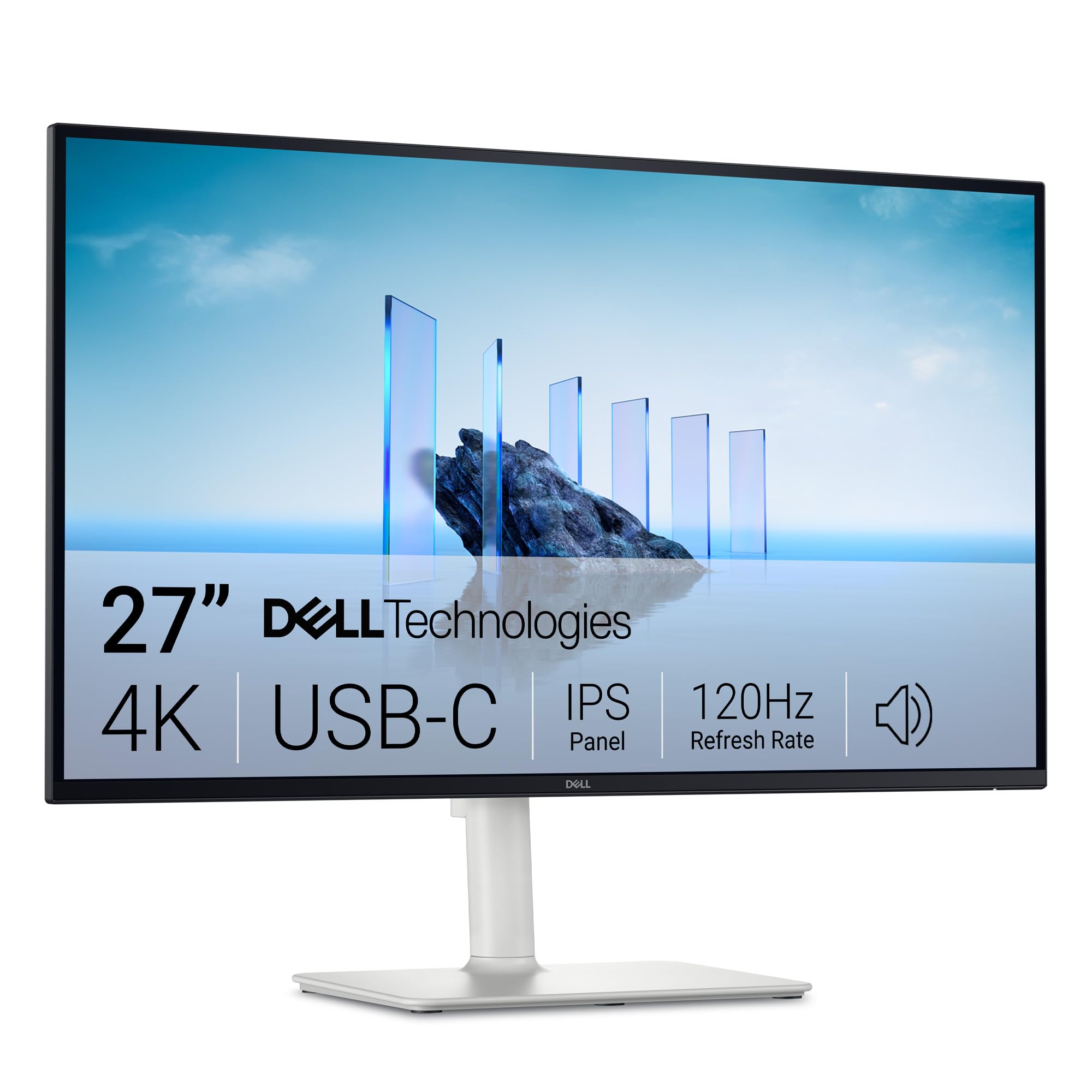
The 4K designer’s hub that cleans up your desk with a single USB-C cable — 4K, 120Hz, and 65W charging in one connection.
The S2725QC shares the core panel with the S2725QS above — 4K UHD (3840×2160), 120Hz, 1500:1 contrast ratio, and 99% sRGB — but adds a major convenience: a USB-C port with up to 65W Power Delivery. You connect your laptop with a single USB-C cable. That cable charges your laptop, carries the 4K display signal, and connects USB peripherals, all without needing a separate dock or hub. This is a direct benefit for anyone using a MacBook or ultrabook.
The panel technology delivers what early owners describe as near-OLED black levels, which is a huge advantage for evaluating shadow detail in your photos or video. The built-in speakers are re-engineered for better sound, and the ComfortView Plus keeps blue light low without a color shift. The stand provides height, swivel, and pivot adjustments for a long editing session. The major difference from the S2725QS is this USB-C functionality.
Reviewers point out this monitor offers “excellent image quality (crisp, great contrast, deep blacks, vibrant color)” and that “USB-C connectivity” is a top feature. One owner calls the setup “smooth with one usb for power, display, and data.” The negative feedback focuses on the control buttons being placed on the back of the monitor — hard to reach — and a slightly wobbly stand that some find just “OK.”
Best for: Laptop-centric designers who want a clean, single-cable desk solution with 4K at 120Hz. The slight stand wobble is the main physical compromise; consider a VESA mount for a rock-solid setup.
8. ASUS ProArt PA279CV 27 Inch 4K UHD

The 4K monitor with Calman verification and factory calibration — so the red of your logo is exactly the red the client will see.
The PA279CV is the 4K big brother of the PA278CV. It provides 4K UHD (3840 x 2160) resolution on a 27-inch IPS panel, giving you the pixel density needed to see every stray pixel in a 20-megapixel photo. It covers 100% of the sRGB and 100% of the Rec. 709 color gamuts, and comes Calman Verified with a factory color calibration report in the box, guaranteeing a Delta E of less than 2. For a graphic designer, that means the red of your logo is exactly the red the client will see.
The USB-C port delivers 65W Power Delivery and acts as a full hub for your peripherals — a single cable connects, charges, and transfers data. It also includes a USB 3.1 hub, DisplayPort, and HDMI. The ergonomic stand supports tilt, swivel, pivot, and height adjustment. It also offers a complimentary 3-month Adobe Creative Cloud subscription, a direct value-add for a creative professional. The 5-year warranty adds long-term confidence.
Owners say the monitor quality and color accuracy are top positive aspects. One describes the 4K color as “excellent for video editing” and another calls it a “perfect set-up with Macbook Pro M1 Max for Graphic Design,” noting it matches the MacBook’s color right from the start. However, some reviews are “MIXED” on power and “NEGATIVE” on connectivity — some units reportedly have USB-C failures, and connectivity can be problematic with Macs. The recurring advice is to verify your connector compatibility upfront.
If you want the best 4K color accuracy on a budget: the PA279CV is the top choice, provided you verify the USB-C compatibility with your system. The power and connectivity reports make it a monitor for the patient professional who can handle an occasional setup quirk.
Understanding the Specs
Color Gamut (sRGB, DCI-P3, Rec. 709)
Color gamut is the range of colors a monitor can display. sRGB is the standard for web and most digital content. DCI-P3 is a wider gamut used in video production and some high-end displays. A higher percentage means more of those color spaces are covered, so your design will look consistent on other devices. For graphic design, aim for at least 99% sRGB. More coverage — like 100% sRGB or a high percentage of DCI-P3 — is even better for video and print.
Delta E (dE)
Delta E is a number that shows how much the monitor’s color can drift from the true standard. A Delta E of less than 2 is considered excellent — the human eye usually cannot tell the difference below that threshold. This means your screen colors will match the final output (printed or on other calibrated monitors). Many design monitors, like the ASUS ProArt line, are factory-calibrated to guarantee a Delta E of less than 2.
FAQ
Can I use a gaming monitor for graphic design?
Is a 27-inch 4K monitor too small for graphic design?
What is the difference between sRGB and DCI-P3 for design?
Do I need a Delta E of less than 2 for my first design monitor?
Can I use a regular monitor for graphic design work?
Is a 60Hz monitor okay for graphic design?
What is DisplayPort daisy-chaining on a monitor?
Should I get a QHD or 4K monitor for graphic design?
What does ‘factory calibrated’ mean for a design monitor?
Can I use a USB-C monitor with a desktop PC?
Final Thoughts: The Verdict
For most people, the budget monitor for graphic design winner is the Samsung ViewFinity S7 — it delivers a rare combination of 99% sRGB color accuracy and 4K UHD resolution at a price that leaves your wallet intact. If you need a fully adjustable stand and a wider DCI-P3 color gamut, grab the LG 27UP650K-W. And for a hybrid workflow that blends smooth 144Hz motion with pro-level color accuracy, the ASUS ProArt PA278CGRV is the one to reach for.
How We Picked
We do not accept paid placement. Every pick is matched to a real buyer and a real use-case; we do not hands-on test units.
Sources & Methodology
Specifications: manufacturer listings and product documentation. Review insights: verified customer reviews, as of July 2026. Pricing: not shown on this page (it changes often); check the current price via the retailer link.
As an Amazon Associate, FitlyFast earns from qualifying purchases. This does not affect which products we feature.