
Our readers keep the lights on and the weekend projects moving. As an Amazon Associate, I earn from qualifying purchases.
Specs are compiled from manufacturer listings and verified buyer reviews and can change over time — please confirm the key details on the product page before buying.
Finding a capable point-and-shoot on a tight budget means navigating a sea of inflated megapixel claims and digital zoom that is just cropping in-camera. The real secret is ignoring the headline number and looking at what actually determines a sharp photo — the lens quality, the sensor size, and whether the zoom is truly optical. This guide cuts through the noise on eight wallet-friendly cameras so you know exactly which one matches how you really shoot.
I’m Rikta — the founder and writer behind FitlyFast. This guide is built by comparing the manufacturers’ published specifications and the patterns across verified customer reviews, so you get each pick’s real strengths and trade-offs instead of marketing spin.
Whether you are hunting for the best budget point and shoot camera for travel, a daily carry, or a first camera for a kid, these eight options cover every price tier while staying affordable.
Our Picks at a Glance

How To Choose The Best Budget Point And Shoot Camera
Buying a budget camera is about identifying the one trade-off you can live with. A camera with a great optical zoom might have a smaller sensor. A camera with a sharp lens might not have Wi-Fi. Know what matters most to you before you start.
Optical Zoom vs. Digital Zoom
Optical zoom uses the lens to physically magnify the scene, keeping the image crisp. Digital zoom simply crops into the photo and enlarges the pixels, which destroys detail. Always prioritize optical zoom over a high digital zoom number — the latter is essentially meaningless for image quality.
Sensor Resolution (Megapixels)
More megapixels do not always mean a better photo. On budget cameras, cramming a very high pixel count onto a small sensor often results in noisy, soft images — especially in low light. A 16MP or 20MP sensor from a reputable brand like Sony or Canon can easily outperform a 44MP camera from a lesser-known brand in real-world use.
Battery Type and Life
Budget cameras generally use one of two battery types: proprietary rechargeable lithium-ion packs, or standard AA batteries. Proprietary batteries can offer longer run times but leave you stuck if you run out of power away from a charger. AA-powered cameras let you buy fresh batteries anywhere, which is a huge advantage for travel.
Quick Comparison
| Model | Best For | Optical Zoom | Video Resolution | Screen Size | Amazon |
|---|---|---|---|---|---|
| Minolta MND20★ Best Overall | Absolute budget entry | 16X (Digital) | 2.7K | 2.9″ | Amazon |
| KODAK PIXPRO AZ255Also Great | Long-range shooting | 25X (Optical) | 1080p | 3.0″ | Amazon |
| Canon PowerShot ELPH 360 HSPremium Pick | Trusted brand quality | 12X (Optical) | HD | 3.0″ | Amazon |
| KODAK PIXPRO FZ45 | Simplest starter kit | 4X (Optical) | 1080p | 2.7″ | Amazon |
| Sony Cyber-shot DSC-H300 | Insane zoom range | 35X (Optical) | HD | 3.0″ | Amazon |
| Minolta ProShot MN40Z | Bridge camera value | 40X (Optical) | 1080p | 3.0″ | Amazon |
In‑Depth Reviews
1. Minolta MND20 44MP Digital Camera
The lightest entry point with a huge number on the box and a tiny price tag.
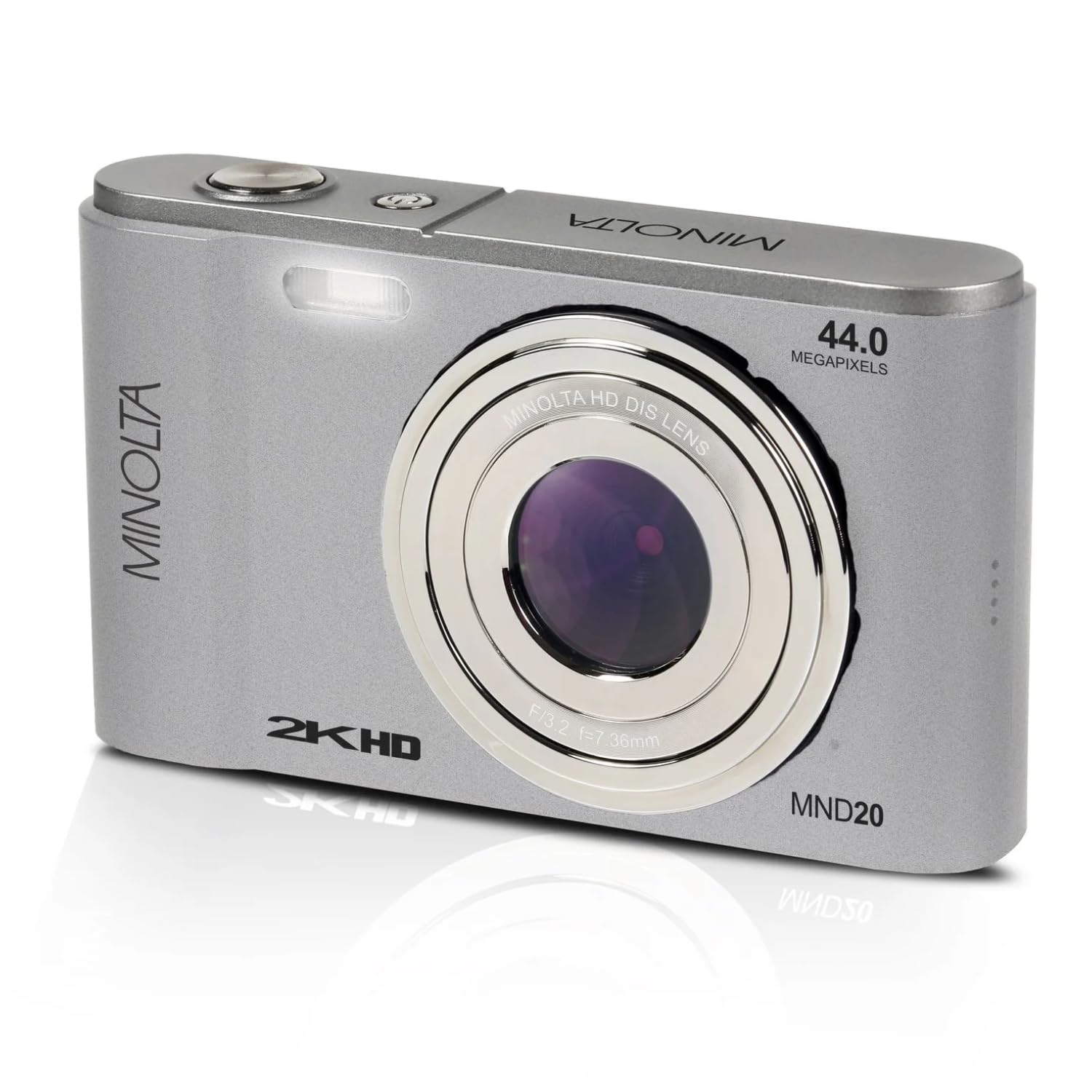
The MND20 is the camera that gets you the most spec for the least money. A 44MP photo resolution, 2.7K Quad HD video, and a 16X digital zoom are impressive numbers on paper — and at this price, they are hard to argue with. The 2.9-inch LCD monitor is the biggest screen in this budget tier, making it easier to compose shots and review your captures. The camera is lightweight at 8 ounces and pocketable, which is exactly what a beginner or a child needs.
Owner experiences are mixed in an honest way. Some call it an “OK entry-level fun camera” that works well as an “affordable beginner camera” for casual use, while others point out that the actual sensor resolution is closer to 12MP based on image metadata. The digital zoom is essentially cropping, and the battery drains faster than you would like. The fixed f/3.2 lens produces “okay photos” in daylight but grainy, dark results indoors. This is a novelty camera best suited for ages 8-16 or as a fun, inexpensive gadget — not a tool for anyone who needs reliable image quality.
Fun first, serious second: The MND20 is the most affordable way to put a dedicated camera in a kid’s hands. The 2.9-inch screen is genuinely helpful for young shooters, and the 44MP number sounds impressive on paper.
Keep expectations grounded: The 44MP is interpolated; the real sensor is much lower resolution. Battery life is poor, and digital zoom is just cropping. Think of it as a toy, not a tool.
Best for: Young children, pre-teens, or anyone who wants a cheap “fun” camera for novelty shots and does not care about serious image quality.
Not for: Anyone who needs sharp, reliable photos — the KODAK FZ45 is a much better choice for the same money if you care about image quality.
2. KODAK PIXPRO AZ255 16MP Digital Camera
A 25X optical zoom with image stabilization that actually works on a budget.
The AZ255 is the crowd-favorite for a reason — it puts serious reach in your hands without asking you to learn complex menus. The 25X optical zoom (24mm-600mm equivalent) lets you pull in distant subjects, from wildlife at the park to a performer on stage, while the optical image stabilization (OIS) fights the hand-shake that usually ruins long shots. The 16MP CMOS sensor delivers sharp daylight photos, and the 3-inch LCD makes composing and reviewing those shots comfortable.
What buyers love most is that it runs on 4 AA batteries. You are never tethered to a charging cable — grab fresh alkalines at any store and keep shooting. Picture quality is the most-praised aspect, followed closely by value for the money. The 25-point autofocus system handles most scenes reliably, though the build quality gets mixed feedback from a smaller group of owners. This is the best pick for anyone who wants one camera that does a bit of everything — wide shots, zoom, video, and easy sharing — without spending more.
What Owners Rave About
- Genuine 25X optical zoom that brings distant subjects into clear view
- Runs on standard AA batteries — easy to replace anywhere
- 3-inch screen and simple controls make it beginner-friendly from the start
The Honest Trade-off
- A smaller number of buyers report mixed feelings on long-term build quality
- Low-light performance is average at best — stick to well-lit scenes for the best results
A versatile all-rounder: This camera suits beginners, travelers, and casual photographers wanting genuine zoom reach without a learning curve.
Think twice if: You mostly shoot indoors or at night — the smaller sensor and f/3.7 maximum aperture need good light to shine.
3. Canon PowerShot ELPH 360 HS
Canon’s pocket powerhouse with a 12X optical zoom and built-in Wi-Fi.
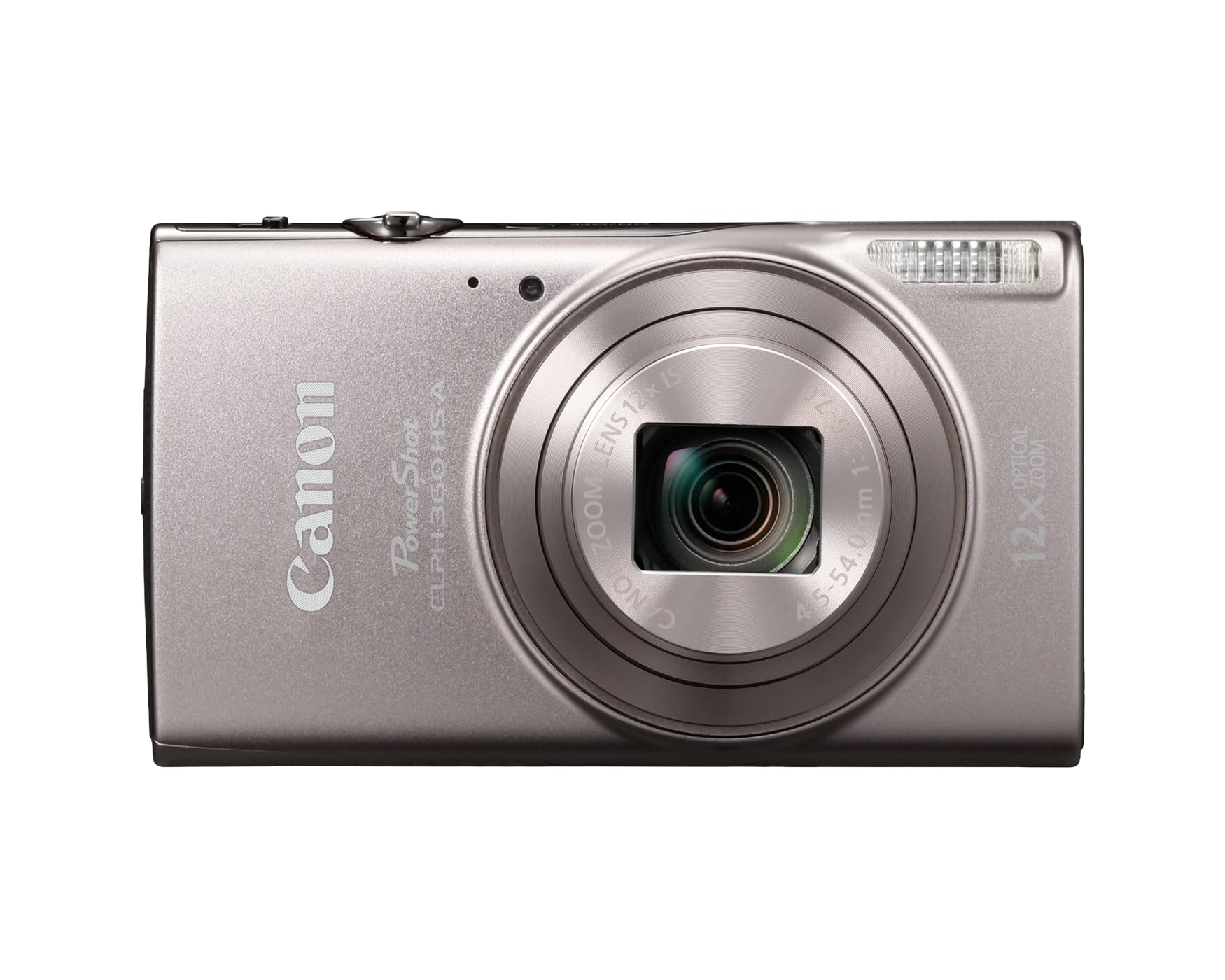
The ELPH 360 HS brings the trusted Canon name and the DIGIC 4+ Image Processor to the budget conversation. The 20.2MP CMOS sensor and a fast f/2.8 maximum aperture at the wide end mean it handles dimly lit scenes better than most cameras in this price range. The 12X optical zoom with Optical Image Stabilizer helps you reach out without ruining the shot with camera shake. Owners mention that sunlight shots look fantastic, and the camera also holds its own in poorly lit basements — a rarity at this level.
You get built-in Wi-Fi and NFC (near-field communication, a tap-to-pair wireless standard) so transferring photos to your smartphone is painless. The Hybrid Auto mode is a clever addition: it records a four-second video clip before each still and compiles them into a daily recap. Buyers consistently praise the photo quality and build quality. The trade-off is battery life — the lithium-ion pack is rated for about 1 hour of continuous use, so pack a spare for a full day out. This is the pick for anyone who values a trusted brand, great low-light handling, and smooth phone connectivity.
Brand confidence meets real results: The ELPH 360 HS delivers a level of image processing and low-light capability that the pure budget tier simply cannot match. The 12X zoom, Wi-Fi sharing, and Hybrid Auto mode make it a feature-dense daily companion.
One limitation: Battery life is the most common mixed point — plan to carry a spare lithium-ion pack for full-day outings or vacations.
Reach for this if: You want a compact camera with a great lens, strong brand support, and the ability to shoot acceptable photos from sunrise to sunset.
Look elsewhere if: You need a full day of heavy shooting on a single charge — carry a backup battery.
4. Sony Cyber-shot DSC-H300 20.1 MP Digital Camera

A 35X optical zoom from a top-tier brand, renewed and ready for the long haul.
The Sony DSC-H300 is a different beast entirely. Its 35X optical zoom is the longest reach on this list, letting you capture subjects that are genuinely far away without the blur that plagues digital zooms. The 20.1MP sensor delivers highly detailed photos that hold up well when enlarged or cropped, and the Optical SteadyShot image stabilization keeps those long telephoto shots as sharp as possible. The Sweep Panorama mode captures wide landscapes with a single press of the shutter.
This is a renewed unit (a professionally inspected pre-owned camera), which is where the real value lies. Photo quality and build quality are the top two praised aspects by a wide margin — buyers consistently call the photos “stunning” and “HD.” The main mixed point is reliability, with a small number reporting issues after about 30 days. The zoom can be finicky at the far end, as one reviewer noted. If you want the longest zoom possible and are comfortable buying renewed, this is the most capable camera here.
class-leading reach: The 35X optical zoom is a class above everything else on this page — ideal for sports, wildlife, and distant landscapes. The 20.1MP (megapixel) sensor gives you real cropping freedom, so you can zoom in on a distant bird and still print a sharp 8×10 photo.
The renewed reality: As a pre-owned unit, some arrive with issues. Check the return policy carefully, and factor in that the zoom range requires steady hands even with Stabilization.
Best for: Outdoor photographers who prioritize reach over pocketability and are comfortable with a renewed product.
Not for: Anyone who wants a brand-new, in-warranty camera or needs a pocket-friendly size — this is larger than a typical point-and-shoot.
5. Minolta ProShot MN40Z 20MP Camera
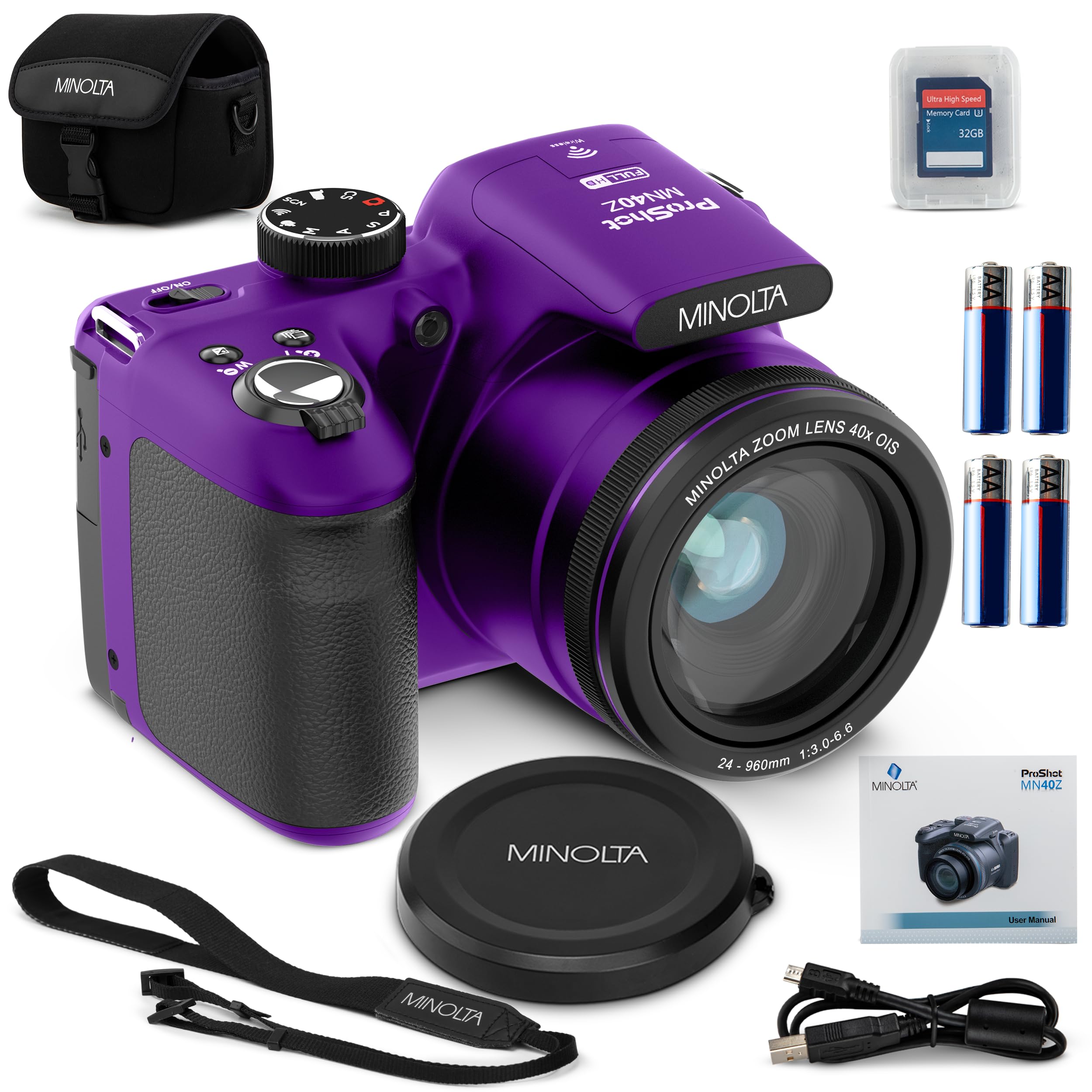
A 40X optical zoom with Wi-Fi and raw capture in a bridge-body format.
The MN40Z is the bridge between a point-and-shoot and a DSLR. The headline feature is the massive 40X optical zoom — the most powerful lens on this list — which lets you frame subjects so far away they are invisible to the naked eye. The 20MP sensor captures raw and JPEG files, giving you editing flexibility that most budget cameras lack. The built-in Wi-Fi and companion app let you transfer images directly to your phone and even control the camera remotely for group shots.
Camera quality and image quality are the top praised aspects, with buyers calling the zoom “impressive” and noting it can capture the moon freehand. The 3-inch LCD is bright and makes reviewing your telephoto shots practical. The autofocus is on the slower side, and a couple of customers note the camera froze when switching modes (requiring a battery reset). It also uses AA batteries, which are convenient to replace but may drain faster than a proprietary pack. This is the right pick if you want the maximum zoom and the most flexible file format, all at a very competitive price.
Standout Features
- 40X optical zoom is the most powerful in this guide — real reach for wildlife and sports
- Wi-Fi remote control and instant sharing to your smartphone
- Raw and JPEG shooting gives you full editing control over your images
Areas to Know
- Autofocus is slower than average — best for stationary or slow-moving subjects
- A small number of reviewers point out the camera freezing and needing a battery pull to reset
Pick this for: The maximum optical zoom on a budget combined with raw shooting and Wi-Fi — a rare feature set.
skip it if: You need snappy autofocus for kids or pets, or you prefer a compact pocketable design over a bridge camera form factor.
6. KODAK PIXPRO FZ45 16MP Digital Camera
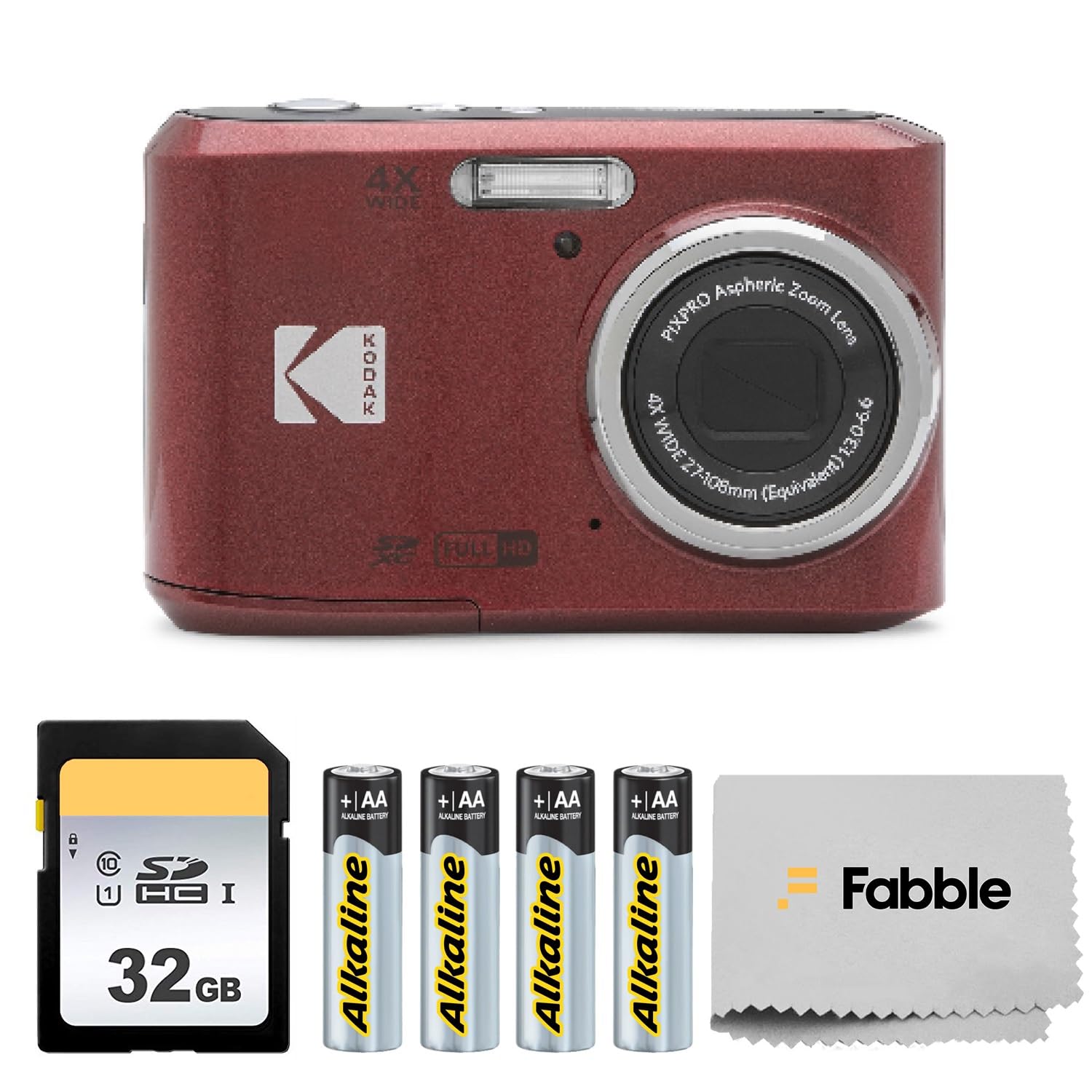
Simple, reliable, and AA-powered — the definition of a no-fuss point-and-shoot.
The FZ45 is the camera you buy when you want the experience of shooting with a dedicated camera, not the complexity of learning a new device. The 16MP sensor with a 4X optical zoom (27mm wide angle) is the genuine heart of this camera — it captures sharp, vibrant daylight photos that impress for the money. The 2.7-inch LCD is bright enough to frame shots easily, and the 1080p Full HD video is a solid bonus for casual recording. The bundle includes 4 AA batteries and a 32GB SD card, so you are shooting in minutes.
Aspect counts show that picture quality is the number one praise, with owners calling it “super easy to use” and loving the “perfect size” for travel and daily carry. Shoppers say it is “lightweight, pocket-sized” and delivers “great quality pictures.” It does struggle in low light — the f/3.5 aperture limits its ability in dim conditions — and the screen resolution is nothing special. But the simplicity of AA batteries, the reliable optical zoom, and the overwhelmingly positive owner experience make this the safest bet for anyone who just wants a camera that works.
Why It Works
- Genuine 4X optical zoom (27mm wide angle) keeps photos crisp — no digital cropping tricks
- Runs on standard AA batteries — universal, cheap, and easy to replace
- Bundled with batteries and an SD card — truly ready from the start
The Limit
- Low-light performance is weak due to the f/3.5 aperture — best for well-lit outdoor scenes
- The 2.7-inch screen is small for reviewing fine details and has limited resolution
For the pure point-and-shoot experience: The FZ45 is the easiest camera to recommend for beginners, kids, or anyone who wants a reliable dedicated camera with zero learning curve.
it’s not for you if: You plan to shoot in dim bars, concerts, or at night — the lack of a bright lens and the small sensor make it a daylight-only camera.
Understanding the Specs
Optical Zoom vs. Digital Zoom
Optical zoom is a true mechanical zoom — it moves glass elements inside the lens to magnify the scene, keeping every pixel sharp. Digital zoom is just the camera cropping into the center of the image and enlarging those pixels, which instantly loses detail. A 4X optical zoom is always better than a 16X digital zoom because the first preserves quality while the second destroys it. When comparing cameras, always look for the “X” before the word “Optical.”
Megapixels and Sensor Size
Megapixels measure the total pixel count of the sensor, but they do not tell the whole story. A 16MP sensor from a reputable brand like KODAK or Sony often produces better images than a 44MP sensor from a lesser-known brand because the pixels themselves are larger and capture more light. Interpolated megapixels (where the camera mathematically adds extra pixels) do not add real detail — they just make the file bigger. Focus on the optical zoom and the brand’s sensor quality, not the headline megapixel number.
Aperture (f-stop)
The aperture is the opening in the lens that lets light hit the sensor. A lower f-number (like f/2.2) means a wider opening, which allows more light in — this is crucial for sharp photos indoors, at dusk, or in any low-light situation. A higher f-number (like f/3.5 or f/5.6) means a smaller opening, which requires brighter conditions for the same quality result. On a budget camera, a wide aperture (f/2.8 or lower) is the single best spec you can have for indoor shooting.
Battery Type
Budget point-and-shoot cameras use either proprietary lithium-ion rechargeable batteries or standard AA alkaline batteries. Lithium-ion packs are rechargeable via USB and can last longer on a single charge, but if they die you are stuck until you find a power outlet. AA-powered cameras let you buy fresh batteries at any convenience store, which is a huge advantage for travel, camping, or long events. Many owners prefer AA cameras for their convenience, even if the total cost of batteries over time is higher.
FAQ
What is the difference between optical zoom and digital zoom?
Is a 44MP or 48MP camera better than a 16MP camera?
Can I use a budget point-and-shoot camera for vlogging?
Are AA batteries better than lithium-ion rechargeable batteries?
How many photos can a budget camera hold on a 32GB SD card?
Is a renewed/refurbished camera safe to buy?
Will a budget camera work well in low light?
Can I transfer photos to my phone from a budget camera?
What is the best budget point-and-shoot camera for a child?
Do budget cameras have image stabilization?
Final Thoughts: The Verdict
Across the board, the winner for the budget point and shoot camera category is the KODAK PIXPRO AZ255 because it balances a real 25X optical zoom, user-friendly AA batteries, and strong owner reviews at a very fair price. If you want the purest point-and-shoot simplicity with the best picture quality for the money, grab the KODAK PIXPRO FZ45. And for maximum zoom power and Wi-Fi sharing, the Minolta ProShot MN40Z is the one to reach for.
How We Picked
We do not accept paid placement. Every pick is matched to a real buyer and a real use-case; we do not hands-on test units.
Sources & Methodology
Specifications: manufacturer listings and product documentation. Review insights: verified customer reviews, as of July 2026. Pricing: not shown on this page (it changes often); check the current price via the retailer link.
As an Amazon Associate, FitlyFast earns from qualifying purchases. This does not affect which products we feature.