
Our readers keep the lights on and the weekend projects moving. As an Amazon Associate, I earn from qualifying purchases.
Specs are compiled from manufacturer listings and verified buyer reviews and can change over time — please confirm the key details on the product page before buying.
You don’t need to spend a fortune to know when a speed trap is ahead. The real question is which budget radar detector balances early warning range, fewer false alarms, and simple setup without emptying your wallet. This guide breaks down seven options that actually work for daily commuters and highway travelers.
I’m Rikta — the founder and writer behind FitlyFast. This guide is built by comparing the manufacturers’ published specifications and the patterns across verified customer reviews, so you get each pick’s real strengths and trade-offs instead of marketing spin.
From 360-degree coverage to laser detection, here’s what separates a smart budget radar detector from one that just beeps at every automatic door.
Our Picks at a Glance
How To Choose The Best Budget Radar Detector
Before you pick, you need to know what actually matters. A detector that screams at every sensor on the road is worse than no detector at all, because you’ll learn to ignore the alerts. The best budget pick balances range with restraint.
Band Coverage Is Non-Negotiable
Police radar guns in the U.S. use X, K, and Ka bands. A detector that misses any of these leaves you blind to a whole category of threats. Check the frequency bands listed for each model — you want all three covered, ideally with laser detection as a bonus.
False Alert Filtering Determines Your Sanity
Automatic doors, blind spot monitors, and traffic sensors all emit radar signals. Without filtering, you’ll hear beeps constantly on a city street. Look for a detector with a dedicated filter (sometimes called IVT or a DSP chip) to quiet those sources without missing real threats.
City vs Highway Modes
Urban areas are full of radar noise, so City Mode turns down sensitivity to reduce distraction. On open highways, Highway Mode pushes range to its maximum. Manual toggling is fine, but it’s a feature you should know exists before you buy so you’re not stuck with constant beeping.
Quick Comparison
| Model | Best For | Bands Covered | Detection Type | Weight | Amazon |
|---|---|---|---|---|---|
| Speed Sentinel 360°★ Best Overall | Value hunters wanting voice alerts | X, K, Ka | 360° | 2.26 oz | Amazon |
| YP YuanPei UpgradedBest Range | Long-range highway commuters | X, K, Ka, KU, ST, CT | 360° + Laser | — | Amazon |
| KARADAR S360 | Fast, tool-free installation | X, K, Ka | Front + Laser | — | Amazon |
| KARADAR S360 (B0F8982S97) | Custom band control | X, K, Ka + Laser | LaserEye | 0.1 kg | Amazon |
| Whistler CR73 | Bilingual voice alert fans | X, K, Ka, Laser | 360° + POP | 9.6 oz | Amazon |
| Cobra RAD 480i | Community alert sharing | 34.7, 24.125, 10.525 GHz | Front & Rear LaserEye | 136.1 g | Amazon |
| Cobra RAD 490i | Firmware-updatable future-proofing | X, K, KA | Front & Rear LaserEye | 4.8 oz | Amazon |
In-Depth Reviews
1. Speed Sentinel 360° Radar Detector
The compact dash companion that talks you through every alert while staying affordable.
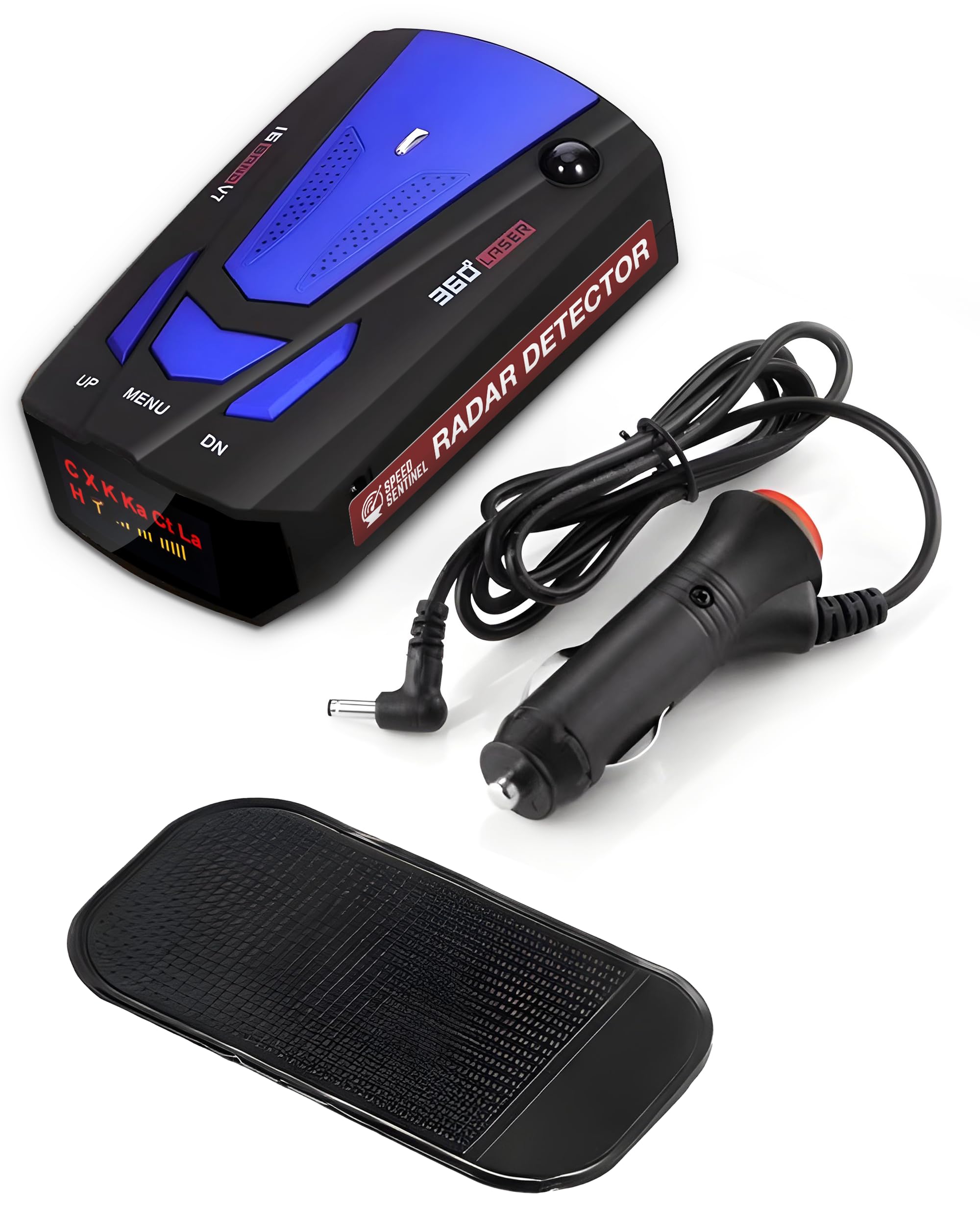
Scanning every direction at once is this unit’s party piece — the 360° coverage catches radar signals from the side and behind, not just straight ahead. At only 2.26 ounces and 3.9″L x 2.5″W x 1.4″H, it sits on your dash without dominating the windshield. The 12V power cable and anti-slip mat mean you’re driving with protection in about two minutes.
City Mode and Highway Mode let you tune sensitivity to your route. In Highway Mode, detection range stretches past 650 feet (over 215 yards) for early warnings on open roads. Rather than vague beeps, you get voice alerts that name the band type and signal strength, so your eyes stay on the asphalt. It covers the essential bands — X, K, and Ka — with an LCD display to confirm what’s happening. Know that it does not come with a dash suction cup, so the included mat is your mounting method.
Most owners describe it as reliable, easy to set up, and solid value for the money, with clear voice alerts that don’t grate. Buyers report the false alert filtering cuts down on nuisance beeps from stores and traffic sensors. The recurring gripe: an occasional unit — often a second unit in a different color — arrives dead, with no detection or sound even next to a police car broadcasting Ka band. That’s a quality-control dice roll, but when you get a good one, the early 360° alerts are impressive for the price.
What wins people over
- Voice alerts that identify the band type clearly
- 360° coverage catches side and rear signals
- Compact size fits any dashboard setup
- City/Highway modes slash false alerts
What gives you pause
- No suction cup included — mat mount only
- Quality control varies; some units arrive defective
- Voice clarity draws occasional complaints
Reach for this if: you want your first detector to be affordable, easy to install, and talkative about what it detects.
Look elsewhere if: you demand bulletproof reliability from day one and can’t tolerate the chance of a defective unit.
2. YP YuanPei Upgraded Radar Detector
The long-distance specialist that watches the road from 1,100 yards out so you can relax.
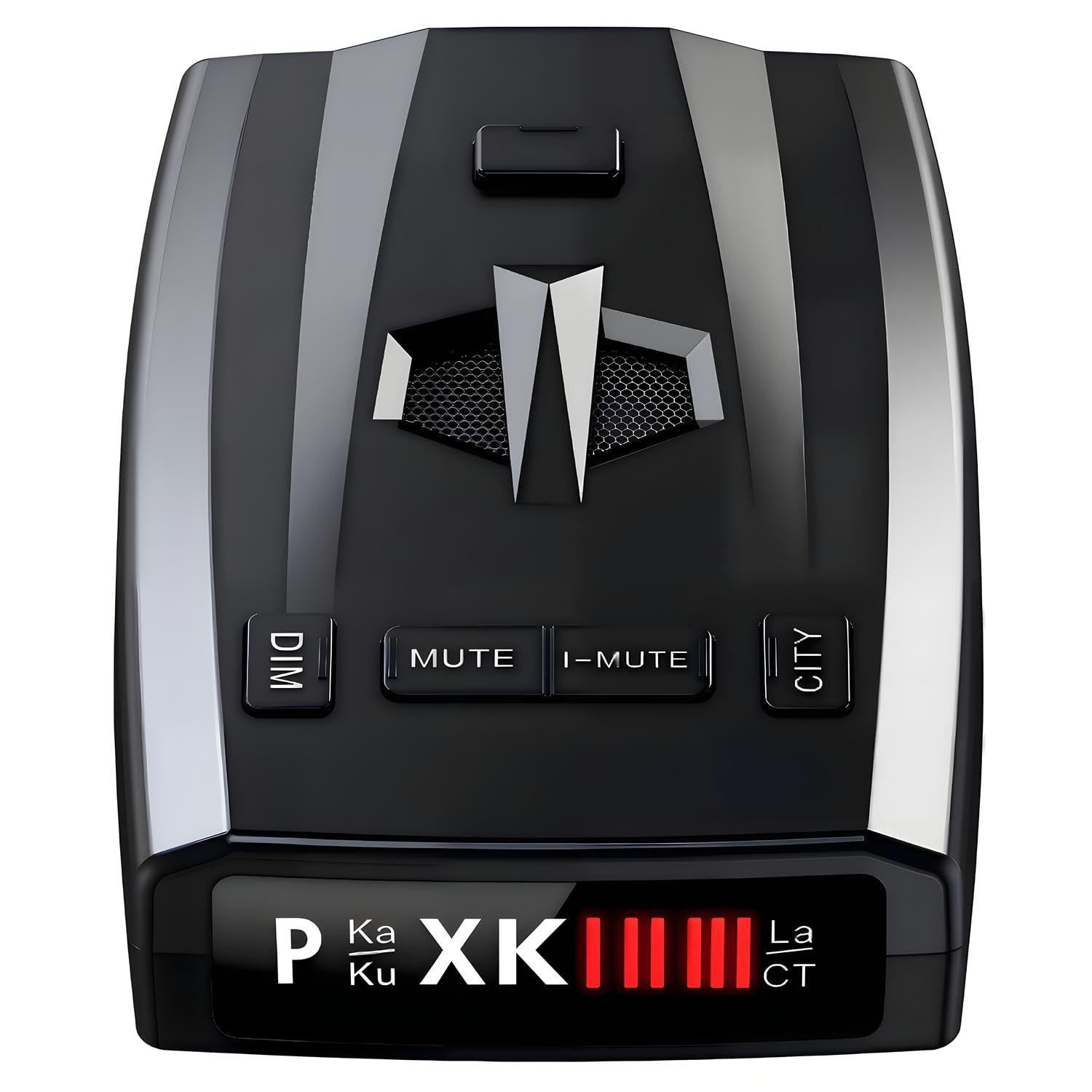
If early warning is your priority, this detector’s monitoring range of 330 to 1,100 yards gives you serious lead time on open highways. It’s built to process signals from every direction while covering more bands than most budget picks — X, K, Ka, KU, ST, and CT — plus laser detection. A DSP chip inside filters out automatic door openers and other cars’ blind spot monitoring systems, so you’re not drowning in false beeps.
City and Highway modes adapt sensitivity to your environment, and the smart memory automatically restores your preferences every time you start the car. The electronic stealth feature keeps the unit invisible to common signal-detecting devices, which matters if you drive where detectors aren’t welcome. Setup is plug-and-play, and the sturdy suction mount holds firm on bumpy roads.
Owners consistently highlight the long-range detection and clear voice alerts as the standout features. The experience isn’t universal, though — some owners mention false signals, with one describing alerts triggered by meeting a Honda, calling it inaccurate. It’s a split personality: dependable for many, frustrating for a few. Customers note the false alert filter does reduce beeps for most users, which is exactly what you want from an affordable long-range unit.
Your best bet if: you cover long highway stretches and want maximum reaction time before a traffic camera or patrol car appears.
A fair warning: false alerts are a known variable — a slice of owners find the filtering unreliable in real traffic.
3. KARADAR S360 Radar Detector
The tool-free pick that goes from box to windshield in about a minute, no drilling required.
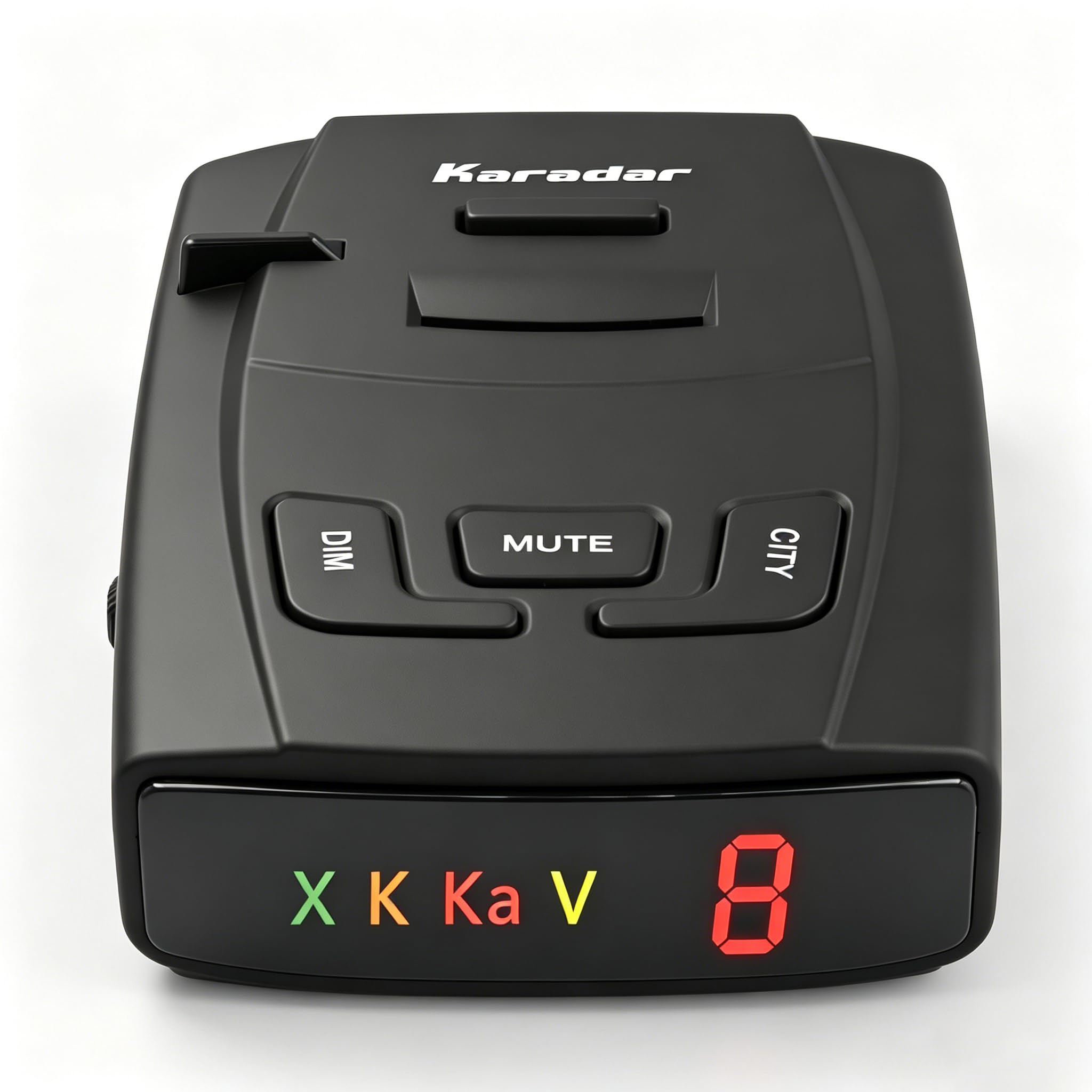
Installation is genuinely this unit’s superpower. It comes with a windshield mount and velcro, so you’re up and running in one minute without touching a single tool or damaging your interior. Three clearly marked physical buttons handle brightness, mute, and mode switching, which means no fumbling through menus while driving. It’s compatible with most 12V vehicles, making it a simple swap between cars.
Detection focuses on forward-facing threats, picking up X, K, and Ka band signals from the front — the bands that cover 10.525 GHz, 24.125 GHz, and 34.700 GHz. The LaserEye sensor catches instant-on laser signals, though range is typically shorter because laser guns use a narrow beam. Be clear on what this is: a pure radar/laser detector with no GPS module, so it won’t alert you to fixed red-light cameras that don’t emit radar. It only responds to live, powered-on police radar guns.
Reviewers praise the fast response, with detection reported around 0.5 miles in good conditions. The honest trade-off everyone should hear: reliability is genuinely split. Some reviewers point out it works flawlessly in both city and highway driving, while others say it doesn’t perform as advertised. One specific complaint: it can trigger on speed signs rather than patrol cars. The most consistent praise is value for money and the ease of installation — two things that matter for a first-time buyer.
Best if: you’re a beginner who wants a cheap, easy install to test whether a detector fits your driving.
Not for: drivers who need rear detection or who can’t tolerate a chance of inconsistent threat pickup.
4. KARADAR S360 Detector with Custom Band Control
The tunable detector that lets you switch off bands you don’t use to cut the noise.
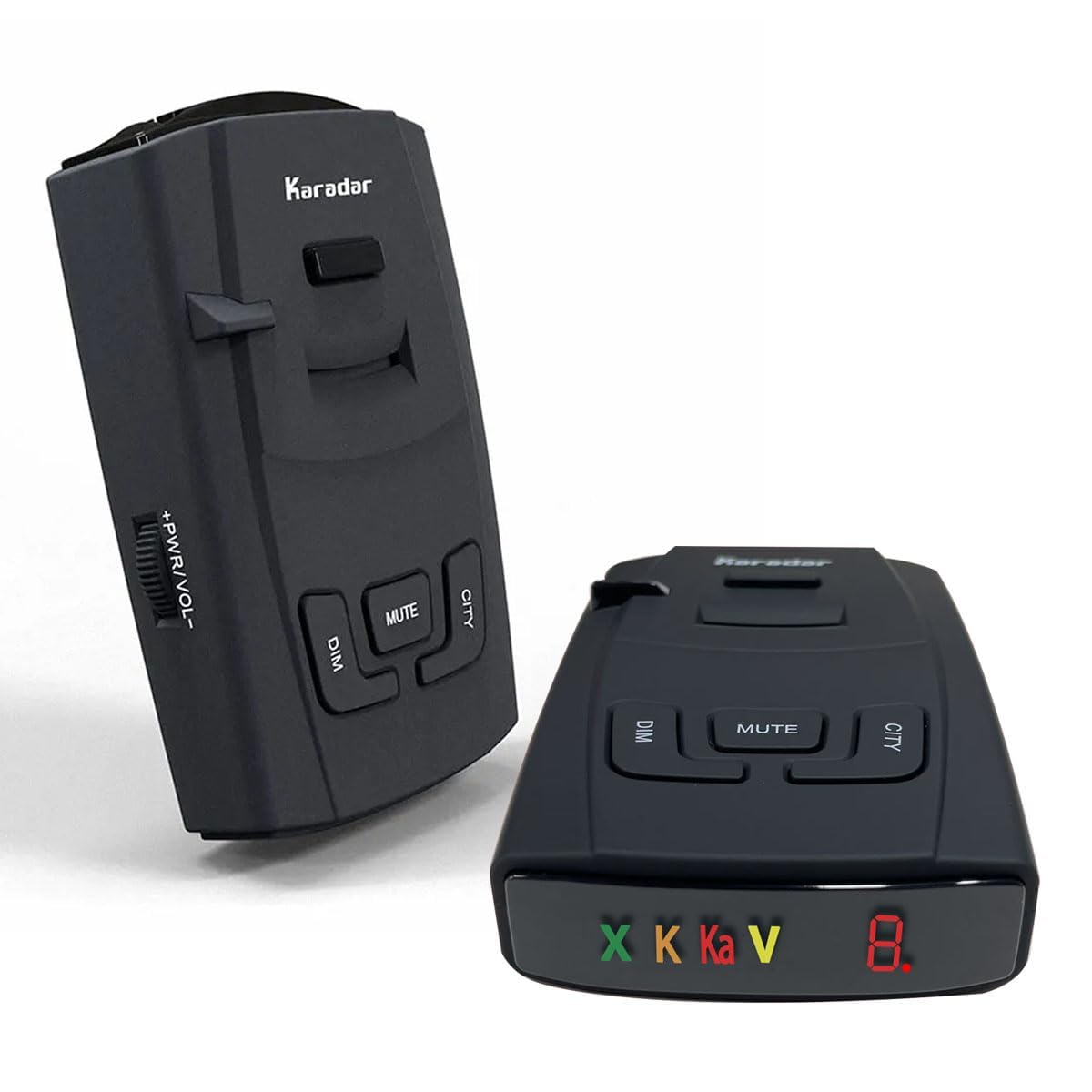
This KARADAR variant puts control in your hands with customizable band management. You can turn specific bands on or off to match your local enforcement patterns, which is a rare feature at this level and a real defense against false alerts. It detects X Band (10.525 GHz), K Band (24.125 GHz), Ka Band (34.7 GHz), and laser at 910 nm with 100PPS, giving you complete coverage of the common threat spectrum. The smart filter uses IVT technology to suppress up to 90% of false alarms from blind spot monitors and vehicle safety systems.
You get two driving modes so you can tailor alerts to your route. Highway Mode boosts sensitivity for maximum range on open roads, while City Mode cuts false alarms in dense areas. The unit measures 4.7″L x 1.7″W x 6.1″H, so it fits neatly on your windshield, and it weighs just 0.1 kg, so it won’t add noticeable weight. It comes with a 3-month replacement warranty—that’s a 90-day guarantee, giving you a short safety net if something goes wrong.
The owner experience skews positive — many say every time it alarms, they spot a police or state trooper’s car nearby as expected, which is exactly the validation you want. It’s note the brand’s FCC and Laser Class certifications confirm U.S. compliance. A small number of shoppers say issues, including one who says the detector failed after a month and describes the model as discontinued, so check warranty terms before you commit. There are also scattered references to a Uniden comparison in reviews, which suggests some buyers are weighing this against name-brand alternatives.
Why owners like it
- Band toggles eliminate useless alerts in your area
- Laser detection covers the 910 nm spectrum
- 90-day replacement warranty for confidence
- Compact and light at 0.1 kg
What to watch
- Occasional reports of failure after a month
- Limited review history means less long-term data
Pick this when: you drive the same routes and want to disable the bands that never appear there.
skip it if: you want a proven track record with thousands of owners behind it.
5. Whistler CR73 High Performance Detector
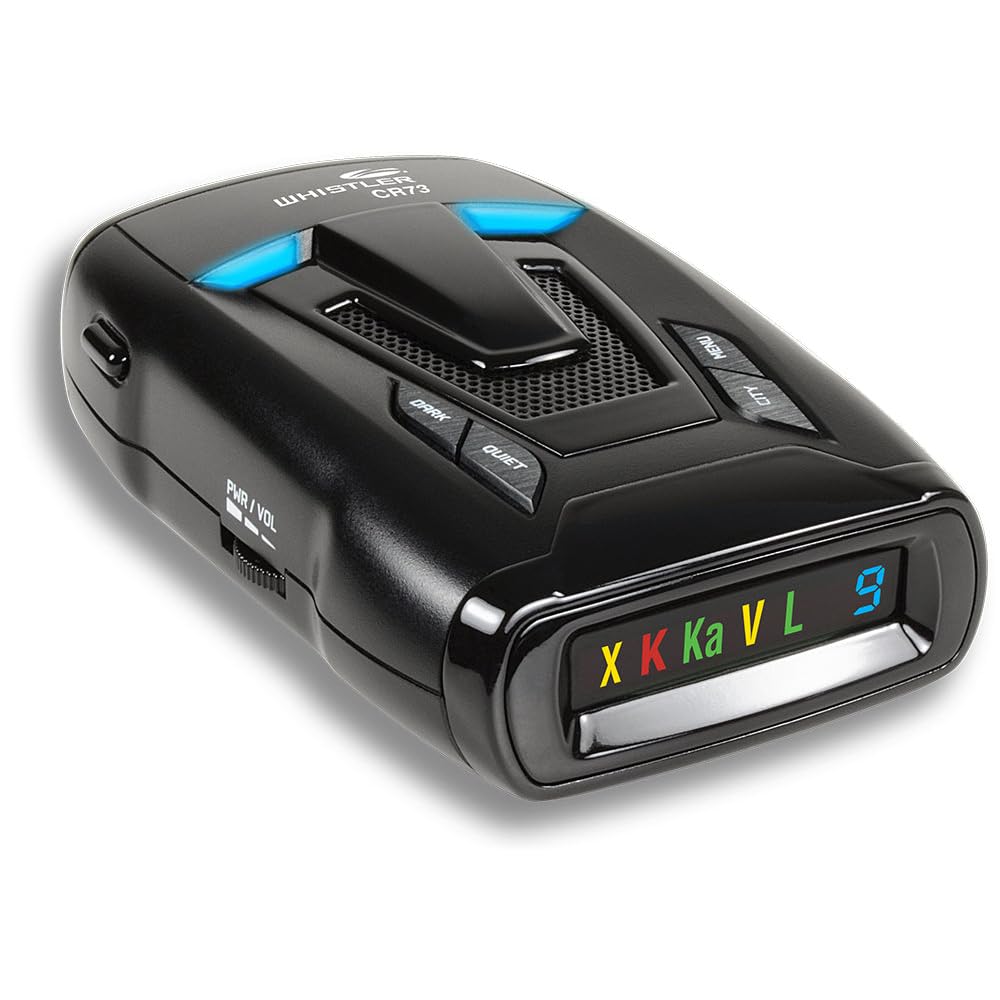
The brand-name 360° option with English and Spanish voice alerts and POP mode radar.
Whistler is a recognized name in detectors, and the CR73 earns its premium spot with full-spectrum coverage. It detects X, K, Ka, and laser bands plus POP mode radar from all directions simultaneously, so threats ahead, behind, or to the side all get caught. The digital signal strength indicator shows exactly which band is detected and how strong it is, telling you precisely how much reaction time you have. At 9.6 ounces and 7.63″L x 2.22″W x 6″H, it’s larger than the budget picks, so it commands more windshield space.
Bilingual voice alerts in English and Spanish keep your eyes on the road, announcing the band in whichever language you prefer. Dim/Dark Mode prevents a bright display from revealing your detector at night, and the Safety Warning System alerts you to emergency vehicle, road hazard, and school zone warnings broadcast by equipped infrastructure. Everything you need ships in the box: the 12V power cord, windshield bracket kit, and user guide, with no subscriptions or app required.
The honest read here: owners call it fantastic value for the money, and it works perfectly from the start for many daily commuters who get warned immediately to speed traps. But the noise issue is real and recurring. Several buyers report nonstop laser alerts that can’t be muted, and false alarms pile up in cities and rural areas alike. It’s a strong detector when it behaves, with the reliability being the main variable you’re gambling on.
Choose this for: a recognizable brand with bilingual alerts and full 360° protection from the start.
Be ready for: potential false alarm fatigue — especially on the laser band — that some owners find intolerable.
6. Cobra RAD 480i Laser Radar Detector

The crowd-sourced shield that learns from other drivers and shows alerts on your car’s display.
This is the smartest pick on the list, and it’s about the app ecosystem as much as the detector itself. Cobra’s LaserEye technology detects signals from both the front and rear of your vehicle for all-around protection. Connect to the Drive Smarter community to receive live alerts from other drivers across the country, and with Apple CarPlay and Android Auto compatibility, you can view your route and interact with alerts right on your vehicle’s display. Digital Signal Processing processes incoming laser signals faster, giving you warnings before a threat is directly in front of you.
The next-generation updateable IVT Filter intelligently reduces false alerts from blind spot monitoring systems and other vehicle avoidance systems. The OLED display at 4.25″L x 2.75″W x 1.25″H is small but highly visible, with stealth options to dim it at night. It covers 34.7 GHz, 24.125 GHz, and 10.525 GHz bands. Everything you need ships in the box — a 12V power cord, suction cup mount, and hook-and-loop fastener for dash mounting. It’s engineered and supported in the USA, backed by over 50 years of vehicle technology.
The community alerts are the standout feature — owners mention being saved from multiple speeding tickets, with some saying it rivals detectors costing four times as much. The app is the weak link, drawing complaints about notification loops and spam emails. Some customers note the detector stopping work within a day, while others praise its calm, assertive alerts. Warning times run roughly 2-3 seconds in town and around 10 seconds on the highway. This is the most proven detector here by owner count, making it a safe bet for most buyers.
The strengths
- Front and rear LaserEye detection for full coverage
- CarPlay and Android Auto integration for on-screen alerts
- Community alerts from thousands of drivers
- Calmer, more assertive alerts than pricier rivals
The drawbacks
- Companion app has notification and spam issues
- Mount is basic; mute requires reaching the detector
- A minority report units failing within a day
Best for: tech-savvy drivers who want live crowd-sourced warnings and don’t mind a flawed companion app.
Not ideal if: you want a completely self-contained unit with zero smartphone dependency.
7. Cobra RAD 490i Laser Radar Detector
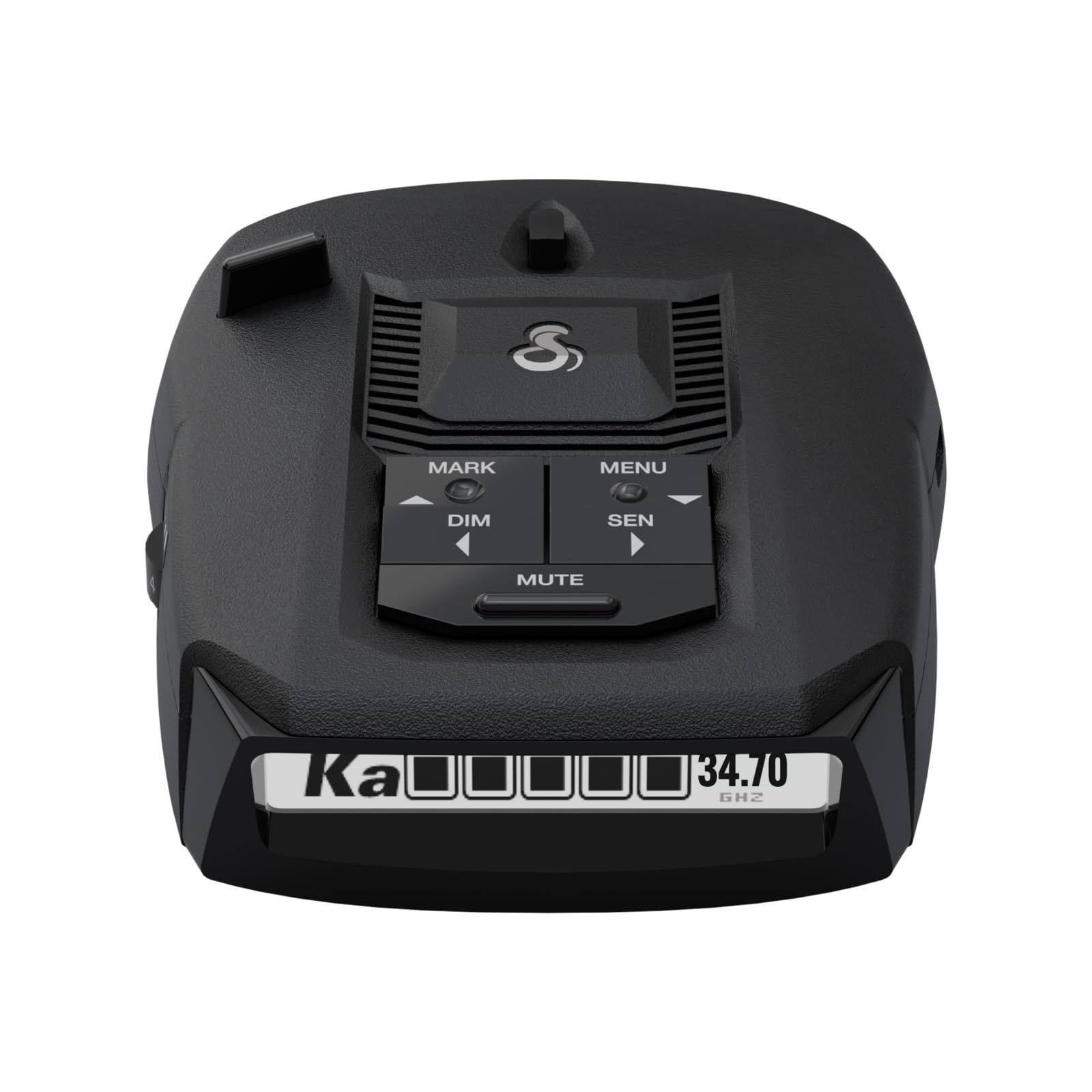
The newest Cobra that keeps getting better with firmware updates and USB-C convenience.
This is the 490i — the new model in the Cobra line — and its defining feature is longevity. Firmware updates mean the detector can improve over time with software support, keeping it capable on the road long after you buy it. The updated mounting system uses a secure adhesive mount with a detachable bracket and adjustable angle, replacing the basic suction cup for better visibility and stability. USB-C power comes in the box with a USB-C to cigarette lighter adapter, so you may already have compatible cables around the house.
Detection is comprehensive: next-generation updateable IVT Filter and advanced anti-falsing circuitry reduce false alerts from blind spot monitors, while LaserEye captures laser signals from both front and rear. It covers X, K, and KA bands with an LED display. Adjustable Sensitivity and Filtering Modes let you control notification frequency, and Extreme Mode offers no-compromises coverage and range when you want maximum protection. At 4.8 ounces and 4.25″L x 2.75″W x 1.25″H, it’s the same compact footprint as the 480i but lighter.
This is the most consistently praised unit in the lineup. Owners highlight excellent blind spot monitoring filtering, solid Ka range, fast startup, and simple pairing with the DriveSmarter app and Android Auto. The app adds navigation and crowdsourced alerts from other detectors, creating a network effect that gets stronger as more drivers join. Early alerts come well before visual contact with a threat. A few caveats: there’s no suction cup option — the adhesive mount is the only choice, and it requires an alcohol wipe for proper installation. Extreme Mode triggers many false alarms, and the display lacks a band name readout.
Worth it for: drivers who want the newest tech, firmware updates, and USB-C — a future-proof choice at the top of the range.
Know before you buy: the adhesive-only mount is permanent-ish, and Extreme Mode needs careful use to avoid false alert noise.
Understanding the Specs
Radar Bands (X, K, Ka)
Police radar guns transmit on specific frequencies. X Band (around 10.525 GHz) is the oldest and least common, K Band (24.125 GHz) is widely used, and Ka Band (34.7 GHz) is the modern standard. A detector needs to cover all three to be useful. Some add KU, ST, and CT bands for extra coverage, which matters if you travel between states with different enforcement tech.
False Alert Filtering (IVT / DSP)
Modern cars have blind spot monitoring and safety systems that emit radar signals. Without filtering, these trigger constant false alarms. IVT (In-Vehicle Technology) filters and DSP (Digital Signal Processing) chips identify and suppress these signals while keeping real threats loud. Good filtering is the difference between a detector you trust and one you ignore.
360° vs Front-Only Detection
Some detectors scan in all directions, catching signals from the side and rear. Others are forward-facing only, with auxiliary rear detection that has significantly shorter range due to physical limitations. If you’re often passed by speeders or worry about rear laser hits, 360° or front-and-rear detection is worth the extra cost.
Laser (LIDAR) Detection
Laser guns use a narrow beam that’s much harder to detect than radar. When a detector picks up laser, the signal range is typically shorter because the beam must be line-of-sight. Think of laser detection as a warning that you’ve already been targeted, while radar detection offers early warning. Both are valuable, but they work very differently.
FAQ
Will a budget radar detector work on all vehicle types?
What is the difference between radar and laser detection?
How often will a budget detector give false alerts?
Is the Whistler CR73 better than the Cobra RAD 480i?
Do I need City Mode or Highway Mode?
Will a detector alert me to red-light cameras or speed cameras?
How long does a budget radar detector last?
Can I mount the detector without a suction cup?
Does the Cobra app require a subscription?
Final Thoughts: The Verdict
Across the board, the budget radar detector winner is the Speed Sentinel 360° because it combines voice alerts, 360° coverage, and city and highway modes at a price that fits anyone’s first detector. If you want long-range highway awareness, grab the YP YuanPei Upgraded with its 1,100-yard range. And for the smartest connected experience with community alerts, the Cobra RAD 480i is the one to reach for.
How We Picked
We do not accept paid placement. Every pick is matched to a real buyer and a real use-case; we do not hands-on test units.
Sources & Methodology
Specifications: manufacturer listings and product documentation. Review insights: verified customer reviews, as of August 2026. Pricing: not shown on this page (it changes often); check the current price via the retailer link.
As an Amazon Associate, FitlyFast earns from qualifying purchases. This does not affect which products we feature.