
Our readers keep the lights on and the weekend projects moving. As an Amazon Associate, I earn from qualifying purchases.
Specs are compiled from manufacturer listings and verified buyer reviews and can change over time — please confirm the key details on the product page before buying.
The hardest part of starting a podcast or stream isn’t the content — it’s getting broadcast-quality voice without a broadcast budget. Headsets muffle you, laptops pick up every fan hum, and the microphone aisle is full of expensive names that blow the budget fast. This guide finds budget mics that deliver clear, broadcast-ready vocals while staying affordable.
I’m Rikta — the founder and writer behind FitlyFast. This guide is built by comparing the manufacturers’ published specifications and the patterns across verified customer reviews, so you get each pick’s real strengths and trade-offs instead of marketing spin.
Whether you’re recording your first episode, hopping on endless Zoom calls, or leveling up your gaming stream, these picks cover every budget. Find your perfect budget studio microphone here, so you never waste a dollar on a mic that sounds worse than your headset.
Our Picks at a Glance


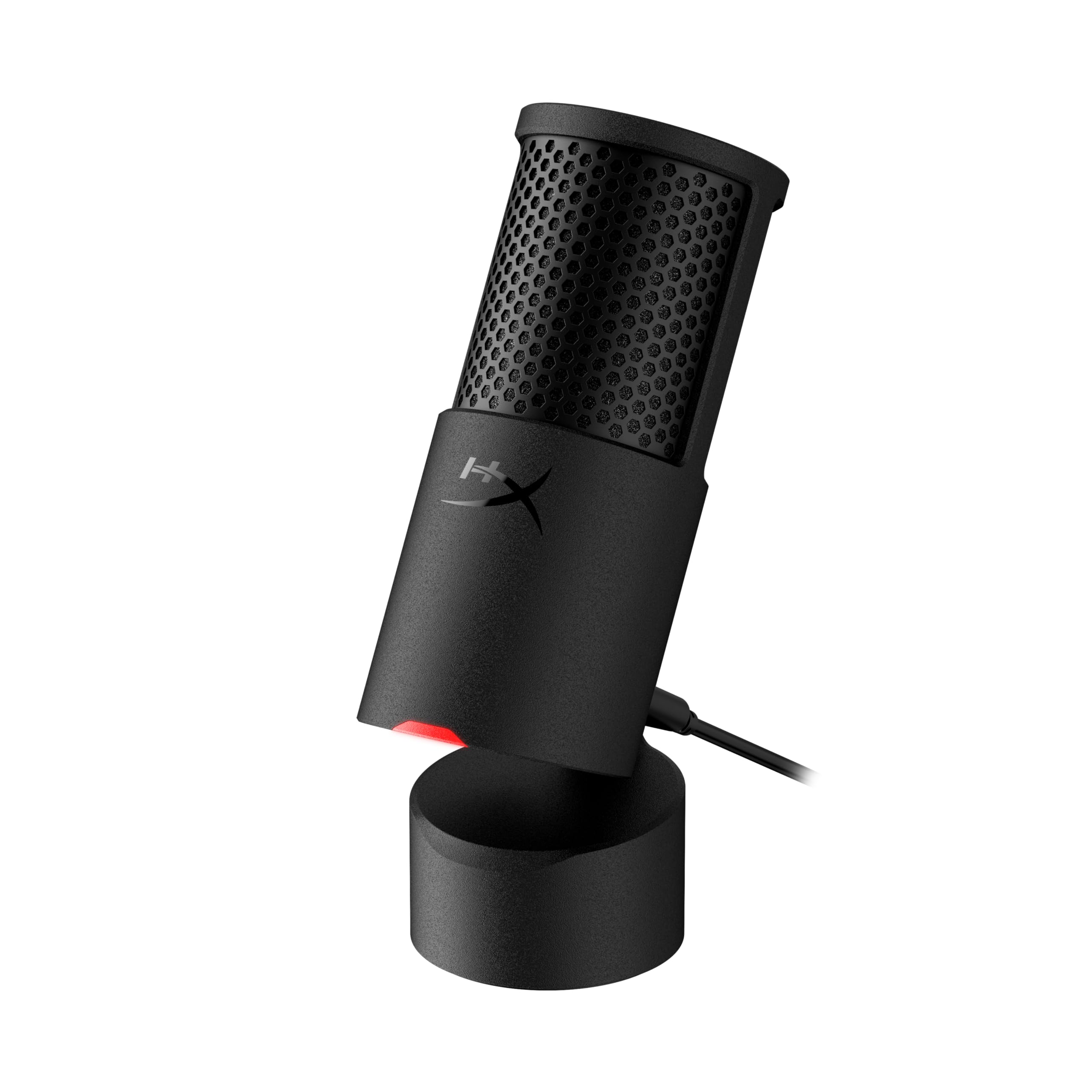
How To Choose The Best Budget Studio Microphone
Before you click buy, match the mic to your actual use case. A mic perfect for a quiet home studio might be terrible for a loud office desk. Here’s what separates a smart purchase from a regret.
Pickup Pattern: The Room Noise Filter
This decides what the mic hears. A cardioid pattern (the most common on budget mics) focuses on sound directly in front of it and rejects noise from the sides and back. A supercardioid pattern is even tighter, like the Razer Seiren V3 Mini, which means it suppresses more ambient sound like typing or mouse clicks, but it demands you speak directly into it. If your desk sits in a noisy room, the tighter the pattern, the cleaner your audio.
USB vs. XLR: The Simplicity vs. Quality Trade-off
USB mics plug straight into your computer and work instantly — no extra gear, no drivers, just sound. XLR mics need an audio interface or mixer to amplify the signal, which adds cost and complexity. But XLR gives you a clearer path to upgrade your setup later and often delivers a warmer, more natural tone for vocals. For a true beginner, USB wins; for someone building a home studio that can grow, XLR is the better foundation.
Quick Comparison
| Model | Best For | Type | Sample Rate | Connectivity | Amazon |
|---|---|---|---|---|---|
| Razer Seiren V3 Mini★ Best Overall | Work calls & compact desks | Condenser | — | USB | Amazon |
| ST-800 Podcast KitBest Value Kit | Full studio kits on a budget | Condenser | 192kHz/24bit | USB | Amazon |
| HyperX SoloCast 2Streamer Favorite | Gamers & streamers | Condenser | 96kHz/24bit | USB-C | Amazon |
| MAONO PD100 | XLR beginners | Dynamic | — | XLR | Amazon |
| FDUCE SL40+ | USB/XLR flexibility | Dynamic | 96kHz/24bit | USB & XLR | Amazon |
| Tascam TM-80 | Vocals & acoustic instruments | Condenser | — | XLR | Amazon |
| Sennheiser XS 1 | Handheld vocals & gigs | Dynamic | — | XLR | Amazon |
| FIFINE T669 | All-in-one starter kits | Condenser | — | USB | Amazon |
| FIFINE AM8 | Gaming with RGB style | Dynamic | — | USB & XLR | Amazon |
In-Depth Reviews
1. Razer Seiren V3 Mini
The tiny desk mic whose tap-to-mute sensor wins over everyone stuck on endless work calls.
Weighing just 8.32 ounces and standing 6.38 inches tall, this is the mic you forget is on your desk — until you need it. Its supercardioid pickup pattern is tighter than the standard cardioid you’ll find on most budget mics, so it focuses hard on your voice while pushing away the sound of typing and mouse clicks. That detail matters if your workspace isn’t a soundproof booth.
The defining move here is the tap-to-mute sensor with an LED indicator. Tap the top to cut your audio instantly during a call, glance at the light to confirm you’re muted, and tap again to return. Buyers report it’s a lifesaver when you’re “on work calls all the time” — no more fumbling for a software mute button mid-sentence.
It’s plug-and-play with no drivers needed, working straight into Discord, OBS Studio, and XSplit. Hardcore tweakers can open Razer Synapse for studio-level sample rate control and separate volume mixes for playback versus your audience. The trade-off: background noise dampening is light, though buyers find it fixable with software settings, and there are no on-device sensitivity or volume knobs.
compact plug-and-play
- Clear, reliable sound that buyers consistently rate as a solid step up from headset mics
- The tap-to-mute and LED indicator are called out repeatedly as a 10/10 feature
- Compact size and easy setup make it a permanent desk fixture
needs gain tweaks
- Background noise rejection is weak from the start and needs software tuning
- No sensitivity or volume controls on the mic itself, so you rely on your computer
desk clarity: your days are full of calls and you want a compact, simple to use mic with the best mute button on this list — a tap-to-mute sensor that lets you silence yourself instantly without fumbling for a switch.
studio purists: you need physical gain knobs on the mic body for quick adjustments mid-recording.
2. ST-800 Podcast Microphone Kit
A complete studio-in-a-box with boom arm, shock mount, and pop filter for less than a single fancy mic.
Open the box and you get everything: the condenser mic, a scissor boom arm, shock mount, table clamp, anti-wind foam cap, and pop filter. That’s a full podcasting setup ready in about ten minutes, which is why buyers call it the best microphone for the budget, especially for first-time streamers. The metal construction and flexible arm give it a presence that rivals kits costing far more.
Under the hood, it records up to 192kHz/24bit — a higher sample rate than most rivals in this price class. Buyers do note it defaults to 44kHz on setup, so you’ll want to switch it to 192kHz in your settings for the full detail. The cardioid pickup zeroes in on your voice and suppresses background noise, making it a strong choice for vocal intelligibility during podcasts.
The honest trade-offs: the listed audible noise figure of 78 dB is high versus the Razer Seiren V3 Mini’s 20 dB, so you may hear a faint hiss in quiet recordings. Durability gets mixed feedback — some owners mention the stand breaking after about a month of use. In terms of frequency range, it spans 30 Hz to 16kHz, which is narrower than the Razer’s 20 KHz top end, so you lose some airy high-end detail.
full bundle value: No other mic near this price bundles a full metal boom arm setup with shock mount and pop filter, making it the least-effort route to a working studio.
plastic body feel: treat the screws and arm joints gently; occasional units develop looseness or wiggle over time.
3. HyperX SoloCast 2
An all-in-one condenser that captures voice from across the room, clean and ready from the start.
HyperX packs everything into the body: a foam pop filter, a tiltable stand with a weighted base, and an internal shock mount that reduces vibrations from desk knocks. At just 330 grams, it’s light enough to angle easily, and the built-in 3/8″ and 5/8″ threads let you mount it on any standard mic arm when you’re ready to upgrade your setup.
Recording quality hits 96kHz/24bit with a cardioid polar pattern that captures sound best from the front while reducing pickup from the sides and rear. Owners are consistently surprised by how far it reaches — customers note it picks up voices clearly from 25-30 feet away. The tap-to-mute with LED indicator holds up well, and the HyperX NGENUITY software adds high-pass, low-pass, and voice enhancement filters you can save directly to the mic.
The recurring gripe is physical rather than sonic: the USB-C port on the lower back isn’t firmly secured, and it can unplug with movement. Buyers recommend using a boom arm and securing the cable with a zip tie or tape. Paired against the ST-800 above, it trades the full boom-arm kit for a cleaner, more compact design with a more secure build quality.
daily driver ease
- Exceptional vocal reach with clear pickup from 25-30 ft away
- Built-in pop filter and shock mount mean no extra gear to buy
- Crisp, natural audio that reviewers point out rivals pricier mics
stand wobbles
- USB-C port can come loose with movement if the cable isn’t secured
- Sensitive capsule picks up background noise even with suppression on
streamers: gamers and streamers who want a dependable, compact mic with zero extra purchases required.
boom arm users: anyone who’ll constantly reposition the mic on a boom arm without securing the cable.
4. MAONO PD100 XLR Podcast Microphone

The metal-bodied dynamic mic that brings broadcast warmth to your first XLR setup.
This is a dynamic microphone, which means it naturally rejects room ambience better than a condenser, making it ideal for untreated rooms. It focuses on podcasting and vocal recording with a cardioid pattern and a “talk to the mic top” pickup style that captures your voice with smooth depth. The built-in dynamic core and inner double-layer pop filter tame plosive sounds (those hard “P” and “B” bursts) before they hit the recording.
It ships with a desktop stand, a 2.36-inch rod extender to bring the mic closer to your mouth, a heavy round metal base for stability, and a 6.56 ft XLR cable. The metal brackets and thick circular base dampen vibrations to keep audio clean. Since it’s XLR-only, you’ll need an audio interface or mixer like the Maonocaster AME2 — that’s the catch for total beginners, but it’s also the point if you’re building a studio that can grow.
Owners who’ve compared it to expensive broadcast mics note it runs brighter in tone than the Shure SM7B but keeps accurate lows, and they say it “punches above its weight” for spoken word — especially once you apply a little EQ. The frequency response spans 60Hz-14kHz, which is more limited at the top than condenser rivals, but for voice it’s rarely a problem — you get clear, warm speech without the harsh sibilance.
audio hobbyists: you’re committed to learning XLR and want a solid metal dynamic that will grow with your home studio.
USB simplicity: you want a simple USB plug-and-play mic and don’t yet own an audio interface.
5. FDUCE SL40+ Dynamic Microphone

A dual-interface dynamic that starts on USB and moves to XLR, without buying a second mic.
The headline feature is the dual USB/XLR output. Plug it into your computer via USB for instant plug-and-play recording, then later connect it to an audio interface via XLR (when you’ve added one to your setup) without needing a built-in preamp for extra gain. That’s a genuine upgrade path most budget mics don’t offer, making this a smart buy if you’re unsure which setup you’ll commit to.
The dynamic core supports up to 96kHz/24bit with a cardioid pickup that cuts environmental noise, and the digital audio processing handles equalization and mute functions to keep your voice pure. On the body, a one-key mute button works instantly, and in USB mode a long press switches it to control volume for the mic and headset. The boom arm is all-metal with a table mount clamp, giving you reliable positioning.
Buyers call it a solid entry-level mic for online chatting and gaming, with one noting “perfect for my podcast” and professional-sounding quality. The catch: as a dynamic mic with lower output, it can require a bit of software gain (in Audacity, for example) to reach good levels, and some owners hear a pop on words starting with “P” that needs better filtering. The frequency range runs 50Hz-14kHz, so you get solid lows and mids for voice, but the top end is less extended than a condenser.
voiceovers: someone who wants to start with USB today and keep the same mic when they graduate to an XLR interface.
quiet talkers: anyone expecting a ready-to-go loud signal with zero gain adjustment needed.
6. Tascam TM-80 Large Diaphragm Condenser

A large-diaphragm condenser that captures acoustic guitars with a naturalness dynamics simply miss.
With an 18mm aluminum diaphragm and a cardioid pickup pattern, the TM-80 is engineered for vocals and acoustic instruments. It’s a condenser, which is far more sensitive than a dynamic mic, so it captures the subtle details of a guitar string or the breath in a vocal performance. Buyers who switched from pricier dynamics report the TM-80 sounds more natural on acoustic guitar and catches nuances the dynamic missed entirely.
The internal circuitry is tune to keep noise and distortion low while retaining a rich, full sound. Its maximum sound pressure rating of 136dB SPL means you can safely point it at loud sources like guitar amps and drums without distortion. The bundle includes a tabletop stand, a six-foot XLR cable, and an elastic shock mount to reduce rumble — so it’s genuinely ready to record once you have an interface.
The honest knock: owners find it heavy, and the included tripod stand is on the flimsy side — the mic’s weight can make it topple, and the angle mechanism is weak. A sturdier boom stand is a common follow-up purchase. It’s an XLR-only mic, so it demands an audio interface to function at all.
treated rooms: recording vocals and acoustic instruments in a controlled home studio where sensitivity is a feature, not a flaw.
noisy spaces: you lack an audio interface or you need a mic that survives being knocked around on a wobbly stand.
7. Sennheiser XS 1 Handheld Dynamic

The legendary German audio brand, distilled into a rugged handheld that fits any stage or studio.
It’s a Sennheiser at a price that makes buyers do a double-take. This is a handheld dynamic microphone with a cardioid polar pattern and an XLR-3 connector, built from heavy metal at 15.68 ounces — a weight that conveys the premium construction inside. The silent mute switch on the body is a rare convenience for a handheld, letting you cut audio between songs without a thump.
Sound-wise, owners consistently report no hiss and no hum, just clean, reliable vocal reproduction. It works with amplifiers, audio mixers, karaoke machines, and radios, which is why it’s found its way into podcast studios on a budget and as spare mics for PA gigs. Buyers who know the brand say it carries the “house sound” of Sennheiser’s pricier handheld dynamics, though it lacks the vocal enhancement you’d get from a dedicated broadcast mic.
Compared to the MAONO PD100 above, this is the more versatile physical tool — you can hand it to a guest or a singer — but it’s purely XLR, so it won’t plug into a computer without an interface. That makes it the exception on this list: a studio-worthy mic that’s equally at home on a live stage or trivia night, but only if you already own an audio interface.
podcasters: you want a do-everything dynamic mic from a top-tier brand that will outlast your gear budget.
bass lovers: your setup is USB-only with no interface in sight, since this needs an XLR input.
8. FIFINE T669 Studio Condenser USB Microphone
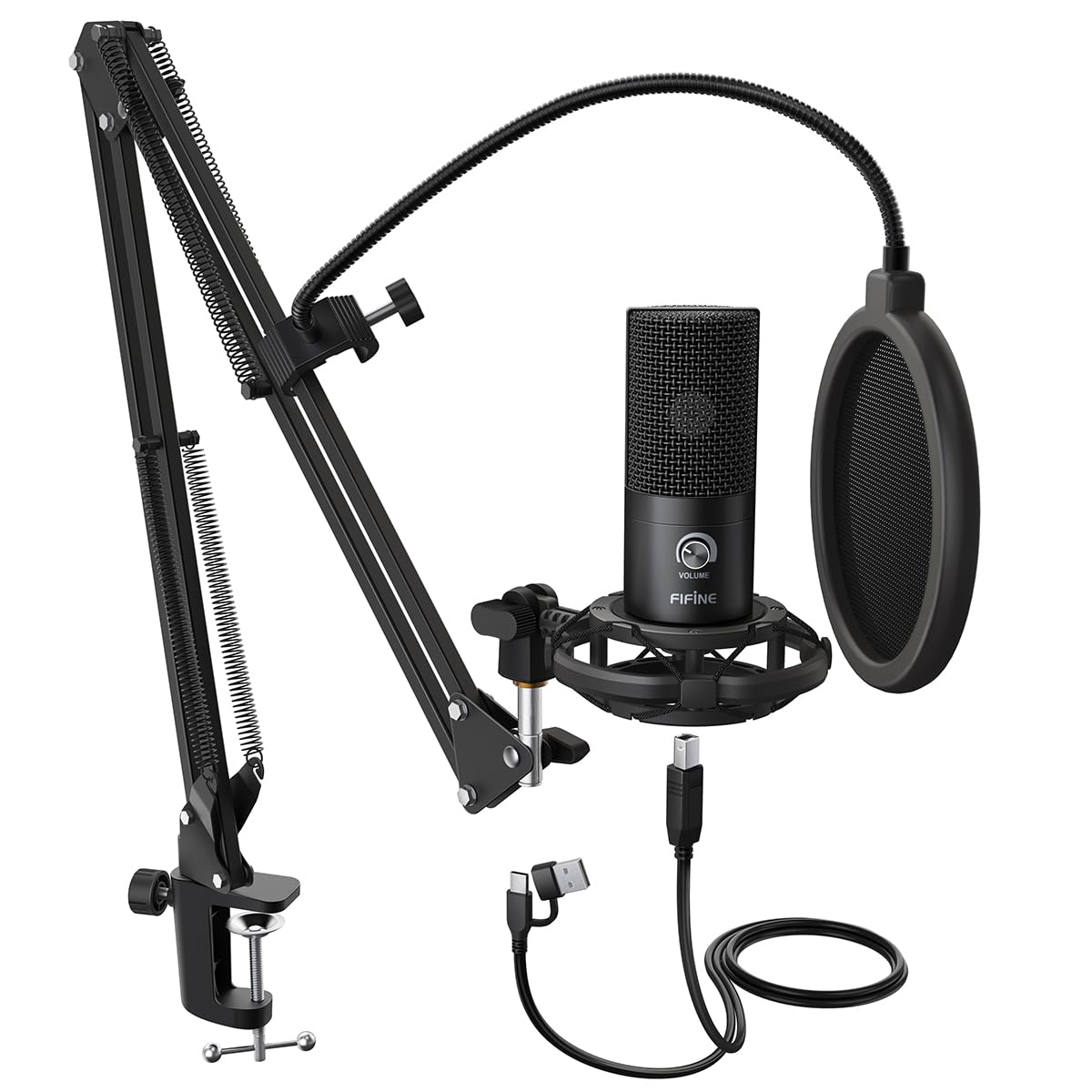
The crowd-favorite starter kit — a near-professional sound that’s kept thousands of creators happy.
This is the best-selling path into podcasting for a reason. The USB condenser mic plugs into your PC or laptop with no additional hardware or drivers, and the kit throws in a fully adjustable boom arm, a studio-grade shock mount, a double pop filter, and an 8.2-foot cable. The cardioid condenser capsule (a pickup pattern that focuses on sound from the front) captures crisp audio from the front while rejecting ambient noise, making it a guaranteed upgrade from any headset.
The boom arm is the star of the kit: all-steel construction with 180° up-and-down rotation and 135° forward-and-backward extension, delivering up to a 30″ reach. The frequency range spans 20Hz-20KHz, which is wide for the price and handles high sound pressure levels with ease. Buyers call it “just about the best microphone you could get for a relatively cheap price” with “nearly professional quality.”
The trade-offs are about the accessories, not the sound. The pop filter can be loose and may fall off, the boom arm is sturdy but can wobble, and there’s no mute button — you twist the volume knob to mute. It’s also incompatible with Xbox, and the stand grip fits square tables better than round or thick ones.
long-term reliability
- Reliable, warm clean audio that’s held up for buyers over 1.5 years of use
- Most complete kit in its class with arm, shock mount, pop filter, and long cable
- True plug-and-play with no drivers for PC and laptop
cable clutter
- Pop filter can detach or fall off and may need a stronger glue
- No dedicated mute button; you twist the volume dial instead
budget buyers: total beginners who want one box with everything they need to start a podcast or stream today.
minimalists: anyone who needs console support or a rock-solid pop filter straight from the start.
9. FIFINE AmpliGame AM8
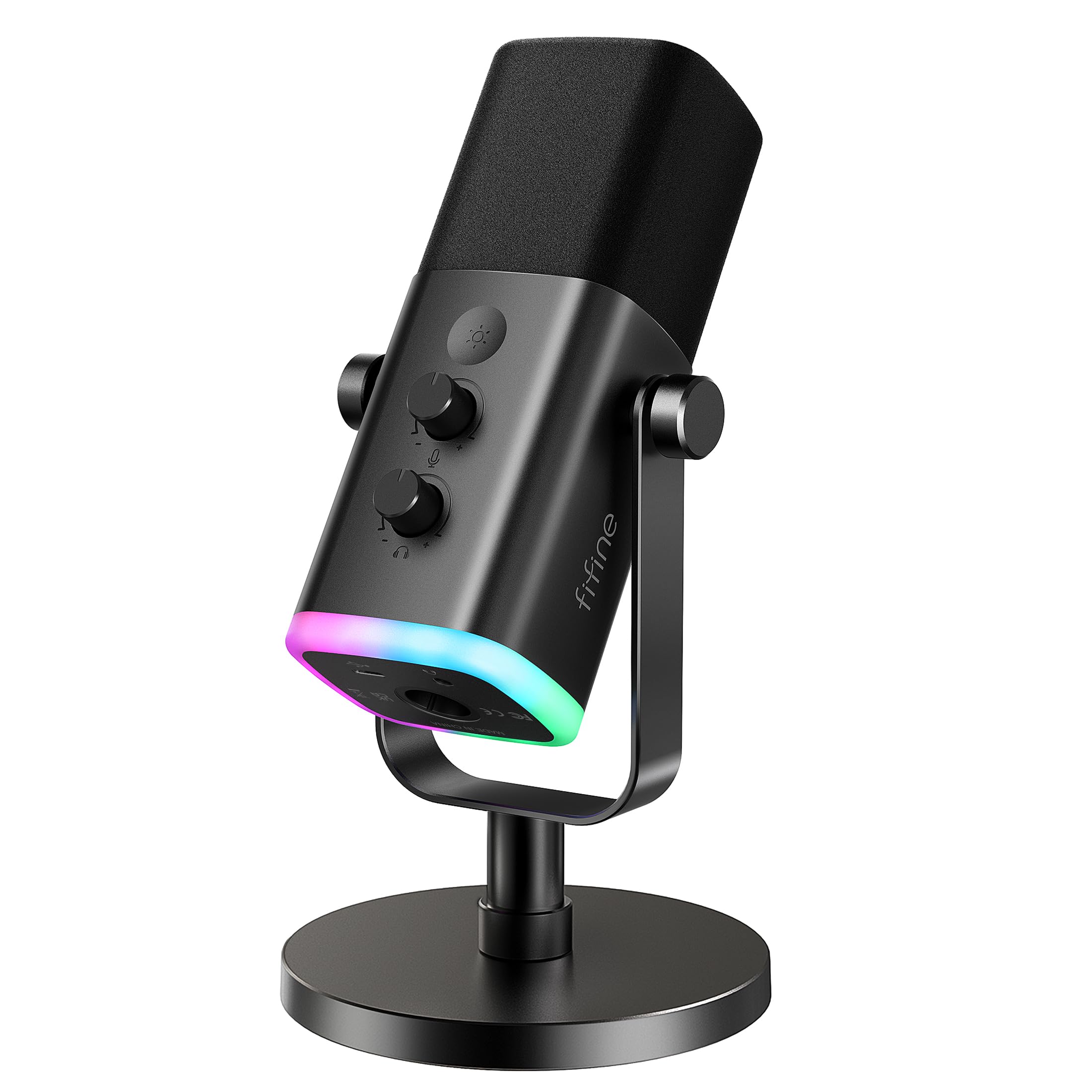
A dynamic mic with a controllable RGB ring that blends studio quality with full gamer aesthetic.
The RGB ring on the base is the instant attention-grabber — three modes and more than ten color options that sync with your PC gear, with a memory function so your chosen color returns on power-up. But this isn’t just a light show. It’s a dynamic microphone with a frequency response of 50Hz-16KHz that won’t exaggerate your voice, paired with a cardioid pickup that rejects off-axis noise for clear, natural vocal reproduction.
Like the FDUCE SL40+, it offers both USB and XLR connections. Use USB for plug-and-play convenience with tap-to-mute and an LED mute reminder, or connect via XLR to an audio interface for higher fidelity — though the RGB and function keys go inactive in XLR mode. A headphone jack lets you monitor your voice in real time, and the smooth mic gain knob adjusts your level without needing post-production. Shoppers say it’s a “significant step-up from headset quality.”
The catch: reliability draws mixed feedback. While the majority of owners love the sound and look, a smaller group reports units stopping working after about two months, and the listed audible noise of 80 db is on the higher side. The suggested recording range is a close 2 to 6 inches from the mic top, so you can’t sit far back. Use the USB-A port on the back of a PS5 console for best results.
gamers: gamers who want their mic to match their RGB setup and value the USB-to-XLR growth path.
pure audio: if long-term reliability is your top concern, the mixed durability reports suggest considering a more proven pick.
Understanding the Specs
Sample Rate & Bit Depth
You’ll see numbers like 96kHz/24bit or 192kHz/24bit on USB mics. The bit depth (24-bit) controls how much dynamic range — the space between quiet and loud — the mic can capture. The sample rate (96kHz or 192kHz) is how many times per second the audio is measured. Higher numbers mean more headroom and detail, which gives you cleaner sound for editing. For most podcasting and streaming, the difference is subtle, but it matters if you plan to process your audio heavily.
Condenser vs. Dynamic Capsules
This is the most important choice you’ll make. Condenser mics (like the Razer, ST-800, HyperX, Tascam, and FIFINE T669) are highly sensitive and capture crisp detail with a wide frequency response — great for quiet studios, but they pick up room noise and keyboard clacks. Dynamic mics (like the MAONO, FDUCE, Sennheiser, and FIFINE AM8) are less sensitive, so they naturally reject background noise and handle loud sources better — ideal for untreated, noisy rooms and for voices that need warmth rather than extreme detail.
FAQ
Will a budget USB microphone sound better than my laptop’s built-in mic?
Can I plug these microphones into my PS5 or Xbox console?
What is the difference between USB and XLR connections for a beginner?
Why do some mics pick up my keyboard clicks even with noise suppression on?
How many feet away from the microphone should I sit?
How long does a budget studio microphone typically last?
Do I need a pop filter if I already have a windscreen?
Can I use these microphones with an acoustic guitar or other instruments?
Final Thoughts: The Verdict
Across the board, the best budget studio microphone is the Razer Seiren V3 Mini because it delivers clear, reliable sound with the single most useful feature for call-heavy days — the tap-to-mute sensor — in a compact, affordable package. If you want a complete studio setup in one box, grab the ST-800 Podcast Kit with its boom arm and accessories. And if you’re a gamer building an RGB setup or want the USB-to-XLR growth path, the FIFINE AM8 is the one to reach for.
How We Picked
We do not accept paid placement. Every pick is matched to a real buyer and a real use-case; we do not hands-on test units.
Sources & Methodology
Specifications: manufacturer listings and product documentation. Review insights: verified customer reviews, as of August 2026. Pricing: not shown on this page (it changes often); check the current price via the retailer link.
As an Amazon Associate, FitlyFast earns from qualifying purchases. This does not affect which products we feature.