
Our readers keep the lights on and the weekend projects moving. As an Amazon Associate, I earn from qualifying purchases.
Specs are compiled from manufacturer listings and verified buyer reviews and can change over time — please confirm the key details on the product page before buying.
You want sports footage that looks smooth and steady, even when you’re bouncing down a trail or sprinting across a field. You don’t need flagship money for a 4K wearable that lasts a full ride or match. Choose between a thumb-sized clip-on for casual POV and a full action cam for versatility.
I’m Rikta — the founder and writer behind FitlyFast. This guide is built by comparing the manufacturers’ published specifications and the patterns across verified customer reviews, so you get each pick’s real strengths and trade-offs instead of marketing spin.
Whether you’re mounting to a helmet or clipping to a jersey, the right budget video camera for sports keeps your hands free and your footage watchable without emptying your wallet.
Our Picks at a Glance

How To Choose The Best Budget Video Camera For Sports
Buying a sports camera on a budget means deciding what you can live without. A tiny clip-on is great for a first-person view, but a full action cam offers a screen, better battery, and more mounting options. Start with your wear style, then match specs like battery and stabilization to your sport.
Battery life is the real bottleneck
A camera that dies mid-ride misses the action, so prioritize higher mAh ratings for longer sessions. Look for the battery capacity in milliampere-hours (mAh) — a higher number generally means more recording time. Some models also charge while recording, which is a lifesaver for all-day events if you can carry a power bank.
Stabilization separates watchable from unwatchable
EIS uses software to reduce shake, keeping helmet or handlebar footage watchable. Without it, fast pans and bumps turn into blurry, unwatchable clips. If your sport involves bumps or fast motion, prioritize a camera with some form of EIS.
Mounting flexibility decides where the camera goes
Decide your mount point—helmet, chest strap, handlebar, or shirt clip—before choosing a camera. Some cameras come with a full mounting kit, while the smallest thumb cams rely on magnetic holders and clips. Verify the included mount fits your intended surface, like a helmet strap or handlebar.
Quick Comparison
| Model | Best For | Video Resolution | Battery Capacity | Stabilization | Amazon |
|---|---|---|---|---|---|
| 4K Thumb Action Camera★ Best Overall | Ultra-light POV clips | 4K Ultra HD | 800mAh | None specified | Amazon |
| POV Camera 4K with WiFiBest Versatile | Long shoots with case | 4K | 500mAh | EIS | Amazon |
| RexingUSA A1Dual-Lens Pick | Front and rear recording | 1080p@30fps | Not specified | None specified | Amazon |
| CHOVE Camera Glasses | Hands-free POV eyewear | 4K | 290mAh | 6-axis Gyro + EIS | Amazon |
| RunCam Helmet Camera | Tactical and airsoft | 4K | Not specified (6 hrs claim) | None specified | Amazon |
| AKASO Brave 7 LE | All-round value | 4K30fps | 2x 1350mAh | EIS 2.0 | Amazon |
| AKASO Brave 7 LE Bundle | Complete kit with 128GB | 4K30fps | 2x 1350mAh | EIS 2.0 | Amazon |
| GoPro MAX | 360-degree footage | 5.6K30 (360) | Not specified | Stabilization | Amazon |
| DJI Osmo Action 4 | High-end low-light | 4K/120fps | 1770mAh | 3 modes | Amazon |
In‑Depth Reviews
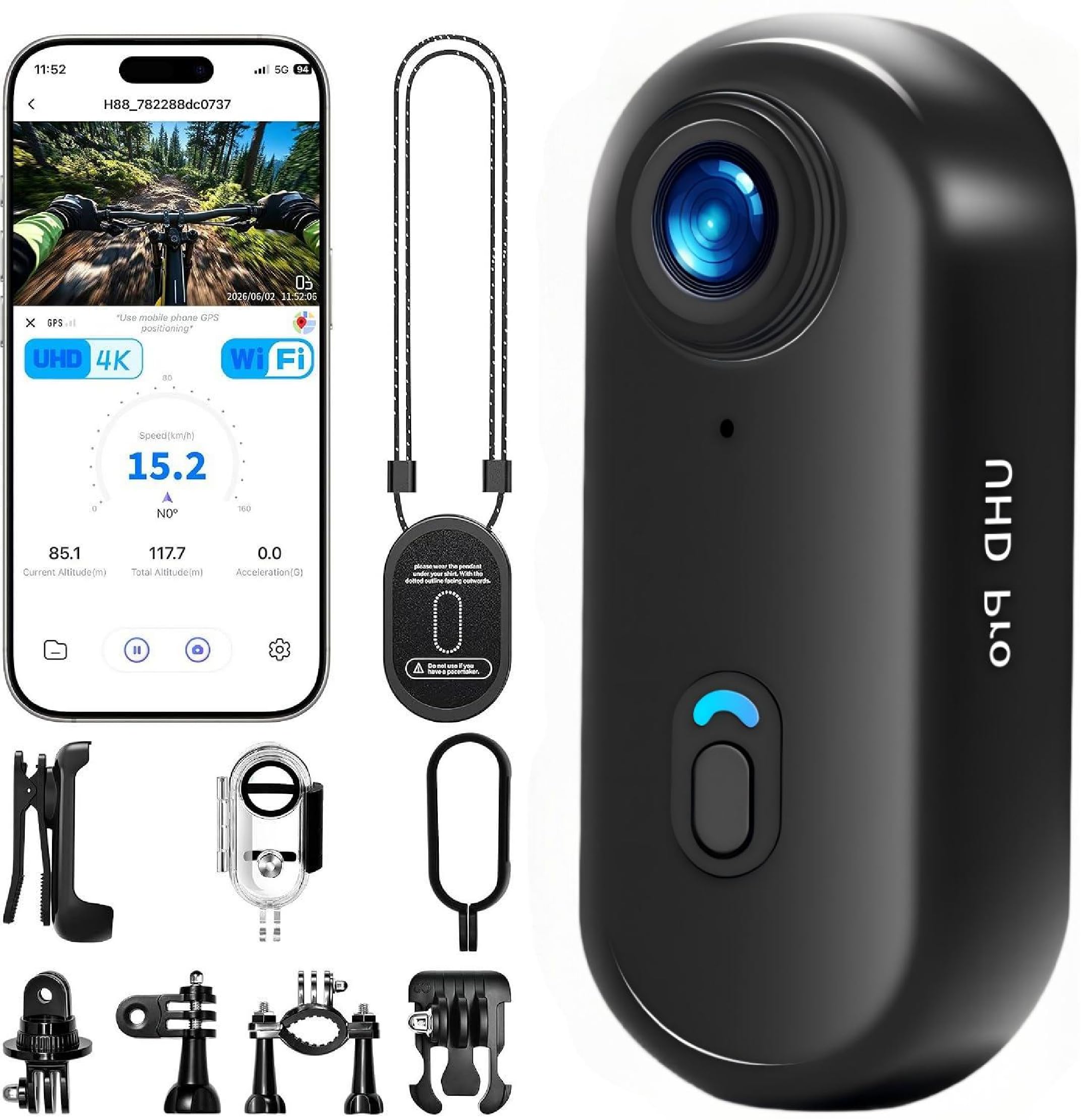
1. 4K Thumb Action Camera
The featherweight clip-on that disappears on your collar yet delivers 4K sharpness.
You get more recording time before the battery dies: the 800mAh battery offers 60% more capacity than the POV Camera 4K’s 500mAh cell, so you can capture the final sprint instead of a dead screen. At just 36g, it’s so light that buyers report forgetting they’re wearing it. The included 128GB microSD card (U3 speed class, a fast card for smooth 4K writing) means you can record for hours without buying extra storage.
What wins people over is the video quality — it’s the most-praised feature, with owners calling it “surprisingly good” for a camera this size. The 120° wide-angle lens captures a broad scene, while the waterproof case (rated to 30 meters) lets you take it snorkeling or into a downpour without worry. Set-up is genuinely one-touch, and the Wi-Fi app connection makes pulling clips onto your phone quick.
Owners mention “great value for the price,” and the verdict holds up against pricier rivals: it lacks the fancy stabilization of the AKASO above, so fast panning can get a little shaky. But for a first-person view of a ride, a hike, or a vlog, this is the most balanced pick on the list — the magnetic mount and clip make it versatile enough for almost any sport.
What Wins Owners Over
- Sharp 4K video with a 120° wide-angle lens
- Featherlight at 36g, barely noticeable on clothing
- 30-meter waterproof case included
- 128GB microSD card in the box
Keep in Mind
- No image stabilization for fast, bumpy action
- Compact size means a tiny screen
Best for: Anyone who wants a tiny, wearable 4K camera for casual sports, travel, and vlogging without fuss.
Think twice if: Your sport involves heavy vibration, since there’s no stabilization to smooth out the shakes.
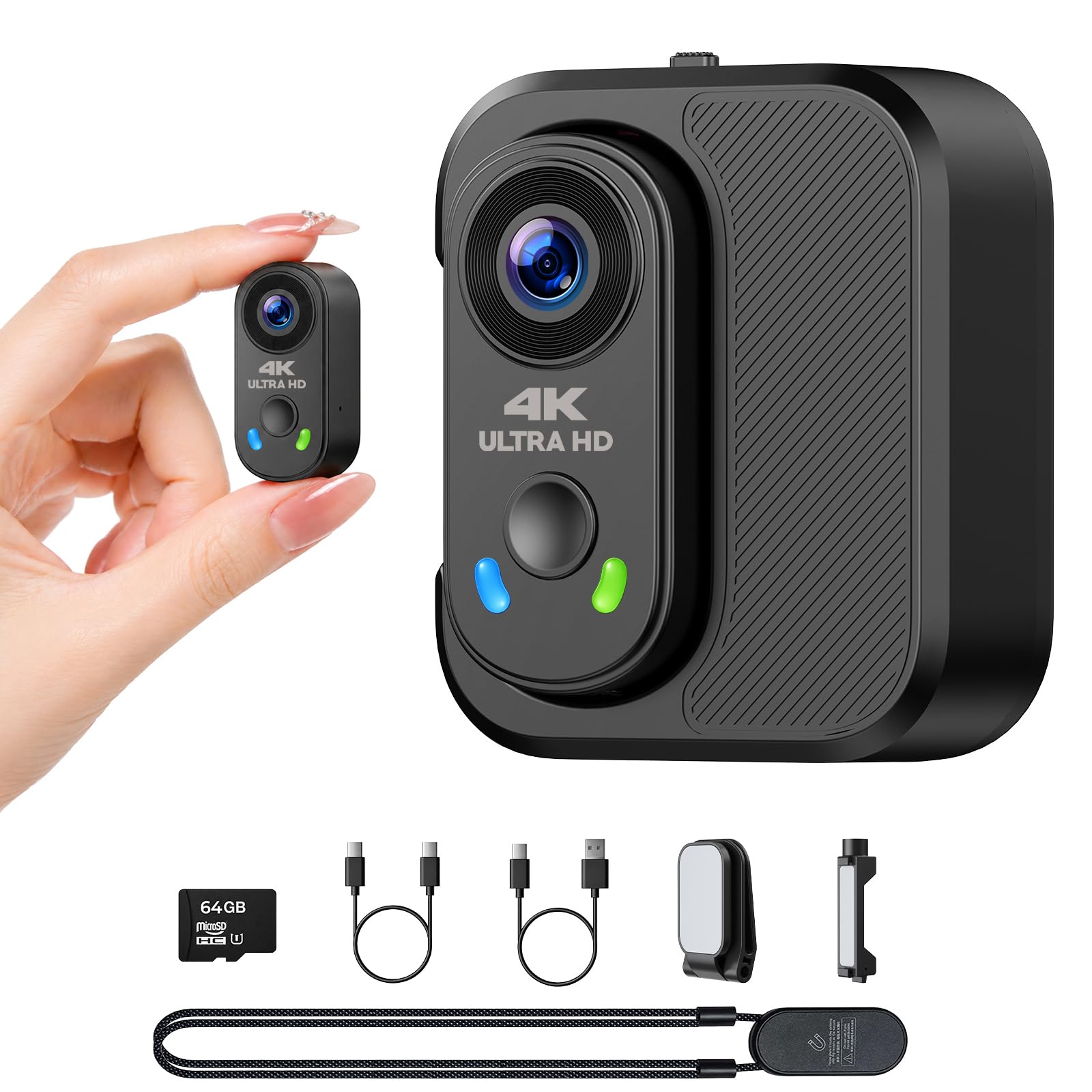
2. POV Camera 4K with WiFi
A thumb cam with an 1800mAh charging case that stretches a 500mAh battery into a full-day affair.
You see more of the scene with the 150° wide-angle glass lens, which captures a broader field of view than the 120° on the Thumb Action Camera above — handy when you’re helmet-mounted and want the whole trail in frame. The camera weighs just 28g, so you’ll barely notice it. Its real trick: the 1800mAh charging case extends recording to roughly three hours of continuous 4K.
The magnetic mount and one-second chest lanyard are what owners rave about, with the 64GB pre-installed card meaning zero set-up friction. Video quality is the most-mentioned strength, and the EIS (electronic image stabilization) smooths out a bumpy ride noticeably better than the competition. The Viipulse app makes Wi-Fi transfer and control simple, and OTG direct transfer via USB-C works with iPhone 15 or later.
The catch is real though: this camera is not waterproof, so keep it dry. Some owners also note that the 3-minute file segments with gaps require editing, and a handful report the stabilization isn’t flawless when panning fast. It’s a solid middle-ground pick if you value battery flexibility and quick phone transfers over water resistance.
Hands-Free Design: The magnetic lanyard clips to your chest in one second, making it feel like you’re not wearing a camera at all.
Real Trade-off: The lack of waterproofing rules out wet-weather sports and snorkeling, so treat it as a fair-weather companion.
3. RexingUSA A1 Two-Way Action Camera
The rare budget cam that records front and rear simultaneously, so your whole ride is on tape.
You skip buying two cameras for two angles: the A1 records both views simultaneously with dual lenses at 1080p@30fps each, so motorcyclists and cyclists can document the road ahead and the traffic behind. A wireless wrist remote lets you snap images or lock an important recording without reaching for your phone — a real safety plus while riding.
The IMX307 sensor is a dependable imaging chip, and it’s backed by FCC, CE, and RoHS certifications for quality assurance. Loop recording automatically overwrites the oldest footage when the card fills up, so you never lose a moment due to full storage. Owners note that having a prominent camera on the helmet actually makes other road users “more conscious and considerate,” a nice side benefit for commuters.
The trade-offs: video resolution tops out at 1080p, which is lower than the 4K of the thumb cams above, and the memory card is not included. Battery life also draws a “just needs a longer battery life” note from riders. If your priority is two-angle safety coverage over maximum resolution, this is the pick.
Safety Angle: The wrist remote and visible dual lenses make this more of a ride-recorder than a vlog camera, ideal for commuters.
Resolution Caveat: Sticking at 1080p means less cropping room in editing than a 4K action cam offers.
4. CHOVE 4K Camera Glasses
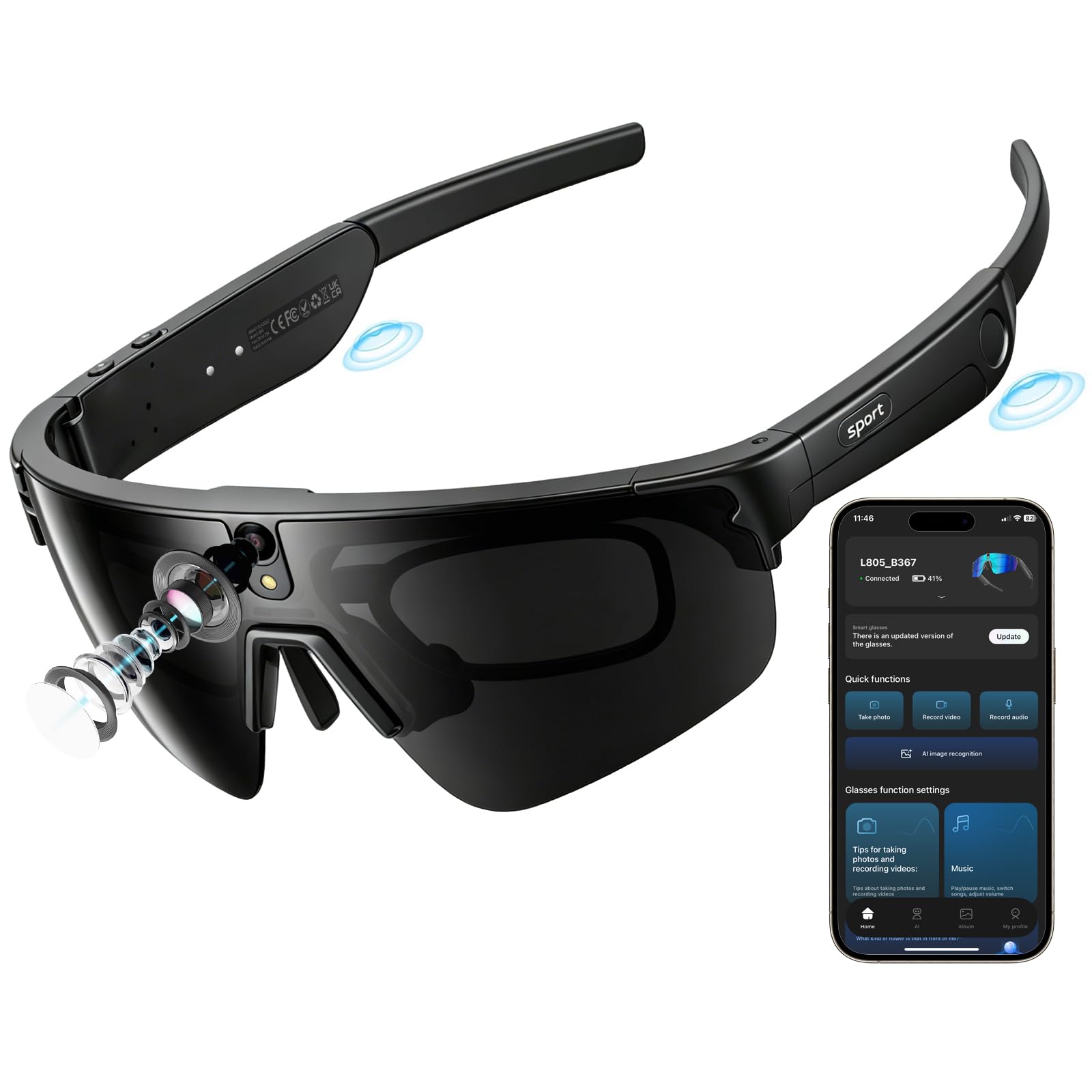
Sunglasses that shoot 4K from your line of sight, with stabilization tuned for the trail.
The appeal here is pure point-of-view: you look where you’re going, and the built-in 8MP camera captures exactly what you see. A 6-axis Gyro plus EIS (electronic image stabilization) works together to reduce shakiness, and owners confirm it holds up well during outdoor activity — one parent reports their teen reaches for these over a GoPro on every ride. Video quality is the top praised feature by a clear margin.
At 46.8g with a 290mAh battery, they’re light enough for daily wear, and the IP66 waterproof rating shrugs off rain, sweat, and dust. There’s also a clever removable inner bracket: if it limits your peripheral vision, you can detach it for a fully unobstructed view. The dual-mic noise reduction keeps your voice clear even in wind.
The honest limit is fit: they’re not designed for prescription glasses wearers, and a few owners found the tailoring “crazy fit.” Audio quality gets a mixed nod, and touch controls can feel delayed. If you want a camera you never have to mount, and your eyes are happy in standard sunglasses, this is a unique way to capture sports POV.
Why It Delights
- Captures true first-person view while you wear shades
- IP66 waterproof rating handles weather and sweat
- 6-axis Gyro + EIS keeps footage steady
- Removable inner frame clears peripheral vision
Who Should Pass
- Prescription glasses wearers will struggle with fit
- Small 290mAh battery limits long all-day shoots
Reach for this if: You want hands-free POV from your eyes, not a mount, and you’re filming cycling or hiking.
Look elsewhere if: You need to swap lenses for prescription vision or film for hours without charging.
5. RunCam Helmet Camera

A bendable camera tube that angles any way you need, built for airsoft and tactical helmets.
Airsoft, paintball, and tactical players get a camera that flexes into position. The unique slider and magic tape mounts fit a variety of helmets, and the flexible tube lets you aim the lens exactly where you’re looking — owners say this makes aiming “nearly easy.” One-touch recording with vibration alerts means you know it’s rolling without looking at a screen.
The 4K sensor captures sharp video, and the 6-hour battery claim is the headline for long skirmish days. Wi-Fi sync with the app gives real-time preview so you can check your framing before a match. Owners who use it for head-cam duty prefer this form factor over a standard action cam because the controls are simple to use without seeing them.
The weak spot is audio: “10/10 Video. 3/10 Audio,” as one player sums it up — the tiny mic gets overwhelmed by loud noises. Battery life also draws mixed reports, with some saying it barely stretches an hour despite the 6-hour claim. If you’re chasing tactical footage and can live with so-so sound, this bendable cam is a niche winner.
Form Factor: The bendable tube separates it from rigid cameras, letting you aim precisely on a helmet.
Honest Limit: The onboard mic struggles with loud claps and bangs, so external audio is a consideration.
6. AKASO Brave 7 LE 4K30FPS
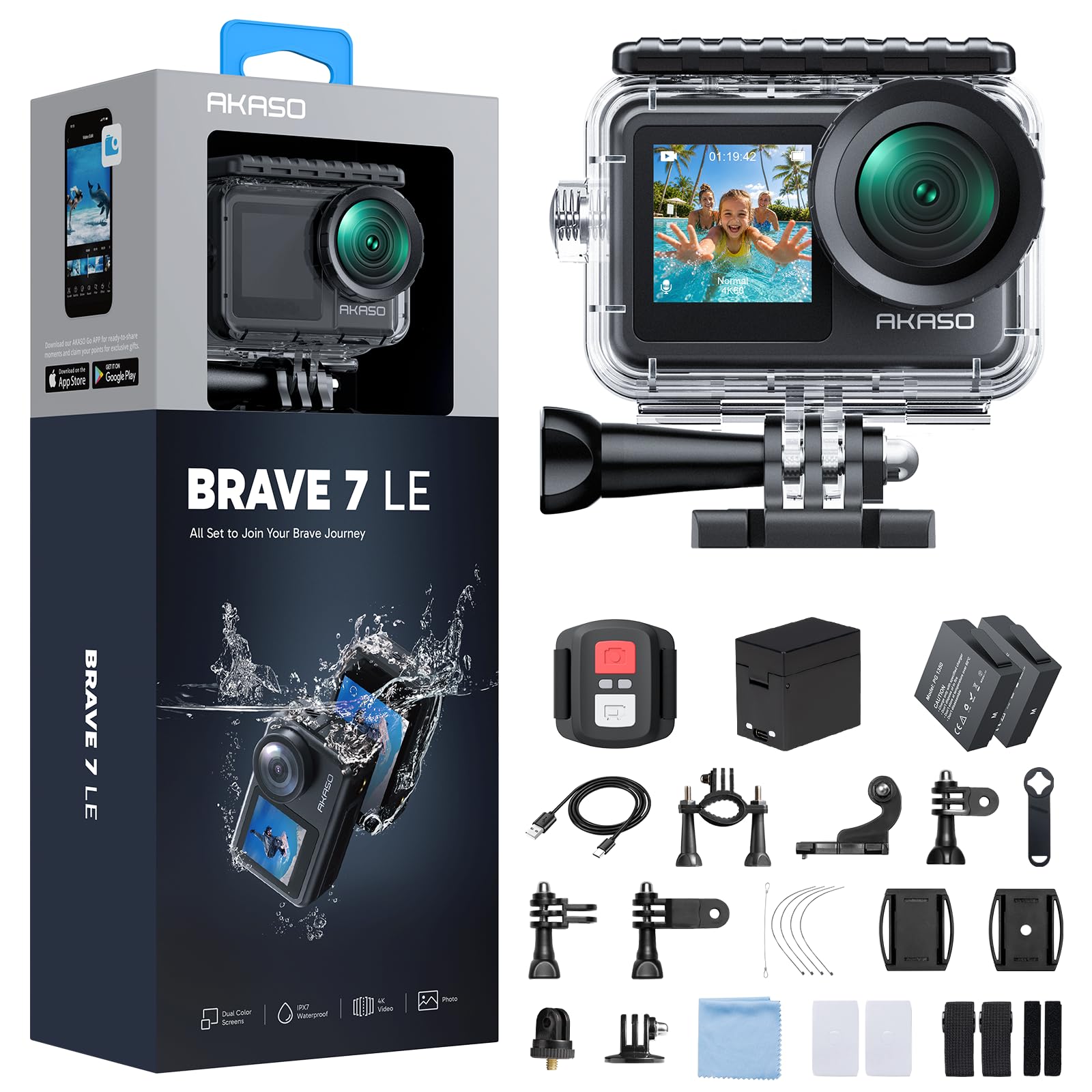
The crowd-favorite action cam with a front screen and two batteries that outlast most rivals.
This is the pick that dominates the budget conversation — 4.4 stars across 6,600+ owners makes it the most-reviewed camera on this list. Its 4K30fps footage is crisp in daylight, the 6-axis EIS 2.0 gives gimbal-like stability for fast movement, and the dual screens (a 2-inch touch back and a front selfie screen) make framing easy. For sports like cycling and vlogging, it’s the complete package.
The two included 1350mAh batteries are the real workhorses, giving you roughly 2 hours each for around 4 hours of total shooting — a huge edge over single-battery thumb cams. The IPX7 water resistance handles rain and splashes without a case, and with the included waterproof housing you can dive to 131 feet. A remote control, mounting kits, and 20MP stills round out an all-in-one kit.
Owners consistently praise the value-for-money, which is the most-mentioned strength, and the quality of the footage. The honest caveats: low-light performance gets grainy, and the built-in audio is quiet with the last few seconds sometimes cut off. It beats the thumb cams above on stabilization and battery, making it the best all-rounder for active sports.
The Big Wins
- Two 1350mAh batteries for ~4 hours total
- 6-axis EIS 2.0 stabilizes fast action
- Waterproof to 131ft with included housing
- Front screen for easy selfie framing
The Small Gripes
- Low-light footage turns grainy
- Audio is quiet and can cut off slightly
The go-to pick: For most sports buyers, this is the balanced choice that does everything well without a premium price tag.
Consider others if: You plan to film mostly at dusk or night, where the low-light grain will show.
7. AKASO Brave 7 LE with 128GB Bundle

The same beloved Brave 7, now bundled with a 128GB card so you never scramble for storage.
This is essentially the AKASO Brave 7 LE above, but the bundle adds a 128GB MicroSDXC U3 memory card — a meaningful upgrade for long sessions, since 4K footage eats storage fast. Everything else carries over: the 4K30fps sensor, 6-axis EIS 2.0 stabilization, dual screens, and the same 2x 1350mAh batteries. Quality and value-for-money are the top-praised aspects, with owners calling it a “great starter model.”
The waterproofing to 131ft (40m) with the housing makes it a favorite for snorkelers, and the footage stays steady even for motorcycle use. The included remote, 2 batteries, and mounting kits mean you have a full rig from the start. Owners note the battery drains faster when you run Wi-Fi and stabilization together, so keep that second cell handy.
Compared to the standard Brave 7, you’re paying a bit more but removing the need to buy a memory card separately — and the 128GB capacity is twice the 64GB you’d find on a thumb cam. The one recurring puzzle is the adapter selection, which some find excessive and missing the exact chest-mount part they need. For a complete, ready-to-film kit, this is the one.
Out-of-the-Box Ready: Card, batteries, remote, and mounts all included — just format and go.
The Setup Snag: The bundle’s adapter variety can confuse; you may need a specific extra mount for chest rigs.
8. GoPro MAX

The only camera here that captures everything around you at once, then reframes it after the fact.
For sports where the action swirls around you — think mountain biking with friends or capturing everyone’s reaction at a pool — the MAX’s 5.6K30 spherical video is a different league. You never need to aim; you just record, and the GoPro Quik app reframes the 360 footage into standard videos from any angle. The Stealth Mounting feature even stitches the pole out of your shots, giving drone-like self-capture from a stick.
In Single Lens (HERO) mode, it shoots standard 1080p or 1440p video like a regular GoPro, so it’s genuinely two cameras in one. The 16.6MP 360 photos capture the whole scene, and a built-in touch screen makes setup easy. Owners call it “best of both worlds,” praising the video quality and the clever 1/4-20 tripod mount that’s a big improvement over the original.
The trade-offs are real: the lens glass is prone to scuffs even with careful handling, which can ruin certain angles, and 360 shooting drains the battery in about an hour — avoid charging while recording to prevent overheating. It’s the most expensive non-DJI option here, but it’s the only one that gives you reframing freedom after the action is done.
Post-Shoot Flexibility: Reframing 360 footage means you never miss the moment, even if you weren’t looking at it.
Care Required: The exposed lens glass scratches easily, so treat the camera with kid gloves.
9. DJI Osmo Action 4 Standard Combo

The low-light king with a 1/1.3-inch sensor that leaves budget rivals in the dust at dusk.
If you film in challenging light — an evening ride, a dim gym, a shaded trail — the Osmo Action 4 is the clear upgrade from the AKASO. The larger 1/1.3-inch sensor with 2.4μm pixels captures dramatically cleaner low-light footage, and the 1770mAh battery lasts up to 150 minutes, working in temps as low as -20°C (-4°F). It’s waterproof to 18m without a case, so you can take it straight into the water.
Shooting in 4K at 120fps with a 155° ultra-wide field of view gives you buttery-slow-motion with minimal cropping. The magnetic quick-release system snaps between mounts and vertical orientation in seconds, and the three stabilization modes keep everything level. DJI’s reputation for durability shows — one owner ran it on a 170mph dragster with excellent stability and no overheating in Caribbean heat.
The price-to-value ratio is why it leads the premium tier: owners consistently note it “beats a GoPro” on thermal performance and value, while the 10-bit color and D-Log M profile give editors real grading headroom. The mixed mentions around battery life and occasional overheating in heavy use are the only reservations — and for a top-tier action cam, these are minor. This is the pick if your budget stretches and image quality is non-negotiable.
The Pro-Grade Edge
- Superior low-light via 1/1.3″ sensor
- 4K/120fps slow-motion with 155° view
- Waterproof to 18m with no case needed
- Magnetic quick-release for instant mounting
The Cost of Premium
- Highest price on this list
- Some owners note battery drain and heat under heavy load
Splurge for this if: You want the best possible image in low light and don’t mind paying for professional-grade features.
Save your money if: You mostly film in bright daylight, where the AKASO at half the price performs nearly as well.
Understanding the Specs
Battery Capacity (mAh)
Milliampere-hours (mAh) tells you how much energy the battery holds — a higher number generally means longer recording time. The AKASO’s 1350mAh cells outlast a thumb cam’s 800mAh, and the DJI’s 1770mAh pushes to 150 minutes. If you film long events, look for a camera that charges while recording or includes a charging case.
Electronic Image Stabilization (EIS)
EIS uses software to smooth out the shakes from your movement — essential for helmet or handlebar footage. Without it, fast pans can blur and make footage hard to watch. The DJI and AKASO offer the most mature EIS, while cheaper thumb cams often skip it entirely, so check carefully if your sport involves bumps.
FAQ
Will a 4K thumb camera fit on my bicycle helmet?
How long does a 500mAh battery last for sports recording?
Is image stabilization worth paying extra for in a sports camera?
Can I use these cameras for underwater sports like snorkeling?
What does the microSD speed class matter for 4K video?
How do camera glasses compare to a helmet-mounted camera for cycling?
Is a 360-degree camera better than a standard action cam for sports?
What is the difference between 1080p and 4K video for sports?
Can I control a sports camera remotely while riding?
How do I transfer sports footage to my phone quickly?
Final Thoughts: The Verdict
For most buyers, the budget video camera for sports winner is the AKASO Brave 7 LE because it balances 4K quality, real stabilization, dual batteries, and waterproofing at a price that beats its rivals. If you want a tiny, featherweight clip-on for casual POV clips, grab the 4K Thumb Action Camera. And if low-light performance is your top priority, the DJI Osmo Action 4 is the premium pick that justifies its cost with a larger sensor and pro-grade video.
How We Picked
We do not accept paid placement. Every pick is matched to a real buyer and a real use-case; we do not hands-on test units.
Sources & Methodology
Specifications: manufacturer listings and product documentation. Review insights: verified customer reviews, as of August 2026. Pricing: not shown on this page (it changes often); check the current price via the retailer link.
As an Amazon Associate, FitlyFast earns from qualifying purchases. This does not affect which products we feature.