
Our readers keep the lights on and the weekend projects moving. As an Amazon Associate, I earn from qualifying purchases.
Specs are compiled from manufacturer listings and verified buyer reviews and can change over time — please confirm the key details on the product page before buying.
Picking a budget video drone used to mean accepting wobbly, grainy footage and a battery that dies before you figure out the controls. That trade‑off is vanishing fast. The current batch of sub‑ quadcopters packs GPS‑assisted flight, 4K cameras, and enough flight time to actually learn the ropes — without requiring FAA registration. This guide breaks down the nine strongest contenders, matching each to the real‑world scenario where it earns its keep.
I’m Rikta — the founder and writer behind FitlyFast. This guide is built by comparing the manufacturers’ published specifications and the patterns across verified customer reviews, so you get each pick’s real strengths and trade-offs instead of marketing spin.
Whether you are a complete beginner looking for a confidence‑boosting first flight or a content creator trying to stretch every dollar into usable aerial footage, the right budget video drone is waiting below.
Our Picks at a Glance


How To Choose The Best Budget Video Drone
A smart buy starts with three big decisions: how the drone keeps itself from flying away, how long it stays in the air, and how much camera quality you actually need. Let’s walk through each.
GPS and Auto‑Return — Your Safety Net
A drone without GPS is a kite with a motor. A budget video drone with a GPS module locks onto satellites, holds its position against a breeze, and — most importantly — flies itself back home if the signal drops or the battery runs low. This single feature is the difference between a fun afternoon and a lost quadcopter, especially for learners.
Flight Time and Battery Strategy
Every drone’s advertised “max flight time” assumes perfect conditions and a hover. Real flying — shooting video, fighting wind, making climbs — chews through power faster. Models that come with two batteries are a huge advantage, giving you double the airtime without sitting through a recharge.
Camera Realism: 4K on a Budget
“4K” in this price bracket means the sensor captures that many pixels, but it rarely means cinematic quality. What you get is good‑enough footage for social media, family memories, and learning to frame shots. True image stabilization (EIS) is a step up that smooths out the jello effect caused by wind vibrations.
Built‑In Screen vs. Phone‑Only
Some drones stream live video straight to your phone via an app. That works, but a bright phone screen is hard to see outdoors. An increasing number of budget drones now include a dedicated screen on the controller — no phone needed, no app fuss, and the display is tune for sunlight.
Quick Comparison
| Model | Best For | Camera | Flight Time | Weight | Amazon |
|---|---|---|---|---|---|
| HYTOBP P17★ Best Overall | Maximum battery value (3-pack) | 4K adjustable | 54 min | Under 249 g | Amazon |
| SIMREX G29Also Great | First‑time flyers who want safety | 4K adjustable | 40 min | 8 oz | Amazon |
| Oddire HK11Pro Features | Extended 48‑min filming sessions | 4K UHD | 48 min | 249 g | Amazon |
| PLEGBLE (Controller Screen) | Built‑in 5″ screen flyers | EIS 4K | 70 min | Under 249 g | Amazon |
| TOPBLASTERBOX H11 | Kids and teens learning to fly | 4K UHD | 45 min | 210 g | Amazon |
| UFLYTOO LA (Screen Controller) | Phone‑free outdoor flying | 4K | 45 min | Under 249 g | Amazon |
| Ameta S20 Pro | Sony IMX258 sensor sharpness | 4K Sony IMX258 | 50 min | 181 g | Amazon |
| SJsharp IDEA12GPS | Complete beginner bundle | 4K adjustable | N/A | Under 250 g | Amazon |
| suangrc X9 | Low‑cost entry with GPS safety | 4K | 18 min | 249 g | Amazon |
In‑Depth Reviews
1. HYTOBP P17
The HYTOBP P17 gives you three batteries for the price of one, stretching airtime to 54 minutes.
No other budget drone in this lineup packs three intelligent batteries into the box. That means 54 minutes of total flight without waiting for a recharge — enough time to practice landings, try the Follow Me mode, and still have power left for sunset shots. The 4K camera is adjustable by 90° mid‑flight, and the 5G Wi‑Fi transmission provides a steady live feed. The Obstacle Alert system adds an audible warning when the drone gets too close to an object, which is a genuine confidence booster for raw beginners.
The under‑249g weight means no FAA registration, and the included carrying case keeps everything organized. That said, a few reviewers point out losing the drone on its very first flight when the connection dropped and the auto‑return failed to engage. Others found the camera output to be grainy rather than true HD. This is a fine entry point for the lowest financial risk, but the connection quality and camera sharpness are not in the same league as the higher‑rated picks on this list.
best for: absolute beginners on a tight budget who want the most flight time per dollar and are okay with basic camera quality.
skip it if: reliable long‑range connection and crisp video are your priorities — the SIMREX or Oddire are better bets for those needs.
2. SIMREX G29
The SIMREX G29 is the crowd‑favorite entry‑level drone that safety‑minded beginners trust most.
What makes this the top pick is the combination of a dependable 4K camera and a GPS system that genuinely prevents flyaways. The 90° electrically adjustable lens lets you tilt from horizon to straight down mid‑flight, using 5G Wi‑Fi to stream the view up to 2296 feet. And the optical flow and altitude hold work together to keep the hover rock‑steady, so your first video clips don’t look like a shaky home movie.
You get confidence from auto‑return (the drone flies back to you if the signal drops or the battery runs low) and the Find My Drone feature (it shows the last known location on a map if you land far away). Across the included batteries you have 40 minutes of total flight time, so you can practice without recharging constantly. The honest trade‑off: the 4K sensor (a camera that captures 3840×2160 pixels) is clear for the price but won’t match a pro mirrorless camera in low light — in daylight, though, buyers report the results are genuinely impressive.
reliable flight experience
- GPS auto‑return + Find My Drone map feature
- 90° adjustable 4K camera with stable FPV
- Lightweight sub‑249g build needs no FAA registration
limited range
- Camera performance falls off in low‑light conditions
- Phone‑based app viewing instead of a dedicated controller screen
grab this if: you want the safest possible learning experience — GPS that brings it home, a clear enough camera to practice framing shots, and a weight that keeps you out of FAA paperwork.
think twice if: you need a built‑in controller screen for sun‑glare‑free flying; this model relies on your phone for the live view.
3. Oddire HK11
The Oddire HK11 stretches a single battery session into a full afternoon of aerial filming.
Powered by two 7.7V 1800mAh batteries, the HK11 delivers up to 48 minutes of total flight time — a clear step above the 18‑minute single‑pack competition. That extra airtime matters when you are learning to follow a subject or practicing smooth orbits. The 4K UHD camera records at 2048x1088P video and 4096x3072P stills, with an F2.15 110° wide‑angle lens that adjusts within 90° from the remote or the app.
Owners consistently praise the GPS Follow‑Me and Waypoint Flight modes for being genuinely usable, not just check‑box features. The 5G Wi‑Fi transmission module and remote‑mounted signal repeater hold a connection up to 1640 feet. The catch is a somewhat confusing app situation — owners mention you need the “XDRONE GO” app rather than the one linked in the manual, and compass calibration is required every power‑on. Still, the durable build has survived its share of crashes, which speaks to its beginner‑proof construction.
versatile performance
- 48 minutes total flight with two powerful 7.7V batteries
- Long 1640‑foot transmission range for open‑field flying
- Surprisingly durable frame handles beginner crash landings
basic camera
- App setup is fiddly — you must use “XDRONE GO” instead of the default link
- Compass calibration needed before each flight session
reach for this if: you plan longer, uninterrupted flight sessions and want a drone that can survive the inevitable beginner bump.
choose something else if: you dislike app‑related fuss; the Oddire demands a specific app and a short calibration ritual every time you fly.
4. PLEGBLE (Controller Screen)
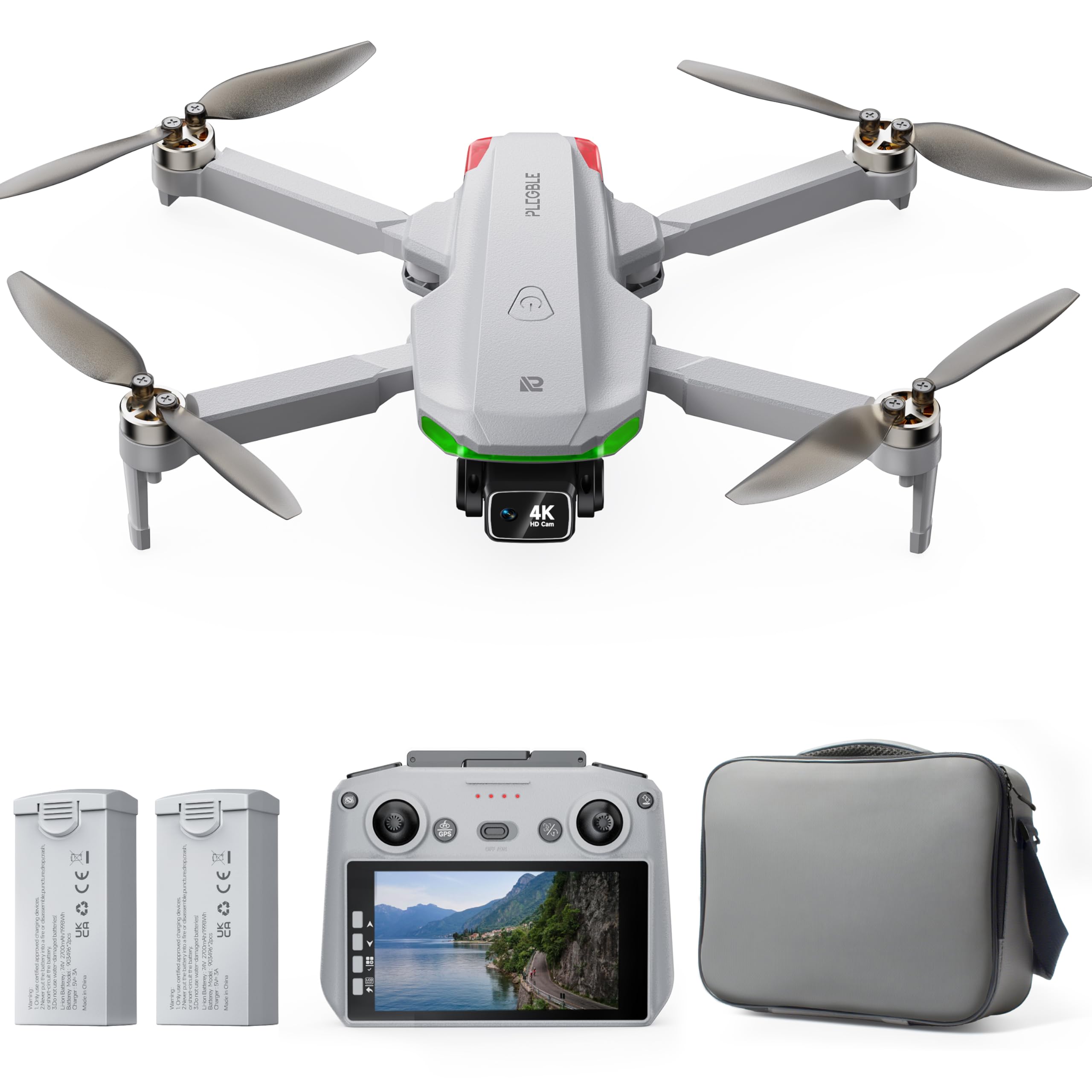
The PLEGBLE eliminates the phone from your flying kit with a bright, built‑in 5‑inch screen.
This is the drone for anyone tired of squinting at a phone screen in sunlight. The 5.0‑inch HD display on the controller shows your FPV feed with zero latency and includes local photo preview and SD card formatting — no app required. The camera is a 4K unit at 30 fps with a 130° wide‑angle lens and 90° adjustable tilt, and the electronic image stabilization (EIS) smoothes out the jello effect that plagues cheaper drones in a breeze.
Customers note that the GPS lock is solid, the auto‑return triggers reliably, and the Follow‑Me mode works well for vlogging or biking. The dual 7.6V 2700mAh batteries push total flight time to a claimed 70 minutes — the longest in this roundup. On the less glamorous side, the slow charging speed and a stated 600‑meter range (despite a longer theoretical max) mean you’ll want to plan your flights close to home. An occasional unit arrives with calibration issues, but the U.S.‑based support team typically resolves them within 24 hours.
best for: creators and new pilots who want a phone‑free, sun‑friendly flying experience with the longest battery endurance in this class.
consider alternatives if: you need a super‑fast charger or plan to fly at extreme range; the real‑world reach settles around 600 meters and charging is slow.
5. TOPBLASTERBOX H11
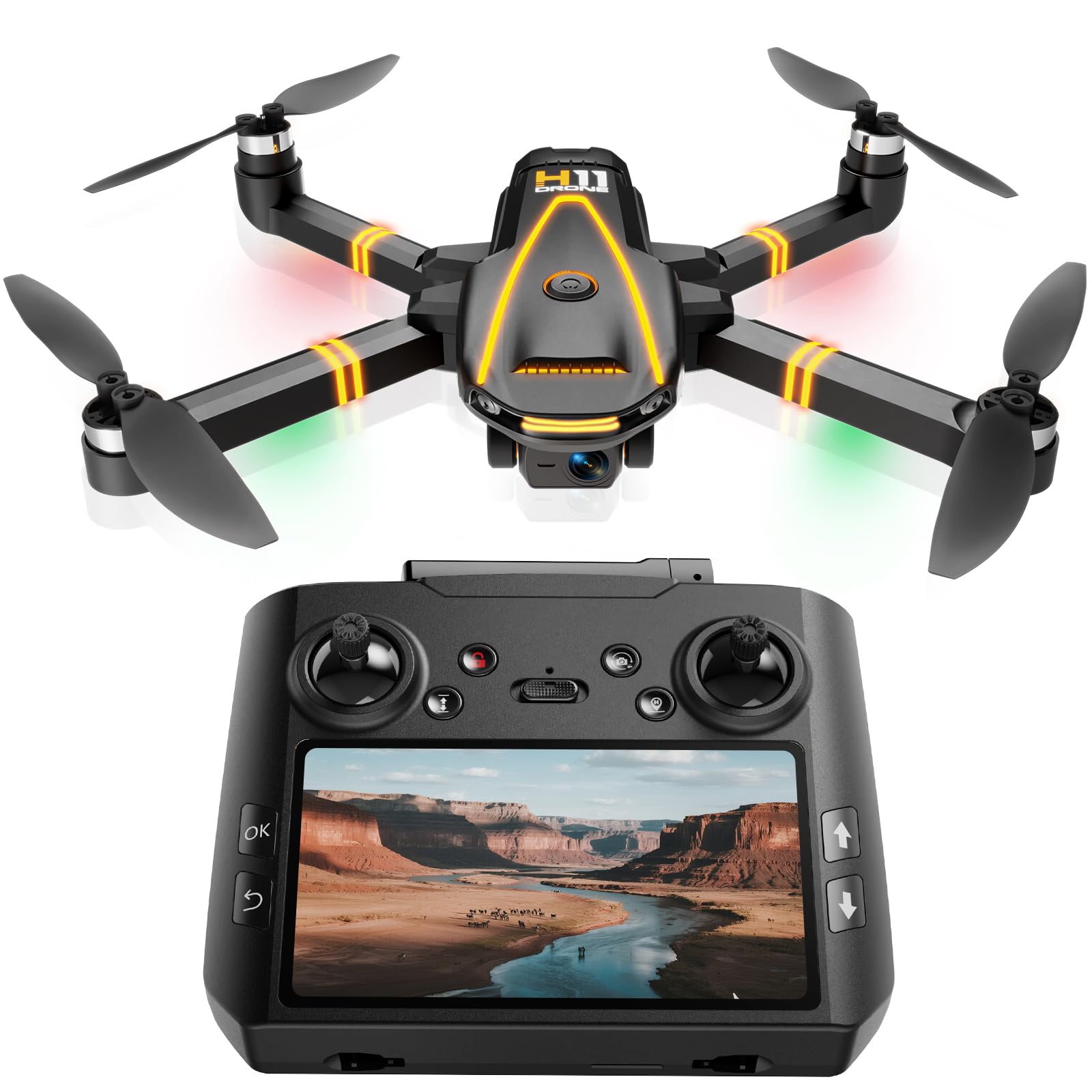
The H11 folds the classic beginner drone features into a package kids actually enjoy flying.
This one stands out because the SD card is included right in the box — no racing out to buy extra storage before the first flight. The 4K UHD camera with a 90° adjustable lens captures 3840×2160 photos, and the built‑in HD screen on the controller gives real‑time FPV without needing a phone. The GPS auto‑return and optical flow positioning give young pilots a safety net, and the foldable, sub‑249g build makes it travel‑friendly.
The feature that families love is the one‑key takeoff and landing paired with three speed settings — a kid can start slow and graduate to faster flights. Reliability is a mixed topic in the feedback: some units work flawlessly, while a handful arrive with battery charging issues (the LED never turns green). That inconsistency is the main reason to buy from a seller with a solid return policy. On the plus side, when it works, the video quality and stable hover win over nearly every young first‑timer.
perfect gift for: children and teenagers ready for their first real drone experience — it includes everything in one box and grows with their skill level.
buy with caution if: you expect flawless hardware every time; a small batch has reported battery or charger faults that require a return.
6. UFLYTOO LA (Screen Controller)

The UFLYTOO LA cuts the phone cord with a bright controller screen and a sturdy, beginner‑friendly flight feel.
This drone aims straight at the user who finds phone‑based FPV unreliable in daylight. The controller screen is simple — non‑touchable — but it shows the live feed without glare struggles. The brushless motors handle wind well, and the GPS Return‑To‑Home function gets consistent praise from owners who tested it deliberately. Two 2200mAh batteries push total flight time to 45 minutes, which is plenty for a full afternoon session.
The real‑world feedback is split between solid performance and a remote that can be hard to see in bright sun. Several long‑term owners reported that the drone flew well for nearly a year before a crash, after which manufacturer support went silent. That means this pick is best treated as a fun, capable gadget rather than a long‑term investment. When it works, the range is impressive — buyers mention clear transmission up to 1800 feet — and the included carrying case keeps everything organized.
go for this if: you want a simple, phone‑free flying experience and prefer a drone that is easy to pack and store.
hesitate if: you expect long‑term manufacturer support after a crash; some owners found customer service unresponsive after the warranty period.
7. Ameta S20 Pro
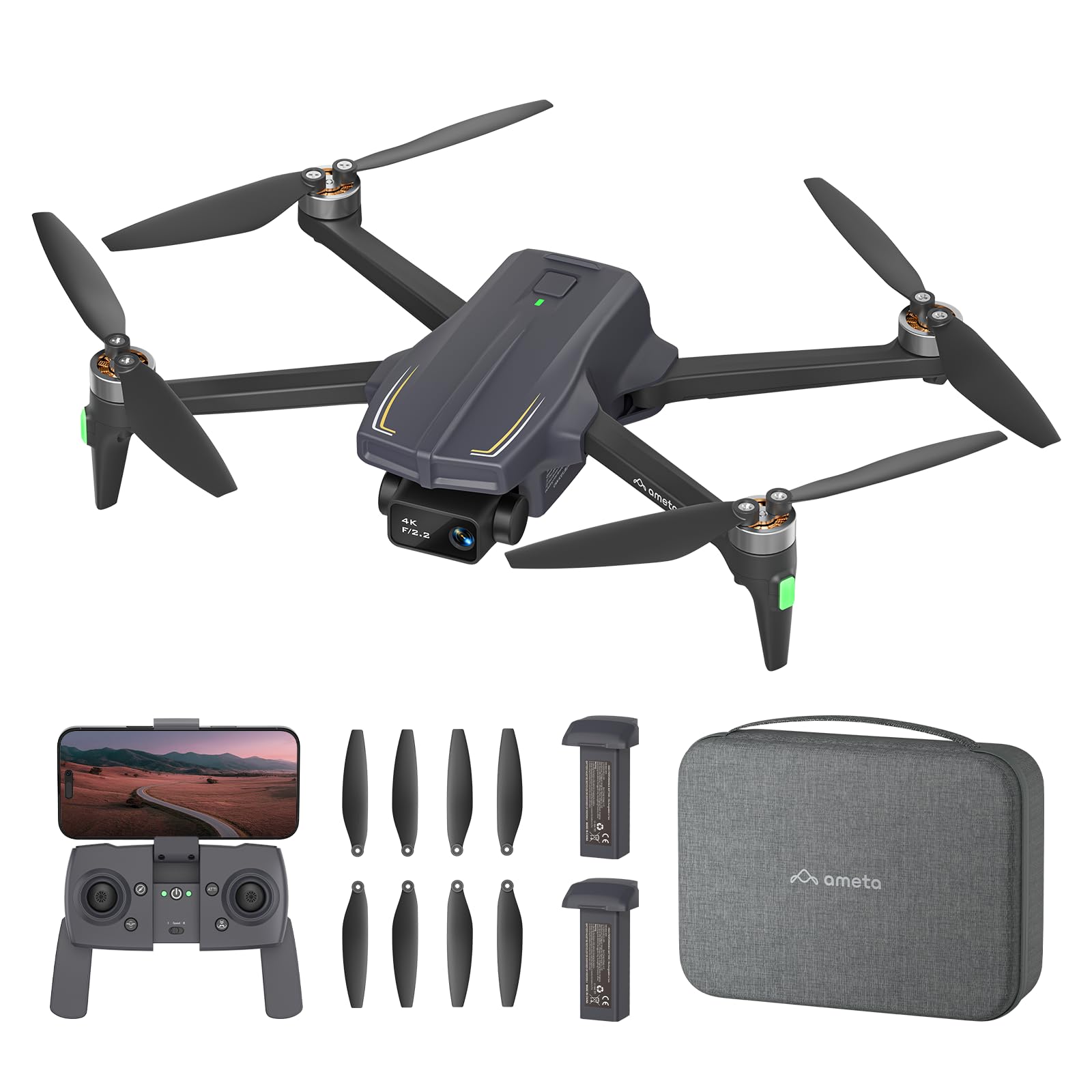
The Ameta S20 Pro packs a genuine Sony IMX258 sensor into a sub‑250‑gram frame for noticeably sharper stills.
That Sony sensor is the headline: it resolves 13‑megapixel stills and 4K video with better color and low‑light behavior than the generic 8‑MP sensors found on most budget drones. The 90° adjustable lens and 5G Wi‑Fi transmission give you a clean FPV feed at up to 300 meters. The GPS suite is comprehensive — one‑tap return, low‑battery return, and signal‑loss return — and the optical flow mode keeps the hover stable even without a satellite lock indoors.
Buyers praise the creative shooting modes — Rocket, Orbit, Dolly Zoom, Panorama, Timelapse, and Gesture Selfie — that let you get cinematic shots without a pilot’s license. The two 3000mAh batteries (each holds 3000 milliamp-hours of charge) give you up to 50 minutes of total flight time, and at 181 grams it is the lightest drone here. A minority of reviewers report the camera can be shaky in moderate wind, and a few units developed sensor issues after two weeks of travel — a reminder that this is still a budget drone, not a professional cinema rig.
choose this for: image quality first — the Sony IMX258 sensor and 13‑MP still resolution beat almost every other drone in this price bracket.
pass on it if: you fly frequently in gusty conditions; the camera stabilization can struggle with wind, and the build is not crash‑proof.
8. SJsharp IDEA12GPS
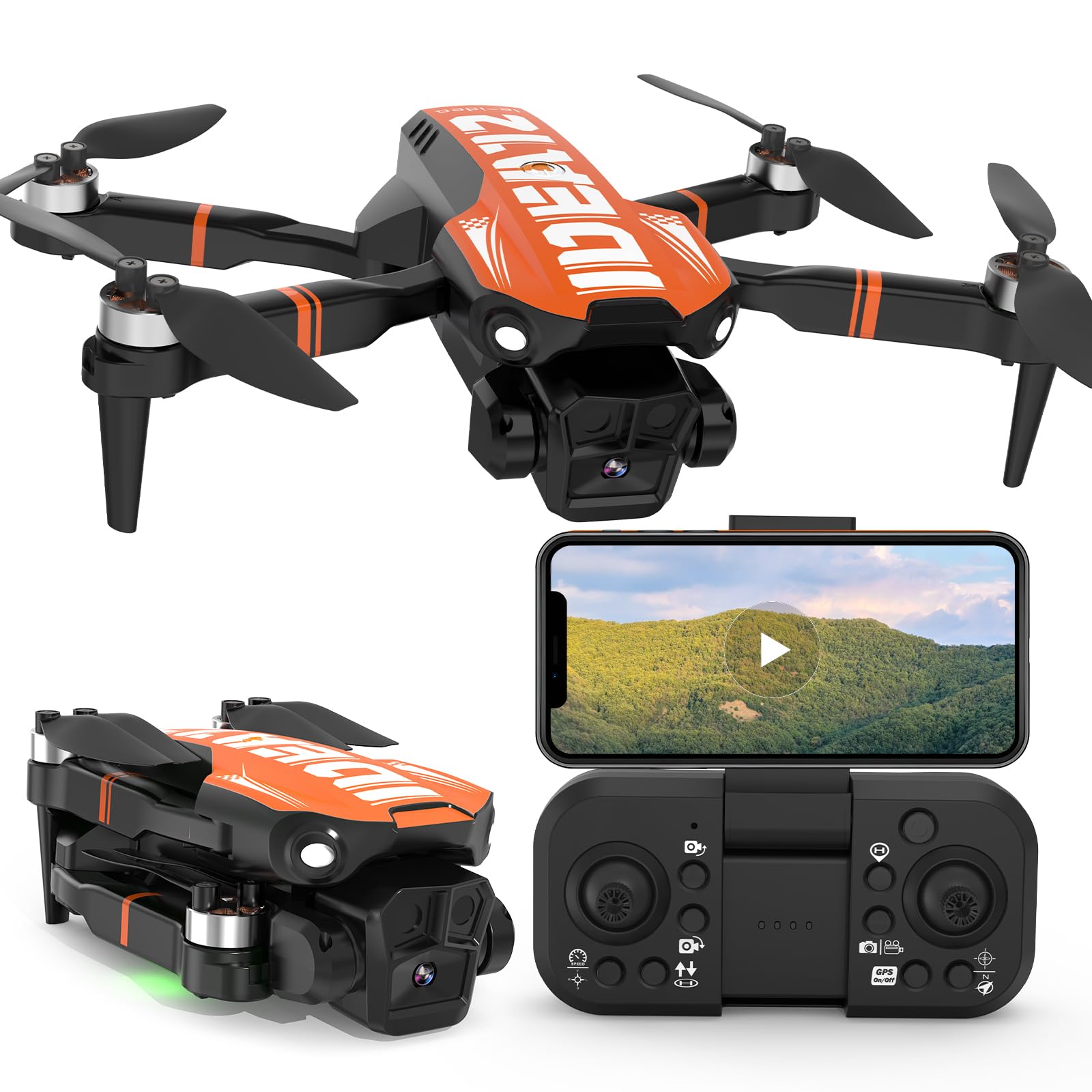
The SJsharp IDEA12GPS wraps beginner‑friendly flying in a foldable design that slips into a daypack.
The Hover‑Lock Technology here combines GPS positioning with an optical flow sensor, meaning the drone stays put even without a strong satellite signal. That is a real boon for first‑time pilots who panic when a breeze pushes their drone sideways. The 4K camera with a 90° electrically adjustable lens captures solid daytime footage, and the 5G Wi‑Fi FPV relays the view to your phone without noticeable lag.
Smart flight modes — Follow Me, Waypoint Flight, and Point of Interest — are genuinely usable rather than just marketing checkboxes. The brushless motors offer good wind resistance and run quietly, which the neighbors will appreciate. On the downside, the remote control was reported by some owners to have erratic calibration and range issues, occasionally causing drift or signal dropout at distance. Customer service replaced the unit for the affected buyer, but it is a note of caution for anyone planning long‑range flights far from the launch point.
ideal for: beginners who want a compact, foldable video drone with reliable hover lock and GPS safety features straight from the start.
exercise caution if: you intend to fly at maximum range; a few units have shown signal issues at distance.
9. suangrc X9
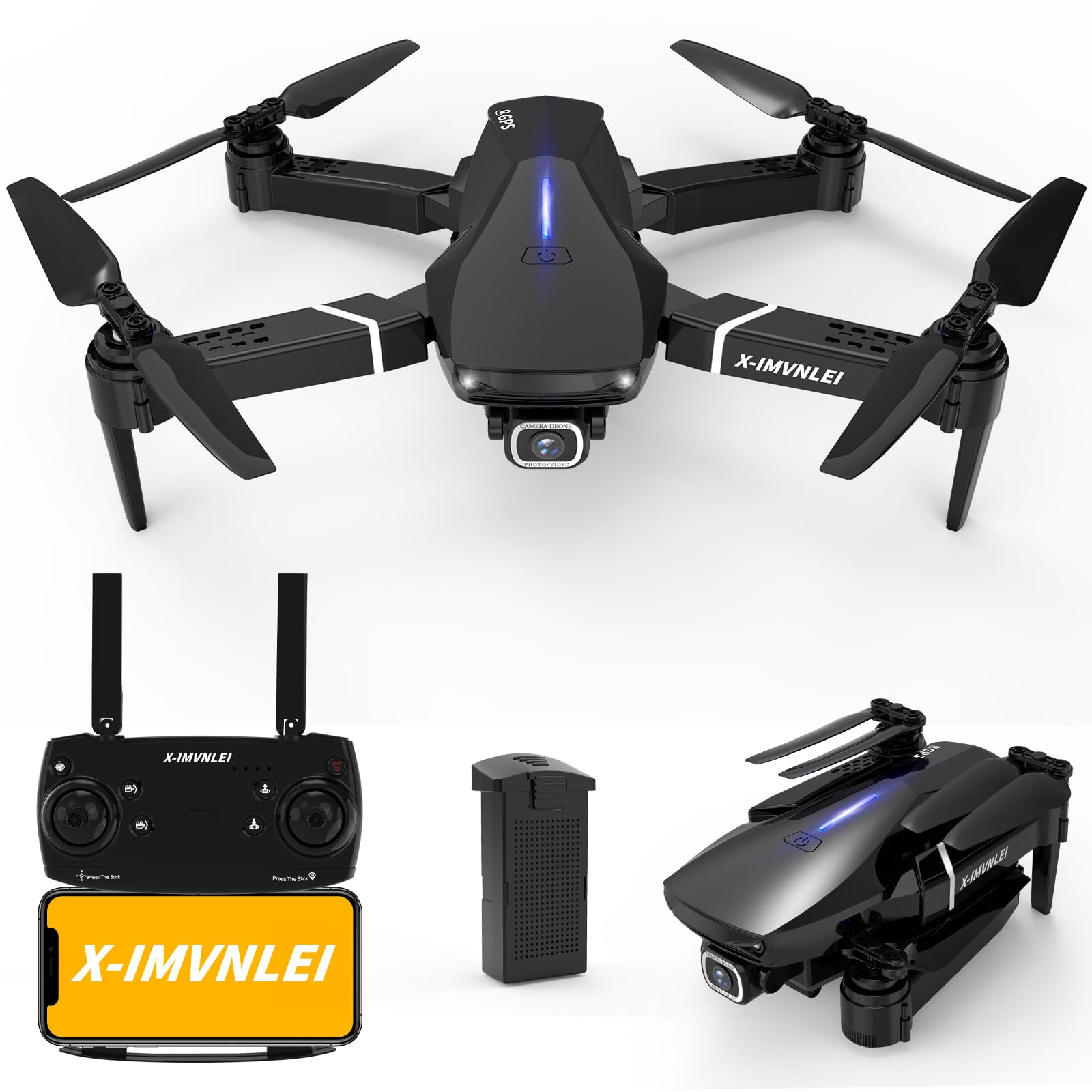
The suangrc X9 is the lowest‑risk way to dip into GPS‑assisted aerial video for under a hundred dollars.
For the price of a video game, you get a 4K drone with GPS auto‑return, optical flow positioning for stable hovering, and a 110° wide‑angle lens. The foldable body packs down to 6.1 inches long, making it genuinely pocketable for spontaneous flights. The built‑in 4.5‑inch LCD controller screen means no phone mounting — just turn it on and the live feed appears instantly.
Buyers consistently call this a “surprisingly good little drone” for the money, praising the stable hover, the one‑key start, and the no‑phone‑needed convenience. A minority report that the 1200mAh battery is too weak to lift the drone properly, leading to emergency landings after 20 seconds. The 18‑minute total flight time is the shortest here, but for the price it is a fair trade‑off. This is a confidence‑building toy that can shoot decent video, not a serious production tool.
perfect entry point for: curious flyers who want a functional GPS drone with a controller screen at the absolute lowest cost.
look elsewhere if: you need more than 18 minutes of airtime or a battery that reliably lifts off every time.
Understanding the Specs
4K Camera vs. True 4K Image Quality
The “4K” label on a budget video drone typically means the sensor can capture 3840×2160 pixels or higher. That is enough resolution for sharp social‑media clips, but budget sensors still struggle with low‑light grain and motion wobble. Electronic Image Stabilization (EIS) — found on models like the PLEGBLE — helps smooth out the jello effect from wind vibrations. Always check whether “4K” refers to photo capture only or also to video recording, and whether an SD card is included for storage.
GPS and Optical Flow Positioning
A GPS module locks onto satellites to hold the drone’s position outdoors and enable auto‑return. Optical flow is a secondary sensor that looks at the ground texture to keep the hover steady when GPS is weak — for example, inside a garage or under tree cover. The best budget video drones combine both, giving you a stable hover in more environments and reducing the risk of drift‑related crashes.
FAQ
Do I need FAA registration for a drone under 250 grams?
What does auto‑return do when the battery gets low?
Can I fly a budget drone in light rain or drizzle?
How long do the batteries take to charge fully?
Is a built‑in controller screen better than using my phone?
What is EIS and why does it matter for video quality?
Can I use a budget drone for professional real‑estate photography?
Why does my drone need compass calibration before every flight?
What is the difference between brushless and brushed motors?
How high and how far can I safely fly a budget video drone?
Final Thoughts: The Verdict
For most people, the budget video drone winner is the SIMREX G29 because it balances GPS safety (the drone knows where it is and can return home), clear 4K footage, and a lightweight frame (under 250 grams) that keeps you out of FAA registration — all at a price that does not sting when you make your first mistake. If you want a phone‑free flying experience with the longest battery life, the PLEGBLE is a compelling alternative. And for pure value — the most airtime for the lowest cash outlay — the HYTOBP P17 with its three‑battery kit is tough to top.
How We Picked
We do not accept paid placement. Every pick is matched to a real buyer and a real use-case; we do not hands-on test units.
Sources & Methodology
Specifications: manufacturer listings and product documentation. Review insights: verified customer reviews, as of July 2026. Pricing: not shown on this page (it changes often); check the current price via the retailer link.
As an Amazon Associate, FitlyFast earns from qualifying purchases. This does not affect which products we feature.