
Our readers keep the lights on and the weekend projects moving. As an Amazon Associate, I earn from qualifying purchases.
Specs are compiled from manufacturer listings and verified buyer reviews and can change over time — please confirm the key details on the product page before buying.
Volleyball demands explosive lateral moves, repeated jumps, and sudden stops — and a budget shoe often fails at least one of those before the season ends. The real question is which pair delivers the necessary ankle support, non-marking grip, and forefoot cushioning without making you pay for gimmicks you will never use.
I’m Rikta — the founder and writer behind FitlyFast. This guide is built by comparing the manufacturers’ published specifications and the patterns across verified customer reviews, so you get each pick’s real strengths and trade-offs instead of marketing spin.
This guide breaks down five pairs with real owner feedback, so you can confidently pick your next pair of budget volleyball shoes without guessing which spec actually matters on the court.
Our Picks at a Glance
How To Choose The Best Budget Volleyball Shoes
Volleyball puts unique stress on a shoe — you need a grippy, non-marking outsole for hard floors, enough lateral support to stop a slide into the adjacent court, and reasonable forefoot cushioning for landings from a jump. When you are working with a tighter budget, every dollar needs to go toward these core features, not flashy extras.
Outsole Rubber — The Silent Hero
Look for a synthetic rubber outsole that says “non-marking” in the description. That means it will not leave black streaks on polished wood gym floors. Gum rubber compounds generally grip better on dusty indoor courts than harder compounds, so prioritize traction over any other spec when reading a shoe’s description.
Midsole Cushioning — Your Landing Gear
EVA foam is the standard at this price range. It absorbs impact and compresses under your heel, then springs back. Some brands give it a proprietary name — FLYTEFOAM, PROPEL, Zoom Air — but they all aim to soften your landing after a block or spike. Thicker midsole foam under the ball of your foot is a good sign for attackers who jump frequently.
Upper Materials — Breathable vs. Durable
A synthetic leather and mesh upper (common on the picks below) balances ventilation with structure. Mesh breathes well but has less lateral support; synthetic leather adds that support but can feel stiff for the first few sessions. If the shoe has a reinforced toe cap — often called an Adituff toe or a TPU cage — it will resist wear from toe-dragging on serves or floor burns.
Quick Comparison
| Model | Best For | Weight | Outsole | Upper Material | Amazon |
|---|---|---|---|---|---|
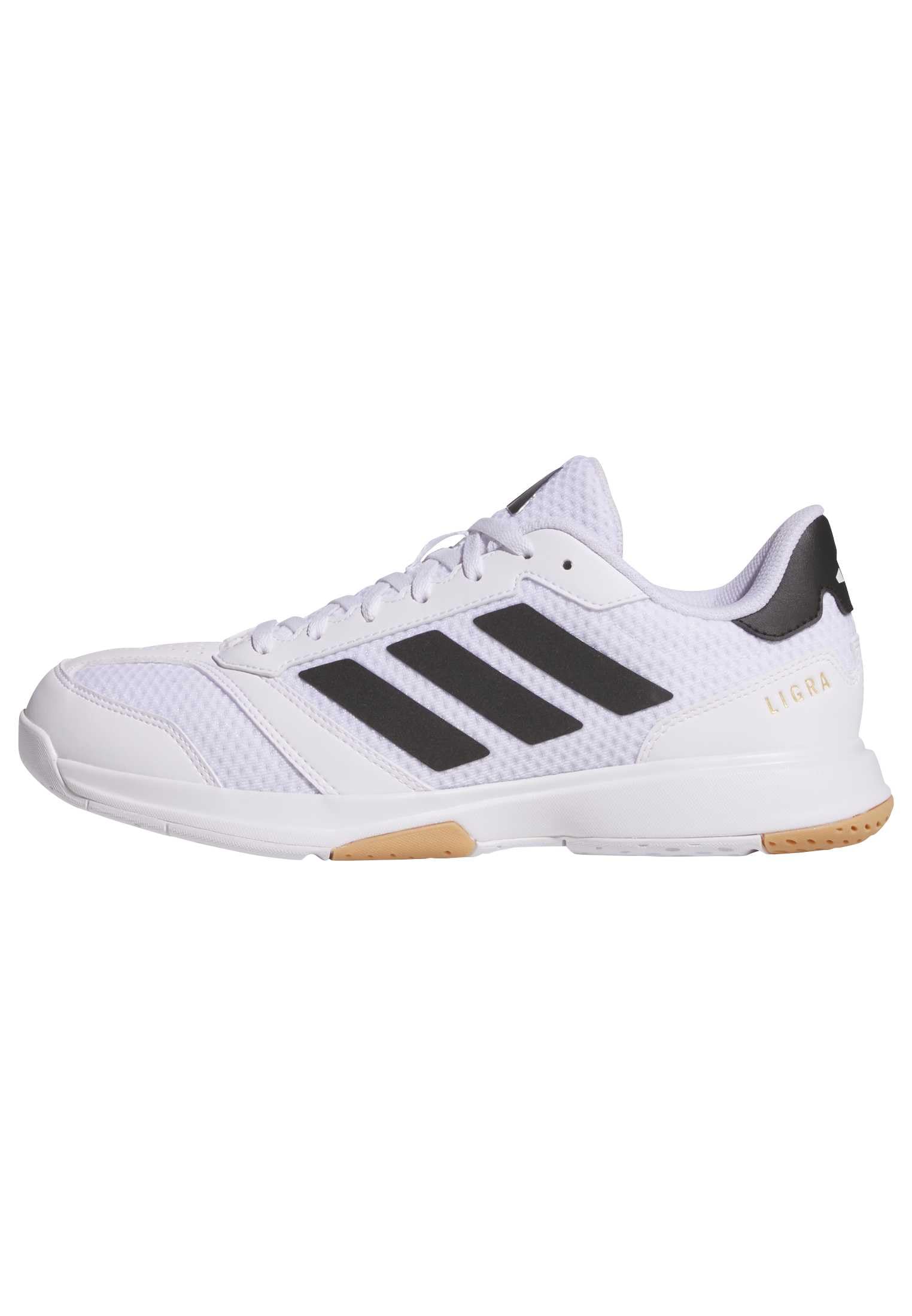
| adidas Ligra 8 (Women’s)★ Best Overall | All-round court performance on a budget | 2.43 lb | Synthetic Rubber | Synth Leather / Mesh | Amazon |
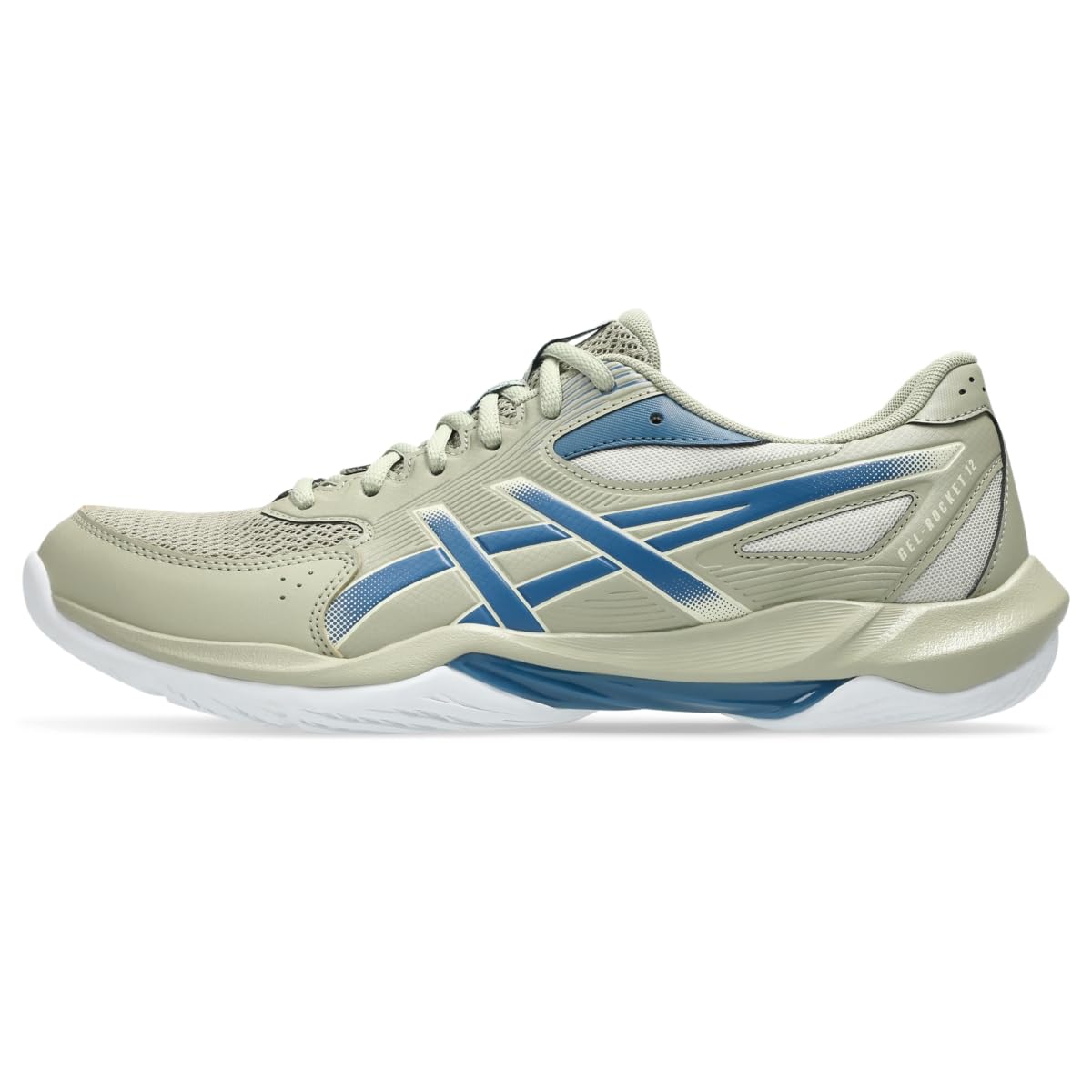
| ASICS Gel-Rocket 12 (Men’s)Versatile Court Shoe | Wide feet & multi-sport versatility | 1.44 lb | Synthetic Rubber | Polyester / No-sew | Amazon |
| adidas Ligra 8 (Men’s) | Durable lockdown for weekly play | 2.43 lb | Synthetic Rubber | Synth Leather / Mesh | Amazon |
| Mizuno Cyclone Speed 3 (Women’s) | Youth players & lateral movement | — | Non-marking Rubber | Mesh | Amazon |
| Nike Zoom HyperAce 2 (Women’s) | Hard practice schedules & durability | — | Rubber | Breathable Mesh | Amazon |
In‑Depth Reviews
1. adidas Womens Ligra 8 Indoor Shoes
You get proven fit and arch support at a price that lets you buy two pairs for what premium brands charge for one — that is the adidas Women’s Ligra 8’s edge.
At 2.43 pounds, this is not the lightest pair on the list — but the trade-off is a synthetic leather and mesh upper that breathes well while keeping your foot locked in during lateral slides. The reinforced Adituff toe means toe-drags on a serve or a floor burn in warm-ups will not shred the tip after three practices. What wins people over is the fit and arch support: 32 mentions from owners highlight the sizing confidence, and 17 more call out the comfort. The price also draws consistent praise for delivering that level of structure without a premium tag.
The rubber outsole grabs the court reactively — a buyer noted it works very well on the pickleball court because it is “reactive without grabbing too much.” Compared to the ASICS Gel-Rocket 12 below, the Ligra 8 is heavier and bulkier, but many owners find it true to size straight from the start with zero break-in needed. One caveat: a single owner reported the sole detached after a few uses, so it is worth checking the glue line early in the first week of wear.
Buyers report the shoe works for volleyball, cheerleading, casual wear, and even pickleball, making it a versatile budget choice if you need one pair for multiple court sports. The roomy toe box also gets a nod from owners with bunions, so narrow feet may want to try a half-size down for a snugger heel lock.
Court-Ready Foundation
- Great arch support and heel hug — praised across 32 fit mentions
- Adituff toe resists wear from toe drags and floor burns
- No break-in needed; comfortable with bunions per owner feedback
Consider Before Buying
- Heavier than the ASICS Gel-Rocket 12 (2.43 lb vs 1.44 lb)
- One owner reported the sole separated after minimal use
- Some find the look too bulky/clunky for everyday wear
Reach for these if you want proven fit, arch support, and a reinforced toe at a price that lets you buy two pairs for what premium brands charge for one.
Look elsewhere if you are a lighter player who prioritizes minimal weight or you have very narrow feet that swim in a standard D-width.
2. ASICS Men’s Gel-Rocket 12 Volleyball Shoes
At just 1.44 pounds, the Gel-Rocket 12 is a full pound lighter than the adidas Ligra 8 — it floats on the court without sacrificing support.
This is the lightest pair in the guide — the adidas Ligra 8 weighs 2.43 pounds compared to the Gel-Rocket 12’s 1.44 pounds. The FLYTEFOAM and PROPEL cushioning work together to soften landings from jumps, and the TRUSSTIC technology under the arch adds lateral stability when you cut hard to dig a ball. The fact that appearance earns 50 mentions from owners tells you these shoes look good enough for casual wear, but the real story is versatility: owners mention using them for pickleball 4 times a week without foot or knee pain, and a size-13 picky 16-year-old gave them full approval for high school practice.
The synthetic rubber outsole provides reliable traction on indoor courts, and the no-sew overlays improve both support and flexibility without adding bulk. Some owners note the toe box could be wider — so if you have especially wide feet, you may want to try a half-size up. The insoles are described as cheap, but they are easily replaceable with orthotics if you need more arch support. One buyer found the fit tighter than expected and less comfortable for longer sessions, so sizing is worth verifying before you commit.
Why it stands out: At 1.44 pounds it is noticeably lighter than the adidas Ligra 8 (2.43 lb), and the FLYTEFOAM + PROPEL cushioning delivers a bouncier feel for players who jump frequently.
Grab these for multi-sport use — volleyball, pickleball, badminton, gym workouts — and if you want a lightweight shoe that does not sacrifice support for low weight.
Skip if you have wide feet that need a naturally roomy toe box, or if you prefer a plush, heavily padded feel underfoot.
3. adidas Men’s Ligra 8 Indoor Volleyball Shoes
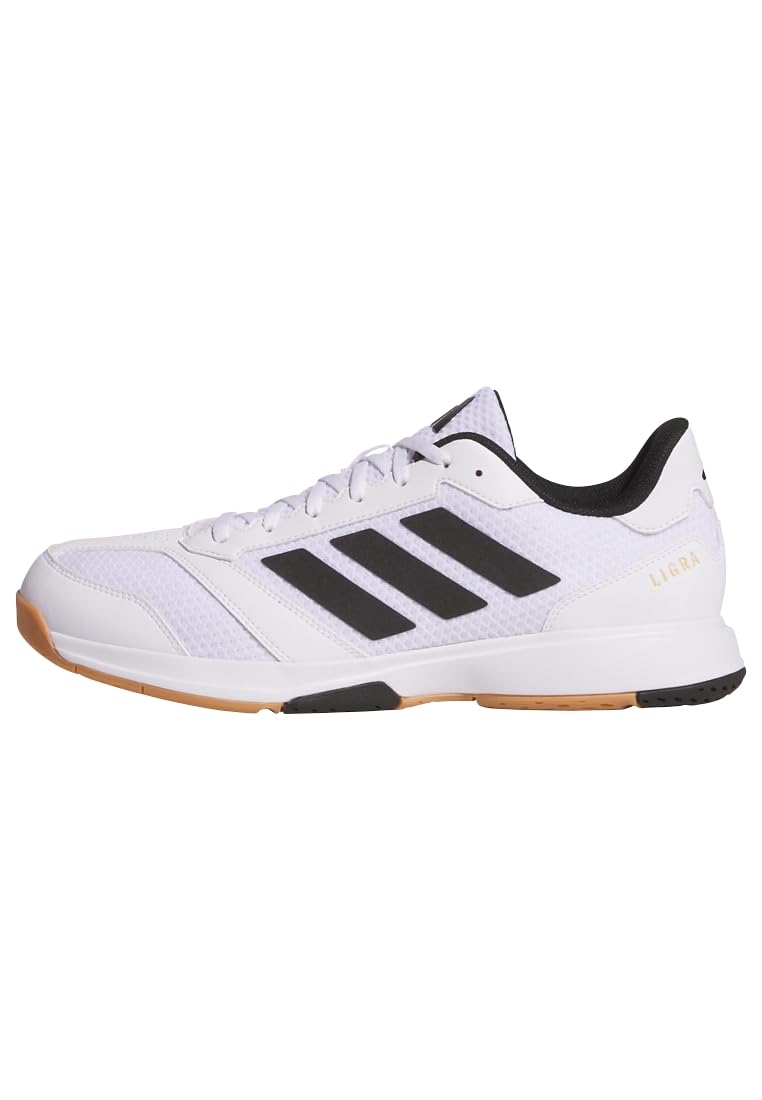
The men’s Ligra 8 takes everything the women’s version does well and adds a roomier fit for wider feet — it is the durable workhorse for players who need toe room.
Like its women’s counterpart, this shoe uses a synthetic leather and breathable mesh upper with the Adituff toe reinforcement, and it also weighs 2.43 pounds. But the men’s version draws particular praise for its lockdown and lateral support — customers note it feels stable without being restrictive, and the roomy fit works very well for wider feet. The midsole has a slightly harder feel fresh from the start, but after 4 or 5 sessions the cushion breaks in to become excellent, per one owner’s experience.
The white upper cleans up easily — a buyer noted the first smudge came off without fuss — so these stay presentable through a season of dusty gym floors. The cushioning and support earned 16 comfort mentions and 21 fit mentions, making this a reliable choice for weekly practice and match play. Owners also appreciate the value-for-money ratio, with 5 calling out the cost as a deciding factor. One thing to be aware of: the size runs a touch larger than standard, so consider a half-size down if you are between sizes.
Built for Consistency
- Roomy fit ideal for wide feet — no cramped toes after long sessions
- Easy-to-clean white upper with stain-resistant feedback from owners
- Premium materials and clean aesthetic for casual or workout use
Minor Hurdles
- Needs a short break-in period (4–5 sessions) to reach full comfort
- Runs a half-size large; ordering down may be necessary
Best for players with wide feet who want a durable, supportive shoe that will last a full season while staying affordable.
Not ideal if you need a shoe that feels plush instantly — budget for a short break-in window, or go with the ASICS Gel-Rocket 12 for softer initial comfort.
4. Mizuno Womens Cyclone Speed 3 Volleyball Shoe
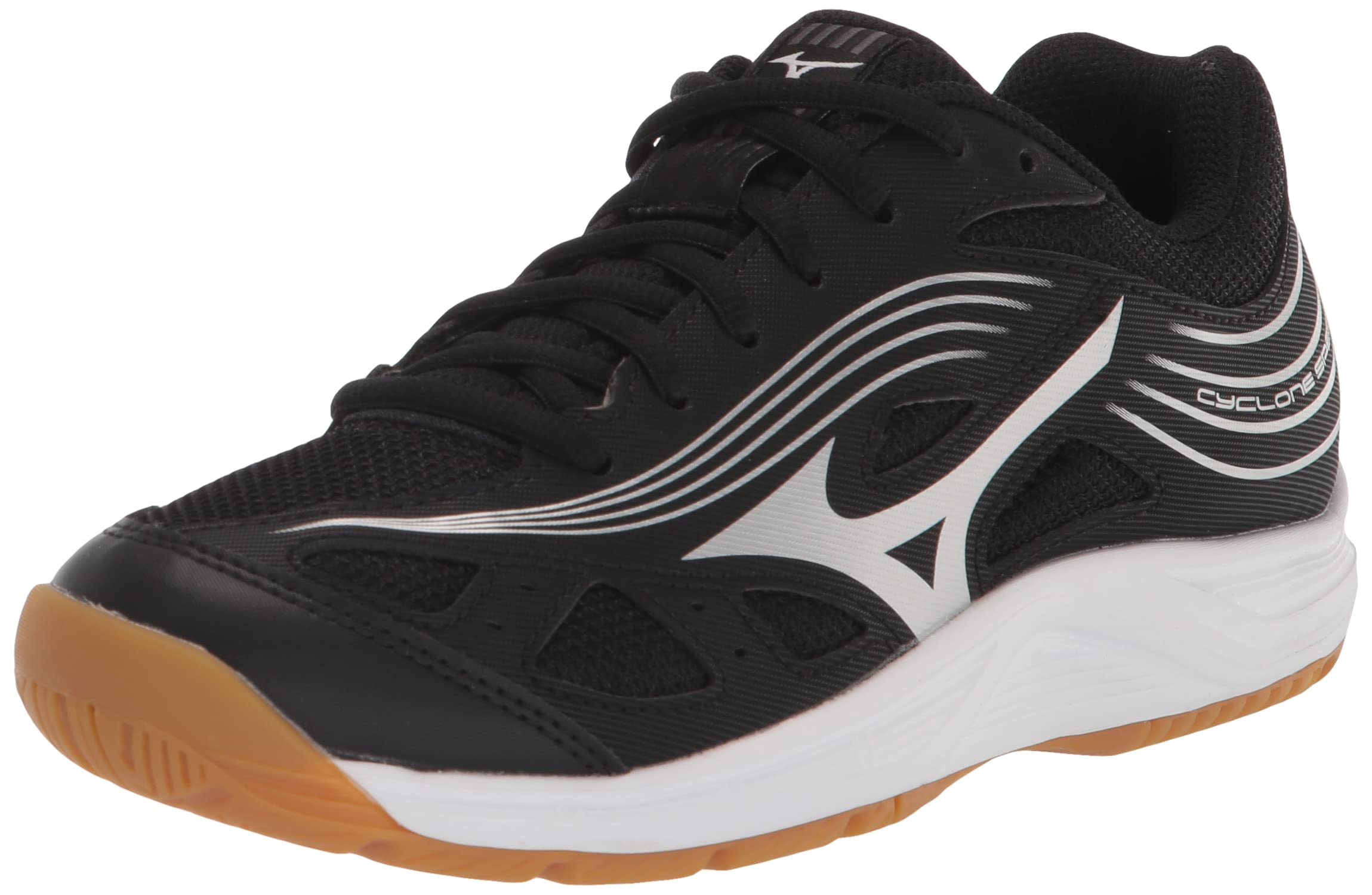
Mizuno’s Cyclone Speed 3 prioritizes lateral stability above all else — owners say the non-marking outsole gives them confidence their foot will not slide out during a sudden direction change.
The responsive EVA midsole delivers a firm platform rather than a marshmallow-soft step, which actually helps you feel more connected to the court during hard cuts. The non-marking rubber outsole provides the grip that keeps you from slipping on a dusty gym floor. Owners praise the traction and support — the shoes are described as “reliable on court,” with feet feeling “protected and comfortable” during play. The comfort (22 mentions) and build quality (15 mentions) both score high, and many reviewers point out the shoe works just as well for pickleball and fencing as it does for volleyball.
The catch is sizing: the fit runs narrow, and 15 size-related mentions come with a Mixed verdict. One owner put it simply: “When I got the size right I loved them.” If your foot is on the wider side, you will almost certainly need to go up a full half-size — a buyer ordered size 8 then had to swap to 8.5. The mesh upper makes them very light and breathable, but the shoe will not stretch over time, so getting the fit right is essential. A few owners found the narrow shape restrictive even with lacing loosened.
What it excels at: The grip and lateral stability are the standouts here — owners say the non-marking outsole gives them confidence on the court that their foot will not slide out during a sudden direction change.
Reach for these if you have a narrow to regular width foot and you want a shoe that feels like an extension of your foot during lateral movements and quick stops.
Skip if you have wide feet or you are shopping for a growing youth who may need room to grow — the narrow fit and mesh upper will not accommodate extra width.
5. Nike Women’s Zoom HyperAce 2 Volleyball Shoes
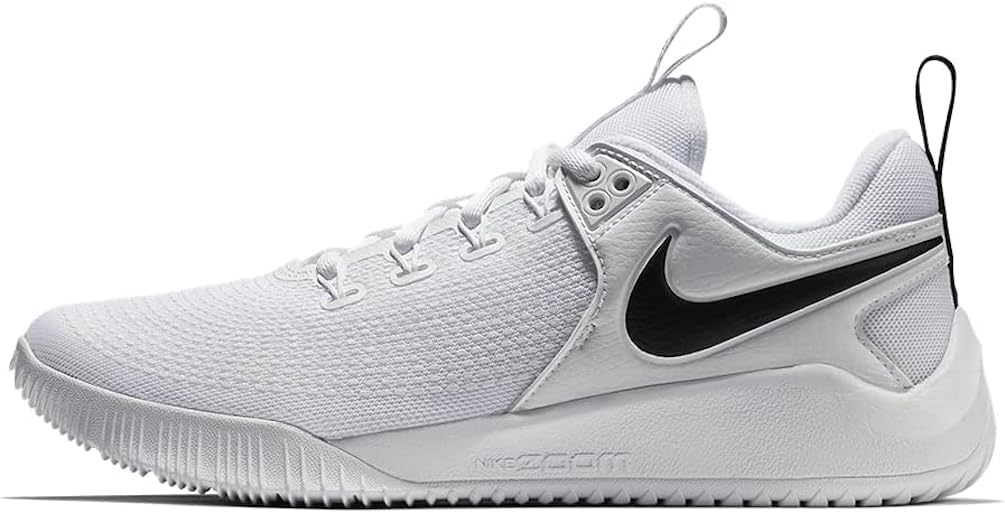
The Zoom HyperAce 2 is built for 5-day-a-week practice schedules — the Zoom Air units and TPU cage are designed to keep you jumping all season.
Nike puts Zoom Air units in the forefoot and heel, delivering lightweight cushioning that returns energy on each jump. The TPU cage wraps the midfoot and adapts to your foot shape over time, creating a personalized supportive fit. Owners frequently point to quality (27 mentions) as the top reason to buy, and the shoe holds up well during long practices — a buyer reports her daughter wears them 5 days a week and they still feel solid. The same owner says the shoes make her feel like she jumps higher, which speaks to the responsiveness of the Zoom Air system.
The fit gets a Mixed verdict from the data: some describe it as true to size, but others recommend going up a half-size. Nike’s typical sizing applies here — if you usually need a half-size up in other Nike court shoes, do the same for the HyperAce 2. A buyer noted they are “a little pricey but well worth the money,” which points to the premium placement in this budget guide. The breathable mesh upper keeps feet cool during intense rallies, and the rubber outsole provides the grip needed on hard court surfaces. One owner found them slightly uncomfortable from the start, so a short break-in period is likely.
Built to Last
- Zoom Air units deliver responsive cushioning for repeated jumps
- TPU cage adapts to your foot for a personalized, supportive fit
- Owners praise the quality build and durability through weekly wear
Budget Caveats
- Premium price point compared to the other picks in this guide
- Mixed sizing feedback — many owners recommend going up a half-size
- May need a short break-in period for full comfort
Choose this if your daughter (or you) hits the court 5-plus days a week and you need a shoe that will not show wear after a single season — the Zoom Air cushioning and TPU cage justify the extra cost for heavy-use players.
skip it if you play casually once a week and want the most bang for your buck — the ASICS Gel-Rocket 12 saves money while still delivering strong performance.
Understanding the Specs
Outsole Compound & Court Grip
The outsole is the only part of your shoe that touches the floor, and its rubber compound directly determines how well you stick during a hard cut. Non-marking rubber outsoles are essential for indoor gyms so you do not leave dark streaks on polished wood. A tackier gum-rubber formula generally grips better on dusty courts than a harder compound, which is why the Mizuno Cyclone Speed 3’s non-marking outsole gets such consistent praise for traction.
Midsole Cushioning — EVA vs. Zoom Air vs. FLYTEFOAM
Every shoe on this list uses some form of foam or air unit underfoot to absorb the impact of jumping and landing. EVA foam is the most common budget option — it compresses under your heel and springs back. FLYTEFOAM (ASICS) and Zoom Air (Nike) are proprietary formulations that aim to deliver more energy return per jump without adding weight. The thicker the midsole under the forefoot, the better for attackers who jump repeatedly.
Upper Materials — Breathability vs. Support
Synthetic leather adds lateral stiffness and supports quick side-to-side movements, but it does not breathe as well as mesh. A synthetic leather and mesh upper (like the adidas Ligra 8) offers a good midpoint: mesh panels let hot air escape, while synthetic leather panels lock your foot in place. A toe reinforcement like Adituff or a TPU cage protects the front of the shoe from abrasion when you drag your toe on a serve or a floor burn.
Weight — The Trade-Off No One Tells You About
A lighter shoe (like the ASICS Gel-Rocket 12 at 1.44 pounds) lets you move faster and feel more agile, but it often uses thinner materials that may wear out faster. A heavier shoe (like the adidas Ligra 8 at 2.43 pounds) typically uses thicker leather and more substantial foam, which takes longer to break in but can outlast a lighter pair over a full season. Your choice depends on whether you prioritize speed or durability.
FAQ
Should I buy volleyball shoes that are a half-size larger?
Can I wear budget volleyball shoes for pickleball?
Are more expensive volleyball shoes always better?
Do budget volleyball shoes provide enough ankle support?
What does “non-marking outsole” mean and why does it matter?
Is the Adituff toe reinforcement on the adidas Ligra 8 worth it?
Can I use budget volleyball shoes as everyday sneakers?
Final Thoughts: The Verdict
If you want one dependable pick, the budget volleyball shoes winner is the adidas Womens Ligra 8 because it nails fit, arch support, and court durability at a price that leaves room for knee pads or a new ball. If you want the lightest possible shoe for multi-sport use — especially pickleball or badminton — grab the ASICS Gel-Rocket 12. And for players with wider feet who need a roomier toe box, the adidas Men’s Ligra 8 is the one to reach for.
How We Picked
We do not accept paid placement. Every pick is matched to a real buyer and a real use-case; we do not hands-on test units.
Sources & Methodology
Specifications: manufacturer listings and product documentation. Review insights: verified customer reviews, as of July 2026. Pricing: not shown on this page (it changes often); check the current price via the retailer link.
As an Amazon Associate, FitlyFast earns from qualifying purchases. This does not affect which products we feature.