
Our readers keep the lights on and the weekend projects moving. As an Amazon Associate, I earn from qualifying purchases.
Specs are compiled from manufacturer listings and verified buyer reviews and can change over time — please confirm the key details on the product page before buying.
Using running shoes for deadlifts is like trying to hammer a nail with a pillow — the soft foam absorbs your power before it reaches the floor, and your feet wobble under heavy weight. What you actually need is a firm, non-compressible platform that keeps you grounded, stable, and safe when the bar gets heavy. This guide cuts through the noise to find the best budget weightlifting shoes that deliver that solid foundation without emptying your wallet.
I’m Rikta — the founder and writer behind FitlyFast. This guide is built by comparing the manufacturers’ published specifications and the patterns across verified customer reviews, so you get each pick’s real strengths and trade-offs instead of marketing spin.
You want to feel planted during a heavy squat set without spending a fortune. The right pair of budget weightlifting shoes gives you a stable base that helps you lift more safely — and you do not need to spend a fortune to get it right.
Our Picks at a Glance
How To Choose The Best Budget Weightlifting Shoes
A budget lifting shoe must still deliver a stable, non-compressible platform.
Heel Height: Raised vs. Flat
A raised heel — typically between 0.6 and 1.4 inches — helps you reach full depth in a squat if your ankles are tight. Flat shoes (zero-drop, meaning no height difference between heel and toe) keep you closer to the ground for deadlifts and are common in CrossFit-style training. Choose a raised heel for squats or a flat sole for deadlifts.
Sole Firmness: The Non-Negotiable
A non-compressible sole is the defining feature of a lifting shoe. A heel that bends in your hands will waste power under a barbell. Look for solid rubber or a hard TPU (thermoplastic polyurethane) midsole — the same material used in high-traction automotive parts — that resists compression.
Strap or No Strap
A single Velcro strap across the midfoot locks your foot down so it does not slide forward inside the shoe during a heavy squat. A Velcro strap is a reliability feature experienced lifters prefer. Without a strap, only laces keep your heel locked down.
Quick Comparison
| Model | Best For | Heel Type | Weight (approx) | Strap | Amazon |
|---|---|---|---|---|---|
| Nike Air Monarch IV★ Best Overall | All-day comfort + lifting | Flat/neutral | — | No | Amazon |
| MANUEKLEAR Lifting ShoesBest Value | Dedicated squat shoes | Raised (0.8 in) | ~1.8 lb | Yes | Amazon |
| Osterland Lifting ShoesSmart Starter | Beginner squat form | Raised (0.75 in) | — | Yes | Amazon |
| adidas Powerlift 5 | Entry-level heel shoe | Raised (low) | 2.43 lb | Yes | Amazon |
| adidas Dropset Control | CrossFit/versatility | Flat/firm | 2.43 lb | No | Amazon |
| New Balance Minimus TR V2 | Barefoot-style lifting | Zero-drop | — | No | Amazon |
| Nordic Lifting VENJA | Olympic lifting | Raised (1.06 in) | 3.28 lb | Yes | Amazon |
| Reebok Nano X5 | CrossFit/gym hybrid | Flat/firm | — | No | Amazon |
In‑Depth Reviews
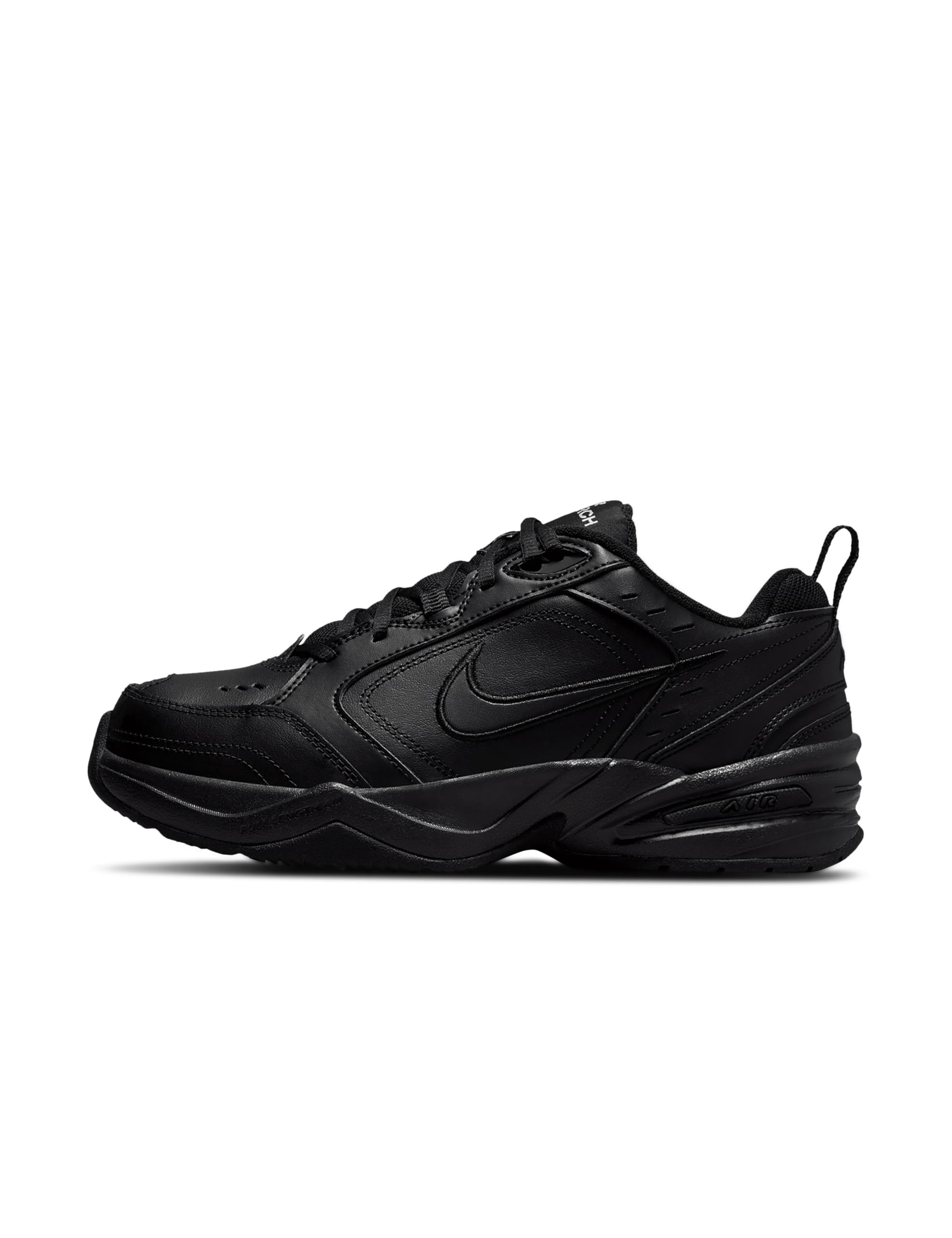
1. Nike Men’s Air Monarch IV Training/Workout Shoes
The classic gym sneaker that refuses to retire, favored by lifters who want one shoe for everything.
The Nike Air Monarch IV is not a dedicated lifting shoe — it has a flat, solid rubber sole and a full-length encapsulated Air-Sole unit (a cushioned air pocket inside the sole) for comfort, which makes it the rare shoe you can wear for a heavy squat set and then keep on for the rest of the day. The wide toe box is the thing buyers praise most, with comfort earning over two thousand mentions as the standout feature. A buyer who deals with Plantar fasciitis noted it helped, and another called it “extremely stable,” saying it prevents ankle turns during exercise.
The trade-off is durability and noise. The sole glue can fail first if the shoes get wet, and a heavy user may get 6-8 months before they start separating. Squeakiness is the most-discussed negative — 588 owners flag it, with some finding that talcum powder under the insole quiets it down. The synthetic leather upper holds up well, but these are not built like a purpose-made lifting shoe with a strap or a rigid heel.
If you are only in the gym a few times a week and need one pair of shoes for lifting, walking, and light cardio, the Monarch IV is the crowd-proven choice with a massive following. For pure lifting with a raised heel and a strap, one of the purpose-built shoes below will suit you better.
Why it wins
- Extremely wide toe box — rare in the category
- Air-Sole cushioning works for all-day wear, not just the gym
- Solid rubber outsole with good traction on varied surfaces
The honest downsides
- Sole glue is the weak link; heavy use or wet conditions shorten life
- No Velcro strap for heel lockdown under serious load
One-shoe gym-goer: This is your pick — comfortable enough to walk in, stable enough to squat in, and proven by tens of thousands.
Dedicated lifter: skip it if you need a raised heel or a strap for heavy squats — this is a hybrid, not a specialty tool.
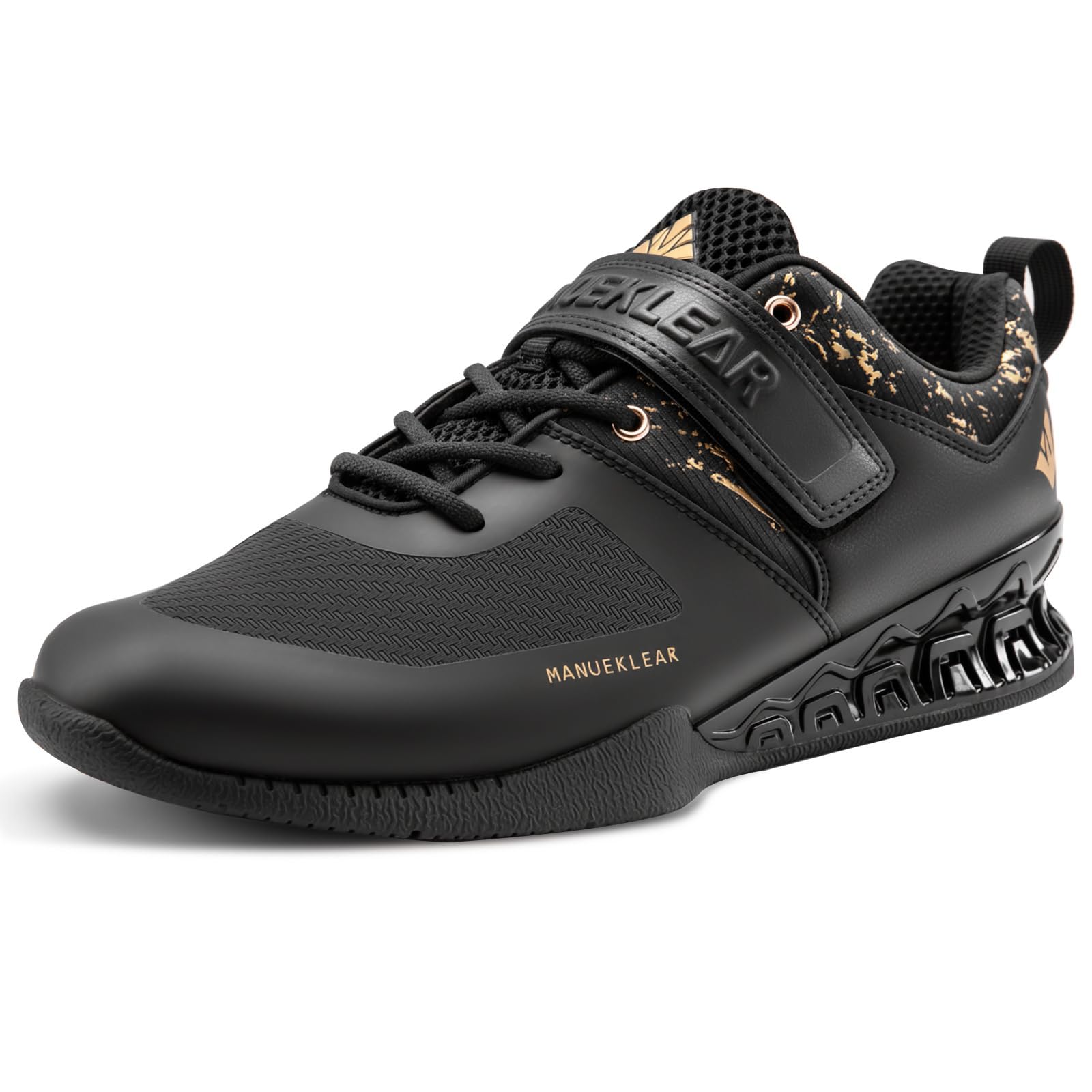
2. MANUEKLEAR Weight Lifting Shoes Men
A properly built squat shoe with a heel strap at a price that forces bigger brands to explain themselves.
MANUEKLEAR brings the two things a dedicated lifting shoe must have: a raised heel and a non-compressible sole. The outsole uses a honeycomb rubber structure that gives you that glued-to-the-floor feel, and buyers report it makes heavier weights feel “like a non-factor” under load. The heel height helps ankle mobility for deeper squats, and the Velcro strap across the midfoot locks your foot so it does not slide forward.
Sizing is the first thing to get right. The shoe runs narrow and small — one buyer who normally wears a 10.5 ordered an 11 and said they “barely fit” until breaking in. The general advice is to go up half a size for a snug fit and a full size if you want room in the toe. The TPU and Oxford cloth upper is eco-friendly and durable, though the long-term durability is the unknown since the shoe is relatively new to market.
The grip works well on wet surfaces, but one buyer who pushed into heavier deadlifts noted their foot would slide slightly on the footplate — worth considering if you pull sumo and rely on lateral traction.
Price-to-spec score: tough to top a raised heel with a strap at this level.
Sizing warning: Factor in the half-to-full-size-up rule before you order — returns are a hassle.
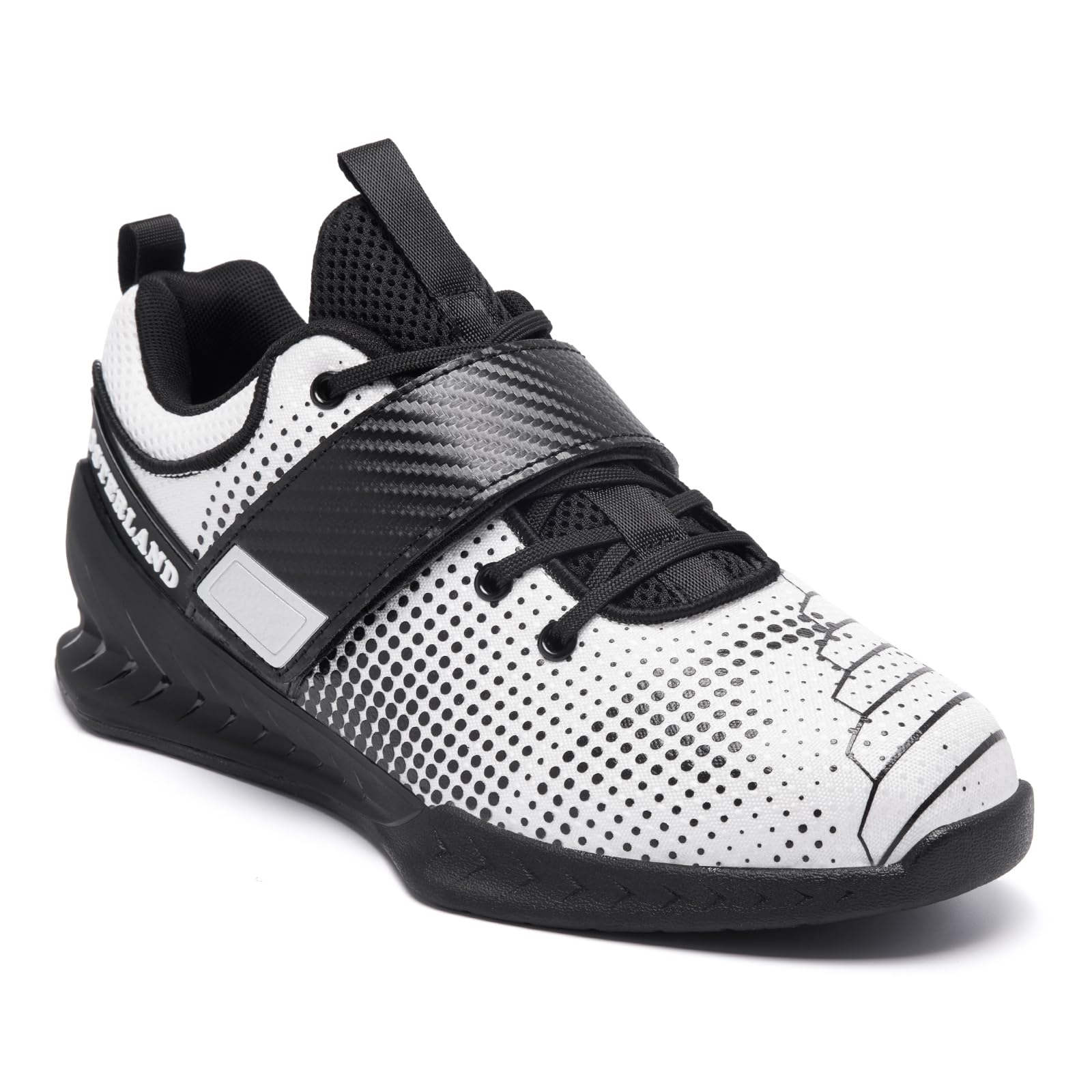
3. Osterland Weightlifting Shoes
A beginner-friendly shoe that prioritizes quality construction and stable squat form without the premium price tag.
Quality is the thing buyers praise most about the Osterland — 47 owners single it out. The shoe is built with a solid hard rubber outsole that does not compress under heavy weight, which means the force from your legs goes straight into the barbell instead of getting soaked up by soft foam. The moderate heel helps activate the quads and reduces lower back strain on deep squats, making it a smart first pair for anyone transitioning from running shoes.
The fit is generous for wide feet, and the brand recommends going half a size up if you have wider feet — buyers with normal-width feet find it true to US sizing. The breathable mesh and microfiber upper wick moisture, which keeps feet from getting swampy during long sessions.
Two real-world notes: the pull tab on the tongue can rip after a few months of weekly use, and the toe box is stiff enough that one buyer found it caused pressure during squats. Neither is a deal-breaker — the shoe overall is well-built and owners mention it has “definitely helped with squatting.” It is not designed for cardio or running, so keep that in mind if you do metcons.
The right first shoe: If you are new to lifting and want to know what a stable heel feels like, this is the low-stakes entry point.
The catch: The pull tab is the weak point; treat the lacing area gently during the first few wears.
4. adidas Unisex Adult Powerlift 5 Weightlifting Shoes
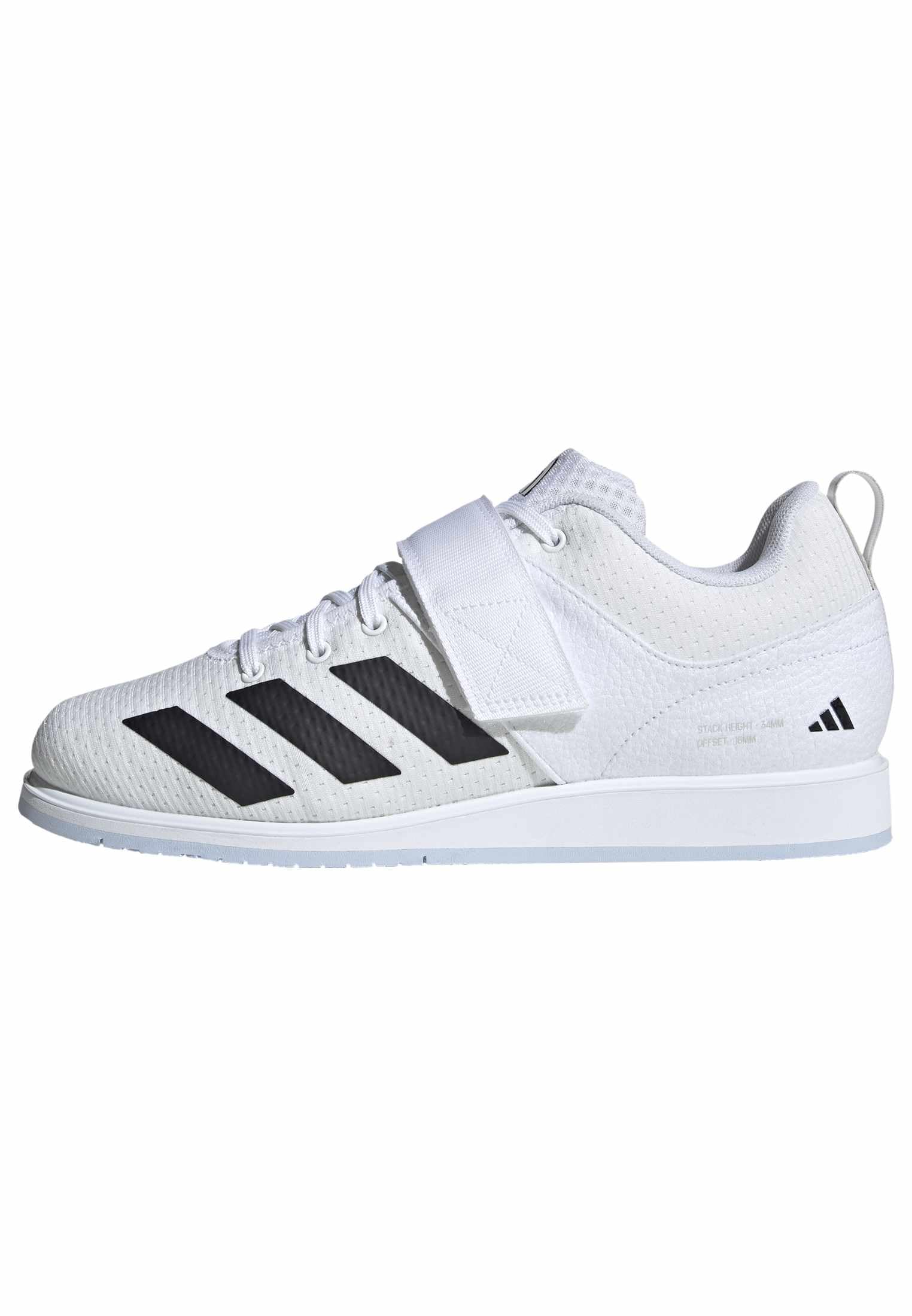
adidas’ entry-level weightlifting shoe with a lower heel that bridges the gap between flat trainers and Olympic lifters.
The Adidas Powerlift 5 is the most budget-friendly option from a major athletic brand, and it nails the basics: a solid, stable base for squats and overhead presses. The heel is lower than traditional Olympic lifting shoes (Olympic lifting shoes have a raised heel for deep squats), which is deliberate — it works well if you wear orthotics (custom shoe inserts) that already raise your heel, or if you want a more natural foot angle. Buyers describe it as a “standout” for squat alignment, with one noting they “eliminated shoulder pain” after switching.
The fit runs narrow, especially in the toe box. The most consistent advice is to go half a size up. A size 11.5 buyer found that size too short, exchanged for a 12, and called it a perfect fit. The flexible sole lets you walk more naturally than a stiff Olympic shoe, but it still provides stable ground contact when you are under load.
At 2.43 pounds, it is one of the lighter dedicated lifting shoes here. The white colorway attracts scratches and black marks quickly — a small cosmetic gripe for a shoe that performs well. If you have wide feet, the narrow toe box will likely be a problem; the Osterland or MANUEKLEAR are better options for you.
What stands out
- Brand-name reliability with a lower heel for orthotic users
- Noticeable stability improvement over general trainers
What to watch
- Narrow toe box — not for wide feet
- White finish picks up scuffs fast
5. adidas Womens Dropset Control Training Sneakers
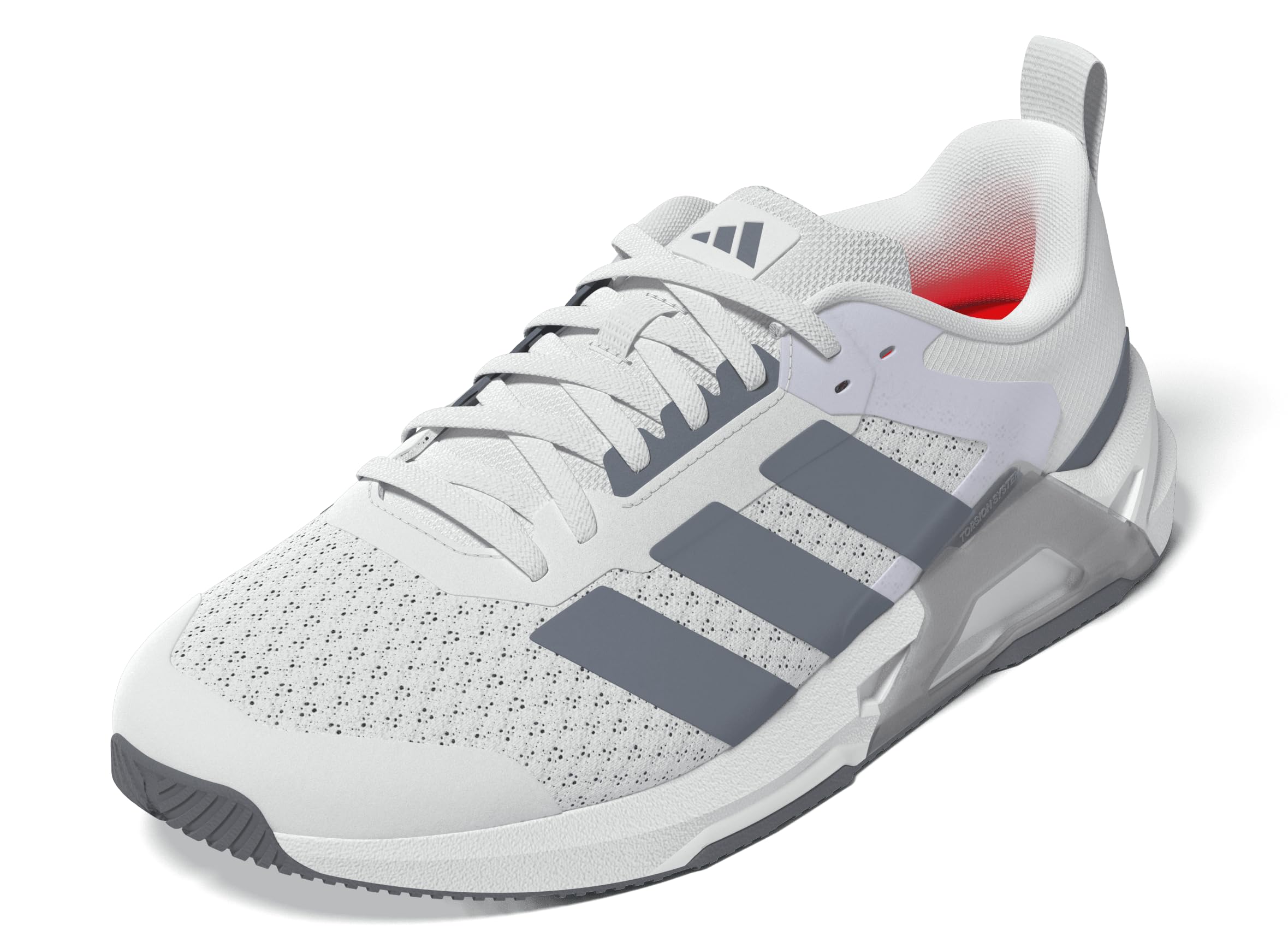
A wide-fit training shoe built for lifters who need stability for strength work and flexibility for warmups.
The Dropset Control is not a classic raised-heel lifting shoe — it is a flat, firm cross-training shoe with Repetitor foam that resists compression under load, keeping you connected to the floor during squats and deadlifts. The wide fit lets your foot spread naturally for maximum ground contact, and the TPU torsion system through the midfoot adds support during lunges and lateral movements. This is a shoe for CrossFit-style training where you deadlift, then jump rope, then hit a ladder drill — it offers stability without locking you into one movement pattern.
Fit is the top positive, with buyers noting it works well for wide feet — something that is genuinely hard to find in training shoes. A wide-foot owner who has had them for months said they are “still very pleased.” The trade-off is comfort is mixed: the shoe is stiff, and some find it uncomfortable for anything beyond weightlifting. A buyer pointed out it is “only good for weightlifting but not good for any type of cardio or even movement like lunges.”
If you need a single shoe for a varied training day and have wide feet, the Dropset Control fills that gap well. If you only squat and deadlift, a dedicated heeled shoe will serve you better.
Wide-foot haven: One of the few flat trainers that genuinely accommodates a wide foot without pinching.
The fit note: The stiffness is purposeful — expect a break-in period, and do not buy these if you need cushioning for running.
6. New Balance Women’s Minimus Tr V2

A zero-drop training shoe that gets you as close to the floor as possible while keeping a thin layer of protection.
The Minimus TR V2 is for lifters whose coach recommends a shoe without lift — a flat, barely-there platform that mimics barefoot mechanics. With zero heel-to-toe drop and a lightweight build, it is designed for explosiveness in the gym. Buyers find it comfortable for long days and praise the traction for treadmill work and weightlifting. The low-to-ground design reduces ankle sprain risk, according to several owners.
Sizing is the main headache. The shoe runs small, and several customers note needing to go up half a size — even in a wide width, the toe box can feel short. These are also women’s sizes, so men should be cautious. Comfort is the top positive at 16 mentions, but a vocal minority found the shoe too thin, calling it “uncomfortable” and noting “no support.” The general consensus: these are gym-only shoes for lifting, not walking or standing for long periods.
If you are used to cushioned sneakers, the Minimus TR V2 will feel jarring at first. The lack of padding is the point — you feel the floor directly. It is a solid pick if your training prioritizes ground feel over comfort.
Why choose it
- True zero-drop platform for barefoot-style lifting
- Lightweight construction with good gym traction
Warning signs
- Runs small — order half a size up
- Very thin sole; not for all-day wear or walking
7. Nordic Lifting VENJA Weightlifting Shoes

The dedicated Olympic lifting shoe with a 1.06-inch heel that serious squatters and powerlifters gravitate toward.
The VENJA is the most purpose-built shoe on this list — a traditional weightlifting shoe with a raised heel, a solid rubber non-compressible outsole, a Velcro strap, and a reinforced structure that boost stability and force transfer. The 1.06-inch heel is noticeably higher than the Osterland or MANUEKLEAR, which gives you extra ankle mobility for hitting depth in a squat. Quality is the thing buyers praise most (67 mentions), and the shoe holds up to daily use — one owner reported they lasted four years of training 5-7 days a week before needing minor repairs.
Fit is generous for wide feet. The shoe runs true to size with ample toe room, and the strap system locks your heel down without restricting movement. Compared to the adidas Powerlift, buyers find the VENJA offers a superior fit and feel for squatting and walking. At 3.28 pounds, it is heavier than the Powerlift (2.43 lb), but the weight signals durability. Reviewers point out noticeable stability improvements across squats, deadlifts, and overhead presses.
The trade-off is durability is marked as mixed in the data — while many owners get years of use, some note the materials show wear over time. These are not comfortable for all-day wear or walking long distances, and they are not designed for high-impact cardio. The VENJA is a specialist tool for lifters who want a proper heeled shoe without paying premium brand prices.
The specialist pick: If you squat multiple times a week and want a real heel to improve your depth, the VENJA delivers at a price that undercuts adidas and Nike lifting shoes.
Not for CrossFit: The stiff heel and higher weight make it less versatile for varied training — keep these for heavy days only.
8. Reebok Nano X5 Cross Training Shoes
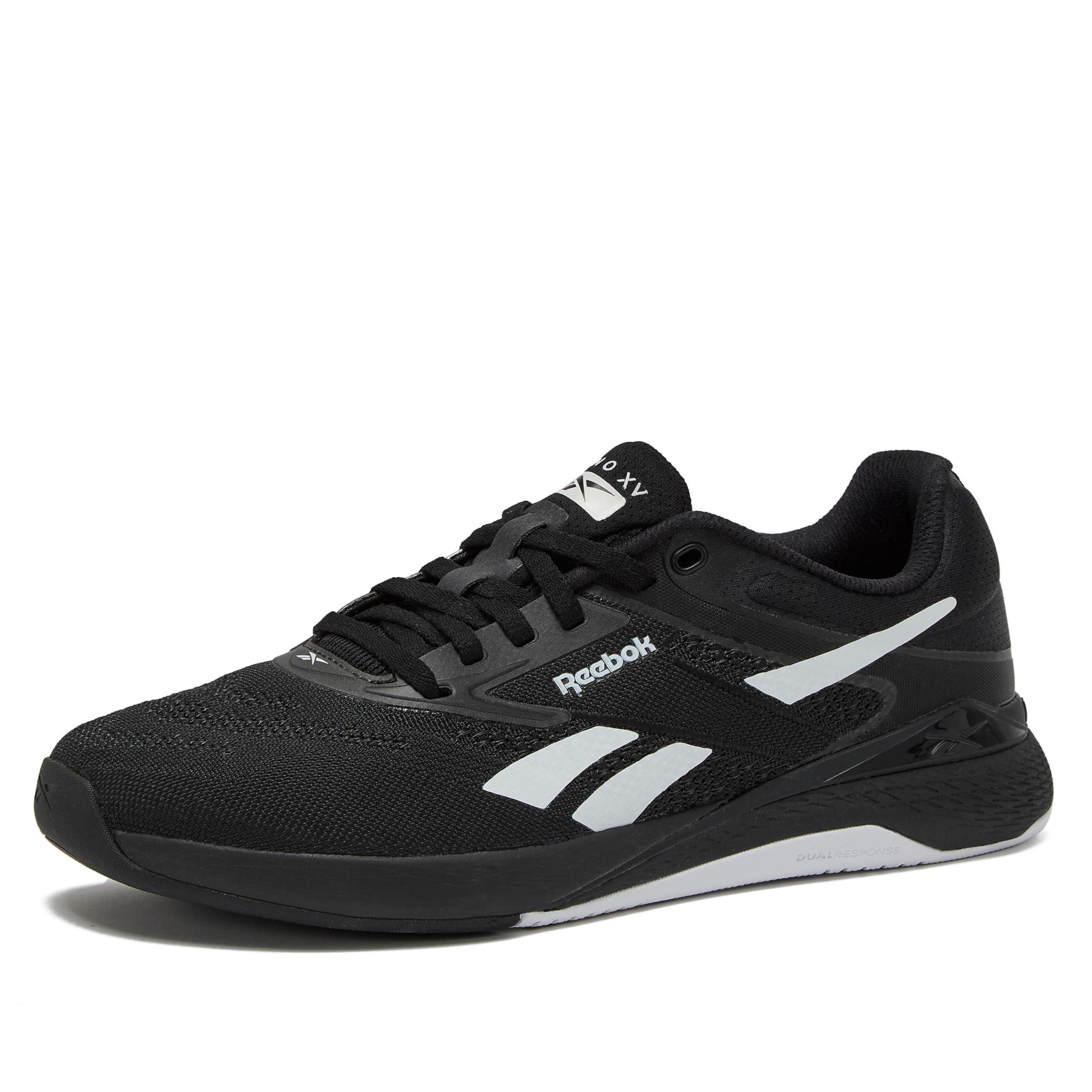
The CrossFit staple that balances stability for lifting with enough flex for box jumps and double-unders.
The Reebok Nano X5 is the latest iteration of Reebok’s iconic training shoe, and it refines the formula: a hard bottom with a sturdy base that keeps you grounded during lifts, paired with enough flexibility for the treadmill, stairs, and dynamic CrossFit movements (CrossFit combines weightlifting, cardio, and gymnastics). Gym functionality is the top praise (18 mentions), with buyers saying it solved balance issues on split squats and provides good arch support for plantar fasciitis. The fit runs slightly large and wide — a narrow-foot buyer recommends sizing down, while a buyer with narrow size 12 women’s called it a “perfect fit.”
The flat platform makes this suitable for both weightlifting and short runs, unlike the specialized heeled shoes above. One buyer described them as “walking on a cloud,” noting they are comfortable and durable. The colorways get compliments, and the purple heel detail on some models is a nice touch.
The mixed area is arch support. Some buyers find it supportive while others say the arch sits too far back and causes discomfort, even with custom insoles. The lacing system also does not reach the ankle for some wearers, creating a loose fit. If you have high arches or particular support needs, try these on first. For general CrossFit and gym work, the Nano X5 is a proven performer.
What it does well
- Hard, stable base for lifting with flex for dynamic movements
- Runs true to size for most, with wide and narrow fit options available
The split decision
- Arch support is polarizing — test before committing if you have specific needs
- Runs wide; narrow feet may need to size down
Understanding the Specs
Heel-to-Toe Drop
This is the difference in height between the heel and the forefoot, measured in millimeters. A zero-drop shoe is completely flat, which mimics barefoot mechanics and is ideal for deadlifts. A raised heel (typically 0.6 to 1.4 inches, or 15-35mm) angles your shins forward, helping you maintain an upright torso in a squat. Your choice depends on ankle mobility and primary lift: raised heels for squats, flat for deadlifts.
Non-Compressible Sole
This is the single most important spec for a lifting shoe. A compressible sole — like the soft foam in a running shoe — absorbs force that should transfer through your legs into the barbell. A non-compressible sole is made of hard rubber or TPU (thermoplastic polyurethane) that does not squish under load. You can test this by squeezing the heel of the shoe: if it gives more than a millimeter under firm pressure, it is not a proper lifting shoe.
Velcro Strap (Metatarsal Strap)
A climbing-style strap across the midfoot locks your foot into the heel pocket. In a heavy squat, your foot naturally wants to slide forward inside the shoe — the strap prevents that, keeping your heel planted. A shoe with a strap and laces gives you two independent locking systems. Shoes without a strap rely entirely on laces, which can loosen under load.
Toe Box Width
Weightlifting shoes often have a wider toe box than running shoes to let your toes splay naturally for better balance and ground contact. A narrow toe box can cause discomfort and toe cramping during squats, especially if you have wide feet. Some brands offer wide-fit versions, while others simply run narrow — checking sizing feedback is essential before buying.
FAQ
Can I wear running shoes for weightlifting?
Why do weightlifting shoes have a raised heel?
Should I buy the same size as my regular shoes?
Are weightlifting shoes good for deadlifting?
Can I use lifting shoes for CrossFit?
How long do budget weightlifting shoes last?
Do I need a Velcro strap on my lifting shoes?
What is the difference between a lifting shoe and a training shoe?
Why are some lifting shoes heavier than others?
Final Thoughts: The Verdict
For the majority of shoppers, the budget weightlifting shoes winner is the Nordic Lifting VENJA because it delivers a proper 1.06-inch raised heel, a Velcro strap, and a non-compressible sole at a price that undercuts the big brands — backed by a four-year owner report that proves its durability. If you want one shoe for the whole gym session and the rest of your day, grab the Nike Air Monarch IV. And for CrossFit-style training where you lift, jump, and run in the same hour, the Reebok Nano X5 is the one to reach for.
How We Picked
We do not accept paid placement. Every pick is matched to a real buyer and a real use-case; we do not hands-on test units.
Sources & Methodology
Specifications: manufacturer listings and product documentation. Review insights: verified customer reviews, as of July 2026. Pricing: not shown on this page (it changes often); check the current price via the retailer link.
As an Amazon Associate, FitlyFast earns from qualifying purchases. This does not affect which products we feature.