
Our readers keep the lights on and the weekend projects moving. As an Amazon Associate, I earn from qualifying purchases.
Specs are compiled from manufacturer listings and verified buyer reviews and can change over time — please confirm the key details on the product page before buying.
Wood bats offer that classic crack, the right swing weight, and a feel aluminum just cannot match — but the price tags on the big-name models can scare you off before you even step into the cage. The good news is you do not need a three-figure bat to get solid wood construction, a balanced swing, and enough pop for practice, pickup games, or even home defense. This guide cuts through the options to find the best budget wood bats that deliver real value without making you wince at checkout.
I’m Rikta — the founder and writer behind FitlyFast. This guide is built by comparing the manufacturers’ published specifications and the patterns across verified customer reviews, so you get each pick’s real strengths and trade-offs instead of marketing spin.
We focused on one-piece solid wood, , and how each bat actually holds up to swings and knocks so you can pick the right budget wood bat for your game, your kid’s first season, or just keeping near the door.
Our Picks at a Glance

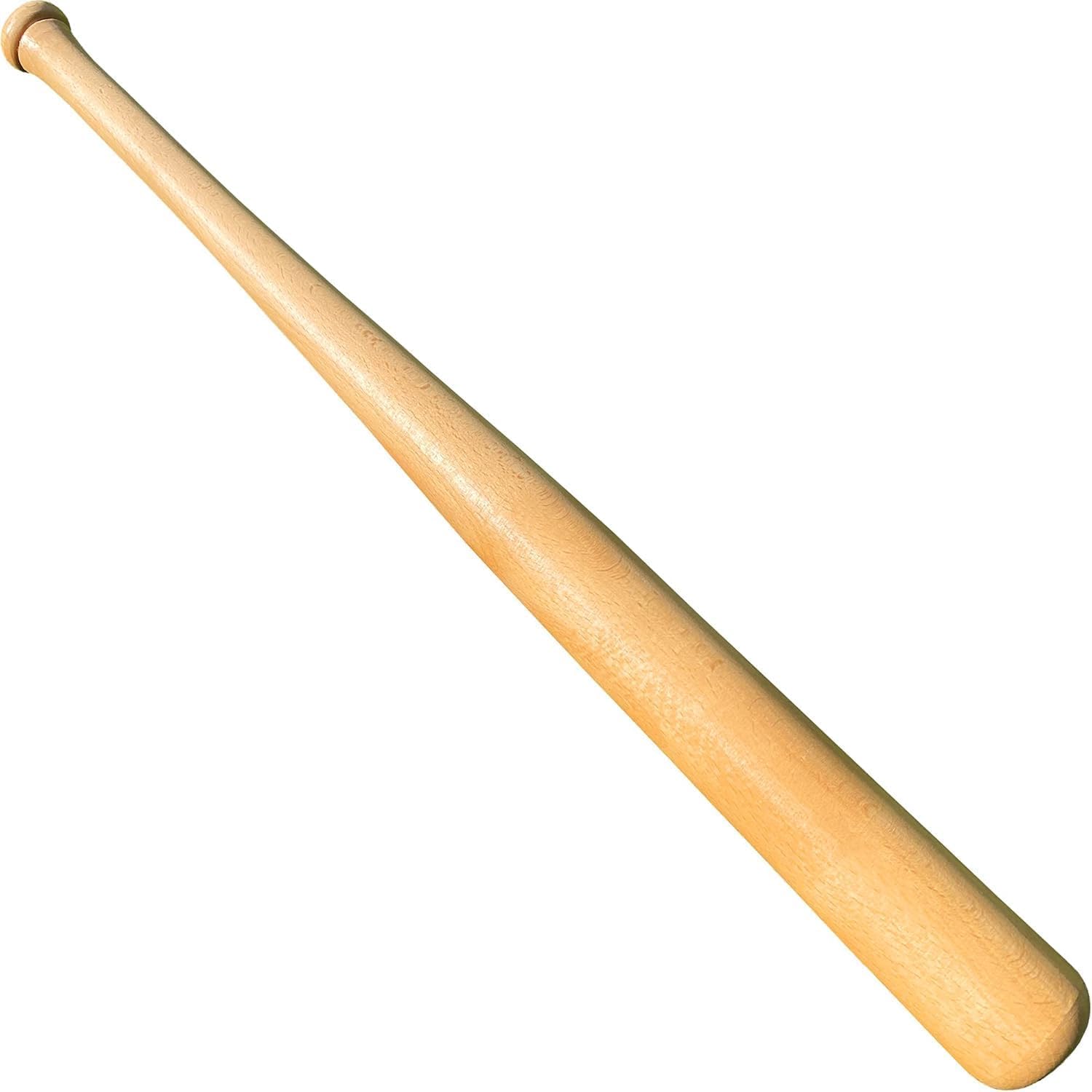

How To Choose The Best Budget Wood Bats
Picking a wooden bat on a budget is about knowing which specs actually affect your swing and which are just marketing. Here is what matters most.
Match the Length to Your Height
The bare minimum is whether the bat reaches your comfort zone. A bat that is too long throws off your timing; one too short leaves you reaching. Youth bats typically run from 26 to 29 inches, while adult options start around 31 inches and go up to 34 inches. Measure from the center of your chest to the tip of your outstretched hand — that number is a solid starting length.
One-Piece Wood Construction
Budget bats are almost always a single piece of solid wood — beech, ash, or a wood mix. That is actually a good thing: no welded joints, no composite sleeves, just a single billet (a solid block of wood). Beech is dense and durable. Ash is lighter and offers more flex. The “mix” labels from brands like Louisville Slugger are multi-wood laminates designed for consistent performance at a lower price.
Weight and Swing Feel
A “balanced” swing weight means the bat feels evenly weighted through the swing, which helps with bat speed and control. A “cupped” barrel (a slight scoop at the end) removes a few ounces of wood to make the bat lighter without shortening it. For budget picks, look for the actual ounce weight — a 19-ounce bat swings very differently from a 30-ounce one, even at the same length.
Grip and Handle Thickness
Wood handles vary from thin (more whip, more sting on mishits) to thicker (more control, less vibration). Most budget bats come with a raw wood handle you can wrap yourself. If the grip feels too skinny, a simple over-the-counter bat grip tape adds thickness quickly.
Quick Comparison
| Model | Best For | Length | Weight | Wood Type | Amazon |
|---|---|---|---|---|---|
| Vliuxn Classic Wooden Youth | Best Overall Value | 29″ | 15 oz | Solid Wood | Amazon |
| KOTIONOK Beech Wood | Youth Practice & Self-Defense | 27″ | 19 oz | Beech | Amazon |
| SECOTAN Training Bat | Versatile Training Thump | 28″ | — | Natural Wood | Amazon |
| Louisville Slugger MIX | Adult Game-Ready Power | 33″ | 1.5 lb | 3X Wood Mix | Amazon |
| Louisville Slugger Natural Youth | Youth Tee Ball Starter | 26″ | 1.1 lb | Maple | Amazon |
| Rawlings Adirondack Ash | Adult League All-Rounder | 34″ | 1.2 lb | Ash | Amazon |
In‑Depth Reviews
1. Vliuxn Classic Wooden Youth Baseball Bat
A feathery 15-ounce swing that feels lighter than it looks, wrapped in polished solid wood.
This bat strips away the fluff and gives you a 29-inch, 15-ounce piece of solid wood that is carefully polished and varnished — the kind of finish that catches light and feels smooth in the hands. Buyers report it is “sturdy, solid, not too heavy,” and the rubberized handle wrap provides a secure grip even when you are wearing gloves.
The quality is the thing owners praise most, and the value-for-money reputation runs deep — the solid build and smooth finish consistently impress at this price point. A few note the barrel is on the thinner side compared to a full-size bat, so it is best suited for youth practice, training, and casual games rather than competitive adult league play.
Weaving in a real buyer experience: one owner stripped the clear layer to repaint it as a custom gift and found the grip tape adhesive so tenacious it was “good quality” — the bat held up perfectly through the project. It is fully wooden, with a classic look that one fan described as making them feel “like Nancy from Stranger Things.”
Light, polished, ready to swing: The 15-ounce weight and 29-inch length hit a balance for youth and teen players — light enough to generate quick bat speed, solid enough to feel authoritative on contact.
Know the fit: The handle diameter runs slightly larger than a typical baseball bat, which is great for grip but may feel chunky for very small hands. The top is also a bit thinner than expected, so hard-ball impact at the very end may feel different.
Reach for this if: you need a smooth, lightweight wood bat for a younger player or for training drills — the polished finish and balanced feel make it a joy to swing.
Think twice if: you are a power hitter looking for a 33-inch adult bat; this one tops out at 29 inches and is built for control, not crushing.
2. KOTIONOK Genuine Solid Beech Wood Baseball Bat
Four extra ounces of beech wood give this 27-incher a dense, authoritative feel that younger players can grow into.
At 19 ounces (versus the Vliuxn’s 15 ounces) and 27 inches, this KOTIONOK bat is heavier — a difference you feel immediately in the hands. That added mass comes from the genuine beech wood, a dense hardwood known for durability. Owners mention legendary craftsmanship and a swing weight that feels natural for boys in the 8-12 age range, making it a strong candidate for batting cages, pickup games, and backyard practice. One owner summed it up: “perfect size and weight for a protection bat.”
The beech construction gives the bat a distinct deep wood grain and a timeless look that works whether it is in the batting cage or leaning in a corner of a study. The traditional tapered end cap and pommel knob keep the grip secure. Durability earns heavy praise alongside quality, and the self-defense angle gets its own frequent mention — the solid heft makes it an intimidating deterrent. A few find the 27-inch length too small for teens or adults who have outgrown youth sizing, so measure before buying if the player is approaching full height.
One reviewer used this bat for a baseball-themed baby shower — guests signed it as a keepsake — and called it “well made, and perfect for what we needed it for.” That kind of versatility, from practice swings to decorative memorabilia to home protection, speaks to the build quality.
Dense beech for durability: The one-piece beech construction handles hard contact without flexing, and the 19-ounce weight develops arm strength as kids swing it during practice.
Size is the catch: At 27 inches this is firmly a youth bat — adult buyers looking for a full-length bat should size up unless they specifically want a compact protection piece.
Best for: boys 8-12 who want a classic wooden bat that feels solid and built to last through tee-ball and practice seasons.
Skip if: you need a longer barrel for teenage or adult league play; the 27-inch length and compact profile are designed for growing players, not full-grown hitters.
3. SECOTAN Wood Baseball Training Bat (28″)
A 28-inch compact slugger that packs a surprising wallop for its size, built from sustainably sourced natural wood.
The SECOTAN is shorter than most adult bats at 28 inches, but the feedback from owners is that it “packs a big punch for a small bat.” Its scientific weight distribution positions the balance point for a stable, controlled swing — great for soft toss and tee drills. The handle is ergonomically shaped to reduce fatigue during longer practice sessions. Owners call the quality solid and the construction sturdy, with one noting it is “perfect size for sports or home defense.” Another buyer found an unconventional use: “hard wood gives tires a good thump” when knocking snow off parked cars.
The key limitation is spelled out plainly by the manufacturer: this bat is not designed for hard baseballs. It is meant for soft-core training balls, T-balls, and practice sessions. That makes it a dedicated training tool rather than a game-day bat, so if you plan to step into a live cage against hard machine pitching, look at the Louisville Slugger or Rawlings options below. But for a kid learning to hit off a tee or a casual adult working on mechanics, the value is tough to beat.
Construction quality and value for money are the two most-discussed strengths. The clear wood finish shows off the natural grain, and the bat feels about the right weight for its size — compact enough to control, heavy enough to drive a soft ball.
Great for soft-ball drills: The balanced swing and ergonomic handle make it a pleasure for repetitive practice swings, and the 28-inch length keeps it manageable for smaller players.
Hard ball warning: Using this bat with standard hard baseballs will damage it and could be unsafe — it is strictly a soft-ball training tool.
Ideal for: batting practice with soft-core balls, T-ball, or as a multi-use compact bat for drills and general thumping.
Not right for: league games, live cage sessions with hardballs, or any competitive hardball hitting.
4. Louisville Slugger Genuine Mix Baseball Bat (33″)

A 33-inch adult bat that brings Louisville Slugger’s wood-mix engineering to the budget aisle without cutting corners.
When you need a full-length adult bat that can handle live pitching and real hardballs, the Louisville Slugger MIX is the most affordable entry point into big-league wood. The 33-inch cupped barrel reduces swing weight for better bat speed, and the 3X wood mix construction delivers consistent performance across the barrel. Owners who use it for pickup games and non-pro practice report it is durable enough for regular use — one specifically noted it held up against pitches in the 80-90 MPH range, though hard cage use or 92+ MPH fastballs at the end cap can cause micro-cracking.
Bat quality is what owners praise most, and the balanced swing weight earns particular mention. The clear finish looks sharp from the start, and the cupped design helps younger adults get the barrel through the zone faster. The durability conversation is mixed — some report it going strong after multiple seasons while a couple received bats that cracked early — making this a solid practice and pickup-game bat rather than a tournament model. Its heft at 1.5 pounds means it can send outer-zone pitches further when you get the barrel on them.
Customers note it is “durable enough for practice and most pickup games of the non-pro level.” The 33-inch length and cupped design make it a legitimate option for adult recreational leagues where you want the wood-bat experience without the price.
Legit adult length: At 33 inches and cupped, this bat gives you the reach and swing speed you need for competitive adult play — a real step up from the 27-29 inch youth options above.
Durability is situational: Great for 70-90 MPH pitching and casual games, but repeated cage use or 92+ MPH fastballs near the end cap can cause cracks.
Choose this for: adult recreational leagues, pickup games, and batting practice where you need a full-sized wood bat that won’t blow your budget.
Look elsewhere if: you plan to hit hundreds of cage pitches at high velocity every week — the 3X mix handles normal use but is not an end-cap-proof cage monster.
5. Louisville Slugger Natural Youth Teeball Bat (26″)

A 26-inch maple bat built for tee-ball beginners — short enough to control, heavy enough to drive the ball off the tee.
The first wood bat a kid swings can shape their whole feel for the game, and this Louisville Slugger Natural Youth model makes a strong first impression. At 26 inches, it is designed for the youngest players — think 7 to 10 year olds just transitioning from plastic bats to real wood. The balanced swing weight and cupped barrel make it easier to get around on the ball, and the maple construction brings a dense, solid contact feel that aluminum just does not have. One owner described it as “good quality for the price,” and another noted that the heavier swing helped their kid hit dramatically farther.
Quality is the standout aspect here — it is the most-praised feature by a wide margin. Buyers also call out the value, especially given that this is a genuine Louisville Slugger. The skinny handle is standard for youth bats, but a few parents mention it may need an aftermarket grip wrap to prevent the bat from slipping out of smaller hands. The 26-inch length is perfect for tee-ball and coach-pitch, but some families found it too short for older or taller 10-year-olds.
One buyer used it as a display piece and called it “very classy and well made — it looks excellent displayed in my sports room.” That speaks to the finish quality: the natural wood topcoat is smooth and shows off the maple grain nicely. Made in the USA, which adds a layer of confidence.
Perfect tee-ball starter: The 26-inch maple barrel gives a young player a real wood-bat experience with a manageable length and balanced weight that builds good swing habits.
The grip may be too skinny: Young hands can struggle to hold it securely; a simple over-the-counter grip wrap fixes it quickly.
Grab this for: a child’s first wood bat in tee-ball or coach-pitch — the quality and balance are excellent for beginners.
Consider longer if: your player is on the taller side or has already outgrown 26-inch bats — check their chest-to-fingertip measurement first.
6. Louisville Slugger Youth Genuine Y125 (27″)

A 34-inch ash wood bat from a heritage brand — the Adirondack name has been cracking fences since before aluminum was a thing.
If you are an adult player stepping into the box against live pitching, this Rawlings Adirondack in ash wood is the most proven budget bat on the list. The 34-inch length is the standard adult game size, and the 31/32-inch handle diameter gives you a comfortable, easy swing. Ash is lighter and more flexible than maple, which means more whip through the zone and a bit more forgiveness on off-center hits. The larger barrel design packs extra pop, and owners consistently praise the weight — it “feels right in my hands,” as several reviewers put it. Quality is the most-discussed strength, followed closely by weight satisfaction.
Durability is where the conversation gets honest. Many reviewers point out this bat lasting through two full seasons of adult league play, which is excellent for ash at this price. Others note that ash can dent and flake faster than maple, especially on cold days or against hard-throwing pitchers. The top-heavy balance gives it power potential but means you need decent bat speed to keep it through the zone. The black paint on some units has been reported to fade after a few sessions, though that is cosmetic only.
Shoppers say it is “a great bat” for practice and game use, and one called it “durable enough to survive multiple rounds where others broke.” If you want an adult wood bat that has MLB heritage and a generous barrel, this is the one to reach for.
Proven adult performer: The ash construction, 34-inch length, and larger barrel make this a genuine game-ready bat for adult recreational leagues and pickup games.
Ash dents faster than maple: Ash flexes more, which gives it a softer feel, but it also dents and chips more readily — avoid using it in freezing weather.
Pick this for: adult league play and practice where you want a full-sized ash wood bat with a generous barrel and proven durability from a legendary name.
Consider maple instead if: dent resistance is a priority or you face high-velocity pitching regularly — ash will show wear faster than a dense maple model.
Understanding the Specs
Bat Length vs Barrel Reach
The length of a wood bat (measured in inches from knob to end cap) determines how much of the plate you can cover. A bat that is too short leaves you reaching for outside pitches; one that is too long slows your swing down. For youth players, 26 to 29 inches is the typical range. Adults generally swing 31 to 34 inches. The old rule of thumb still works: stand the bat vertically against your leg — if you can reach the knob comfortably with your palm, the length is in the ballpark.
Wood Type: Beech, Ash, Maple, and Mix
The wood species changes the bat’s weight, feel, and durability. Beech is dense and heavy — good for building arm strength but can feel sluggish. Ash is lighter and has more flex, which can help generate bat speed but dents more easily. Maple is the gold standard for pop and hardness but is more expensive and can shatter if you hit the end cap hard. Budget wood bats often use a “mix” — layers of different woods laminated together — which gives consistent performance at a lower price point than a single-piece maple billet.
Cupped vs Un-Cupped Barrel
A “cupped” bat has a slight hollow scoop carved into the end of the barrel. That removes an ounce or two of wood weight without shortening the length, making the bat feel lighter and swing faster. Most budget wood bats at the adult level are cupped. Un-cupped bats (solid all the way through) are heavier and can feel more end-loaded, which some power hitters prefer for driving the ball deep. For a first wood bat, cupped is usually the safer choice — it gives you more bat speed with less fatigue.
Drop Weight Explained
The “drop” is the difference between the bat’s length in inches and its weight in ounces. A 30-inch bat that weighs 25 ounces has a -5 drop. Lower drops (like -3) mean the bat is heavier for its length, which is closer to wood-bat feel and used in high school and college wood-bat leagues. Higher drops (-8, -10) are lighter and easier for young players to swing. Budget wood bats rarely list a drop, so check the actual ounce weight and compare it to the length to understand how heavy it will feel.
FAQ
Can I use a budget wood bat in an adult league game?
What size wood bat should I get for my 10-year-old?
How long does a budget wood bat last compared to an aluminum one?
Is a wood bat better than a composite or aluminum bat for practice?
Can I use a wood youth bat for self-defense?
What is the difference between ash, maple, and beech wood bats?
Do I need to treat or oil a wood bat?
Can a budget wood bat hit regulation hard baseballs?
How do I know if a wood bat is the right weight for my swing?
What does “cupped” mean on a wood bat?
Final Thoughts: The Verdict
For most families and players, the best budget wood bat is the Vliuxn Classic Wooden Youth Bat because it delivers a polished, 15-ounce swing at 29 inches with a finish that punches well above its price. If your young player needs a denser practice bat that builds arm strength, grab the KOTIONOK Beech Wood Bat. And for adult league action, the Rawlings Adirondack Ash Bat is the most proven full-sized wood option that will not blow your budget. No matter which you choose, you are getting a real piece of solid wood that delivers the classic crack and feel aluminum can never quite replicate.
{“@context”: “https://schema.org”, “@graph”: [{“@type”: “ItemList”, “name”: “8 Best Budget Wood Bats”, “url”: “https://fitlyfast.com/best-budget-wood-bats/”, “numberOfItems”: 6, “itemListElement”: [{“@type”: “ListItem”, “position”: 1, “name”: “Vliuxn Classic Wooden Youth Baseball Bat”, “url”: “https://fitlyfast.com/best-budget-wood-bats/#product-1”}, {“@type”: “ListItem”, “position”: 2, “name”: “KOTIONOK Genuine Solid Beech Wood Baseball Bat”, “url”: “https://fitlyfast.com/best-budget-wood-bats/#product-2”}, {“@type”: “ListItem”, “position”: 3, “name”: “SECOTAN Wood Baseball Training Bat (28\”)”, “url”: “https://fitlyfast.com/best-budget-wood-bats/#product-3”}, {“@type”: “ListItem”, “position”: 4, “name”: “Louisville Slugger Genuine Mix Baseball Bat (33\”)”, “url”: “https://fitlyfast.com/best-budget-wood-bats/#product-4”}, {“@type”: “ListItem”, “position”: 5, “name”: “Louisville Slugger Natural Youth Teeball Bat (26\”)”, “url”: “https://fitlyfast.com/best-budget-wood-bats/#product-5”}, {“@type”: “ListItem”, “position”: 6, “name”: “Louisville Slugger Youth Genuine Y125 (27\”)”, “url”: “https://fitlyfast.com/best-budget-wood-bats/#product-6”}]}, {“@type”: “Product”, “position”: 1, “name”: “Vliuxn Classic Wooden Youth Baseball Bat”, “image”: “https://m.media-amazon.com/images/I/417nK56ymPL.jpg”, “brand”: {“@type”: “Brand”, “name”: “Vliuxn”}, “url”: “https://www.amazon.com/dp/B0BJL4R2XT/?tag=fitlyfast00-20”, “offers”: {“@type”: “Offer”, “url”: “https://www.amazon.com/dp/B0BJL4R2XT/?tag=fitlyfast00-20”}}, {“@type”: “Product”, “position”: 2, “name”: “KOTIONOK Genuine Solid Beech Wood Baseball Bat”, “image”: “https://m.media-amazon.com/images/I/51DSNwl0CFL.jpg”, “brand”: {“@type”: “Brand”, “name”: “KOTIONOK”}, “url”: “https://www.amazon.com/dp/B08V85K5VJ/?tag=fitlyfast00-20”, “offers”: {“@type”: “Offer”, “url”: “https://www.amazon.com/dp/B08V85K5VJ/?tag=fitlyfast00-20”}}, {“@type”: “Product”, “position”: 3, “name”: “SECOTAN Wood Baseball Training Bat (28\”)”, “image”: “https://m.media-amazon.com/images/I/31s3y020hXL.jpg”, “brand”: {“@type”: “Brand”, “name”: “SECOTAN”}, “url”: “https://www.amazon.com/dp/B0DPHMCPM3/?tag=fitlyfast00-20”, “offers”: {“@type”: “Offer”, “url”: “https://www.amazon.com/dp/B0DPHMCPM3/?tag=fitlyfast00-20”}}, {“@type”: “Product”, “position”: 4, “name”: “Louisville Slugger Genuine Mix Baseball Bat (33\”)”, “image”: “https://m.media-amazon.com/images/I/51k3yNm6SkL.jpg”, “brand”: {“@type”: “Brand”, “name”: “Louisville”}, “url”: “https://www.amazon.com/dp/B0B2VBM1G9/?tag=fitlyfast00-20”, “offers”: {“@type”: “Offer”, “url”: “https://www.amazon.com/dp/B0B2VBM1G9/?tag=fitlyfast00-20”}}, {“@type”: “Product”, “position”: 5, “name”: “Louisville Slugger Natural Youth Teeball Bat (26\”)”, “image”: “https://m.media-amazon.com/images/I/61vW502o1mL.jpg”, “brand”: {“@type”: “Brand”, “name”: “Louisville”}, “url”: “https://www.amazon.com/dp/B0B2T9JV82/?tag=fitlyfast00-20”, “offers”: {“@type”: “Offer”, “url”: “https://www.amazon.com/dp/B0B2T9JV82/?tag=fitlyfast00-20”}}, {“@type”: “Product”, “position”: 6, “name”: “Louisville Slugger Youth Genuine Y125 (27\”)”, “image”: “https://m.media-amazon.com/images/I/41rwlnCNCCL.jpg”, “brand”: {“@type”: “Brand”, “name”: “Louisville”}, “url”: “https://www.amazon.com/dp/B00YADRMRW/?tag=fitlyfast00-20”, “offers”: {“@type”: “Offer”, “url”: “https://www.amazon.com/dp/B00YADRMRW/?tag=fitlyfast00-20”}}, {“@type”: “FAQPage”, “mainEntity”: [{“@type”: “Question”, “name”: “Can I use a budget wood bat in an adult league game?”, “acceptedAnswer”: {“@type”: “Answer”, “text”: “Yes, as long as it meets the league’s length and wood requirements. Most adult recreational leagues allow any wood or wood-mix bat under 34 inches. The Rawlings Adirondack (34\”) and Louisville Slugger MIX (33\”) are both solid game-day options. Check your league rules — some require a specific wood type or certification.”}}, {“@type”: “Question”, “name”: “What size wood bat should I get for my 10-year-old?”, “acceptedAnswer”: {“@type”: “Answer”, “text”: “For a 10-year-old, a 27-inch to 29-inch bat is the typical range, depending on their height and arm strength. The Vliuxn at 29 inches and 15 ounces is the lightest option and great for building swing confidence. The KOTIONOK at 27 inches and 19 ounces is heavier and better for kids who have already played a season or two. Have your child stand the bat straight up — if they can comfortably reach the knob with their palm flat on the top of the barrel, that length is likely a good fit.”}}, {“@type”: “Question”, “name”: “How long does a budget wood bat last compared to an aluminum one?”, “acceptedAnswer”: {“@type”: “Answer”, “text”: “It depends on how and where you use it. A wood bat used against live pitching in the 70-90 MPH range can last a full season or more with normal use. Wood bats used in automated pitching machines or against 90+ MPH fastballs near the end cap can crack faster. Aluminum bats last much longer but cost more initially. Budget wood bats are often treated as consumable practice tools — they give you the classic feel at a price that is easy to replace if one does crack.”}}, {“@type”: “Question”, “name”: “Is a wood bat better than a composite or aluminum bat for practice?”, “acceptedAnswer”: {“@type”: “Answer”, “text”: “It depends on your goal. Wood bats give you immediate feedback — you feel exactly where on the barrel you made contact, which helps you develop a better swing. Aluminum bats are more forgiving and have a larger balance. Many coaches recommend wood bats for training because they force you to hit the center of the barrel consistently. Budget wood bats make this affordable.”}}, {“@type”: “Question”, “name”: “Can I use a wood youth bat for self-defense?”, “acceptedAnswer”: {“@type”: “Answer”, “text”: “Yes — several of these bats are explicitly marketed for self-defense, and buyers confirm they work well for home protection. The KOTIONOK beech wood bat at 19 ounces and 27 inches gets frequent mention as a deterrent. The compact length makes it easy to store by a door. Just be aware of the legal regulations in your area regarding carrying or storing a bat specifically for self-defense.”}}, {“@type”: “Question”, “name”: “What is the difference between ash, maple, and beech wood bats?”, “acceptedAnswer”: {“@type”: “Answer”, “text”: “Ash is lighter, flexible, and tends to flake rather than shatter — it is forgiving on mishits but dents more easily. Maple is dense, hard, and offers a stiffer feel with more pop, but it can crack if you hit the end cap. Beech sits in the middle: denser than ash, less expensive than maple, and very durable. For budget wood bats, beech and ash are the most common choices because they are easier to source and work with compared to premium maple.”}}, {“@type”: “Question”, “name”: “Do I need to treat or oil a wood bat?”, “acceptedAnswer”: {“@type”: “Answer”, “text”: “Not strictly necessary for budget wood bats, but a light coat of raw linseed oil applied once a month can help keep the wood from drying out and reduce the chance of cracking. Store the bat indoors away from extreme heat, cold, or moisture. If the bat came with a clear topcoat finish (like most of the options in this guide), the wood is already sealed and needs minimal care — just wipe it down after use.”}}, {“@type”: “Question”, “name”: “Can a budget wood bat hit regulation hard baseballs?”, “acceptedAnswer”: {“@type”: “Answer”, “text”: “Most budget wood bats designed for baseball (like the Vliuxn, KOTIONOK, Louisville Slugger, and Rawlings models) can handle regulation hardballs for typical practice and game use. The SECOTAN training bat explicitly states it is not for hard baseballs — use it only with soft-core or training balls. Always check the product description. If it says \”training\” or \”softball\” in the title, assume it is not meant for hardballs.”}}, {“@type”: “Question”, “name”: “How do I know if a wood bat is the right weight for my swing?”, “acceptedAnswer”: {“@type”: “Answer”, “text”: “Hold the bat horizontally with your dominant hand at the knob and extend your arm straight out. If you can hold it steady for 10 seconds without your arm shaking or dropping, the weight is manageable for your swing. If it feels heavy after a few seconds, consider a lighter bat. For youth players, lighter is generally better — a 15-ounce or 19-ounce bat will help them develop bat speed and good mechanics before moving up in weight.”}}, {“@type”: “Question”, “name”: “What does \”cupped\” mean on a wood bat?”, “acceptedAnswer”: {“@type”: “Answer”, “text”: “A \”cupped\” bat has a small concave scoop carved into the end of the barrel. This removes an ounce or two of weight from the end of the bat, shifting the balance point closer to your hands. This makes the bat feel lighter and easier to swing fast. Most adult wood bats are cupped. Youth bats may or may not be cupped depending on the model. Un-cupped bats have a solid, flat end and feel heavier at the tip.”}}]}]}