
Our readers keep the lights on and the weekend projects moving. As an Amazon Associate, I earn from qualifying purchases.
Specs are compiled from manufacturer listings and verified buyer reviews and can change over time — please confirm the key details on the product page before buying.
PETG is a fussy filament. It warps at the corners, lifts on smooth glass, and bonds so aggressively to some surfaces that you risk chipping the print—or the plate—prying it off. The fix is a textured PEI sheet or a specialty low-temperature plate that grabs the first layer like a magnet but releases the moment things cool down. This guide cuts through the noise on exactly that surface: the best build plate for PETG that saves you glue, saved prints, and a lot of cancelled jobs.
I’m Rikta — the founder and writer behind FitlyFast. This guide is built by comparing the manufacturers’ published specifications and the patterns across verified customer reviews, so you get each pick’s real strengths and trade-offs instead of marketing spin.
You need a build plate for petg that sticks firmly at printing temperature, lets go easily when cool, and keeps working after many prints. The right plate saves you from warped first layers and damaged surfaces — here is which one earns your money and why.
Quick Picks
- BIQU CryoGrip Pro Glacier Panda Build Plate for — Best Overall
- Thicker 0.77mm Textured PEI Build Plate — Best Value
- Official Creality K1C Build Plate 235x235mm — Best for Creality
- Upgraded Thicker Textured PEI Plate 0.77mm — Long Haul
- IdeaFormer-3D P1S A1 Textured PEI Build Plate — Smart Swap
- BIQU CryoGrip Pro Glacier Panda Build Plate for Bambu-Lab — Cold Champion
- Upgraded Kobra S1 Double Sided PEI Build Plate — Niche Fit
How To Choose The Best Build Plate For PETG
PETG’s combination of strength and slight flexibility makes it a go-to for functional prints, but that same flexibility causes curling at the edges if the bed surface isn’t aggressive enough. Here is what separates a plate that works from one that wastes filament.
Surface Material
Textured PEI (polyetherimide) is the gold standard for PETG because the rough micro-surface gives the first layer thousands of tiny anchor points. Smooth glass or bare spring steel often causes PETG to lift, while PEI holds it flat. Some newer plates use a proprietary polymer coating that works at much lower bed temperatures for the same grip.
Plate Thickness and Flatness
A thicker sheet—0.77mm versus the typical 0.5mm or so—resists warping itself and maintains flatter contact across the whole heated bed. This matters for PETG because a slight dip in the plate creates a gap that reduces adhesion exactly where you need it most.
Release Behavior for PETG
PETG can bond too well to some surfaces. The trick is a plate that holds tight during printing but releases cleanly once the bed cools down. Textured PEI plates naturally loosen when they reach room temperature, and cold-adhesion plates require a full cooldown—sometimes even a trip to the freezer—before the print pops off.
Quick Comparison
| Model | Best For | Thickness | Weight | Size | Amazon |
|---|---|---|---|---|---|
| BIQU CryoGrip Pro (A1 Mini) | Cold-printing fanatics on A1 Mini | Not stated | 14.1 oz | 184x184mm | Amazon |
| Wefuit Thicker 0.77mm PEI | Bambu Lab owners wanting OEM+ quality | 0.77mm | 13.4 oz | 257x257mm | Amazon |
| Creality K1C Textured PEI | Creality K1 and Ender 3 series users | Not stated | 10.5 oz | 235x235mm | Amazon |
| Sahvaim Upgraded 0.77mm PEI | High-volume Bambu Lab printing | 0.77mm | 13.7 oz | 257x257mm | Amazon |
| IdeaFormer-3D Textured PEI | Bambu Lab users who want QR-code detection | Not stated | 11.3 oz | 256x256mm | Amazon |
| BIQU CryoGrip Pro (257mm) | Cold-printing on full-size Bambu Lab machines | Not stated | 14.4 oz | 257x257mm | Amazon |
| KOYOFEI PEI for Kobra S1 | Anycubic Kobra S1 and Neptune 4 owners | Not stated | 11.3 oz | 264x276mm | Amazon |
In‑Depth Reviews
1. BIQU CryoGrip Pro Glacier Panda Build Plate for Bambu-Lab A1 Mini
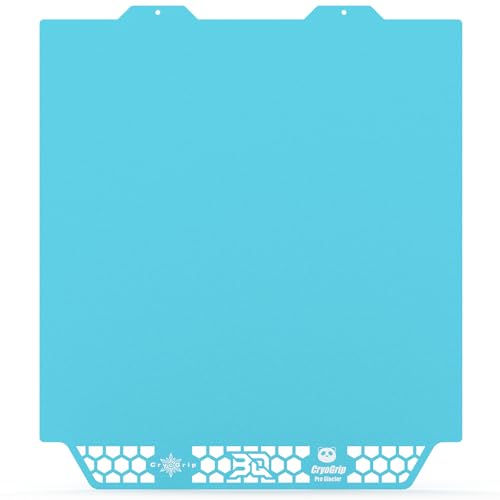
The plate that sticks PETG cold and makes glue sticks a memory.
This is the plate that changes how you think about bed temperature. BIQU’s 7-layer polymer coating grips PETG so hard that the recommended bed setting drops to 60-75°C for PETG—well below the 80-85°C many users run. Buyers confirm the effect: one reports “excellent cold adhesion at 25-30°C” that eliminates warping and lets them skip bed heating entirely, speeding up the whole print cycle. The double-sided fine-textured surface leaves a matte finish on the bottom of your prints, and the honeycomb handle stays cool enough to touch even when the bed reaches 100°C. At 14.1 ounces, it is noticeably heavier than the Creality K1C plate (10.5 ounces)—a 34% weight gap that speaks to the denser coating and extra spring steel.
The catch is size and release patience. This plate fits only the Bambu Lab A1 Mini (184x184mm), so full-size machine owners need the 257mm version. And because the adhesion is so strong at temperature, the part will not let go until the plate is fully cool. A few buyers mention using the freezer trick for stubborn pieces. Clean with soap and water or alcohol—acetone kills the coating.
Grip-first design: Cold-printing capability that skips bed heat entirely, saving time on every PETG job.
Size limitation: 184x184mm is A1 Mini only; full-size Bambu Lab printers need the larger 257mm variant.
Reach for this if: you run an A1 Mini and want the widest PETG adhesion window possible, including cold prints that never lift.
Consider the 257mm version if: you have a P1S, X1C, or other full-size Bambu machine—the same tech is available in the larger size.
2. Thicker 0.77mm Textured PEI Build Plate with QR Code for Bambu Lab P2S X2D
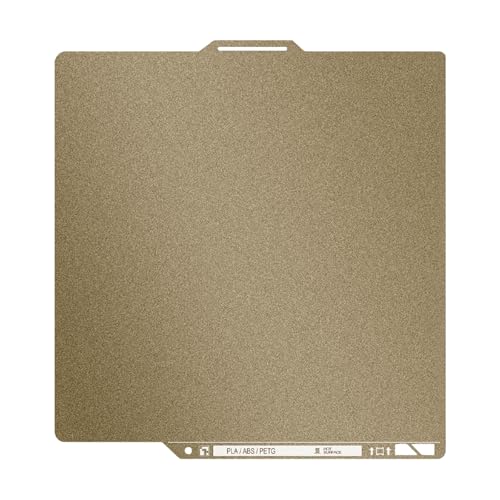
An affordable textured PEI plate that matches OEM build quality on Bambu Lab machines.
The 0.77mm thickness is the headline number here. Most stock Bambu Lab plates come in thinner—this extra heft reduces warping across the bed, which directly helps PETG hold its first layer flat across the full 257x257mm surface. Buyers highlight that the integrated QR code is readable by the X2D without tweaks, letting the printer auto-detect the plate. One reviewer calls it “as good as OEM” and says they have used it extensively with no issues. At 13.4 ounces, it is lighter than the premium BIQU plate (14.1 ounces in the A1 Mini size), but the trade-off means a faster heat-up time.
The real-world quirk is release timing. PETG sticks so well to this PEI coating that several buyers stress you must let the bed cool fully to room temperature before flexing the plate—or the part stays fused. A simple wash with detergent and water restores the surface when adhesion drops. Avoid acetone here; it ruins the PEI permanently.
Why it works
- 0.77mm thickness resists flex and keeps the bed flat for PETG first layers
- QR code lets Bambu Lab printers detect it automatically
- Buyers report it is as good or better than the official Bambu PEI plate
One thing to know
- Must cool completely or PETG parts stick too strongly to remove
- No cold-printing capability like the BIQU plates—needs standard bed heat
Who it suits: Bambu Lab owners (P1S, X1C, P2S, A1) who want a drop-in textured PEI replacement at a lower cost than the brand-name plate, with better thickness and solid adhesion.
Not for you if: you want colder bed temps or a polymer coating—this is a traditional PEI surface that needs standard heating.
3. Official Creality K1C Build Plate 235x235mm Textured PEI Sheet
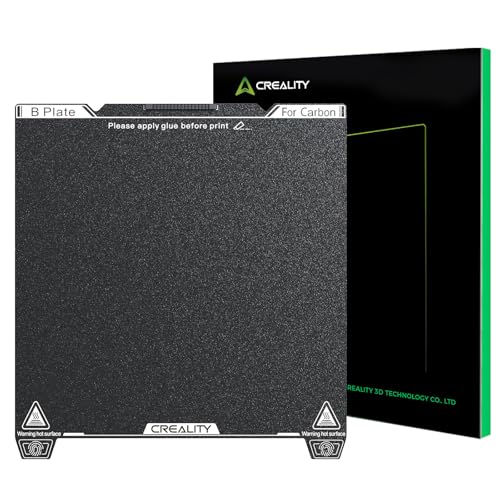
The textured PEI plate that makes PETG behave on K1 and Ender 3 printers.
Creality finally put out an official textured sheet for the K1C, and it solves the biggest PETG headache on these machines: first-layer lift. The dense PEI coating grips PETG securely across the 235x235mm area, and buyers confirm it “provides excellent adhesion for PETG and other warping filaments”—with the textured finish giving a uniform matte look on the print bottom. An integrated nozzle cleaner strip at the edge wipes the hot end before printing starts, a small touch that reduces blobs on the first layer. Magnetic fixation and positioning slots make swapping quick, and the high-strength spring steel lets you flex the plate gently to pop off cooled PETG parts. At 10.5 ounces, it is the lightest plate here—a full 3.6 ounces lighter than the 0.77mm Bambu plates—which means less thermal mass to heat up.
Unlike the Bambu Lab plates, this one has no QR code or print-detection chip, so the printer cannot auto-identify the surface type. You will need to set your bed temperature manually in the slicer. Owners mention no wear after many prints, even with glue stick use, and the PEI coating withstands high-temperature materials like PC and PA as well.
Best features
- Official Creality fit for K1, K1C, K1 SE, and Ender 3 V3 series—no guesswork
- Nozzle cleaner strip improves first-layer quality by removing debris
- Customers note adhesion is fantastic with PETG, PLA, ABS, and silk filaments
The trade-off
- No QR or chip for automatic bed-surface detection
- At 235x235mm, it is smaller than full-size Bambu Lab plates and won’t fit those machines
Grab this for: any Creality printer with a 235x235mm bed—the factory fit and dense PEI coating make PETG adhesion reliable without aftermarket fiddling.
Skip it for: Bambu Lab owners or anyone who needs a 257mm+ build surface.
4. Upgraded Thicker Textured PEI Plate 0.77mm with QR Code for Bambu Lab P1S/P2S
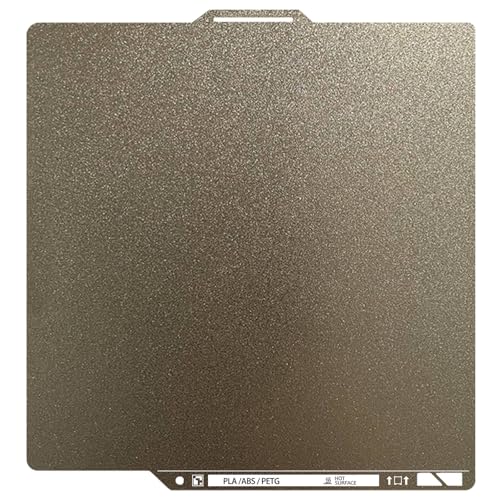
A thick, dual-sided PEI plate that handles hundreds of PETG prints without losing grip.
This is the workhorse of the list. The 0.77mm thickness (same as the Wefuit plate above) provides rigidity that prevents the kind of plate flex that breaks first-layer adhesion on larger PETG parts. At 13.7 ounces, it is 0.3 ounces heavier than the similar Wefuit plate, likely from a denser coating. Reviewers point out that this plate has gone through hundreds of prints with no adhesion loss, while the original Bambu plate started failing after just a few. One reviewer notes it “works better than the one that came with my Bambu P1S”—proof of the powder-sprayed textured surface that holds PETG flat even with the auxiliary fan blowing. The dual-sided design gives you two identical textured sides, so when one is dirty from a glue-stick test, flip it over and keep printing.
The included QR code allows P2S and X2D printers to recognize the plate, but users on P1S and X1C may need to disable build-plate detection in the slicer if the code is not read correctly. Wash with detergent and water only—acetone will damage the PEI surface irreversibly.
Proven endurance: Multiple buyers confirm hundreds of prints with no adhesion degradation.
Firmware note: Some P1S/X1C units may require turning off build-plate detection for proper recognition.
Pick this if: you print PETG daily on a Bambu Lab machine and want a plate that outlasts the stock option without extra cost.
Skip it for: cold-printing workflows—this is a traditional PEI plate that needs bed heat to work properly.
5. IdeaFormer-3D P1S A1 Textured PEI Build Plate with QR Code for Bambu Lab 256x256mm
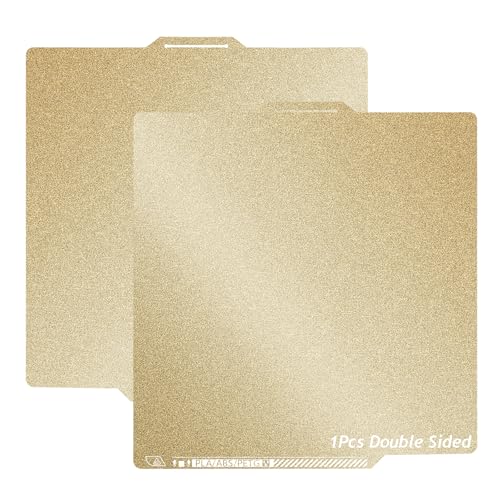
A 256mm PEI plate with dual-sided QR codes that Bambu Lab printers recognize right away.
IdeaFormer put identification codes on both sides of this spring-steel sheet, so X1 and X1C users get automatic hot-bed leveling without having to manually select the plate type in the slicer. At 256x256mm, it is 1mm smaller on each axis than the standard Bambu Lab 257mm plates, but shoppers say a perfect fit on P1S, P1P, A1, and X1C machines with no overhang issues. PETG adhesion is strong across the textured powder-sprayed surface—one reviewer printed PLA, PETG, and TPU without issues for three months and calls it their favorite board so far. Weighing 11.3 ounces, it is 2.8 ounces lighter than the 0.77mm PEI plates, so it heats up faster.
The trade-off reported by a handful of users is that after roughly 12 hours of use, some parts—especially support bases—stick too well even after washing. The texture also showed some wear at the nozzle-wipe area over time, which can affect cleaning performance. Supports may need extra cooling before removal.
What stands out
- Dual-sided QR codes mean both sides are detected by X1 and X1C
- Buyers confirm it works with PLA, PETG, and TPU without release agents
- Lighter than 0.77mm plates so it warms up quicker
What to watch
- Some users report overly strong adhesion on supports after 12+ hours
- Nozzle wipe area can show texture wear over weeks of use
Great for: Bambu Lab users who want plug-and-play QR detection on both sides without slicer tweaks.
Better alternatives: the 0.77mm plates (Wefuit or Sahvaim) if you prioritize long-term texture durability over fast heat-up.
6. BIQU CryoGrip Pro Glacier Panda Build Plate for Bambu-Lab X2D P2S P1S P1P X1C

The full-size cold-printing plate that turns PETG into a set-and-forget material.
This is the same 7-layer polymer tech as the A1 Mini version above, scaled to 257x257mm for X2D, P2S, P1S, P1P, X1C, X1E, and A1 machines. The Glacier coating grabs PETG at bed temperatures as low as 60-75°C—compared to the 80-85°C many PEI plates demand—and buyers report it works even at room temperature on the cold bed. One long-time user runs a printing business and notes ASA pops off clean after a minute of cooling, with zero failed first layers. The honeycomb handle stays cool enough to touch at 100°C bed temp, so you can pull the plate mid-job. A sheet of custom AR-code stickers is included so X1C and other QR-reading printers recognize the plate, though you need to disable build-plate detection on X2D and P2S.
The genuine limitation is the release procedure. Because adhesion is so aggressive at temperature, the plate must cool completely—sometimes minutes longer than a standard PEI plate—before the print pops off. Clean with soap and water or alcohol; acetone damages the polymer coating.
Performance edge: Full-size machines get the same cold-printing benefit as the A1 Mini version—PETG sticks at 60-75°C or even room temperature.
Setup step: X2D and P2S users must disable build-plate detection in the slicer or the printer will reject the plate.
Best for: anyone with a full-size Bambu Lab printer who wants the widest PETG adhesion temperature range and is willing to wait for full cooldown before removal.
Not ideal for: fast plate-swapping workflows where you need prints off immediately after the job finishes.
7. Upgraded Kobra S1 Double Sided PEI Build Plate for Anycubic Kobra S1 264x276mm
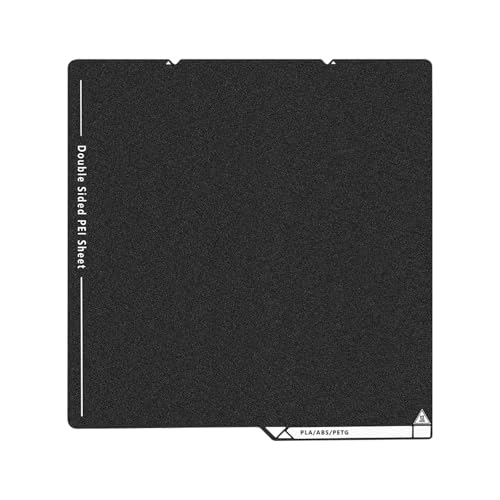
The 264x276mm textured PEI plate that fills the Kobra S1 gap—and fits Centauri Carbon too.
Anycubic Kobra S1 owners have fewer build-plate options than the Bambu Lab or Creality crowd, and this dual-sided textured PEI sheet directly addresses that. At 264x276mm, it is the largest plate here, designed specifically for the Kobra S1 platform. Buyers confirm it fits the Neptune 4 without trimming and the Centauri Carbon perfectly, with a textured surface close to the stock CC plate. PETG adhesion is zero-fuss: one reviewer says they have had no issues adhesion-wise with PETG and uses this plate for most of their PETG printing. The powder-coated PEI finish leaves a uniform matte texture on the bottom of prints, and the double-sided design doubles the lifespan. Weighing 11.3 ounces, it is on the lighter side despite its larger surface area, so heating is reasonably fast.
The main thing to note is compatibility. This plate is dimensioned for the Kobra S1—if you have a different machine, measure your bed first. It also lacks any QR code or detection chip, so bed-leveling and temperature settings are manual. Wash with soap and water; no acetone.
Its selling points
- One of the few drop-in textured PEI options for the Kobra S1 and Neptune 4
- Buyers confirm zero adhesion issues with PETG and easy release after cooling
- Dual-sided with even coating so you flip rather than replace
Before you buy
- No QR code or auto-detection—manual slicer setup required
- Only fits printers with a 264x276mm bed; not universal
Pick this if: you run a Kobra S1, Neptune 4, or Centauri Carbon and want a reliable dual-sided PEI plate that handles PETG without glue.
Look elsewhere if: you need QR detection for automated workflows or have a non-Kobra/Neptune printer.
Understanding the Specs
Plate Thickness
Thickness is measured in millimeters. A 0.77mm plate is roughly 50% thicker than many standard build plates. The benefit for PETG is simple: a thicker sheet resists bowing and stays flatter across the heated bed, giving the first layer more consistent contact pressure and reducing edge curling.
PEI vs Polymer Coating
PEI (polyetherimide) is a heat-resistant plastic powder-sprayed onto spring steel. It provides strong grip at typical bed temperatures (70-85°C for PETG) and releases when cool. Polymer coatings like BIQU’s CryoGrip use a different chemistry that grips at much lower temperatures. The trade-off is that polymer plates often need a longer cooldown before prints pop free.
FAQ
Do I need a special build plate for PETG or will any PEI sheet work?
Can I use a textured PEI plate for PLA and PETG without switching?
Will a Bambu Lab X1C recognize a third-party PEI plate with a QR code?
How do I clean a textured PEI build plate for PETG?
Why does my PETG print stick too well and refuse to come off the build plate?
Is a 0.77mm build plate worth the extra cost over a standard 0.5mm sheet?
Can I use a cold-adhesion plate like the BIQU CryoGrip on any printer?
How long does a textured PEI build plate last before needing replacement?
Why does my PETG warp on smooth glass but stick fine on textured PEI?
Does a thicker build plate improve print quality for PETG?
Final Thoughts: The Verdict
Across the board, the build plate for petg winner is the Thicker 0.77mm Textured PEI Plate because it combines Bambu Lab compatibility, a thick rigid sheet, and strong PETG adhesion at a price that undercuts OEM replacements. If you want cold-printing capability that skips bed heating entirely, grab the BIQU CryoGrip Pro for A1 Mini (or the 257mm version for full-size machines). And for Creality K1 and Ender 3 series owners, the Official Creality K1C Textured PEI Sheet is the reliable factory-fit choice that handles PETG without guesswork.
How We Picked
We do not accept paid placement. Every pick is matched to a real buyer and a real use-case; we do not hands-on test units.
Sources & Methodology
Specifications: manufacturer listings and product documentation. Review insights: verified customer reviews, as of July 2026. Pricing: not shown on this page (it changes often); check the current price via the retailer link.
As an Amazon Associate, FitlyFast earns from qualifying purchases. This does not affect which products we feature.