
Our readers keep the lights on and the weekend projects moving. As an Amazon Associate, I earn from qualifying purchases.
Specs are compiled from manufacturer listings and verified buyer reviews and can change over time — please confirm the key details on the product page before buying.
Buying matcha in bulk sounds smart — lower cost per cup, fewer re-orders, and a steady supply for morning lattes. The trouble is that a big bag of poor-quality powder turns bitter fast and sits half-used in your pantry. This guide cuts through the claims to find the bulk matcha powder that actually tastes smooth, mixes easily, and keeps its vibrant green color from the first scoop to the last.
I’m Rikta — the founder and writer behind FitlyFast. This guide is built by comparing the manufacturers’ published specifications and the patterns across verified customer reviews, so you get each pick’s real strengths and trade-offs instead of marketing spin.
Whether you are stocking your home café or running a smoothie bar, these seven options represent the top-rated performers available right now for any bulk matcha powder budget.
Our Picks at a Glance
How To Choose The Best Bulk Matcha Powder
Scooping matcha from a big bag is convenient only if the powder inside is worth drinking. Here are the four things to check so you don’t end up with a bitter, dusty clump.
Grade — Culinary vs Ceremonial
Ceremonial grade uses the youngest, most tender leaves from the first spring harvest. It is smoother, sweeter, and designed for drinking straight with just hot water. Culinary grade uses slightly older leaves and holds up better against milk, sweeteners, and flour in lattes, smoothies, and baking. Many bulk bags labeled “culinary” still produce a perfectly tasty latte — the key is knowing what you plan to make with it.
Color — The Vivid Green Test
High-quality matcha is a brilliant, almost electric green. A dull yellow-brown tint means the leaves were harvested late, stored poorly, or exposed to air and light too long. When you open a fresh bag, the powder should look like fine emerald dust. The color fades after opening, which is why resealable pouches and storing the bag in the refrigerator make a real difference.
Origin and Harvest
Almost all serious matcha comes from Japan, specifically the Uji and Kagoshima regions. “First harvest” (Ichibancha) leaves picked in early spring have the most chlorophyll and L-theanine, giving a naturally sweet taste and that smooth energy without the coffee jitters. A bag that names its harvest season is usually a sign of a brand that cares about quality.
Texture and Mixability
A fine, stone-ground powder is essential. If the matcha feels gritty on your finger or refuses to dissolve without turning into lumps, every drink you make will suffer. Look for phrases like “stone-milled” or “micron-ground” in the specs — that traditional process preserves flavor and creates the silky texture that whisks into a smooth cup every time.
Quick Comparison
| Model | Best For | Grade | Size | Organic | Amazon |
|---|---|---|---|---|---|
| MatchAiA Organic Matcha★ Best Overall | Best Overall | Premium Culinary | 12.3 oz | Yes | Amazon |
| NatureBell Organic MatchaBest Value | Best Value per Pound | Culinary | 1 lb | Yes | Amazon |
| Total Tea Organic Matcha | All-Purpose Budget | Culinary | 1 lb | Yes | Amazon |
| Harney & Sons Organic Everyday Matcha | Premium Everyday | Everyday | 1 lb | Yes | Amazon |
| Maeda-En Matcha Bulk | Traditional Japanese | Culinary | 1.1 lb | No | Amazon |
| Jade Leaf Culinary Grade | Most Popular | Culinary | 1 lb | Yes | Amazon |
| Jade Leaf Barista Edition | Ceremonial Bulk | Ceremonial | 1 lb | Yes | Amazon |
In‑Depth Reviews
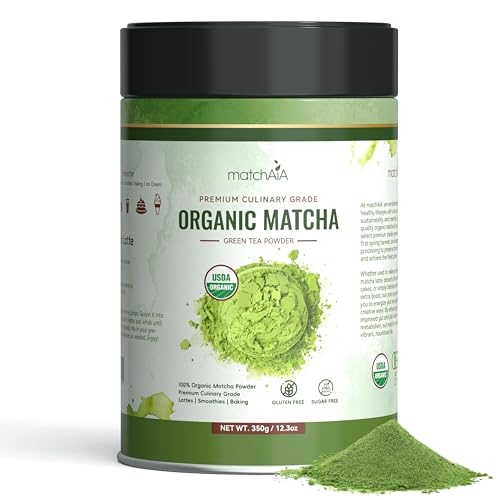
1. MatchAiA Organic Matcha Powder, Premium Culinary Grade, 350g/12.3oz Tin
Our pick — over 4.5★ from 650+ verified ratings; the strongest balance of quality and price.
The tin that makes you question why you ever paid for a matcha subscription.
What wins people over here is the taste — owners call it smooth, not bitter or grassy, with a vibrant green color that speaks to fresh leaves. The texture is fine and silky, and when you whisk or froth it, the powder dissolves without turning into lumps (though a quick sift helps if you are making a concentrated shot). The 12.3-ounce tin gives you a significantly larger volume than most entry-level bulk bags, and at this quality level, the per-serving math works out very cleanly.
The brand sources its matcha from a 14,000-acre sustainable tea garden and uses traditional stone-grinding methods that preserve the chlorophyll and amino acids. That matters because it means the powder stays vibrant and flavorful through the whole tin, not just the first few scoops. Buyers who switched from pricier subscriptions report noticing no difference in taste or texture — just a much better price for the same morning ritual.
You should know that this is a premium culinary grade, not a ceremonial grade meant for drinking straight with water. For lattes, smoothies, and baking, it is exactly right. A few owners mention that if you do not sift it first, the powder can form small clumps when whisking into a concentrated paste. That is common with any finely ground matcha and is solved by a quick pass through a fine-mesh strainer.
What Owners Rave About
- Taste is the most-praised feature — smooth, no bitterness, authentic umami
- Fine stone-ground texture dissolves easily with a whisk or frother
- Generous 12.3-ounce tin delivers strong value vs subscription services
- Certified USDA organic with clear sourcing transparency
The Honest Trade-Off
- Not ceremonial grade — best for lattes and recipes, not straight drinking
- Can clump slightly if not sifted before whisking
Your best bet if: you drink matcha daily and want café-quality taste without the subscription markup.
Think twice if: you plan to drink matcha straight with just hot water — that is where ceremonial grade shines, and this is a culinary blend.
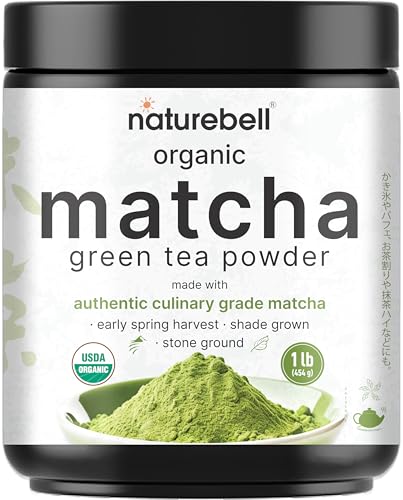
2. Organic Matcha Green Tea Powder, 1 Pound – NatureBell
A full pound of smooth, unsweetened matcha that outperforms its price tag at every turn.
You get a smooth texture that mixes in easily with no graininess or grit — the main reason cheaper bulk powders sit unused. Owners note it blends smoothly into protein smoothies, dissolves with a quick frother whisk, and makes a latte that holds its color without turning muddy. At 1 pound (454 grams) you get roughly 151 servings using the standard single-scoop approach, and the price per serving is what keeps daily drinkers coming back.
The powder comes from an early spring leaf harvest, which is the same sourcing principle behind much more expensive matchas. Third-party lab testing covers radiation, GMOs, gluten, soy, and common allergens — a level of transparency that matters when you are going through a pound of powder a month. Compared to the MatchAiA tin above, this bag holds 30% more matcha by weight, so it stretches further if you are making multiple servings a day.
The honest caveat here is that the taste is described as “okay” or “mild” by some owners rather than exceptional. It is not the most complex, nuanced matcha you have ever had — the flavor is solid but not jaw-dropping. For daily lattes, smoothies, and baking, it fits perfectly. If you are the kind of drinker who savors a straight shot of ceremonial matcha in silence, the difference will be noticeable.
Why It Wins
- Exceptionally smooth texture — no graininess even in concentrated drinks
- Full 1-pound bag gives strong per-serving value for daily use
- Early spring leaf harvest and third-party lab tested
- Unsweetened and versatile for lattes, smoothies, and baking
The Trade-Off
- Flavor is solid but mild — not the most complex matcha available
- Not intended for straight ceremonial drinking
Reach for this if: you go through matcha quickly and value smooth mixability over nuanced flavor.
Look elsewhere if: you want a single-sip ceremonial experience — this is a workhorse culinary grade.
3. Organic Matcha Green Tea Powder (1 Pound) – Certified USDA Organic by Total Tea
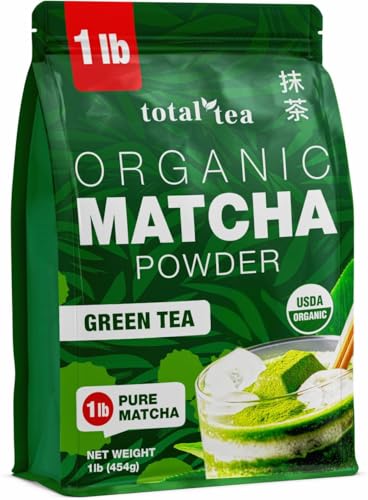
Certified organic matcha that is designed to deliver the best bang for a dollar-conscious buyer.
This 1-pound bag from Total Tea touts itself as the best matcha powder on the market for the price, and the buyer consensus backs up the value claim. Owners praise its versatility — it works in smoothies, lattes, and baking without the harsh bitterness that can ruin a drink. The aroma gets a special nod, and several buyers mention that blending it with a proper matcha whisk (or even persistent spoon stirring) produces a smooth result.
One reviewer calls it the “best Green Tea powder Ive ever used and I try a lot of the.” That enthusiasm comes with a trade-off: you need to add a little sweetener — honey is the popular choice — to round out the flavor. At just over 1 pound, this bag is roughly 13% lighter by weight than the NatureBell option above, but the price difference reflects that positioning so you are choosing between two close budget-friendly options.
Where this pick splits opinions is taste fidelity. A few owners note that the flavor leans more toward green tea than classic matcha, with a slight bitterness that suggests hybrid leaves rather than pure shade-grown matcha. If you are adding milk and sweetener anyway, that distinction fades. But if you are hoping for a straight cup of matcha tea with no additions, you might find this one a little sharp.
Who this fits: Budget shoppers who want USDA organic certification in a full pound and plan to use the powder in recipes, lattes, or sweetened drinks.
Who should skip: Purists who want true matcha leaf flavor for straight drinking — this reads more like green tea powder to some palates.
4. Harney & Sons Organic Everyday Matcha Powdered Tea, 16 oz Bag
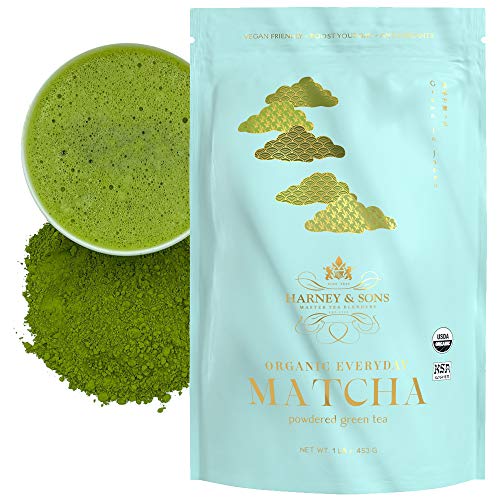
A tea-house staple that brings proper green color and zero bitterness to your everyday cup.
Harney & Sons has a reputation that precedes the bag — they are a respected name in loose-leaf tea, and this organic everyday matcha lives up to that standard. The flavor is the most-discussed aspect: owners consistently call it not bitter, with a proper green color that looks like matcha should. One buyer who drinks it daily says it compares favorably to higher-end brands while delivering strong value for a 1-pound bag. The shade-grown leaves are milled using traditional stone techniques, which explains the fine, smooth texture that whisks up with a regular whisk or a frother.
The bulk 16-ounce bag format is explicitly designed for frequent drinkers, office tea stations, and smoothie bars. A recurring trick from owners: split the bag into glass pint jars and vacuum seal them, which preserves freshness through the full pound. The bag is also a 1% For The Planet partner, donating a portion of sales to environmental nonprofits, so your purchase supports land restoration efforts as well.
The main thing to note is that this is an “everyday” grade, not a ceremonial one. It sits between true culinary and ceremonial in the lineup — fine enough for a satisfying straight cup but really designed to shine in lattes and iced drinks. Some owners who are used to premium ceremonial matcha notice a slight gap in complexity, but for the price and the brand pedigree, most find the trade-off easy to accept.
The verdict: If you trust Harney & Sons’ tea expertise and want a bulk bag that never tastes harsh, this is a premium everyday staple.
5. Maeda-En Matcha Powder Bulk, Matcha Green Tea Powder – 1.1 LB Large Bag

A proper 1.1-pound bag from a Japanese tea company that delivers strong quality at a fair price.
Maeda-En is a name that carries weight in the matcha world, and this bulk bag reflects that heritage. Quality is the aspect owners praise most — the powder is consistently fresh with a nice green color, and buyers who have tried several brands say this one stands out as the purest and freshest. The 1.1-pound bag is slightly bigger than the standard 1-pound pouches, giving you about 17.6 ounces of matcha for your money. At this tier, the price per gram becomes very attractive for daily drinkers who go through multiple servings.
The taste does get a mixed reception. Many owners love it for lattes, where the slight bitterness balances well against milk and sweetener. A Nespresso frother with two teaspoons is a commonly recommended method for perfect temperature and foam. But if you plan to drink it straight with just hot water, the bitterness is more noticeable — a few owners note it is not rich enough for straight ceremonial use. This matcha performs best when treated as a high-quality culinary grade for mixing and baking.
The bag is not resealable, which is an important detail when buying in bulk. Owners recommend transferring the powder into an airtight container or canister and keeping it in the refrigerator. Without that step, the matcha can lose its vibrant green and fresh aroma more quickly than a resealable pouch would allow.
Strong Points
- Japanese heritage brand with consistent quality praise from owners
- 1.1-pound bag is one of the larger bulk options available
- Great value for daily lattes and culinary use
Keep In Mind
- Bag is not resealable — you need your own storage container
- Bitterness is more noticeable when drinking straight
Grab this if: you respect Japanese tea tradition and want a large bag for lattes, smoothies, and baking.
Pass if: you need a resealable pouch or plan to drink the matcha straight as a daily tea.
6. Jade Leaf Matcha Organic Culinary Grade Matcha Powder, 454g / 16 Ounce Bulk Pouch
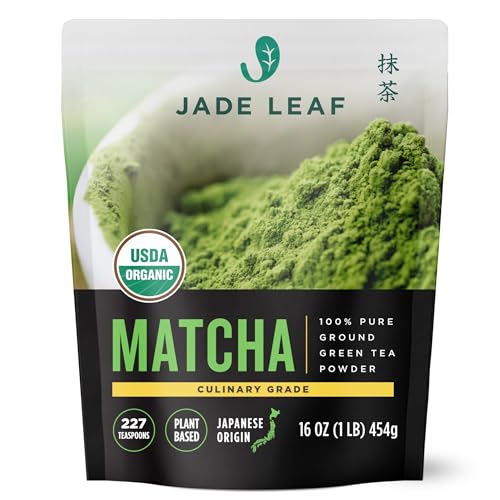
The undisputed crowd favorite — tens of thousands of owners can’t be wrong about a smooth, affordable daily matcha.
Jade Leaf is the name that comes up most often when people search for bulk matcha, and the numbers back it up: tens of thousands of owners have rated this pouch, and the consensus is clear. The taste is the most-praised feature — owners describe it as delicious, not bitter, and frequently compare it favorably to café drinks. The powder blends beautifully into smoothies and iced lattes, and the resealable pouch keeps the contents fresh across the full 16 ounces (454 grams). Using half a teaspoon per serving, the brand says this pouch makes roughly 225 full-sized lattes or up to 454 traditional usucha servings.
The sourcing is authentic Japanese — Uji and Kagoshima — with tea cultivars including Okumidori, Hoshun, Okuyutaka, and Yabukita listed on the package. That level of transparency is rare at this price point. The powder is USDA organic, vegan, gluten-free, and keto-friendly, with no sweetener added. For coffee switchers, the natural L-theanine content delivers calm, sustained energy without the afternoon crash that coffee drinkers know well.
The catch that comes up most in reviews is the value-for-money perception. While many owners find it extremely economical compared to buying single drinks at a coffee shop, a vocal minority feels the price per ounce is higher than expected for a culinary grade powder. The pouch size can also look deceiving — it is a flat, wide bag that appears large on the shelf but holds a standard 1-pound quantity. If you are used to a denser tin, the visual can throw you off. But anyone doing the math on cost per latte will see the savings clearly.
What Makes It a Legend
- Tens of thousands of positive ratings — the most trusted option in the category
- Smooth, non-bitter taste that blends perfectly into lattes and smoothies
- Resealable pouch with clear Japanese origin and cultivar information
- USDA organic, vegan, keto-friendly, and third-party tested
The Reality Check
- Some owners find the per-ounce price high for a culinary grade
- Pouch looks big but holds a standard 1-pound quantity — easy to misjudge
Who it is for: Daily matcha drinkers who want a proven, consistent option with a massive community of happy owners behind it.
Who might hesitate: Shoppers comparing strictly on weight-to-price math — the culinary-grade pouches from NatureBell or Total Tea offer a lower per-ounce cost.
7. Jade Leaf Matcha – Artisanal Barista Edition – Ceremonial Grade, First Harvest, 1 Pound Bulk Pouch

Ceremonial grade matcha in a 1-pound pouch — the closest you can get to café quality at home without the markup.
This is the step up for anyone who has been using culinary grade and wonders what the fuss is about. The Artisanal Barista Edition uses first harvest (Ichibancha) leaves — the early spring flush that is shade-grown for up to 4 weeks before picking. That process boosts chlorophyll and L-theanine, resulting in a naturally sweeter flavor and a brighter green color than later harvests. Owners describe it as exceptionally smooth with light, nutty notes and balanced umami, and many note that it rivals or beats the matcha from Starbucks at a fraction of the per-cup cost.
The bulk pouch holds a full 16 ounces (454 grams), which is rare for ceremonial grade — most companies sell ceremonial matcha in small 30g or 100g tins. Jade Leaf’s approach means you can stock up without sacrificing grade. The package is vacuum-packed and resealable, and the recommended storage is in the refrigerator after opening. Used within 30-60 days, the powder stays vibrant and fresh. Each serving contains just 20-40mg of naturally occurring caffeine, roughly one-third of an 8-ounce cup of coffee, making it a solid option for coffee switchers who want calm, sustained energy without jitters.
The honest note here is that value for money gets a mixed reception. Some owners find the price entirely reasonable for ceremonial grade in bulk, while others feel it falls short when compared to true top-tier Japanese ceremonial matchas. A small number of repeat buyers have noticed inconsistency between batches — one pouch might be smooth and vibrant, while a later purchase leans slightly more bitter and chalky. That is the trade-off of buying ceremonial grade in a large format: you get the convenience and savings, but the quality control demands are higher than for culinary blends.
Who this is perfect for: Enthusiasts who want ceremonial-grade smoothness in a bulk format and plan to use it within a couple of months.
Who might be disappointed: Ultra-purists who expect absolute batch-to-batch consistency at the level of small-batch Japanese tins.
Understanding the Specs
Culinary vs Ceremonial Grade
This is the most important distinction in matcha. Culinary grade uses leaves from later harvests — it is designed to hold its flavor against milk, sugar, flour, and ice. It is slightly more astringent and less expensive. Ceremonial grade uses only the youngest first-harvest leaves, giving a naturally sweet, smooth taste that you can drink straight with just hot water. For daily lattes and baking, culinary grade is the right choice. For sipping neat, go ceremonial.
Organic Certification and Sourcing
USDA Organic certification means the tea was grown without synthetic pesticides or fertilizers. For a product you consume daily, that matters — matcha uses the whole leaf, so any residue ends up in your cup. Japanese origin from regions like Uji or Kagoshima is a strong signal of traditional farming practices. Some brands also list specific tea cultivars (the plant varieties) which gives advanced buyers a sense of the flavor profile.
Harvest Season and Freshness
First harvest (Ichibancha) from early spring is the most prized because young leaves have the highest chlorophyll and L-theanine content. That translates to a brighter green color and a sweeter, more complex taste. Later harvests produce a more astringent, darker powder. Freshness matters enormously — matcha stored in a sealed, opaque pouch away from light and heat will keep its color and flavor for several months. An opened bag is best used within 30-60 days.
Weight and Serving Math
Most bulk bags range from 12 ounces to 1.1 pounds. A standard matcha latte uses roughly a half teaspoon (about 1 gram) of powder. A 1-pound bag (454 grams) therefore delivers around 450 usucha servings or 225 large lattes. Knowing your daily consumption helps you pick the right size — a daily drinker will go through a pound in about a month, while a casual user might want a smaller bag to avoid staleness.
FAQ
What is the difference between culinary grade and ceremonial grade matcha?
How long does bulk matcha powder stay fresh after opening?
Can I use culinary grade matcha for drinking straight?
How many servings are in a 1-pound bag of matcha powder?
Why does some matcha taste bitter while other matcha is smooth?
Is organic matcha worth the extra cost?
What does “first harvest” mean on a matcha label?
Does matcha contain as much caffeine as coffee?
What is the best way to whisk matcha so it doesn’t clump?
Final Thoughts: The Verdict
If you want one dependable pick, the bulk matcha powder winner is the MatchAiA Organic Matcha because it delivers a smooth, vibrant, certified organic experience at a price that beats subscription services — all backed by over 600 ratings and a strong 4.6-star score. If you want the absolute highest value per pound and plan to use matcha heavily for lattes and smoothies, the NatureBell 1-Pound bag is the budget-smart pick. And for the buyer who wants ceremonial-grade smoothness in a bulk format without paying small-tin prices, the Jade Leaf Artisanal Barista Edition is the ceremonial option worth reaching for.
How We Picked
We do not accept paid placement. Every pick is matched to a real buyer and a real use-case; we do not hands-on test units.
Sources & Methodology
Specifications: manufacturer listings and product documentation. Review insights: verified customer reviews, as of July 2026. Pricing: not shown on this page (it changes often); check the current price via the retailer link.
As an Amazon Associate, FitlyFast earns from qualifying purchases. This does not affect which products we feature.