
Our readers keep the lights on and the weekend projects moving. As an Amazon Associate, I earn from qualifying purchases.
Specs are compiled from manufacturer listings and verified buyer reviews and can change over time — please confirm the key details on the product page before buying.
Planting bushes for your backyard is about instant gratification and long-term payoff, but the gap between the picture on the listing and the twig that shows up at your door can be brutal. You want something that survives a forgetful watering schedule, throws color without fuss, and maybe hides the neighbor’s trampoline. This guide cuts through the guesswork.
I’m Rikta — the founder and writer behind FitlyFast. This guide is built by comparing the manufacturers’ published specifications and the patterns across verified customer reviews, so you get each pick’s real strengths and trade-offs instead of marketing spin.
You want bushes that survive the trip and thrive in your yard, not ones that arrive as dead twigs. These bushes for backyard earn their reputation with real buyer reports of plants arriving moist and ready to grow, not dried out or broken.
Our Picks at a Glance


How To Choose The Best Bushes For Backyard
Not every bush fits every backyard. Your soil, sunlight, and how much patience you have for watering all decide which plant survives the first season. Here’s what to look at before you click “buy”.
Know Your Hardiness Zone
The USDA zone rating tells you if a plant can survive your winter. A bush rated for zones 5-9 will struggle in a zone 3 deep freeze. Check your zone before ordering — it is the single biggest factor in whether your plant lives or dies.
Evergreen vs Deciduous
Evergreens keep their leaves all year, giving you privacy and color through winter. Deciduous bushes drop everything and go dormant, which means a bare spot from November through March. An evergreen is the smarter pick if you want year-round screening.
Mature Size vs. Shipping Size
Every listing gives you a “shipped height” (often 6-12 inches) and a “mature height” (up to 60 feet for some trees). That 48-inch expected height only happens after several growing seasons. The container size — 1-gallon vs 2-gallon — is your best clue to how big the root system is when it lands on your porch.
Sunlight and Water Needs
Some bushes need full sun to bloom or hold their color, while others burn in direct afternoon heat. Water needs also vary: drought-tolerant varieties like Texas sage survive on rain alone once established, while hydrangeas need consistent moisture to keep their leaves from crisping.
Quick Comparison
| Model | Best For | Mature Height | Sunlight | USDA Zones | Amazon |
|---|---|---|---|---|---|
| Obsession Nandina★ Best Overall | Year-Round Color | 48 Inches | Sun to Part Shade | 6-10 | Amazon |
| Double Play Doozie SpireaTop Performer | Compact Flowers | 24 Inches | Full Sun to Part Shade | 3-8 | Amazon |
| Thuja Green GiantPremium Pick | Privacy Screen | 50 Feet | Full Sun | 5-9 | Amazon |
| Gold Mop Cypress | Tight Budget | 10 Inches | Full Sun | 4-8 | Amazon |
| Silverado Sage | Drought Tolerance | — | Full Sun | — | Amazon |
| 10 Thuja Green Giants | Bulk Planting | 40 Feet | Full Sun | 5-9 | Amazon |
| Lynwood Gold Forsythia | Early Spring Color | — | Full Sun | 5-9 | Amazon |
| Little Lime Hydrangea | Summer to Fall Blooms | 36 Inches | Full Sun | 3-8 | Amazon |
| Blue Chiffon Rose of Sharon | Tall Flowering Hedge | 96 Inches | Full Sun to Part Shade | 5-9 | Amazon |
In‑Depth Reviews
1. Southern Living 2 Gal. Obsession Nandina Shrub
Our pick — over 4.5★ from 900+ verified ratings; the strongest balance of quality and price.
A 48-inch color machine that arrives looking like it came straight from the nursery.
This is the bush that keeps your backyard interesting every single month. The foliage shifts from green in spring through a red-green blend in summer to a vivid bright red in fall and winter — no blossoms needed, the leaves do all the work. It thrives in USDA zones 6-10 and asks for nothing more than sun to part shade and moderate water.
Buyers report these arrive “moist & happy just like it was in a nursery,” with plants that are hard to find locally. The 8.8-pound per plant weight tells you these are substantial 2-gallon specimens, not twigs in a cup. It is a slow grower, though, and it loses all its leaves in winter — so it will not give you a privacy screen, but it will give you a reliable splash of color that looks designed rather than accidental.
What wins people over
- Four-season color shift from green to brilliant red
- Arrives in excellent condition — the healthiness is the most-mentioned praise by a wide margin
- Low-maintenance once established; water once per week
- Thrives in both sun and part shade
The honest trade-offs
- Non-flowering — all the color is from foliage only
- Loses every leaf in winter, so it goes bare for part of the year
- Growth is slow; don’t expect a full 48-inch bush overnight
- An occasional box arrives damaged in transit, which can knock off stems
Reach for it if: You want a low-effort, seasonally-dynamic shrub that paints your yard red without needing any deadheading or pruning.
Think twice if: You need a winter screen or flowers — this is a foliage plant through and through, and it drops bare when temperatures drop.
2. Proven Winners 2 Gal. Double Play Doozie Spirea Shrub
A flowering shrub that arrives already blooming and stays that way from spring to fall.
The first thing you notice in the reviews is how often the words “healthy,” “lush,” and “blooms” appear together. This 2-gallon spirea ships packed with buds and flowers already popping out, which is rare for a mail-order plant. It matures to 24-36 inches tall and wide — a compact, tidy mound that fits a spot in a foundation bed or a container on a patio. Hardiness zones 3-8 cover nearly the entire country, from Minnesota deep freezes to Carolina summers.
The appearance wins the most praise of any aspect, and for good reason: the red-to-purple flowers keep coming from spring through fall on a plant that asks for moderate water and full sun to partial shade. A buyer who had to delay planting for three weeks reported it “stayed alive on my enclosed porch and even started to bloom.” That kind of resilience is exactly what makes a bush feel like a smart investment rather than a gamble.
Standout strengths
- Blooms from spring through fall — months of continuous color
- Compact mature size (24-36 inches) fits small yards and containers
- Thrives in zones 3-8, handling both deep cold and heat
- Buyers consistently report “excellent condition” on arrival with flowers already showing
What to note
- Deciduous — loses all foliage in winter, leaving bare branches
- Ships dormant from winter through early spring; what you see initially may be less impressive than summer growth
- Recommended spacing of 24 inches means you need multiple plants for a full hedge effect
Who it suits: Anyone who wants a compact, flowering bush that starts performing the day it arrives and keeps going all season.
Who should look elsewhere: If you need year-round coverage or a plant over 3 feet, this stays small and goes bare in winter.
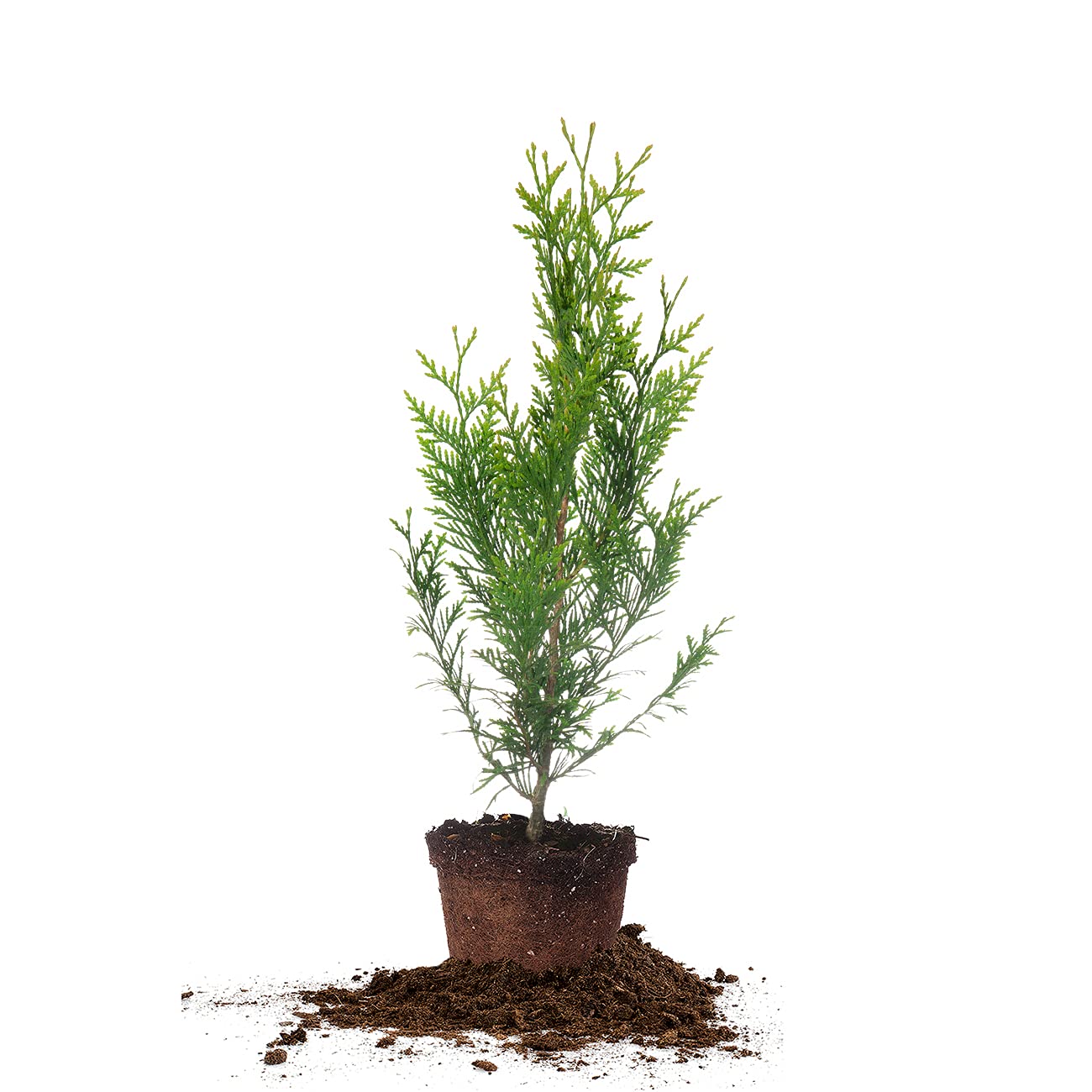
3. Perfect Plants Thuja Green Giant 1 Gallon
The fastest-growing evergreen screen that hits 50 feet without touching a special fertilizer.
If privacy is your endgame, this is the bush — well, technically a tree — that gets you there fastest. The Thuja Green Giant is widely known as the premier fast-growing privacy evergreen for most of the US, and it earns that reputation with dense, dark green foliage that smells like Christmas trees when you break a leaf. It forms a wide-bottomed pyramidal shape that can reach 50 feet tall and 20 feet wide, but it prunes easily if you want to keep it shorter.
It thrives in zones 5-9, which covers the vast majority of the country. The reviews confirm it arrives in good shape, with buyers calling the quality “excellent” and noting the bamboo cane support that prevents shipping damage. One review pointed out that some root balls filled only two-thirds of the pot, but none were root-bound — the plants settled in and grew 1-3 feet per year once planted.
Why it dominates: No other bush on this list combines 50-foot mature height, dense year-round foliage, and 3+ feet of annual growth in a single plant. It’s the closest thing to instant privacy you can buy.
The catch: It needs full sun and regular water until established. In partial shade, growth slows noticeably. And a 50-foot tree is permanent — think hard about where you plant it.
Perfect for: Homeowners who want a living fence that grows fast, stays green all winter, and requires minimal maintenance after the first year.
Not for: Small yards where 20 feet of width would swallow the space, or anyone who wants flowers or color variation.
4. Proven Winners 2 Gal. Blue Chiffon Rose of Sharon

A tall flowering hedge that reaches 8 feet and throws ice-blue blooms all summer.
The mature size here is the headliner — 96-144 inches tall (8 to 12 feet) — making this the tallest flowering option on the list. It grows into a substantial shrub that doubles as a seasonal privacy screen while pumping out delicate blue chiffon blossoms from spring through fall. The appearance is the single most praised aspect, with owners calling the flowers “gorgeous” and noting they arrived with tons of buds ready to pop.
Thrives in zones 5-9 and handles full sun to part shade with regular water. Owners mention it “looks better than the one we bought at Home Depot,” and the packaging is designed to keep limbs intact and soil moist even in summer heat. The trade-off is winter bareness (deciduous), and some plants arrive looking a bit stressed if the box spent too long in the sun. A few buyers found the size smaller than expected, but that is common with mail-order plants that ship dormant.
The big wins
- Stunning blue chiffon flowers over a long season — spring through fall
- Tremendous mature height: 8 to 12 feet for a real privacy screen
- Handles full sun to part shade, zones 5-9
- Buyers rate the appearance as the top positive feature by a wide margin
Consider this
- Deciduous — bare branches from late fall through early spring
- Some reports of leaves turning yellow or heat stress during shipping in summer
- Slow-growing in part shade; full sun is needed for the best bloom display
Ideal for: Anyone who wants a tall, flowering hedge that provides summer color and seasonal privacy without needing to water every day.
Reconsider if: You need year-round coverage or you are planting in a spot that gets less than 6 hours of direct sun.
5. 10 Thuja Green Giant Arborvitae 7-10 Inches Tall

Ten fast-growing evergreens that hit 40 feet and turn a bare property line into a wall of green.
If you are looking at the single Thuja above and thinking “I need a dozen,” this is the bulk buy that saves you the multiple orders. You get ten young trees, each 7-10 inches tall, shipped in their soil and containers — ready to space 6 to 7 feet apart for a dense screen. They grow at a fast 3 feet per year once established, with a mature height of 40 feet and a 15-foot spread.
Hardiness zones 5-9 cover most of the country, and the reviews bear out their toughness: one buyer in north Missouri reported their trees survived a hard winter and more than doubled in size in one year, using a simple 5-gallon bucket drip system. Another noted full-sun trees grew from 8 inches to 3.5 feet in 16 months. Just be ready with consistent water for the first six months.
The bulk advantage: At 40 feet tall each, planted 6 feet apart, ten trees create a solid visual and sound barrier that only gets denser with time. Nothing else at this price point competes.
What to watch for: These start small — 7-10 inches — so your first summer will not look like a hedge. And the 15-foot width per tree means you cannot plant them close to a house foundation or fence.
Who needs this: Anyone with a long property line who wants the cheapest route to a tall, permanent, year-round screen in 3-5 years.
Who should pass: Small lots, impatient buyers who want an instant 6-foot fence, or anyone in zone 4 or colder.
6. 1G Silverado Sage Plant, Shrubs Live in Planters for Outdoor Plants
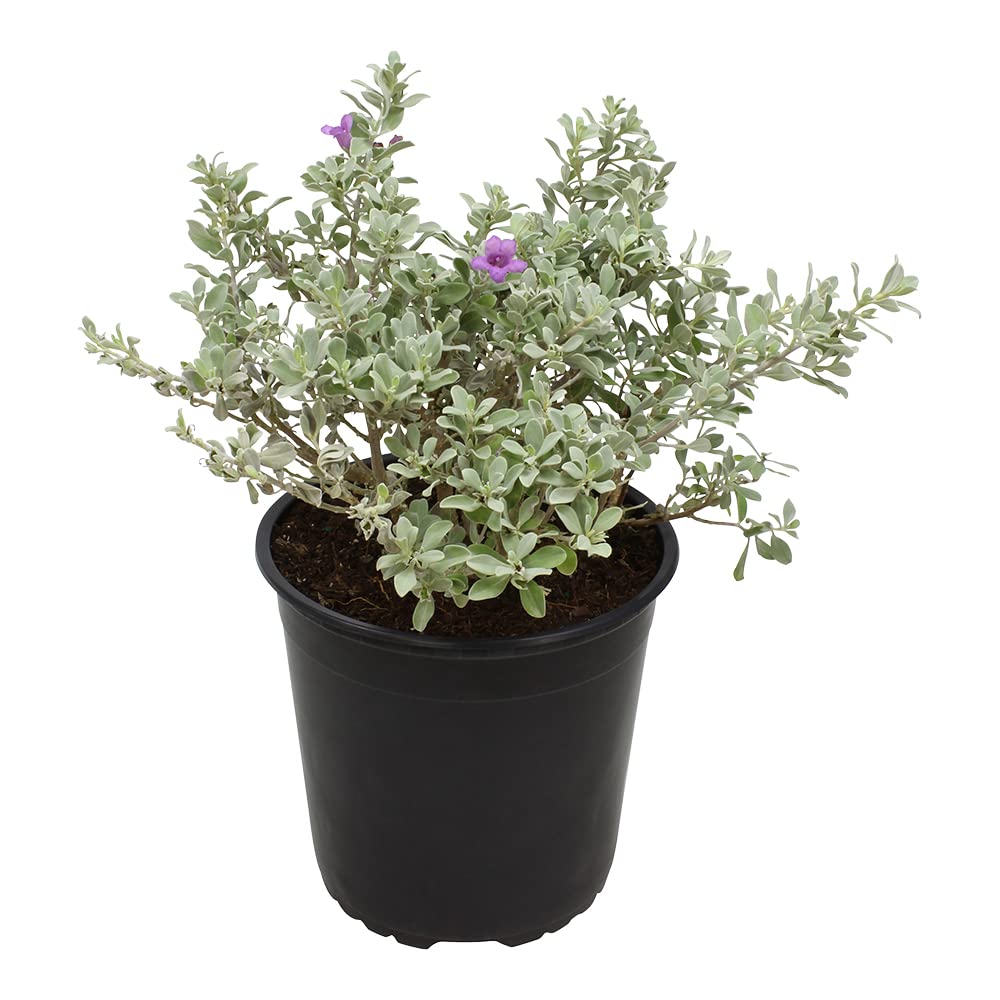
The Texas sage that thrives on neglect — full sun, no fuss, and purple blooms.
If you have a spot in your yard that bakes in the sun and you forget to water half the time, this is your plant. Silverado sage is a cold-hardy perennial that arrives in a 1-gallon nursery pot ready to go straight into the ground or a decorative planter. It is drought-tolerant by nature, so once it is established, you can pretty much let the rain handle it.
The healthiness and appearance are the top praised aspects, with buyers calling it “healthy, large, and well started.” The purple blooms are a bonus that surprises many owners, and the plant thrives in California drought conditions. A portion of every purchase goes to helping shelter animals, which is a nice extra. The main caution is that the courier sometimes crushes the box, causing branch damage — but the plant itself typically survives if the roots are intact.
Why it works
- Drought-tolerant — survives on minimal water once established
- Beautiful purple blooms that attract pollinators
- Arrives healthy and well-started in a 1-gallon pot
- Works as a patio plant, front porch decor, or garden edging
Keep in mind
- Some arrivals are smaller than expected
- Branch damage from shipping is possible if the box gets crushed
- Not a privacy screen — stays compact and low-growing
Grab it if: You want a no-brainer bush for a hot, dry spot that still rewards you with flowers and good looks.
skip it if: You need a tall shrub or anything that stays green through a hard freeze — this is a semi-woody perennial, not an evergreen.
7. Gold Mop, 1 Gallon

A pocket-sized pop of golden color that turns a barren front yard into a showpiece.
This is the bush that wins on pure value per dollar. The Gold Mop cypress is shipped as a 1-gallon plant with a mature height of 5 feet and an 8-foot spread — though the shipped plant is much smaller. It needs full sun and well-draining loam soil, and it makes a striking golden ball of foliage that keeps its color all season.
The reviews tell the story: one buyer ordered two dozen plants for a previously barren front yard, reporting they “all arrived healthy, undamaged, and matched photos.” Another said “I was afraid I was gonna hate it. Now that I see it in my garden I want three more.” The price makes it easy to buy in bulk for edging or mass planting. The catch is that the shipped size is small — a consistent theme in the reviews — and some plants arrive with brown leaves if stressed during transit.
The edge: At this price, you can buy a dozen and create a golden border that transforms your yard for less than the cost of a single premium shrub.
The downside: The “1 gallon” size means the root ball is small, so what lands on your porch is a baby plant. Patience is required — and full sun is non-negotiable for that golden color.
Best for: Budget-conscious gardeners who want bright golden foliage and don’t mind waiting a season or two for the plant to fill in.
Not ideal for: Shady yards — without full sun, the color fades to green — or anyone who wants instant landscaping impact from day one.
8. 2 Gal. Little Lime Hydrangea Shrub

A compact hydrangea that flips from lime green to pink as the season cools.
The Little Lime is the smaller cousin of the classic Limelight hydrangea, maturing at 36 inches tall instead of 6-8 feet. It fits neatly into a foundation bed or container, and its blooms start out a fresh lime green in summer, gradually blush to pink, and hold their color through fall. USDA zones 3-8 mean it handles everything from Minnesota winters to Virginia summers.
Buyers consistently praise the condition on arrival, with one noting it arrived with “leaves full of life” and already starting to bloom. The double pack includes two identical plants, perfect for symmetrical flanking at an entryway. The durability rating is mixed, though — some plants die over winter if not properly protected, and a few customers note black spots on the leaves, which points to a fungal issue that good air circulation helps prevent.
What delights buyers
- Unique green-to-pink color change that extends the visual season
- Compact 36-inch mature height fits small spaces
- Zones 3-8 — among the most cold-hardy hydrangeas available
- Arrives healthy with buds and blooms already forming
Be aware
- Deciduous — dies back to bare stems in winter
- Black spots on leaves are a recurring complaint; avoid overhead watering and ensure spacing for airflow
- Some plants need a full season to establish before they bloom heavily
Reach for it if: You want a showy, compact hydrangea with unique coloring that fits in a small yard or a large container.
Think twice if: You are planting in a hot, humid climate with poor air circulation — the leaf spot issue is real and needs management.
9. Lynwood Gold Forsythia Bush

The earliest spring bloomer that explodes in yellow before anything else has woken up.
Forsythia is the traditional herald of spring, and this Lynwood Gold variety delivers that famous burst of bright yellow flowers when the rest of your yard is still gray and dormant. It arrives as a bare-root plant, shipped 1-2 feet tall, and needs to go straight into the ground — it will not thrive in a container. It thrives in zones 5-9 with full to part sun.
The reviews are full of long-term owners who planted their forsythia three or four years ago and report it “exceeds expectations” and “survives a long and cold winter.” One buyer who ordered from ten different nurseries through Amazon called DAS Farms “the only one that did not disappoint.” The bare-root form means the plant looks like a stick with roots when it arrives—it is dormant, not dead—but some buyers found the shipped size smaller than the advertised 1-2 feet, with one measuring theirs at 8 inches instead.
Why it is worth it: There is no better plant for that first punch of spring color. When the forsythia lights up, you know winter is truly over.
What to expect: It takes about ten years to reach full size, so patience is required. California orders arrive bare-root per state regulations, which means a root-only package with no soil.
Perfect for: Traditionalists who want that iconic early-spring yellow display and are willing to wait a few years for the plant to mature.
Not for: Instant-gratification gardeners, small-space planters, or anyone who wants a plant that looks like a bush on day one — this arrives dormant and stick-like.
Understanding the Specs
Mature Height vs. Shipped Height
This is the single most misunderstood spec in online plant buying. The “shipped height” is what lands on your porch — usually 6-18 inches for these bushes. The “mature height” is what the plant reaches after several years of growth. A Thuja listed at 50 feet mature height will take 10-15 years to get there. Check the “Expected Plant Height” in the specs: that is the eventual size, not the size in the box.
Container Size (Gallons)
A 1-gallon pot holds a small root ball and a young plant. A 2-gallon pot has roughly double the root mass, which usually means a larger, more established top growth and a shorter time to fill in. For instant impact, always choose the larger container size within your budget. A 2-gallon plant is typically worth the extra cost over a 1-gallon because it establishes faster and survives transplant stress better.
USDA Hardiness Zones
Every plant is rated for a range of zones (e.g., 5-9). The zone number refers to the coldest winter temperature a plant can survive. Zone 5 means it handles -20°F. If you are in zone 4 and buy a plant rated for zones 6-9, expect it to die the first winter. Check your zone at planthardiness.ars.usda.gov before ordering anything.
Water Needs
“Moderate watering” means once per week after the plant is established. “Regular watering” means 2-3 times per week in dry weather. All bushes need more water during their first season — typically twice per week for the first month, then tapering off. Drought-tolerant plants like Silverado Sage can survive on rainfall alone once their root system is mature.
FAQ
Will a bush that arrives dormant in winter leaf out in spring?
Which of these bushes stays green all winter?
How fast does the Obsession Nandina grow?
Can I plant these bushes in a container instead of the ground?
What does “bare root” mean for the Forsythia?
Which bush has the most impressive flowers?
What spacing should I use for a privacy hedge with the Thuja Green Giants?
How long does it take for the Gold Mop Cypress to reach its golden color?
Will the Silverado Sage survive a freeze?
Which bush requires the least maintenance?
Final Thoughts: The Verdict
Across the board, the bushes for backyard winner is the Southern Living Obsession Nandina because it delivers year-round color, arrives in exceptional condition, and asks almost nothing of you after the first month. If you want fast privacy, grab the Perfect Plants Thuja Green Giant — no other bush grows this tall, this dense, this quickly. And for a flowering show that keeps going all season, the Proven Winners Double Play Doozie Spirea is the one to reach for. Every pick on this list has proven itself in thousands of real yards; your job is to match the bush to the spot you are planting.
How We Picked
We do not accept paid placement. Every pick is matched to a real buyer and a real use-case; we do not hands-on test units.
Sources & Methodology
Specifications: manufacturer listings and product documentation. Review insights: verified customer reviews, as of July 2026. Pricing: not shown on this page (it changes often); check the current price via the retailer link.
As an Amazon Associate, FitlyFast earns from qualifying purchases. This does not affect which products we feature.