
Our readers keep the lights on and the weekend projects moving. As an Amazon Associate, I earn from qualifying purchases.
Specs are compiled from manufacturer listings and verified buyer reviews and can change over time — please confirm the key details on the product page before buying.
If your yard turns into a sponge every time it rains, you do not need to drain it — you need plants that treat that bog as a feature. The right shrubs for wet soil turn a drainage problem into a lush, flowering border., and This guide walks you through the three proven picks that actually thrive in standing water and heavy clay..
I’m Rikta — the founder and writer behind FitlyFast. This guide is built by comparing the manufacturers’ published specifications and the patterns across verified customer reviews, so you get each pick’s real strengths and trade-offs instead of marketing spin.
Soggy ground wrecks most shrubs, but these three wet-soil fighters keep their roots happy in clay and boggy spots. — this is the direct, honest ranking of the best bushes for wet soil you can order today.
Our Picks at a Glance

How To Choose The Best Bushes For Wet Soil
Wet soil means the ground stays saturated long after a rain, often because of clay that drains slowly or because your yard sits at the bottom of a slope. Most garden shrubs hate that — their roots suffocate in standing water. Your fix is choosing species that evolved beside streams and seepage zones, where wet feet are normal.
Check the Mature Size Against Your Space
Wet-soil shrubs range from compact 3–4 feet buttonbushes to towering 10–20 foot willows. Measure the spot you have before you order, and remember the plant in the data doubles quickly — some fast growers pack on inches in a single week once their roots settle.
Match the Zone to Your Climate
Every plant ships with a USDA zone range, and that number tells you if it will survive your winters. A shrub rated for zones 4–8 will freeze out in a zone 3 yard, so check your zone before you commit to a pick.
Expect Dormancy and Patience
Shrubs shipped in late fall or winter often arrive bare and leafless — that is normal, not a dead plant. The data shows many owners panic first, then watch the same shrub leaf out in spring and take off. Water immediately on arrival and plant fast.
Quick Comparison
| Model | Best For | Mature Height | Soil Type | Bloom Season | Amazon |
|---|---|---|---|---|---|
| Green Promise Farms Ruby Spice Summersweet★ Best Overall | Fragrant pink flowers in wet clay | 5–6 ft | Clay Soil | July | Amazon |
| Japanese Dappled Willow | Fast privacy screens near water | 10–20 ft | Sandy Soil | Spring to Summer | Amazon |
| Proven Winners Sugar Shack Buttonbush | Compact native pollinator magnet | 3–4 ft | Moist Soil | Spring, Winter | Amazon |
In‑Depth Reviews
1. Green Promise Farms Ruby Spice Summersweet
Our pick — 4.5★ from 80+ verified ratings; the strongest balance of quality and price.
The sweet-scented shrub that turns a rain-collecting corner into a July showpiece without a fight..
This summersweet is the one owners rave about a full year later. It landed in a genuinely rough spot — the bottom of a slope where rain collects, in stony clay soil — and buyers report it is “thriving anyway,” which is exactly the resilience you want from wet-soil bushes. It arrives fully rooted in a 3-gallon trade pot, delivered straight from the nursery, ready to plant the day it lands.
The headline draw is the reddish-pink flower spikes that cover the plant in July, packing a scent strong enough to notice from across the yard.. It grows to 5–6 feet tall with the same spread, making it a solid mid-size anchor for a damp border. Owners note it arrives bigger and fuller than expected, and one measured roughly 8 inches of new growth within a few weeks of planting.
The honest catch: it ships dormant and leafless in late fall through winter, which surprises some owners into thinking it is dead. That is normal behavior, and it leafs out on its own in spring. Suited to the crowd favorite spot here — the 4.5-star average across the 85 ratings backs the praise for growth and quality.
What wins people over
- Real-world proof it survives standing water and clay
- Heady reddish-pink blooms every July
- Fully rooted 3-gallon pot, plantable on arrival
Know before you buy
- Arrives bare in winter — don’t mistake dormancy for death
- Expect a few seasons before it shows full form
Reach for this if: your wet patch sits in clay and you want fragrant pink flowers without babying the plant.
Think twice if: you need instant green in winter — this one sleeps until spring.
2. Japanese Dappled Willow (Hakuro-Nishiki)
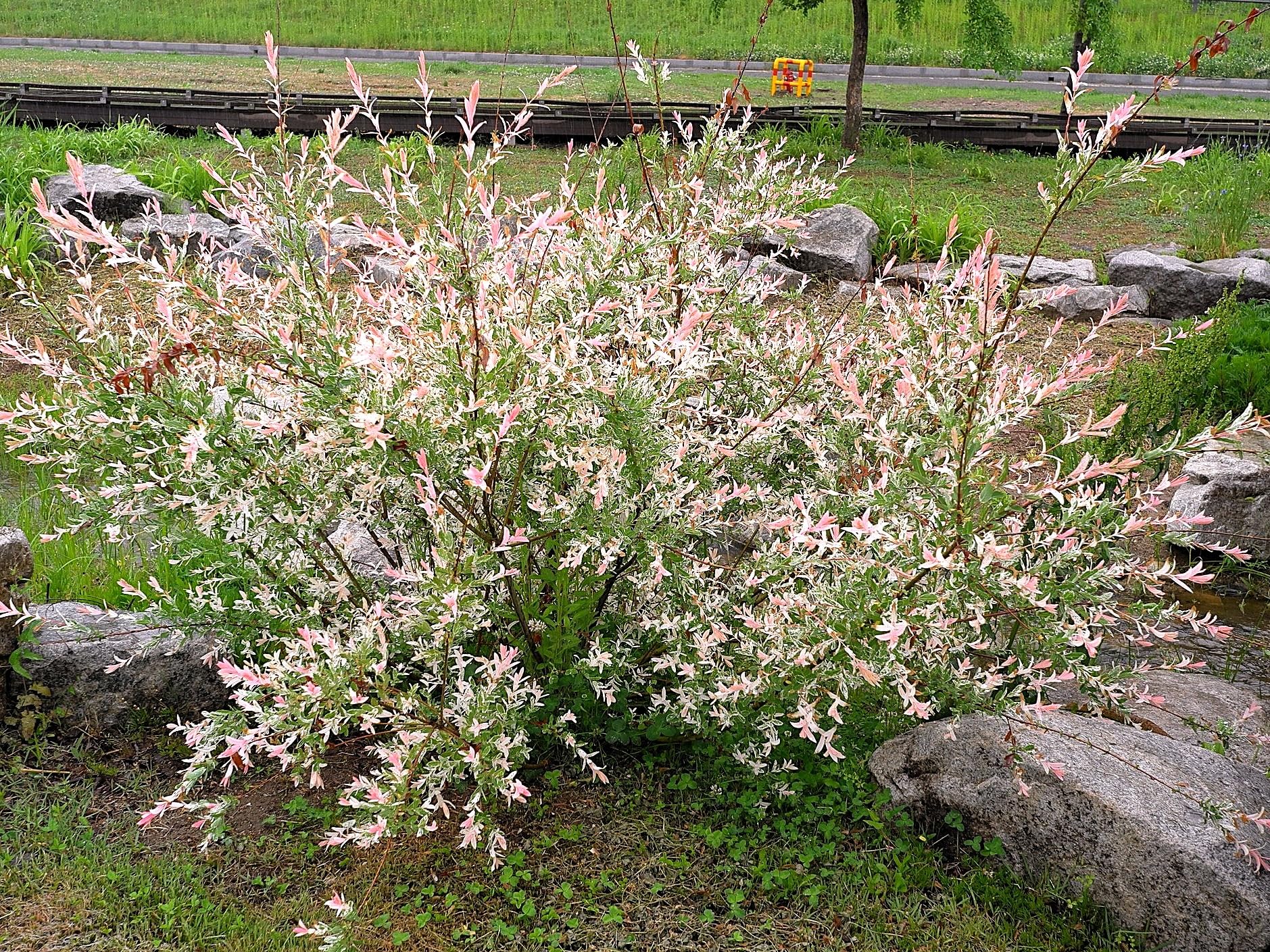
The fast-growing willow that turns a soggy streamside into a tall living privacy wall..
If your wet ground runs beside a stream, water feature, or a low drainage line, this dappled willow is the classic traditional choice — willows are naturally tolerant of wet soils and seepage. It is also the tallest pick here by a wide margin: it matures to 10–20 feet tall versus the buttonbush’s compact 3–4 feet.
The color show runs all year.. Spring brings yellow catkins, then new foliage emerges green and creamy white with pink overtones, deepening to salmon pink by summer. Come fall the leaves turn yellow, and the bare winter branches glow a brilliant red. Owners note the plants arrive well-packaged and healthy in small pint-size containers, then double in size within a week after repotting.
The trade-off is honesty about size: these are young quart-pot plants, not mature specimens, and buyers disagree on whether that is a fair deal. It also tolerates drought once established, which widens the planting flexibility beyond just wet spots. The 4.2-star rating comes with the usual mail-order gamble — an occasional unit fails, but the 14-day guarantee from the delivery date backs your order.
Best angle: the fastest route to a tall wet-soil screen — expect serious yearly jumps once roots settle, and plant it where you want height, not a tidy border.
Grab this for: privacy screens, windbreaks, and streamside spots where you want the agressive height of a willow.
skip it if: you only have a small damp bed — a 10–20 foot giant will overrun it.
3. Proven Winners Sugar Shack Buttonbush

The compact, sweet-scented buttonbush that packs native pollinator appeal into a tidy 3–4 foot frame..
This is the pick for a smaller wet bed where a towering willow would never fit. The Sugar Shack buttonbush stays neatly at 3–4 feet tall and wide, and it is famous for an unusual flower form with an outstanding scent that pulls native pollinators into your landscape. One owner in zone 7 with wet clay and full sun watched it go from bare branches to a healthy, full, beautiful plant within 6–8 weeks, filling out to about 2 by 2 feet.
It is shipped in a #3 size container, fully rooted and ready to plant on arrival, and it handles a genuinely wide zone range of 4–10. The unusual round flower clusters are the visual hook — nothing else in the border looks quite like them. Owners mention it arrives bigger than expected and settles in fast even when ordered during a heat wave, with one arriving “perfect condition and thriving in lake.”
The honest caveat: growing results are split. Some owners see vigorous growth, while a few experienced shrubs that withered despite proper planting. The appearance and healthiness of the plant itself earn the most consistent praise. Treat the bare-stick arrival as normal dormancy and give it a few weeks in damp soil before judging it.
The take: the best compact, wildlife-friendly option for a genuinely wet spot — just budget patience for the first month while it establishes.
Choose this when: space is tight and you want native pollinators buzzing around a small, scented shrub.
Look elsewhere if: you need immediate dense growth — this one rewards patience, not urgency.
Understanding the Specs
Mature Height & Spread
This pair of numbers tells you exactly how much room the shrub will claim at full size. The buttonbush stays petite at 3–4 feet, while the dappled willow can tower to 10–20 feet — a huge difference that decides whether the plant fits a border or needs to anchor a privacy screen. Always measure your wet spot before choosing.
Soil Type & Moisture
The soil type line — clay, sandy, or moist — tells you the conditions the plant tolerates best. Clay soil holds water and stays soggy, which is where the summersweet shines, while the willow handles wet but also sandy ground. Match the plant’s tolerance to what your yard actually has, not what you wish it were.
USDA Zone Range
The zone range (like 4–8 or 4–10) states which winter climates the plant survives. Check your local zone before ordering — a shrub rated for warmer zones will not make it through a colder winter. This single number prevents most beginner failures with mail-order plants.
Dormancy & Growth Rate
Deciduous shrubs arrive bare and leafless in late fall through winter — that is normal, and they leaf out in spring. Fast-growing species like the willow can double in size within a week of planting, while others settle in more slowly. Read the plant’s expected planting period and give it the season it needs.
FAQ
Will these shrubs really survive standing water and clay soil?
Why did my shrub arrive as a bare stick with no leaves?
How tall will these wet-soil bushes grow at full size?
What does a USDA zone rating like 4–8 actually mean for me?
Which of these bushes is best for a small wet garden bed?
Do these shrubs attract pollinators or butterflies?
How fast will these plants grow after I put them in the ground?
Can I plant these shrubs during a heat wave or drought?
When do these wet-soil shrubs bloom?
Final Thoughts: The Verdict
For most buyers, the bushes for wet soil winner is the Green Promise Farms Ruby Spice Summersweet because it has the most real-world proof of thriving in clay and standing water, plus fragrant pink July blooms. If you want fast height and a privacy screen near a stream, grab the Japanese Dappled Willow. And for a compact pollinator-friendly native in a small wet bed, the Sugar Shack Buttonbush is the one to reach for.
How We Picked
We do not accept paid placement. Every pick is matched to a real buyer and a real use-case; we do not hands-on test units.
Sources & Methodology
Specifications: manufacturer listings and product documentation. Review insights: verified customer reviews, as of August 2026. Pricing: not shown on this page (it changes often); check the current price via the retailer link.
As an Amazon Associate, FitlyFast earns from qualifying purchases. This does not affect which products we feature.