
Our readers keep the lights on and the weekend projects moving. As an Amazon Associate, I earn from qualifying purchases.
Specs are compiled from manufacturer listings and verified buyer reviews and can change over time — please confirm the key details on the product page before buying.
Fall planting gives your new shrubs a head start — cool soil and autumn rains let roots establish before winter dormancy, so you get stronger growth come spring. The trick is picking varieties that handle the transition, and that means looking past the flowers to hardiness zone ratings, mature size, and how much sun your yard actually gets.
I’m Rikta — the founder and writer behind FitlyFast. This guide is built by comparing the manufacturers’ published specifications and the patterns across verified customer reviews, so you get each pick’s real strengths and trade-offs instead of marketing spin.
The seven shrubs below cover different garden needs, from compact year-round color to tall privacy screens, so you can find the best bushes to plant in fall for your specific spot and climate.
Our Picks at a Glance


How To Choose The Best Bushes To Plant In Fall
Buying a shrub for fall planting is different from picking one in spring. You are not looking for the biggest bloom right now — you want a plant that will settle in over the cool months and explode with growth when the weather warms. Three things matter most.
Zone Hardiness Comes First
Your USDA zone (a number that tells you the average coldest winter temperature in your area) helps you pick a shrub that will survive your local winter. A shrub rated for zones 4-8 can handle a deep freeze, while a zone 6-10 plant will suffer if you push it into a northern winter. Check your zone before ordering — every plant in this guide includes its zone range.
Mature Size Changes Your Garden
A shrub that reaches 4 feet wide is very different from one that spreads 8 feet. Picture how much space you have five years from now, not just this season. The Proven Winners Blue Chiffon Rose of Sharon, for example, tops out at 8-12 feet tall, so it works as a privacy screen rather than a foundation plant.
Sunlight Isn’t Optional
Some shrubs need full sun (6+ hours) to bloom or color up properly, while others are perfectly happy in part shade. The Encore Azalea Autumn Bonfire, for instance, needs 4-6 hours of direct sun per day to rebloom from spring through fall. If your yard is shady, the Rhododendron ‘Aglo’ thrives in partial sun or full shade.
Quick Comparison
| Model | Best For | Mature Height | USDA Zones | Sunlight | Amazon |
|---|---|---|---|---|---|
| Southern Living Obsession Nandina★ Best Overall | Year-round color (evergreen foliage) | 48 in. | 6-10 | Sun to part shade | Amazon |
| Proven Winners Double Play Doozie SpireaTop Performer | Compact low-maintenance bloomer | 24 in. | 3-8 | Full sun to partial shade | Amazon |
| Encore Azalea Autumn Bonfire | Reblooming spring-to-fall color | 3 ft. | 6-9 (approx, for <0°F) | 4-6 hrs direct sun | Amazon |
| Rhododendron ‘Aglo’ | Shade-tolerant evergreen | 5-6 ft. | 4-8 | Partial sun or full shade | Amazon |
| Obsession Nandina (1.5 Gal) | Part-shade red foliage accent | 3-4 ft. | 6-10 | Part sun to shade | Amazon |
| Proven Winners Blue Chiffon Rose of Sharon | Tall summer privacy screen | 96-144 in. | 5-9 | Full sun to part shade | Amazon |
| First Editions Winterberry (Ilex) | Winter berry interest | 6-7 ft. | 4-8 | Full sun | Amazon |
In‑Depth Reviews
1. Southern Living 2 Gal. Obsession Nandina Shrub
Our pick — over 4.5★ from 900+ verified ratings; the strongest balance of quality and price.
The non-flowering shrub that delivers vivid red foliage in every season.
You get leaf color instead of flowers — bright red new growth that transitions to deep green, then back to red in fall and winter. That means your garden has visual interest even when perennials have died back. The 48-inch mature height makes it a strong mid-level accent for borders or foundation plantings without overwhelming a single-story house.
It grows in USDA zones 6-10 in sun to part shade, with a watering schedule that drops to once per week once the roots settle. Unlike the taller Rhododendron ‘Aglo’ that needs shade, this one adapts to more light. Buyers report the shrubs shipped well: one verified reviewer said they “ordered 4; shipped Mon, arrived Fri in good condition” and found them good value compared to nursery prices.
The catch is that it does not bloom — if you want spring flowers, the Double Play Doozie Spirea or Encore Azalea below will give you that show. But for steady color without deadheading or pruning, this is the most reliable pick on the list.
Year-Round Visual Payoff
- Multicolor foliage shifts from red to green to red — no bare season
- Low-maintenance after establishment; water drops to once a week
- Compact enough for small gardens at 48 in. tall
Two Trade-Offs
- No blossoms — it is strictly a foliage shrub
- Some buyers received smaller plants than expected with shipping damage
Who this fits: Gardeners who want dependable color from a shrub that will never need deadheading or worry about bloom failures.
One limitation: If your yard stays below zone 6 most winters, this nandina may not survive the cold — consider the Double Play Doozie Spirea (zones 3-8) instead.
2. Proven Winners 2 Gal. Double Play Doozie Spirea Shrub
A tidy bloomer that packs red-to-purple flowers into a 24-inch frame.
Where the Obsession Nandina reaches 48 inches tall, this spirea stays at 24 inches with a matching spread — a noticeably more compact plant for the front of a border or a container. It flowers from spring to fall, producing red-to-purple blossoms that the foliage-only nandina cannot match.
It thrives in USDA zones 3-8, so it handles colder winters than most picks here. One reviewer noted they “had to delay planting because our last frost date was about three weeks from arrival” — the shrub stayed alive on an enclosed porch and even started blooming. That kind of resilience, plus the 8.8-pound shipping weight (the same as the larger nandina above), tells you the root system ships healthy and full.
It is deciduous, so you lose the leaves in winter. If you want something that stays green year-round, the Obsession Nandina is a better fit. For sheer bloom volume in a small footprint, this is the one.
What Makes It Worth It
- Blooms from spring to fall — long flowering window for a compact shrub
- Cold-hardy down to zone 3, so northern gardens are covered
- Buyers consistently praise its healthy arrival and vigorous growth
What to Plan For
- Deciduous — foliage drops in winter, leaving bare branches until spring
- At 24 in. tall, it may feel small if you need a backyard anchor shrub
Best match: The front-of-border gardener with cold winters who wants reliable reblooming flowers in a neat, low package.
Not ideal if: You need an evergreen shrub that provides winter structure — this goes bare from late fall through early spring.
3. Encore Azalea Autumn Bonfire (1 Gallon) Red Flowering Shrub

A tough azalea that reblooms three seasons and shrugs off extreme weather.
Unlike traditional azaleas that flower only in spring, the Autumn Bonfire blooms from spring all the way through fall with red single and semi-double flowers. It reaches a mature size of 3 feet tall by 3.5 feet wide — noticeably wider than the Double Play Doozie Spirea’s 24-inch spread, so you get more coverage per plant.
The real standout here is resilience. Owners mention these plants “survived extreme weather (110+°F, freezing nights, heavy rain/wind) and grew significantly.” The manufacturer says they resist heat and sunlight as well as temperatures down to 0°F. For a fall planting, that durability means you do not have to baby the shrub through its first winter as much as you would with a more delicate variety.
It needs 4-6 hours of direct sun per day and watering 2-3 times per week. One buyer mentioned theirs did not return the following year, so soil drainage and proper siting matter — do not plant it in a low, wet spot.
The Weather-Proof Appeal
- Blooms spring, summer, and fall — one of the longest flowering windows here
- Proven to survive 110°F heat and freezing nights based on buyers’ experience
- Evergreen foliage holds year-round even after blooms fade
Consider Before Buying
- Some plants may fail to return the following season if conditions are poor
- Needs consistent watering 2-3 times per week until established
Ideal for: The fall planter in a hot or unpredictable climate who wants the longest possible bloom season from a single shrub.
Possible drawback: It is less forgiving of neglect or poor drainage than the rugged Double Play Doozie Spirea.
4. Rhododendron ‘Aglo’ (Rhododendron) Evergreen, Pink Flowers, #2 – Size Container

A shade-loving evergreen that delivers a wall of pink blooms in early May.
Most shrubs on this list need sun, but this rhododendron grows well in partial sun or full shade — making it the go-to pick for the north side of a house or under a tree canopy. At 5-6 feet tall and wide, it is significantly taller than the Encore Azalea (3 ft.) and the Double Play Doozie Spirea (24 in.), so it functions more as a mid-size backdrop than a border plant.
The 5-pound shipping weight of the Rhododendron is 5 pounds. The Double Play Doozie Spirea has a shipping weight of 8.8 pounds. So you are getting a bushier, taller plant in a lighter container. Buyers consistently praise the shipping quality — one verified reviewer said, “It was supposed to take almost a week to arrive, but was delivered in two days!” and noted the soil was still moist and the plant had buds already.
The hardiness zone range is 4-8, so it handles colder winters than the Southern Living Nandina (zones 6-10). The trade-off is speed: some buyers reported that after the first bloom, the plant died back in fall despite proper care. If you want a bulletproof option, the Double Play Doozie Spirea has more consistent year-two reports.
Why Shady Yards Need It
- Flourishes in full shade where most flowering shrubs refuse to grow
- Evergreen leaves provide winter structure unlike deciduous shrubs
- Arrives with buds ready to bloom the first spring after planting
Two Concerns
- Reports of die-back after the first season — success is not guaranteed
- At 5-6 ft. tall and wide, it needs more space than the compact spirea
Best for: The shaded corner or woodland garden where you need an evergreen shrub that blooms without direct sun.
Watch out for: Planting in heavy clay soil without amending — this rhododendron needs well-drained ground to survive its first winter.
5. Obsession Nandina (1.5 Gallon) Multicolor Evergreen Shrub with Brilliant Red New Foliage
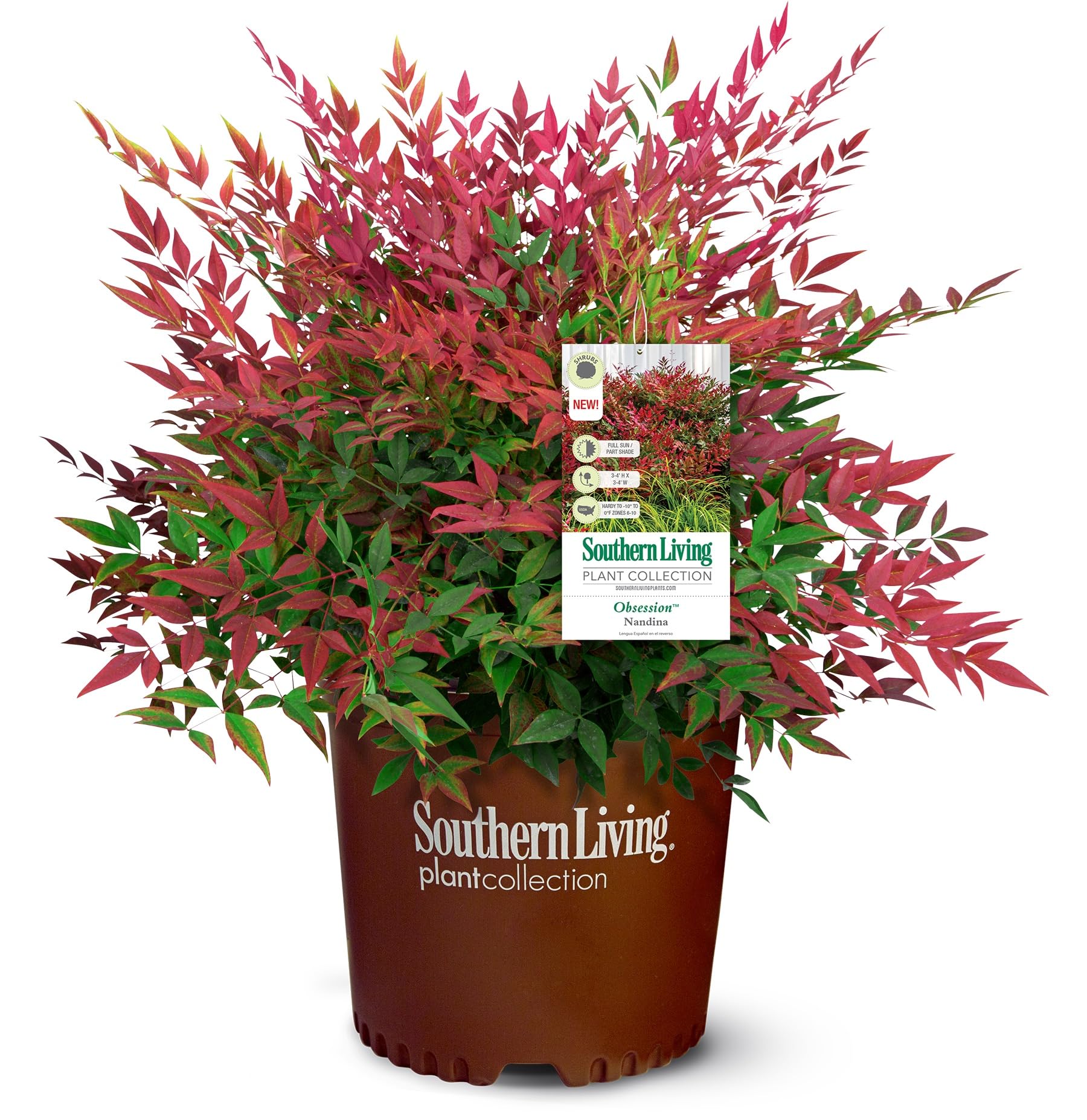
The same nandina color show in a smaller, part-shade-friendly package.
The 1.5-gallon version of the Obsession Nandina tops out at 3-4 feet tall and wide; the 2-gallon version reaches 48 inches (4 feet) tall and wide. It also prefers part sun to shade rather than sun to part shade, so it fits gardens with less direct light. The brilliant red new foliage that matures to deep green, then back to red in fall and winter, gives you the same season-shifting color story as its bigger sibling.
The 1.5-gallon version weighs 12 pounds; the 2-gallon version weighs 8.8 pounds. This tells you the root ball is dense and the plant is fully grown in the container. Customers note it arrives “beautiful with two-tone red/green foliage” and in excellent health. One reviewer called it “one of the healthiest plants I received online.” If the larger nandina feels too tall for your spot, this one gives you the same look in a more contained form.
It has almost no water needs once established — the manufacturer rates its moisture needs as “little to no watering,” so it is a lower-maintenance choice than the Encore Azalea’s 2-3 times per week. But it is a premium-tier pick, and like the larger nandina, it does not produce blossoms.
Consistent Color Advantage
- Evergreen foliage shifts red-green-red — never goes bare
- Thrives in part shade where full-sun shrubs would struggle
- Nearly zero watering needed once established
Consider This
- No flowers — purely a foliage accent shrub
- Some plants arrived unhealthy despite good packaging from the seller
Best for: The part-shade spot where you want the signature nandina color cycle without the 48-inch height of the 2-gallon version.
One caveat: It is a premium-priced plant, and a small number of buyers received plants that did not survive despite following care advice.
6. Proven Winners 2 Gal. Blue Chiffon Rose of Sharon (Hibiscus) Shrub

The tall shrub that turns a fence line into a blue flower wall all summer.
Every other shrub on this list stays below 5 feet, but this Proven Winners Rose of Sharon reaches a mature height of 96 to 144 inches — that is 8 to 12 feet tall. It blooms from spring through fall with blue, chiffon-like flowers and thrives in USDA zones 5-9. If you need a privacy screen or a backdrop for shorter shrubs, this is the one.
The spread matches the height at 8-12 feet wide, so give it room. It ships dormant in winter through early spring, weighing 8.8 pounds in the pot. Buyers confirm it “thrives despite neglect” and blooms even in 100°F heat. One owner reported it looked better than the same variety bought at Home Depot, and another got their first bloom within weeks of spring planting.
The deciduous nature means you lose the leaves in winter — unlike the evergreen Rhododendron ‘Aglo’, this goes bare. Also, some buyers found the plant smaller than expected for a 2-gallon pot, and the soil can be loose during shipping. If you want a big, fast-growing summer screen and do not mind bare winter branches, this works.
The Privacy Case
- Tops 8-12 ft. tall and wide — the only true screen-size shrub here
- Blooms spring through fall with eye-catching blue flowers
- Handles heat and missed watering without dying
The Practical Downsides
- Deciduous leaves drop in winter — no year-round coverage
- Some plants arrived smaller than expected with loose root balls
Perfect for: The gardener who wants a tall, fast-growing flowering screen for summer privacy in zones 5-9.
Not for: Small-space gardens or anyone who needs winter coverage — this shrub goes bare for months.
7. First Editions – Ilex verticillata Wildfire (Winterberry) Shrub, Bright Red Fruit, #3 – Size Container
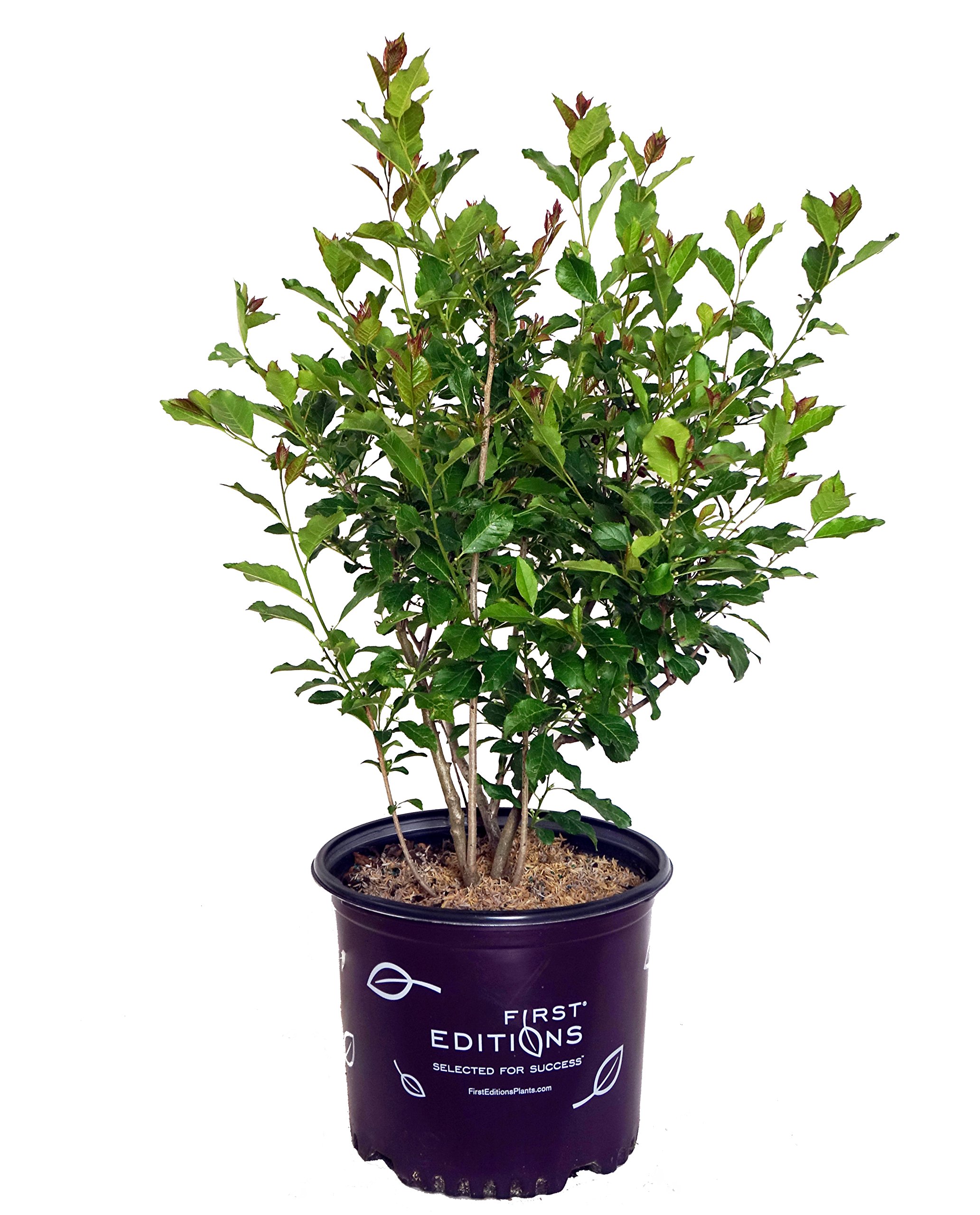
The deciduous shrub that delivers bright red berries when every other plant is bare.
Most shrubs lose interest in winter, but the Winterberry holds bright red berries from late fall into early winter that stand out against snow and gray skies. It reaches a mature height of 6-7 feet with a spread of 7-8 feet — comparable to the Rose of Sharon but with a wider, more rounded shape. It grows in USDA zones 4-8 and needs full sun to produce the heaviest berry set.
The catch is a critical one: you need a male pollinator planted nearby for berry production. Without it, you get a leafy green shrub with no berries. The seller ships this variety as a female plant, so you must buy a separate male winterberry (like Ilex verticillata ‘Jim Dandy’) and plant it within 50 feet. That adds cost and planning that the self-fertile Encore Azalea or Double Play Doozie Spirea do not require.
Buyers rave about the plant health — one verified reviewer called it “very healthy and happy” and noted it “even has red berries all over” on arrival. Another said these Green Promise Farms shrubs were “less than half the cost” of comparable nursery stock. The 4.7-star rating across 526 reviews is the highest on this list, confirming reliable quality.
The Berry Payoff
- Brilliant red berries last through late fall and early winter — class-leading visual interest
- Highest buyer rating on the list at 4.7/5 stars across 526 reviews
- Large mature size (6-7 ft.) creates a natural winter focal point
Essential to Know
- Requires a separate male pollinator within 50 feet to produce berries
- Deciduous — no leaves in winter, just branches and berries
Perfect for: The winter gardener who wants a striking berry display and has space for a second pollinator shrub nearby.
skip it if: You only want one plant with no companion pollinators, or you need year-round green coverage in your garden.
Understanding the Specs
USDA Hardiness Zone
This is the single most important number for fall planting. It tells you the average minimum winter temperature your plant can handle. A shrub rated for zones 4-8 (like the Rhododendron ‘Aglo’) survives winters down to -30°F, while a zone 6-10 plant (like the Southern Living Nandina) can die in colder ground. Always match the zone to your location — buying a zone 7 plant for a zone 5 yard is a waste of money.
Mature Height and Spread
These two numbers tell you how much space the shrub will fill at full growth, usually after 5-7 years. A 24-inch Double Play Doozie Spirea stays compact enough for a container or front border. An 8-12 foot Blue Chiffon Rose of Sharon needs room to spread and works as a screen. Check both numbers before you dig — planting a 6-foot-wide shrub 12 inches from your foundation is a future headache.
Evergreen vs Deciduous
Evergreen shrubs (like the Obsession Nandina and the Rhododendron ‘Aglo’) hold their leaves all winter, giving your yard color even in January. Deciduous shrubs (like the Double Play Doozie Spirea and the Rose of Sharon) lose their leaves in late fall and regrow them in spring. For fall planting, evergreen varieties give you immediate winter interest, while deciduous varieties focus energy on root growth during dormancy.
Sun Exposure Requirements
This spec tells you how much direct sunlight the shrub needs daily to bloom or color properly. Full sun means 6 or more hours. Part sun or part shade means 3-6 hours. Full shade means less than 3 hours. The Encore Azalea needs 4-6 hours of direct sun to rebloom, while the Rhododendron ‘Aglo’ grows fine in full shade. Planting a full-sun shrub in a shady spot leads to sparse blooms and weak growth.
FAQ
Is fall really better than spring for planting bushes?
When exactly should I plant bushes in fall?
Will a shrub planted in fall survive winter without help?
Should I fertilize bushes when I plant them in fall?
Can I plant a bush in fall if my zone is borderline for that shrub?
What is the difference between a 1-gallon and a 2-gallon shrub?
Why do some of these shrubs ship “dormant” and what does that mean?
Do I really need a second plant for the Winterberry to get berries?
Final Thoughts: The Verdict
Across the board, the bushes to plant in fall winner is the Southern Living 2 Gal. Obsession Nandina because it delivers reliable year-round color from a compact, low-maintenance shrub that thrives in sun or part shade. If you want a long-blooming flower show that bounces back from extreme weather, grab the Encore Azalea Autumn Bonfire. And for a cold-hardy, compact rebloomer that fits tight spaces, the Proven Winners Double Play Doozie Spirea is a strong pick.
How We Picked
We do not accept paid placement. Every pick is matched to a real buyer and a real use-case; we do not hands-on test units.
Sources & Methodology
Specifications: manufacturer listings and product documentation. Review insights: verified customer reviews, as of July 2026. Pricing: not shown on this page (it changes often); check the current price via the retailer link.
As an Amazon Associate, FitlyFast earns from qualifying purchases. This does not affect which products we feature.