
Our readers keep the lights on and the weekend projects moving. As an Amazon Associate, I earn from qualifying purchases.
Specs are compiled from manufacturer listings and verified buyer reviews and can change over time — please confirm the key details on the product page before buying.
Your hand gets tired, the tie ends up either too loose or too tight, and the sharp tail left behind can cut your finger later. That is the problem a cable tie gun solves. The right tool delivers consistent tension and a flush cut in one squeeze, eliminating sharp tails. The wrong tool slips on certain tie widths, jams mid-job, or feels flimsy in your hand. This guide covers seven proven cable tie guns — from a featherweight 5.6-ounce ductwork specialist to an industrial Panduit built for daily wire harness work — so you can pick the one that actually fits your ties and your hands.
This guide is built by comparing the manufacturers’ published specifications and the patterns across verified customer reviews, so you get each pick’s real strengths and trade-offs instead of marketing spin.
Whether you are an HVAC pro running flex duct in an attic or a weekend mechanic bundling wiring in a project car, a quality cable tie gun turns a two-hand wrestling match into a one-squeeze finish that leaves every tie tight and cut clean.
Our Picks at a Glance


How To Choose The Best Cable Tie Gun
A cable tie gun is simple: squeeze, tighten, cut. But how it performs each step determines whether it saves or wastes your time. Here are the four specs to pay attention to before you add one to your cart.
Tie Material and Width
Most guns are designed for either nylon ties or stainless steel ties — not both. A tool made for nylon has a softer cutting action and a different grip jaw than one built for metal bands. Check the maximum tie width the gun accepts. For nylon, common limits are 1/4 inch (for standard 125 lb and 175 lb ties). For stainless steel, look for a 12 mm width and 0.3 mm thickness rating. Buying the wrong one means the tie won’t fit into the tensioning slot.
Tension Control
A cable tie gun without adjustable tension is a gamble. You want a knob or dial that lets you set how hard the tool pulls before it cuts. Too much force crushes flexible ductwork or cracks brittle plastic housings. Too little leaves the tie loose enough to slide. Good guns give you a tension adjustment knob that you set once per job so every tie is identical.
Weight and Grip Comfort
For a single wiring project, weight hardly matters. For hours of attic flex-duct work, a heavy gun will wear your forearm out fast. Look for cushioned vinyl grips and a handle profile that fits your hand. Heavier all-metal guns (around 11-15 ounces) are durable but tiring; lightweight steel guns (around 5 ounces) are easier on the wrist but sometimes less sturdy.
Cut Quality
A flush cut leaves the tie end flat against the buckle with no sharp nub. A standard snip leaves a small tail that can scratch you, snag wires, or puncture duct lining. Guns with a manual cut-off lever let you position the cut; automatic cut-off models cut the instant the tension is reached. For control panels and wiring enclosures, a flush cut with no sharp edge is the safer choice.
Quick Comparison
| Model | Best For | Tie Type | Max Tie Width | Weight | Amazon |
|---|---|---|---|---|---|
| Malco TY4G★ Best Overall | HVAC Ductwork | Nylon | 0.5 inch (compatibility warning) | 5.6 oz | Amazon |
| Idong Metal KitSteel Specialist | Stainless Steel Ties | Stainless Steel | 12 mm | — | Amazon |
| iCrimp Stainless Tool | Exhaust / Header Wrap | Stainless Steel | 12 mm | — | Amazon |
| Eastwood Professional | General Nylon Ties | Nylon | 1/4 inch | 11.5 oz | Amazon |
| Crescent WT1 | Flex Duct / Medium Duty | Nylon | 3/8 inch and smaller | 12.8 oz | Amazon |
| Malco TY6 | Professional HVAC | Nylon | Up to 15 inch dia. ties | 15 oz | Amazon |
| Panduit GTS-E | Control Panel / Flush Cut | Nylon | — | 13.1 oz | Amazon |
In‑Depth Reviews
1. Malco TY4G Gripped Tensioning Tool with Manual Cut-Off
Our pick — over 4.5★ from 600+ verified ratings; the strongest balance of quality and price.
The featherweight duct gun that weighs 5.6 ounces — less than a can of soda.
At just 5.6 ounces, this is the lightest tool in the lineup. That weight matters when you are reaching overhead to secure flex duct collar after flex duct collar. The Malco TY4G works with standard 175 pound and thinner 125 pound nylon ties, and it uses a manual cut-off lever so you control exactly when the tie end gets snipped. The cushioned vinyl grips with built-in hand stops mean your hand does not slide forward during a hard pull. Buyers report that the hardened steel stampings and weather-resistant nickel chrome finish hold up well in attics and crawlspaces where moisture and dust are constant.
Owners consistently talk about quality — it is the single most-discussed aspect, and the verdict is overwhelmingly positive. Most appreciate being able to dial in the pull force with the tension adjustment knob, but a smaller group notes they want more tension range for extremely tight applications.
The Malco TY4G is about 5.6 ounces vs the Eastwood Professional which is 11.5 ounces.
Field-ready lightweight: HVAC pros who do high-volume duct work will appreciate the 5.6-ounce carry weight and the lifetime warranty — Malco stands behind it.
Width limitation: If your job calls for extra-wide 0.5-inch nylon ties, this tool simply will not fit them. Reach for the Eastwood or a dedicated stainless gun instead.
Who it suits: Any ductwork installer or electrician who wants a featherlight, proven gun that works 125 lb and 175 lb ties all day.
Who should skip: Anyone using wide-bodice zip ties, and anyone who wants an automatic cut-off instead of a manual lever.
2. Idong Metal tie wrap Gun kit (with 100 Stainless Steel Ties)
The kit that brings 100 stainless steel ties with it — so you test the tool right away.
This Idong kit ships with 100 stainless steel cable ties in the box — 4.6 x 250 mm (roughly 9.8 inches), made from 304 stainless steel that resists rust and holds up to high temperatures. The tool itself is designed for stainless ties up to 12 mm wide and 0.3 mm thick, with a SKD11 high-speed steel cutter that owners mention cuts cleanly without leaving sharp edges. The TPR (rubber-like) handle gives good slip resistance even with greasy or sweaty hands, and the rolling ball self-locking mechanism makes tightening simple: pull the tail through the tool, squeeze, and the lock holds while you cut.
The most-discussed aspect is functionality — owners are impressed that the tool gets metal straps extremely tight. Functionality and ease of use are the top two positively mentioned aspects by a wide margin. A few owners note potential long-term durability concerns: the jaw teeth may wear over time if you use stainless ties daily, and the tool is finicky in cold weather around 30°F. But for occasional metal-tie work like mounting brackets, fixing chain-link fence, or securing exhaust wrap, it earns strong approval.
Complete starter kit: Having 100 stainless ties included saves a separate purchase. The 304-grade ties are genuinely rust-resistant.
Long-term uncertainty: The question mark is how the cutter teeth hold up after hundreds of metal straps.
Reach for this if: You need a stainless-steel tie gun and want everything in one box — tool plus 100 ties — for outdoor, high-heat, or corrosion-prone applications.
Look elsewhere if: Your work involves daily high-volume stainless tie installation in below-freezing conditions.
3. iCrimp Stainless Steel Cable Tie Tool Zip Gun

One-hand operation that beats the frustration of old-style metal tie tools.
The iCrimp is made specifically for stainless steel cable ties up to 12 mm wide and 0.3 mm thick, and it comes with a smart extraction tool that releases a tie in seconds if you need to adjust or replace it. The cutting blade is hardened to HRC55 and the tension holder jaw hits HRC60 — these are Rockwell hardness numbers, meaning the steel is tough enough to handle repeated metal-strap cutting without dulling quickly. The ergonomic handle is designed for one-handed operation, which owners say is a huge improvement over bulkier two-handed stainless tools.
Buyers consistently praise its cutting performance and overall ease of use. The most-discussed positive is functionality by a solid margin, followed by quality. That said, there is a practical gotcha: the tool needs the tie tail to be at least 2 inches longer than the circumference you are wrapping to let the jaws grip properly. Sales pages sum it up best: buy ties that are longer than you think you need. For header wrap, exhaust heat shielding, and CV joint boots on motorcycles or cars, this gun is a favorite.
Smart release tool: The included extraction tool lets you back out a metal tie without mangling it — a feature missing on most stainless guns.
Tie-length gotcha: You must order ties that are noticeably longer than the bundle circumference. Owners universally say “buy longer ties.”
Go for the iCrimp if: You work on automotive exhaust or heat-wrap projects and want a stainless gun that cuts cleanly with one hand.
skip it if: You do not want to think about tie lengths; the Malco or Crescent nylon guns have no such extra-length requirement.
4. Eastwood Professional Cable Tie Gun
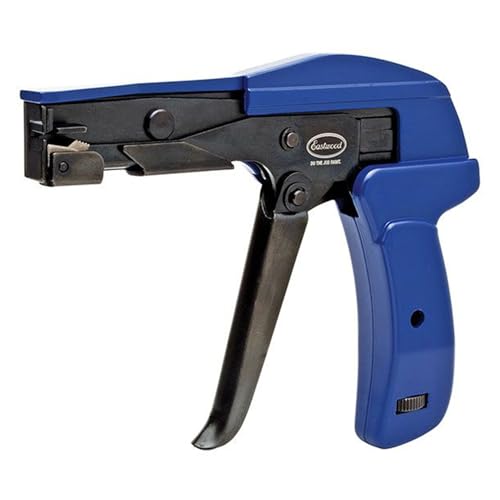
A solid metal body that gives each squeeze a satisfyingly confident feel.
The Eastwood Professional is made from all-metal construction with a lightweight aluminum alloy cover, and it weighs 11.5 ounces — noticeably heavier than the 5.6-ounce Malco above, but that weight comes from durable die-cast steel internals. It works on nylon cable ties up to 1/4 inch wide, and the adjustable tension knob lets you dial in the pull force so you do not crush wire insulation or over-tighten delicate bundles. The flush-cut point leaves no sharp edge, which owners consistently highlight as a time-saver: no second trim step with side cutters.
Performance and quality are the two most positively discussed aspects, with owners calling the tool excellent for wiring harness work and general shop use. Buyers describe pulling ties tight and cutting them off flush in one smooth squeeze. The main trade-off is that it only handles nylon ties up to 1/4 inch — no stainless, no extra-wide ties. If your work involves only standard nylon ties in a workshop or mechanic setting, this gun is a sturdy choice.
One-squeeze flush cut: Adjust the tension once and every zip tie after that comes out identical, cut flush with no jagged tail.
Nylon-only limitation: Unlike the Idong or iCrimp, this tool does not work with stainless steel ties at all.
Ideal for: Shop mechanics, wiring harness builders, and anyone who works exclusively with standard 1/4-inch nylon ties.
Not for: HVAC ductwork overhead (too heavy for sustained overhead use) or anyone needing stainless tie capability.
5. Crescent Wiss WT1 Cable Tie Tensioning Tool

A medium-duty tool that handles everything from tiny 4-inch ties to 36-inch duct straps.
The Crescent WT1 (previously branded Wiss) is a 7.5-inch red-handled tool that uses an ergonomic, non-slip grip and an integrated cut-off lever to snip tie tails cleanly. At 12.8 ounces, it is the heaviest gun in the lineup behind the Malco TY6, and that weight comes from all-metal construction with thick steel body and blade. Customers note it works well on ties from 3/8 inch down to the smallest widths, and the two-lever design — one to tighten, one to cut — gives you precise control over the final trim. Several reviewers point out it pulls ties extremely tight and cuts flush, even on large 30- to 36-inch ties used for flex ductwork.
Quality is the most-mentioned positive aspect by a wide margin, followed by functionality. Durability and value for money are mixed — some owners find it well-built and worth the money, while a few report that the pivot pin can work loose or the tool feels “just OK” for the price. The consensus is that this is a solid medium-duty tool for occasional to regular use, but it is not built for heavy daily professional punishment in the way the Malco TY6 is. One owner noted it requires “large, strong hands” to operate comfortably.
Impressive range: The thumb-lever cut mechanism works from 4-inch ties all the way up to 36-inch duct straps without skipping a beat.
Mixed durability reports: Most owners are happy, but a vocal minority mention the pivot loosening over time.
Best for: Serious DIYers and semi-pro HVAC installers who need a durable nylon-tie gun for medium-duty use across many tie sizes.
Skip if: Your hands are on the smaller side, or if you need a tool that can survive being dropped from a ladder every day.
6. Malco TY6 Flex Duct Cable Tie Tensioning Tool
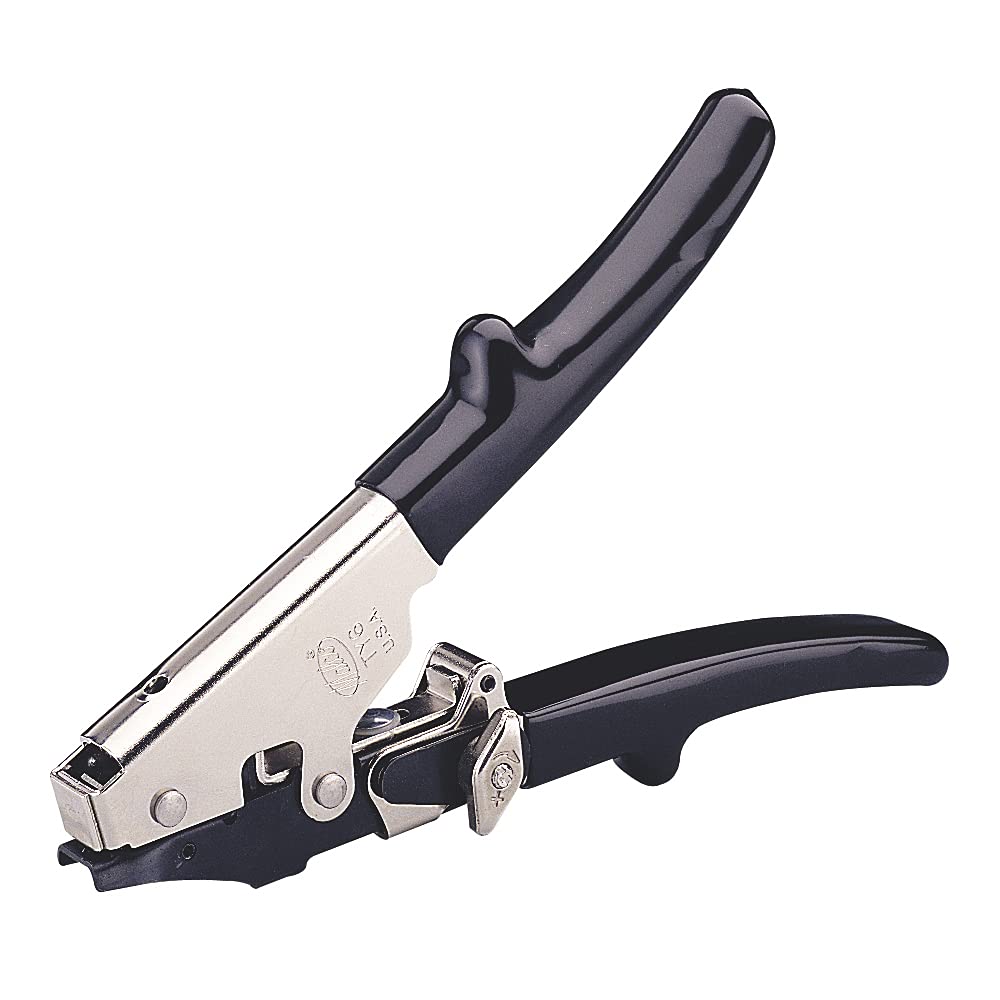
The auto-cut-off tool that lets you tension, cut, and move — all in one squeeze.
The Malco TY6 is the more advanced sibling of the TY4G above, and it uses a breakaway spring mechanism: the instant the tool reaches the tension you have dialed in with the adjustment knob, the lower handle releases and the blade automatically cuts the tie tail flush. No second lever, no separate snips. It handles both 125 lb and 175 lb nylon ties and fits ties up to 15 inches in diameter. At 8.5 inches long and 15 ounces, it is the heaviest tool here, but the contour and vinyl cushion grips with hand stops help distribute the weight.
Quality is the most frequently praised aspect here, and owners consistently call it a “must have” tool for attic flex duct work where temperatures hit 120°F. The sharpness of the cut — leaving no sharp edges — also gets strong positive mentions. A small number of owners find the tie-tightening range could be broader, but this is a minority opinion. The TY6 is designed for pro HVAC installers who do high-volume ductwork daily.
One-motion operation: Set the tension knob once per job, then each squeeze tensions, cuts, and signals completion with the handle breakaway.
Weight is the trade-off: At 15 ounces it is the heaviest tool here. Not ideal for occasional homeowners.
Grab this if: You are a professional HVAC installer who runs flex duct all day and needs a tool that tensions, cuts, and releases in one motion without snagging.
pass on it if: This is for a one-time basement project; the Eastwood or Crescent will serve you well at a lower weight.
7. Panduit GTS-E Ergonomic Hand Operated Cable Tie Gun
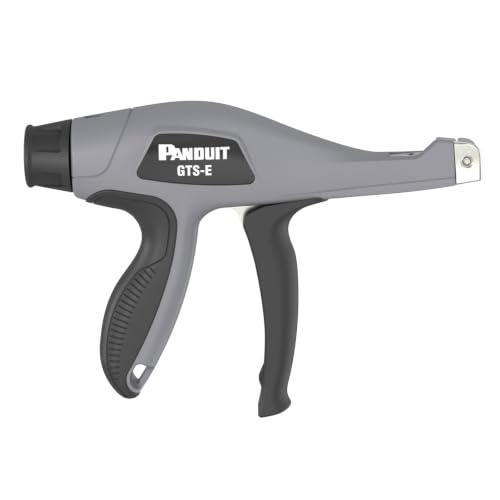
The flush-cut king that leaves zero sharp edges on every single tie.
The Panduit GTS-E is built for control-panel and electrical-enclosure work where a sharp tie tail can cut wire insulation or scrape hands during maintenance. The cut-off mechanism is engineered to need low handle force, minimizing hand impact over hundreds of ties. The adjustable tension setting uses a side chart (printed on the tool) so you dial in the exact pull force for the tie size you are using. The result: every single tie is pulled to the same tension and cut completely flush with no sharp edge at all.
Functionality is the most-mentioned positive aspect, followed by adjustability and flush cut quality. Owners consistently use words like “precision” and “refined.” The biggest talking point is value for money — and it is mixed. At a significant premium over every other tool here, the GTS-E is a serious investment. Some owners consider it “worth every penny” for professional wiring work, while others find it overpriced for occasional use. The tool is made in the United States, and for production electricians who wire enclosures daily, the reduced hand fatigue and perfect flush cuts justify the expense.
Zero-sharp-edge guarantee: The flush cut is so clean that shoppers say you can run your finger over the cut end without any risk of a cut.
High price floor: This is the most expensive tool in the guide by a wide margin. Not for the casual user.
Buy it for: Daily control-panel wiring, network rack assembly, or any job where flush cuts and repeatable tension are non-negotiable.
Pass on it if: You need a tool for flex duct or outdoor stainless ties — there are better-value options above.
Understanding the Specs
Tie Type: Nylon vs Stainless
The most important split in cable tie guns is what material they are made to work with. Nylon-tie tools use a softer jaw and a gentle cut-off lever designed for plastic. Stainless-steel guns use hardened steel jaws (often HRC55 to HRC60 hardness) and a different tensioning mechanism to handle the metal band without slipping. A few tools claim to handle both, but in practice it is best to buy the tool that matches your most common tie material. Using a nylon gun on stainless ties can damage the cutter or fail to grip properly.
Tension Adjustment Knob
The tension knob controls how hard the tool pulls the tie before it cuts. On basic guns, you manually feel when to stop. On better guns like the Malco TY6 and Panduit GTS-E, you set the knob once and the tool stops and cuts automatically at that force. This is critical for flexible ductwork (too tight crushes the insulation, reducing efficiency) and for wiring bundles (too tight can crack wire insulation or strain terminals). A grab-and-cut approach without tension control works fine for simple bundling but risks over-tightening on sensitive materials.
Cut-Off Mechanism
There are two cut-off styles. Manual cut-off means you squeeze a second lever or press a button to snip the tail. Auto cut-off means the tool releases and cuts the instant the preset tension is reached — you never take your hand off the tool. Auto cut-off is faster and more consistent for production work, but it gives you no control over the exact cutting angle if the tie is in a tight spot. Manual cut-off is slower but lets you position the cut exactly where you want it.
Weight and Balance
Weight matters based on how long you are using the tool. A 5.6-ounce gun like the Malco TY4G feels almost weightless but is lighter-duty. A 15-ounce tool like the Malco TY6 is heavier but built tougher, with more leverage in the handle. For overhead work, lighter is almost always better. For bench or floor work, the extra weight and leverage can actually make the pull easier on your hand. The handle length also affects mechanical advantage — longer handles need less hand strength per squeeze, which reduces fatigue over hundreds of ties.
FAQ
Can a cable tie gun be used on any brand of zip tie?
What is the difference between a manual cut-off and an auto cut-off cable tie gun?
How do I know which tension setting to use on my cable tie gun?
Will a cable tie gun work with metal or stainless steel ties?
How long does a cable tie gun blade last before it needs replacement?
What does “flush cut” mean on a cable tie gun?
Can I use a cable tie gun one-handed, or do I need both hands?
How do I release a cable tie if I overtighten it with a gun?
Is a heavier cable tie gun better than a lighter one?
Final Thoughts: The Verdict
Across the board, the cable tie gun winner is the Malco TY4G because it weighs just 5.6 ounces, handles both 125 lb and 175 lb nylon ties, and comes with a lifetime warranty backing its quality — the most-praised feature among owners. If you work exclusively with stainless steel ties, grab the Idong Metal Kit (it even ships with 100 stainless ties). And for professional HVAC installers who need speed and consistency all day, the Malco TY6 with its auto cut-off is the one to reach for — a heavier tool at 15 oz, but it tensions and cuts in a single motion that keeps you moving from collar to collar without a wasted second.
How We Picked
We do not accept paid placement. Every pick is matched to a real buyer and a real use-case; we do not hands-on test units.
Sources & Methodology
Specifications: manufacturer listings and product documentation. Review insights: verified customer reviews, as of July 2026. Pricing: not shown on this page (it changes often); check the current price via the retailer link.
As an Amazon Associate, FitlyFast earns from qualifying purchases. This does not affect which products we feature.