
Our readers keep the lights on and the weekend projects moving. As an Amazon Associate, I earn from qualifying purchases.
Specs are compiled from manufacturer listings and verified buyer reviews and can change over time — please confirm the key details on the product page before buying.
A caldero is the kind of pot that changes how your rice turns out — fluffy, separate grains with that golden, toasty bottom (the socarrat) that good Latin cooking is known for. But with aluminum, cast aluminum, ceramic-coated, and glass-lid options on the shelf, picking the right one for your stove and family size can feel like a guessing game. This guide walks you through the seven best calderos right now and explains exactly which specs matter for your cooking.
I’m Rikta — the founder and writer behind FitlyFast. This guide is built by comparing the manufacturers’ published specifications and the patterns across verified customer reviews, so you get each pick’s real strengths and trade-offs instead of marketing spin.
Whether you are cooking for two or feeding a crowd, the right pot makes all the difference. Here is the breakdown of the caldero for rice that actually delivers on its promises.
Our Picks at a Glance


How To Choose The Best Caldero For Rice
The best caldero for rice balances even heat, a snug lid, and the right size for your cooking load. Here are the key factors to look for when you are shopping.
Material and Heat Distribution
Aluminum and cast aluminum are the classics for a reason — they heat up fast and spread that heat evenly across the bottom and sides. That even spread stops hot spots that burn the rice before the middle is done. A caldero that is 3mm thick (like the Uniware) gives noticeably steadier heat than thinner budget pots. If you want the traditional uncoated interior that builds up seasoning over time, look for bare aluminum. If you prefer easy cleanup, search for a nonstick or ceramic coating.
Capacity for Your Family
Calderos range from tiny 1.7-quart pots (good for one or two servings) all the way up to 7-quart pots that feed a crowd. For two people, a 3.4-quart pot gives enough room for rice plus a side. For a family of four or more, a 5.5-quart to 7-quart pot is the better call. Remember: rice expands a lot, so you need headroom above the rice-and-water line.
Lid Fit and See-Through Cooking
A tight-fitting lid traps steam, which is how you get fluffy rice with no gummy texture. Some calderos come with a glass lid, so you can watch the water level without lifting the cover and letting heat escape. Others use a metal lid that seals even tighter. Both work — the trade-off is visibility versus a more sealed cooking environment.
Quick Comparison
| Model | Best For | Capacity | Material | Weight | Amazon |
|---|---|---|---|---|---|
| Universal Square (6 Qt)★ Best Overall | Best Overall | 6 quarts | Cast Aluminum | — | Amazon |
| Alpine Cuisine (7 Qt)Large Family | Large Families | 7 quarts | Aluminum (Nonstick) | — | Amazon |
| Universal 2-in-1 (3.4 Qt) | Cooking Lid Versatility | 3.4 quarts | Cast Aluminum | 3 Pounds | Amazon |
| IMUSA 6.9Qt Bistro-Cera | Ceramic Nonstick | 6.9 quarts | Aluminum (Ceramic) | — | Amazon |
| Frynest 5.5 Qt | Induction Compatible | 5.5 quarts | Aluminum (Uncoated) | 2.53 Pounds | Amazon |
| IMUSA 4.4Qt Bistro | Mid-Size Families | 4.4 quarts | Aluminum (Ceramic) | — | Amazon |
| Uniware 1.7 Qt | Single Servings | 1.7 quarts | Aluminum | 1.7 Pounds | Amazon |
In‑Depth Reviews
1. Universal (6 Quart – 15 Cups) Square Caldero
Our pick — 4.5★ from 400+ verified ratings; the strongest balance of quality and price.
Square design that fits more rice in the same stovetop footprint.
The big idea here is shape. Unlike every other round caldero on this list, this Universal pot is square — 10 inches across with a 6-quart capacity. That square gives you more usable cooking surface for browning meat or toasting rice before you add liquid, which means you can sear a bigger batch in one layer without crowding. The cast aluminum construction heats quickly and evenly to help prevent hot spots — exactly what you want for a consistent pot of rice.
Buyers report the polished finish cleans up easily in the dishwasher, and the pot is oven safe for slow braises or roasting. The 6-quart size fits somewhere between the big Alpine Cuisine (7 quarts) and the mid-size Frynest (5.5 quarts), making it a solid all-around choice for most families. One trade-off: because it is square, it takes up more linear space on the stovetop than a round pot of the same capacity. If you have a small cooktop or burners that are close together, check your clearances first.
Square edge advantage: The shape gives you more bottom surface for browning than a round pot of equal capacity — 100 square inches vs roughly 78 in a 10-inch round — so you get more crust per batch.
Mind the footprint: At 13 x 13 inches, this pot spans two burners on most ranges; make sure your cooktop grates accommodate the square corners.
Reach for it if: you want a versatile, oven-safe, dishwasher-safe caldero that handles big batches of rice and braised meats.
Think twice if: your stove is tight on space or you prefer the compact storage of a round pot.
2. Alpine Cuisine 7-Quart Nonstick Aluminum Caldero Pot
Massive capacity with an easy-clean nonstick surface for big batches.
At 7 quarts, this is the largest caldero in the lineup and the one you grab when you are cooking for a crowd. The nonstick aluminum body conducts heat well, and the glass lid lets you keep an eye on the water level without breaking the steam seal. Because the nonstick coating makes cleanup fast, you can go from stovetop to serving table without scrubbing stuck-on rice. The 7-quart capacity also offers 59% more room than the IMUSA 4.4-quart bistro pot — a meaningful gap if you regularly cook for more than four people.
Owners mention the riveted handle feels sturdy when moving a full pot, and the surface resists stains and odors well. A few customers note that the dimensions — 14.17 inches wide — mean it can crowd a standard cooktop. This is not a pot for a cramped galley kitchen. Also, the manufacturer recommends hand washing, so this one is not dishwasher safe.
Fit check: At 14.17 inches across, this is the widest pot in the lineup — 20% wider than the IMUSA 6.9-quart (14.37 x 14.37 x 6.5 inches), so measure your stovetop grate opening before you buy.
Reach for it if: you regularly cook large portions of rice, beans, and stews for family gatherings.
Look elsewhere if: your stovetop space is limited or you prefer dishwasher-safe cookware.
3. Universal 2-in-1 Caldero Pot with Cooking Lid (3.4 QT)

Two cooking surfaces in one pot — the lid works as a flat griddle.
This is the only caldero on the list whose lid pulls double duty. The included cast aluminum lid flips over into a divided cooking surface, so you can sear meat or sauté vegetables on top while your rice simmers below. The 3.4-quart size is designed for two to four servings, which makes it a smart pick for small families. The 2-in-1 design also means you use less cookware overall — one pot and one lid handle both jobs. The cast aluminum construction gives fast, even heat, though the manufacturer notes it is not induction compatible.
At 3 pounds, this is heavier than the similarly sized Uniware (1.7 pounds) but still manageable. The 2-in-1 lid is a genuinely useful feature if you prep multiple components for a meal, but keep in mind the lid’s cooking surface is relatively shallow, so it works best for a single portion of protein or veggies.
What the dual lid does
- Lid becomes a divided cooking surface for searing or sautéing
- Save time and use fewer pans for a complete meal
What to consider
- 3.4-quart pot is small for families of more than four
- Not induction compatible — works on gas, electric, and ceramic stovetops
Reach for it if: you cook for one or two people and like the idea of searing meat on the lid while rice simmers below.
skip it if: you need a large pot for batch cooking or you have an induction stove.
4. IMUSA 6.9Qt Bistro-Cera Aluminum Speckled Black Ceramic Caldero
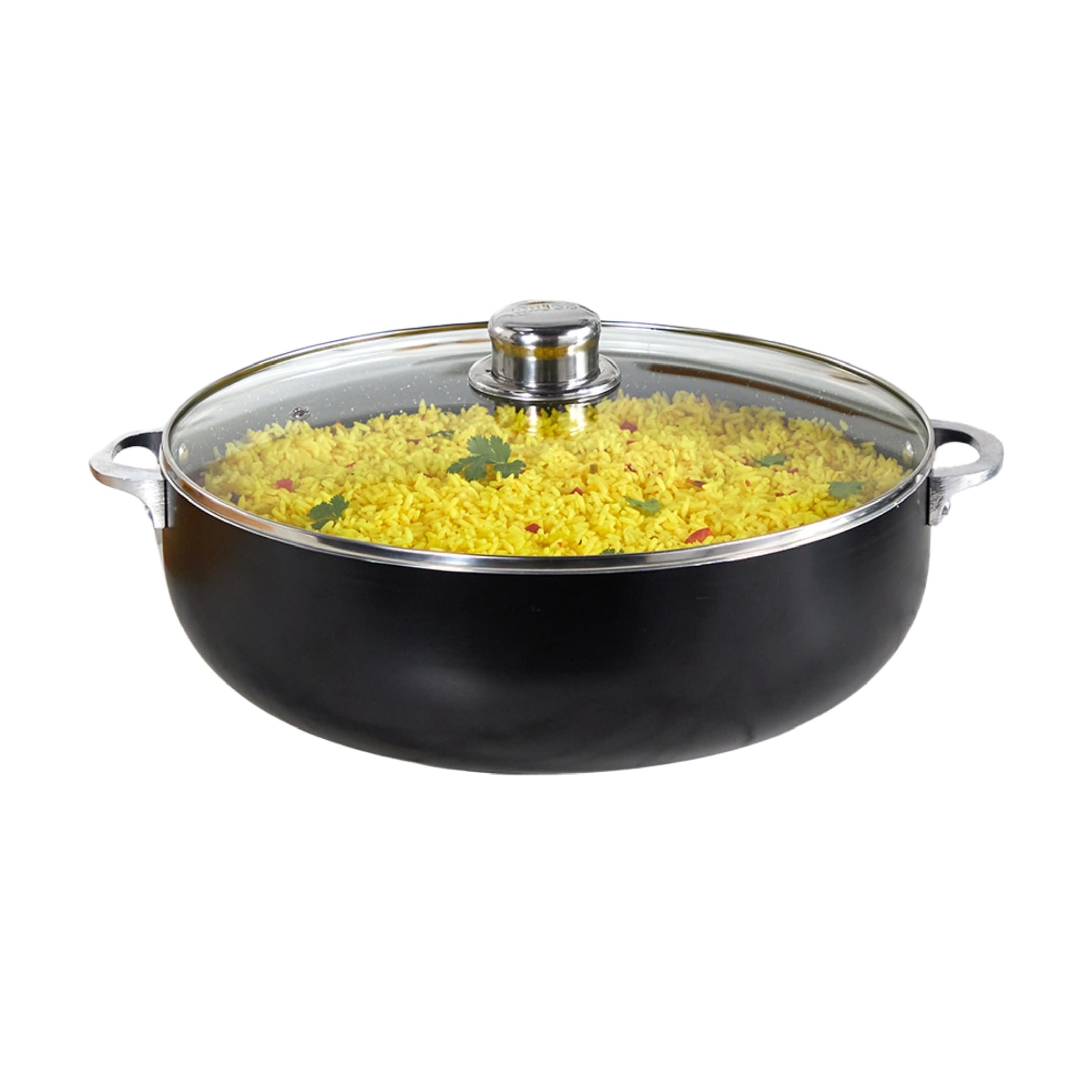
Generous capacity with a modern ceramic finish for easy release.
The 6.9-quart capacity gives this IMUSA caldero the second-largest volume on the list after the Alpine Cuisine (7 quarts). The key difference is the speckled black ceramic coating inside, which provides a nonstick surface that releases rice and beans cleanly. The tight-fitting glass lid has a steam vent and a stainless-steel knob, and the pot is oven safe when you remove the lid. The riveted handles feel secure, and the aluminum body provides even heat distribution. This pot is also dishwasher safe, which is a convenience you do not get with every ceramic-coated caldero.
The trade-off is the ceramic coating requires gentle care — metal utensils can scratch the surface. Buyers also note the pot’s wide 14.37-inch dimensions demand a generous burner. This IMUSA measures 14.37 x 14.37 x 6.5 inches, the same footprint as the 4.4-quart version but taller, which gives you the extra volume without needing a much larger burner.
Reviewers report the ceramic layer is noticeably slick from the first use, with no seasoning needed.
Ceramic vs. traditional: The coating gives you nonstick release without the Teflon-based chemistry found in some nonstick pots — but it is more prone to chipping if you use metal spoons or store other pots inside it.
Reach for it if: you want a large, dishwasher-safe caldero with a ceramic nonstick surface for easy cleanup.
Think twice if: you prefer bare aluminum that develops a natural patina or you often use metal utensils while cooking.
5. Frynest Caldero Pot 5.5 Quart (11 Inch)
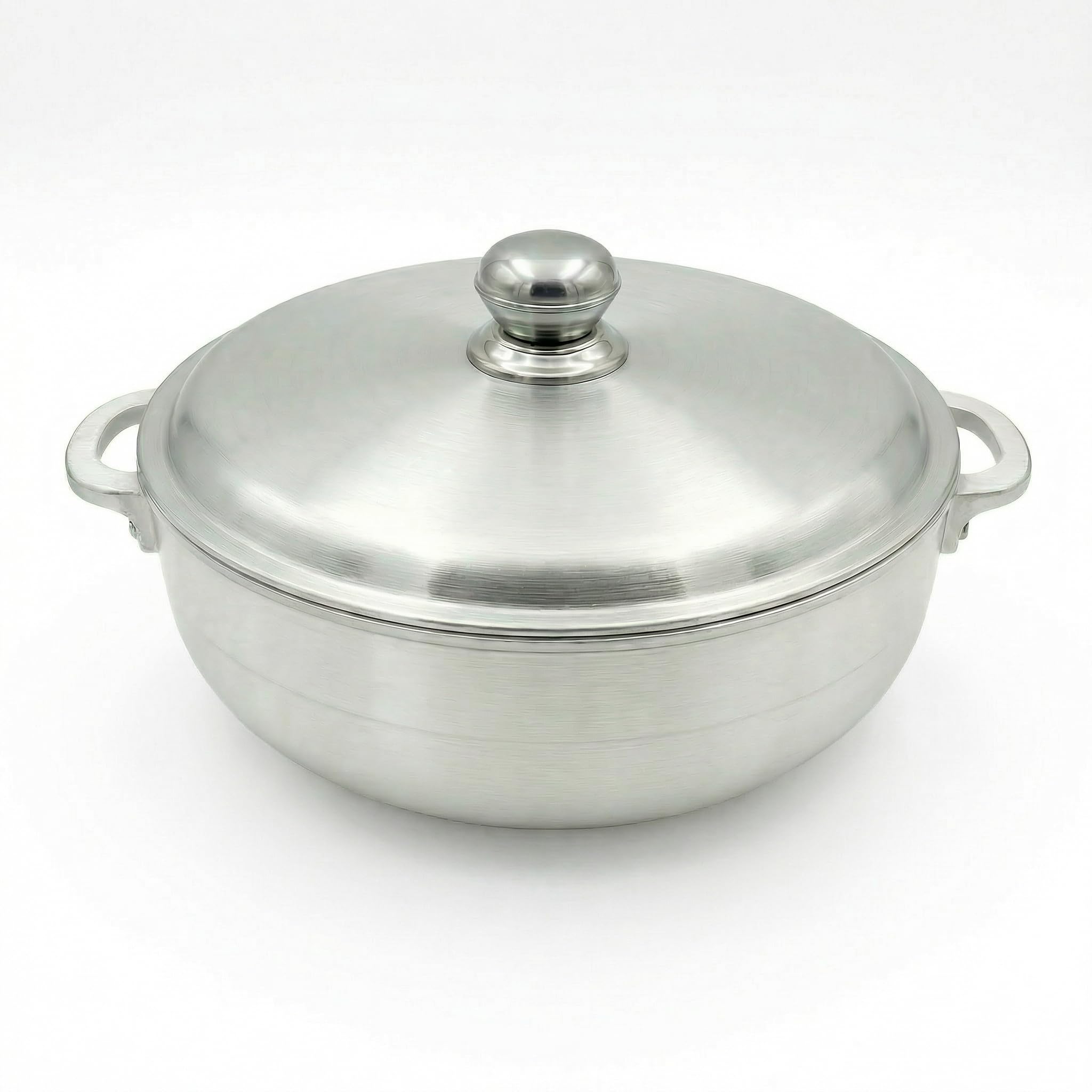
Traditional uncoated aluminum with an induction-compatible base for any stovetop.
If you have an induction cooktop, this is the caldero to reach for. Most aluminum pots do not work on induction burners because aluminum is not magnetic, but the Frynest has a flat base that is specially designed for induction compatibility. That base also means it works on every standard stovetop — gas, electric, ceramic, and induction — so it is future-proof if you switch cooktops later. The 5.5-quart capacity is a family-friendly size, and the uncoated aluminum interior is the traditional caldero surface that builds up flavor with use.
At 2.53 pounds, this pot is 49% heavier than the tiny Uniware (1.7 pounds), but that weight gives it a solid feel and steady heat retention. The included metal lid is oven safe up to 350°F, and the pot is dishwasher safe, though hand washing is recommended to preserve the finish. Buyers rate this 4.8 out of 5 from 31 reviews, noting the even heat is exactly what they expect from a classic caldero.
Induction advantage: This is the only pot in the lineup with an induction-compatible base, making it the pick for modern glass-top induction ranges that other aluminum calderos do not work on.
Reach for it if: you have an induction cooktop or want a traditional uncoated aluminum caldero that works on any stove.
Look elsewhere if: you prefer the easy release of a nonstick coating or need a larger capacity.
6. IMUSA 4.4Qt Bistro Ceramic Nonstick Caldero/Dutch Oven
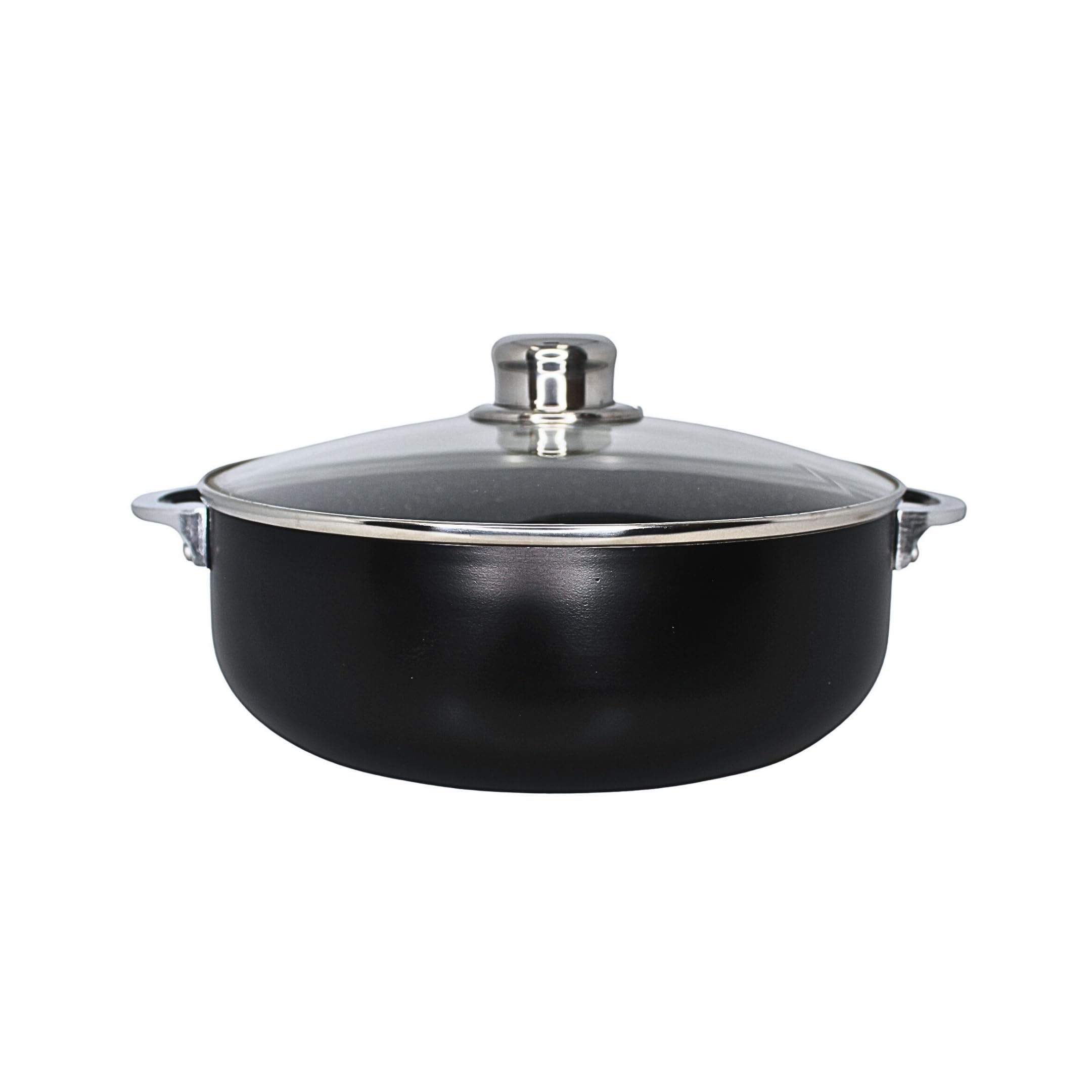
A smaller version of the 6.9-quart IMUSA, with the same ceramic finish.
The 4.4-quart capacity lands this IMUSA in the middle of the lineup — bigger than the small 1.7-quart Uniware but smaller than the 5.5-quart or 6.9-quart options. Like its larger sibling, it features a speckled black ceramic nonstick coating on aluminum, a tight-fitting glass lid with a steam vent, and a stainless-steel knob. It is also oven safe without the lid, so you can start rice on the stovetop and finish it in the oven if you like. The ceramic release is effective for rice, beans, and sauces without sticking.
One key difference from the 6.9-quart model: this pot is hand-wash only, not dishwasher safe. The manufacturer specifically advises hand washing. Buyers mention the 12.8-inch diameter fits well on a standard burner without overhang. The ceramic coating is slick and easy to wipe clean with a soft sponge, but it will scratch if you are not careful with metal utensils.
Same family, smaller size: This pot shares the same dimensions width-wise as the 6.9-quart IMUSA (12.8 x 12.8 inches) but is shorter at 5.91 inches tall, so it uses the same burner space with less volume.
Reach for it if: you need a mid-size ceramic pot for rice and stews for a family of three or four and prefer hand care.
pass on it if: you want dishwasher-safe convenience or need more than 4.4 quarts of capacity.
7. Uniware Super Quality Aluminum Caldero/Stock Pot (1.7 QT)

A small, heavy-duty pot for single servings of perfect rice.
This Uniware is the smallest caldero on the list at 1.7 quarts, but do not mistake its size for flimsy construction. The walls are a full 3mm thick — that is noticeably heavier gauge than many budget pots — which means it distributes heat evenly and holds temperature well for a small batch. The pure aluminum construction heats rapidly, and the tight-fitting aluminum lid seals in steam for fluffy rice. At just 1.7 pounds, it is easy to handle with one hand. The capacity is about 2x smaller than the 2-in-1 Universal (3.4 quarts), so it is strictly for one to two servings.
Buyers appreciate the sturdy riveted handles that stay cool on the stovetop. The pot is both stove safe and oven safe. Because it is small, it heats up fast, so keep an eye on the heat level to avoid scorching small portions. This pot works well for rice, browning a single portion of meat, or warming sauces.
Thick walls, small pot: The 3mm thickness is twice what you get on many thin-gauge pots, giving you more even heat even in a tiny 1.7-quart volume.
Reach for it if: you cook for one or two people and want a sturdy, thick-walled aluminum pot that heats evenly.
Think twice if: you need capacity for a family or want a nonstick interior for easy cleanup.
Understanding the Specs
Aluminum vs. Cast Aluminum
Both materials heat quickly and spread heat evenly, but cast aluminum is denser and heavier. That extra weight holds temperature steadier when you add cold rice or liquid, which helps prevent temperature drops that lead to gummy results. Pure aluminum is lighter and responds faster to heat changes. For everyday rice cooking, both work well — pick cast aluminum for better heat retention, pure aluminum if you prefer a lighter pot that is easier to lift when full.
Nonstick vs. Uncoated Interior
The inside surface determines your cleanup routine and the flavor of your rice over time. Uncoated aluminum develops a natural patina (a darkened seasoning layer) through use, which adds a subtle nutty character to rice and helps prevent sticking. Nonstick and ceramic coatings make cleanup almost easy and release every grain, but they never build up that traditional seasoning. If you want to taste the pot’s history in your rice, go bare aluminum. If convenience is your priority, nonstick or ceramic is your match.
Glass Lid vs. Metal Lid
Glass lids let you monitor the water level and cooking progress without lifting the lid and releasing steam. That is helpful for rice because losing steam mid-cook can leave you with undercooked grains. Metal lids form a tighter seal with less heat loss, which can speed up cooking time. Glass lids usually have a steam vent, while metal lids often sit flush. Both work for rice — glass gives you visibility, metal gives you a better seal.
FAQ
What is the best size caldero for cooking rice for a family of four?
Can I use a caldero on an induction cooktop?
Is a glass lid or a metal lid better for rice?
How do I clean a caldero without damaging it?
Can I put a caldero in the oven?
Does the weight of the caldero affect rice cooking?
What is the difference between a caldero and a regular stockpot?
How do I prevent rice from sticking to an uncoated aluminum caldero?
Final Thoughts: The Verdict
For most people, the caldero for rice winner is the Universal 6-Quart Square Caldero because it offers a large 6-quart capacity, fast and even cast aluminum heating, and a unique square shape that expands cooking surface for better browning. If you need the largest capacity for feeding a crowd, grab the Alpine Cuisine 7-Quart Nonstick Caldero. And for small households or one- or two-person meals, the Uniware 1.7-Quart Aluminum Caldero delivers thick 3mm walls in a compact, lightweight pot that heats evenly for perfect single servings.
How We Picked
We do not accept paid placement. Every pick is matched to a real buyer and a real use-case; we do not hands-on test units.
Sources & Methodology
Specifications: manufacturer listings and product documentation. Review insights: verified customer reviews, as of July 2026. Pricing: not shown on this page (it changes often); check the current price via the retailer link.
As an Amazon Associate, FitlyFast earns from qualifying purchases. This does not affect which products we feature.