
Our readers keep the lights on and the weekend projects moving. As an Amazon Associate, I earn from qualifying purchases.
Specs are compiled from manufacturer listings and verified buyer reviews and can change over time — please confirm the key details on the product page before buying.
The biggest challenge in wildlife filming is the distance to your subject. Because animals rarely allow close approach, optical zoom range is the first spec to evaluate. This guide ranks camcorders by optical zoom, stabilization, and image quality to help you fill the frame from a distance.
I’m Rikta — the founder and writer behind FitlyFast. This guide is built by comparing the manufacturers’ published specifications and the patterns across verified customer reviews, so you get each pick’s real strengths and trade-offs instead of marketing spin.
Whether you are chasing backyard birds or planning a safari, the best camcorder for wildlife must pair a long optical zoom with rock-steady image stabilization to turn distant subjects into sharp, watchable footage.
Our Picks at a Glance


How To Choose The Best Camcorder For Wildlife
Wildlife filming demands precise timing and maximum reach. You shoot from far away, often handheld, with no second chances. A camcorder with strong optical zoom and stabilization captures that fleeting moment clearly; a weak one delivers a blurry miss. These specs separate a capable wildlife camcorder from a frustrating one.
Optical Zoom is Your True Reach
To capture a fox at the edge of a field or a bird in a distant tree without it turning into a tiny speck, you need a camcorder with at least 20x optical zoom (the minimum on the serious models here). Optical zoom uses the lens’s glass to magnify the scene, keeping full detail as you zoom in. Digital zoom, by contrast, simply crops and enlarges pixels, so the picture gets softer and grainier the further you push it. Some models stretch far beyond that — the Canon VIXIA HF R800 offers 32x optical, and the Sony HDRCX405 pushes to 30x optical with a 60x Clear Image Zoom that uses processing to extend your reach while keeping more clarity than standard digital zoom.
Image Stabilization Determines If Footage Is Watchable
At full zoom, even tiny hand movements become exaggerated shaking on screen, so image stabilization is non-negotiable for wildlife work where you often shoot handheld from awkward positions. Optical SteadyShot (Sony’s system) and Canon’s Super Range OIS physically shift lens elements to counteract shake, giving you a steadier image than digital-only correction. The premium tier goes further: the Panasonic HC-X1500 and HC-X2000 use a 5-axis hybrid system that combines lens-based optical correction with electronic detection to iron out many types of movement — so you can track a moving animal without your footage looking like it was shot during an earthquake.
Low-Light Performance Extends Your Shooting Day
Many animals are most active at dawn and dusk, exactly when the light is weakest. A larger image sensor captures more light, which means less noise (that grainy speckle) in your footage. The Sony FDR-AX43’s 1/2.5″ Exmor R sensor is specifically designed for low-light sensitivity, and the Canon XA60’s 1/2.3″ CMOS sensor paired with its DIGIC DV6 processor keeps detail rich even in challenging conditions. If you plan to film in forests, early mornings, or overcast days, sensor size matters as much as the zoom range.
Quick Comparison
| Model | Best For | Optical Zoom | Max Video Resolution | Image Stabilization | Amazon |
|---|---|---|---|---|---|
| Sony HDRCX405★ Best Overall | Value seekers on a budget | 30x (60x Clear Image) | 1920p (Full HD) | Optical SteadyShot with Active Mode | Amazon |
| Canon VIXIA HF G70Also Great | Serious hobbyists wanting 4K quality | 20x | 2160p (4K UHD) | Advanced Optical | Amazon |
| Canon VIXIA HF R800Zoom King | First-time buyers wanting maximum zoom | 32x | 1920p (Full HD) | Super Range OIS | Amazon |
| Sony FDR-AX43 | Low-light shooting in 4K | 20x (30x in 4K) | 3840p (4K UHD) | Balanced Optical SteadyShot | Amazon |
In‑Depth Reviews
1. Sony HDRCX405 (B00R5LH9HO)
Our pick — over 4★ from 2,500+ verified ratings; the strongest balance of quality and price.
A featherlight Full HD shooter that proves you do not need 4K to bring the action closer.
If you want serious zoom reach without the premium price tag, the Sony HDRCX405 is a remarkably capable entry point. Its 30x optical zoom gets you to a bird in a distant tree, and the 60x Clear Image Zoom extends that reach further by using processing to keep the image sharper than traditional digital zoom. The 26.8mm wide-angle ZEISS lens captures a broad scene, so you can start wide to locate the animal and then zoom in without losing your bearings. Compared to the Canon VIXIA HF R800, this Sony offers a wider 26.8mm starting view versus the Canon’s 32.5mm, letting you frame more of the landscape.
This is also the most travel-friendly camcorder here — owners consistently highlight its compact size and light weight as a major plus, with some noting it is small enough to slip into a pocket. The Optical SteadyShot with Active mode (Sony’s image stabilization system) keeps handheld footage steady, which is critical when you are zoomed in at 30x. A built-in USB cable folds out of the wrist strap, making file transfers and charging easy when you are out in the field. Owners mention this little camera has been “durable, reliable 6+ years,” proof of its build quality.
The honest catch is that this is a 1080p Full HD camcorder, not 4K, and the sensor’s effective still resolution of 9.2 mp outshines its video capability. Low-light performance has produced mixed feedback, so treat it as a bright-conditions tool. The tiny body and small buttons are also tricky for large hands to operate comfortably. For the budget-conscious wildlife watcher who values portability and reach, this is a very hard package to beat.
The featherweight reach: You get 30x optical zoom and true portability in a package that fits a jacket pocket.
The honest limit: It tops out at 1080p Full HD, so if you are editing for large 4K screens, look higher up this list.
2. Canon VIXIA HF G70 (B0BCLWJMZ1)
The 4K powerhouse that turns a distant moose into a frame-filling star without breaking a sweat.
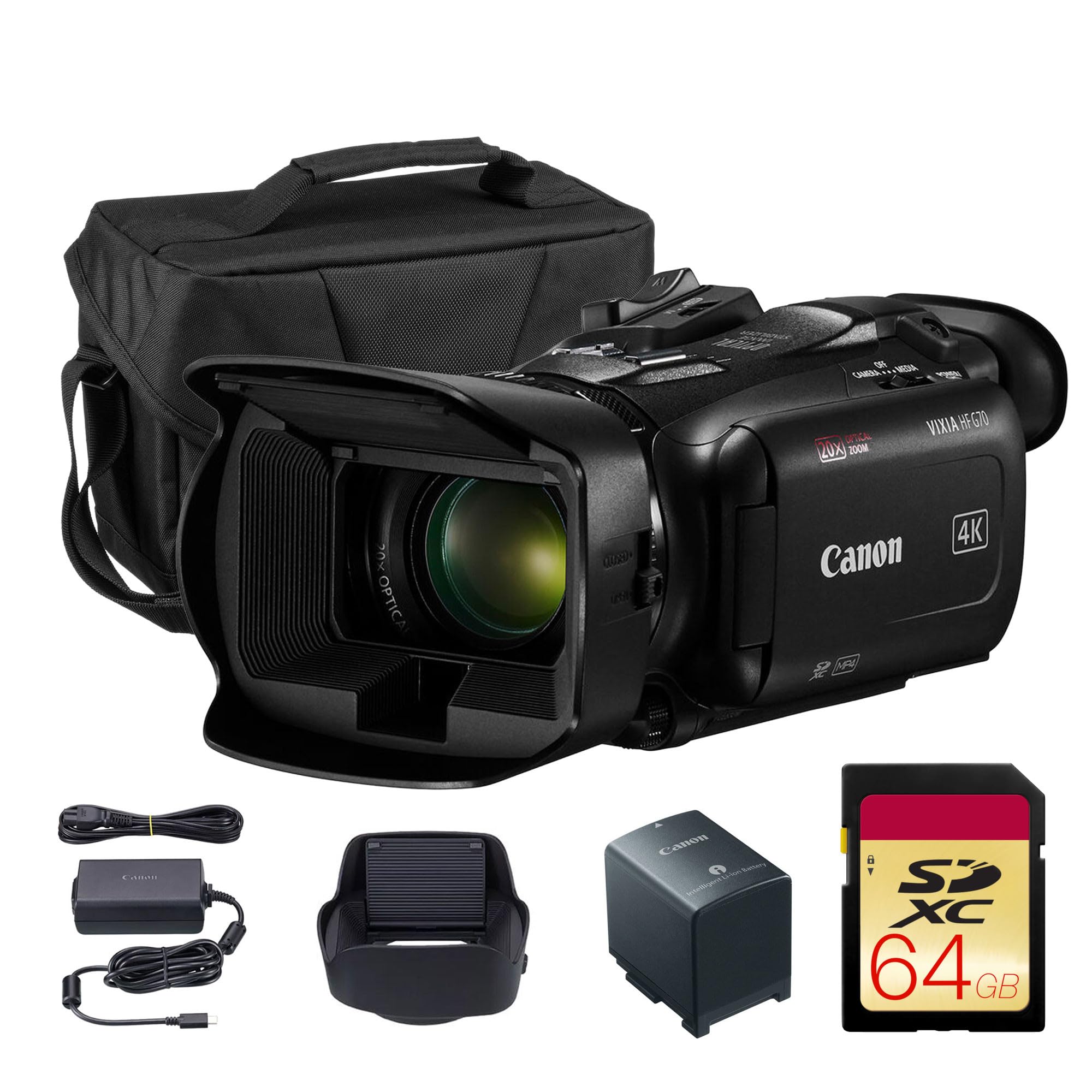
For the wildlife enthusiast who has outgrown entry-level gear, the Canon VIXIA HF G70 is the balance of reach and resolution. Its 20x optical zoom is the professional standard for this class, and when you need more, the 800x digital zoom is there — though you will want to stay firmly in the optical range to keep that crisp detail. Footage is captured on a 1/2.3″ 4K UHD CMOS sensor (the chip that turns light into a picture, at a resolution of 2160 pixels) paired with a DIGIC DV6 processor (the brain that handles color and noise), so your shots of a caribou at dawn stay vibrant and clean.
Where this camcorder truly shines for outdoor work is the advanced Hybrid AF system. This autofocus combines speed and face detection to lock onto a moving subject and hold it, which is exactly what you need when an animal is trotting across a meadow. The 8-blade aperture creates a smooth, cinema-style blur in out-of-focus areas, making your subject pop from the background. Owners who bought it specifically for filming a moose and caribou hunt report it is ideal for capturing outdoor adventures, and the consensus is that the “bang for the buck is worth every penny” for the video quality it delivers.
The trade-off appears when the sun dips. Buyers report that low-light performance is a weak spot — footage gets soft at higher gain (the amplification of the signal) and turns mushy at extreme settings, so this is a daylight-and-golden-hour machine rather than a night-vision tool. It also lacks an audio peak warning, a small annoyance for careful sound recordists. But for the “run & gun” style of wildlife filming — quick, mobile, and in good light — this is the most balanced pick on the list.
What wins owners over
- Crisp, sharp 4K UHD video that owners call outstanding in quality
- Insane zoom reach and fast, precise autofocus that locks onto moving subjects
- Lightweight body that is easy to handle on long outdoor shoots
Where it asks for patience
- Low-light footage softens quickly, so it is not for night shoots
- Gimbal function reported as needing improvement for smooth pans
Reach for this if: you want true 4K quality with professional autofocus for daytime wildlife filming.
Look elsewhere if: your shooting day starts before sunrise or ends after sunset on a regular basis.
3. Canon VIXIA HF R800 (B074G4BY22)
The 32x optical reach champion that delivers 60% more zoom than the Canon G70 for a fraction of the cost.
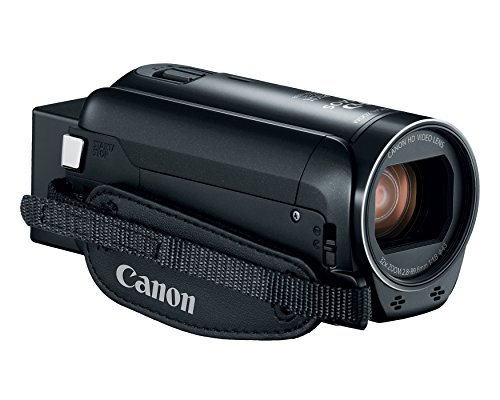
Zoom is the headline here, and the Canon VIXIA HF R800 delivers it in spades. At 32x optical, it offers 60% more reach than the Canon VIXIA HF G70’s 20x lens, which is a massive advantage when the subject is barely a speck in the distance. The 57x advanced zoom — a combination of optical and digital processing — stretches that to an almost unbelievable 1853mm equivalent, and the Super Range OIS (image stabilization) works hard to keep those extreme focal lengths steady. For a first-time wildlife buyer, this is the most reach you can get for your money.
This is a renewed (refurbished) unit, and customers note the cameras arrive “in excellent condition” and “work as it should,” with one owner noting it “fits nicely in hand and very lightweight.” The 3.28 megapixel Full HD CMOS sensor (the chip capturing the image) produces “nice videos with a touch of nostalgia,” as one owner put it — a solid, straightforward 1080p image that is easy to use with no complicated menus. The DIGIC DV 4 processor handles the image processing efficiently, keeping operation smooth.
The trade-offs are clear. Its effective still resolution of 3.28 mp is a fraction of what the Sony HDRCX405 offers at 9.2 mp, so if you want to grab high-quality stills from your video, this is not the one. The image sensor is smaller, which affects low-light performance. And being a renewed model, availability and condition can vary, though the reviews here are overwhelmingly positive. This is the budget pick for maximum optical zoom reach.
The reach advantage
- 32x optical zoom is the most on this list, letting you fill the frame from very far away
- Lightweight and straightforward operation ideal for beginners
- Refurbished units arrive in excellent working condition per owner reports
The reach trade-off
- 3.28 mp still resolution is weak for grabbing photos from your footage
- Small sensor struggles in low light compared to larger-sensor rivals
Pick this for: maximum optical reach on a budget, when the subject is far and light is decent.
Think twice if: you plan to shoot at dusk or want high-resolution stills from the same device.
4. Sony FDR-AX43 (B084QBSQGW)

The 4K low-light specialist that keeps every leaf crisp when the sun abandons you.
When wildlife activity peaks at dawn and dusk, the Sony FDR-AX43 is built for exactly those hours. Its 1/2.5″ Exmor R CMOS sensor is Sony’s low-light specialist, designed to capture more light and reduce the grainy noise that ruins twilight footage. Owners describe the picture quality in glowing terms — “every leaf is crisp” — and the 4K detail is genuinely stunning. The 20x optical zoom is complemented by a Clear Image Zoom of 30x in 4K and 40x in HD, giving you solid reach without sacrificing the 4K resolution.
The defining feature here is the built-in gimbal — Sony’s Balanced Optical SteadyShot image stabilizer. This is a physical mechanical stabilizer that counteracts shake at the lens level, which is noticeably more effective than software-only correction when you are zoomed in tight on a nervous animal. The Fast Intelligent AF tracks focus on moving subjects, so a bounding deer stays sharp. With a 26.8mm wide-angle ZEISS Vario-Sonnar T lens, you can capture the environment before zooming into the action.
The catch is ergonomics. The large battery protrudes awkwardly from the back, which one owner noted gets in the way on a selfie stick, and the camera has no internal memory — you must supply an SD card before you can shoot. The zoom features receive mixed feedback in the reviews, with some wishing for more reach than 20x optical. But for the wildlife filmmaker who primarily battles low light and wants true 4K color accuracy, this Sony’s sensor is a clear step up.
The low-light edge: A larger, light-hungry sensor and a physical gimbal make this the best choice for dim conditions.
The reach reality: At 20x optical, it trails the Canon R800’s 32x, so distant subjects need the Clear Image Zoom to bridge the gap.
5. Canon VIXIA HF G70 4K Bundle (B0FKNJX8DG)
The industry’s smallest 4K/60p pro camcorder that packs a 24x zoom and studio-grade stabilization into a compact body.
Panasonic claims — and the specs back it up — that the HC-X1500 is the industry’s smallest and lightest 4K/60p camcorder, making it a compelling choice for the wildlife pro who hikes miles with gear on their back. The 24x optical zoom covers a huge range from 25mm wide-angle to 600mm telephoto, and the i.ZOOM feature extends that to 32x in 4K and an impressive 48x in Full HD. This flexibility means you can capture a sweeping valley scene and then instantly punch in on an eagle’s nest without changing lenses.
The 5-axis hybrid image stabilization is the standout engineering here. It combines lens-based optical stabilization with electronic detection to correct a wide range of camera shake — the kind you get when you are breathing hard after a climb or bracing against a tree. The high-precision AF uses face detection and sophisticated color recognition to track a subject even when it turns sideways, which is crucial for following a moving animal. This bundle also includes a 64GB SanDisk Extreme Pro card, a soft case, and a cleaning kit, making it ready to shoot from the start.
The trade-offs are notable. Owners describe a “steep learning curve for novices,” so this rewards patience and study. There are also real ergonomic complaints — some call it “heavy” and “odd shaped,” and the battery situation is finicky, with only smaller batteries fitting the body. Low-light performance is a documented weakness. This is a professional tool that excels in good light and rewards users who will invest time in learning its menus.
Pro-grade reach and stability: 24x optical zoom backed by true 5-axis stabilization is a serious wildlife combo.
The learning investment: Complex menus and specific battery quirks mean this is not a grab-and-go camera.
6. Canon XA60 (B0BCN6325Y)

The broadcast-spec Panasonic that pairs a 24x optical zoom with 3G-SDI output for serious production work.
When your wildlife footage needs to go to air or into a professional production pipeline, the Panasonic HC-X2000 is the tool. It is essentially the big brother of the HC-X1500, sharing the same 24x optical zoom lens (25mm to 600mm), the same 5-axis hybrid image stabilization, and the same compact body — but it adds the critical 3G-SDI output. This is the professional broadcast connection standard that lets you feed a clean, uncompressed signal directly to a switcher, recorder, or live-stream encoder, which is essential for live wildlife cams or multi-camera shoots.
Like its sibling, it records 4K/60p video with impressive quality, and the i.ZOOM extends reach to 32x in 4K and 48x in Full HD. Owners are clear that the “4K is noticeably better than 1080p,” and they praise the intuitive menu system and high-quality build. The bundle is generous, including a 64GB SanDisk Extreme Pro card, a soft case, a cleaning kit, and a card reader. It also supports Full-HD live streaming over Wi-Fi to platforms like Facebook and YouTube, and it can be controlled wirelessly from a tablet or smartphone — a powerful feature for remote wildlife setups.
The complaints are minor but real. One owner notes the power cable shipped with a European plug, requiring a US adapter — a bundle quality-control issue. Another reported missing items in their specific bundle, a reminder to check contents on arrival. Some owners find the battery expensive and the menus clunky. This is the premium, future-proof choice for a serious wildlife filmmaker who wants broadcast output capability and does not mind paying for it.
Invest here if: you need 3G-SDI broadcast output and wireless control for professional wildlife productions.
Watch out for: bundle contents varying between shipments, so verify everything is in the box.