
Our readers keep the lights on and the weekend projects moving. As an Amazon Associate, I earn from qualifying purchases.
Specs are compiled from manufacturer listings and verified buyer reviews and can change over time — please confirm the key details on the product page before buying.
Capturing a basketball game is one of the hardest tasks in photography because the action bursts, the gym lighting is often dim, and players constantly cross paths. The cameras below tackle these three issues head-on: fast autofocus to lock onto a dribbler, a high burst rate to freeze the peak of a jump shot, and a sensor that keeps noise low when arena lights are weak. You want a camera that keeps up with the speed and light, and these picks deliver.
I’m Rikta — the founder and writer behind FitlyFast. This guide is built by comparing the manufacturers’ published specifications and the patterns across verified customer reviews, so you get each pick’s real strengths and trade-offs instead of marketing spin.
If you are ready to move past smartphone blur and capture the game properly, this breakdown of the best camera for basketball games explains exactly which autofocus, burst, and low-light specs will actually make a difference courtside.
Our Picks at a Glance


How To Choose The Best Camera For Basketball Games
Basketball is a sport of constant, unpredictable motion. A camera that takes gorgeous portraits will still miss the play if it can’t lock focus fast enough or shoot enough frames per second. You need a body built for action, not just resolution.
Autofocus is the real hero
The single most important feature is how quickly and confidently the camera locks onto a moving player. More autofocus points covering more of the frame means the camera can track a player running toward you without losing them. Look for phase-detection systems and dedicated subject tracking for people.
Burst rate decides your keepers
Burst rate, measured in frames per second (fps), is how many photos the camera takes in one second while you hold the shutter. At 7 to 8 fps you’ll capture the sequence of a drive to the basket. At 20 to 40 fps you can catch the exact split-second the ball leaves the shooter’s hand. Faster bursts mean more chances to freeze the action.
Low-light performance separates good from great
Most gyms are not brightly lit, especially high school and community courts. A camera that can push a high ISO (light sensitivity) without turning the image into noise will give you sharp, clean shots. Full-frame sensors generally handle dim light better than the smaller APS-C sensors, but they cost more.
Quick Comparison
| Model | Best For | Resolution | Burst Rate | Autofocus Points | Amazon |
|---|---|---|---|---|---|
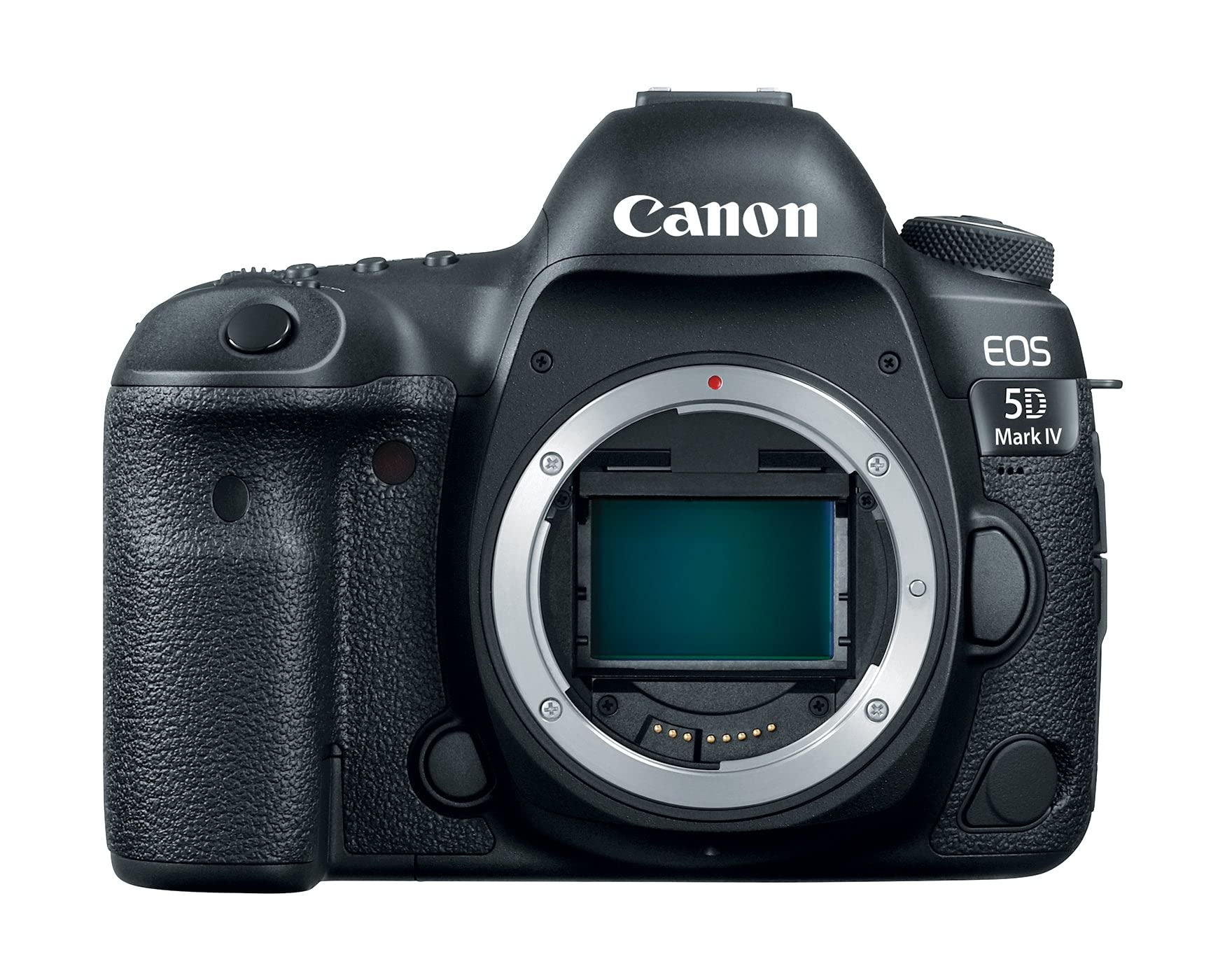
| Canon EOS 5D Mark IV★ Best Overall | Pro full-frame stills | 30.4 MP | 7.0 fps | 61 | Amazon |
| OM System E-M10 Mark IVBest Value | Compact beginner value | 20 MP | — | 121 | Amazon |
| Nikon D7500Action Pick | Action with kit lens | 20.9 MP | 8 fps | 51 | Amazon |
| Sony Alpha a7 III | Hybrid full-frame value | 24.2 MP | 10 fps | 693 | Amazon |
| Sony Alpha 7 IV | Advanced hybrid creator | 33 MP | — | 693 | Amazon |
| Nikon Z6 III | High-speed video and stills | 24.5 MP | 120 fps | 299 | Amazon |
| Canon EOS R5 | High-resolution all-rounder | 45 MP | 12 fps | 1053 | Amazon |
In-Depth Reviews
1. Canon EOS 5D Mark IV
Our pick — over 4.5★ from 850+ verified ratings; the strongest balance of quality and price.
The pro-grade workhorse that turns dim gyms into clean, sharp action stills.
If your priority is pure still-image quality under harsh arena lights, this is the body to beat. The 30.4 megapixel full-frame CMOS sensor delivers exceptional results in nearly any light, and the reported performance at high ISO is why owners still pick it over newer mirrorless options. It is a camera that owners describe as reliable for every shoot — a “workhorse” in the truest sense.
The autofocus is a big part of the basketball story. With 61 autofocus points and Canon’s Dual Pixel CMOS AF, the system is fast and sensitive, with buyers reporting flawless tracking of moving subjects in servo mode. You get 7.0 fps continuous shooting, which is plenty to sequence a drive to the hoop, and a DIGIC 6+ processor that keeps the buffer moving.
The honest trade-off is that this is a DSLR of a certain era. The fixed LCD screen is a common gripe — owners wish it flipped out for low-angle shots along the baseline — and it lacks the eye-tracking wizardry of the newest mirrorless bodies. But for a photographer who wants a tank that nails focus and color, the Mark IV’s reputation as a “rock solid” camera is well earned.
What owners love: The autofocus speed and accuracy, plus the improved dynamic range over earlier 5D models — buyers report it rivals even the best of its generation for low-light work.
The one caution: The fixed screen means you will be crouching or kneeling for baseline shots, not tilting the display up at you.
Reach for this if: You shoot professional or semi-pro games and want a legendary, durable full-frame body.
Look elsewhere if: You want a flip-out screen or the latest mirrorless eye-tracking autofocus — this is a classic, not a futuristic.
2. OM System Olympus E-M10 Mark IV
A tiny, beginner-friendly camera that hides serious stabilizer tech and 121 autofocus points.
This is the pick for someone new to interchangeable-lens cameras who wants something small enough to carry everywhere. Despite its compact size, it packs a 20 MP Live MOS sensor and — the standout feature — in-body 5-axis image stabilization that compensates for up to 4.5 shutter speed steps. That means you can shoot at slower shutter speeds without blur, a real help in a dim gym.
The autofocus system uses 121 contrast-detection points, which is an impressive number for the price class. Owners are genuinely amazed by what it can do, with beginners specifically praising its ease of use and the macro capabilities of the kit lens. The flip-down monitor and dedicated selfie mode are a fun bonus that you won’t find on the bigger pro bodies.
The catch here is the burst speed, which lags behind the DSLRs and mirrorless action cameras on this list. It is a fantastic all-rounder and a great first camera, but if your sole job is freezing fast-break layups, a faster-shooting body will serve you better. A few owners also hit the dreaded “stopped working” issue, so it is worth treating gently.
The consensus: The overall quality and image quality are what owners praise most, with over 60 buyers highlighting the build quality alone.
Notable flaw: The kit lens is sharp enough, but some owners find it inferior to the pricier OM SYSTEM 12-45mm PRO lens.
Best for: Beginners and hobbyists who want a pocketable camera with serious stabilization for mixed shooting.
Not ideal for: A dedicated basketball action shooter who needs high-speed burst — look to the faster Nikon or Canon options.
3. Nikon D7500
A fast, rugged DSLR that owners swear by for chasing fast-moving dogs — and players.
Forget the “dated” label some throw at it — this 2017 DSLR remains a serious action shooter. The 20.9MP sensor delivers class-leading image quality with an ISO range and processing equivalent to Nikon’s award-winning D500, which means clean, sharp, low-noise photos even when the gym lights are dim. Owners describe the photos as sharp and the viewfinder as excellent.
The heart of its sports cred is the 51-point autofocus system with 15 cross-type sensors and group-area AF, paired with up to 8 fps continuous shooting. That combination is precisely why owners mention it is “great for action shots like fast-moving dogs” — a perfect proxy for a driving point guard. The large 3.2-inch tilting touchscreen LCD helps you frame from odd angles.
The 18-140mm kit lens is a huge part of the value here, offering a flexible zoom range that covers everything from baseline to half-court. It is larger and heavier than mirrorless rivals, and the tech is genuinely older, but the battery life is superb and the autofocus is proven. For a mid-range price, this is a sturdy, dependable action machine.
Why owners pick it
- Fast, accurate 51-point autofocus with group-area AF for tracking players
- Class-leading image quality and low-noise photos even at high ISO
- Excellent battery life and a weather-resistant 18-140mm kit lens
Where it shows its age
- Bulky and heavy compared to modern mirrorless cameras
- Dated tech and button layout takes time to learn
Reach for this if: You want a proven, fast DSLR with a versatile kit lens and don’t mind the weight.
Think twice if: Ultimate portability and the latest mirrorless AF features matter more to you than raw value.
4. Canon EOS R10

A tiny full-frame body built for instant sharing, with sharp photos that punch above its size.
If you want to post highlights right after the final buzzer, the LUMIX S9 is a compact full-frame mirrorless camera built for speed. Its ultra-fast Wi-Fi connection and the LUMIX Lab app (a companion app that transfers photos directly to your phone) drop shots straight into your phone’s photo library. The small 18-40mm zoom lens is ideal for courtside seats or travel, so you can shoot and share without bulky gear.
The image quality genuinely impresses. Owners describe the photos as “nice and sharp” with solid dynamic range, and the 255 autofocus points help keep subjects in focus. One happy owner called it a “Point and Shoot Masterpiece” for anyone wanting that small-body feel. It also copies the same sensor as the larger S5II, so you are getting a lot of imaging power in a tiny package.
The catch is significant for basketball: this camera has no flash, and more importantly, no hotshoe to attach one — owners were baffled by this at the price. It also lacks a viewfinder, which can make tracking fast action in bright gyms tricky. It’s a superb travel and vlogging camera, but for serious sports tracking, you’ll want the grip and viewfinder of a dedicated action body.
What owners praise: The picture quality and overall build quality are the most-mentioned positives, with sharp results and a solid feel.
The deal-limiter: The lack of a flash and hotshoe means no external flash support at all, a real constraint in dark gyms.
Best for: Travel, vlogging, and casual courtside shooting where instant phone sharing is the priority.
Not for: Dedicated action photographers who need a viewfinder and flash options.
5. Sony Alpha a7 III

A legendary hybrid that owners call a standout, balancing 24.2MP quality with 693 focus points.
This is the camera that redefined what a “value” full-frame could be, and it still holds up beautifully for basketball. The advanced 24.2MP back-illuminated full-frame sensor delivers stunning photo quality, and owners upgrading from Canon DSLRs report it “surpasses” their old gear even with the kit lens. The 15-stop dynamic range and ISO range up to 204,800 make it a low-light monster in dim gyms.
For action, the specs are formidable. You get up to 10 fps shooting with either silent or mechanical shutter while maintaining autofocus and auto-exposure tracking. The autofocus system is vast — 693 phase-detection points and 425 contrast points covering 93% of the image — and buyers consistently praise its fast, accurate performance. It is a top-tier hybrid for both stills and 4K video.
The trade-offs are the notoriously complex menu system and a kit lens (28-70mm f/3.5-5.6) that is just okay. The battery, however, is a highlight — reviewers point out shooting roughly 710 photos per charge. It’s a superb all-rounder that handles action, portraits, and video with equal ease, making it the smart pick for the photographer who shoots everything.
The strengths that sell it
- 693-point autofocus with 93% frame coverage for reliable subject tracking
- Up to 10 fps silent shooting with AF/AE tracking for quiet gym work
- Excellent low-light performance and long battery life (~710 shots/charge)
The quirks to know
- The menu system is complex and takes time to learn
- Limited weather sealing compared to pro sports bodies
Reach for this if: You want one camera that nails basketball, portraits, and video without compromise.
Think twice if: You hate digging through menus — the learning curve is real, even if the results are worth it.
6. Sony Alpha 7 IV

The 33MP all-rounder with lightning-fast AF that owners call a 10/10 investment.
If the a7 III was the standout, the a7 IV is the refinement. The 33MP full-frame Exmor R back-illuminated CMOS sensor is a step up in resolution, giving you more cropping room to zoom into a player’s face from the baseline. The next-generation BIONZ XR processing engine is “8x more powerful,” handling high-speed capture and noise reduction with ease, and owners praise the remarkably accurate autofocus.
The autofocus system keeps the 693 points from its predecessor but improves the algorithm, with buyers reporting it is lightning-fast and reliable, occasionally missing only on user error. It records 4K video at up to 60p in 10-bit 4:2:2 with full pixel readout, making it a serious hybrid for capturing game highlights. The improved menu system is a welcome upgrade over the older a7 III.
It’s not without flaws. Owners note average battery life and some report overheating during extended video sessions. The dual card slots (CFexpress Type A and SD) are a pro touch, though CFexpress cards are pricey. For a photographer who wants the latest hybrid tech and can manage the learning curve, this is a top-tier choice that owners say is “well worth the money.”
The top compliment: The overall quality and image quality dominate the praise, with the autofocus and menu system also winning strong approval from owners.
The honest flaw: Performance gets mixed feedback — some units run like new, but overheating can occur during long 4K recording.
Best for: Advanced photographers who want a versatile, high-resolution hybrid for sports and video.
Not ideal if: You need marathon battery life or plan to record long 4K clips without breaks.
7. Nikon Z6 III

A hybrid powerhouse with a blinding 4000-nit viewfinder and 6K video that owners call the best under 2K.
This is the camera for the basketball videographer who also wants superb stills. The Nikon Z6 III records 6K/60p internal N-RAW video and oversampled 4K UHD, along with 4K/120p and Full HD/240p slow motion — everything you need for slick highlight reels of a crossover or a game-winning three. The stills side is anchored by a 24.5MP full-frame sensor that owners say takes “amazing photos.”
The viewfinder is a genuine standout. With a max brightness of 4000 nits (a measure of luminance, so it stays visible in bright arenas), a 5760k-dot resolution, and a 120 fps refresh rate, it gives you a clear, lifelike view even in harsh light—and critically, smooth motion when you pan to follow a fast break. The autofocus detects down to -10EV (extremely low light) with sophisticated multi-subject recognition, and it is about 20% faster than the Z6 II. Owners call it fast, reliable, and excellent in low light, and it survives downpours thanks to weather sealing.
The cons are real but manageable. The menus are complex, the auto mode is unreliable, and the battery lasts only about 2 hours of heavy use. It also ships without a charger, which is a frustrating omission. But for the hybrid shooter who wants top-tier video and fast action stills, owners consider it superior to even the Sony A7 IV.
What stands out: The overall quality and value for money are the top praised aspects, with the image quality and speed close behind.
The recurring gripe: The battery life is a noted negative — plan for multiple spares during a full game.
Reach for this if: You want class-leading video specs and a viewfinder that keeps up with fast action.
Look elsewhere if: You want a simple, out-of-the-box experience — this one demands menu-diving and extra batteries.
8. Canon EOS R5

A 45MP mirrorless masterpiece with eye-tracking AF that owners call the best camera they’ve ever owned.
For the photographer who wants ultimate detail, the R5 is the crown jewel. The stacked, back-side illuminated 45-megapixel full-frame CMOS sensor delivers phenomenal low-light performance and a level of detail that lets you crop deep into the action and still print large. Owners upgraded from the 5D IV describe it as “superior,” with a brighter screen and silent shutter that’s great for not disturbing players.
The autofocus is legendary. Dual Pixel CMOS AF with 1,053 AF points covers approximately 100% of the frame, with subject tracking for people, animals, and vehicles using deep-learning technology. It even features Eye Control AF, letting you select focus points simply by looking — a futuristic touch that owners rave about for sports and wildlife. The 12 fps mechanical and 20 fps electronic burst rates ensure you capture the action.
It also shoots 8K RAW and 4K up to 120fps internally, making it a stellar hybrid. The trade-offs are the price tag, the costly CFexpress cards, and a battery that drains faster than DSLR owners expect. Some owners also report reliability concerns, with a small number finding the camera becomes unusable after a short period. But for pros, the results are undeniable — owners call it “a true beast” and “the first camera that will pay for itself.”
Why it’s worth the premium
- 45MP sensor with phenomenal detail and low-light performance
- 1,053-point AF with Eye Control and 100% frame coverage
- 8K video and 4K/120fps internal recording for pro-level highlights
What holds it back
- High price and costly CFexpress memory cards
- Shorter battery life and occasional reliability reports
Reach for this if: You are a professional or serious enthusiast who wants top-tier resolution, AF, and video in one body.
Look elsewhere if: The cost of the body and high-speed cards is a stretch — the R6 Mark III offers similar AF for less.
Understanding the Specs
Autofocus Points
These are the spots on the image where the camera can lock focus. More points, and wider coverage across the frame, mean the camera can grab and hold a moving player even when they’re not in the center of the shot. For basketball, look for a high count combined with good subject-tracking technology, not just the raw number.
Burst Rate (fps)
This is how many photos the camera takes in one second. A rate of 7-8 fps will capture a sequence of a drive to the hoop. Rates of 15-40 fps (found on the Canon R10, R6 Mark III, and Nikon Z6 III) let you catch the exact millisecond the ball leaves a shooter’s hands. Faster burst rates fill memory cards quicker, so plan accordingly.
ISO Range & Sensor Size
ISO is the camera’s light sensitivity. A higher ISO lets you shoot in darker gyms, but can introduce noise (grain) in the image. Full-frame sensors, being larger, handle high ISO much better than the smaller APS-C sensors. A camera with a wide ISO range and a full-frame sensor is your best bet for dim, indoor courts.
Image Stabilization
This is a system that counteracts your hand shake to reduce blur. In-body stabilization (IBIS) is built into the camera body, working with any lens. It’s especially useful for shooting handheld from the stands with a telephoto lens. It helps keep the background and static elements sharp, though it does not freeze a moving player — that’s the job of your shutter speed.
FAQ
What is the most important spec for shooting basketball?
Is a full-frame sensor necessary for indoor basketball?
How many frames per second (fps) do I need to freeze a basketball play?
What lens is best for shooting basketball from the stands?
Is a DSLR or a mirrorless camera better for sports?
Will the Canon EOS RP keep up with fast-moving basketball players?
What is pre-capture or pre-burst shooting and why is it useful?
Will I need a high-capacity memory card for sports photography?
Final Thoughts: The Verdict
For most shooters, the camera for basketball games winner is the Canon EOS 5D Mark IV because it delivers a legendary combination of fast, accurate autofocus and exceptional low-light image quality in a durable pro body. If you want the best burst rate and modern tracking technologyat a lower price, grab the Canon EOS R10. And for the videographer who wants 6K slow motion plus stills, the Nikon Z6 III is the one to reach for.
How We Picked
We do not accept paid placement. Every pick is matched to a real buyer and a real use-case; we do not hands-on test units.
Sources & Methodology
Specifications: manufacturer listings and product documentation. Review insights: verified customer reviews, as of August 2026. Pricing: not shown on this page (it changes often); check the current price via the retailer link.
As an Amazon Associate, FitlyFast earns from qualifying purchases. This does not affect which products we feature.