
Our readers keep the lights on and the weekend projects moving. As an Amazon Associate, I earn from qualifying purchases.
Specs are compiled from manufacturer listings and verified buyer reviews and can change over time — please confirm the key details on the product page before buying.
Starting outdoor photography is notable, but the camera aisle is a maze of megapixels and lens jargon. You want a camera that keeps up with a sunrise hike or a city stroll without a steep learning curve. This guide matches you with a body suited to your shooting style, from rugged waterproof to full-frame pro.
I’m Rikta — the founder and writer behind FitlyFast. This guide is built by comparing the manufacturers’ published specifications and the patterns across verified customer reviews, so you get each pick’s real strengths and trade-offs instead of marketing spin.
Each pick balances image quality, ease of use, and durability to support your learning curve. Find the best camera for beginner outdoor photography that matches your style and budget.
Our Picks at a Glance


How To Choose The Best Camera For Beginner Outdoor Photography
Your first outdoor camera needs to be forgiving while you learn, light enough to carry on a trail, and capable enough to grow with you. The best starting point is a body with a kit lens that covers a versatile zoom range, letting you frame everything from a sweeping valley to a close-up wildflower without changing glass.
Match the Sensor to Your Ambitions
Full-frame sensors capture more light and detail, which is why they dominate at sunrise and in forests. Crop-sensor cameras and compact models are lighter and more affordable, making them perfect travel companions, though they may struggle more in dim light.
Quick Comparison
| Model | Best For | Sensor Resolution | Autofocus Points | Video | Amazon |
|---|---|---|---|---|---|
| Sony Alpha 7 IV★ Best Overall | All-round full-frame power | 33MP | 693 | 4K 60p | Amazon |
| OM System Tough TG-7Rugged Explorer | Waterproof adventures | 12MP | 9 | 4K | Amazon |
| OM System E-M10 Mark IVBeginner’s Mirrorless | Compact beginner mirrorless | 20MP | 121 | 4K | Amazon |
| Insta360 Luna Ultra | Vlogging & travel video | 8K | — | 8K30fps | Amazon |
| Nikon Z 30 | Vloggers & streamers | 20.9MP | 209 | 4K | Amazon |
| Nikon D5600 | Classic DSLR beginners | 24.2MP | 39 | 1080p 60fps | Amazon |
| Canon EOS RP | Affordable full-frame entry | 26.2MP | 4,779 | 4K UHD | Amazon |
| Nikon D7500 | Action & wildlife | 20.9MP | 51 | 4K UHD | Amazon |
| Canon EOS R8 | Lightweight full-frame hybrid | 24.2MP | 1,053 | 4K 60p | Amazon |
| Sony Alpha a7 III | Pro-level stills value | 24.2MP | 693 | 4K | Amazon |
| FUJIFILM X-E5 | Street & travel style | 40.2MP | 425 | — | Amazon |
In-Depth Reviews
1. Sony Alpha 7 IV Full-frame Mirrorless
Our pick — over 4.5★ from 750+ verified ratings; the strongest balance of quality and price.
The full-frame workhorse that grows with you from first hike to pro-level landscape.
Its 33MP full-frame sensor and 693 autofocus points make it a long-term investment for serious outdoor shooters. Its 33MP full-frame sensor captures stunning detail, while its 693 autofocus points track a moving subject across the frame with remarkable accuracy. Buyers consistently describe the image quality and color as “amazing,” making it a top-tier choice for capturing vibrant outdoor scenes.
The learning curve is real — the steepest of any pick here — but it’s a curve worth climbing. Buyers report that the many settings and customization options can feel overwhelming at first, yet the payoff is a versatile tool that handles everything from crisp RAW photos to high ISO low-light shots. It also shoots 4K 60p video, adding serious hybrid capability.
It’s not the lightest or cheapest option, and some owners mention wanting a spare battery for long shooting days. But for a beginner who is serious about outdoor photography as a lifelong hobby, the investment pays off in images you’ll want to print large.
Why It Wins
- 33MP full-frame sensor delivers pro-level image quality
- 693 autofocus points lock onto subjects fast and reliably
- 4K 60p video with full pixel readout for high-quality footage
- Improved menu system praised by upgraders
Consider This
- Steep learning curve due to extensive settings
- Battery life is adequate but a spare is wise for long shoots
- Some owners mention overheating during extended performance use
The verdict: Best for a beginner who wants a serious, long-term investment in photography and is willing to learn.
The trade-off: The complexity that makes it powerful can be intimidating for a first-time buyer.
2. OM System Tough TG-7
The go-anywhere camera that laughs at rain, drops, and the bottom of a river.
If your outdoor adventures involve water, mud, or clumsy moments, this is your match. It’s waterproof to 15 meters, shockproof from a 2.1-meter drop, and freezeproof down to -10°C, so it survives the conditions that would destroy other cameras. Buyers love it as a rugged everyday carry that’s more durable than a phone.
Its macro system is the standout feature, capturing details from as close as 1 centimeter to the lens — perfect for documenting tiny insects or intricate textures on the trail. While its 12MP sensor and 9 autofocus points are modest by full-frame standards, the camera is praised for delivering sharp, vibrant photos in bright outdoor light. This makes it ideal for capturing casual memories rather than professional portfolios.
The recurring downside, as customers note, is that the battery “dies without warning—carry spare.” Its low-light performance is also weak, so plan to shoot in daylight. It’s a specialized tool for a specific kind of outdoor fun, not a general-purpose camera.
Best for: Divers, kayakers, and families who need a low-maintenance camera for wet and rugged conditions—so you can shoot in rain, spray, or underwater without a housing.
The catch: The 12MP sensor limits cropping, and weak low-light performance means it’s not for evening shoots.
3. OM System E-M10 Mark IV
A tiny, forgiving mirrorless that delivers beautiful photos without weighing you down.
This camera is frequently described by buyers as “great for a beginner,” with its compact, lightweight body making it a joy to carry on long walks. Its 20MP sensor produces excellent image quality, and the in-body 5-axis image stabilization compensates for up to 4.5 shutter speed steps — meaning sharper handheld shots in the dappled light of a forest. The kit lens is sharp enough for casual use, while the camera’s 121 autofocus points keep up with most subjects.
One reviewer was particularly “amazed by the macro capabilities,” which are a pleasant bonus for nature close-ups. The flip-down monitor and dedicated selfie mode make it fun and easy to use, and its small size allows it to slip into a handbag or large pocket. Its 20MP sensor and 5-axis stabilization outclass a phone while staying pocket-friendly.
Some reviewers point out the camera is compact and comfortable even with large hands, but the tiny lens cap is easy to lose. While most feedback is positive, a minority have reported functionality issues, so it’s note the mixed reliability feedback from the broader owner community. It’s a fantastic value for a beginner seeking a lightweight, high-quality interchangeable-lens camera.
Ideal for: Hikers and travelers who want DSLR-level quality in a pocket-friendly body.
Think twice if: You’re a pixel-peeper needing the absolute highest resolution, as the 20MP crop sensor has limits.
4. Insta360 Luna Ultra
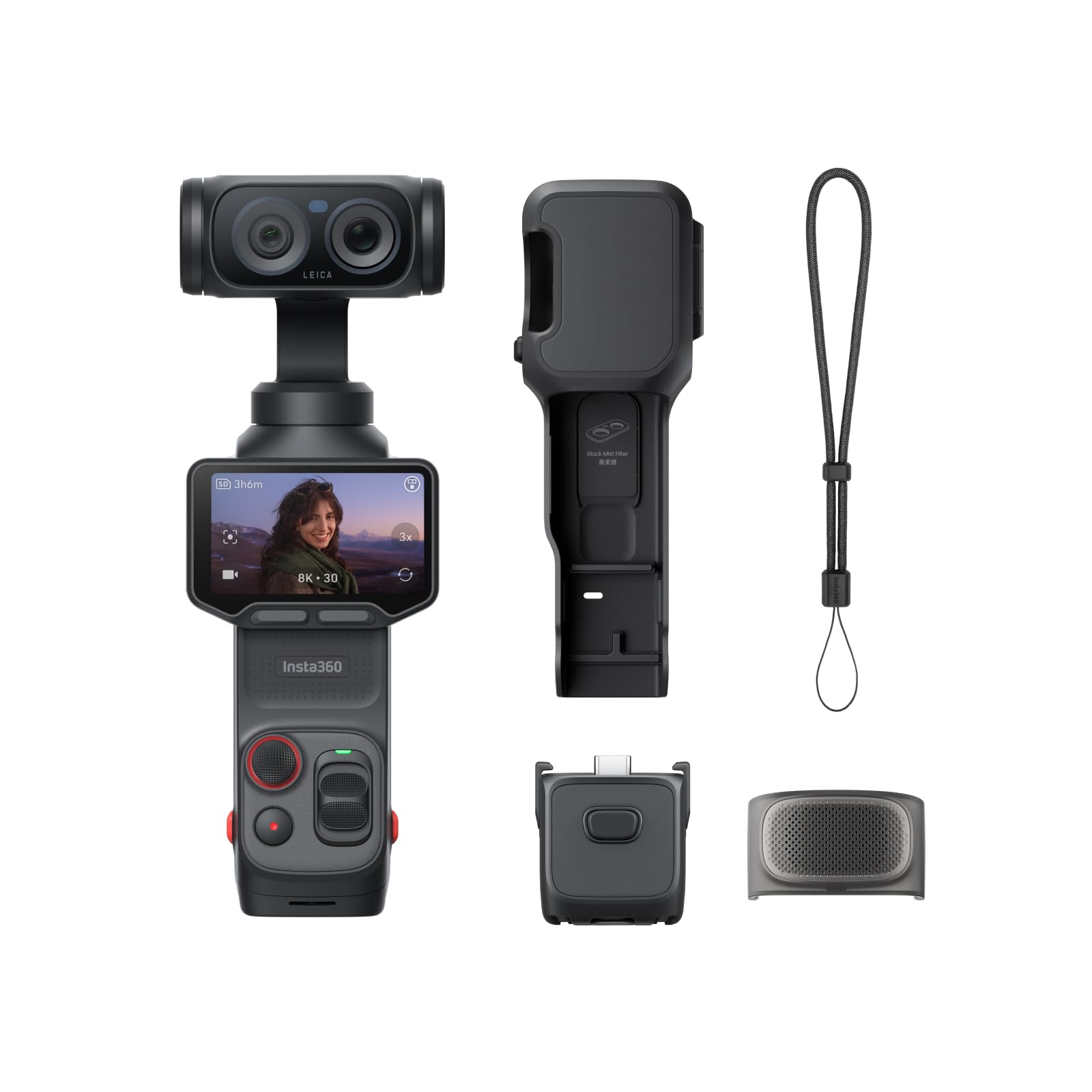
A pocket gimbal camera that turns your outdoor vlogs into cinematic 8K footage.
For beginners focused on video, the dual Leica lenses and 3-axis stabilization deliver smooth, cinematic 8K footage. The dual Leica lenses combine a 1″ main sensor with a telephoto lens, giving you a 12× zoom range with natural background blur for stunning subject separation. The 3-axis mechanical stabilization keeps footage smooth while you walk a trail, and AI tracking keeps subjects centered and in focus.
Travel and sports-parent buyers rave about the crisp video quality and the detachable 2″ OLED touchscreen, which lets you control the camera from up to 20 meters away — perfect for solo vlogging or group shots. The 4-hour battery life on a single charge is a major plus for a full day out, and fast charging brings it to 80% in just 23 minutes.
It’s important to note that while most owners are thrilled, a few have reported serious reliability glitches, including error messages and screen issues. The zoom functionality, praised by many, was also flagged as glitchy for some. For most, the build quality and top-tier video performance win out, but treat it as a capable tool rather than an indestructible one.
What Shines
- 8K30fps video with Dolby Vision for cinema-grade footage
- 12× zoom range for flexibility in framing
- Detachable touchscreen for remote control up to 20m away
- Up to 4 hours of battery on a single charge
What to Watch
- Reliability is a mixed bag, with some owners reporting glitches
- Learning curve for manual settings and modes
The call: Great for vloggers and sports parents who prioritize smooth, high-res video over still photography.
Look elsewhere if: You need a guaranteed rock-solid performer, as some units have shown reliability issues.
5. Nikon Z 30

Nikon’s most compact mirrorless, built for creators who want sharp stills and smooth vlogs in one.
The Z 30 is Nikon’s answer to the creator who wants to do a bit of everything outdoors. It delivers crisp 4K resolution with autofocus that offers eye tracking for people and pets, making it easy to keep a friend sharp in front of a scenic backdrop. The build quality is praised, with buyers noting its lightweight, intuitive controls and fast, reliable autofocus.
It comes with a versatile 16-50mm wide-angle zoom lens, covering everything from landscape vistas to group selfies. The flip-out touchscreen selfie monitor and built-in stereo microphone with adjustable sensitivity are tailor-made for vlogging on the move. It also works as a plug-and-play webcam over USB-C, adding home-streaming versatility.
The main omission is the lack of a viewfinder, which some buyers find takes adjustment. Battery life is a common complaint, with several owners reporting it won’t charge while plugged in. If you’re comfortable composing on a screen, this is a fantastic, lightweight gateway into the Nikon Z ecosystem.
Perfect for: Creators and vloggers who want a compact, high-quality camera for mixed photo and video work.
Compromise: No viewfinder, and battery life is a recurring frustration for some owners.
6. Nikon D5600

A classic DSLR that gives you a real viewfinder and legendary Nikon color science on a budget.
For beginners who want the traditional DSLR experience with a through-the-lens viewfinder, the D5600 is a superb starting point. Its 24.2MP sensor delivers photos that owners describe as “awesome,” and the 3.2-inch 1.037m-dot vari-angle touchscreen makes composing shots from high or low angles easy. The 18-55mm VR kit lens includes image stabilization (VR) to help reduce blur from shaky hands.
Buyers consistently recommend it as a great first camera, praising its lightweight design and ease of use. The Wi-Fi and SnapBridge connectivity is a favorite feature for remote shooting and quick transfers to a phone, although some find the app buggy and requiring occasional re-pairing. Full HD 1080p video at 60 fps is solid for capturing family moments.
It’s important to know this is a crop-sensor (DX) camera with 39 autofocus points — more than enough for most beginners but less advanced than modern mirrorless systems. However, the optical viewfinder offers a clear, lag-free view that many still prefer for outdoor photography.
The High Points
- 24.2MP sensor with excellent image quality for the price
- Vari-angle touchscreen for flexible composition
- Lightweight, easy-to-use design ideal for beginners
The Low Points
- SnapBridge app connectivity can be buggy
- 39-point autofocus system is dated compared to newer models
Bottom line: The best pick for a beginner who wants a classic DSLR feel with a bright optical viewfinder.
Keep in mind: Its autofocus and connectivity tech are a generation behind, which may matter if you shoot fast action.
7. Canon EOS RP + 24-105mm Lens

A compact full-frame gateway that delivers those dreamy, blurred-background portraits without the pro price.
This is the camera that reviewers call “a fantastic way to get into Full Frame while staying affordable.” It captures vibrant, detailed images with that signature full-frame depth of field that makes subjects pop from the background. The included 24-105mm lens is versatile for both sweeping landscapes and intimate portraits, and it features optical image stabilization for up to 5 stops of shake correction.
Owners love the face-detection autofocus for portraits and the superb low-light performance, which is a boon for golden-hour and twilight shoots. The camera body is light and well-built, making it comfortable for travel. An automatic mode that adjusts settings for the best picture quality is frequently highlighted as excellent for beginners.
The most common trade-offs are the 4K video limitations (crop, no autofocus, 30-minute limit) and soft edges on the kit lens at wider apertures. Battery life is also a noted weakness. For a beginner focused primarily on high-quality stills, this is a brilliant entry into the Canon RF system.
The niche: Perfect for beginners prioritizing stunning still photos and portrait bokeh over advanced video features.
The downside: 4K video is limited, and the kit lens sharpens up best when stopped down to f/8 or beyond.
8. Nikon D7500

A durable DSLR with pro-grade autofocus and burst speed to freeze fast-moving wildlife.
If your outdoor photography involves birds in flight or a dog sprinting across a field, the D7500 is a formidable choice. It boasts a class-leading image quality and ISO range, with processing equivalent to Nikon’s award-winning D500. Its 51-point autofocus system includes 15 cross-type sensors, and it can shoot continuously at up to 8 frames per second to capture the perfect moment.
The included 18-140mm lens is a brilliant all-in-one travel companion, praised by owners as “outstanding” and weather-resistant, covering a wide to telephoto range without needing to change lenses. The large 3.2-inch tilting touchscreen makes it easy to compose shots from tricky angles. Buyers are impressed with its sharp, low-noise photos and fast autofocus, even in challenging light.
Owners note it has a steep learning curve, making it less ideal for a total novice than some other picks on this list. It’s also larger and heavier than mirrorless alternatives. For a beginner willing to learn, the D7500 offers incredible value and performance that will last for years.
Best suited for: Beginners who want a durable, fast camera for action and wildlife and are ready to learn manual controls.
Not for: Those seeking a compact, lightweight travel camera, as its DSLR body is substantial.
9. Canon EOS R8

Canon’s lightest full-frame body packs flagship autofocus into a compact travel-friendly design.
You get pro-level image quality without the back strain: the EOS R8 is Canon’s lightest full-frame RF-mount camera (a full-frame sensor is the largest common sensor size, giving you better low-light shots and background blur). Its 24.2MP sensor (megapixels, or millions of pixels, determine print size and cropping room) delivers sharp, detailed photos. The real star is the Dual Pixel CMOS AF II autofocus system, which covers 100% of the frame with 1,053 AF zones and uses deep learning to track people, animals, and even vehicles—so a moving dog stays in focus while you shoot.
Video creators will love the uncropped 4K 60p recording, oversampled from 6K, for crisp, detailed footage. Owners describe the low-light performance as “magic,” with superb autofocus that locks on quickly and accurately. It’s a fantastic entry point for those wanting to step up to full-frame without the bulk of a traditional DSLR.
The compromises for this lightweight design are a single SD card slot, a smaller battery, and no in-body image stabilization. The most common owner complaint is battery life. Its learning curve is steep, and the small battery demands a spare for full-day shoots.
Standout Traits
- Lightest full-frame Canon RF camera for easy travel
- Excellent 4K 60p video and low-light performance
- Intuitive menus and customizable controls
Watch Out For
- Battery life is the biggest negative, requiring spares for long days
- No in-body image stabilization, so you rely on lens IS
The verdict: An excellent compact full-frame choice for a beginner who values both photo and video quality.
Remember: Pack extra batteries if you’re planning a full day of landscape shooting.
10. Sony Alpha a7 III

The legendary full-frame that set the standard for pro quality at an accessible price.
Its 24.2MP full-frame sensor and 693-point autofocus deliver pro-level stills at a value price. Owners praise its 15-stop dynamic range and sharp kit-lens output, calling it a “best purchase ever.” Its 24.2MP back-illuminated full-frame sensor offers a 15-stop dynamic range, meaning you can recover incredible detail from shadows and highlights in a high-contrast landscape. With 693 phase-detection autofocus points covering 93% of the image, it locks onto subjects with speed and accuracy that outperforms many DSLRs.
It shoots up to 10 frames per second with silent or mechanical shutter while tracking focus and exposure, making it surprisingly capable for action shots. Owners rave about its incredible battery life, which is a huge advantage on long outdoor excursions, and its compact, comfortable body. Low-light performance is described as excellent, keeping images clean and detailed as the sun goes down.
Its menus are famously complex, which can be daunting for a first-time mirrorless user. While a newer model exists, the a7 III remains a phenomenal value for the price, delivering pro-level results that will serve a beginner well for many years.
Why it’s a legend: You get a full-frame sensor (the largest common sensor size, ideal for low light and blurry backgrounds) at a price that undercuts most rivals, while still delivering professional-grade stills and 4K video (ultra-high-definition video, four times the pixels of 1080p).
The hurdle: A complex menu system and limited weather sealing are the main drawbacks for beginners.
11. FUJIFILM X-E5

A beautiful rangefinder-style camera with stunning film simulations for instant, share-ready colors.
If you love the look of a classic film camera but want digital convenience, the X-E5 is a joy. Its machined aluminum top-plate feels like a vintage rangefinder, and buyers describe the image quality as a “perfect high-quality carry-around device.” The 40.2-megapixel X-Trans 5 HR sensor (a sensor type that reduces moiré patterns without a blurring filter) is the highest resolution on this list—so you can crop deeply into distant wildlife shots or detailed landscapes and still print large.
The in-body image stabilization (IBIS) provides up to 7 stops of benefit, keeping your shots sharp even in low light without a tripod. The customizable Film Simulation dial is a unique feature, giving you instant access to Fujifilm’s famous color profiles so your outdoor shots look stunning straight out of the camera. One owner sums up the feeling perfectly: “If you can afford this camera, buy it immediately, without question.”
The trade-offs are its price and lack of weather sealing, which is a consideration for outdoor use. The electronic viewfinder is also noted as low-resolution but usable. It’s an investment in style and image quality, ideal for urban and street photography as well as travel.
The appeal: Best for those who want a beautiful, compact camera that produces gorgeous colors with minimal editing.
The caveat: It’s a premium investment that lacks weather sealing, so treat it gently in the elements.
Understanding the Specs
Sensor Resolution (MP)
This is the number of megapixels your camera’s sensor captures. More megapixels give you more room to crop an image and still retain detail — useful when you can’t get closer to a mountain peak or a distant bird. It’s not the only factor in image quality, but it’s a great gauge for how large you can print or how much you can zoom in post-processing.
Autofocus Points
These are the focus zones across the frame that the camera uses to lock onto a subject. More autofocus points generally mean better tracking of moving subjects across a wider area. This matters outdoors when photographing wildlife or a friend running down a trail, as the camera can keep them sharp even if they’re not centered in the frame.
FAQ
Is a full-frame camera worth it for a beginner?
Which is better for outdoor photography, a DSLR or a mirrorless camera?
Do I need a weather-sealed camera for outdoor use?
What is the best kit lens for a beginner outdoor photographer?
How important is image stabilization for outdoor shots?
What does “megapixel” mean for a beginner camera?
Will an entry-level camera be outdated in a few years?
Should I buy a camera with a built-in flash for outdoor photography?
Final Thoughts: The Verdict
For most people, the camera for beginner outdoor photography winner is the Sony Alpha 7 IV because it offers a perfect balance of high-resolution stills, reliable video, and a clear path for growth. If you want a lightweight and portable option for travel, grab the OM System E-M10 Mark IV. And for those who need a durable camera for wet adventures, the OM System Tough TG-7 is the one to reach for.
How We Picked
We do not accept paid placement. Every pick is matched to a real buyer and a real use-case; we do not hands-on test units.
Sources & Methodology
Specifications: manufacturer listings and product documentation. Review insights: verified customer reviews, as of August 2026. Pricing: not shown on this page (it changes often); check the current price via the retailer link.
As an Amazon Associate, FitlyFast earns from qualifying purchases. This does not affect which products we feature.