
Our readers keep the lights on and the weekend projects moving. As an Amazon Associate, I earn from qualifying purchases.
Specs are compiled from manufacturer listings and verified buyer reviews and can change over time — please confirm the key details on the product page before buying.
Rigging a mirrorless camera on a gimbal is the fastest way to make your video look professionally shot, but the wrong body will leave you fighting the motor all day. This guide cuts through the spec sheets to find the cameras that actually balance, track, and record beautifully when mounted, so you get buttery footage without the frustration.
I’m Rikta — the founder and writer behind FitlyFast. This guide is built by comparing the manufacturers’ published specifications and the patterns across verified customer reviews, so you get each pick’s real strengths and trade-offs instead of marketing spin.
Whether you’re a content creator, filmmaker, or enthusiast, the right camera for gimbal makes stabilized footage easy and reliable, from fast-action sports to cinematic travel shots.
Our Picks at a Glance


How To Choose The Best Camera For Gimbal
Choosing a gimbal camera means balancing weight against your stabilizer’s payload limit, pairing IBIS with the gimbal’s motors, and prioritizing 4K/60fps or higher for smooth footage.
Weight and Payload Limits
Every gimbal has a maximum payload it can hold before the motors struggle. Heavier rigs cause jittery footage and battery drain. Check your gimbal’s limit and make sure your camera and lens combination sits under that number with a little margin to spare.
Stabilization and Autofocus
Cameras with built-in stabilization (IBIS) work with the gimbal to reduce micro-shake, especially at the end of a pan. Fast, reliable autofocus with subject tracking keeps you centered in the frame, which is why features like face or animal detection are non-negotiable for solo filming.
Video Quality and Frame Rates
For truly smooth gimbal footage, look for 4K resolution and a high frame rate like 60fps or 120fps. The higher frame rate allows you to slow the footage down in editing without losing that fluid, cinematic look that gimbals are known for.
Quick Comparison
| Model | Best For | Video Resolution | Stabilization | Autofocus Points | Amazon |
|---|---|---|---|---|---|
| Sony FX30 (Best Overall)★ Best Overall | Cinematic 4K creation | 6K oversampled 4K | In-Body (IBIS) | 495 | Amazon |
| Xtra MuseBest Value | Budget gimbal camera entry point | 4K/120fps | 3-Axis Built-in | — | Amazon |
| DJI Osmo Pocket 3Top Performer | Compact travel vlogging | 4K/120fps | 3-Axis Built-in | — | Amazon |
| Insta360 Luna Ultra | 8K hybrid shooting | 8K30fps | 3-Axis Built-in | — | Amazon |
| Sony a6700 | Travel photo & video hybrid | 4K/60p | In-Body (IBIS) | 759 | Amazon |
| Sony a7 IV Bundle | Full-frame gimbal filmmaking | 4K/60p | 5-Axis In-Body | 759 | Amazon |
| Nikon Z6III Bundle | High-speed action & wildlife | 6K/60p | 5-Axis In-Body | 299 | Amazon |
| Canon EOS R5 | Professional 8K hybrid work | 8K RAW | In-Body (IBIS) | 1,053 | Amazon |
| Canon EOS R6 Mark III | Stills & video with deep buffer | 4K | 8.5-stop In-Body | 393 | Amazon |
| Nikon Z 7II Bundle | Landscape & portrait resolution | 4K FX | None Specified | — | Amazon |
| Panasonic LUMIX S1RII | Feature-rich 8K hybrid | 8K Video | In-Body (IBIS) | 399 | Amazon |
In‑Depth Reviews
1. Sony Cinema Line FX30 Super 35 Camera, Gray
Our pick — over 4.5★ from 500+ verified ratings; the strongest balance of quality and price.
The cinema-body that delivers 90% of the FX3’s power for a fraction of the price.
The FX30 is the pick that gimbal shooters graduate to when a phone camera stops feeling like enough. It is the crowd favorite here — a 4.8-star body with 500+ owners behind it — and the reason is simple: it brings true cinema features into a compact package that balances beautifully on a stabilizer.
You get a 20.1MP Exmor R APS-C (Super 35mm format) image sensor, and the images hold up against far pricier rigs. The S-Cinetone color profile gives you that cinematic look straight out of the camera without any grading, so your gimbal work looks finished the moment you stop recording. It shoots 6K oversampled 4K, meaning the 4K you get is packed with extra detail, and the dual native ISO keeps noise low when you’re shooting dusk city walks on a gimbal.
The flip side is battery life; buyers report the included pack lasts about 1-2 hours of shooting, so a spare battery is almost mandatory for a full day out. The 495 autofocus points and Dual Base ISO are what win people over, and unlike some mirrorless bodies, the built-in fan means no overheating during long gimbal takes. At 14+ stops of dynamic range, it handles harsh daylight and shadowed alleyways with equal grace.
Why it leads the list
- S-Cinetone color profile for cinematic looks without grading
- 6K oversampled 4K delivers exceptional sharpness
- Built-in fan prevents overheating on long shoots
The trade-off
- Battery life is weak at 1-2 hours, so carry spares
- Interchangeable lens system means buying glass separately
Reach for this if: you’re a content creator who wants cinema-grade footage without cinema-grade cost.
Look elsewhere if: you need all-day battery life straight from the start.
2. Xtra Muse Vlogging Camera with 1” CMOS & 4K/120fps
A budget-friendly gimbal camera that fits in a purse and shoots like a pro.
The Xtra Muse proves you don’t need to empty your wallet for smooth, stabilized footage. Like the Osmo Pocket 3 above, it packs a 1-inch CMOS sensor and records 4K resolution at 120fps, but it comes at an entry-level price that makes it the smart starting point for first-time vloggers.
Its defining feature is the built-in 3-axis gimbal stabilizer, which owners say makes videos look noticeably more professional. The 2-inch touch screen rotates for horizontal and vertical shooting, and the face/object tracking keeps you center-frame whether you’re dancing, running, or hiking. Owners describe the image quality as rivaling the DJI Osmo, with some even preferring its color output.
Real-world testing reveals a critical catch: while the stabilization is praised, reliability has been the sticking point. Owners mention repeated SD card format errors and overheating during video recording, even with high-end SanDisk Extreme PRO cards, particularly at 4K60. If you’re capturing irreplaceable moments, the unit’s compact size and 161-minute battery are pluses, but some have found it unreliable when it matters most.
What wins people over: the gimbal stabilization is the most-praised feature, with owners noting footage looks professional straight out of the camera.
The honest catch: reliability is a mixed bag, so this is best for casual shooting where a card error isn’t a disaster.
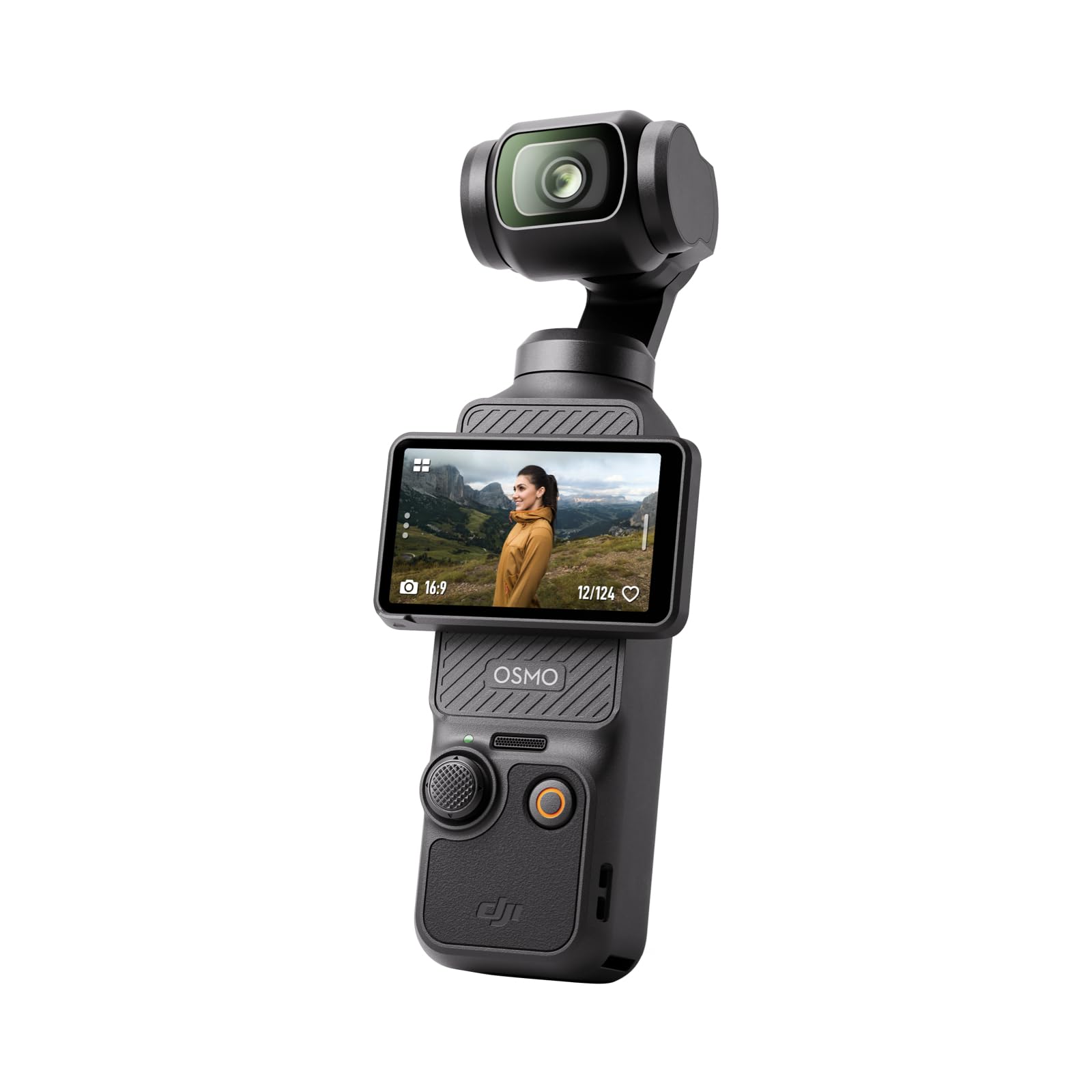
3. DJI Osmo Pocket 3 Vlogging Camera
The pocket-sized gimbal that slips into any bag and delivers stunningly crisp 4K.
The DJI Osmo Pocket 3 is the benchmark for portable gimbal cameras. It’s the one owners consistently describe as slipping into a pocket or small bag, making it the go-to for travel, family gatherings, and action-packed scenes. Its 1-inch CMOS sensor records 4K at an impressive 120fps, so you can capture slow-motion details with enhanced clarity.
The 3-axis mechanical stabilization is the star here, delivering fluid, buttery footage even while dancing, chasing pets, or hiking. ActiveTrack 6.0 keeps you easily centered in the frame, and the 2-inch touchscreen rotates for both horizontal and vertical shooting. For audio, it connects directly to two DJI Mic 2/Mic Mini transmitters for high-quality sound without extra gear.
On battery, the Osmo Pocket 3 outlasts the Xtra Muse — 166 minutes versus 161 — a small but meaningful edge for long days out. The recurring complaint isn’t about the footage but the setup: you must register the camera via the DJI Mimo app before the fifth use, or it becomes bricked. Some Android users also report the app fails GDPR standards and won’t install on certain phones, so check compatibility first.
What everyone raves about
- 3-axis mechanical stabilization for buttery-smooth footage
- Compact size that slips into a pocket or small bag
- DJI OsmoAudio connects to Mic 2 transmitters
Setup friction
- Must be activated via the DJI Mimo app or it bricks
- App has GDPR compatibility issues on some Android phones
4. Insta360 Luna Ultra 8K Vlogging Camera
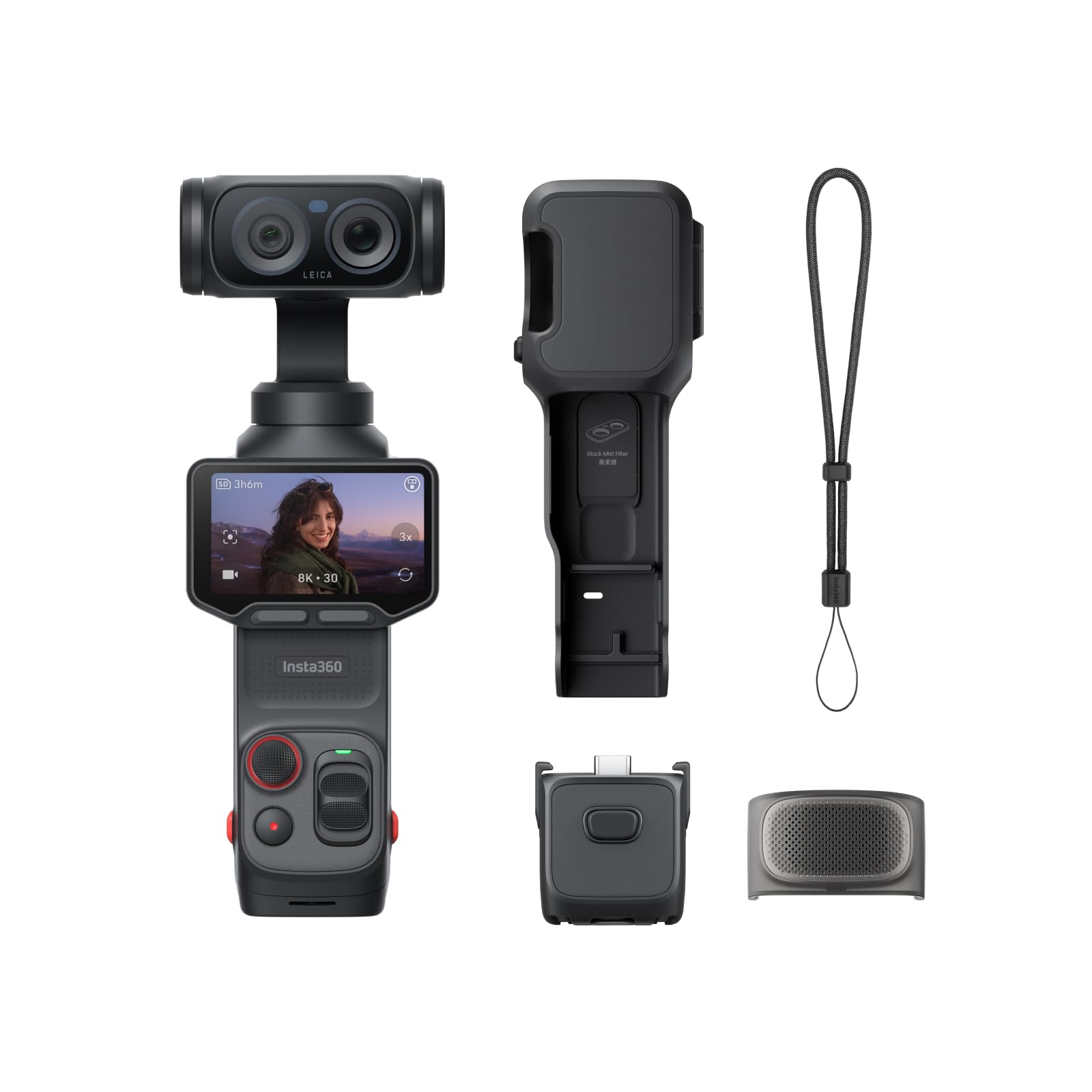
A dual-lens 8K gimbal camera with a detachable screen that follows you anywhere.
Its dual Leica lenses combine a 1-inch main sensor with a pro-grade telephoto lens, giving you up to 6x lossless zoom and a 12x total zoom range with real optical background blur. It’s the pick for travel creators who frame crowded night markets or distant wildlife without changing lenses.
It shoots cinematic 8K30fps with Dolby Vision, and captures up to 14 stops of dynamic range for vivid color. The 4K60fps PureVideo mode handles dark gyms and nighttime scenes with advanced AI noise reduction. The detachable 2-inch OLED touchscreen is the standout feature, working as a remote control up to 20 meters away for solo shooting and group shots.
The battery lasts up to 4 hours on a single charge, and fast charging to 80% takes just 23 minutes. Owners praise the build quality, calling it the key selling point, and one parent noted the zoom is perfect for recording volleyball from the stands in 4K60fps. The trade-off is that it’s a premium product with a learning curve for manual settings, and there have been a few reports of screen blackouts and glitches, so it’s not for someone who wants zero tinkering.
Standout feature: the detachable OLED touchscreen works as a remote up to 20m away, ideal for solo creators.
Who should think twice: if you want a simple point-and-shoot, the manual learning curve and occasional glitches may frustrate you.
5. Sony Alpha a6700 Mirrorless Camera with 18-135mm Lens

A compact APS-C powerhouse with sticky autofocus and a versatile kit lens.
The Sony a6700 is the hybrid shooter’s dream: a compact body with pro-level autofocus and 4K video that mounts easily on a gimbal. It packs a 26.0MP APS-C Exmor R back-illuminated CMOS sensor and records 4K/60p oversampled from 6K, plus high-frame-rate 4K 120p for silky slow motion. The dedicated AI Processor powers Real-time Recognition for tracking people, pets, and cars.
You get a complete photo-and-video setup straight from the start, so you can shoot both without buying extra gear. The 759 autofocus points track eyes and faces, and customers note the AF is “fast and sticky” in real use. The included 18-135mm F3.5-5.6 zoom lens handles everything from close-ups to distant subjects, so you won’t need another lens for most shoots.
There are real caveats for gimbal use. Reviewers point out it overheats after about 40 minutes of continuous 4K 60fps, which is a hard limit for long takes. It also comes with no battery charger or USB cable in the box — a surprising omission that owners flag. For travel and all-day shooting it’s strongly recommended, but if video is your primary focus, the FX30 is the better tool.
What makes it great
- 759-point autofocus with eye and face detection
- 4K/120p for smooth slow-motion gimbal shots
- Lightweight and portable for all-day carry
Know before you buy
- Overheats after ~40 min at 4K 60fps
- Ships without a battery charger or USB cable
6. Sony a7 IV Filmmaker’s Bundle with DJI RS 3 Mini Gimbal
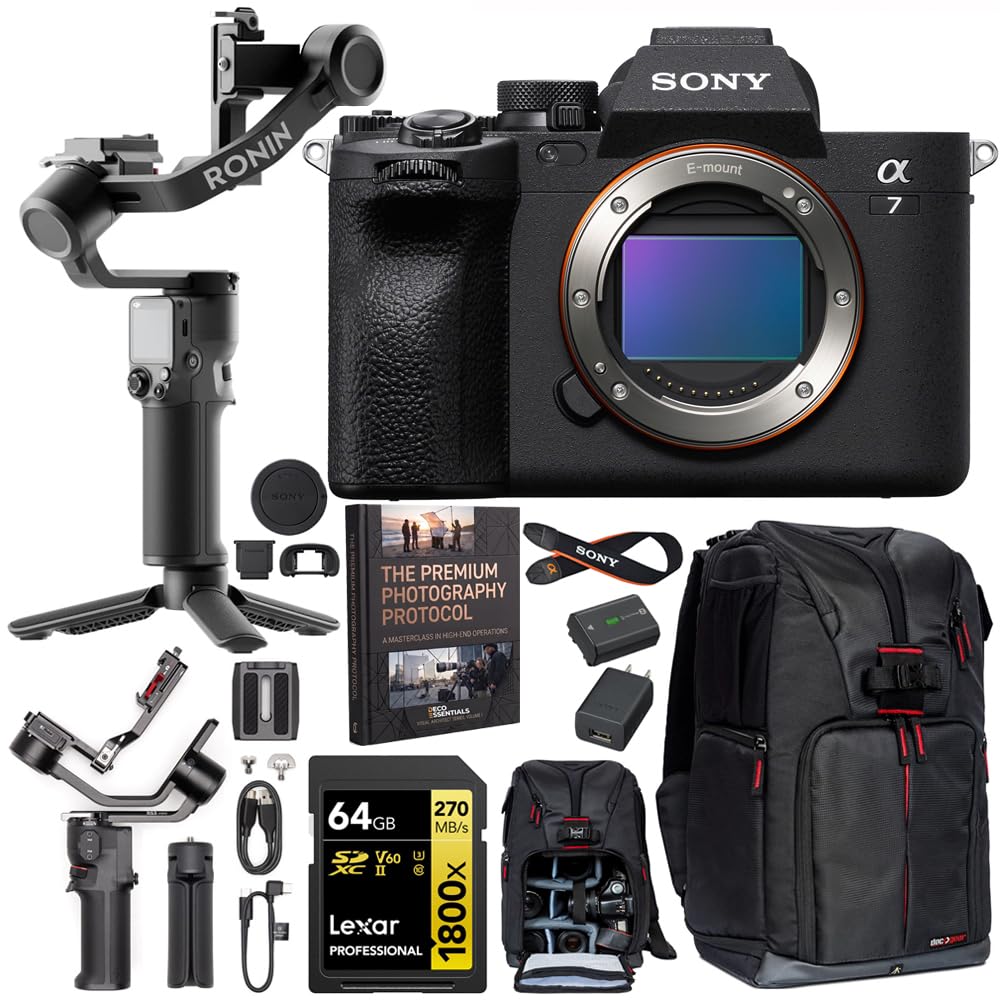
A full-frame cinematic workhorse bundled with the exact gimbal it belongs on.
This bundle gives you the full-frame camera that gimbal filmmakers build entire kits around, so you can start shooting stabilized, cinematic footage on day one. The Sony a7 IV pairs its 33MP full-frame Exmor R sensor with a DJI RS 3 Mini gimbal stabilizer, a Deco Gear backpack, and a 64GB UHS-II memory card — everything you need without extra purchases.
The camera itself is a legend: 4K 60p 10-bit 4:2:2 with full pixel readout, 5-axis in-body stabilization, and 15+ stops of dynamic range. The RS 3 Mini handles camera and lens combos up to 4.4 lbs, making it the perfect match for the a7 IV with a compact prime. Owners call the image quality sharp with excellent clarity and dynamic range.
This is a “Filmmaker’s Bundle,” so the value lies in the completeness. However, there’s a caveat: some units in this bundle have shipped damaged or incomplete, with one buyer receiving a box with a single lens and no camera. It’s a logistics risk — the quality is excellent when it arrives correctly, but inspect your package immediately upon delivery.
Why it earns its spot: the included DJI RS 3 Mini is matched to the a7 IV’s weight, giving you a balanced, ready-to-shoot gimbal rig.
Who should be cautious: if you’re wary of bundle shipping issues, this requires a careful unboxing and immediate verification.
7. Nikon Z6III Filmmaker’s Bundle with DJI RS 4 Gimbal
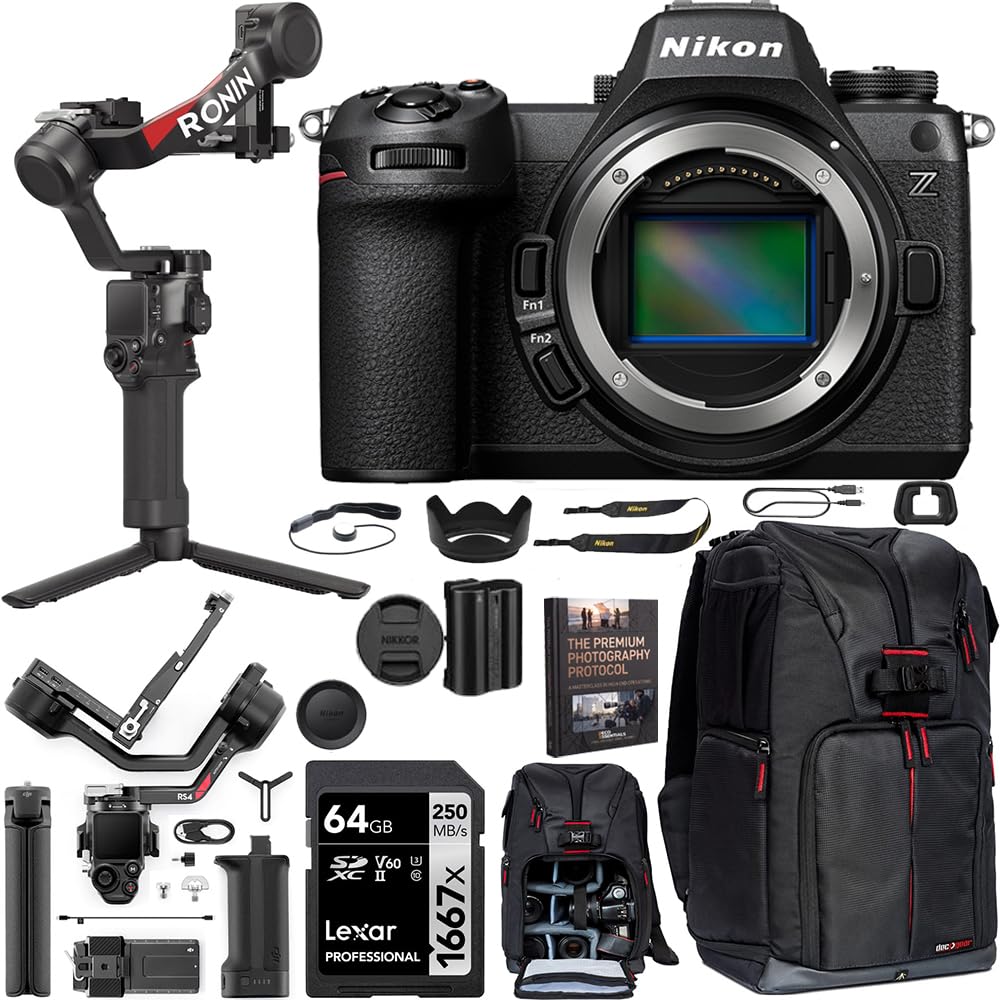
The world’s first partially-stacked full-frame sensor, built for split-second action.
The Nikon Z6III is a technological marvel for gimbal shooters who chase fast action. Its 24.5MP partially-stacked FX sensor and EXPEED 7 engine open up blackout-free bursts up to 120 fps, 20 fps RAW, and ISO 64,000 clarity. This camera is built for wildlife, sports, and low-light storytelling where every millisecond counts.
You can record 6K/60p N-RAW internally, or switch to full-frame 4K/60p oversampled from 6K, or capture 4K/120p slow motion — all in-camera in 10-bit H.265, so your footage stays detailed and color-rich. The 299-zone 3D subject-detection autofocus covers 90% of the frame, locking onto eyes, animals, birds, and vehicles even in dim light down to -10 EV. The 5.76M-dot 120Hz EVF keeps your framing clear in any lighting condition.
This bundle includes the DJI RS 4 gimbal, a massive upgrade that supports enhanced vertical shooting. The catch is that the RS 4 handles lighter payloads, so this is fine for the Z6III with a compact prime but will strain with a heavy telephoto. Owners praise the camera quality but the kit’s extra accessories (like the battery) have drawn mixed feedback, so treat the camera as the star and verify the bundled accessories carefully.
What makes it unique
- 120 fps blackout-free burst for action shots
- 6K/60p N-RAW internal recording
- 299-zone 3D subject-detection AF down to -10 EV
Kit considerations
- Bundled accessories like the battery have mixed feedback
- RS 4 gimbal struggles with heavy telephoto lenses
8. Canon EOS R5 Mirrorless Camera (Body Only)

A 45-megapixel full-frame legend that shoots 8K and tracks eyes by looking at them.
The Canon EOS R5 is the camera that set the bar for hybrid mirrorless performance, and it remains a top choice for professional gimbal rigs. It features a stacked, back-illuminated 45-megapixel full-frame CMOS sensor with an ISO range of 100-51200, expandable to 102400. This is the camera for pros who need extreme resolution and cinematic 8K video in one body.
The video capabilities are staggering: 8K RAW, 4K up to 120fps internal recording in all formats, and Dual Pixel CMOS AF with 1,053 AF points covering approximately 100% of the frame. The Eye Control AF lets you select focus points simply by looking at them — a feature that’s as futuristic as it sounds. Owners call the 4K HQ mode (downsampled from 8K) cinematic and crisp.
For gimbal work, the in-body stabilization is rock-steady, and the 12 fps mechanical (20 fps electronic) shutter handles fast action. But there’s a usability note: shoppers say the camera can become unusable in a small number of cases after less than 7 weeks, a reliability question that’s been overblown but exists. The body is also expensive to feed — CFexpress cards cost a premium — and the battery life is a consideration for long shoots.
The defining spec: Eye Control AF lets you shift focus points with just your gaze, a game-changing feature for solo gimbal operators.
Weigh this: if you don’t need 8K or 45MP, the R6 Mark III below offers similar autofocus at a friendlier price.
9. Canon EOS R6 Mark III Body, Full-Frame Mirrorless Camera
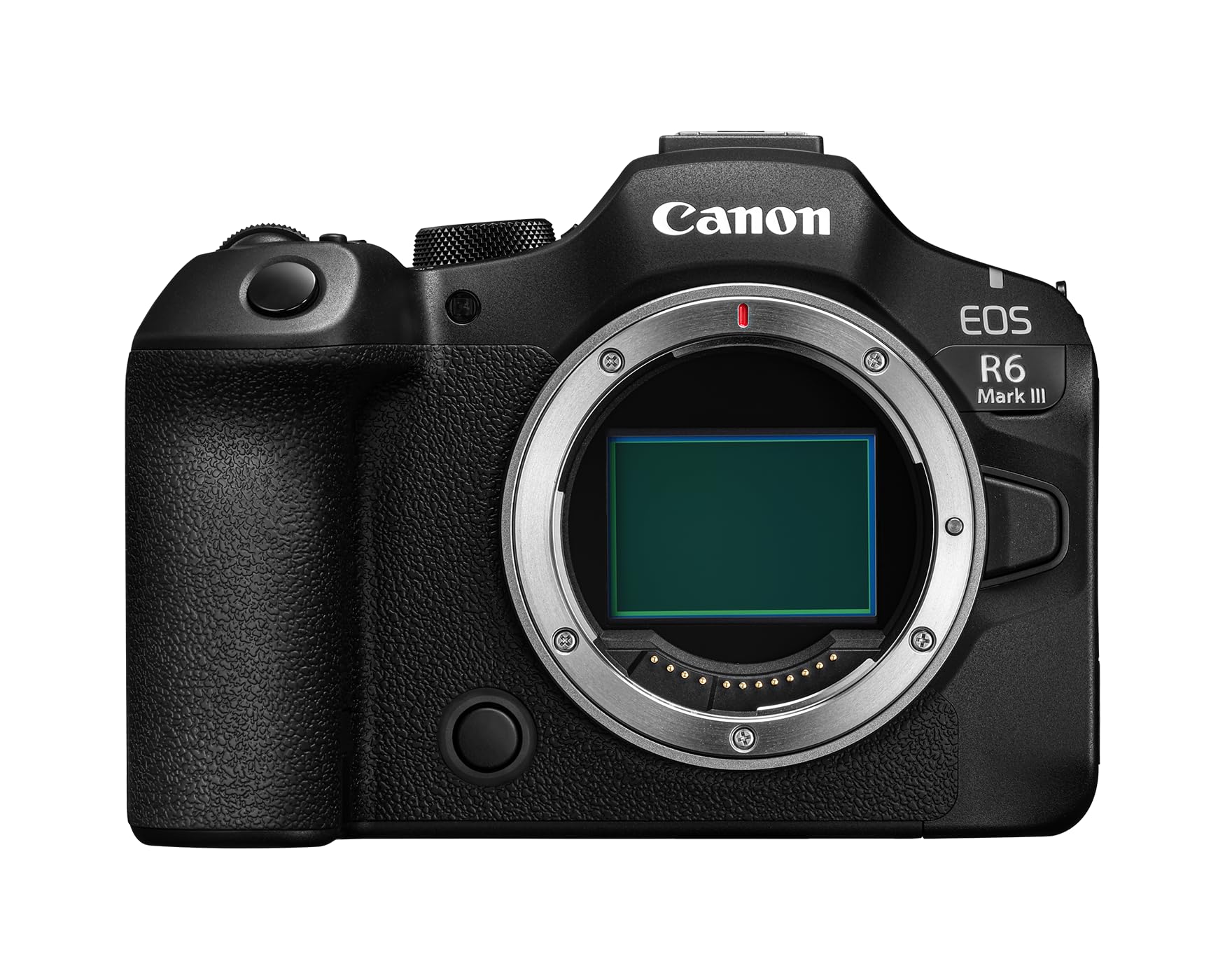
The enthusiast’s full-frame that punches above its weight with 8.5-stop IBIS.
The Canon EOS R6 Mark III is the full-frame camera for shooters who want pro-level results without the pro-level price tag. It packs a 32.5MP full-frame CMOS sensor with the DIGIC X image processor, and its 8.5-stop (center) in-body image stabilization is the best in its class. On a gimbal, that IBIS works with the stabilizer to eliminate even the tiniest micro-shake.
The wow factor is the speed: up to 40 fps with 20 frames of pre-continuous shooting, so you never miss the peak moment, whether it’s a flying bird or a breaking wave. The Dual Pixel CMOS AF II detects people, animals, and vehicles, with Register People Priority to keep your subject locked. Owners who switched from other brands say it “feels like legacy gear” in the best way — precise, responsive, and a joy to shoot.
For gimbal shooters, the 393 autofocus points and subject tracking that “locks on and stays locked” make this an easy camera to operate one-handed while the gimbal does the work. It has dual card slots — one CFexpress Type B and one UHS II SD — for flexible storage. The only real trade-off is that it’s newer to the market, so some users note a learning curve if you’re coming from an older system.
Why it stands out
- 8.5-stop IBIS for ultra-steady gimbal footage
- 40 fps burst with 20 frames of pre-capture
- Reliable subject tracking that locks on and stays locked
The honest note
- Newer model means some learning curve
- CFexpress Type B cards add to the overall cost
10. Nikon Z 7II Full Frame Mirrorless Camera 4K FX Bundle
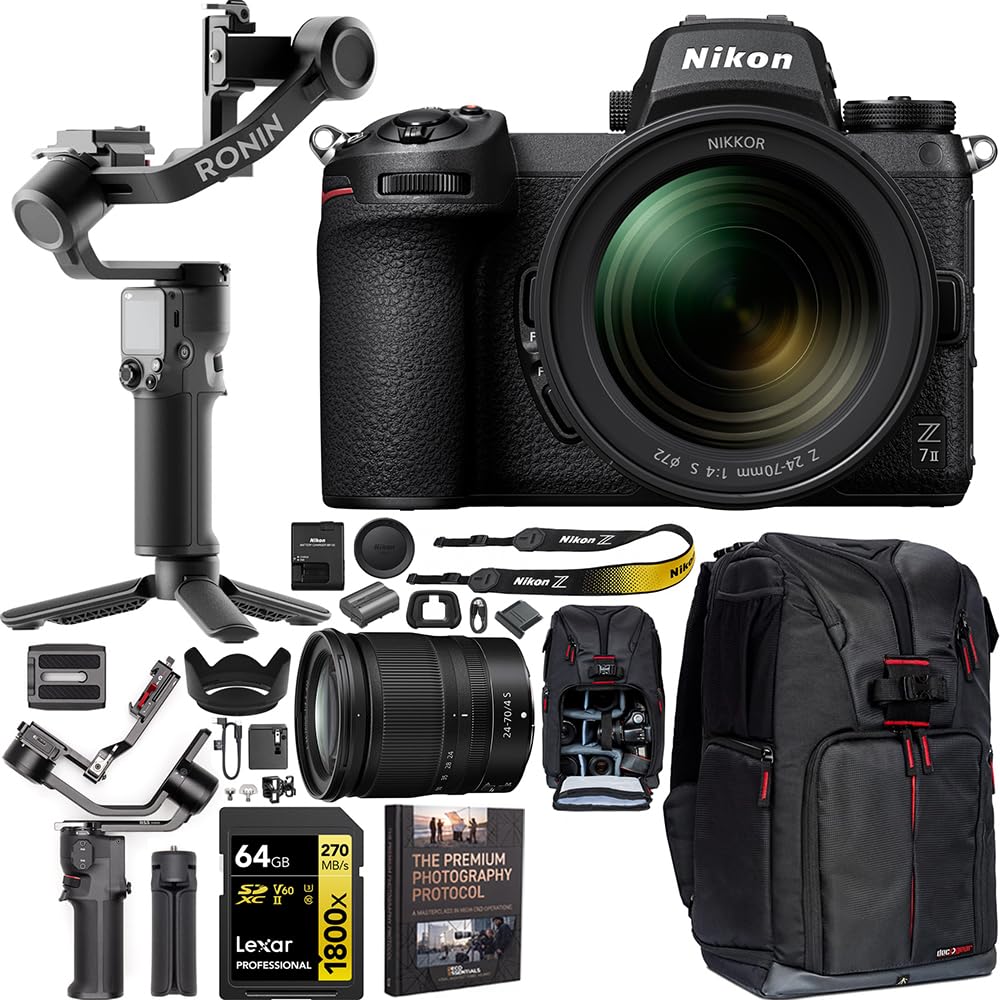
A high-resolution 45.7MP full-frame body bundled with the lens and gimbal you need.
The Nikon Z 7II is the resolution king for gimbal shooters who also demand stills quality. It delivers exceptional 4K FX video recording with dual processors for enhanced speed, and it bundles with the NIKKOR Z 24-70mm f/4 S lens and the DJI RS 3 Mini gimbal stabilizer. This is a complete kit for landscape, portraits, and dynamic video content.
The 24-70mm f/4 S lens covers wide-angle to portrait focal lengths with a consistent f/4 aperture throughout, making it versatile for diverse shooting scenarios. The DJI RS 3 Mini enables smooth, professional-grade camera movements and eliminates unwanted shake during handheld filming, with fluid motion tracking for filmmakers and content creators. The comprehensive kit even includes a Deco Gear backpack and a 64GB memory card.
Owners are uniformly satisfied, describing it as a “very nice package and very good camera” that comes with all the bundle attachments as expected. The main caveat is the learning curve — full-frame mirrorless systems take time to master, and there’s a slight delay between shots. For an intermediate photographer with room to grow, owners say it’s a camera with “lots of options but not too far over my head.”
The standout spec: the bundled 24-70mm f/4 S lens is sharp across the zoom range, covering most shooting scenarios from the start.
Keep in mind: this is a bigger, heavier kit than the compact options, so balancing it on the RS 3 Mini requires care.
11. Panasonic LUMIX S1RII Full Frame Mirrorless Camera

LUMIX’s first-ever 8K camera with a 44.3MP sensor and evolved Phase Hybrid AF.
The Panasonic LUMIX S1RII is a feature-rich hybrid that pushes the boundaries of what a gimbal camera can do. It’s LUMIX’s first-ever 8K video camera, featuring a 44.3MP full-frame sensor with unique color science and a lifelike feel. For hybrid shooters who want 8K flexibility and high-resolution stills in one body, this is a compelling option.
The evolved Phase Hybrid AF uses advanced AI to boost human recognition and keeps focus locked even when multiple people intersect — perfect for dynamic gimbal shots at events or in crowds. The AFC 40 burst shooting maintains speed and resolution for sports and wildlife. It supports wide dynamic range log recording and cinematic slow-motion, with 32-bit float audio available via a microphone adapter.
Buyers report that after the v1.3 firmware update, there are no overheating issues, AF is faster, and a new MP4 lite codec was added. One owner who bought it for a professional photographer son noted the AF is “much better” than previous LUMIX models. There have been a few isolated reports of overheating on early units and a sensor dust-seal issue, but the consensus is that this is a high-quality hybrid with super-fast autofocus.
The breakthrough
- LUMIX’s first 8K video camera
- Advanced AI boosts human recognition in crowds
- 32-bit float audio capability for pro sound
Fair warnings
- Early units had overheating, fixed by v1.3 firmware
- Isolated reports of sensor dust-seal issues
Understanding the Specs
Stabilization Systems
A built-in 3-axis mechanical stabilizer is the core of any gimbal camera. A built-in 3-axis mechanical stabilizer physically moves the sensor to counter your hand shake, which is why it’s described as “buttery smooth” footage.
In-body image stabilization (IBIS) does the same job but works with the gimbal’s motors.
The gimbal handles large pans and tilts, while IBIS cancels out the micro-jitters that cause shaky, amateur-looking footage.
Autofocus Points
Autofocus points are the invisible sensors on the image sensor that lock onto your subject. More autofocus points let the camera lock onto and track a moving subject across the frame with greater precision.
This matters on a gimbal because both you and your subject are in motion, so the AF must keep up with dual movement.
Face and eye detection keeps you or your subject sharp even during backward walks or spins.
FAQ
Will a heavy full-frame camera like the Sony a7 IV balance on a DJI RS 3 Mini?
What is ActiveTrack and how does it help me film myself?
Is a 4K/120fps camera necessary for smooth gimbal footage?
Why does the DJI Osmo Pocket 3 need to be registered before the fifth use?
Which is better for a gimbal: a dedicated pocket gimbal camera or a mirrorless body on a separate gimbal?
What is S-Cinetone and why do gimbal shooters like it?
How long does the battery last on the DJI Osmo Pocket 3 on a full day of shooting?
Can I use the DJI Osmo Pocket 3 with external microphones?
Why does the Insta360 Luna Ultra have a detachable touchscreen?
What is 6K oversampled 4K on the Sony FX30?
Final Thoughts: The Verdict
If you want one dependable pick, the camera for gimbal winner is the Sony FX30 because it delivers cinema-grade color and 6K oversampled 4K in a compact body that balances perfectly on any stabilizer. If you want the ultimate in portability without sacrificing stabilization, grab the DJI Osmo Pocket 3. And for shooters chasing the absolute highest resolution and speed, the Canon EOS R5 is the one to reach for.
How We Picked
We do not accept paid placement. Every pick is matched to a real buyer and a real use-case; we do not hands-on test units.
Sources & Methodology
Specifications: manufacturer listings and product documentation. Review insights: verified customer reviews, as of August 2026. Pricing: not shown on this page (it changes often); check the current price via the retailer link.
As an Amazon Associate, FitlyFast earns from qualifying purchases. This does not affect which products we feature.