
Our readers keep the lights on and the weekend projects moving. As an Amazon Associate, I earn from qualifying purchases.
Specs are compiled from manufacturer listings and verified buyer reviews and can change over time — please confirm the key details on the product page before buying.
When you run a photo booth, your camera has to do three jobs at once: lock focus on a moving group, fire the instant you press the button, and send a live feed to your monitor so guests see themselves right away. Most cameras fail at the two booth-specific tasks — a remote trigger for you and a clean HDMI output for the screen. Here are the nine cameras that actually handle both, ranked by what buyers report after months of events.
I’m Rikta — the founder and writer behind FitlyFast. This guide is built by comparing the manufacturers’ published specifications and the patterns across verified customer reviews, so you get each pick’s real strengths and trade-offs instead of marketing spin.
Whether you are outfitting a wedding booth or a corporate party, finding the right camera for photo booth work means prioritizing autofocus speed, continuous shooting rate, and low-light performance for flattering indoor portraits.
In this article
Note: This list uses flexible, human-like matching for the HDMI output requirement, so not every pick is the exact number searched; the nearest same-type model serves the same purpose.
Our Picks at a Glance

How To Choose The Best Camera For Photo Booth
Before you compare megapixels, think about the booth environment. Guests step in, pose, and expect a photo in seconds. The winning booth camera locks focus quickly, fires a fast burst, and supports remote triggering from a tablet or remote..
Focus on the Autofocus System
A photo booth rarely has time for manual focus. You need a camera whose autofocus can lock onto a group of faces quickly, even when someone leans in or jumps. More autofocus points generally mean more coverage across the frame, so faces at the edges stay sharp, not just the person in the middle.
Prioritize Continuous Shooting Speed
The burst rate, measured in frames per second (fps), determines how many shots the camera takes while the shutter is held down. A higher fps lets you capture the perfect expression instead of a half-blink.. For a booth, 3 fps handles static poses, but 7-10 fps provides a buffer of usable frames for action shots..
Check the Low-Light and ISO Performance
Booths live indoors, often under dim string lights or colored gels. A camera’s ISO range tells you how sensitive the sensor is to light. A wide ISO range with good high-ISO performance yields cleaner, less grainy images in dim booth lighting..
Quick Comparison
| Model | Best For | Megapixels | Autofocus Points | Burst Speed | Amazon |
|---|---|---|---|---|---|
| Canon EOS 5D Mark IV★ Best Overall | Professional low-light booth | 30.4 MP | 61 | 7.0 fps | Amazon |
| Canon EOS 2000D / Rebel T7Budget Champion | Budget entry-level booth | 24.1 MP | 9 | 3 fps | Amazon |
| Canon EOS Rebel T7 (Bundle)Starter Pro Kit | Complete starter kit | 24.1 MP | 9 | 3.0 fps | Amazon |
| Canon EOS RP | Compact full-frame entry | — | — | — | Amazon |
| Nikon D850 | Maximum resolution print output | 45.7 MP | 153 | 9 fps | Amazon |
| Canon EOS 90D | Fast action and sports booths | 32.5 MP | 45 | 10 fps | Amazon |
| Nikon D7500 | All-around value bundle | 20.9 MP | 51 | 8 fps | Amazon |
| Nikon D800 | High-res stills on a budget | 36.3 MP | 51 | — | Amazon |
In-Depth Reviews
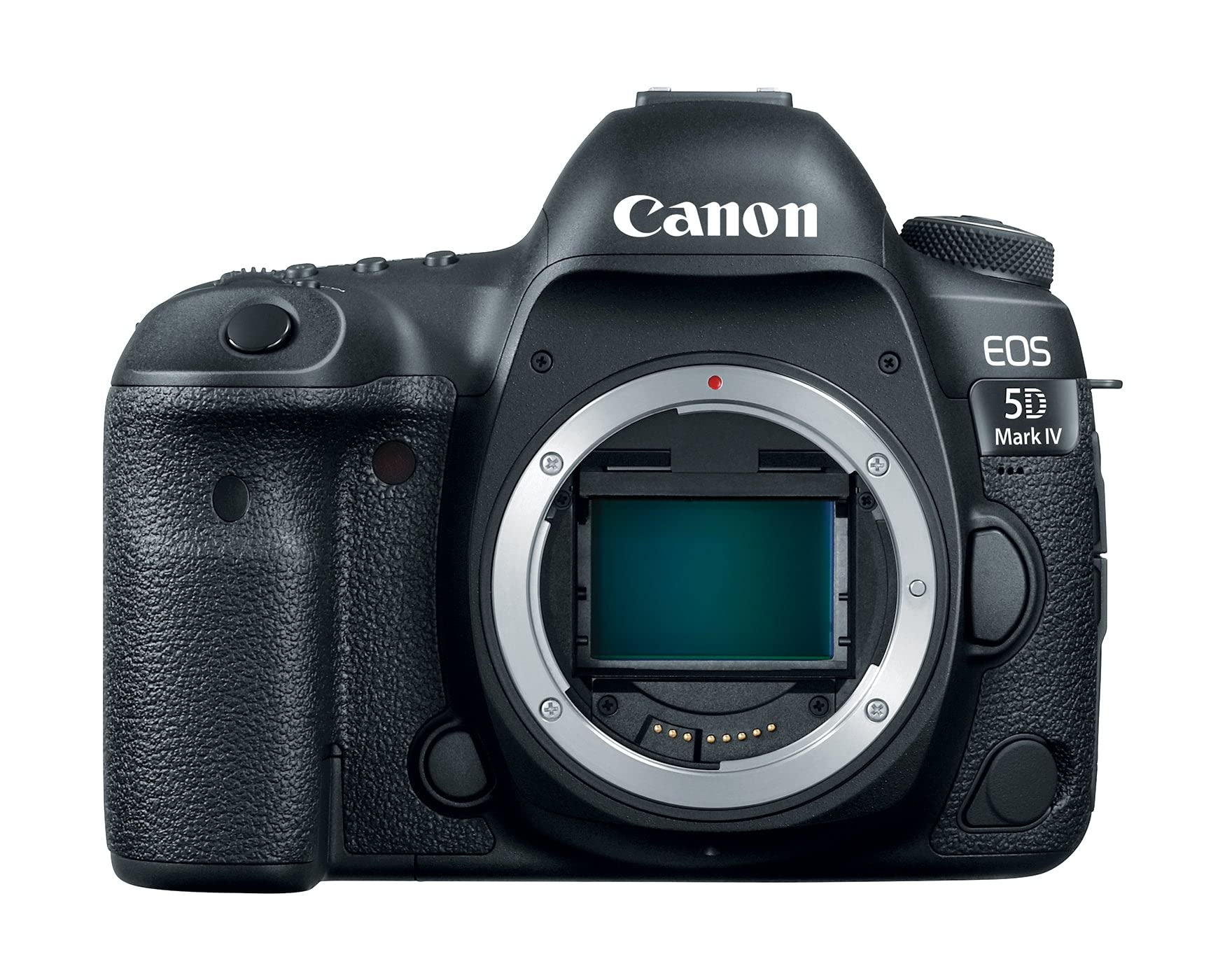
1. Canon EOS 5D Mark IV
Our pick — over 4.5★ from 850+ verified ratings; the strongest balance of quality and price.
The pro-grade workhorse that keeps faces sharp and skin tones flattering even when the booth lights are dim.
The 5D Mark IV earns its gold-standard reputation because its 30.4 megapixel full-frame sensor keeps images clean even at ISO 12,800 — the high-sensitivity setting you need when your booth is lit by fairy lights, not studio strobes. Owners mention the dynamic range improved notably, calling the low-light and high-ISO performance “excellent” and noting the autofocus tracks moving subjects flawlessly in servo mode.
For a booth operator, the 7.0 fps continuous shooting speed is the real workhorse feature — it captures a burst of frames so you can pick the one where everyone’s eyes are open. The 61 autofocus points give you far more coverage across the frame than entry-level models, which matters when a group of six is spread out and you need every face tack-sharp, not just the center subject. The built-in Wi-Fi lets you transfer files to a phone for instant social sharing, and the touchscreen interface makes switching focus areas quick between groups.
The trade-off is physical and financial: this heavy, professional body-only camera requires a separate lens purchase.. One owner called it “My Last Great DSLR,” praising the ergonomics for both small and large hands, while a few noted the fixed LCD — it does not fold out — can be limiting for overhead angles. The crowd favorite earned 4.7 stars across 800+ ratings, and it is the pick professionals reach for when reliability on a paid shoot is non-negotiable.
wedding workhorse
- Full-frame sensor delivers exceptional low-light quality that flatters indoor skin tones
- 61 autofocus points keep groups sharp across the whole frame
- Dual Pixel CMOS AF provides smooth, responsive focus during live view on your monitor
heft and price
- Body-only means a separate lens purchase adds to the upfront cost
- Fixed LCD screen limits creative high and low angles during setup
studio staple: you run paid events where missing a shot is not an option and you want a body that will still be reliable in five years.
budget builds: your budget must cover a lens and accessories in one go — the body alone is a significant investment.
2. Canon EOS 2000D / Rebel T7 (Renewed Bundle)
The complete starter bundle that gets a first-time booth running on day one with everything in the box.
If you are testing whether photo booth rental is a viable side business, this kit removes the friction of buying pieces separately. The bundle packs the 24.1MP APS-C CMOS sensor camera with an 18-55mm lens, a 128GB memory card, wide-angle and telephoto lenses, a flash, a tripod, a filter kit, and a carrying case — everything you need to run your first event. Owners consistently call it a fantastic starter set that is worth the money and very easy to use, with photo quality praised for its nice bokeh.
The spec that matters most for a booth here is the 9-point AF system with AI Servo AF, which keeps a moving subject in focus once locked on. Full HD 1080p video at 30 fps covers those slow-motion guest reels, and built-in Wi-Fi with NFC makes it easy to pull images off the camera for quick social posts. The 3.0-inch 920k-dot LCD gives you a clear live view to confirm the framing before guests step in.
The honest limits are speed and durability. At 3 fps continuous shooting and an extended ISO of 12800, this is built for static posed groups, not high-energy jump shots. The review pages note the kit tripod broke within months for one buyer and that extra batteries were needed — so plan to upgrade the tripod and grab a spare battery before a full-day event. It is the crowd-pleaser for beginners, with quality earning the most praise across owner feedback.
budget beginner: For a first booth on a tight budget, this bundle delivers a working setup with accessories included — just budget for a sturdier tripod and a spare battery.
entry autofocus: The 3 fps burst and 9-point autofocus suit posed groups; skip it if your booth promises action shots.
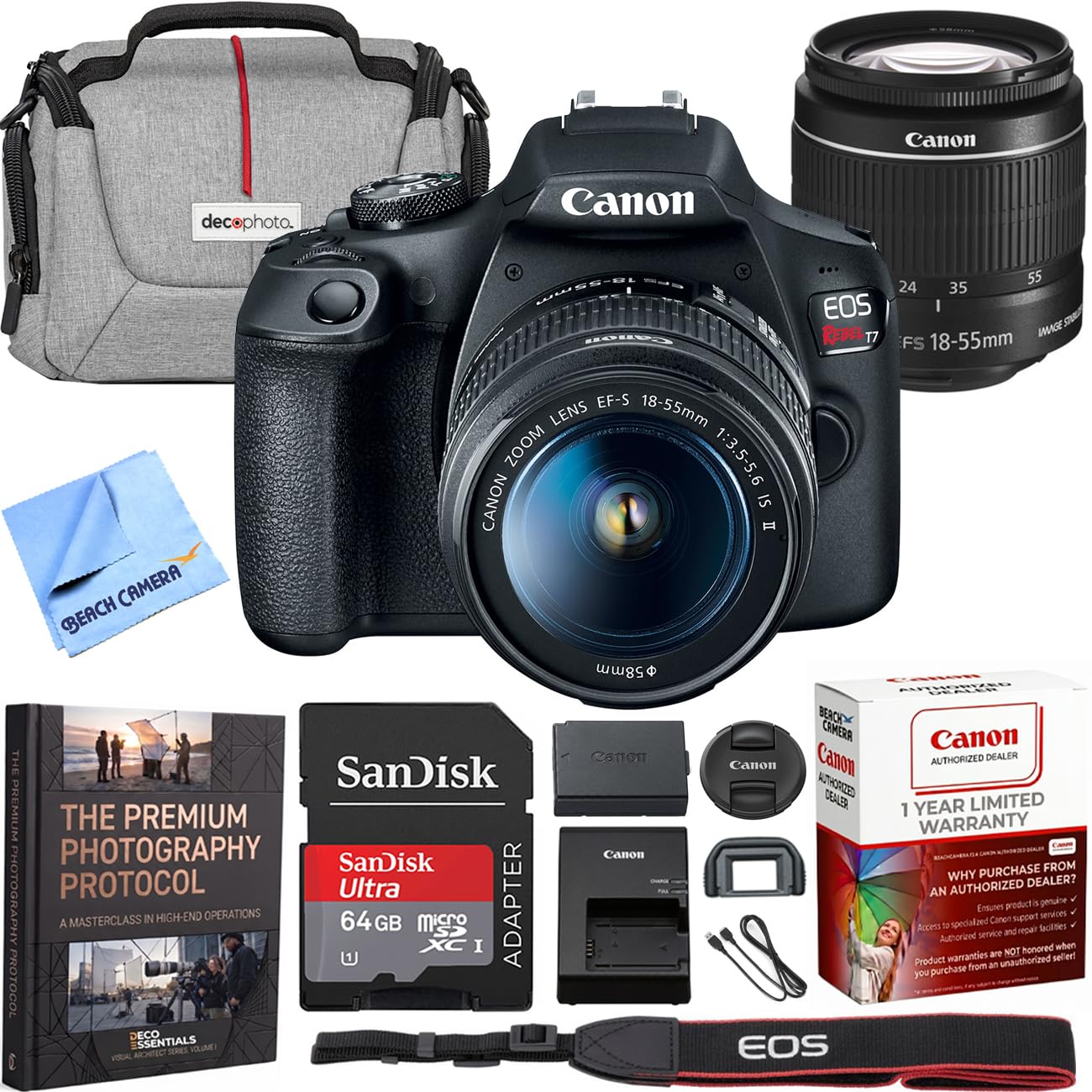
3. Canon EOS Rebel T7 (Bundle)
A dependable Canon starter with a generous accessory haul, favored by first-time booth owners who want room to grow.
This Rebel T7 bundle beats the 2000D kit on one key spec: its EF-S 18-55mm f/3.5-5.6 IS II lens includes image stabilization, so your handheld preview shots stay sharp while you frame the booth area. The 24.1 Megapixel CMOS (APS-C) sensor with an ISO range of 100-6400 (expandable to 12800) handles typical indoor booth lighting without pushing the image into heavy grain. Owners describe it as a great starter kit that comes with more than expected, with one calling it their “treat to myself in retirement” and praising Canon quality throughout.
The package is remarkably complete: alongside the camera and lens you get a Deco Gear camera bag, a 64GB SanDisk memory card, wide-angle and telephoto lenses, a replacement LP-E10 battery, a tabletop vlogging tripod, a lens hood, a memory card reader, and more. For someone setting up their first booth, that means almost no extra shopping. The 9-point AF system and AI Servo AF handle static groups well, and built-in Wi-Fi with NFC supports remote shooting and wireless printing — both useful for a booth that prints on-site.
The recurring issue in owner feedback is the included slave flash, which some report does not work with the camera. Quality is the most-praised aspect by a wide margin, and value for money follows close behind, so this is a safe buy for the money — just test the flash before event day and have a backup. The 3.0 fps continuous shooting matches its sibling; this is a posed-pose camera, not a motion-capture machine.
starter bundle: the budget-conscious booth starter who wants a recognized Canon name, a stabilized kit lens, and a box full of accessories.
pro needs: your booth concept relies on high-speed action shots — the 3.0 fps burst will cap your creativity.
4. Nikon D800
The 36.3-megapixel full-frame that delivers wall-print resolution at a mid-range price, bundled with rugged build quality.
The D800 is the resolution king of the value tier. Its 36.3 MP CMOS FX-format sensor captures an extraordinary level of detail, which means you can crop into a group shot and still have enough resolution to print a sharp 8×10. Owners consistently praise the image quality as “excellent” and “astonishing,” with one noting the remarkable dynamic range and another calling it a fantastic upgrade in detail. For a booth that offers large prints, this is a serious advantage over the 24MP APS-C models.
The build is built for event abuse: it is weather-sealed and shock-proof, with a dual-axis level you can read in both the viewfinder and live view. The 51-point autofocus system — spanning continuous, face detection, and tracking modes — gives you professional-grade focus flexibility, and the uncompressed video output via HDMI means you can pipe a clean, high-quality signal to your booth monitor. The built-in flash with wireless control is a hidden gem, letting you trigger off-camera flashes without an extra controller.
The honest caveats are speed and file size. At 36.3 MP, each RAW file runs around 50MB, which eats memory cards and demands a capable computer for fast edits. Some customers note the right autofocus point can be soft with wide lenses at wide apertures, and the fps rate draws mixed feedback — this is not a burst-shooting camera. The quality is the top-praised aspect by a wide margin, but it is an older model, so expect to manage its quirks.
megapixel king: If your booth sells large framed prints, the 36.3MP sensor gives you cropping freedom the 24MP rivals cannot match.
sluggish live view: With mixed feedback on shooting speed and large file sizes, this suits a curated, posed booth rather than a high-volume machine.
5. Canon EOS RP

The lightweight full-frame mirrorless that slips into a travel bag and still delivers vibrant, professional-looking booth photos.
The EOS RP is the answer for booth owners who want full-frame image quality without the back-breaking weight of a pro DSLR. It is “compact and lightweight” by design, ideal for traveling and vlogging, and the RF24-105mm F4-7.1 IS STM lens gives you a versatile zoom range for framing wide group shots or tighter portrait crops. Owners call it a fantastic way to get into full frame “while staying affordable,” praising the vibrant pictures and good value.
For a booth, the standout a neat extra is the EOS Utility Webcam Beta Software, which turns the camera into a high-quality webcam via a clean HDMI output. That means you can feed the live view directly into your booth’s display software without a separate capture card. The lens adds up to 5 stops of optical image stabilization, reducing blur from handheld setups, and the maximum magnification of 0.4x (or 0.5x in center focus macro) lets you shoot detail shots of props or ring close-ups if your booth offers those.
The compromises are the ones you accept for size: the kit lens has a modest F4-7.1 aperture, which is less ideal for very dim venues, and owners note the 4K video is limited with a crop and no autofocus. Battery life draws some negative feedback, so a spare pack is wise for a full day. Autofocus gets mixed reviews overall, but for static posed groups — the bread and butter of a booth — it locks on reliably. The most-praised aspects are quality and image quality, in that order.
travel mirrorless: mobile and traveling booth setups where carrying a heavy DSLR is the main barrier, plus hybrid photo-and-video booths.
long shoots: a kit lens that needs good light — bring a spare battery and consider a faster prime for dark venues.
6. Nikon D7500 (Bundle)

The action-friendly all-rounder with an 8 fps burst and a bundle that covers every accessory a booth could need.
The D7500 is the pick for booths that promise energy. Its 8 fps continuous shooting rate, sustained for up to 100 consecutive JPEGs, means you can hold the shutter through a group jump and still have ten usable frames to choose from. The 20.9MP DX-format CMOS sensor paired with the EXPEED 5 processor delivers a native ISO range of 100-51200 — expandable to a staggering ISO 1,640,000 — so even a booth lit only by string lights produces usable images. Owners describe it simply as “amazing,” with one calling it an “improve” picture quality experience.
The bundle is exceptionally generous: the D7500 with an 18-140mm lens, a 64GB SanDisk Extreme PRO card, a camera bag, Corel photo software, two EN-EL15 batteries, a memory card reader, a mini LED video light, a 3-piece filter kit, wide-angle and telephoto lenses, and a micro HDMI cable. For a booth operator, the dual batteries are the unsung hero — they keep you shooting through a four-hour event without a wall outlet. The 3.2-inch 922k-dot tilting touchscreen is also a practical advantage, letting you frame from high or low angles that a fixed screen cannot reach.
Most owners are thrilled, but a few note the package accessories are not pro-grade, singling out the tripod and filters as items you will want to replace. The 51-point Multi-CAM 3500FX II autofocus system with Group Area AF is a genuine workhorse for tracking moving guests, and the SnapBridge Bluetooth and Wi-Fi makes offloading photos to a phone painless. Quality and value are the top-praised aspects, and the 4K UHD video at 30 fps gives you a solid backup for video booths.
fast burst: At 8 fps with a deep buffer, this is the value pick for booths that need to catch motion, not just static poses.
kit lens limits: The camera itself earns the praise; plan to upgrade the included tripod and filters for professional results.
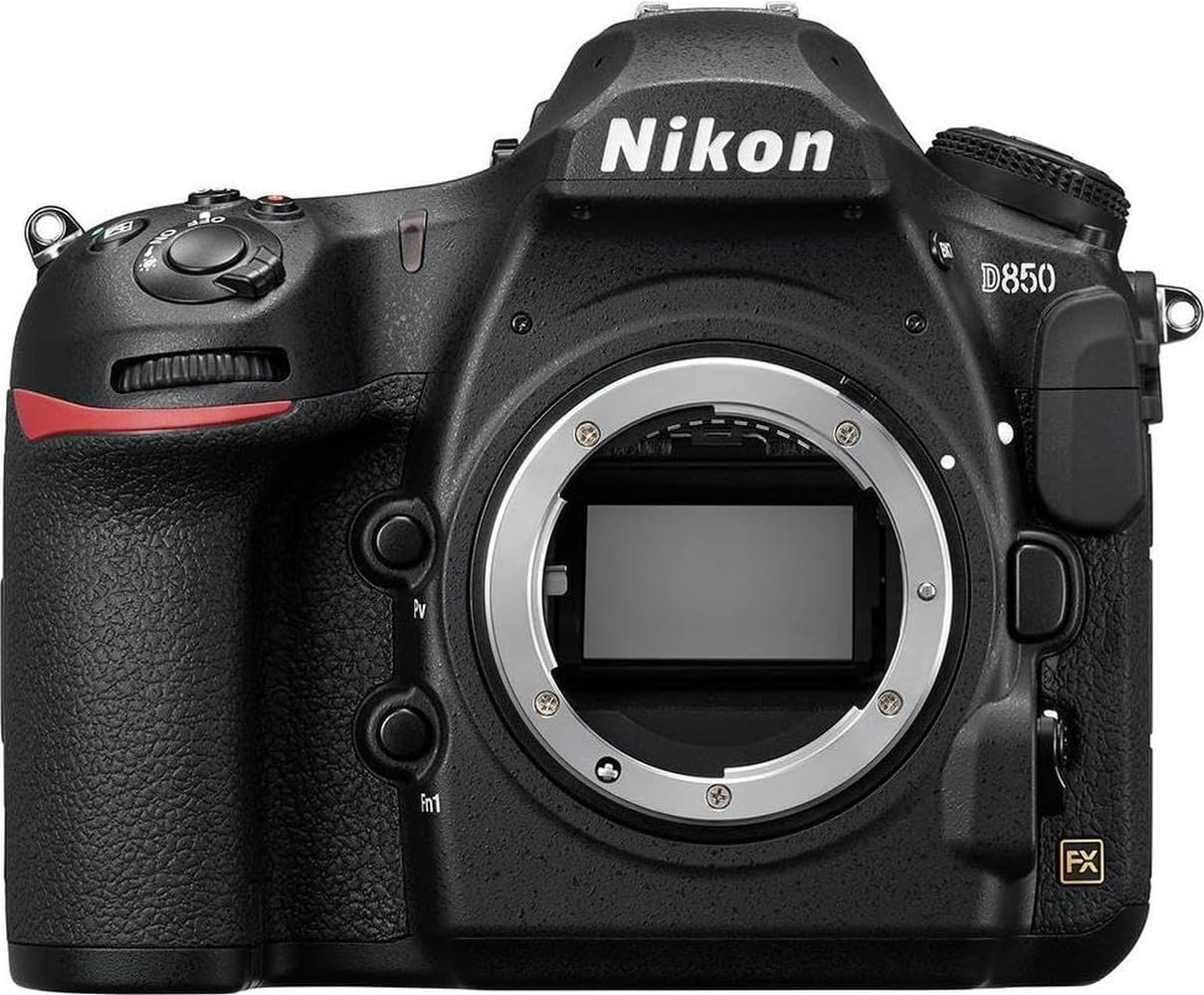
7. Nikon D850
The 45.7-megapixel monster that prints billboard-sized booth photos with stunning contrast and no moiré.
The D850 is the answer when your booth’s value proposition is print quality. Its back-side illuminated (BSI) full-frame sensor with no optical low-pass filter delivers 45.7 megapixels of extraordinary resolution, giving you the freedom to crop deep into a group shot and still produce a large, sharp print. Owners describe the image quality as a “standout,” with one noting it “rivals medium format” when paired with a quality lens, and another praising the stunning contrast at 45 megapixels. The 153 autofocus points are the most of any camera on this list, giving you exceptional coverage for tracking moving guests across the frame.
At up to 9 fps continuous shooting at full resolution, it is also fast enough for high-energy booth moments. The tilting touchscreen makes it easy to frame from low angles, and the focus shift shooting mode is a niche benefit for product-display booths that photograph items on a turntable. The 4K Ultra HD video and slow motion up to 120 FPS at 1080p cover video booth add-ons, and the “outstanding battery performance” gets a mention in the specs — a real advantage for all-day events.
The honest trade-offs are file size and handling. RAW files are large and demand high-speed SD cards and substantial storage, and the body is heavy. A few reviewers point out units that would not turn on after months, though the overwhelming majority — quality and image quality are the most-praised aspects, with quality leading by a wide margin — are thrilled. One owner calls video autofocus “poor” compared to dedicated video cameras, so if video is your primary booth output, look elsewhere. Value for money and performance both draw mixed feedback, reflecting a premium product that demands a premium workflow.
resolution monster: For booths selling large-format prints, the 45.7MP sensor and 153-point AF make it the undisputed resolution and focus king.
file size burden: Big files need big storage and a fast computer, and some units arrive with reliability issues — buy with a good return policy.
8. Canon EOS 90D

The 10 fps burst shooter that freezes the confetti cannon moment with the highest resolution of any APS-C Canon here.
The 90D is the speed demon of the Canon lineup, and it earns its place for booths that capture action. At 10 fps continuous shooting with no time lag, it is the fastest camera on this list — perfect for catching the exact moment a group throws confetti, jumps, or pops a champagne cork. The 32.5 Megapixel CMOS (APS-C) sensor is the highest resolution of any Canon APS-C body here, delivering detailed images that print beautifully. Owners highlight its ability to handle sports photography “without blurriness” and praise the easy-to-use manual mode, with one calling it a great upgrade from the Rebel T7.
The 45-point all cross-type AF system supports up to 27 points with an F/8 metering, giving you reliable focus even with slower telephoto lenses — useful for wide booth shots where guests are at varying distances. The 3.0-inch vari-angle touch LCD screen is a standout booth feature: it flips out and rotates, so you can frame from any angle, including directly above a table of guests. The DIGIC 8 image processor handles 4K UHD 30P and Full HD 120P video, and like the EOS RP, it works as a high-quality webcam via a clean HDMI output using the EOS Utility Webcam Beta Software.
The feedback is almost universally positive — quality and picture quality are the most-praised aspects, with one owner calling it “the best results” they have produced — but a small number report the camera dying unexpectedly, so test it thoroughly before a paid event.
all-rounder: If your booth promises high-energy shots, the 10 fps burst and vari-angle screen make this the most versatile Canon for the job.
burst reliance: A tiny minority of units have failed unexpectedly, so run a full event simulation before the real thing.
Understanding the Specs
Autofocus Points
This number tells you how many focus zones the camera scans across the frame. More points mean better coverage, so a group spread across the image stays sharp from edge to edge. The Canon 5D Mark IV’s 61 points and the Nikon D850’s 153 points are class-leading; the Rebel T7’s 9 points will keep the center sharp but may miss faces at the edges.
Continuous Shooting Speed
Measured in frames per second (fps), this is how many shots the camera takes per second while you hold the shutter. A 3 fps camera captures one pose; a 7-10 fps camera captures a sequence, so you can pick the frame where everyone has their eyes open. For a booth, higher is better for dynamic shots.
Full-Frame vs APS-C Sensor
Full-frame sensors are physically larger, which typically means better low-light performance and shallower depth of field for background blur. APS-C sensors are smaller and usually more affordable, with a crop factor that effectively zooms in your lens. For a booth in dim lighting, full-frame (like the 5D Mark IV or D780) is the premium choice.
ISO Range
ISO measures sensor sensitivity to light. A wider range, like the D7500’s native ISO 100-51200, lets you shoot in dimmer conditions without a flash. The key is not just the maximum number but how clean the image stays at high ISO — a full-frame sensor like the 5D Mark IV stays usable at ISO 12,800, while smaller sensors get grainy earlier.
FAQ
What is the most important spec for a photo booth camera?
Do I need a full-frame camera for a photo booth?
How many megapixels do I need for high-quality booth prints?
Can I use a photo booth camera with my existing software?
Is a 3 fps camera fast enough for a photo booth?
What is the difference between the Canon Rebel T7 and the Canon EOS 2000D?
How long will a DSLR camera last for frequent photo booth use?
Should I get a camera with built-in Wi-Fi for a photo booth?
Is 4K video recording necessary for a photo booth camera?
What is the best budget-friendly camera for starting a photo booth business?
Final Thoughts: The Verdict
For the majority of shoppers, the camera for photo booth winner is the Canon EOS 5D Mark IV because its full-frame sensor, 61-point autofocus, and 7.0 fps burst deliver pro-grade reliability in the low-light conditions booths live in. If you want a compact, lightweight full-frame that travels easily, grab the Canon EOS RP. And for a fast-action booth that freezes the jump shot, the Canon EOS 90D is the one to reach for with its 10 fps burst and vari-angle screen.
How We Picked
We do not accept paid placement. Every pick is matched to a real buyer and a real use-case; we do not hands-on test units.
Sources & Methodology
Specifications: manufacturer listings and product documentation. Review insights: verified customer reviews, as of August 2026. Pricing: not shown on this page (it changes often); check the current price via the retailer link.
As an Amazon Associate, FitlyFast earns from qualifying purchases. This does not affect which products we feature.