
Our readers keep the lights on and the weekend projects moving. As an Amazon Associate, I earn from qualifying purchases.
Specs are compiled from manufacturer listings and verified buyer reviews and can change over time — please confirm the key details on the product page before buying.
Canadian winters don’t mess around, and neither should your footwear. The real question isn’t whether a boot looks warm — it’s whether it can hold up to slush-filled commutes, -30°C wind chills, and icy driveways without turning your feet into ice blocks. This guide breaks down the insulation, waterproofing, and traction that actually matter, so you can pick a pair built for your specific winter routine.
I’m Rikta — the founder and writer behind FitlyFast. This guide is built by comparing the manufacturers’ published specifications and the patterns across verified customer reviews, so you get each pick’s real strengths and trade-offs instead of marketing spin.
Find the right pair of canadian winter boots for your climate and lifestyle with our breakdown of insulation weights, waterproof membranes, and real-owner durability reports.
Our Picks at a Glance


How To Choose The Best Canadian Winter Boots
Before you scroll through picks, you need a quick filter. The three numbers that decide most winter boot purchases are the insulation weight, the waterproofing method, and the outsole compound. Match these to your coldest month and your usual winter activities.
Insulation Weight: The Warmth Dial
Insulation is measured in grams, and higher numbers mean more trapped heat. A 200g boot suits mild, active days, while 400g to 800g handles serious cold. For standing still in deep freeze, you want the heavy hitters — but remember, high insulation can make feet sweat during shoveling or walking.
Waterproofing: Membranes vs. Rubber Shells
Not all waterproof claims are equal. A fully rubber shell like on hunting boots stops water completely, while a waterproof-breathable membrane (common in hiking-style boots) lets sweat escape but can be less forgiving in deep puddles. Check if the construction is seam-sealed for the best wet-snow protection.
Quick Comparison
| Model | Best For | Insulation | Waterproofing | Key Feature | Amazon |
|---|---|---|---|---|---|
| TIDEWE Rubber Hunting Boots★ Best Overall | Extreme Wet & Cold | 800g | 7mm Neoprene & Rubber | Flexible Shell | Amazon |
| Columbia Expeditionist ShieldTop Performer | Daily Winter Commute | Thermal-Reflective | Waterproof-Breathable | Ice-Gripping Traction | Amazon |
| Kamik Momentum 3Best Value | All-Day Errands | HEAT-MX™ | Seam-Sealed | Fur Lining | Amazon |
| SOREL Tivoli V Tall | Style & Snow | Insulated | Waterproof | Tall Shaft | Amazon |
| Baffin Zone | Arctic Trekking | B-Tek Heat | Waterproof Membrane | Snowshoe Compatible | Amazon |
| North Face Thermoball Zip Up II | Quick On/Off | Thermoball | Waterproof | Side Zipper | Amazon |
| Columbia Minx IV | Wide Feet | Insulated | Waterproof | Sneaker Feel | Amazon |
| SOREL Out N About lV Chillz | Wet Terrain Hikes | Insulated | Waterproof | Rubber Toe Cap | Amazon |
| North Face Chilkat V 400 | Deep Snow & Trails | 400g | Waterproof Rubber | Metal Grommets | Amazon |
| KEEN Revel 4 Polar | Hiking & Snowshoeing | Polar Insulation | Waterproof | Wide Toe Box | Amazon |
| Irish Setter Elk Tracker | Backcountry Hunting | 1000g Thinsulate | GORE-TEX Leather | Goodyear Welt | Amazon |
In‑Depth Reviews
1. TIDEWE Rubber Hunting Boots
Our pick — over 4.5★ from 900+ verified ratings; the strongest balance of quality and price.
The rubber-and-neoprene fortress that flexes with your foot while sealing out the worst of a Canadian deep freeze.
When your day involves standing in slush or walking a snowy treeline, this is the pair that wins. The 800g insulation is the standout — buyers report it stays “very warm in mid-teens weather,” which is exactly the kind of cold that makes lesser boots fail. The 7mm neoprene and rubber shell flexes as you walk, so you are not clomping around like you have boards strapped to your feet.
The comfort story is strong here, too. A thick, cushioned foot bed and a roomy toe box mean you can layer up with heavy wool socks — one owner notes fitting two pairs comfortably in really cold conditions. It runs about a half size big for some, so sizing down is the common advice, and there are no half sizes offered.
Quality is the thing owners praise most — well over a hundred buyers call it out — followed closely by warmth. The recurring trade-off? There’s little arch support, so a decent insole upgrade is the fix most owners land on. The rubber smell fades after a bit, and the heel lugs can feel slick on wet surfaces, but for pure cold-wet protection at this level, it’s hard to argue with the consensus.
Mudproof rubber grip
- 800g insulation keeps feet warm in serious cold.
- Flexible rubber & neoprene shell moves naturally.
- Easy on and off, even with thick socks.
Heavy for long hikes
- Lacks built-in arch support; plan on insoles.
- Runs a half size big for many buyers.
Wet terrain: your winter is defined by wet snow, slush, and long cold stretches where keeping dry is the top priority.
Light packers: you need serious arch support straight from the start or do most of your walking on polished indoor floors.
2. Columbia Men’s Expeditionist Shield
The lightweight daily driver that feels like a hiker but holds its own in deep snow and single-digit cold.
For daily winter life—commuting, errands, just getting around—this Columbia boot earns its spot as the everyday pick. Owners mention wearing it “almost every day and all day” because it uses Columbia’s Omni-Heat thermal-reflective technology (a metallic lining that bounces your body heat back to you) to keep you warm without feeling hot or sweaty. It’s also lighter than a traditional snow boot, so you can walk comfortably all day without heavy feet.
The waterproof-breathable build is a genuine asset in slush, though the honest caveat is that it’s more water-resistant than fully waterproof. One owner who tested it in deep snow stayed dry and warm, while another notes it dries fast even when pushed. The cold-tune traction grips ice and snow well, but that aggressive tread does track snow, sand, and salt into your car or home.
Quality is what owners single out most, with warmth close behind. Sizing is the main friction point — it runs about a half size small, so sizing up is the near-universal advice. The stock insole is thin and worth replacing, and a few find the gold trim at the collar a bit juvenile. Get past that, and this is the most versatile cold-weather boot in the lineup.
Shielded waterproofing: Lightweight comfort that doesn’t quit, backed by thermal-reflective warmth and solid cold-weather traction. It walks the line between hiker and snow boot better than anything else here.
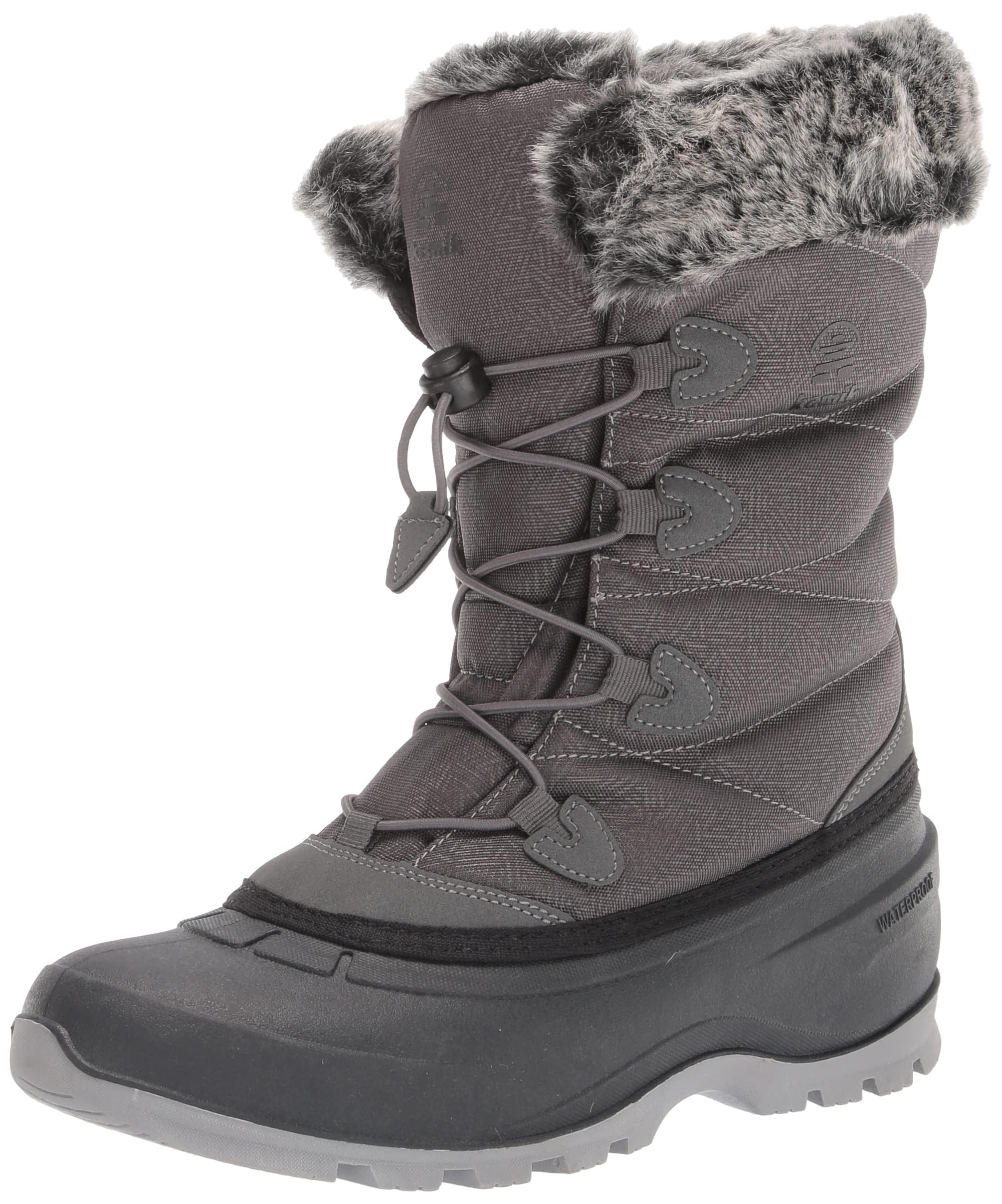
3. Kamik Momentum 3 Insulated Snow Boots
A warm, fur-topped boot that handles snowy Lapland treks and daily commutes while staying affordable.
For women who need genuine cold protection without a luxury price tag, the Momentum 3 overdelivers. Warmth is the thing owners praise most — by a wide margin — thanks to the HEAT-MX™ lining that extends all the way to the toes. Customers note walking for hours in below-freezing conditions with no complaints and no wet socks, with one family describing a 9-day snowy Lapland trip as a “10/10.”
The waterproof, seam-sealed build is the backbone here. Snow stays out thanks to the fuzzy top and drawstring closure, and the thick sole provides solid traction on icy trails. The fit is snug, so most owners advise sizing up a half or full size, especially if you wear thick socks. The ankle runs narrow, which is the main fit caveat for wider feet.
Durability is the honest trade-off here. Most owners praise warmth, comfort, and ease of use, but a few report seam failures after a few months. One buyer notes: “After 4 months light use, seams came apart, water leaked in.” That’s not a universal pattern, so treat this as a solid 2-3 season boot for everyday wear—not a decade-long investment. If you need a boot that lasts for years, consider the Irish Setter below instead.
Insulated warmth boost: Outstanding warmth-to-price ratio, a cute fur detail that earns compliments, and easy pull-on convenience. Just size up and treat the seams kindly.
4. SOREL Women’s Tivoli V Tall Waterproof Boot
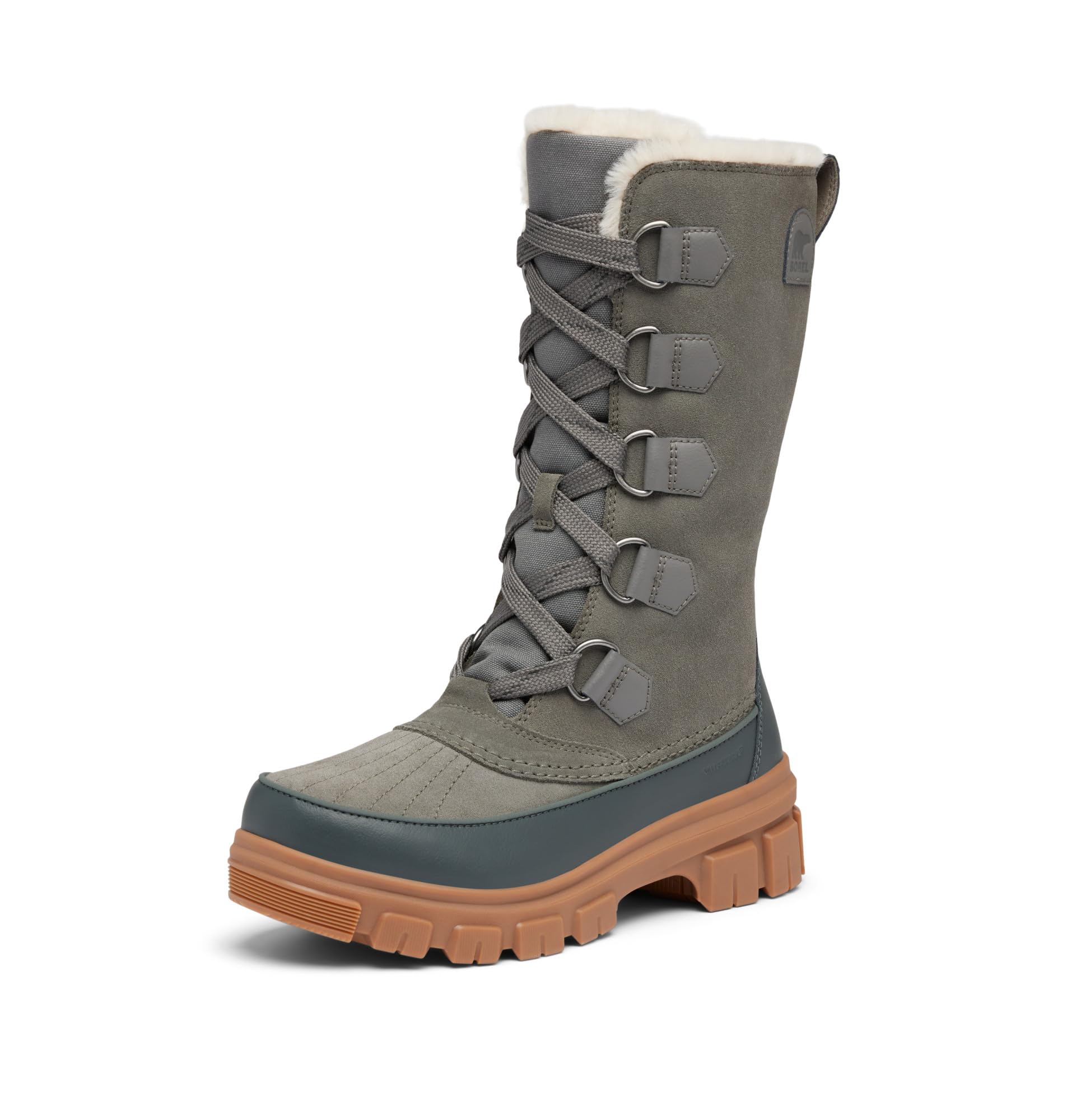
The tall, polished boot that proves winter footwear can look this good and still shrug off a two-foot dump.
This is the rare boot that gets compliments. Quality is the thing owners praise most here — well over a hundred buyers call it out — and the warmth numbers are nearly as strong. It keeps feet toasty and dry even in deep snow, with one owner reporting perfect comfort at 0°F and another lasting through a harsh New York winter. The tall shaft means you can tuck pants in for serious snow protection.
The interior is described as super soft, and the orthotic-friendly design means you can swap in your own insoles without a fight. The laces are thick and don’t freeze in colder temps, which is a small detail that matters when you’re out in the elements for hours. Traction is solid across ice and snow, and owners repeatedly call them comfortable for long wear.
Fit is the one thing to get right. Most find them true to size, but a notable share of owners say they run small — one size 11 buyer hit the toe box and needed to size up. It’s a fit-note, not a flaw: buy your normal size for thin socks, or go up a half size if you plan on thick wool. The build quality is exactly what you’d expect from a brand whose previous pair lasted over a decade.
Chic tall silhouette
- Compliment-worthy looks with serious warmth.
- Soft, orthotic-friendly interior.
- Tall shaft for deep snow protection.
Slippery on ice
- Runs small for a share of buyers.
- Ankle can rub when laced very snugly.
City style: the buyer who wants a winter boot that transitions from snowy sidewalks to dinner out without missing a beat.
Icy walks: you need a wide fit or plan to wear very thick socks with your true size.
5. Baffin Men’s ZONE Insulated Winter Sports & Hiking Boots

A feather-light, snowshoe-ready boot tested by ambassadors during Arctic and Antarctic ultramarathons.
When your winter means real miles—snowshoeing, hiking, or long cold walks—the ZONE is the lightest-feeling boot in this lineup, with owners calling it “feather light.” Its B-Tek Heat insulation (a 4-channel hollow-fibre design) traps warmth across a broad temperature range, so you stay comfortable from a brisk morning to a deep-freeze afternoon. The Polar Rubber outsole (a cold-weather rubber compound) keeps grip on icy trails as temperatures drop.
The snowshoe compatibility is a genuine differentiator. A tendon guard and ledge on the base make binding attachment easy, and the speed-lace system lets you cinch down quickly. Reviewers point out excellent traction on icy decks and no water seepage in snowy conditions, with warmth holding up to -15°C when paired with two sock layers.
Warmth is the top praise, and the waterproof-breathable membrane with booty construction handles wet snow well. The honest limits: it’s lightly insulated by design, so it’s not a multi-day winter camping boot — one owner found it saturated and frozen solid overnight at -13°C on a multi-day trip. Sizing runs small for many, and the fit is best described as snug. For day hikes and active winter recreation, it’s superb; for sitting still in extreme cold, it’s not the one.
Arctic-grade insulation
- Remarkably light for a winter boot.
- Snowshoe-compatible base design.
- Strong traction on ice and snow.
Bulky for driving
- Runs small; size up.
- Not built for multi-day extreme-cold camping.
Extreme cold: you’re actively moving — hiking, snowshoeing, or trekking — and want a boot that disappears on your feet.
Car commutes: you need to stand still for hours in polar-vortex conditions; this is a mover’s boot.
6. THE NORTH FACE Women’s Thermoball Progressive Zip Up II

The sneaker-soft boot with a side zipper that makes winter exits and entries genuinely easy.
For anyone who’s wrestled with frozen laces in a parking lot, the side zipper on this North Face boot is a revelation. Owners describe it as easy on and off with no break-in period — it hugs your foot comfortably from the first wear. The Thermoball insulation keeps things cozy, and at this weight, it genuinely feels like wearing sneakers. One New Hampshire owner reports warm, dry feet through snowy conditions all winter.
The rubber outsole and waterproof build handle everyday snow and rain well. It’s a smart-looking boot that isn’t chunky, which makes it a favorite for commuters who don’t want to look like they’re heading to base camp. The cushioning around the foot is a consistent highlight in owner experiences.
Fit is where opinions split. Many owners say the ZONE runs true to size, but an equally vocal group finds it small and narrow—one buyer couldn’t get their foot in, and another sized up 1.5 sizes just to fit heavy socks. Zipper performance is also mixed: some call it essential, others say it fails. Quality earns top praise, but order with a return-friendly mindset to nail your size before committing.
Packable lightweight warmth: easy zipper access and sneaker-like lightness make this the easiest winter boot for people who value quick transitions.
Thin sole cushion: Fit is unpredictable — order a size up and be ready to exchange if the zipper or width doesn’t cooperate.
7. Columbia Minx IV
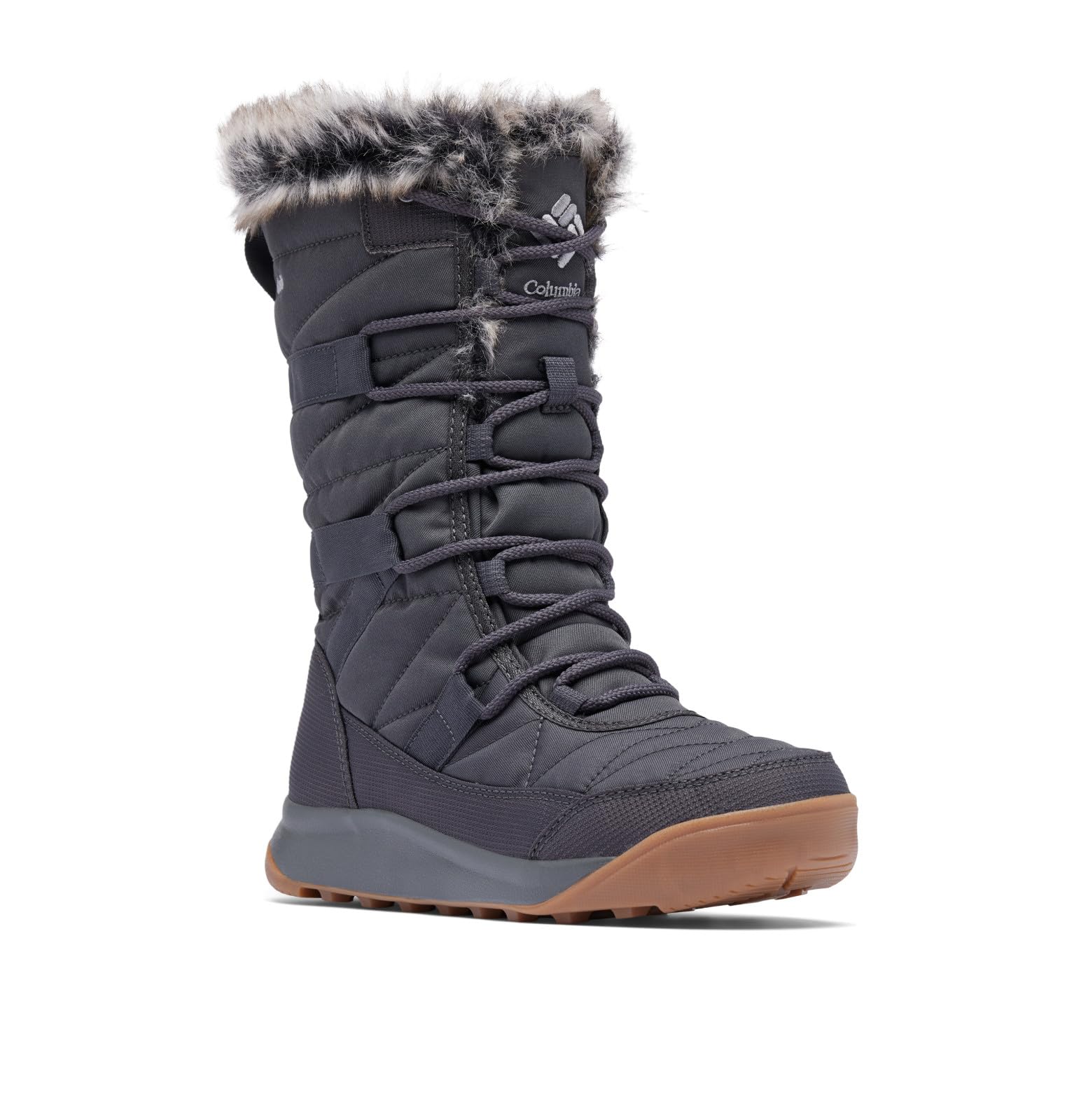
The mid-calf boot that feels like a sneaker while keeping feet toasty in minus temps without thick socks.
Columbia’s Minx IV is the boot that surprises people. Quality is the top praise, with owners calling it the best winter footwear they’ve owned — one notes a bad-back relief from the ankle and arch support. It’s warm, soft, and breathable, with a stretchy interior that accommodates bunions and a cushioned feel that owners describe as “like sneakers.” The fur trim adds a touch of style that earns compliments.
Waterproofing is solid for snow, and the traction handles snowy trails well. Shoppers say it’s comfortable straight from the start with easy slip-on convenience, and it dries quickly. For outdoor hours in the cold, it’s repeatedly called ideal, with one owner noting it’s almost too warm for indoor work.
The fit is where you need to pay attention. While some owners find it perfect for wide feet, just as many say it runs narrow — one buyer found even the “wide” version too narrow. The universal advice is to order a half size up, sometimes a full size for thick socks. A few note the laces are short, and there are no rivet holes. Ice traction is good on snow but can be slippery on pure ice, so treat icy sidewalks with care.
Cozy fleece lining
- Sneaker-comfort with genuine winter warmth.
- Easy slip-on with stretchy, bunion-friendly fit.
- Mid-calf height with stylish fur trim.
Limited arch support
- Narrow fit for a share of buyers.
- Slippery on pure ice.
Casual wear: anyone who wants the comfort of a sneaker with real winter protection and doesn’t mind ordering up a half size.
Long treks: you have very wide feet and can’t tolerate a snug forefoot.
8. SOREL Women’s Out N About lV Chillz Waterproof Boot
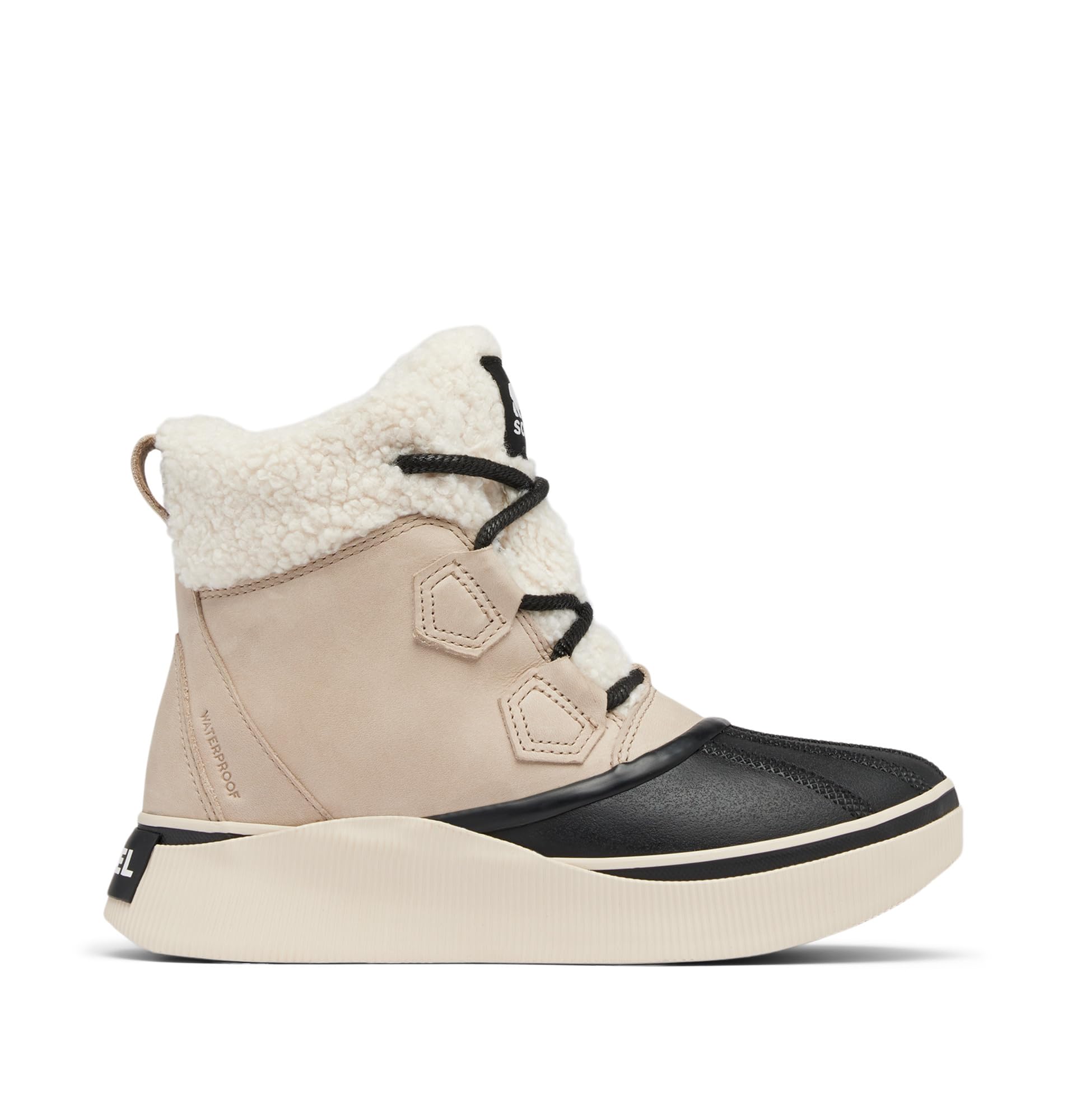
The rugged-but-cute boot that survived mud, sand, and glacier tours while keeping feet happily dry.
This SOREL gets its reputation from versatility. Appearance is the top praise — owners love the look — but it’s the all-terrain capability that wins loyalty. One owner took them on a 30-mile hike through mud, sand, and water, reporting warm, dry, pain-free feet the whole way. Another wore them on an Alaskan cruise and glacier tour, crediting them with keeping toes warm and dry in the deep cold.
The rubber toe cap is a practical shield for rocky trails and wet slush, and the ankle-high shaft with adjustable laces offers a customizable fit. Owners repeatedly describe them as comfortable with room for thick socks, waterproof for rain or snow, and easy to get on. The cushioning earns consistent positive marks.
The main advice from owners is to size up — a full size for thick socks is the common recommendation, as they run small for many. The traction is a point of contention: most find it solid, but a few note it’s slippery in slush. It’s a fit-and-surface note, not a universal flaw. For the buyer who wants one boot that handles city snow, trail mud, and travel, this is a strong contender.
Versatile everyday tread
- Genuine all-terrain versatility.
- Rubber toe cap for trail protection.
- Roomy fit for thick socks.
Low ankle support
- Runs small; size up a full size.
- Some find traction weak in slush.
Daily errands: your winter blends city sidewalks and outdoor trails and you want one boot that does both.
Hiking trips: you need maximum grip on icy slush and refuse to size up.
9. THE NORTH FACE Women’s Chilkat V 400

The 400-gram-insulated workhorse that spent five Colorado winters intact and still going strong.
This is the boot for people who measure winter in years, not seasons. Quality is the dominant praise — well over a hundred owners single it out — and the durability stories back it up. One owner used them for five years in the Colorado Rockies, reporting they’re still intact, warm, and waterproof with soles that haven’t given out. That’s the kind of longevity that makes the investment make sense.
The 400g of premium insulation keeps feet toasty in deep snow, and the waterproof rubber extends up to the lacing for serious wet protection. Metal grommets and a sturdy build mean they hold up to daily abuse — one owner uses them for 4-7 hours feeding horses in snow, rain, and sleet with warm, dry feet throughout. Traction on wet pavement and icy trails earns consistent praise.
Sizing is the major friction point. A large share of buyers report they run small and tight at regular shoe size, with the common fix being to size up at least a half size, often a full size. One owner notes they’re great for wide feet once sized correctly. The other caveat: while waterproof for snow, a few owners advise avoiding deep puddles — it’s not designed for full submersion. Get the size right, and this is a decade-class winter boot.
400g warm insulation: Proven multi-year durability with 400g insulation that handles deep snow, wet trails, and daily winter work without complaint.
Stiff leather upper: Sizing is genuinely off for many — order up at least a half size and be ready to exchange.
10. KEEN Revel 4 Mid Height Polar Insulated Waterproof
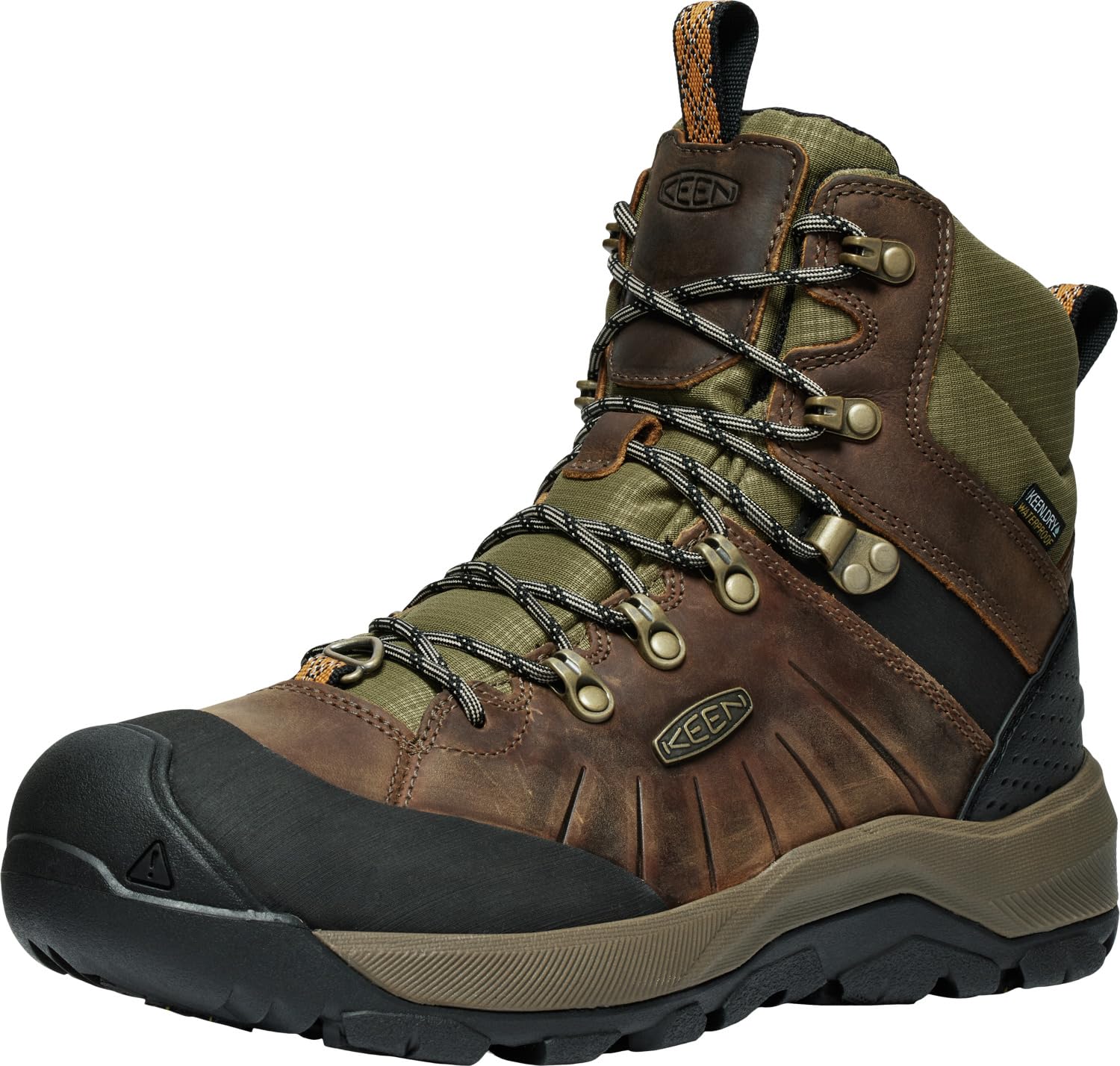
The snowshoe-ready hiker with a wide toe box that earned the nickname “snow tires for your feet.”
KEEN builds on its reputation for wide, foot-friendly fits, and the Revel 4 delivers. Fit is the thing owners praise most — comfortably over a hundred call it out — with the wide toe box being the standout for anyone who hates cramped toes. The Polar insulation, backed by a thermal heat shield inside, keeps feet warm in serious cold, and owners mention success at -5°F winds while climbing a Colorado fourteener in March.
The Polar Grip outsole is the traction story here, with one owner describing the grip as “snow tires for your feet” thanks to glass shards in the compound that bite into ice. The speed lace webbing system makes for quick adjustments, and the waterproof, breathable build handles wet conditions without water ingress. It’s snowshoe-compatible, making it a genuine winter hiking partner.
Durability is the honest mixed note. While many customers note minimal wear after a year of harsh winter use, a smaller group has had the rubber toe guard delaminate or stitching come undone within months. It’s not a universal pattern, but it’s the trade-off to know. True-to-size for most, though half-sizing up for thick socks is the common advice, and leaving top laces loose avoids leg pain on long days.
Mid-height polar protection
- Wide toe box that prevents cramping.
- Excellent ice grip with Polar Grip outsole.
- Zero break-in with immediate comfort.
Tongue shifts
- Mixed durability reports on the toe guard.
- Needs gaiters for very deep snow.
Snowy hikes: hikers, snowshoers, and anyone with wider feet who wants a technical boot that fits from the first step.
Wet pavement: you plan to rely on one pair for many harsh winters and want zero durability risk.
11. Irish Setter Elk Tracker 12″ Mens Hunting Boot

The tank-like, 12-inch leather boot with 1000g Thinsulate that owners call “Abrams tanks for the feet.”
This is the heavy artillery of winter boots. The Elk Tracker packs 1000g of 3M Thinsulate Ultra insulation — the highest in this lineup — and it shows. Reviewers point out keeping feet warm from 75°F down to -10°F, with another using them for years in a -25°F freezer warehouse. The full-grain, waterproof leather upper with GORE-TEX membrane is built for the backcountry, and the Goodyear leather welt construction means they can be re-soled rather than replaced.
Durability is the standout here. One owner reports 11 years with the same pair—still warm, dry, and intact after a free sole replacement from Irish Setter—while another says they lasted ~4 years of daily freezer-warehouse abuse before needing re-soling. The Bulls-Eye Air Bob outsole (a lugged tread pattern) grips soft ground, and ScentBan technology (an odor-neutralizing treatment) keeps smells down on long hunts. At 12 inches tall, it offers mid-shin protection that outlasts the Columbia and ZONE picks.
The trade-offs are real and physical. These are heavy boots — owners say the weight is the first thing you notice — and they’re not ideal on ice or stairs. A few report the soles cracking after a couple of months, though Irish Setter’s warranty service earned glowing marks for replacements. Sizing runs true for most, though insulation can make a half-size-up worthwhile. This is a serious investment for serious winter work, not a casual commuting boot.
Sturdy elk leather
- 1000g Thinsulate for extreme cold.
- Re-soleable Goodyear welt construction.
- Proven 11-year durability in owner reports.
Requires long break-in
- Heavy — you feel the weight on long walks.
- Poor grip on ice and wet smooth floors.
Backcountry hunts: you hunt, work outdoors in extreme cold, or want a lifetime boot you can re-sole instead of replace.
Quick walks: you want a light commuter boot or spend your winters on icy city sidewalks.
Understanding the Specs
Insulation Weight: Grams Matter
Insulation is measured in grams, and higher numbers trap more heat. A 200g boot is fine for active days above -5°C, while 400g to 800g handles deep freeze. The heaviest options, like 1000g Thinsulate, are for standing still in extreme cold. Remember, more insulation also means more sweat if you’re moving a lot.
Waterproofing: Shell vs. Membrane
Check how the boot stops water. A full rubber or neoprene shell — like on hunting boots — blocks water completely but can trap sweat. A waterproof-breathable membrane, like GORE-TEX, lets moisture escape while keeping wet snow out. Seam-sealed construction is the marker of seriously waterproof boots.
FAQ
How much insulation do I need for Canadian winters?
Should I size up in winter boots?
What is the difference between waterproof and water-resistant boots?
Are insulated rubber hunting boots good for everyday winter wear?
What makes a boot good for walking on ice?
How long should a good pair of Canadian winter boots last?
Are 400g insulated boots warm enough for -30°C?
What is the difference between a mid-height and tall winter boot?
Final Thoughts: The Verdict
For most people, the canadian winter boots winner is the TIDEWE Rubber Hunting Boots because it pairs 800g insulation with a fully waterproof, flexible shell that owners consistently rate for quality and warmth. If you want light, daily-driver versatility, grab the Columbia Expeditionist Shield. And for the backcountry hunter facing extreme cold, the Irish Setter Elk Tracker is the one to reach for.
How We Picked
We do not accept paid placement. Every pick is matched to a real buyer and a real use-case; we do not hands-on test units.
Sources & Methodology
Specifications: manufacturer listings and product documentation. Review insights: verified customer reviews, as of August 2026. Pricing: not shown on this page (it changes often); check the current price via the retailer link.
As an Amazon Associate, FitlyFast earns from qualifying purchases. This does not affect which products we feature.