
Our readers keep the lights on and the weekend projects moving. As an Amazon Associate, I earn from qualifying purchases.
Specs are compiled from manufacturer listings and verified buyer reviews and can change over time — please confirm the key details on the product page before buying.
Your check engine light is glaring at you with a P0420 code, and the mechanic’s estimate to replace the catalytic converter probably made you wince. Before you shell out thousands, a pour-in cleaner is the smart, low-cost first move that solves the problem for many drivers — the key is picking the right one and knowing what it can and can’t do.
I’m Rikta — the founder and writer behind FitlyFast. This guide is built by comparing the manufacturers’ published specifications and the patterns across verified customer reviews, so you get each pick’s real strengths and trade-offs instead of marketing spin.
We break down the top catalytic converter cleaner p0420 options to help you clear that code and pass smog without overpaying for a part you may not need.
Our Picks at a Glance


How To Choose The Best Catalytic Converter Cleaner P0420
A P0420 code means the engine computer thinks your catalytic converter isn’t cleaning exhaust efficiently enough. A cleaner works by dissolving the carbon and resin buildup that coats the converter’s honeycomb interior — if the part is physically sound, cleaning often restores it; if it’s cracked or melted, no additive will help.
Match the product to your vehicle’s fuel type
Most cleaners are designed for gasoline engines, but some also claim compatibility with diesel, hybrid, and flex-fuel vehicles. Always confirm the bottle states your engine type before pouring — using a gas-only formula in a diesel engine won’t clean anything and could cause issues.
Decide between liquid and tablet forms
Liquids are the classic choice and are simply poured into the fuel tank. Tablet-style cleaners achieve the same goal but are far easier to store in a glovebox or trunk, and they weigh almost nothing — a real advantage if you want to keep a dose on hand for multiple vehicles.
Read the fine print about effectiveness
Be realistic about what any cleaner promises. The most honest listings note that results vary by vehicle and that the product cannot repair a broken converter. If a brand claims it “always” works, treat that as a red flag rather than a guarantee.
Quick Comparison
| Model | Best For | Volume | Format | Key Engine Fit | Amazon |
|---|---|---|---|---|---|
| Cataclean 16 oz★ Best Overall | Proven smog-pass results | 500 ml | Liquid | Gas, Diesel, Hybrid | Amazon |
| Dura Lube 2-PackPremium Pick | High-mileage fleet upkeep | 16 fl oz each | Liquid | All Gasoline | Amazon |
| MotorPower Care 2-PackTop Performer | Stubborn codes that need repeat doses | 8.45 fl oz each | Liquid | Gas & Hybrid | Amazon |
| Nitrox Clean Cat | Drivers following a strict drive-cycle | 17 fl oz | Liquid | All Gasoline | Amazon |
| JLM Emission Treatment | Knock and sticky-valve complaints | 250 ml | Liquid | Petrol | Amazon |
| Sledgehammer MAC | Pre-test top-up after repairs | — | Liquid | Gasoline | Amazon |
| WhyBox Tablet 2-Pack | Easy storage and dosage | — | Tablet | Gas, Diesel, Hybrid | Amazon |
| Buptop 4-Pack | Long shelf-life stocking | 120 ml each | Liquid | Gasoline | Amazon |
| Solder-It 12-Pack | Rotten-egg odor elimination | 16 oz each | Liquid | Gasoline | Amazon |
In‑Depth Reviews
1. Cataclean Fuel & Exhaust System Cleaner
Our pick — over 4★ from 15,500+ verified ratings; the strongest balance of quality and price.
The crowd favorite that turns a dreaded P0420 into a passable smog certificate.
This is the bottle owners reach for first, and the reason is simple: it has one of the longest track records in the category. The 500 ml formula targets carbon buildup across the catalytic converter, fuel injectors, and oxygen sensors, and The maker claims it can cut hydrocarbon emissions on gas motors by up to 50%. — which is why it’s the go-to for pre-inspection treatment.
Real-world results back the hype. Buyers report that a single bottle cleared the check engine light and held it off long enough to pass a New York inspection, calling it a far cheaper alternative to a converter replacement. Many found it took two bottles used weekly to satisfy the emissions computer, and on older high-mileage SUVs the light sometimes returned after a few hundred miles — often traced to a failing O2 sensor rather than a clogged cat.
At 13.6 ounces for a full 500 ml, it’s a generously sized dose that outlasts the tiny tablet packs by a wide margin. The one caution that pops up: on rare vehicles with deeper ignition issues, running a cleaner can surface a separate misfire code, so it’s smart to confirm your plugs and coils are healthy first.
Why owners swear by it
- Passed real DMV and NY inspections after one to two bottles
- Wide engine compatibility — safe for gas, diesel, and hybrid
- 500 ml bottle gives you more product per dose than rivals
- Non-toxic formula handles injectors and O2 sensors too
The honest trade-offs
- Results vary by vehicle — some need a second bottle
- Can surface a separate misfire code if ignition parts are weak
- Light may return if a downstream O2 sensor is actually bad
Grab it if: you have a P0420 or P0430 code, an intact converter, and a smog test looming — this is the proven first move.
Think twice if: your cat is physically cracked or melted; no cleaner can weld metal back together.
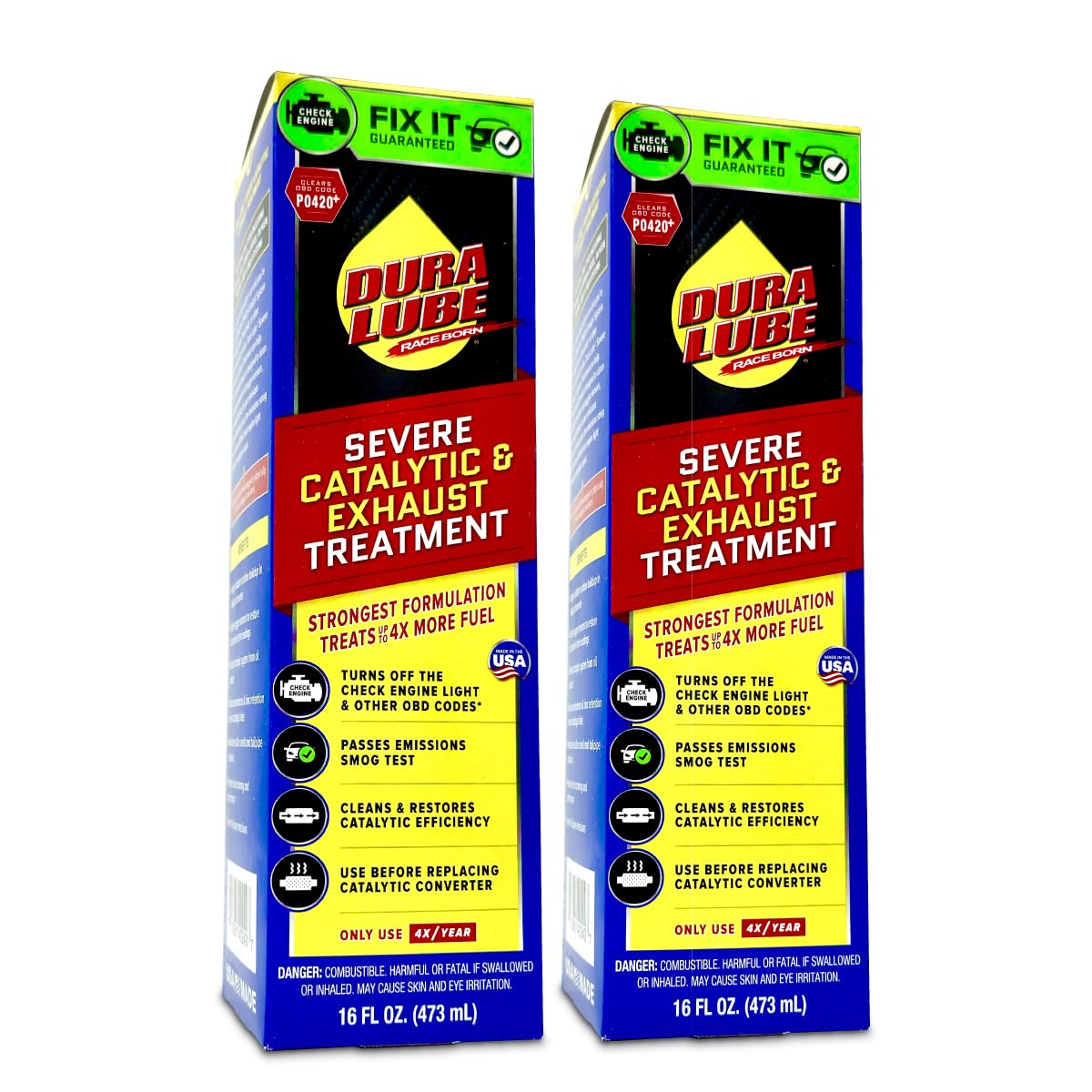
2. Dura Lube Severe Catalytic & Exhaust Treatment
The heavy-hitter for high-mileage rigs that need constant converter maintenance.
If your daily driver is north of 200,000 miles, this 2-pack of 16 fl oz treatments is built for your situation. Owners mention it cleared the check engine light on a 297k-mile truck with failing converters and kept it off when used every couple of tanks — a fraction of the replacement bill a shop would quote.
Aside from the code, this earns its keep on smells and smoothness. Multiple owners say it wiped out the rotten-egg sulfur odor after a spark plug misfire fix, and The maker notes it cleans carbon from the converter, oxygen sensors, and exhaust all at once while also functioning as a fuel injector cleaner, which explains the reported gas mileage gains of up to 10%.
The catch is consistency. A fair number of owners found the light cleared for only a tank or two before returning on the next refill, meaning this works best as a recurring maintenance habit rather than a one-and-done miracle. A couple of buyers also reported the light never cleared at all and couldn’t reach support — worth knowing before you rely on it for a deadline inspection.
Built for the long haul: this is the pick for drivers who treat a catalytic cleaner as routine upkeep, not an emergency fix.
Not for one-shot fixes: if you need a single dose to pass a test this week, a stronger instant-cleaner may serve you better.
3. MotorPower Care Catalytic Converter Cleaner 2-Pack
The patient fixer that outlasts rivals — its code-clearing magic often appears on the second tank.
Here’s where the category gets interesting: some owners tried Cataclean and a chain-store cleaner with zero luck, then this 2-pack of 8.45 fl oz bottles finally silenced their P0420 and P0430 codes. The secret is patience — the first can on a half tank did nothing, but the second can on a half tank got the light to clear.
That delayed response actually points to a smarter formula. Owners describe using two bottles in a near-empty tank, letting the engine hot-soak at high RPMs overnight, then driving normally — and the codes stayed cleared for thousands of miles. One comparison showed it beating both DuraLube’s 800-mile result and Cataclean’s 300-mile result, with the light still off after 4,000 miles.
Being patient is the whole game here. Drivers report the onboard sensors need about 200 miles of driving to reset after disconnecting the battery for 30 minutes, so this isn’t a pour-and-pray product. The brand is also upfront that it can’t fix a cracked or melted converter — it cleans, it doesn’t repair.
Worth the wait: the strongest choice for stubborn codes that other cleaners couldn’t shake.
Needs commitment: expect to run two full bottles and a proper drive cycle before judging results.
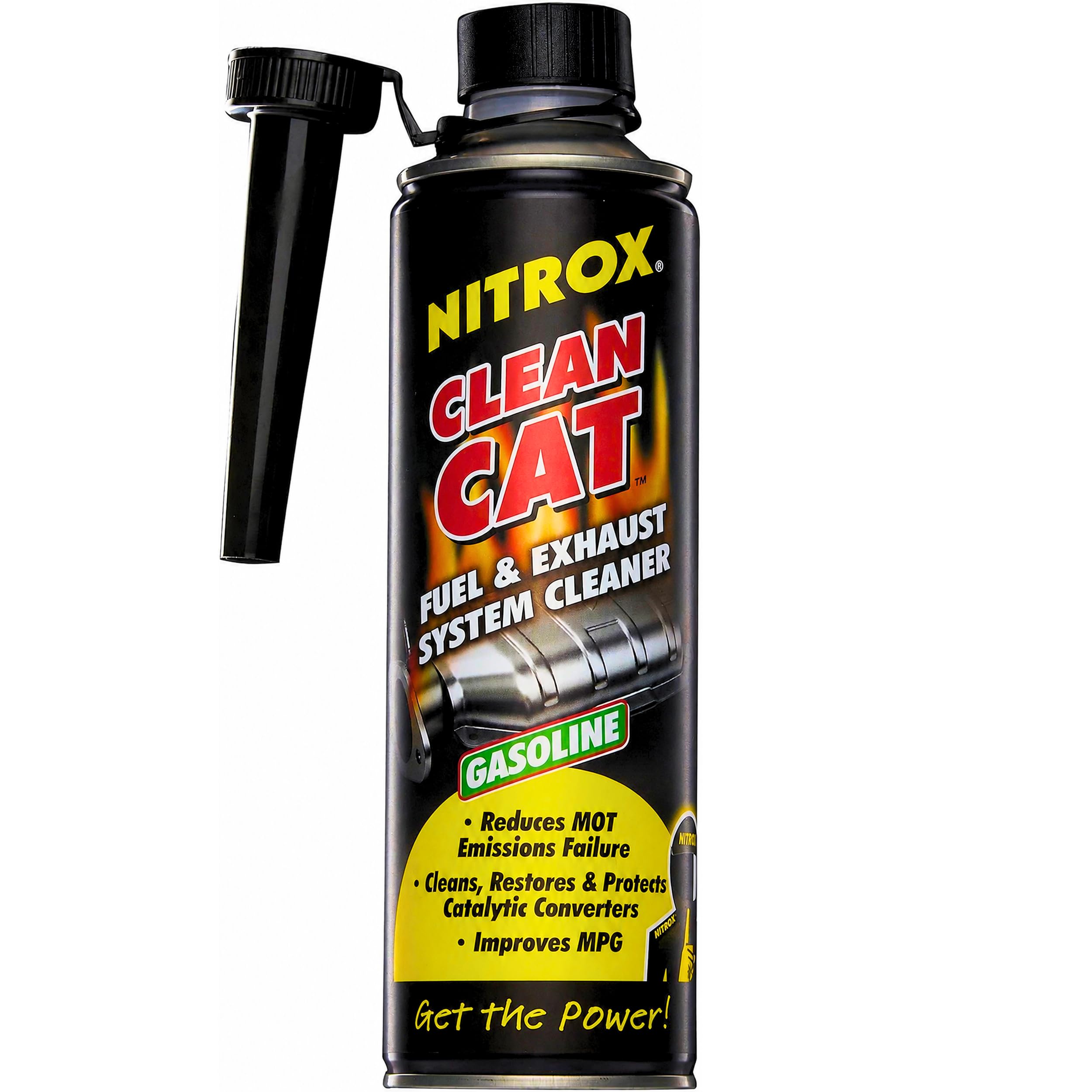
4. Nitrox Clean Cat Catalytic Converter Cleaner
A generous 17-ounce dose that works best when you follow its precise drive-cycle ritual.
This one rewards methodical drivers. The 17 fl oz can comes with a spout for a clean pour, and the maker’s guidance is specific: use one can at under a quarter tank, drive 50-60 miles, then fill up with detergent gas and add a second can. Owners who followed that script saw the check engine light go out within the first day.
Success depends heavily on vehicle age. Owners found it works best on cars under 15 years old when used soon after the light appears — on older vehicles, the success rate drops noticeably because years of carbon deposits are harder to dissolve. It’s also pitched as a preventive habit, with the maker suggesting use 3-4 times a year to avert costly converter failures.
The honest warning here is real. One owner reported the cleaner actually clogged their catalytic converters on a GMC Terrain within two weeks, costing far more in the end. That’s an edge case, but it’s why this pick suits cars with light-to-moderate buildup rather than severely neglected systems.
Strong points
- Large 17 fl oz can with easy-pour spout
- Check engine light often clears within a day of driving
- Clear, repeatable drive-cycle instructions
- Designed to boost throttle response and BHP
Watch out for
- Best results only on newer cars under 15 years old
- One severe case saw cats clogged further after use
- Mixed owner verdicts on overall effectiveness
Reach for this if: your car is relatively new and you can commit to the two-can drive cycle.
Look elsewhere if: you’re treating a 20-year-old converter with heavy buildup — the risk isn’t worth it here.
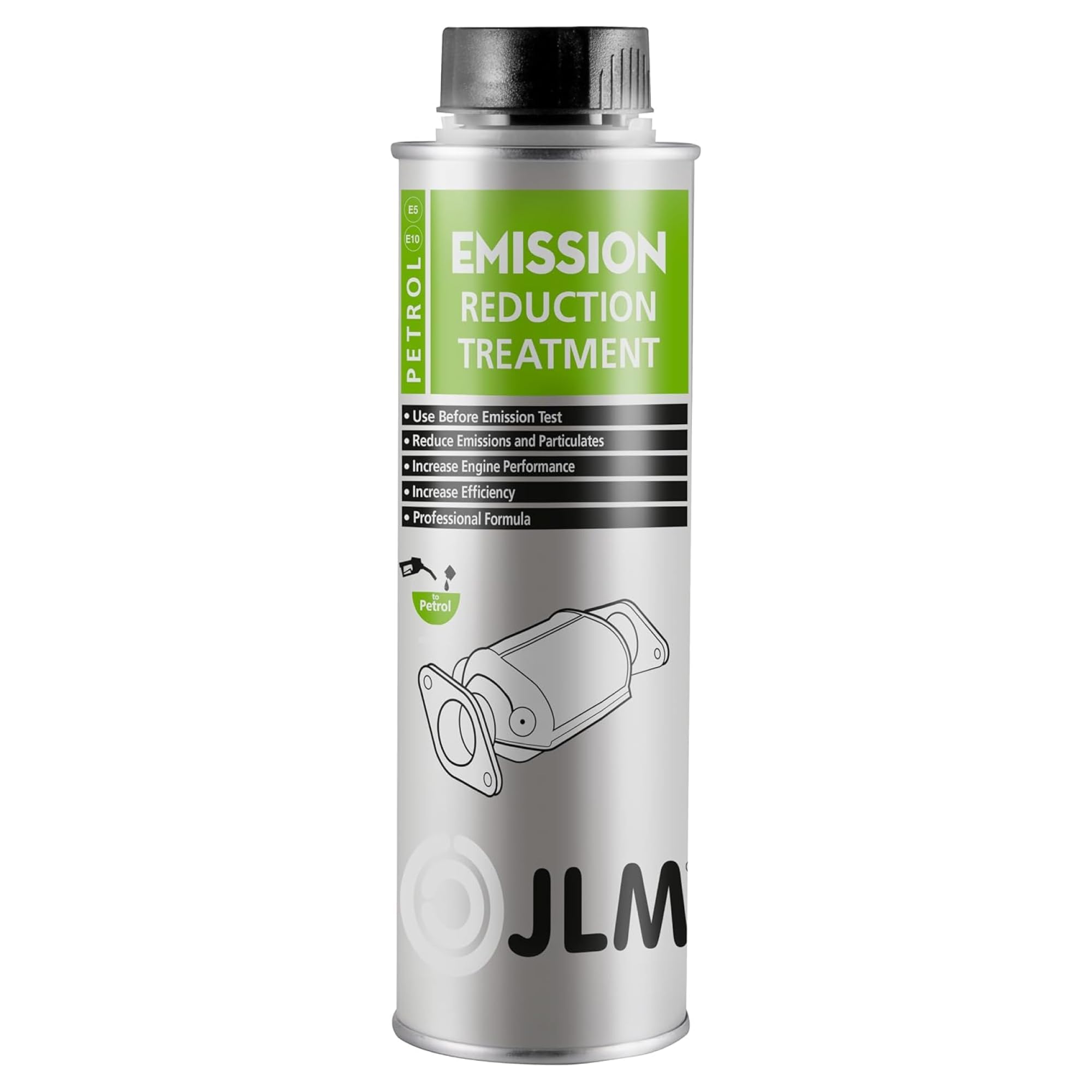
5. JLM Petrol Emission Treatment
A specialist that targets knocking and sticky valves as much as the converter itself.
JLM approaches the P0420 problem from a different angle. Beyond restoring catalytic converter function, this 250 ml treatment is explicitly formulated to eliminate knocking under partial loads and clean the lambda sensor (the oxygen sensor that tells your computer how well the cat is working). That broader approach is why customers note smoother performance across multiple cars.
The bottle design earns consistent praise for being easy to use, and European owners swear by it for passing their strict emissions inspections — one described running at 3,000 RPM for 20 minutes after adding it to the tank and clearing the test handily. It’s also stocked as a four-car treatment, with owners confirming a noticeable difference in performance across each vehicle.
What it isn’t is a fuel-economy miracle. As reviewers point out: “Bottle design is easy to use but noticed no difference in engine power or fuel economy.” If your only goal is squeezing out extra MPG, this may disappoint — but if you’re chasing a passable emissions test and smoother idle, it delivers.
A targeted emission tool: ideal for petrol cars facing inspection with mild converter and sensor buildup.
Skip for MPG gains: owners saw no fuel-economy change, so manage expectations on that front.
6. Sledgehammer Catalytic Converter Fuel System Cleaner
A pre-test insurance policy that got a 125k-mile Kia Soul through emissions with ease.
This is the cleaner you reach for when a mechanic has already confirmed your converters are still physically good but the code keeps returning. The classic scenario: a dealership tech told one owner the cats were fine even after the P0420 came back, so this product became the pre-emissions-test ritual that finally got the car through.
The brand leans on manufacturing credibility rather than flashy claims — It’s built by ISO-certified factories and inspected for fit, form, and function, with outstanding durability as the stated goal. Owners describe it as genuinely easy to use, which matters when you’re doing this on a Saturday before a Monday test.
The split verdict is honest: about as many shoppers say it did “no good at all” as report it worked. Given that, view this as a budget-friendly Hail Mary before committing to a converter replacement — if it works, you’ve saved thousands; if not, you’re no worse off than before.
Try before replacing: a sensible stopgap when your converter is confirmed intact but the code persists.
Mixed track record: results are genuinely split, so don’t bank your inspection on this alone.
7. WhyBox Catalytic Converter Cleaner Tablets 2-Pack
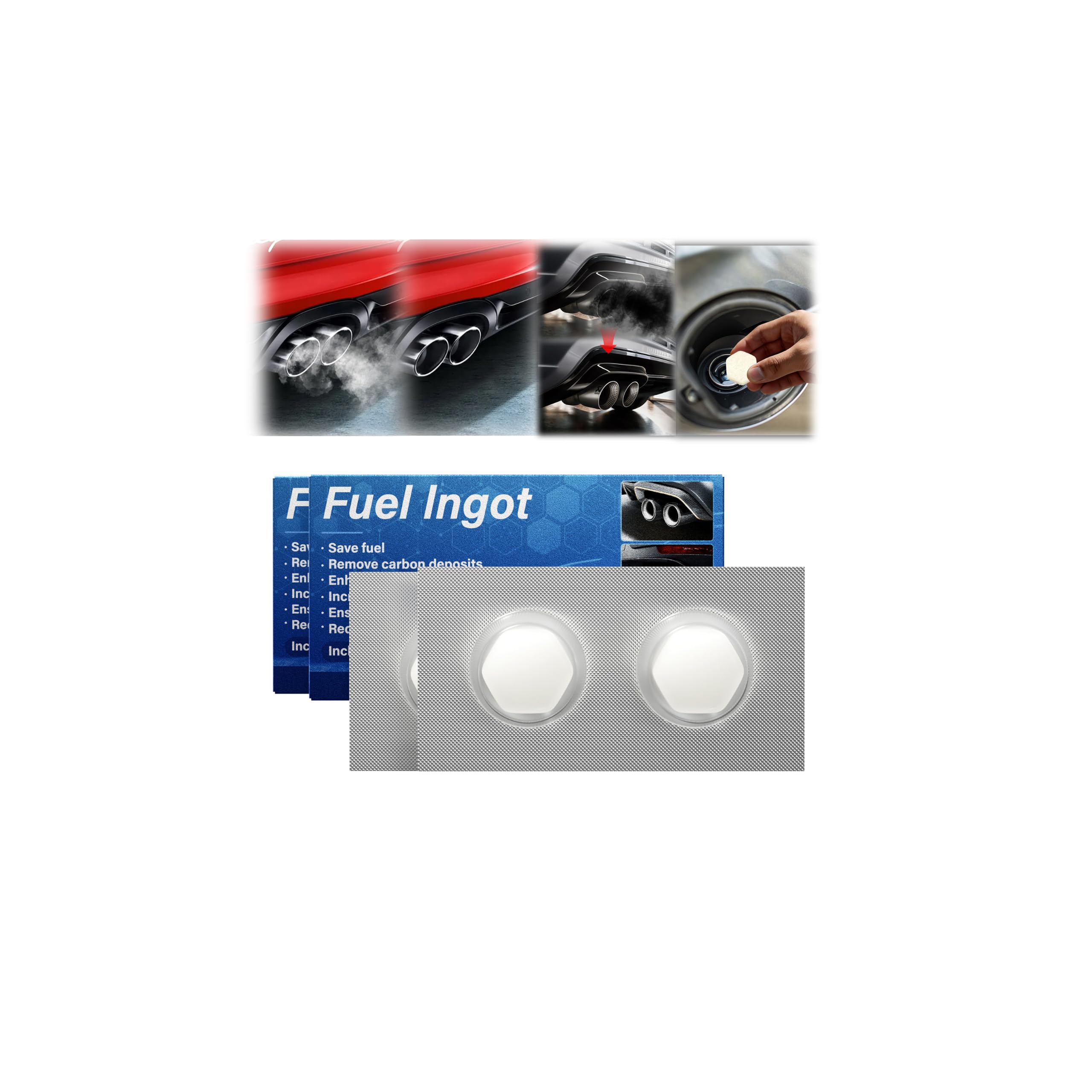
The featherweight tablet that slips into a glovebox and works its magic without a bottle.
At 0.634 ounces for the pack, this is the easiest product to store in the entire category — a real advantage when you want a dose ready for multiple vehicles or a roadside emergency. Just drop a tablet into the tank at refueling time, no measuring or pouring involved.
The performance record is genuinely encouraging. Buyers report a 3.5 EcoBoost F-150 King Ranch responded “in minutes,” and a daughter’s car that overheated from a radiator leak saw its check engine light vanish after two tablets in the tank — it hasn’t returned since. Another owner noted smoother idle, sharper throttle, better fuel economy, and reduced exhaust odor all at once.
Be honest about the mixed reviews, though. One owner used all four tablets and the engine light stayed on, concluding it did nothing for their particular converter. Performance gets the most praise by a wide margin, but quality opinions split — so treat this as a high-convenience option with vehicle-dependent results. The maker recommends two tablets initially, then one per refuel for best effect.
What wins people over
- Ultra-light 0.634 oz format stores anywhere
- Quick results reported on F-150 and post-repair cars
- Safe for gas, diesel, hybrid, and flex-fuel
- No spill, leak, or evaporation worries
Honest limitations
- Quality opinions are split between great and useless
- Failed completely for one owner’s converter code
- Needs two tablets up front for best results
Best for travel and storage: keep a pack in the car for on-the-go treatment of multiple vehicles.
Not a guaranteed fix: results depend heavily on your specific converter’s condition.
8. Buptop Catalytic Converter Cleaner 4-Pack
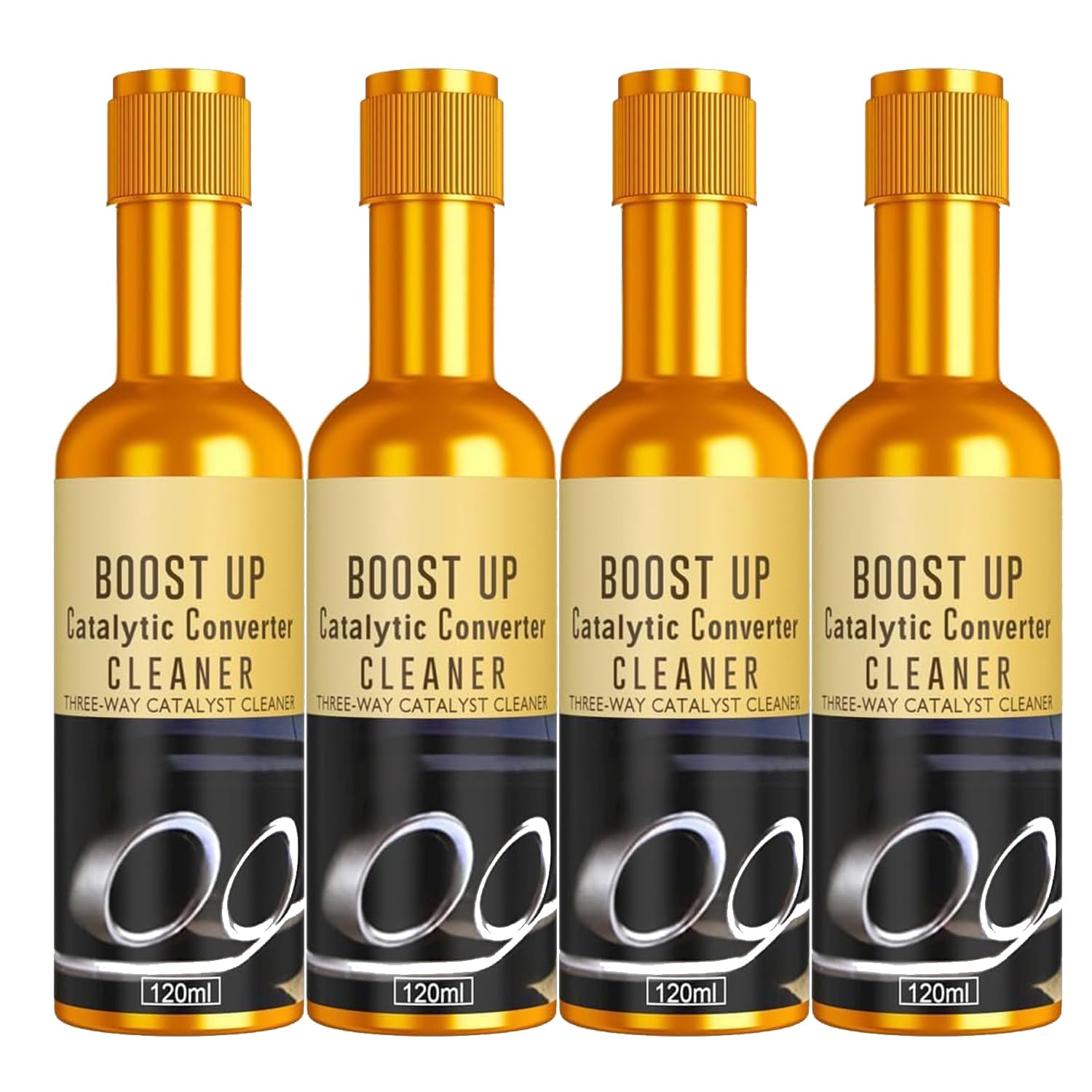
A four-bottle stockpile that tackled two vehicles’ sensor codes over two months of fills.
This is the patient man’s cleaner. Each 120 ml bottle is smaller than most rivals, but you get four of them for the price of many single cans — enough for a sustained multi-tank treatment that can outlast a one-shot dose. There’s no disassembly required; you just pour it in and let it dissolve carbon deposits over successive fill-ups.
The success story here is genuinely impressive. An owner with two different vehicles facing thousands of dollars in sensor replacement charges used one bottle every time they got gas for two months — and the engine lights turned off on both vehicles, which then passed California emissions. That kind of persistence pays off when buildup is deep.
A couple of practical perks round it out: A three-year shelf life means you can stock it without worrying about it going bad., and the small size keeps it easy to tuck away. The recurring gripe is that it’s not a quick fix — one owner who needed instant results said it didn’t work and recommended Cataclean instead. This one rewards consistency over speed.
Built for the long game: ideal if you want a multi-tank cleaning plan across two vehicles.
Not instant: expect weeks of repeated use, not a same-day light-off.
9. Solder-It Catalytic Converter Cleaner 12-Pack

A 12-can arsenal for shop owners who fight rotten-egg smells and stubborn codes daily.
When you’re maintaining more than one vehicle, buying in bulk makes sense — this 12-pack of 16 oz cans is the category’s volume play. It’s explicitly formulated as both a catalytic converter cleaner and deodorizer, meaning it targets the sulfur “rotten egg” exhaust smell as aggressively as it attacks carbon buildup. That dual purpose is why owners pair it with other cleaners to keep codes at bay.
The results show a clear pattern: this works fast when it works. One owner saw the cat-code light clear after just 20 minutes of driving — about 30 miles — with no return. Another with a 2005 Cadillac STS and a dual-cat replacement quote used it alongside Cataclean and cleared the code by day four, with less exhaust odor as a bonus. The speed makes it a strong pre-test option.
The honest caveat is longevity. A fair share of owners mention the light returns within a few hundred miles once the treatment wears off, and opinions split between “better than expected” and “doesn’t work at all.” For a fleet or a multi-car household, the per-can value and the smell control make it worth keeping around — just don’t expect one can to be a permanent cure.
Great for multiple cars: the 12-can format plus odor control suits shops and households.
Repeated use needed: codes can return after a few hundred miles, so budget for the whole pack.
Understanding the Specs
Volume per dose
The amount of cleaner in each bottle or can directly affects how many treatments you get. A 500 ml bottle like Cataclean is a full-size dose in one pour, while smaller 120 ml bottles from the budget 4-pack need repeated use across several tanks to match that cleaning power. Bigger isn’t automatically better — but for a single-vehicle fix, a larger single dose usually dissolves heavy buildup faster.
Liquid vs. tablet format
Liquid cleaners pour straight into the fuel tank and are the most common, while tablet formats dissolve in the tank and offer vastly easier storage. The tablet pack weighs just 0.634 ounces versus a 13.6-ounce liquid bottle, so if you want a cleaner that lives in your glovebox for emergencies, tablets win on convenience. Liquids generally offer a larger active dose per treatment.
Fuel-type compatibility
Not every cleaner works on every engine. Some explicitly cover gasoline, diesel, and hybrid vehicles, while others are strictly for petrol engines. Pouring a gas-only formula into a diesel engine won’t clean anything and could cause issues, so match the bottle’s stated compatibility to your vehicle before buying. This is the most common mistake first-time buyers make.
What the cleaner actually touches
The best products clean more than the converter itself — they also target oxygen sensors, fuel injectors, and cylinder heads. That broader reach matters because a P0420 code is often caused by a dirty O2 sensor feeding bad data to the computer. A cleaner that addresses the whole fuel and exhaust system has a better shot at silencing the light for good.
FAQ
Will a catalytic converter cleaner fix my P0420 code for good?
How many bottles or tablets do I need to clear the code?
Can I use these cleaners in a diesel or hybrid vehicle?
How long does it take to see the check engine light go off?
What’s the difference between a liquid cleaner and a tablet cleaner?
How long does an unopened bottle of cleaner last?
Why did my code come back after the cleaner worked?
Is a catalytic converter cleaner worth trying before paying for a replacement?
Does a cleaner improve my gas mileage too?
Final Thoughts: The Verdict
The overwhelming crowd favorite — with more than 15,000 owner experiences behind it — is the catalytic converter cleaner p0420 winner from Cataclean, thanks to its proven inspection-passing results and wide engine compatibility. If you need a second and third dose for a stubborn code, the MotorPower Care 2-Pack outlasted every rival in owner comparisons. And for high-mileage vehicles needing constant upkeep, the Dura Lube 2-Pack turns converter maintenance into an affordable routine.
How We Picked
We do not accept paid placement. Every pick is matched to a real buyer and a real use-case; we do not hands-on test units.
Sources & Methodology
Specifications: manufacturer listings and product documentation. Review insights: verified customer reviews, as of August 2026. Pricing: not shown on this page (it changes often); check the current price via the retailer link.
As an Amazon Associate, FitlyFast earns from qualifying purchases. This does not affect which products we feature.