
Our readers keep the lights on and the weekend projects moving. As an Amazon Associate, I earn from qualifying purchases.
Specs are compiled from manufacturer listings and verified buyer reviews and can change over time — please confirm the key details on the product page before buying.
Handing a teen their first phone usually comes with one knot in your stomach: how do you give them freedom without losing sleep over safety, durability, or a screen that swallows their whole day? The smart move is a device built for their real life — long battery for school days, a camera that doesn’t embarrass them, and specs that handle group chats without freezing.
I’m Rikta — the founder and writer behind FitlyFast. This guide is built by comparing the manufacturers’ published specifications and the patterns across verified customer reviews, so you get each pick’s real strengths and trade-offs instead of marketing spin.
Find the right cell phone for teens by weighing battery life, parental controls, and carrier compatibility against your child’s actual needs.
Our Picks at a Glance



How To Choose The Best Cell Phone For Teens
A teen phone has to survive three things: school days without a charger, a drop on the bus, and a parent’s need for oversight. Here is what actually separates a good first phone from a frustrating one.
Battery capacity is the real daily-must-have
Teens forget chargers at home. A battery measured in milliamp-hours (mAh) tells you how long the phone lasts — a 5000 mAh cell comfortably covers a full school day, while a smaller one might die by afternoon. Look for at least 4000 mAh if you want evening pickups to still see a working phone.
Carrier compatibility decides whether it works at all
An “open up” phone is not a promise it works on every network. GSM carriers (like AT&T and T-Mobile) and CDMA carriers (like Verizon) use different tech — and some international models only support specific bands. Always check the carrier list before buying, or you’ll have a brick until you return it.
Parental controls: software is not a babysitter
Some devices come with monitoring baked in, but not all filters block content in real time. If oversight is your priority, get a phone with dedicated parental control software rather than assuming standard Android settings will do the job.
Quick Comparison
| Model | Best For | Battery | Storage / RAM | Rear Camera | Amazon |
|---|---|---|---|---|---|
| Samsung Galaxy A06★ Best Overall | Parents on a budget who do not need premium speed. | 5000 mAh | 64GB / 4GB | 50 MP | Amazon |
| Realme C21YBest Value | Long workdays without a charger. | 5000 mAh | 32GB / 3GB | — | Amazon |
| Motorola Moto G PureBudget Champion | Two-day battery on a budget. | 4000 mAh | 32GB / 3GB | 13 MP | Amazon |
| Moto G Power | Teens who need three days of battery. | 5000 mAh | 64GB / 4GB | 48 MP | Amazon |
| Samsung Galaxy A16 | Bright AMOLED screen and better performance. | 5000 mAh | 128GB / 4GB | 50 MP | Amazon |
| Kyocera DuraXE Epic | Parents who want a flip phone with zero social media. | 1770 mAh | 16GB | — | Amazon |
| Motorola Moto G86 | Teens who want 5G and 256GB storage. | 5100 mAh | 256GB / 8GB | — | Amazon |
| Bark Phone | Parents who want built-in monitoring and GPS. | 5000 mAh | 32GB | — | Amazon |
In‑Depth Reviews
1. Samsung Galaxy A06
Our pick — 4.5★ from 300+ verified ratings; the strongest balance of quality and price.
A budget Samsung that nails the basics — big screen, big battery, and a camera that beats phones twice its price.
Your teen gets a full day of use without a recharge, thanks to the 5000 mAh battery (milliamp-hour, a measure of how long the charge lasts) in the Samsung Galaxy A06. The 50 MP rear camera (megapixels, a measure of photo detail) keeps their photos clear and sharp, not blurry. The 6.7-inch PLS LCD display (a type of screen that offers good viewing angles) with 720 x 1600 resolution is crisp enough for scrolling TikTok and watching videos.
Owners consistently report that quality is what wins them over — it’s the single most-praised aspect of this phone, far ahead of everything else. Buyers describe it as easy to use and well-built, with one noting it “works well in Cuba, connects to local networks, mobile data OK, long battery” — proof of its versatility. It comes bundled with a case, which is one less thing for you to buy.
The critical catch: this international model only works with T-Mobile and its prepaid brands (Metro) in the US. It will NOT work with Verizon, AT&T, or their affiliates. If your family is on T-Mobile, this is a phenomenal value pick. If not, it’s not the phone for you.
What parents love
- 5000 mAh battery easily covers a full school day
- 50 MP rear camera takes sharp, share-worthy photos
- Comes with a case in the box so it’s ready to go
Check before you buy
- Only works on T-Mobile and its prepaid brands in the US
- Does not support 5G networks
The T-Mobile budget pick: If your family is on T-Mobile, this is the easiest recommendation — a proven Samsung build with a battery that outlasts the school day.
Think twice if: Your carrier is Verizon, AT&T, or any CDMA-based network — this phone simply won’t work there.
2. Realme C21Y
The battery beast for teens who use GPS all day and still come home with power to spare.
The Realme C21Y is built around its battery. Its 5000 mAh cell is the same capacity as the pricier Samsung, and buyers report it “lasts full workday (4h GPS, calls, messages) with 35-40% left” — which means a teen can roam all day without a charger. The 6.5″ HD+ screen (1280×720 resolution) is bright enough to use outdoors, though it’s a step down in sharpness from the Samsung A05’s 720 x 1600 panel.
The fingerprint sensor is fast, there’s a headphone jack for wired earbuds, and it runs near-stock Android 11 — meaning no bloatware slowing it down. That’s a real benefit for a budget phone.
The trade-off: it has only 32GB of storage and 3GB of RAM, which is half the storage of the Samsung A05’s 64GB. And the display isn’t the best — some owners noted dead pixels on arrival and a bottom-placed speaker that’s easy to cover with a finger. For a teen who mainly texts, calls, and uses maps, this is a solid workhorse.
The battery-first pick: If your teen’s biggest problem is a dead phone by 3 p.m., this solves it — the 5000 mAh battery is the most reliable part of the package.
The honest caveat: Limited 32GB storage means no big games or long video libraries without a microSD card.
3. Motorola Moto G Pure
A rugged, water-repellent budget phone that’s been dropped, kicked, and thrown — and keeps working.
If your teen drops things often, the Moto G Pure is built to survive. Its water-repellent design (a coating that makes water bead off) shrugs off spills and splashes, and owners mention it lasting years of heavy use without damage. The 4000 mAh battery is the smallest on this list — a step down from the 5000 mAh in the Samsung Galaxy A06 — but customers note it still lasts two days with normal use, and about one day with heavy gaming.
The 6.5″ Max Vision HD display and 13 MP dual camera with Night Vision are serviceable, and the near-stock Android experience means no bloatware to slow things down. It also carries a MediaTek Helio G25 octa-core processor with HyperEngine for responsive swipes. The fingerprint reader is a nice security touch for teens.
The big problem is compatibility. Reviewers point out significant issues with Verizon service, and the 32GB of storage shrinks to roughly half after the OS — so you’ll want a microSD card. Some owners also note the phone feels slow. It’s a love-it-or-hate-it budget option, but for a basic calls-and-texts phone that can take a beating, it gets the job done.
The durable budget pick: Drop-proof enough for the clumsiest teen, with a water-repellent design that survives school-bag chaos.
The honest caveat: 32GB storage shrinks fast, and Verizon compatibility is a known pain point.
4. Moto G Power

The phone that goes a full three days between charges — the ultimate cure for a forgetful teen.
If there’s one spec that defines the Moto G Power, it’s the 5000 mAh battery that delivers up to three-day battery life. This is the phone for the teen who never remembers to plug in. Shoppers say exceptional endurance — one described battery life as “crazy good,” with the phone barely dropping below 90% through a workday. A 48 MP triple camera system adds genuinely capable photography, with owners noting it beats an iPhone for everyday shots.
You get smooth performance for social media, video chats, and light gaming, thanks to the 6.6-inch Max Vision HD display (720 x 1600 resolution) and the Qualcomm Snapdragon 662 processor (a chip that handles everyday tasks). The water-repellent design means a spilled drink won’t kill the phone. Buyers consistently praise the build quality and the battery life, making it among the most positively-reviewed budget phones we’ve seen.
The trade-offs: the camera is “average at best” according to a film critic of an owner, and the fingerprint/power button can be finicky. Verizon compatibility also generates complaints, with some buyers struggling to activate it. But for a teen who values battery over everything, this is a standout.
The three-day endurance pick: Battery life is the headline — this phone outlasts almost everything on the market, including phones twice its price.
The honest trade-off: The camera won’t win awards, and Verizon setup can be a headache.
5. Samsung Galaxy A16

The first big upgrade: an AMOLED screen so bright that even a teen’s video addiction looks good.
The Galaxy A16 is what you buy when you want the best display quality in this price range. Its 6.7″ Super AMOLED screen with 2340 x 1080 resolution (385 pixels per inch) delivers colors and brightness that utterly outshine the budget LCD panels on the A05 and A06. Buyers consistently praise the screen quality — it’s the second most-mentioned positive aspect, and one review noted the “6.7” Super AMOLED 90Hz” refresh rate makes scrolling feel silky smooth. The 50 MP main camera takes good pictures, and the 128GB storage gives real room for apps and photos.
The 5000 mAh battery keeps the phone running all day, and the One UI interface (Samsung’s custom version of Android) is simple to navigate. One buyer in his 50s summed it up: “I don’t need a phone that costs hundreds of dollars… This is a great phone, it works well and I’m very happy with it.” If your teen wants a phone that feels more premium in the hand, this is the balance.
The critical limit: like the A06, this international model is only compatible with T-Mobile and its prepaid brands in the US. It won’t work with Verizon, AT&T, Spectrum, or Cricket. Some buyers also found the setup process annoying because of a required Samsung account. If you’re on T-Mobile and want the best screen, this is the pick.
Why it’s worth the step up
- Super AMOLED display with 1080p resolution looks dramatically better than budget LCDs
- 128GB storage means no microSD juggling
- 90Hz refresh rate makes scrolling feel smooth
Know before you buy
- T-Mobile only in the US — no Verizon or AT&T
- Samsung account required during setup
The screen-quality pick: For a teen who watches a lot of video, the AMOLED panel is a genuine day-and-night difference over budget LCDs.
Reach for this if: Your family is on T-Mobile — otherwise, the A05 is the safer Samsung choice.
6. Kyocera DuraXE Epic Flip Phone

For parents who want to hand their teen a phone — not a distraction machine.
This Kyocera flip phone is the opposite of a smartphone, and that’s exactly its appeal. It’s rugged, with durability that owners praise — one even noted it survived “rough handling” without issues. A 4:3 aspect ratio TFT LCD display (240 x 320 — tiny by smartphone standards) ensures no one’s watching videos on this thing. It’s a calls-and-texts device, and that’s the point. Plus, it’s FirstNet Certified, which speaks to its build quality for first responders, and it comes with a 2-year Kyocera warranty.
Functionality is what owners praise most — it does what a phone should do. As one happy buyer put it, “Way better than the fancy smart phones. Does everything I need and want!!!” It works with AT&T, Consumer Cellular, and T-Mobile, though Verizon-based networks won’t work. The 1770 mAh battery is small, but a flip phone with a tiny screen sips power, so it can still last days on a charge.
The catch: battery life is the most-discussed negative, with some owners reporting it “doesn’t hold a charge after two months” and others fighting with an open up code for non-AT&T carriers. There’s also a documented factory battery issue that the seller helps resolve with Kyocera. For a parent who wants the most distraction-free option possible, this is the one.
The ultimate no-screen-time pick: You can’t scroll TikTok on a 240 x 320 display — this is a phone for calls and texts only.
The honest caveat: Battery quality has been inconsistent, and non-AT&T carriers may need an open up code.
7. Motorola Moto G86
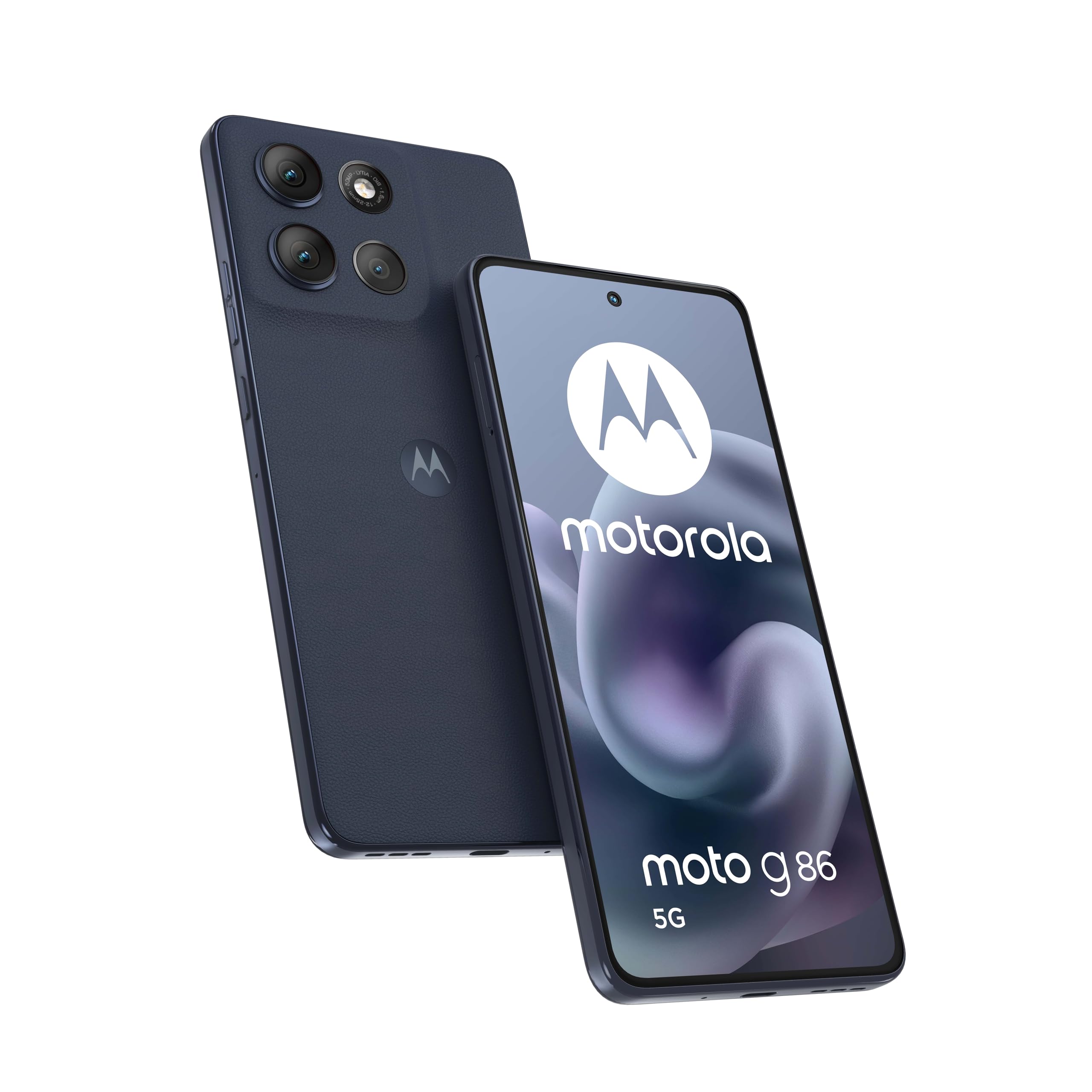
The 5G phone with 256GB of storage that a teen won’t outgrow by next year.
If you want to buy once and not think about it again, the Moto G86 is the future-proof option. It’s the only phone on our list with 5G support, meaning it’s ready for the faster networks that are becoming standard. The 256GB of storage is massive — four times the Realme C21Y’s 32GB — and the 8GB of RAM (the memory that keeps apps running smoothly) is double what most budget phones offer. That combination means it will handle new apps and games for years without slowing down.
The 5100 mAh battery is the largest on our list, and it shows — buyers report all-day light use and about 14 hours of heavy use. A 32 MP front camera is a notable step up for selfie lovers, and owners consistently praise the quality and value. The build is solid with a good grip, and the data connection stays reliable without drops. It weighs 185 g, which feels substantial but not heavy.
The trade-offs: the speaker quality is bad — one owner called it “terrible” with inconsistent notification sounds — and it’s a GSM-only device, so no CDMA carriers. It’s also the second most expensive phone here, which makes it a considered purchase. For a teen who keeps up with trends and wants a phone that lasts through high school, this is the smart investment.
The long-haul pick: 8GB of RAM and 256GB of storage mean this phone won’t feel outdated in two years — a rarity in this price tier.
The honest flaw: The speaker is genuinely bad — your teen will want earbuds for anything beyond a quick call.
8. Bark Phone
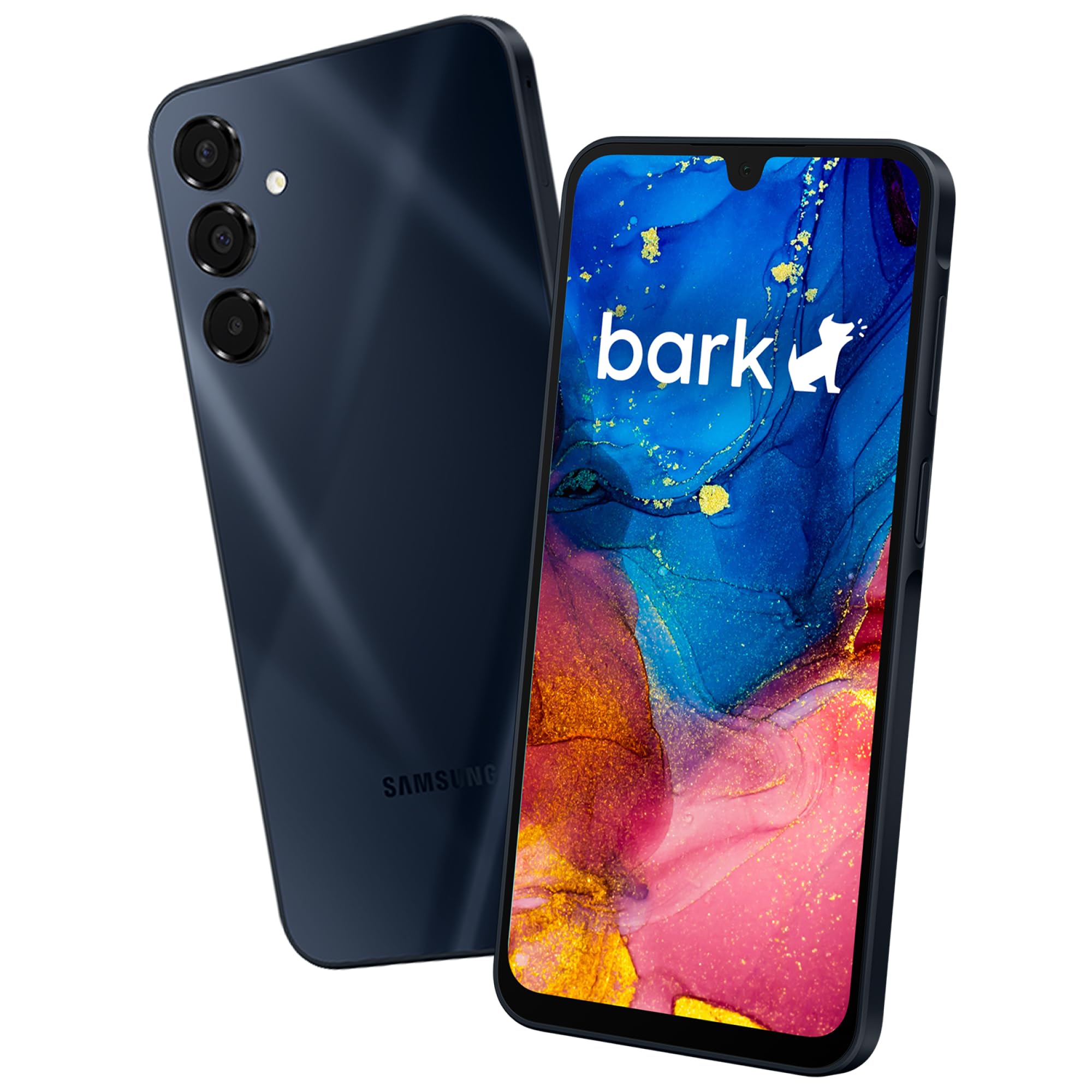
A phone built for parents — with monitoring, GPS, and controls that actually stay put.
The Bark Phone isn’t just a phone — it’s a parental control system with a smartphone attached. It’s built on the Samsung A16 hardware, rocking that same 5000 mAh battery, but the real value is in the software. You get real-time GPS tracking with three ways to monitor: a live map, location alerts, and check-ins. You can approve every app and contact, filter websites, and even pause the internet when your teen needs a break. Alerts flag potential issues across texts, emails, and 30+ social media platforms — from cyberbullying to drug mentions.
Owners praise the functionality most, then the safety features. Reviewers call it a “great first phone” that gives parents real confidence. The controls are tamper-proof — your teen can’t delete texts without your permission or change the rules you’ve set. The 1080×2400 pixels AMOLED display (a screen type with deep blacks and vivid colors) at 400 pixels per inch (a measure of sharpness) makes it a pleasure to use, and the 5000 mAh battery easily handles a day of school and social life.
The critical catch: it requires a monthly subscription on top of the phone price. Some buyers found setup confusing, and one noted that certain restricted sites weren’t blocked in real time — only flagged after the fact. It’s also the most expensive option here by a clear margin.
What makes it different
- Real-time GPS tracking with live map, alerts, and check-ins
- Tamper-proof controls — teens can’t delete texts or change rules
- Monitors 30+ social media platforms for safety issues
What it costs you
- Monthly plan required, starting at /mo
- Some restricted sites are flagged after the fact, not blocked live
The peace-of-mind pick: If monitoring is non-negotiable, this is the only phone built to give you real-time oversight from the start.
Weigh this first: The monthly fee adds up over time, and filtering isn’t always real-time.
Understanding the Specs
Battery Capacity (mAh)
This number tells you how long the phone lasts on a charge. A 5000 mAh battery (milliamp-hours, the unit of energy storage) easily covers a school day with heavy use, while a 4000 mAh version might need a mid-day top-up. For a teen who forgets to charge, bigger is always better.
Storage & RAM
Storage (32GB, 64GB, 128GB) is how many apps, photos, and videos the phone holds. RAM (3GB, 4GB, 8GB) is the working memory that keeps apps running smoothly. More RAM means less freezing when switching between apps — a 4GB minimum is a good rule for a teen who multitasks.
FAQ
Will an open up GSM phone work on Verizon?
How much storage does a teen actually need?
What does a 5000 mAh battery mean in real life?
Are parental control apps enough for a teen’s first phone?
Is a 50 MP camera really better than a 13 MP camera?
What is the difference between 4G and 5G?
How much RAM (random-access memory) does a teen phone need?
Is a flip phone a good idea for a teen?
What is a screen-to-body ratio in a phone display?
Do these phones come with a charger in the box?
Final Thoughts: The Verdict
For most families, the Samsung Galaxy A06 is the winner because it covers the essentials — a 5000 mAh battery, a 50 MP camera, and a large 6.7-inch screen — at a price that keeps parents happy. If your child’s biggest issue is a dead phone by afternoon, choose the Realme C21Y or the Moto G Power for battery life that stretches into the next day. For the ultimate confidence, the Bark Phone is the one to reach for — it’s the only pick here that puts parental monitoring and GPS tracking at the center of the experience.
How We Picked
We do not accept paid placement. Every pick is matched to a real buyer and a real use-case; we do not hands-on test units.
Sources & Methodology
Specifications: manufacturer listings and product documentation. Review insights: verified customer reviews, as of August 2026. Pricing: not shown on this page (it changes often); check the current price via the retailer link.
As an Amazon Associate, FitlyFast earns from qualifying purchases. This does not affect which products we feature.