
Our readers keep the lights on and the weekend projects moving. As an Amazon Associate, I earn from qualifying purchases.
Specs are compiled from manufacturer listings and verified buyer reviews and can change over time — please confirm the key details on the product page before buying.
If you live where cable and fiber never reached, a cellular modem is the difference between a blinking “no signal” screen and a connection that actually holds. The right one turns a weak bar or two into a stable network for your whole home, RV, or remote office.
I’m Rikta — the founder and writer behind FitlyFast. This guide is built by comparing the manufacturers’ published specifications and the patterns across verified customer reviews, so you get each pick’s real strengths and trade-offs instead of marketing spin.
These picks focus on real-world grip, carrier compatibility, and the features that keep you online. This guide to the best cellular modem options cuts through the jargon to what actually matters for your signal.
Our Picks at a Glance


How To Choose The Best Cellular Modem
A cellular modem is a box that takes a SIM card’s mobile signal and turns it into a Wi-Fi or Ethernet connection for your devices. The hard part isn’t the hardware — it’s matching the modem’s supported bands to the towers your carrier actually uses.
Check carrier bands before anything else
Every carrier broadcasts on specific frequency bands, and not every modem covers every band. If your modem lacks the band your carrier uses in your area, you get slow speeds or nothing at all. Look for modems explicitly certified for your carrier — like the Teltonika RUT241, certified by Verizon, AT&T, and T-Mobile.
Match the speed class to your needs
Modems come in speed tiers. A 4G LTE Cat 4 modem tops out around 150 Mbps download — plenty for streaming and video calls. A Cat 12 modem uses carrier aggregation, and a 5G modem reaches far higher speeds. Your choice depends on whether you’re streaming 4K or just checking email.
Decide on single or dual SIM
Dual-SIM modems let you run two carriers at once. The key distinction is “failover” (switches to the backup SIM only when the primary drops) versus “load balancing” (uses both simultaneously). If you need always-on internet for work, failover is the feature that keeps you connected.
Quick Comparison
| Model | Best For | Max Speed | SIM Slots | Wi-Fi | Amazon |
|---|---|---|---|---|---|
| MOFI6500-5GXeLTE★ Best Overall | Business-grade 5G | 3.4 Gbps | Dual | Wi-Fi 6 | Amazon |
| Cudy Outdoor LT500Outdoor Pick | Weatherproof outdoor | 150 Mbps | Single | AC1200 | Amazon |
| Yeacomm YF325Industrial Value | Industrial IoT | 150 Mbps | Dual | 802.11b/g/n | Amazon |
| GL.iNet GL-X2000 | Fast 4G with Wi-Fi 6 | 2402 Mbps | Dual | Wi-Fi 6 | Amazon |
| TravlFi JourneyGo | Portable RV travel | — | e-SIM | Single-band | Amazon |
| Teltonika RUT241 | Compact industrial | 150 Mbps | Single | 802.11b/g/n | Amazon |
| GL.iNet GL-X3000 | 5G for RV and home | 3000 Mbps | Dual | Wi-Fi 6 | Amazon |
| Cudy 5G NR P5 | Premium 5G with dual SIM | 2976 Mbps | Dual | AX3000 | Amazon |
In‑Depth Reviews
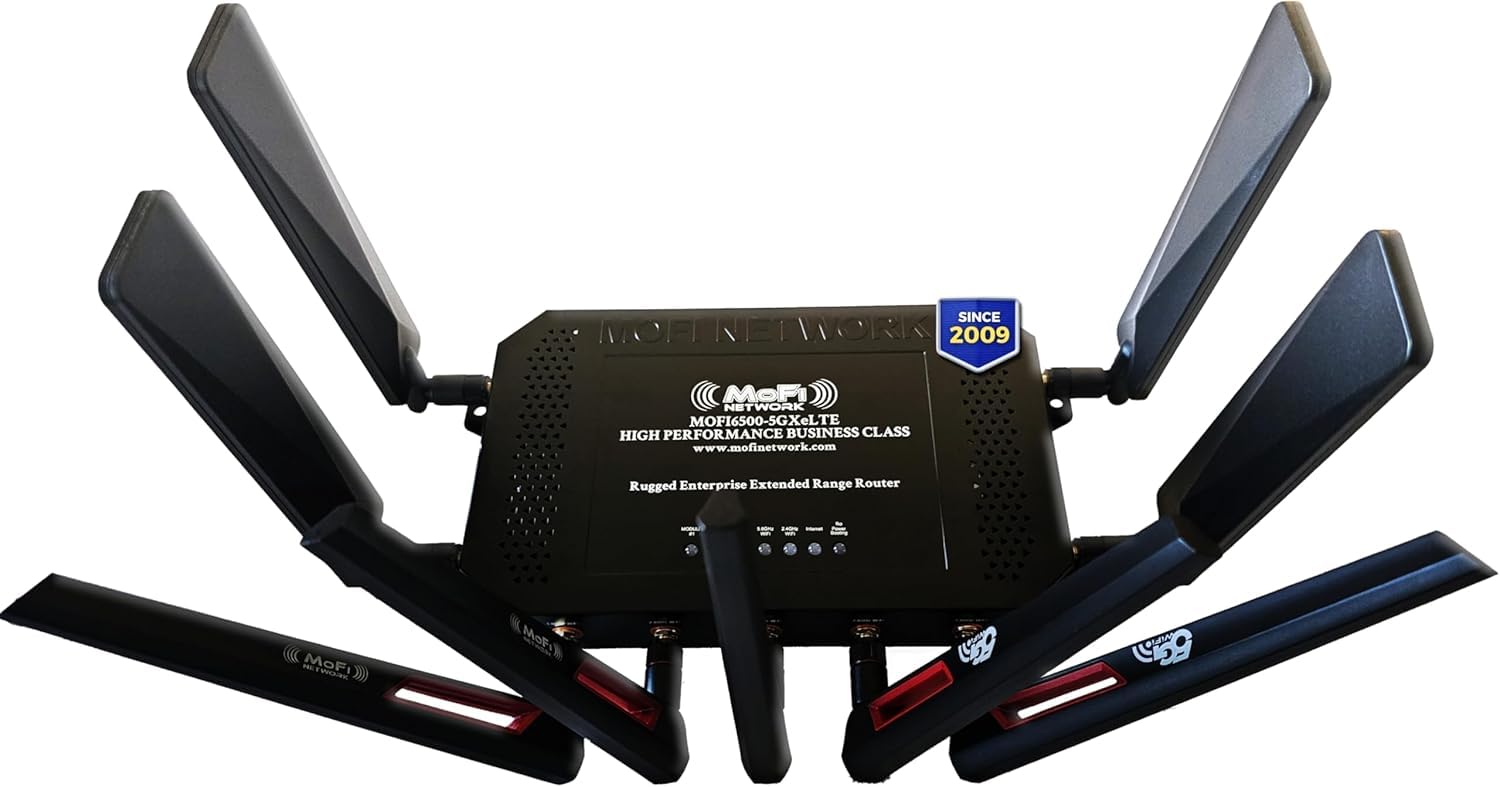
1. MOFINETWORK MOFI6500-5GXeLTE-RM520-HP
Our pick — over 4★ from 850+ verified ratings; the strongest balance of quality and price.
The business-class box that turns one weak bar into four, with a full metal case built to run all day without overheating.
The MOFI6500 is the pick when your connection absolutely cannot drop. It pairs 5G and 4G LTE in one rugged metal enclosure with detachable antennas, and its dual SIM slots switch automatically between carriers to keep you online. Owners in rural areas report that adding a Yagi antenna takes a signal from 1 bar to 4 bars — the kind of jump that separates a buffering nightmare from a smooth stream.
Setup is genuinely fast for most people, with one buyer up and running in two minutes on AT&T. The technical interface is deep enough for experts — you can lock onto specific bands like 3, 5, 13, and 66 — yet beginners find the out-of-box experience friendly. Its 3.4 Gbps data transfer rate over 5 GHz is the fastest headline number in this lineup, and Wi-Fi 6 with built-in amplification pushes a strong signal across a home or small business.
The catch: dual SIM here means automatic failover, not two simultaneous active connections. If you expected true simultaneous dual-SIM, you’d need to look at a different model. And while most owners find it worth the money for the reliability, a few feel it runs pricey for a router.
What wins people over
- Business-grade reliability with IP pass-through, failover, and band lock
- Dual SIM auto-failover keeps the connection alive
- Full metal case with detachable antennas for heat and range
Read the fine print
- Dual SIM is failover only, not simultaneous
- Occasional reports it doesn’t play well with AT&T
Reach for it if: your home or business internet can’t afford a single drop and you want a rugged, powerful 5G router with real failover.
Look elsewhere if: you specifically need both SIMs active at the same time — this model swaps, it doesn’t combine.
2. Cudy Outdoor 4G LTE AC1200 Wi-Fi Router LT500
A weatherproof workhorse that mounts on a pole and survives rain, dust, and freezing cold while serving up to 50 devices.
The Cudy LT500 is built for the outdoors — literally. With an IP65 weatherproof rating and a temperature range from -40°C to 65°C, it shrugs off the elements that kill indoor routers. It runs on 24V Passive PoE, so a single Ethernet cable delivers both power and data, letting you mount it high on a wall or pole for the best possible signal.
Coverage stretches to about 100 meters outside, and the AC1200 dual-band Wi-Fi 5 with MU-MIMO handles up to 50 connected devices. Owners praise the reliability and note a big signal boost — one buyer saw +20dB RSRP versus a phone, and another +10dB more just from the outdoor mount. The IMEI can be changed to work with cheaper phone plans, which is a budget-friendly trick for virtual carriers.
The honest trade-offs: it’s 4G LTE Cat 4 only, so no 5G speeds here, and setup instructions leave some buyers confused. A few units have failed after about a month, and the included wall mount and short Ethernet cable feel substandard to some owners — plan to use your own hardware.
Built for the elements
- IP65 weatherproof with 4kV surge and 8kV ESD protection
- PoE powers it over a single Ethernet cable, even beyond 50 feet
- Outdoor mount adds +10dB signal strength
Know before you buy
- 4G Cat 4 caps at 150 Mbps — no 5G path
- Occasional early failures and confusing instructions
Choose this one for: a permanent outdoor install where weatherproofing matters more than maximum speed.
Think twice if: you’re not comfortable sourcing your own mount and cabling — the included kit is a weak point.
3. Yeacomm YF325 Industrial 4G LTE Router
The rugged DIN-rail modem built for extreme temperatures and industrial gear, with dual SIM slots and serial ports.
The Yeacomm YF325 is an industrial tool, not a living-room gadget. Its aluminum IP30 casing withstands temperatures from -40°C to +85°C, and it runs on a wide DC voltage range of 5V to 36V — perfect for solar setups, trailers, and remote equipment. The DIN-rail mounting and RS232/485 serial interfaces connect it directly to industrial machinery, not just laptops.
Dual SIM slots give automatic failover, maintaining what the maker claims is 99.99% uptime for critical IoT applications. Owners running solar security camera trailers are “very satisfied,” with one reporting 6 cameras recording 24/7 without issues. The signal reach extends to 80 meters, and the 150 Mbps Cat 4 speeds beat fixed internet in some rural tests.
The recurring frustration is signal strength — a few buyers found the cell reception weaker than their phone’s, even with the external antenna attached. The antenna cable is short, and it’s not compatible with Verizon or Sprint, so check your carrier first. Reliability divides owners: some run it flawlessly for years, others hit failures within 16 months.
A true industrial tool
- Rugged aluminum casing, DIN-rail mounting, wide voltage input
- Dual SIM failover for near-continuous uptime
- RS232/485 serial ports for machine-to-machine gear
Not for everyone
- Not compatible with Verizon or Sprint
- Weak cell signal reported by several owners
Best for: solar-powered security cameras, gate intercoms, and remote industrial gear that needs a tough, low-power connection.
Not for: anyone on Verizon or Sprint, or anyone who needs strong signal without an external antenna upgrade.
4. GL.iNet GL-X2000 Spitz Plus
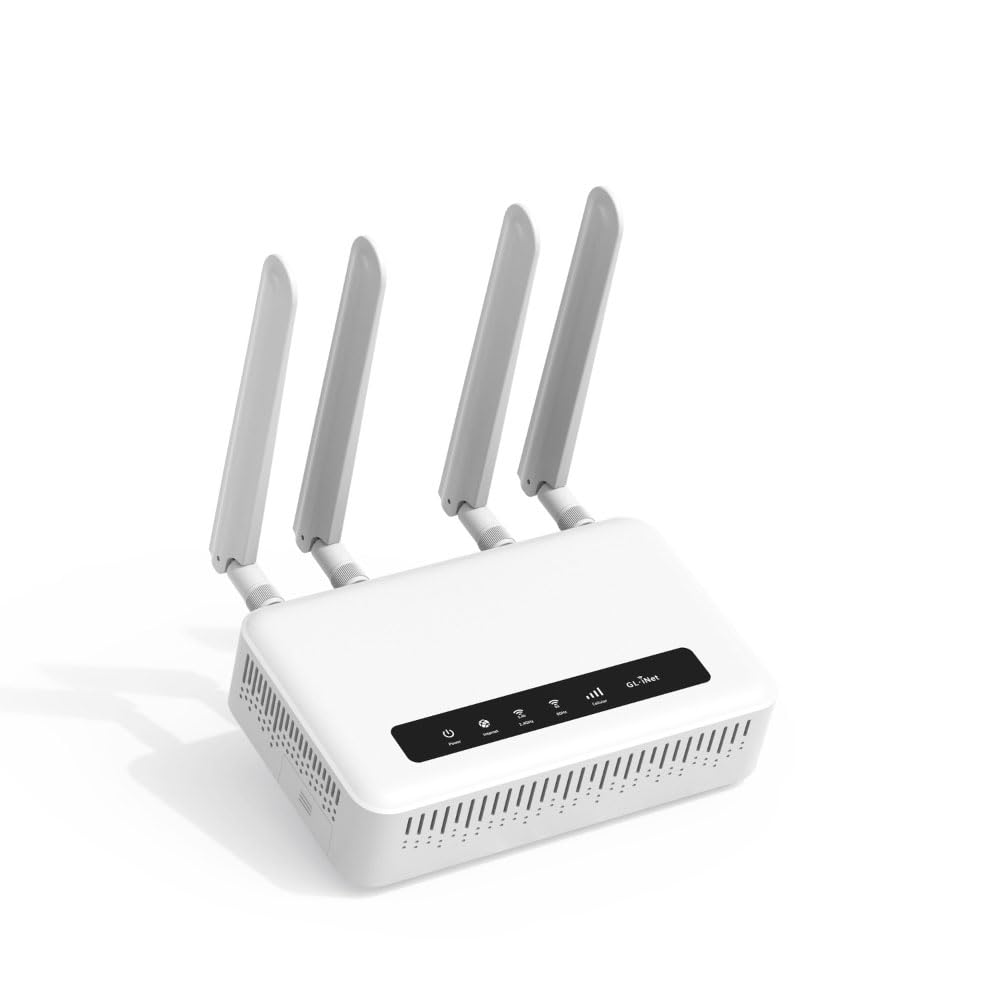
A 4G Cat 12 router that squeezes every drop of speed from LTE, with Wi-Fi 6 and a heavy aluminum build that says quality.
The GL-X2000 proves 4G is far from dead. Its Cat 12 modem uses three-carrier aggregation to combine multiple LTE bands, pulling download speeds up to 2402 Mbps on the 5 GHz Wi-Fi band. That’s enough to stream on multiple devices at once — buyers report 18-20 Mbps downloads that never stutter, even streaming several screens simultaneously.
Dual-SIM with single standby lets you pick the stronger carrier, and it’s certified for both AT&T and T-Mobile. The multi-WAN setup juggles Ethernet, repeater, cellular, and tethering connections with load balancing, so you can mix a Starlink bridge with a cellular backup. Four SMA connectors let you attach external antennas for weak-signal areas, and the OpenWrt-based firmware offers deep control.
The build quality is a standout — owners call it heavy and well-built, with mounting hardware included. But it’s a 4G device, so you won’t get 5G speeds. A rare complaint involves some units failing to hold an AT&T connection, and there’s no active-WAN indicator light to tell you which connection is live at a glance.
Why owners love it
- Cat 12 with three-carrier aggregation for fast LTE
- Multi-WAN with load balancing across connection types
- Heavy aluminum build with four SMA antenna ports
The trade-offs
- 4G only — no 5G support
- No active-WAN indicator light
Grab it if: you have solid 4G coverage and want near-5G speeds with the flexibility of multi-WAN and external antennas.
Skip if: your carrier offers 5G in your area — you’re leaving that speed on the table.
5. TravlFi JourneyGo LTE RV WiFi Hotspot
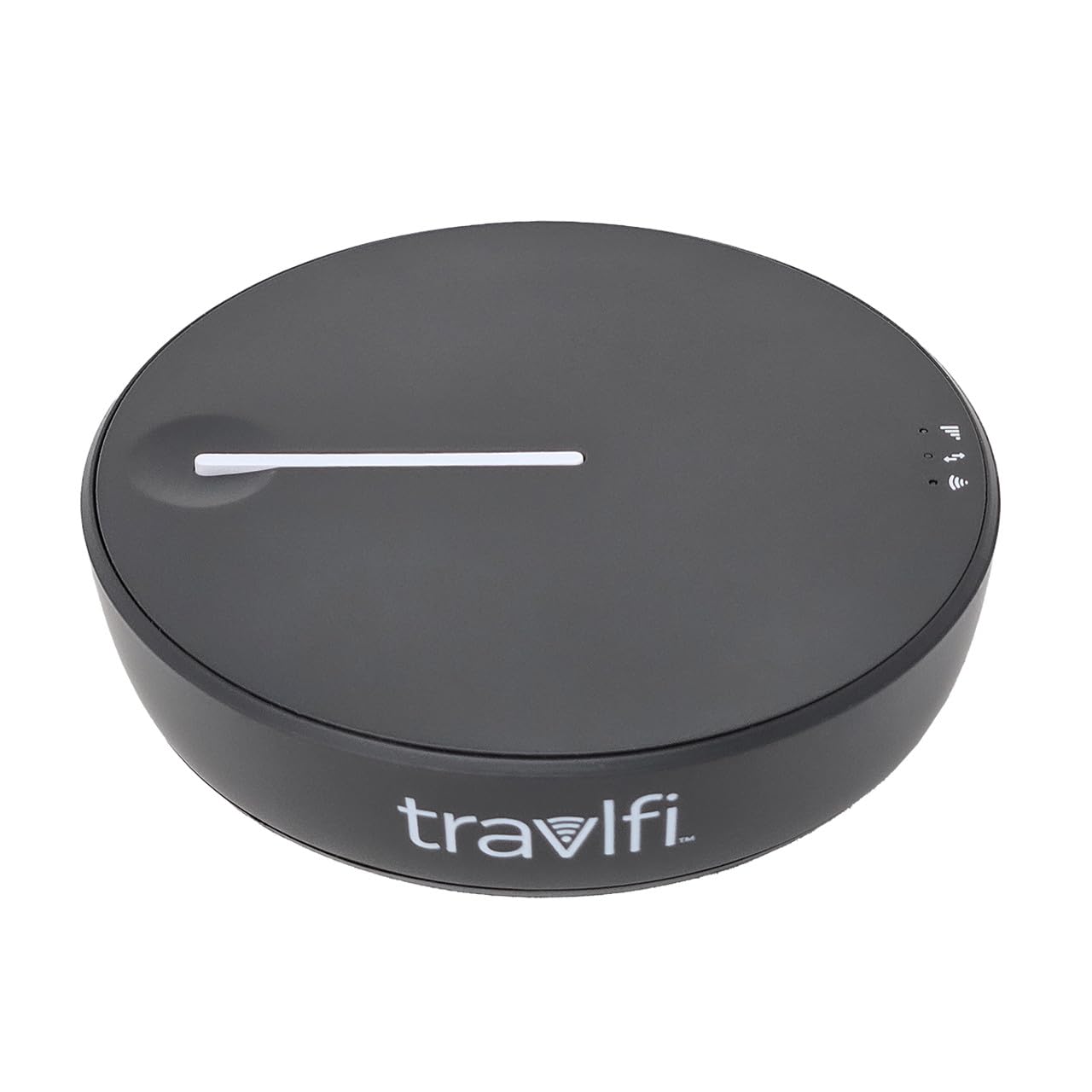
A pocket-sized hotspot that rides along in your RV, uses e-SIM plans from 2 GB to unlimited, and needs no contract.
The TravlFi JourneyGo is the simplest entry on this list, and that’s its superpower. With no SIM to fiddle with and a setup that takes under five minutes, it’s built for travelers who want internet without a networking degree. The e-SIM technology means you pick a data plan from as little as 2 GB all the way up to unlimited, prepaid month-to-month with no contracts.
Coverage rides on nationwide cellular networks, and owners have used it everywhere from a Texas canyon campsite to an RV resort with no Wi-Fi. One happy camper called it a “great” buy after switching from cable, noting the setup was easy and the speed kept up with all their streaming apps. It’s small enough to fit in your pocket and works off a rechargeable battery.
Keep your expectations realistic on battery life — owners note it drains fast and often needs a window seat for the best signal, since line-of-sight to a tower matters. Opinions split on value, with some saying unlimited data is worth it and others finding slowdowns after heavy usage. If you hit your data cap, speeds can drop dramatically.
Why it’s a traveler’s friend
- e-SIM with plans from 2 GB to unlimited, no contract
- Set up in under 5 minutes, pocket-sized and portable
- Works in remote areas and stormy weather
What to watch
- Battery drains fast — keep it charged
- Data slowdowns reported after hitting plan limits
Perfect if: you want the least-fuss way to get internet in an RV or campsite, with flexible month-to-month plans.
Not if: you’re a heavy data user who streams constantly — you’ll want to research the right plan size carefully.
6. Teltonika RUT241 4G LTE Cellular Router
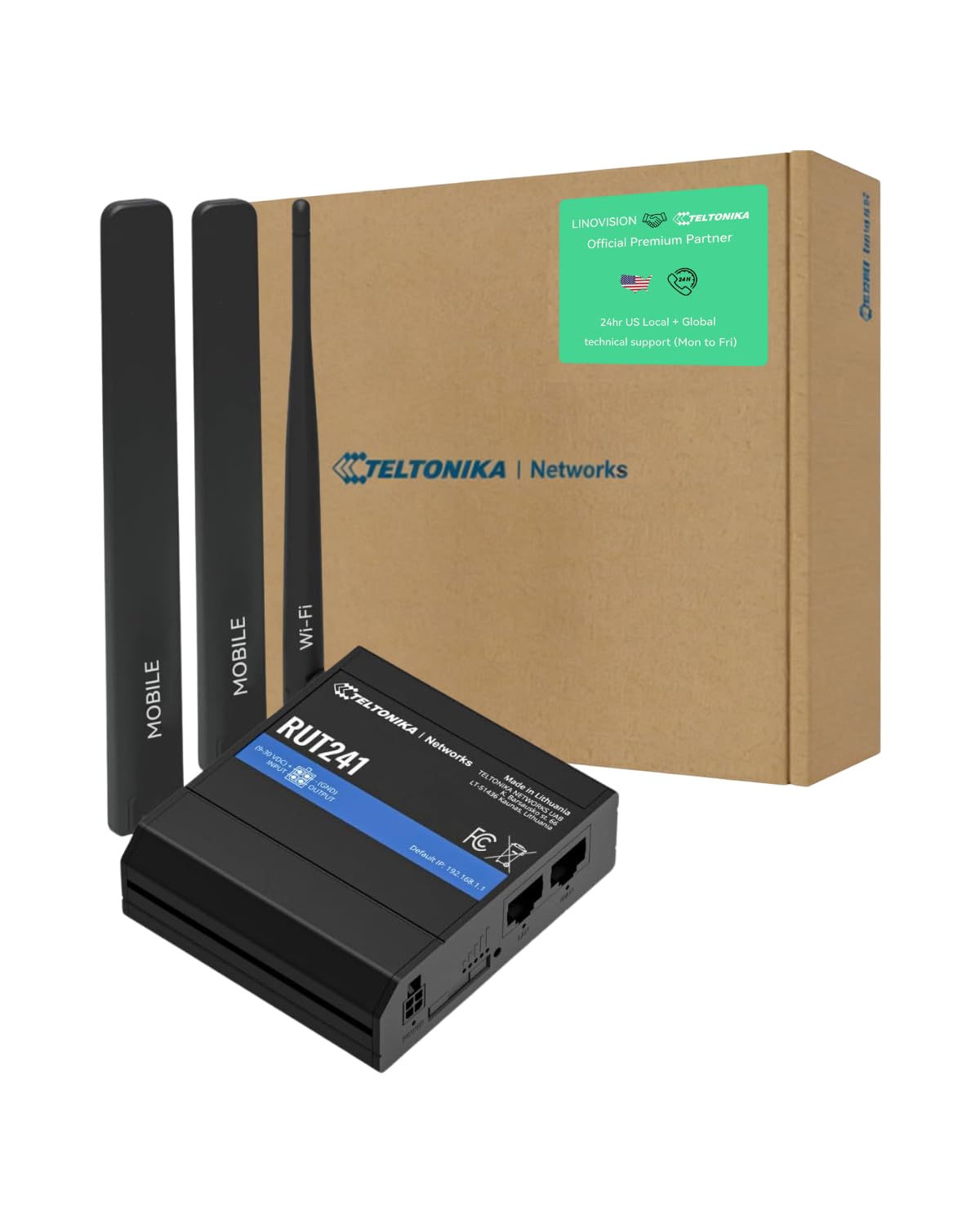
The rare modem certified by all three big carriers, packed into a compact industrial box with automatic failover.
Carrier compatibility is the Teltonika RUT241’s headline trick. It’s certified by Verizon, AT&T, and T-Mobile, which removes the biggest headache in cellular modems — guessing whether your SIM will work. Owners confirm the ease, with one noting a T-Mobile data plan worked right away and an Ethernet device connected perfectly with minimal setup.
It’s the updated version of the well-known RUT240, inheriting the industrial design and compact size. The built-in 4G LTE Cat 4 modem delivers 150 Mbps download and 50 Mbps uplink, with automatic failover across 4G, Wi-Fi, and two Ethernet ports. That failover keeps your connection alive if one path drops, making it solid for vehicles and remote equipment.
Owners running it in a work truck praise its durability where battery-powered hotspots kept failing in the heat. The catch: the power connector is delicate for field installation, and mounting options are limited. A rare unit arrives as a return, and one reviewer noted overheating after continuous use. It’s compact and powerful, but you may want your own mounting solution.
What stands out
- Certified by Verizon, AT&T, and T-Mobile
- Automatic failover across 4G, Wi-Fi, and two Ethernet ports
- Compact industrial design that handles heat
Watch outs
- Delicate power connector for field use
- Limited mounting options included
Ideal for: a vehicle, workshop, or small industrial site where carrier flexibility and automatic failover outweigh raw speed.
Consider others if: you need fast Wi-Fi 6 or a stronger mounting kit from the start.
7. GL.iNet GL-X3000 Spitz AX

A true 5G gateway that outshines dedicated hotspots, with six detachable antennas and a dual-SIM setup for the road.
The GL-X3000 is what you buy when a hotspot just isn’t enough. It’s a real 5G modem/router combo that owners say beats dedicated hotspots from Inseego and Netgear for stability and device networking. One buyer runs it in an SUV, reporting a stable T-Mobile 5G connection at around 150 Mbps even mounted under the floor, powering on and off with the car.
Speed is the story here — up to 574 Mbps on 2.4 GHz and 2402 Mbps on 5 GHz, with a combined data rate of 3000 Mbps. The dual-SIM setup with single standby supports both AT&T and T-Mobile, switching automatically between carriers. Six detachable antennas, four of them for cellular, give you flexibility to mount high-gain externals for the best reception.
Tech-savvy owners love the OpenWrt v21.02 firmware with over 5,000 plug-ins, plus DNS over TLS and HTTPS for privacy. The crowd favorite trait is reliability, with owners praising rock-solid uptime for years at a time. The downsides: it’s a slow starter at about 2 minutes to boot, and some buyers find it overpriced for what it delivers as a router — a few call it a great modem with a mediocre Wi-Fi router built in.
Why it’s a favorite
- Real 5G speeds under both NSA and SA standards
- Six detachable antennas, four for cellular
- OpenWrt firmware with 5,000+ plug-ins
What to expect
- Slow 2-minute startup time
- Some find the Wi-Fi router weaker than the modem
Buy it if: you’re in an RV, car, or rural home and want genuine 5G speeds with deep customization and rock-solid reliability.
Reconsider if: you’re on a budget and 4G speeds would already cover your streaming and work needs.
8. Cudy 5G NR AX3000 Wi-Fi 6 Router P5

A Qualcomm-powered 5G router with two SIM slots and triple failover, built for offices and remote sites that can’t go dark.
The Cudy P5 is built around the Qualcomm X62 chipset, pushing up to 3.4 Gbps over 5G NR. That’s the same headline speed as our top pick, but this model brings two Nano SIM slots with triple failover across WAN, Cellular 1, and Cellular 2 — so your internet stays live even if one carrier stumbles. Owners mention wired ports performing near-perfectly with gigabit cable modems, hitting speeds of 150 to 200 Mbps.
Wi-Fi 6 coverage is strong, with 2402 Mbps on 5 GHz and 574 Mbps on 2.4 GHz. Four detachable SMA cellular antennas let you upgrade to high-gain models for weak rural areas, and the Cudy App adds cloud management, parental controls, and WPA3 security. Enthusiasts appreciate the advanced controls like TTL and band locking, configurable directly in the UI without workarounds.
The elephant in the room is Verizon compatibility. A frustrated buyer spent three days trying to connect with a Verizon SIM before returning it, and there’s no US-based support to lean on. Owners on other carriers, including U.S. Cellular LTE, report solid performance and stable streaming. It runs warm, so check your carrier’s bands before buying.
The highlights
- Qualcomm X62 with 5G speeds up to 3.4 Gbps
- Dual SIM with triple failover for always-on internet
- Advanced controls: TTL, band locking, WPA3
Know this first
- Verizon incompatibility reported by some buyers
- No US-based tech support
Choose it for: a business or remote site on AT&T, T-Mobile, or U.S. Cellular that needs dual-carrier redundancy with 5G speed.
Avoid if: you’re on Verizon — the reports of failed connections are too consistent to ignore.
Understanding the Specs
Cat 4 vs Cat 12 vs 5G
These speed classes tell you how fast the modem can go. Cat 4 tops out around 150 Mbps download — enough for HD streaming and video calls. Cat 12 uses carrier aggregation to combine bands for faster speeds. 5G modems reach far higher, but only where 5G towers exist. Match the class to your actual coverage, not just the spec sheet.
Dual SIM: failover vs simultaneous
Dual SIM sounds like two connections at once, but most modems use “failover” — they switch to the backup SIM only when the primary drops. True simultaneous use is rarer. If you need uninterrupted internet for work, failover is the feature that matters. If you need to combine two connections for speed, look for load balancing specifically.
External antenna ports
Detachable SMA connectors let you attach high-gain external antennas to pull in a weak signal. In rural areas or inside metal RVs, this can be the difference between one bar and four. Check how many antenna ports the modem has — four is typical for 5G, and some outdoor models come with them built in.
Carrier certification
An open up modem still needs to support the specific frequency bands your carrier uses. Certification means the manufacturer has verified it works on that network. The best modems list certifications for AT&T, T-Mobile, and Verizon. If a modem isn’t certified for your carrier, check its band list against your carrier’s coverage before buying.
FAQ
Will any open up cellular modem work with my carrier?
What’s the difference between 4G LTE and 5G cellular modems?
Does dual SIM mean I get two connections at once?
How fast a connection do I need for streaming and work?
Can I use a cellular modem outdoors in the weather?
What is Power over Ethernet and why does it matter?
Will external antennas really improve my signal?
What is failover and why do I need it?
Is a cellular modem better than a mobile hotspot?
How do I know which data plan to get for my RV?
Final Thoughts: The Verdict
For most buyers, the cellular modem winner is the MOFINETWORK MOFI6500-5GXeLTE because it pairs true 5G speed with business-grade failover and a rugged metal build — and its reliability has won over a large crowd of owners. If you need a rugged industrial option for extreme conditions, consider the Yeacomm YF325 with its wide voltage input and DIN-rail mount. And for the traveler who wants 5G on the road, the GL.iNet GL-X3000 is the one to reach for — its six detachable antennas and dual SIM just work, whether you’re parked in a forest or moving down the highway.
How We Picked
We do not accept paid placement. Every pick is matched to a real buyer and a real use-case; we do not hands-on test units.
Sources & Methodology
Specifications: manufacturer listings and product documentation. Review insights: verified customer reviews, as of August 2026. Pricing: not shown on this page (it changes often); check the current price via the retailer link.
As an Amazon Associate, FitlyFast earns from qualifying purchases. This does not affect which products we feature.