
Our readers keep the lights on and the weekend projects moving. As an Amazon Associate, I earn from qualifying purchases.
Stepping into photography with a dedicated camera means trading phone convenience for control, but the fear of wasting cash on gear you won’t use is real. The right entry-level camera gives you clear viewfinder feedback, fast enough autofocus for moving kids or pets, and a 24-megapixel sensor that out-resolves any smartphone sensor for the same price.
I’m Rikta — the co-founder and writer behind FitlyFast. I’ve analyzed thousands of customer reviews, factory spec sheets, and refurbishment standards to identify which models actually deliver learn-without-frustration performance at accessible price points.
This guide cuts through the noise of sensor size debates and zoom ratios to focus on ergonomics, image quality, and long-term value so you can confidently choose the right cheap beginner camera for your first real photography journey.
How To Choose The Best Cheap Beginner Camera
You want a camera that teaches you manual control without punishing your mistakes, uses cheap and widely available lenses, and packs a sensor that clearly beats your phone. Here are the three specs that decide whether a beginner camera is a tool you’ll grow with or a frustration you’ll abandon.
Sensor Size and Megapixel Count
The single most important component is the physical sensor size. An APS-C sensor — found in nearly every DSLR and mirrorless camera on this list — captures roughly 15 times more light than a typical smartphone sensor. That translates directly to better low-light performance, smoother background blur, and more detail in your shadows. Look for at least 20 megapixels; nearly every model here offers 24 megapixels, which gives you plenty of room to crop without losing quality.
Autofocus System and Points
A beginner camera needs autofocus fast enough to keep up with your learning curve. The number of autofocus points determines how many zones the camera can lock onto in a frame. An 11-point system like the Nikon D3200 is perfectly fine for static landscapes and portraits. A 143-point Dual Pixel AF system like the Canon EOS R100 tracks moving faces and animals, which makes it dramatically easier to capture children, sports, or pets without constant manual adjustment.
Lens Ecosystem and Upgrade Path
The body is only the beginning. A camera is only as good as the lenses that fit it. Canon EF-S and Nikon F-mount DSLR lenses are the cheapest and most widely available on the used market. Sony E-mount and Canon RF-mount mirrorless lenses cost slightly more but represent the future of camera design. For absolute budget-friendliness, a used Canon or Nikon DSLR with a 50mm f/1.8 prime lens is the single best combination for learning depth of field and low-light shooting.
Quick Comparison
On smaller screens, swipe sideways to see the full table.
| Model | Category | Best For | Key Spec | Amazon |
|---|---|---|---|---|
| Canon EOS R100 | Mirrorless | Best Overall | 24.1 MP / 143 AF points | Amazon |
| OM SYSTEM E-M10 IV | Mirrorless | Best Image Stabilization | 20 MP / 5-Axis IBIS | Amazon |
| Panasonic LUMIX G7 | Mirrorless | Best 4K Video Value | 16 MP / 4K at 30fps | Amazon |
| Sony ZV-E10 | Mirrorless | Best for Vloggers | 24.2 MP / 425 AF points | Amazon |
| Canon EOS M50 | Mirrorless | Great All-Rounder | 24.1 MP / 4K 24p | Amazon |
| Canon EOS M200 | Mirrorless | Compact for Travel | 24.1 MP / Dual Pixel AF | Amazon |
| Canon EOS Rebel T7 | DSLR | Classic DSLR Experience | 24.1 MP / 9 AF points | Amazon |
| Canon EOS 2000D | DSLR | Best Accessory Bundle | 24.1 MP / Wi-Fi + NFC | Amazon |
| Nikon D3200 | DSLR | Budget Starter Power | 24.2 MP / 11 AF points | Amazon |
| Sony a5000 | Mirrorless | Compact Budget Mirrorless | 20.1 MP / Wi-Fi + NFC | Amazon |
| Sony a3000 | Mirrorless | Entry Mirrorless Value | 20.1 MP / 25 AF points | Amazon |
In‑Depth Reviews
1. Canon EOS R100 Mirrorless Camera

The Canon EOS R100 is the smallest and lightest body in the EOS R mirrorless series, pairing a 24.1-megapixel APS-C sensor with the DIGIC 8 processor. What makes it exceptional for beginners is the Dual Pixel CMOS AF system with 143 autofocus zones and human face and eye detection — a system that previously belonged to much more expensive bodies. In real-world use, this means the camera can track a child running across a yard or a dog bounding toward you without losing focus, something 9-point DSLR systems struggle with.
The kit lens is the RF-S 18-45mm f/4.5-6.3 IS STM, which includes optical image stabilization rated at 4 stops. The lens is not fast in low light, but the stabilization helps you shoot handheld in dimmer conditions than the aperture alone suggests. The camera shoots 4K video at 24 fps and Full HD at up to 60 fps, and the continuous shooting speed of 6.5 frames per second in One-Shot AF is sufficient for capturing action when you time your shots.
The main trade-off is the 2.36-million-dot OLED electronic viewfinder — it’s functional but not high-resolution, and the rear LCD is fixed rather than articulating. Battery life is about 300 shots per charge, which is typical for mirrorless bodies. However, the RF mount gives you access to Canon’s expanding lens ecosystem, and the camera’s lightweight design makes it easy to carry everywhere, which is the single best way to improve your photography.
Why it’s great
- 143-point Dual Pixel AF with face, eye, animal, and vehicle tracking.
- Smallest EOS R body, excellent for daily carry and travel.
- 4K video recording with DIGIC 8 processing for sharp footage.
Good to know
- No in-body image stabilization; relies on lens OIS.
- Fixed rear LCD, no touch-and-drag AF functionality.
- Battery life around 300 shots, typical for mirrorless.
2. OM SYSTEM Olympus E-M10 Mark IV

The E-M10 Mark IV delivers the most advanced stabilization in its class: in-body 5-axis image stabilization rated for 4.5 shutter speed stops of compensation. Practically, this means you can handhold the camera at shutter speeds as slow as 1/4 second and still get sharp images of static subjects, which virtually eliminates the need for a tripod in good light. The 20-megapixel Live MOS Micro Four Thirds sensor is smaller than APS-C, but the stabilization compensates so well that real-world handheld sharpness often beats larger-sensor cameras without IBIS.
The kit includes the M.Zuiko Digital ED 14-42mm F3.5-5.6 EZ pancake zoom, which is incredibly compact — tilting the camera body down turns the lens into a pocketable package that fits in a jacket pocket. The flip-down rear monitor enables a dedicated selfie mode that automatically engages when you rotate the screen downward. The camera also includes 16 Art Filters, including an Instant Film mode, which makes learning composition more playful and less intimidating.
Autofocus uses a contrast-detection system with 121 points. While not as fast as phase-detection systems for tracking erratic motion, it’s accurate for portraits, landscapes, and slow-moving subjects. The 4K video is limited to 30 fps and lacks 10-bit internal recording, but the stabilization makes handheld video exceptionally smooth. The Micro Four Thirds lens ecosystem is enormous and affordable, with lenses from Olympus, Panasonic, and third-party makers available used for minimal cost.
Why it’s great
- 5-axis in-body stabilization for 4.5 stops of handheld sharpness.
- Extremely compact kit lens, jacket-pocket portable.
- Flip-down selfie screen with dedicated selfie mode.
Good to know
- Contrast-detection AF slower than phase-detection for action.
- No external charger included; charges in-camera only.
- Micro Four Thirds sensor has smaller crop factor than APS-C.
3. Panasonic LUMIX G7

Panasonic pioneered affordable 4K in mirrorless cameras with the G7, and it remains one of the best-value video-centric beginner cameras available. The 16-megapixel Micro Four Thirds sensor lacks a low-pass filter, which gives it sharper per-pixel detail than many 24-megapixel sensors that include optical low-pass filters. The 4K QFHD video at 30 fps is oversampled from the full sensor width, producing footage with excellent detail and color reproduction.
The big differentiator is Panasonic’s 4K Photo system: you shoot 4K video at 30 fps and then extract single 8-megapixel frames from the footage. This lets you capture split-second moments like a soccer goal or a jumped dog that would be impossible to time with a normal burst shot. The G7 also includes a high-resolution 2.36-million-dot OLED electronic viewfinder and a fully articulating 3-inch touchscreen LCD that tilts and swivels for selfies, overhead, and low-angle shots.
The physical handling is outstanding for the price point, with front and rear control dials and six customizable function buttons. The kit lens (14-42mm f/3.5-5.6 Mega O.I.S.) includes optical stabilization that works well for stills and video, though the body lacks in-body stabilization. The plastic body is lightweight at about 410 grams, and the 3.5mm microphone input is a critical feature for anyone wanting to improve video audio quality. The G7 does not have weather sealing, and its 1080p video at 60 fps cannot match the bitrate of its 4K footage.
Why it’s great
- 4K Photo extraction captures moments impossible to time manually.
- Fully articulating touchscreen for any-angle framing.
- 3.5mm microphone input for improved audio recording.
Good to know
- No in-body image stabilization; relies on lens OIS.
- Plastic body lacks weather sealing.
- 16 megapixels lower resolution than APS-C competition.
4. Sony Alpha ZV-E10
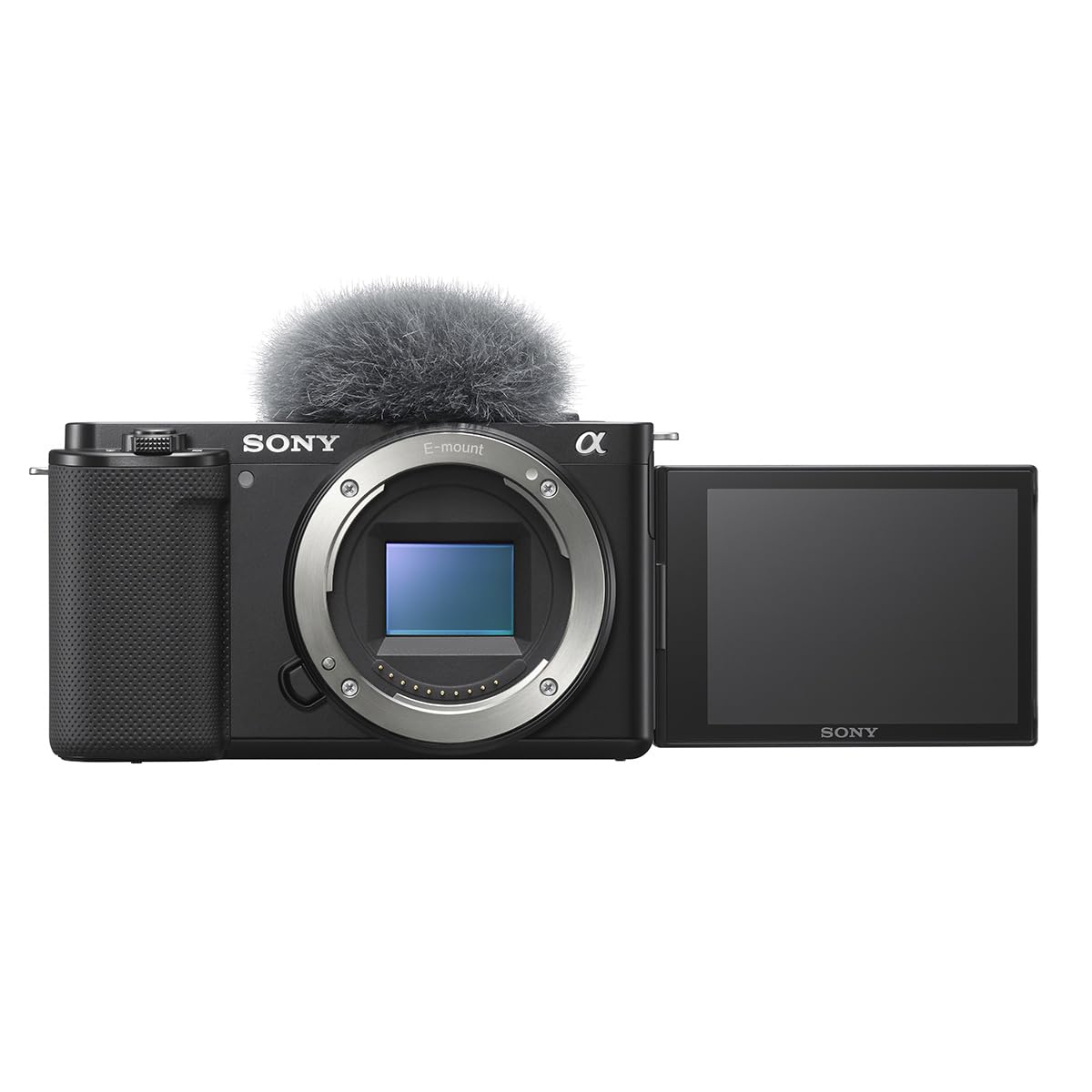
The Sony ZV-E10 is purpose-built for content creators, combining Sony’s excellent 24.2-megapixel APS-C sensor with the most advanced autofocus system in this roundup: 425 phase-detection points covering roughly 84 percent of the sensor area, with real-time Eye AF for humans and animals. The camera features a “Product Showcase” setting that instantly transitions focus from your face to an object held in front of the lens, which is invaluable for reviewers and streamers.
Video specifications rival cameras costing twice as much: 4K recording oversampled from 6K with full pixel readout and no pixel binning, delivering exceptionally sharp and detailed footage. The camera also includes a Background Defocus button that instantly switches the aperture to its maximum setting for blurring the background, making it trivial to achieve a cinematic look without understanding aperture theory. The body is lightweight at 343 grams with the battery and memory card, and the flippy 3-inch LCD allows you to see yourself while recording.
The main limitation is the lack of in-body image stabilization. Sony relies on digital stabilization for video, which introduces a crop factor of about 1.4x. The 4K 30p recording has a resolution limit of 8-bit 4:2:0, and the rolling shutter is severe enough to make quick pans difficult. Battery life is rated at about 440 shots for stills, but continuous 4K recording drains the battery in about 25 minutes. The E-mount lens ecosystem is extensive but lenses tend to be pricier than Micro Four Thirds or Canon EF-S equivalents.
Why it’s great
- 425-point Real-Time Eye AF with human and animal tracking.
- 4K video oversampled from 6K for exceptional sharpness.
- Product Showcase and Background Defocus dedicated buttons.
Good to know
- No in-body stabilization; heavy crop in digital stabilization mode.
- Severe rolling shutter in 4K; not great for fast motion.
- Battery life limited to about 25 minutes in continuous 4K.
5. Canon EOS M50 (Renewed)

The Canon EOS M50, even as a renewed unit, remains one of the most balanced beginner mirrorless cameras because of its Dual Pixel CMOS AF with 143 autofocus points and eye detection focus for both stills and video. The 24.1-megapixel APS-C sensor produces Canon’s characteristically pleasing color science with accurate skin tones that require less post-processing. The built-in OLED electronic viewfinder with 2.36 million dots is sharp, bright, and features Touch and Drag AF — you can move your thumb on the LCD to shift the focus point while keeping your eye to the viewfinder.
The M50 records 4K UHD video at 24p, though with a 1.6x additional crop factor that turns the kit lens into a very tight 35mm-equivalent field of view. For most beginners, the 1080p 60fps mode produces better-looking footage with the full sensor width and Dual Pixel AF engaged. HD slow motion up to 120 fps at 720p is available for creative shots. The camera is small — 387 grams — and the EF-M 15-45mm kit lens collapses into a very compact form when powered off.
The key trade-off of the M50 is the EF-M mount itself. Canon has shifted its mirrorless focus to the RF mount, meaning future lens development for EF-M is limited. However, you can adapt Canon EF and EF-S lenses with a simple adapter that costs very little, and the used EF-M lens market is affordable. The camera lacks weather sealing, the 4K crop is significant, and high ISO performance falls apart above 3200. Renewed units often look like new and save a significant amount compared to retail pricing.
Why it’s great
- Dual Pixel CMOS AF with eye detection for stills and video.
- Sharp OLED EVF with Touch and Drag AF system.
- Renewed pricing delivers exceptional value for the specs.
Good to know
- 4K video has a heavy 1.6x additional crop factor.
- EF-M mount is a discontinued system; use adapter for EF lenses.
- ISO above 3200 shows visible noise and reduced detail.
6. Canon EOS M200

The Canon EOS M200 is designed explicitly for the social-media creator who wants a compact system that outperforms a smartphone. It shares the same 24.1-megapixel APS-C sensor and Dual Pixel CMOS AF with eye detection as the M50, but in a body that weighs only 262 grams with the battery. The flip-up touchscreen LCD tilts 180 degrees for selfies and vlogging, making it one of the easiest cameras to use for web content without needing an external monitor.
The kit lens is the EF-M 15-45mm f/3.5-6.3 IS STM, which includes optical image stabilization and a collapsing design that makes the camera roughly the same size as a compact point-and-shoot. The camera supports vertical 4K video at 24 fps — meaning footage captured in portrait orientation is automatically tagged for phone uploads — and 4K time-lapse movies. Built-in Bluetooth and Wi-Fi with auto image transfer makes pushing photos to your phone nearly seamless for instant sharing.
The M200’s limitations are mostly about control and speed. There is no electronic viewfinder, so you compose entirely on the 3-inch LCD, which can be difficult in bright sunlight. The burst rate is slow, and the buffer fills quickly after about 10 raw images. There is no USB-C charging, and the battery is rated at approximately 315 shots. The EF-M lens ecosystem is limited, and as Canon has discontinued new EF-M development, the pool of available lenses depends on the used market or third-party adapters.
Why it’s great
- Ultra-light 262g body, truly pocketable with kit lens.
- 180-degree flip-up touchscreen for selfies and vlogs.
- Vertical video support and auto image transfer to phone.
Good to know
- No electronic viewfinder; LCD-only composition in bright light.
- Slow burst rate and shallow buffer for action photography.
- No USB-C charging; uses older micro-USB.
7. Canon EOS Rebel T7 (Renewed)

The Canon EOS Rebel T7 is the quintessential entry-level DSLR: an optical viewfinder, a 24.1-megapixel APS-C sensor, and a 9-point autofocus system with a single center cross-type point. The optical viewfinder is the primary reason to choose a DSLR over a mirrorless camera — it uses zero battery power, has zero lag, and shows you the scene exactly as your eye sees it, which makes composing in bright daylight much easier than any electronic viewfinder or LCD.
The camera includes built-in Wi-Fi and NFC for direct photo sharing, a Scene Intelligent Auto mode that handles complex lighting scenarios automatically, and Creative Auto mode that lets you adjust background blur and lighting without diving into manual mode. The T7 uses the EF-S lens mount, which gives you access to the largest and cheapest used lens ecosystem in photography. A used 50mm f/1.8 STM lens can be found for a small price and transforms the camera into a capable portrait and low-light tool.
The T7’s limitations are clear: 9 autofocus points is anemic by modern standards, and the 3.0-inch LCD has a low resolution of 920,000 dots that looks grainier than newer LCDs. The burst rate of 3 frames per second is too slow for sports, and the camera does not record 4K video — only Full HD at 30 fps. The renewed version typically ships without a bag or SD card, but the battery and charger are included. The camera body is plastic but feels solid, and the grip is deep and comfortable for all hand sizes.
Why it’s great
- Optical viewfinder with zero latency, excellent in bright sun.
- Massive EF-S lens ecosystem with cheap used options.
- Scene Intelligent Auto mode handles tricky lighting for beginners.
Good to know
- Only 9 autofocus points; slow for moving subjects.
- No 4K video recording, only Full HD at 30 fps.
- Low-resolution rear LCD compared to modern mirrorless cameras.
8. Canon EOS 2000D / Rebel T7 Bundle (Renewed)

The Canon EOS 2000D is functionally identical to the Rebel T7 — same 24.1-megapixel APS-C CMOS sensor, same DIGIC 4+ processor, same 9-point AF system, and same 3fps burst rate — but this bundle transforms the buying experience by including a 64GB memory card, an LED video light, a case, and a gripster tripod. For someone who owns no camera accessories, this bundle eliminates the immediate need to buy separate gear.
The sensor and processor combination delivers the same solid image quality as the T7, with good color accuracy and decent dynamic range for the class. The ISO range of 100-6400, expandable to 12800, allows some flexibility in low light, though the 18-55mm f/3.5-5.6 kit lens limits you to reasonably well-lit scenes. The built-in Wi-Fi and NFC make wireless transfer to your phone easy, and the camera doubles as a webcam via Canon’s EOS Webcam Utility software for Zoom and Teams calls.
The bundle’s LED video light is useful for close-up or interview-style video but isn’t powerful enough for full-room illumination. The case provides basic protection, and the tripod is a lightweight tabletop unit suitable for group shots and timers. The 2000D screen is 2.7 inches with 230,000 dots — significantly lower resolution than the 3-inch 920K-dot screen on the T7. The optical viewfinder is the same pentamirror type, and the overall shooting experience remains old-school DSLR without mirrorless conveniences like focus peaking or silent shooting.
Why it’s great
- Comprehensive accessory bundle includes card, light, case, tripod.
- Built-in Wi-Fi and NFC for easy smartphone image transfer.
- Works as a USB webcam for streaming without extra hardware.
Good to know
- Small 2.7-inch rear screen with very low 230K-dot resolution.
- Only 9 AF points and 3fps burst; not for action photography.
- No 4K video; Full HD at 30fps is the maximum format.
9. Nikon D3200 (Renewed)
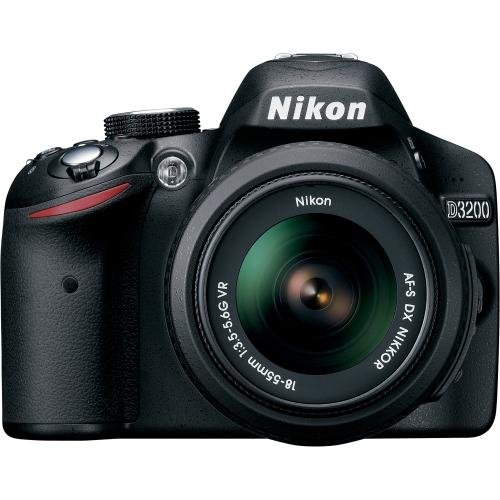
The Nikon D3200, even as a refurbished model, continues to be a phenomenal value because Nikon’s 24.2-megapixel DX-format CMOS sensor paired with the EXPEED 3 processor produces image quality that still competes with modern APS-C sensors. The camera’s 11-point autofocus system with a single cross-type point is one more point than the Canon T7 and offers marginally better coverage for subject tracking. The 18-55mm f/3.5-5.6 AF-S DX VR II kit lens includes Vibration Reduction (VR) optical stabilization, which helps reduce blur from hand shake.
The D3200 shoots Full HD 1080p video at 30 fps with continuous autofocus, and the included 3-inch LCD has 921,000 dots — identical resolution to the Canon T7’s screen. The ISO range from 100 to 6400 expands to 12800, and JPEG images look clean up to ISO 1600 and usable through ISO 3200 with some detail softening. The Guide Mode in the menu system is one of the best built-in tutorials in any camera, explaining aperture, shutter speed, and ISO with visual examples as you shoot.
The D3200 has no built-in Wi-Fi, so transferring images requires a separate wireless adapter or an SD card reader. The camera lacks an autofocus motor in the body, meaning older AF-D Nikkor lenses won’t autofocus — you must use AF-S lenses with built-in motors. The burst rate of 4 frames per second is slightly faster than the T7 but still too slow for serious sports photography. Refurbished units from authorized sellers include a 90-day warranty and typically show minimal cosmetic wear, with all original accessories included.
Why it’s great
- 24.2 MP DX sensor with EXPEED 3 produces excellent image quality.
- Guide Mode walks you through exposure settings as you shoot.
- Kit lens includes Vibration Reduction optical stabilization.
Good to know
- No built-in Wi-Fi; requires adapter for wireless transfer.
- Body lacks AF motor; only works with AF-S lenses for autofocus.
- 4 fps burst rate limits action and sports photography.
10. Sony Alpha a5000
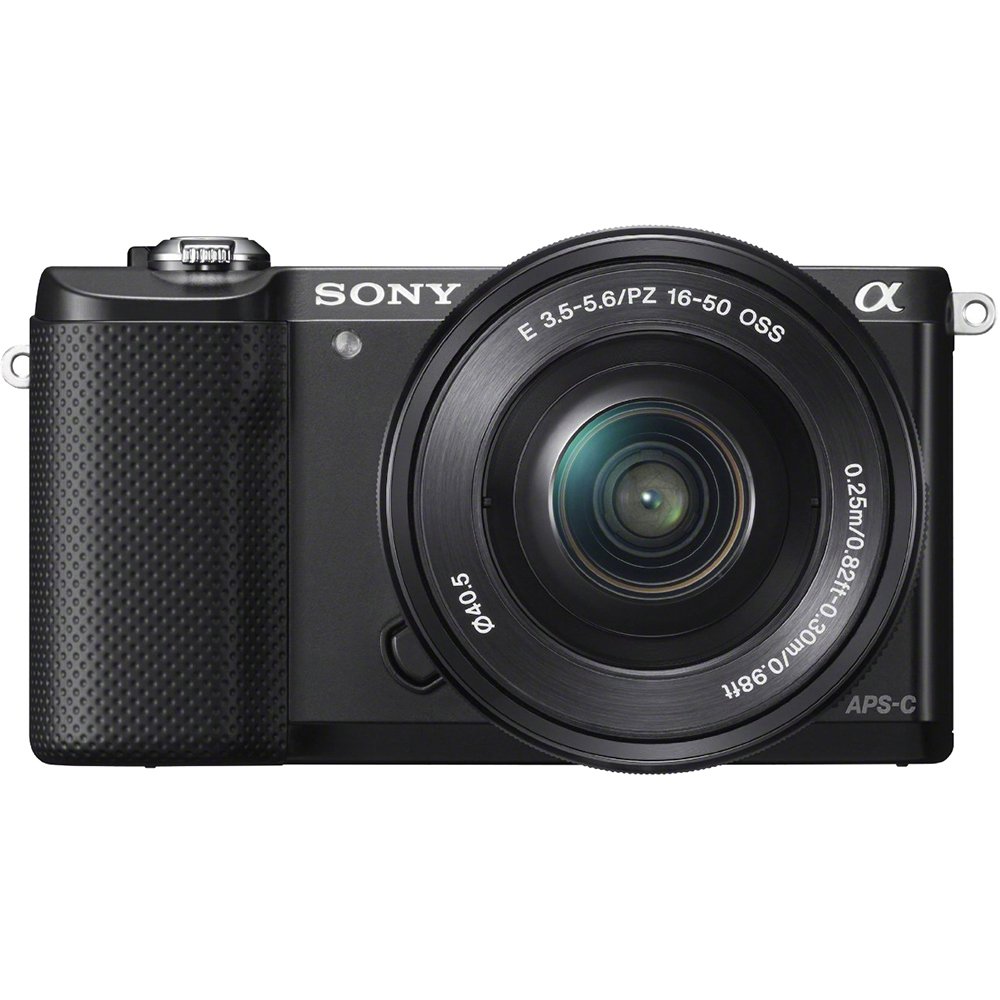
The Sony Alpha a5000 is a compact mirrorless camera that bridges the gap between a point-and-shoot and a full-featured interchangeable lens system. It uses a 20.1-megapixel Exmor APS-C sensor — slightly lower resolution than the 24-megapixel competition, but still massively larger than any smartphone sensor. The camera’s folding design with a 180-degree flip-up screen makes it one of the original selfie-friendly mirrorless cameras, and it includes built-in Wi-Fi with NFC for one-touch pairing with Android devices.
The kit lens is the 16-50mm f/3.5-5.6 OSS (Optical SteadyShot) retractable power zoom, which collapses to just 0.8 inches thick when powered off, making the camera genuinely pocketable in a light jacket. The autofocus system uses 25 contrast-detection points — simpler than phase-detection systems but accurate for static subjects and good enough for casual family photography. The camera also records Full HD 1080p at 60i or 24p, and the battery charges via micro-USB directly in the camera, so you don’t need a separate charger.
The a5000 lacks an electronic viewfinder — a significant compromise compared to the a3000 and every DSLR on this list — so you must compose on the 3-inch, 460K-dot LCD, which is visibly lower resolution than the 921K-dot screens on the Nikon D3200 and Canon T7. The burst rate of 3.5 frames per second is modest, and there is no microphone input for video. The E-mount lens ecosystem is excellent, but Sony-native E-mount lenses are generally more expensive than Canon or Nikon DSLR equivalents, though third-party options from Sigma and Tamron are available.
Why it’s great
- 180-degree flip-up screen makes it easy to frame selfies and vlogs.
- Retractable power zoom collapses to 0.8 inches for pocketability.
- Wi-Fi with NFC for one-touch pairing and fast image transfer.
Good to know
- No electronic viewfinder; LCD-only composition in bright sunlight.
- 460K-dot LCD resolution is lower than competing 921K screens.
- Contrast-detection AF only; no phase-detect for fast tracking.
11. Sony Alpha a3000

The Sony Alpha a3000 is an unusual but compelling bridge between DSLR ergonomics and mirrorless technology. It uses a DSLR-style body with a deep, comfortable grip and a built-in electronic viewfinder, but inside it houses a 20.1-megapixel Exmor APS-C sensor in a mirrorless design. The camera uses a 25-point contrast-detection autofocus system with face detection, and the included 18-55mm f/3.5-5.6 OSS lens provides optical stabilization and a standard zoom range equivalent to 27-82.5mm on full-frame.
Image quality from the a3000 is genuinely excellent for its class. The Exmor sensor delivers clean, well-exposed images up to ISO 400 and very usable files through ISO 1600. The camera shoots RAW and JPEG, and the metering system is reliable across different lighting conditions. Video recording is Full HD at 60i or 24p with stereo sound, and the battery charges via micro-USB. The Sony E-mount gives you access to the same lens ecosystem as the far more expensive a6000 and a7 series cameras.
The a3000’s biggest compromises are in its user interface and display technology. The electronic viewfinder has only 200,000 dots — extremely low resolution that looks like a low-quality video stream. The rear 3-inch LCD also has a low resolution, and both displays are difficult to judge critical focus on. The autofocus system is purely contrast-detection and feels slow compared to phase-detection systems, particularly in low light. The camera lacks built-in Wi-Fi, and the burst rate of 3.5 frames per second is limited. Despite these limitations, the a3000 produces high-quality images and is one of the cheapest ways to enter the Sony E-mount ecosystem.
Why it’s great
- Excellent image quality from 20.1 MP Exmor APS-C sensor.
- EVF and DSLR-style grip for comfortable, stable shooting.
- E-mount compatibility unlocks Sony’s mirrorless lens ecosystem.
Good to know
- Very low-resolution EVF (200K dots) hard to focus with.
- Contrast-detection AF is slow, especially in dim lighting.
- No built-in Wi-Fi or NFC for wireless image transfer.
FAQ
Should I buy a renewed or used camera for my first body?
Do I need a kit lens or should I buy body-only with a prime lens?
What is the difference between Canon EF, EF-S, RF, and RF-S lens mounts?
How important is battery life when comparing DSLRs to mirrorless?
Why do some cameras list 2 different ISO ranges?
Final Thoughts: The Verdict
For most users, the best cheap beginner camera overall is the Canon EOS R100 because its 143-point Dual Pixel AF system and modern RF-mount lens compatibility give you the easiest learning curve and the best upgrade path. If you want the best in-body stabilization for handheld shooting, grab the OM SYSTEM E-M10 Mark IV. And for the absolute most value from a simple, proven platform, nothing beats the Nikon D3200 refurbished — it teaches you photography fundamentals on a sensor that still produces competition-level image quality.