
Our readers keep the lights on and the weekend projects moving. As an Amazon Associate, I earn from qualifying purchases.
Specs are compiled from manufacturer listings and verified buyer reviews and can change over time — please confirm the key details on the product page before buying.
You don’t need to spend a fortune to fill a strap. The secret to finding a great cheap duck call is knowing which budget-friendly features actually matter — the reed type, the material, and how much air it takes to make a realistic quack. This guide identifies budget duck calls that deliver realistic quacks while staying affordable.
I’m Rikta — the founder and writer behind FitlyFast. This guide is built by comparing the manufacturers’ published specifications and the patterns across verified customer reviews, so you get each pick’s real strengths and trade-offs instead of marketing spin.
We’ve separated the true bargains from the duds so you can confidently choose the best cheap duck calls for your next hunt.
Our Picks at a Glance


How To Choose The Best Cheap Duck Calls
You want a duck call that sounds realistic, resists moisture, and requires minimal air pressure. The right budget pick aligns the call’s reed type and material with your skill level and hunting style.
Single Reed vs. Double Reed
The reed is the heart of the call. A single-reed call generally requires less air pressure, making it far easier for beginners to get a clean, realistic quack quickly. Double-reed calls often produce a raspier, more natural hen sound but demand more precise breath control, which can frustrate new hunters.
Material Matters: Plastic vs. Wood vs. Polycarbonate
You’ll find calls in three main materials. High-impact plastic is the cheapest and toughest. Walnut wood gives a warmer, bassier tone but can warp or swell in damp conditions. Polycarbonate (a rugged, see-through plastic) sits in the middle—it’s very durable and often has toneboards (the sound-producing insert) that resist sticking when wet, so your call keeps working in rain.
The “Blows When Wet” Factor
Duck hunting is a wet sport. A call that “sticks” or locks up when condensation or water gets inside is useless in the marsh. Look for calls with “Spit-Tech” toneboards or designs that explicitly state they “blows when wet” — this feature prevents your call from becoming a silent plastic tube at dawn.
Quick Comparison
| Model | Best For | Reed Type | Material | Signature Feature | Amazon |
|---|---|---|---|---|---|
| Primos Easy Mallard 805★ Best Overall | Absolute Beginners & Kids | Single Reed | Plastic | .010-inch Mylar reed | Amazon |
| Duck Commander Late SeasonTrusted Favorite | All Skill Levels | Drake Call | High-Impact Plastic | Drake Replication | Amazon |
| Haydel’s DR-85Pro’s Choice | Versatile Hunters | Double Reed | Plastic | Adjustable Floating Wedge | Amazon |
| Zink Power Hen 2 | Value Seekers | Double Reed | Polycarbonate | Z-Cut No-Stick Channel | Amazon |
| Buck Gardner Poly Double Reed | Learning Advanced Calls | Double Reed | Polycarbonate | Spit-Tech Toneboard | Amazon |
| Buck Gardner Teal Call | Teal Season | Teal Call | Polycarbonate | Extra-Tough Build | Amazon |
| Faulk’s Deluxe WA-33 | Traditional Wood Tone | Single Reed | Walnut Wood | Classic Feed Call | Amazon |
| Buck Gardner Finisher Combo | All-In-One Field Kit | Double Reed & Whistle | Plastic/Polycarbonate | Includes 6-in-1 Whistle | Amazon |
In-Depth Reviews
1. Primos Hunting Duck Call 805, Easy Mallard, Single Reed
The single-reed call that produces a real quack with almost no breath, perfect for beginners.
The Primos 805 is the defining pick for anyone who wants a duck call that simply works. Its thin Mylar reed measures just.010-inch, which is the secret to why it requires so little air pressure to blow. You barely have to exhale to produce a convincing mallard sound, making it the top choice for first-timers and even young hunters.
As owners put it, it is so easy that even a three-year-old can use it, and the call also blows when wet, which is a lifesaver when dew or a splash gets inside. While it is compact at 8 x 4 x 2 inches, you get a light, matte-finish call that carries well on a lanyard without glare to spook birds. Its durable plastic construction makes it a reliable backup for pricier calls.
The main trade-off is that the sound quality is a fixed pitch, so you won’t be running a wide range of advanced hail or comeback calls with this one. It shines as an entry point where you can learn the fundamentals of calling, getting ducks into range while you build your skills.
easy for beginners
- Super easy to blow with minimal air pressure
- Works reliably even when wet
- Beginner-friendly enough for kids to use
limited range
- Fixed pitch limits advanced calling range
- Lanyard slot is not a true loop for some rigs
starter pick: If you or a child wants to learn calling without the frustration, this is the one to grab.
expert only: Veteran callers wanting a wide tonal range will find it too limiting.
2. Duck Commander Specialty Duck Calls – Late Season Hunting, High-Impact Plastic
The late-season confidence call that brings in wary off-ducks with a realistic drake tone.
This isn’t your typical hen call. The Duck Commander Specialty is built to replicate the realistic sounds of a Mallard Drake, targeting those “off-ducks” that hang on the edges of your decoy spread. Hunters find it to be a reliable confidence call when late-season ducks become wary of traditional hen calling, helping to calm nervous birds.
It’s constructed from high-impact plastic, a material choice that means it can take a beating in the marsh and keep delivering consistent sounds. While the pros master it with humming a low bass note, beginners find it easy to produce effective calls with a bit of practice. Buyers report it’s a versatile addition that can attract mallards from a distance without ever scaring birds away.
A recurring tip is that it demands a humming technique rather than just hard blowing, so expect a learning curve before you sound like an expert. Once you get that deep bass note down, you have a durable call that earns its place in any layout blind.
flock-settler: Reach for this when ducks are skittish and you need a different, calming sound.
novice note: It takes practice to master the humming technique required for the best tone.
3. Haydel’s Game Calls DR-85 Mallard Duck Call – Double Reed, Adjustable
The hand-tuned “Deceiver” that offers personal tuning and a solid quack for any skill level.
What makes the Haydel’s DR-85 stand out in the budget tier is its fully adjustable floating wedge. This isn’t just a fixed call; you can personally tune it to match your blowing style and the sound you want. Nicknamed “The Deceiver,” it is hand-tuned by professional callers and is easy enough for beginners while remaining a favorite among pros.
The specs back up its reputation: it features a double reed and blows wet, ensuring your calling session isn’t cut short by a little moisture. Hunters describe its sound as a nice, solid quack and effective even on call-shy birds. This is a versatile workhorse that works well for a beginner practicing and a veteran running a feed call.
The honest feedback is that the plastic barrel can be somewhat thin, so it’s not meant to be thrown in a bag without care. It’s a practice and hunting call that rewards a steady hand, and the sticker on the barrel might peel off with heavy use, a small cosmetic gripe for an otherwise superb sound.
all-rounder: Choose this if you want one call that can grow with you from beginner to confident caller.
rough use: The plastic body is thinner than some rivals, so treat it with care in the field.
4. Zink Calls Power Hen 2 (PH-2) Polycarbonate Double Reed

A hand-tuned polycarbonate call that delivers premium Zink engineering at a friendly price.
The Zink Power Hen 2 (PH-2) brings serious brand engineering to the budget conversation. Every part of this double reed call is machined with software that considers every millimeter of every cut, a level of precision you’d expect from their expensive custom acrylic calls. This is molded after its original custom acrylic namesake, giving you a premium sound on a durable polycarbonate frame.
Its standout feature is the Z-cut, no-stick tone channel, a ground-breaking design that permits a huge range of tones while virtually eliminating reed lock. This means you can experiment with louder, more aggressive calls without the reed freezing up. Hunters find the value to be outstanding, noting it sounds super ducky and is easy to blow.
The feedback on sound is that it’s not as raspy as some hunters prefer, offering a smoother mallard tone instead. Also, condensation can choke it up a bit after extended blowing. It’s a superb call for the money, delivering a smooth, clean finish that excels for standard mallard work.
value pick: Choose this for Zink’s precision design and a wide, no-stick tonal range without the acrylic price tag.
rich sound: It lacks the aggressive rasp that some hunters crave for high-volume situations.
5. Poly Double Reed Duck Call by Buck Gardner Calls
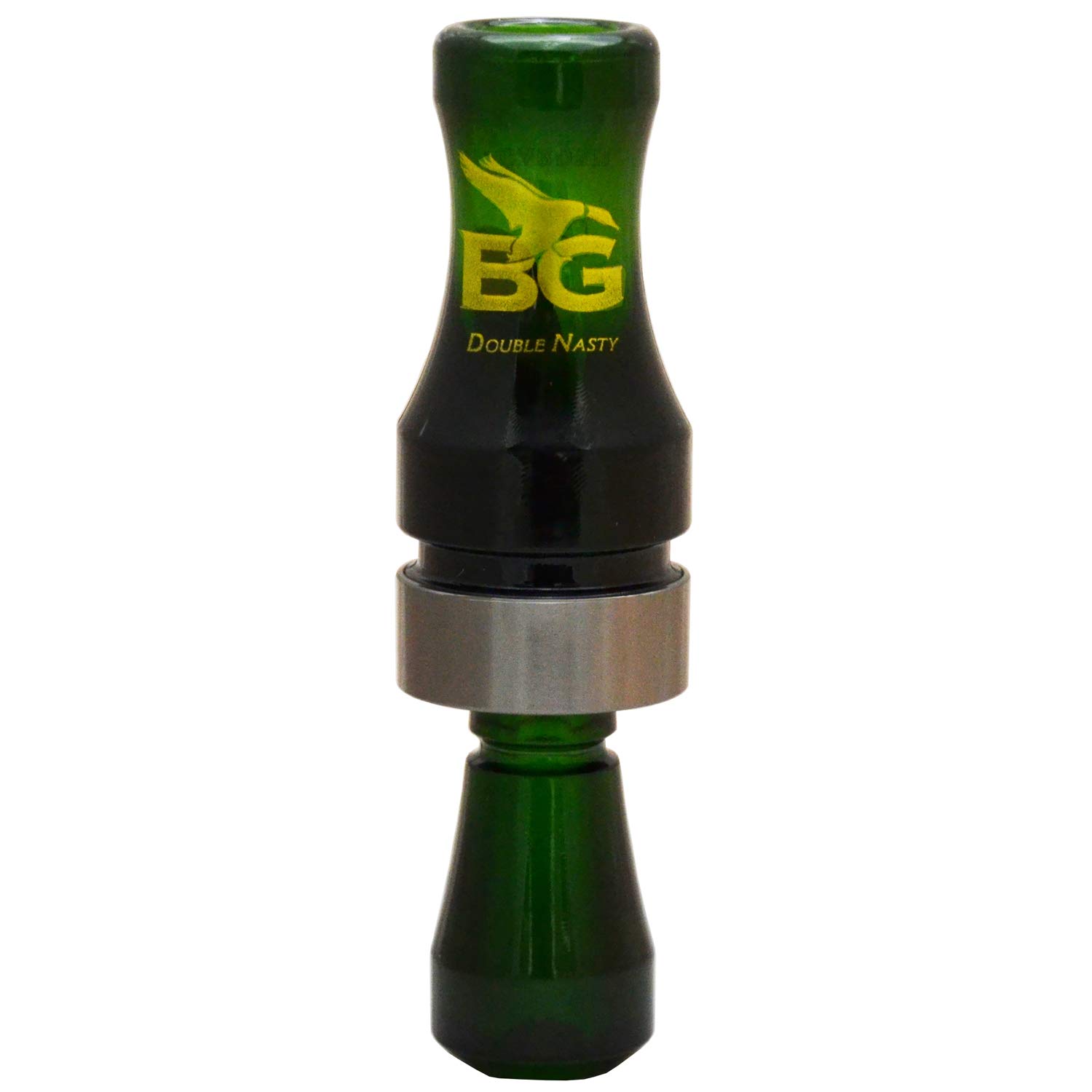
A hand-tuned polycarbonate call that goes from first quack to advanced hail calls.
This is the budget call that grows with you. The Buck Gardner Poly Double Reed is designed with a Spit-Tech toneboard that blows even when wet, ensuring reliable performance in the dampest conditions. Constructed from tough polycarbonate with a gunmetal aluminum band, it’s built to survive a season of hard hunting.
Its single-reed design (one vibrating reed inside the barrel) hits a balance for learners. You get a raspy tone with a full volume range, so you can produce accurate quacks easily and still learn advanced calls like hail and comeback. It sounds like a real duck straight from the start, and varying the pitch takes minimal effort.
The one consistent tip from owners is about cold weather; when the reeds get wet and cold, they can stick together briefly and need a quick cleanup. This is standard for double reeds and a minor hiccup for a call that otherwise performs remarkably well for its tier. It’s a high-quality polycarbonate pick that outlasts cheaper alternatives.
learner’s tool: Pick this if you want a call that lets you master basic quacks and then progress to advanced calling.
harsh climes: In freezing rain, wet reeds may stick and need a quick clear before your next blow.
6. Buck Gardner BGC Teal Call

The extra-tough teal call that breaks out the bluewings when the season opens.
When teal season rolls around, you need a call tuned for those fast, early-season birds. This Buck Gardner model is purpose-built for bluewing, greenwing, and cinnamon teal, giving you the specific high-pitched chatter they respond to. It’s a specialized tool that can make a massive difference in your early-season success.
It’s made from extra-tough polycarbonate with a gunmetal band, and it’s proudly Made in the USA. The design is easy to operate, letting you get those quick, staccato teal bursts without a steep learning curve. Owners mention it’s a good, pretty loud call that has brought birds in, even if it’s not always the first pick in the lanyard.
The main consideration is that this is a teal call, not a general-purpose mallard call. While you can fool around it, getting the authentic sound truly requires the knowledge of an experienced waterfowl hunter. It’s a specialized, fairly priced tool for decoying teal.
teal master: This is your go-to for early teal season, but store it away when mallard hunting takes over.
general duck: To get the true teal chatter, you need some experience; novices will just make noise.
7. Faulk’s Game Calls Deluxe Duck Call WA-33 BROWN

A classic walnut call with a bassy, raspy tone that stands out from plastic calls.
For hunters who love the feel and sound of traditional wood, the Faulk’s WA-33 is a standout. Made of walnut and tuned for a smooth, natural mallard tone, this call weighs just 68 grams, making it an incredibly light and easy addition to any lanyard. It offers a unique alternative to the polycarbonate calls that dominate the budget category.
The old-school friction-fit reed and all-wood Reelfoot-style insert produce a distinctive bassy, raspy tone that’s particularly effective as a feed call. Hunters report it’s effective on call-shy ducks, offering a sound that holds its own even against top-tier acrylic calls. It’s an easy-to-blow single reed that doesn’t freeze up in the cold.
Wood calls demand a little more respect than plastic. This is a softer sounding call, and it will squeak if you blow it too hard. It’s a finesse tool for close-in finishing and feeding chuckles, not long-distance hail calls.
traditional choice: Choose this for a unique, bassy feed call tone that plastic just can’t replicate.
modernists: It’s a soft call that squeaks when overblown; avoid it if you prefer aggressive, loud calling.
8. Buck Gardner BGC The Finisher Duck Call Combo Pack

A field-ready duo that pairs an easy hen call with a versatile 6-in-1 whistle.
This combo pack is the ultimate “grab-and-go” kit for hunters who want coverage without carrying a dozen calls. It includes the easy-to-use Mallard Magic double reed hen mallard call, built with Quick-Tune double reed guts for easy maintenance in the field. It pairs this with a versatile 6-in-1 Whistle designed for mallard drakes, pintail, wood duck, wigeon, and other whistling ducks.
It’s a great value combo that is ready to hunt right from the start. The double reed makes it simple for beginners to learn, while the whistle provides a huge range of sounds for different species. The sound for the price is considered untouchable, with owners noting it sounds like calls costing two to three times as much.
The honest feedback is that the duck call has a higher-pitched tone, sounding more like a young mallard than a mature hen. It’s sturdy and a good beginner value, but serious hunters chasing a deep, raspy adult hen sound might want to step up to a premium single call. As a starter kit, it offers unbeatable value for the price.
all-in-one: Perfect for new hunters who want to cover mallards and puddle ducks with one purchase.
pitch tweaks: If you demand a deep, adult hen rasp, this higher-pitched combo won’t replace a premium call.
Understanding the Specs
Reed Type: Single vs. Double
This is the most important spec because it defines your experience and sound. A single-reed call (like the Primos 805) has one mylar reed and a tone board, requiring very little air pressure to produce a sound. This makes it perfect for beginners and for creating subtle, quiet calls. A double-reed call (like the Zink PH-2) sandwiches two reeds together, which creates a raspier, more realistic “hen” sound but needs more precise breath control to avoid it locking up. Beginners should start with a single; those seeking a raspy edge should lean toward a double.
Material: Polycarbonate, Walnut, & Plastic
The material determines the calls’ durability and its voice. Polycarbonate (seen in several Buck Gardner calls) is a high-impact, durable plastic that stands up to rough handling, and often features “Spit-Tech” toneboards that prevent sticking when wet. High-impact plastic (used by Duck Commander) is similar in toughness but may be slightly simpler. Walnut wood (the Faulk’s WA-33) produces a warmer, bassier tone that some hunters swear by, but it demands more careful treatment in wet conditions. For a cheap and durable call, polycarbonate is your best bet.
FAQ
How much air does a beginner need to blow a cheap duck call?
Will a budget duck call work if it gets wet or when there’s condensation?
What’s the difference between a mallard call and a teal call?
Is a double reed duck call louder than a single reed?
Can I use a cheap duck call for advanced calls like the hail call or comeback call?
What does “J-frame” mean on a duck call like the Double Nasty?
Are wooden duck calls better than plastic or polycarbonate ones?
How durable are cheap duck calls if I drop them in the marsh?
What is a “feed” or “feeder” call and why is it important?
Is it better to buy a combo pack or a single dedicated duck call?
Final Thoughts: The Verdict
For most buyers, the best cheap duck calls winner is the Primos Easy Mallard 805 because its single-reed design is virtually simple to use—ideal for new hunters and kids. If you want a durable call that grows with your skills, the Buck Gardner Poly Double Reed lets you learn advanced techniques. For early teal season, the Buck Gardner Teal Call is the specialized tool to reach for, keeping your lanyard ready for every scenario.
How We Picked
We do not accept paid placement. Every pick is matched to a real buyer and a real use-case; we do not hands-on test units.
Sources & Methodology
Specifications: manufacturer listings and product documentation. Review insights: verified customer reviews, as of August 2026. Pricing: not shown on this page (it changes often); check the current price via the retailer link.
As an Amazon Associate, FitlyFast earns from qualifying purchases. This does not affect which products we feature.