
Our readers keep the lights on and the weekend projects moving. As an Amazon Associate, I earn from qualifying purchases.
Specs are compiled from manufacturer listings and verified buyer reviews and can change over time — please confirm the key details on the product page before buying.
You face a real trade-off when picking a cinema camera: do you want a gorgeous image straight from the start, or a file that bends to your will in editing? The best modern options soften that choice, but you still need to match the sensor, codec (the format that stores your video), and autofocus system to your actual work — long sit-down interviews, run-and-gun events, or full-blown narrative shorts.
I’m Rikta — the founder and writer behind FitlyFast. This guide is built by comparing the manufacturers’ published specifications and the patterns across verified customer reviews, so you get each pick’s real strengths and trade-offs instead of marketing spin.
The right cinema camera for you balances sensor size, recording codecs, and autofocus against your budget and your actual shooting. cinema camera picks here range from pocket-friendly powerhouses to Netflix-approved workhorses.
Our Picks at a Glance


How To Choose The Best Cinema Camera
Think about your longest shooting day, your editing workflow, and your lens collection before you even glance at a spec sheet. A powerful camera with the wrong mount or a file format your computer cannot handle will slow you down.
Sensor Size Sets Your Look
A Super 35 sensor gives you a classic filmic field of view and generally cheaper lenses, while a full-frame sensor brings shallower depth of field and better low-light sensitivity. Neither is “better” — they simply suit different stories and different budgets.
Codecs and Bit Depth Define Your Edit
Look at whether a camera records compressed formats like H.264, professional formats like ProRes, or RAW. A 12-bit RAW file holds far more color information than an 8-bit file, giving you room to grade, but it demands huge storage and a powerful editing machine.
Autofocus and Stabilization
If you shoot solo, gimbal work, or fast-moving subjects, look for reliable phase-detection autofocus and in-body stabilization. If you pull focus manually with cinema lenses, those features matter less to you than a good monitor and focus aids.
Quick Comparison
| Model | Best For | Sensor | Dynamic Range | Autofocus Points | Amazon |
|---|---|---|---|---|---|
| Sony FX30 | Entry-level Cinema & Solo Creators | Super 35 (20.1MP) | 14+ Stops | 495 | Amazon |
| Nikon RED Z Cinema | RED Color Science & 6K R3D | Full-Frame (6K) | 15+ Stops | 273 | Amazon |
| Blackmagic Pocket 6K G2 | Canon EF Lens Owners | Super 35 (6144×3456) | 13 Stops | — | Amazon |
| Blackmagic Pocket 6K Pro | Built-in ND Filters for Outdoor | Super 35 (6144×3456) | 13 Stops | — | Amazon |
| Canon EOS R5 C | Hybrid Photo & 8K Video | Full-Frame (45MP) | — | — | Amazon |
| Canon EOS C70 | Broadcast-Style Body & Audio | Super 35 (4K DGO) | 16+ Stops | 255 | Amazon |
| Sony FX3 | Low-Light & Run-and-Gun | Full-Frame (4K) | 15+ Stops | 627 | Amazon |
In‑Depth Reviews
1. Sony Cinema Line FX30 Super 35 Camera
A compact Super 35 body that delivers 90% of the FX3’s power at a lower price.
The FX30 earns the top spot for balancing pro features with approachable handling. The 20.1 MP Exmor R APS-C sensor delivers a wide dynamic range, and with a 14+ stop range and Dual Base ISO you get clean, low-noise images when the lights drop. Autofocus is the other headline story — with 495 phase-detection points, owners find it fast and accurate enough to trust on gimbals and with touch-to-track on third-party lenses.
What makes it feel like a real cinema tool rather than a stills camera is the shooting flexibility. It offers Cine EI Quick and Cine EI Log modes, and you can apply User LUTs directly to the LCD and HDMI output or even embed them in the clips, which means your monitoring matches your final grade. Reviewers who shoot long-form content, from podcasts to church sermons, report the active cooling means no overheating on hour-long takes, and the dual card slots give you instant redundancy.
The one honest trade-off is the battery — owners consistently note you will want an external pack for all-day shoots. Buyers report it is “Excellent for podcasts (45+ shot)” thanks to the flawless AF and IBIS, but check your power plan before you commit to a full production day.
Why It Wins Owners Over
- Fast, accurate 495-point phase-detect autofocus
- 6K oversampled 4K means rich color and low noise
- Active cooling prevents overheating on long shoots
- Compact, rugged build ideal for solo creators
Know Before You Buy
- Battery life is weak at 1-2 hours
- Plan on an external battery pack for full days
Perfect for: Solo creators, indie filmmakers, and wedding shooters who want a pro image without the pro price tag.
Think twice if: You need built-in ND filters or all-day battery without rigging a pack.
2. Blackmagic Pocket Cinema Camera 4K Power Bundle
A 1.18 lb full-frame body that brings legendary RED color to the Nikon Z mount.
This is the camera for shooters who have been chasing that unmistakable RED look without wanting to haul a cinema behemoth. It captures REDCODE RAW (R3D NE) footage, open up the same color space and Log curve as dedicated RED cameras, and the 6K full-frame sensor delivers 15+ stops of dynamic range with a Dual Base ISO. The extra-large 4-inch DCI-P3 touchscreen that swivels is a welcome change from the small monitors on most mirrorless bodies.
It also records 32-bit float audio with support for external microphones, so you can capture a huge dynamic range of sound without riding the levels. Owners who switched from a Komodo found the faster boot, larger screen, and 6K at 60fps versus the older 40fps to be meaningful upgrades. The autofocus system has 273 points, which is a 81% smaller array than the Sony FX30 above — plenty for most work but a clear second place if you rely heavily on AF tracking.
Be ready for massive files. The 6K R3D footage is beautiful and flexible, but it demands fast CFexpress Type B storage and a capable editing machine. As owners mention, it “Replaced Komodo 6K; faster boot, no black shade, 4″ screen, 6K@60fps vs 40fps, superior R3D/color” — just budget for storage.
RED DNA: The same R3D color science as far pricier RED bodies, in a body that weighs just 1.18 lbs.
Storage hungry: Huge 6K files require fast cards and a serious computer for editing.
3. Blackmagic Pocket Cinema Camera 6K G2
The upgrade path for Canon EF lens owners who want 6K resolution and familiar glass.
If you already own Canon EF lenses, this is the smartest step up because it uses an active EF/EF-S mount — no adapter needed. The Super 35 sensor records a native resolution of 6144 x 3456, and the 13 stops of dynamic range with dual gain ISO up to 25,600 hold shadows and highlights beautifully. The adjustable tilt 5″ LCD keeps you framing without an external monitor.
Owners pair it with DaVinci Resolve Studio (included) and report making “incredible movies,” though the workflow is not for the impatient. It records 12-bit Blackmagic RAW, which gives you fantastic grading headroom but demands heavy editing power — one owner mentioned RAW files are manageable on a 3600g/3060 Ti but you need fast storage. The included NP-F570 battery and charger are fine to start, but expect to plan for external power.
The honest catch is battery life — one owner called it “terrible” and fixed it with a V-mount battery for hours of shooting. If you want the 6K sensor and have EF glass sitting at home, this is a fast, smart buy; if you want built-in NDs and a longer-lasting battery, the 6K Pro below is the better fit.
EF glass friendly: Active EF/EF-S mount means you keep your lenses and gain 6K resolution.
Power hungry: Budget for a V-mount or external battery for any serious shoot.
4. Blackmagic Pocket Cinema Camera 6K Pro

Built-in 2, 4, and 6-stop ND filters make it ideal for outdoor shooting.
This is the Blackmagic for people who shoot outside, because it solves the classic exposure problem with built-in 2, 4, and 6 stop ND filters — no matte box or screw-on filters required. The Super 35 sensor records a native 6144 x 3456 resolution with 13 stops of dynamic range and dual gain ISO up to 25,600, so it is as flexible in the shadows as it is in bright sun. The adjustable tilt 5″ HDR LCD is brighter than the G2’s and easier to read in daylight.
Opera and classical shooters love it for the high resolution, which allows deep digital zoom during editing without losing quality. One owner shooting live performances called the crop capability “amazing” and said it works perfectly for virtual reframing. It records 12-bit Blackmagic RAW or Apple ProRes, and the included DaVinci Resolve Studio key covers post. The 30W power supply with a locking connector is a nice pro touch.
The system’s weakness is its auto-exposure behavior — owners who leave it in auto find harsh jumps in shutter and aperture during lighting changes. If you shoot controlled or manual exposure, this is a beast; if you low-maintenance, you will be frustrated.
ND built-in: Internal 2, 4, and 6 stop filters make outdoor shooting easy.
Keep it manual: Auto exposure lacks auto ISO and can jump harshly in variable light.
5. Blackmagic Cinema Camera 6K, L Mount

A 45MP hybrid that shoots 8K/60P RAW and captures high-quality stills.
If you need one camera that excels at both stills and cinema, this is the defining pick. The 45-megapixel full-frame CMOS sensor (a large light-capturing chip) shoots stills through the DIGIC X processor, and it records internal 8K/60P RAW video — a high-quality, unprocessed format — that owners describe as “Netflix approved.” That dual personality is why ex-Sony shooters call it the best professional hybrid they have used, with eye-detect autofocus that locks onto subjects with high precision.
The built-in internal cooling fan is the hero feature for video: it vents heat, so you can record continuous 8K/60P without the overheating shutdowns that plague fanless hybrids. You also get 13 marked, assignable buttons, a timecode input/output for syncing multiple cameras, and the ability to shoot 4K HFR (high frame rate) at up to 120p in 4:2:2 10-bit color without cropping the sensor — a big deal for gimbal and drone work. Owners who run events and social media shoots call the 8K oversampled quality (where extra pixels are combined for sharper 4K) excellent at the price.
The trade-offs are clear: battery life gets mixed reviews and the mini HDMI port is fragile (owners recommend a cable clamp). It also lacks built-in ND filters, so outdoor work requires a filter system. This is the best all-rounder, not the purest cinema box.
Why It’s the Hybrid King
- 45MP stills plus 8K/60P internal RAW video
- Internal cooling fan for uninterrupted recording
- Netflix-approved for pro workflows
- 120p 4K without sensor crop
The Compromises
- Battery life is mixed; plan a V-mount for long days
- Mini HDMI port is fragile without a clamp
Ideal for: Indie filmmakers and hybrids who want one body for photos and high-end video.
Look elsewhere if: You want built-in NDs or a totally rugged, battery-friendly cinema body.
6. Canon EOS C70 Cinema Camera
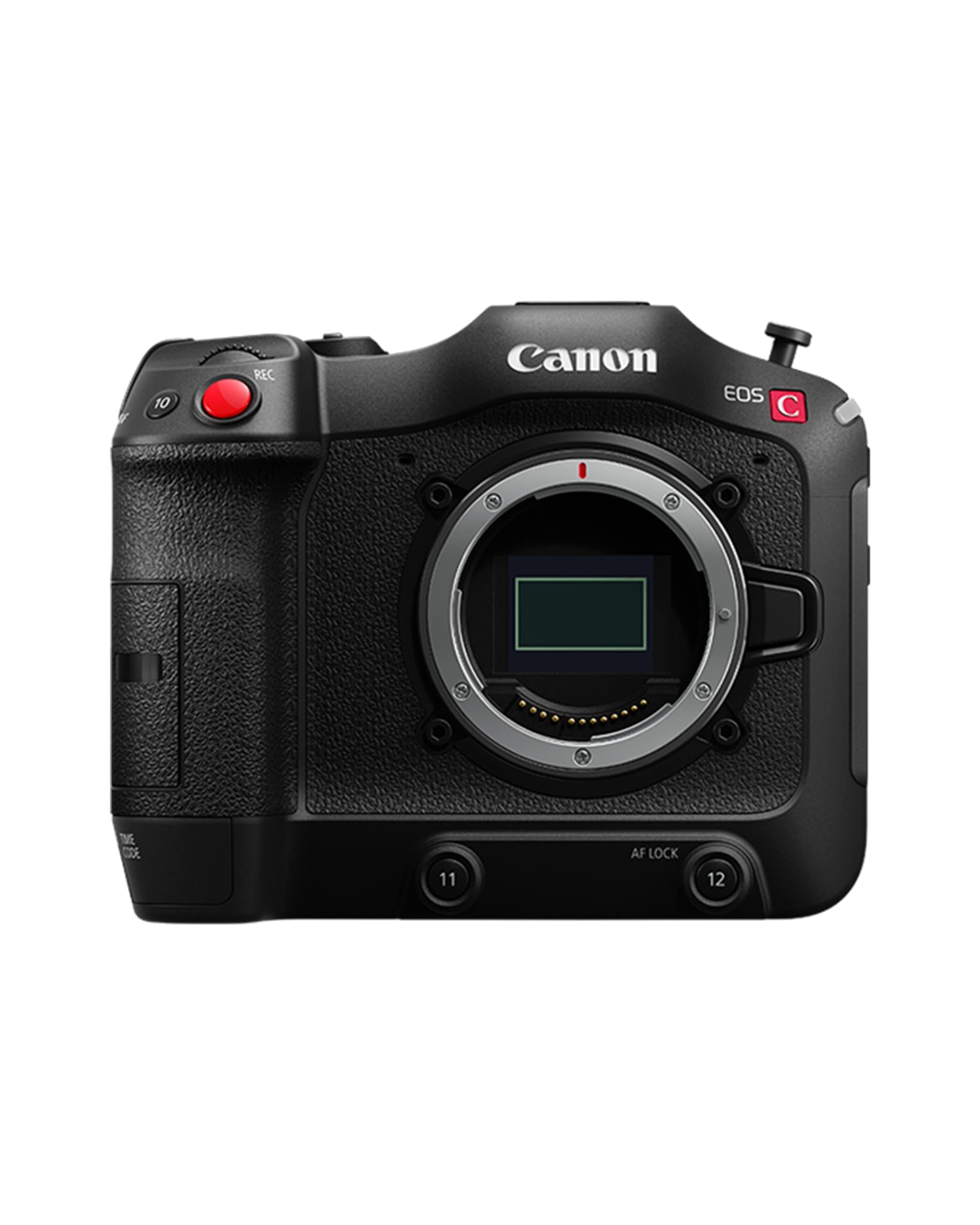
A broadcast-sensor workhorse with 16+ stops of dynamic range.
This camera’s defining trait is its 4K Super 35mm Dual Gain Output (DGO) sensor, a design that reads each pixel twice to boost dynamic range — giving you 16+ stops to protect highlights and shadows simultaneously. That puts it in premium territory for image quality, and it is approved for Netflix productions. The DIG!C DV7 processor and Dual Pixel CMOS AF keep focus sharp, and the body is shaped like a real cinema tool rather than a stills camera.
You get dual SD card slots for simultaneous recording in different formats, up to 4K 60p, and a fully rotatable LCD with direct touch control for one-handed operation. Owners who shoot on it note the built-in NDs and good battery life (1.5 to 3 hours) as genuine pros, and the image quality compares well against much pricier broadcast options. The C70 uses the RF mount, so modern RF glass works natively.
However, the review mix is honest about its flaws: the display hinge is a recurring complaint for feeling loose, low-light performance does not match the Sony FX3, and the electronic image stabilization is considered nearly useless. This is a niche run-and-gun tool for those who value the DGO image above all else, not a do-everything camera.
DGO advantage: Dual Gain Output gives exceptional dynamic range and highlight protection.
Know its limits: Weak low-light, fragile display hinge, and electronic IS that disappoints.
7. Sony FX3 Full-Frame Cinema Line

A low-light full-frame specialist praised for its freeing performance.
When the venue lights drop, the Sony FX3 is the camera owners turn to. Its full-frame 4K sensor offers 15+ stops of dynamic range and high sensitivity, and the S-Cinetone picture profile delivers an expressive cinematic look inspired by VENICE colorimetry straight out of the camera. It reaches up to 4K 120p in 10-bit 4:2:2 with full pixel readout, so slow motion stays detailed and clean.
Live production and streaming crews love it because the clean full-width 16:9 HDMI output is broadcast-ready, and the built-in cooling fan keeps 4K 60p recording uninterrupted. The compact, cage-free design has ¼”-20 mounting points and an XLR top handle, so it slots straight into a rig or onto a gimbal without custom parts. Owners moving up from lesser cameras describe it as “my dream camera” and praise the exceptional low-light performance.
It is not cheap, and it lacks a global shutter and built-in ND filters, which some owners mention but ultimately call irrelevant for their work. If you shoot events, documentaries, or low-light narrative, this is the benchmark.
Low-light legend: 15+ stops of dynamic range and exceptional high-ISO performance.
No NDs: Plan a filter system for bright outdoor work.
Understanding the Specs
Dynamic Range & Bit Depth
Dynamic range, measured in stops, tells you how much detail the sensor holds in both bright highlights and dark shadows at the same time. A 13-stop camera will handle most scenes, while 14+ or 16+ stops give you more safety when exposure is tricky. Bit depth — 10-bit vs 12-bit — controls color gradation; 12-bit gives smoother skies and skin tones and more room for heavy grading without banding.
Autofocus Points
More autofocus points generally means more precise tracking across the frame, especially for moving subjects. A 627-point system like the Sony FX3 will hold a walking subject’s eye better than a 273-point system. But if you pull focus manually with cinema lenses, this number stops mattering — you want a good monitor and focus peaking instead.
Codecs and RAW
A codec is the format the camera uses to store video. H.264 is small and easy to edit, ProRes is a professional intermediate that’s fast to work with, and RAW (like Blackmagic RAW or REDCODE RAW) stores the most sensor data for maximum grading freedom. RAW files are huge, so only choose it if your computer and storage can handle it. Cameras with 12-bit RAW give you the most flexibility in color correction of any format.
ND Filters
An ND (neutral density) filter reduces light entering the lens, like putting sunglasses on the camera. This lets you shoot wide open for shallow depth of field in bright daylight. Built-in ND filters are a big convenience because they keep your kit small and let you adjust exposure in seconds instead of screwing on filters.
FAQ
What is the difference between a cinema camera and a mirrorless camera?
Do I need a full-frame sensor for cinema work?
Can I use my Canon EF lenses on a cinema camera?
How much storage do I need for RAW video?
What is dual base ISO and why does it matter?
Is built-in ND filtration worth the extra cost?
What is the best way to record audio for a cinema camera?
Why does my camera need active cooling?
Final Thoughts: The Verdict
For the majority of shoppers, the cinema camera winner is the Sony FX30 because it delivers professional features, fast autofocus, and compact handling at a smart price. If you want the steepest color-grading curve and an included editing suite, grab the Blackmagic Pocket 4K. And for a true hybrid that shoots 8K RAW, the Canon R5 C is the one to reach for.
How We Picked
We do not accept paid placement. Every pick is matched to a real buyer and a real use-case; we do not hands-on test units.
Sources & Methodology
Specifications: manufacturer listings and product documentation. Review insights: verified customer reviews, as of August 2026. Pricing: not shown on this page (it changes often); check the current price via the retailer link.
As an Amazon Associate, FitlyFast earns from qualifying purchases. This does not affect which products we feature.