
Our readers keep the lights on and the weekend projects moving. As an Amazon Associate, I earn from qualifying purchases.
Specs are compiled from manufacturer listings and verified buyer reviews and can change over time — please confirm the key details on the product page before buying.
The best climber machine is one you’ll still use after week two—balancing intense cardio with a sturdy build that supports your weight. Shoehorning a gym-grade workout into a living room means juggling stride length, resistance levels, and a weight limit that doesn’t tap out when you do.
I’m Rikta — the founder and writer behind FitlyFast. This guide is built by comparing the manufacturers’ published specifications and the patterns across verified customer reviews, so you get each pick’s real strengths and trade-offs instead of marketing spin.
Here is how the climber machine models stack up on stride, resistance, and build quality so you can pick the right one for your home.
Our Picks at a Glance

How To Choose The Best Climber Machine
Before you buy a climber, you need to know how much floor space and ceiling height it will eat up, and how you plan to train. The three numbers that make or break your purchase are stride length (how far each step travels), resistance type (how the machine creates difficulty), and the weight rating on the box (the maximum user weight it supports).
Stride: The Difference Between Stairs and Stepping
A longer stride forces a deeper, more athletic motion that recruits the glutes and hamstrings the way actual stair climbing does. Short-stride machines feel more like a mini stepper, easier on the knees but less demanding. If you are tall, check the stride and the overall height—long legs need room to extend fully on a vertical climber.
Resistance: Magnetic, Hydraulic, or Just You
Magnetic resistance is the quietest and most consistent, holding its tension for the whole session. Hydraulic systems can soften as the cylinders heat up after 30 minutes. The simplest climbers use only your bodyweight as resistance, which is brilliant for cardio but limits strength progression.
Build: Weight Capacity and Stability
Match the machine’s maximum weight recommendation to your body weight, leaving a safety margin for vigorous motion. A heavier frame with a wide base resists wobble during intense sessions, and a higher rating usually signals better steel and sturdier rails.
Quick Comparison
| Model | Best For | Resistance | Stride / Step Height | Weight Capacity | Amazon |
|---|---|---|---|---|---|
| YOSUDA 3-in-1★ Best Overall | Best Overall | 16 Levels Magnetic | 15.5 in Stride | 300 lbs | Amazon |
| Relife Vertical ClimberBudget Pick | Budget Pick | 5 Heights | — | 330 lbs | Amazon |
| Sunny SF-S024035Compact Pick | Compact Stepper | 4 Tension | 8.9 – 23.5 in Height | 220 lbs | Amazon |
| Body-Solid BFMC10 | Muscle Toning | Bodyweight | — | — | Amazon |
| Sunny SF-S021001 | Extended Stride | Hydraulic | 16.9 in Stride | — | Amazon |
| MaxiClimber 2.0 | Vertical Climber | Elastic Bodyweight | Adjustable Height | 240 lbs | Amazon |
| YOLEO Stair Stepper | Premium Pick | 16 Levels Magnetic | 28 in Stride | 660 lbs | Amazon |
| Winfita Stair Stepper | Extra-Long Stride | 77 lbs Magnetic | 19 in Stride | 350 lbs | Amazon |
| Signature Fitness | Commercial Grade | 15 Levels | — | 375 lbs | Amazon |
In‑Depth Reviews
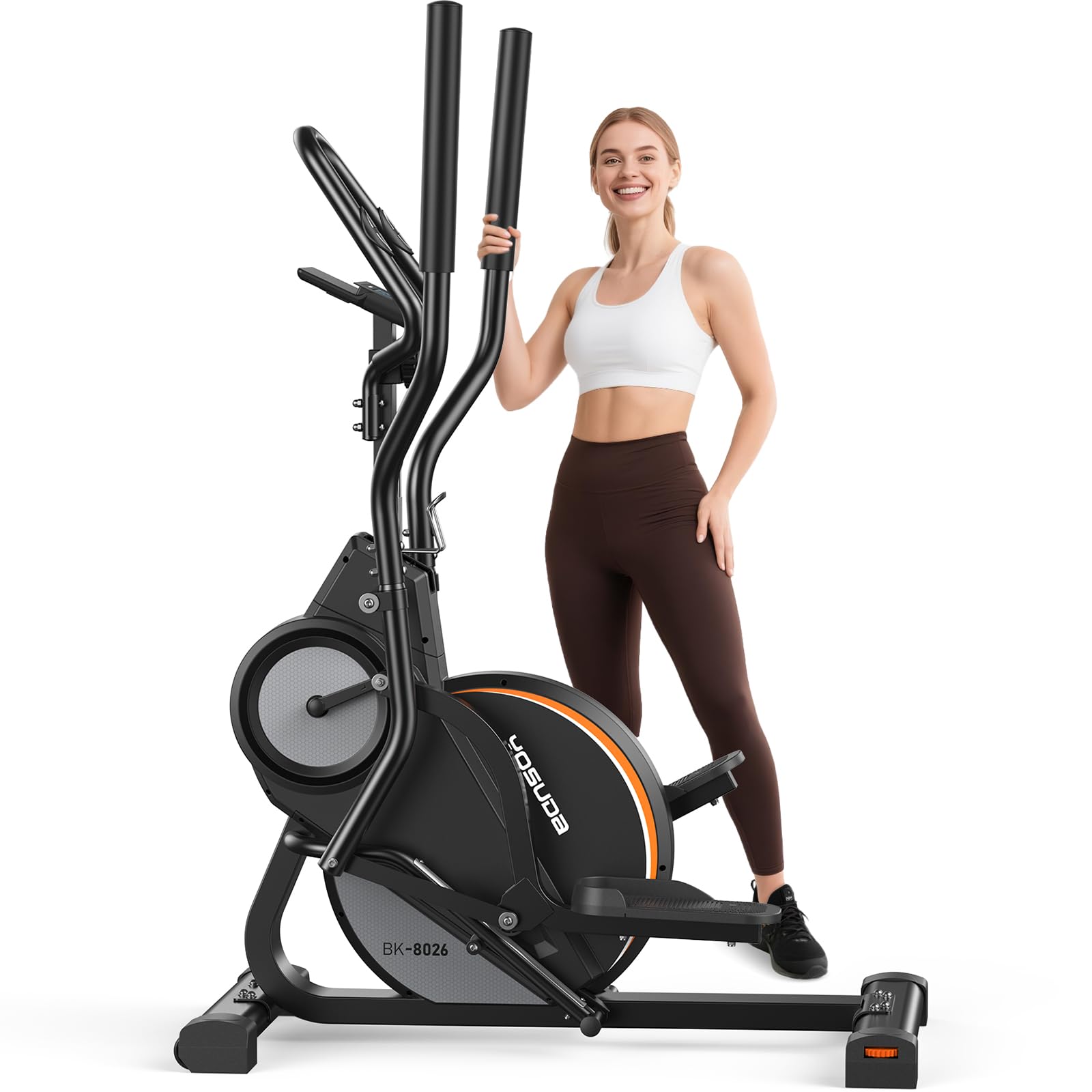
1. YOSUDA 3-in-1 Elliptical Climber
Our pick — over 4★ from 800+ verified ratings; the strongest balance of quality and price.
The three-in-one climber that swaps from stepper to elliptical to climber without asking you to move a muscle.
This 3-in-1 machine combines a stair climber, stepper, and elliptical in a 5.38 sq.ft footprint. The 15.5-inch stride combines with a 45° climbing angle that simulates real outdoor climbing posture, fully waking up the hips, legs, waist, and core in a way flat steppers can’t match. Its 18 LBS flywheel provides stable inertia for a weighted, gym-like feel in your living room.
What wins people over is the build quality—it earns the most praise of any single feature by far, with the sturdy alloy steel frame staying rock-solid at a weight capacity of 300 pounds. The 16-level magnetic resistance dials up from light daily cardio to intense climbing, all delivered through an ultra-quiet magnetic system that stays smooth even during heavy pushing. Assembly lands at 90% pre-assembled, and buyers report finishing the setup within an hour using the included video guide.
The thoughtful touches go deeper: built-in front moving wheels let you roll it between rooms, and the Bluetooth monitor tracks calories, time, speed, distance, odo, and pulse with accuracy that has been confirmed against a wearable tracker. The recurring gripe is the unlit display, a small fairness trade-off for everything else on offer. An occasional unit arrives with a damaged part, but the after-sales support responds quickly and replaces the piece within days.
3-in-1 versatility
- Three workouts from one footprint, a 3-in-1 that saves both space and money
- 13 levels of resistance top out at a genuinely challenging 16 levels
- Compact enough for a bedroom corner at just 5.38 sq.ft
bulky footprint
- The unlit digital display is hard to read in dim rooms
- At 94.6 pounds it is the heaviest pick here, needs two people to move
compact home gym: you want a machine that grows with you from light cardio to intense climbing without buying a second device.
limited space: you have a tight budget or purely want a compact vertical climber, not a full elliptical.
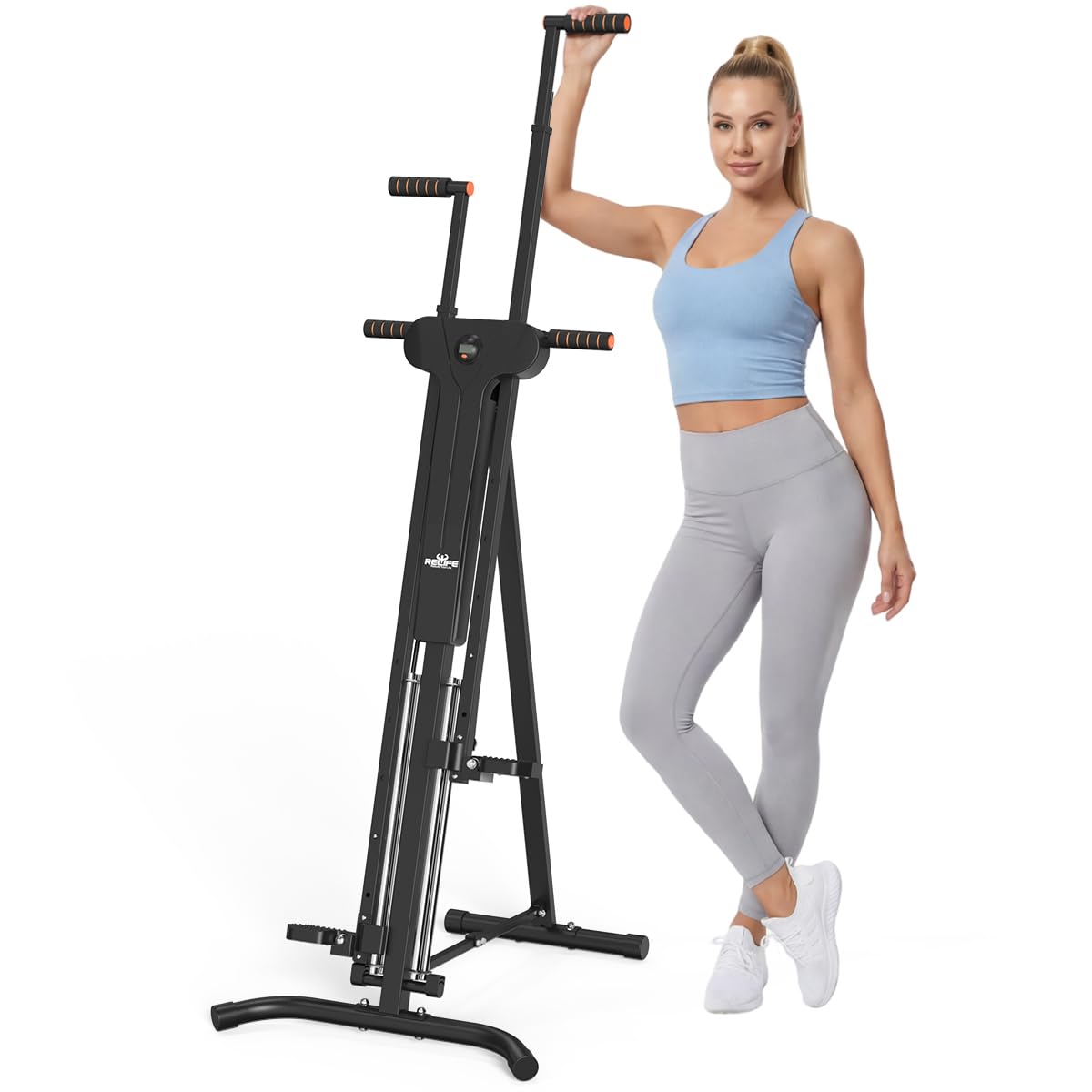
2. Relife Vertical Climber
The 30-pound climber that shrugs off a 300-plus-pound user and still folds flat under a bed.
Certified by buyers as a “beast of an exercise” even while holding well over 300 lbs, this is the budget climber that refuses to act its price. Four metal guide rails brace the frame for stability, and the included lubricating grease keeps the glide smooth instead of squeaky.
Five adjustable levels function like resistance settings, so Level 1 simulates a light jog while Level 5 replicates the rhythm of rock climbing—a full-body burn that owners mention hitting the thighs, biceps, abdomen, and glutes. The radian design angles the slightly inclined pedals to keep your center of gravity close to the frame, preventing the outward tilt that plagues cheaper steppers. It assembles easily and, crucially, folds flat for a corner, under a bed, or on a balcony.
The honest catch is in the phrasing “vertical climber”: this is a bodyweight-driven machine with no adjustable resistance dial, so your progression ceiling is your own gravity. A few taller users note it runs out of leg room at the top of the stride, and the glide is solid but not silky-smooth. What it lacks in polish, it makes up for in raw challenge and durability, backed by a 1-year warranty with support that responds within 12 hours.
cardio beginners: climbers on a budget who want a serious full-body burn and a weight rating that welcomes heavier users without wobble.
advanced athletes: anyone over roughly 5’9″ who needs a full extension at the tallest setting or expects buttery-smooth hydraulics.
3. Sunny Health & Fitness Stair Stepper
The adjustable-height stepper that turns an 8.9-inch step into a 23.5-inch climb for every leg length.
This Sunny stepper stands out for its 8.9″ to 23.5″ adjustable step height and 21.5″ stride length, letting you choose between a knee-friendly short step and a deep, glute-firing climb. The 4-level adjustable handlebars fit a range of heights—tall users around 6’6″ report solid, stable sessions with only occasional knee contact solved by shifting heel position. At just 29.3 pounds, it is a true lightweight that folds for storage in a living space.
Assembly earns the single most praise of any feature, with buyers routinely finishing it in under an hour. Resistance comes from four tension levels controlled by the frame, giving enough load for a solid 20-minute session even for fit users.
The catch shows up in the pedal feel: because there are no resistance settings, some customers note the pedals slamming into the posts unless they shorten their step range. The 220-pound weight capacity means heavier or very aggressive users should look at the Relife’s 330-pound rating instead. Noise is a mixed bag too—quiet for some, squeaky for others—so it suits light-to-moderate sessions of 15-25 minutes far better than marathon training blocks.
light workouts: you want an app-connected, compact stepper that adapts its step height to your exact leg length for under 30 pounds of hardware.
intense training: you weigh over 220 lbs, want a truly silent machine, or plan 45-minute marathon sessions.
4. Body-Solid Vertical Climber

The commercial-grade name in a vertical climber that a gym owner himself called “elite for the price.”
From the brand trusted in actual gyms, this vertical climber brings a heavy-duty alloy steel frame that stays stable with zero wobble during intense intervals. It stands a full 85 inches tall with dual grips and a wide, non-slip foot platform, creating a wide range of motion that torches the arms, chest, back, legs, core, and cardio in one fluid movement. Reviewers point out visible leg and glute tone improvement from 15-minute HIIT sessions three times a week.
You can adjust the height to match your body, and the multi-functional display tracks time, distance, and calories—but it sits at belt level, so you will have to look down to read it mid-workout. There is no resistance setting, so the challenge comes entirely from your own body weight; a gym-owner tester said that is the point: use it as a slider, not a sprinter, and engage your arms and core for a “killer workout” that fits right in with high-end gym equipment.
The durability record is real but mixed, and the fair trade-off is mechanical maintenance: the chain needs lubrication, and the urethane wheels demand gentle foot control to avoid slamming. A small minority hit bolt loosening or grinding issues after a few weeks, which a quick Loctite and regular oiling prevents. It folds for storage but lacks wheels, so budget for the carry effort at 48.5 pounds.
heavy users: intermediate athletes who want a no-frills, bodyweight vertical climber with a reputation for serious muscle engagement.
frequent movers: beginners wanting quiet operation without maintenance, or anyone who prefers a resistance dial over pure bodyweight control.
5. Sunny Health & Fitness Extended Stride Climber

The hydraulic climber that delivers a deep 16.9-inch mountain-climb stride with a quiet, joint-friendly glide.
This Sunny model stretches the stride to 16.9 inches, a deeper range than basic steppers that creates a more demanding motion for the glutes and legs. The hydraulic drive system controls the descent into a smooth, low-impact step that feels comfortable on knees and ankles—a favorite among older users who need joint-friendly movement without sacrificing intensity. Built-in pulse sensors on the ergonomic handlebars let you monitor heart rate mid-session.
Bluetooth connects the machine to the free SunnyFit app, open up trainer-led sessions, scenic routes, and real-time metrics that make a 10-minute indoor climb feel less like a chore. Owners highlight the easy setup, light 36.4-pound frame, and transport wheels that make it simple to roll away for storage. An 82-year-old user praises it for boosting mobility and muscle strength, calling it “tiring in the best way.”
The value question cuts both ways: it delivers more resistance and range than cheaper models, and the hydraulic system stays silent enough for TV viewing. But the price lands above several competitors, and a recurring issue involves a base bolt backing out, causing clicking and monitor failure in an occasional unit. It is a sturdy, quiet mid-ranger for steady 20-30 minute sessions rather than a sprint machine.
tall users: you want a quiet, joint-friendly hydraulic climber with a longer stride and app coaching in a light, portable package.
small rooms: you are on a tight budget and willing to trade the extended stride and app for a simpler, cheaper stepper.
6. MaxiClimber 2.0 Vertical Climber

The original vertical climber that delivers an intense full-body sweat in 5 minutes with no electricity required.
With tens of thousands of owners behind it, the MaxiClimber 2.0 is the proven name in bodyweight vertical climbing. The Elastic Resistance System lets you use your own weight for power or add resistance for strength, and the smooth vertical motion is gentle on knees and ankles. There are no electric parts—just a 33-pound cold-rolled steel frame that arrives 90% pre-assembled and folds for storage, with adjustable height settings to match your body.
The intensity is the headline: shoppers say drenching sweat within 5 minutes and a burn that spans the arms, legs, and abs, comparing it favorably to far more expensive tread-climbers. Its low-impact design suits knee-sensitive users, with progress tracked by reps instead of resistance dials. Assembly is simple at four bolts, and the free companion app adds structured workouts.
Durability feedback is genuinely mixed—while many find it sturdy for years, a smaller share report breakage within 15 uses, and the 240-pound weight capacity excludes heavier athletes. Tall users over roughly 6’2″ cannot fully extend their stride, and the front plastic housing can impede leg movement until removed. It is a superb cardio tool with a modest strength ceiling, best suited to lighter climbers who want intensity without joints impact.
tech enthusiasts: anyone wanting a proven, low-impact vertical climber that delivers serious cardio in short sessions without plugging in.
barefoot users: heavy users over 240 lbs, athletes over 6’2″, or anyone planning to build significant lower-body muscle.
7. YOLEO Magnetic Stair Stepper
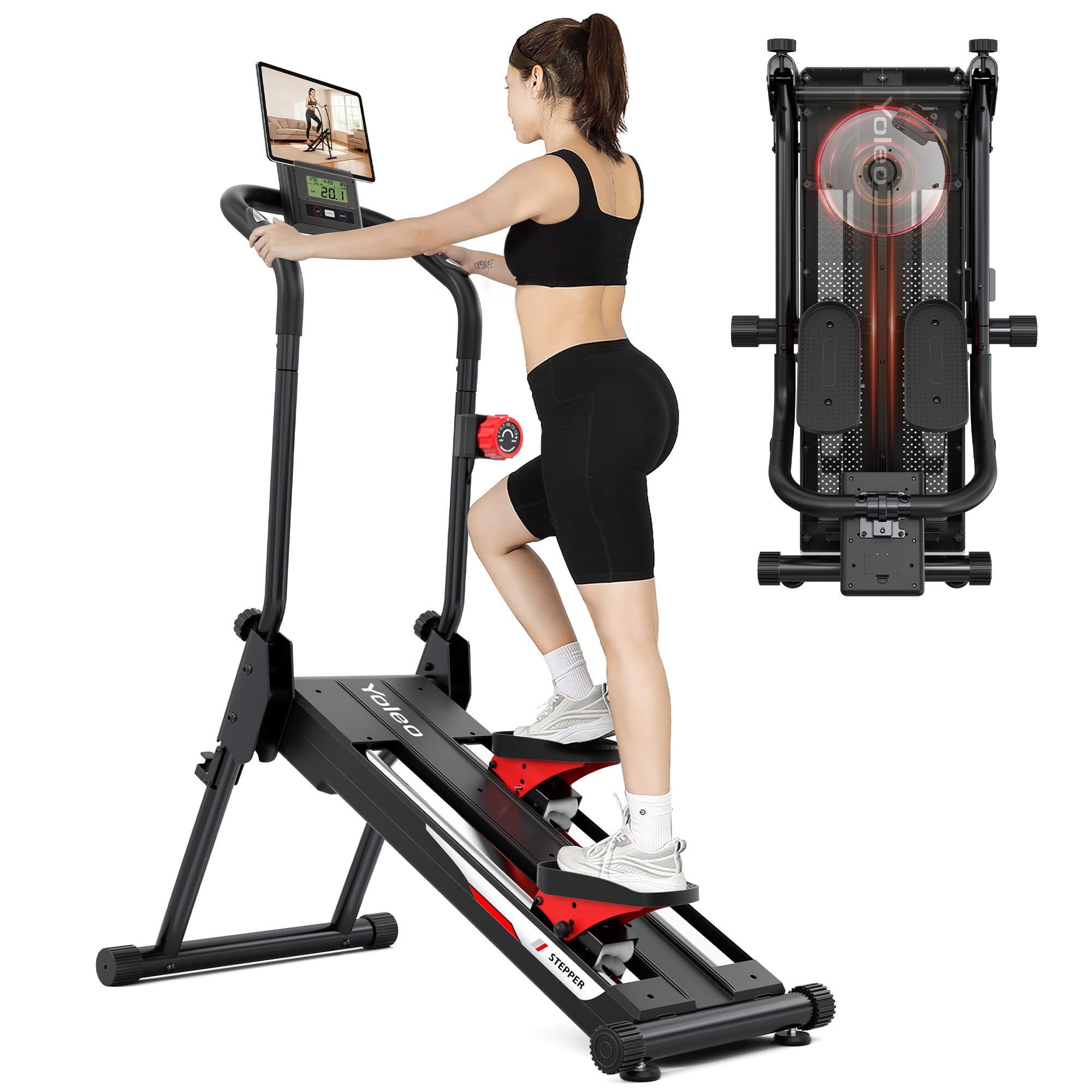
The heavy-duty magnetic stepper with a 660-pound frame rating and dual incline modes for trail-level climbs.
This premium stepper turns your home into a mountain trail. Its reinforced dual-triangle frame, thick steel, and stainless-steel wear-resistant sliding rails support up to 660 LBS, making it the most sturdy frame in this lineup by a significant margin. You can switch between two incline modes: a 77° steep climb that targets your glutes and legs like mountain running, and a 61° endurance incline that mimics outdoor jogging—all powered by a whisper-quiet magnetic system with 16 resistance levels up to 130LBS.
The customization continues with 3 adjustable pedal angles for targeting glutes, thighs, and calves differently, plus a dedicated storage angle for folding. Owners consistently describe it as stable, smooth, and quiet, with the 28-inch extended stride and supportive handlebar making it a staple for 20-30 minute TV workouts. Transport wheels, a carry handle, and heart-rate sensors on the LCD display round out a genuinely complete package.
Because it is new to the market with few reviews, the long-term durability verdict is still forming, though the early consensus is overwhelmingly positive. The one practical complaint: to fold it for storage, you must unscrew the front knobs each time, which slows the “just tuck it away” routine. For anyone who wants gym-grade magnetic resistance and a weight rating that welcomes every family member, this is the top-tier choice.
quiet mornings: you want the strongest frame here with silent magnetic resistance, dual incline angles, and a stride long enough to feel like real mountain work.
wide feet: you need instant one-step folding, since the knobs require unscrewing each time.
8. Winfita Magnetic Stair Stepper
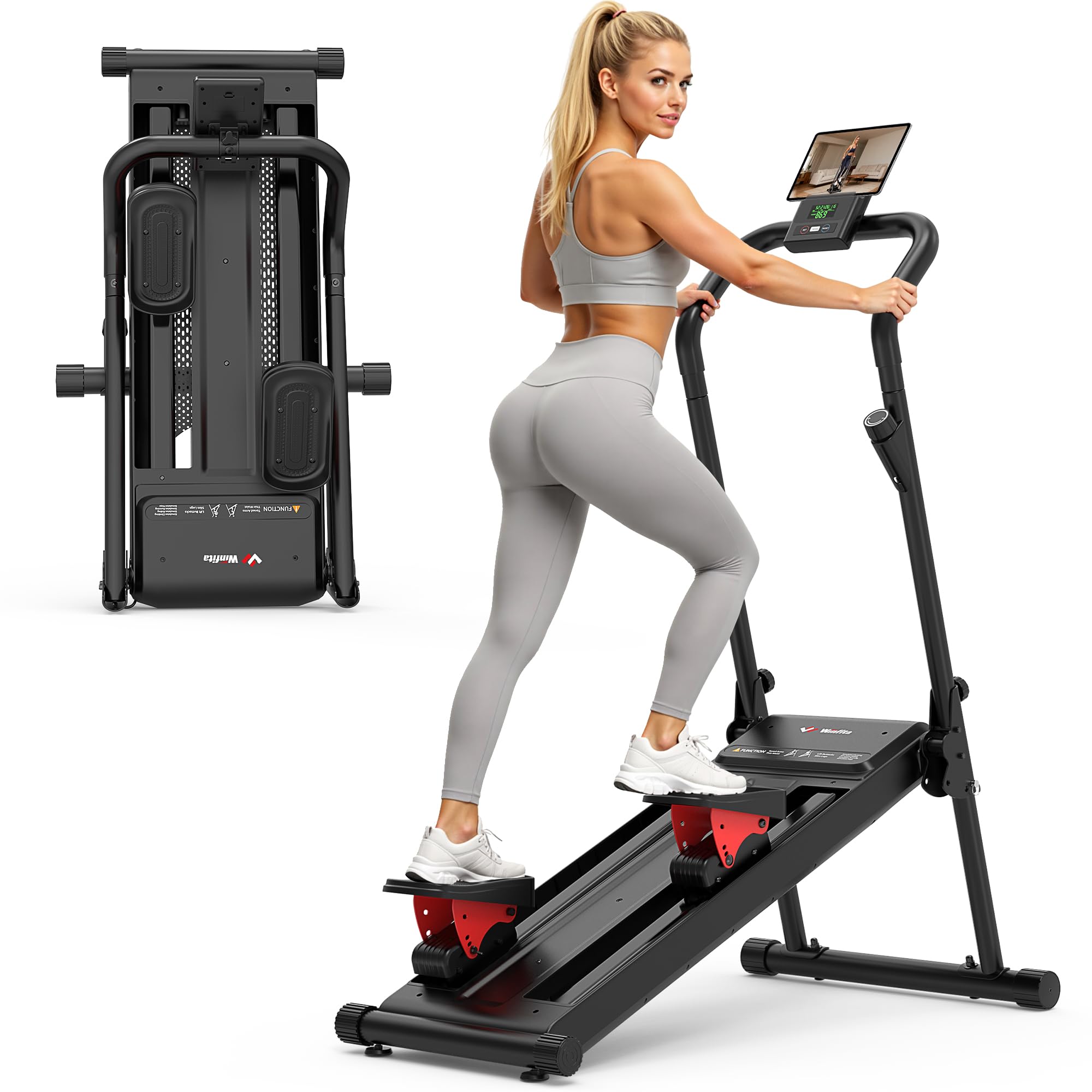
The magnetic stepper whose 19-inch stride equals climbing three stairs at once with every step.
Each stride on this Winfita machine is equivalent to climbing three stairs, a claim backed by a genuinely long 19” stride that activates the glutes and legs with every rep. The magnetic system delivers up to 77LBS of peak resistance across smooth dual rails with silent rollers, holding noise under 20dB for whisper-quiet home training. A 320LBS weight capacity and 12-inch extended foot pedals provide full-foot support for stability and glute comfort on every step.
The real-time LCD monitor tracks total steps, steps per minute, time, watt, count, calories, and distance—and a built-in tablet holder keeps entertainment going through longer sessions. The knee-friendly motion lets users with asthma build from 2.5-minute to 30-minute sessions, with reported gains in quads and glutes. Assembly is straightforward enough to complete alone, and the machine folds compactly to 44.1″ × 24.4″ × 11″ with transport wheels for storage.
A few honest caveats: the step counter pauses when the pedals stop, and some users note their feet slide back on the pedals, requiring a balance adjustment especially when using hand weights. The fully foldable design is a selling point, though one owner found the folding mechanism stiff enough to skip it. At 51.8 pounds, it is heavier than the pure vertical climbers but still manageable.
sturdy builds: climbers who want the longest stride on this list for maximum glute activation, plus a quiet magnetic drive and full data tracking.
balance issues: anyone who needs an instant one-motion fold, since the mechanism demands a deliberate pull.
9. Signature Fitness Continuous Climber
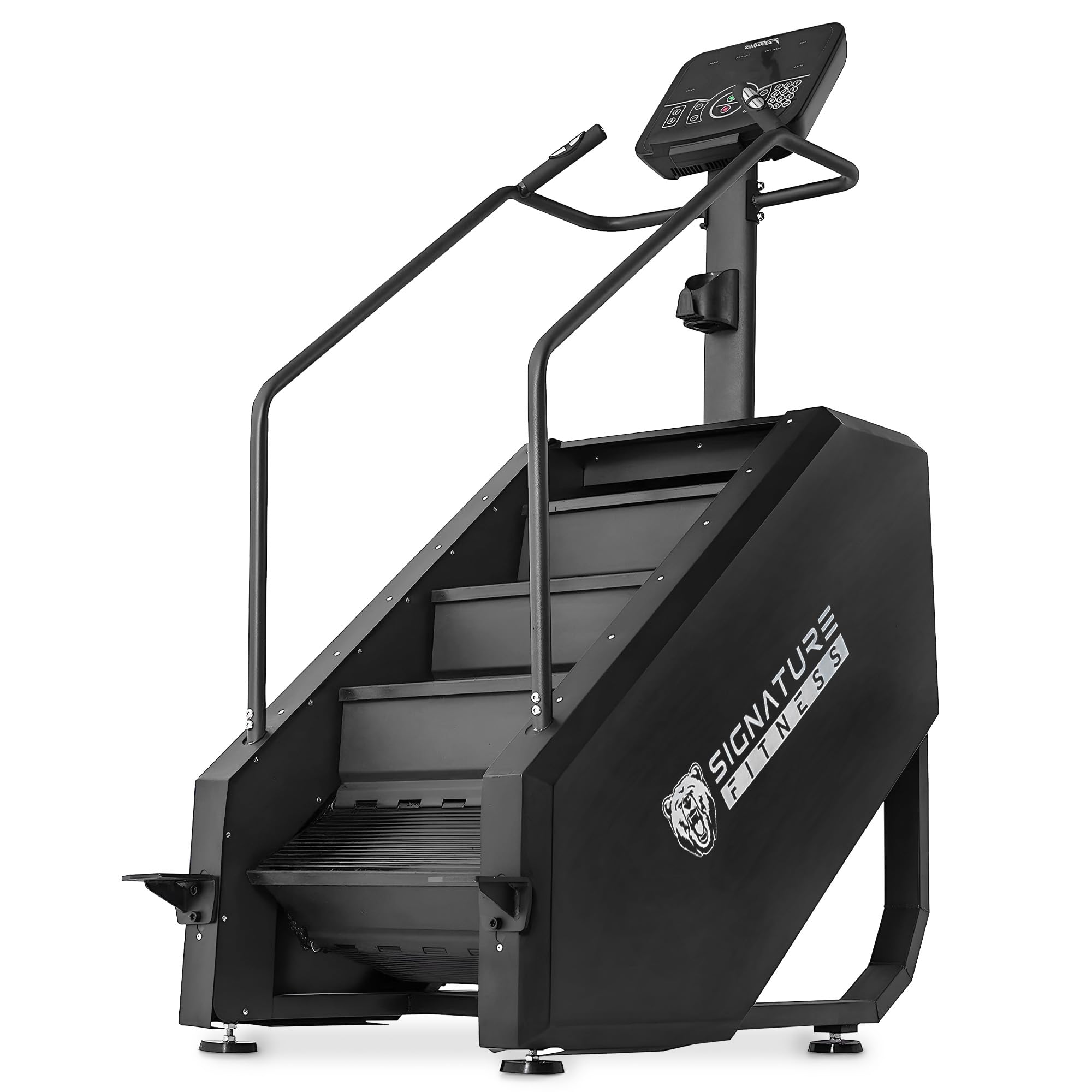
The 418-pound commercial-grade continuous climber that brings true gym intensity home—if you have the ceiling height.
This is the closest thing to a gym stair climber you can put in a house, at a staggering 418 pounds with a maximum load of 375 pounds. Built from alloy steel for long-lasting durability, it delivers a continuous stepping motion with 15 intensity levels that train the legs step by step—an experience owners describe as “commercial-grade intensity” you simply do not get from compact steppers. The electronic fitness tracker monitors calories burned, heart rate, and mileage, with a bottle holder and reading rack keeping essentials close.
Buyers praise it as a “perfect at home stairclimber” and the best home gym investment, noting it is very quiet during operation despite its scale. Its low-impact stepping motion offers a joint-friendly alternative to running for leg training. Assembly is mostly straightforward, though the monitor installation requires some patience, and owners recommend a shoulder dolly for positioning because moving 418 pounds is a two-person job.
The price is the obvious gatekeeper—this sits in a premium tier that only makes sense for dedicated home gyms. It also stands 51 inches tall and needs roughly 11 feet of ceiling clearance to use fully, ruling out basements. A rare unit arrives with cosmetic damage or a loose internal wire, but the 2-year manufacturer warranty covers the build. If you want the real stair-climber feel without leaving home, this is the one.
cross-training: you want genuine commercial-dense stepping with a 375-pound capacity and the budget to match.
casual steppers: you lack an 11-foot ceiling, want something you can move solo, or need a compact folding machine.
Understanding the Specs
Resistance Types Explained
Magnetic resistance is the gold standard for home trainers because it stays silent and consistent throughout a session, with no moving parts grinding together. Hydraulic systems use fluid-filled cylinders that can soften as they heat up after 30 minutes of continuous work. Bodyweight-only machines like the vertical climbers have no dial at all—you control intensity purely by how fast and how far you move.
Why Weight Rating Matters
The maximum weight recommendation tells you how much force the frame, rails, and bearings are engineered to absorb. A higher rating generally means thicker steel and stronger welds, so a 600-plus-pound capacity machine will feel more planted than a 220-pound one during vigorous motion. Match the rating to your body weight with comfort margin to spare, especially if you move aggressively.
FAQ
Climber vs stepper, what is the actual difference?
How much ceiling height do I really need for a vertical climber?
Will a climber hurt my knees?
How much weight can these machines actually hold?
Are magnetic or hydraulic resistance better for home use?
Can tall people use vertical climbers comfortably?
How long does assembly take and how hard is it?
Which climber is best for seniors or joint-friendly cardio?
Do these machines come with fitness apps or smart tracking?
How do I know which resistance level to start with?
Final Thoughts: The Verdict
If you want one dependable pick, the climber machine winner is the YOSUDA 3-in-1 because it delivers three workouts from one footprint with 16 magnetic resistance levels, a 300-pound capacity, and a 15.5-inch stride that suits everyone. If you want the strongest frame on a budget, the Relife handles 330 lbs for a fraction of the cost. And for premium magnetic smoothness with a 660-pound rating, the YOLEO is the one to reach for—just be ready to unscrew the folding knobs each time.
How We Picked
We do not accept paid placement. Every pick is matched to a real buyer and a real use-case; we do not hands-on test units.
Sources & Methodology
Specifications: manufacturer listings and product documentation. Review insights: verified customer reviews, as of August 2026. Pricing: not shown on this page (it changes often); check the current price via the retailer link.
As an Amazon Associate, FitlyFast earns from qualifying purchases. This does not affect which products we feature.