
Our readers keep the lights on and the weekend projects moving. As an Amazon Associate, I earn from qualifying purchases.
Specs are compiled from manufacturer listings and verified buyer reviews and can change over time — please confirm the key details on the product page before buying.
The biggest frustration with close-up photography is getting a sharp shot of something tiny without a tripod, a ring light, or a dozen retakes. A true macro lens or dedicated macro camera solves that by letting you fill the frame with a subject at life-size or beyond, often while holding the camera in your hand. This guide breaks down the best options — from premium prime lenses to rugged all-in-one cameras — so you can match the gear to the tiny worlds you want to capture.
I’m Rikta — the founder and writer behind FitlyFast. This guide is built by comparing the manufacturers’ published specifications and the patterns across verified customer reviews, so you get each pick’s real strengths and trade-offs instead of marketing spin.
Whether you shoot insects, product details, or skin texture, these picks cover every budget and system, and this breakdown of the close up camera field shows you exactly which one fits your kit and your subject.
Our Picks at a Glance


How To Choose The Best Close Up Camera
Close-up photography is all about magnification, working distance, and stability. Before you pick a lens or camera, you need to know your subject and your camera system, because these three factors decide whether your shots are sharp or frustratingly soft.
Magnification Ratio: The Real “How Close” Number
This is the spec that matters most. A 1:1 ratio means your subject appears life-size on the sensor — a 1cm bug fills 1cm of your frame. Some lenses go further to 1.25x or even 2x, letting you fill the frame with subjects smaller than your fingernail. For most beginners, 1:1 is plenty; for serious insect or product work, the higher ratios open up a whole new world.
Working Distance: The Bug-Friendliness Factor
This is the space between your lens front and the subject at minimum focus. A 105mm macro lens gives you a comfortable distance, so insects don’t flee. A 30mm macro forces you inches away, which works for static subjects but scares off living ones. If you shoot bugs, prioritize longer focal lengths for reach.
Quick Comparison
| Model | Best For | Magnification | Focal Length | Weight | Amazon |
|---|---|---|---|---|---|
| Nikon Z MC 105mm★ Best Overall | Best Overall — Z-series sharpness | 1:1 | 105mm | 1.4 lbs | Amazon |
| OM System 30mm MacroBest Value | Compact value for M4/3 | 1.25x | 30 mm | — | Amazon |
| Pentax WG-90Adventure Pick | Rugged underwater macro | Digital Microscope | 5-25mm | — | Amazon |
| Canon EF 100mm L IS | Renewed full-frame value | 1x | 100mm | — | Amazon |
| Sony FE 90mm G | E-mount bokeh specialist | 1.0x | 90mm | 602 g | Amazon |
| Canon RF 100mm L | 1.4x macro for R-series | 1.4x | 100mm | 730 g | Amazon |
| Nikon Coolpix P1000 | Ultra-zoom all-in-one | Macro 1cm | 24-3000mm | Heavy | Amazon |
| OM System 90mm Pro | 2x magnification pro | 2x | 90mm | 453 g | Amazon |
| Sony FE 70-200mm F4 | Zoom + half-macro hybrid | 0.5x | 70-200mm | 1.7 lbs | Amazon |
| Canon EOS R10 Kit | Full kit for travel macro | 1:2 | 35mm RF | — | Amazon |
In-Depth Reviews
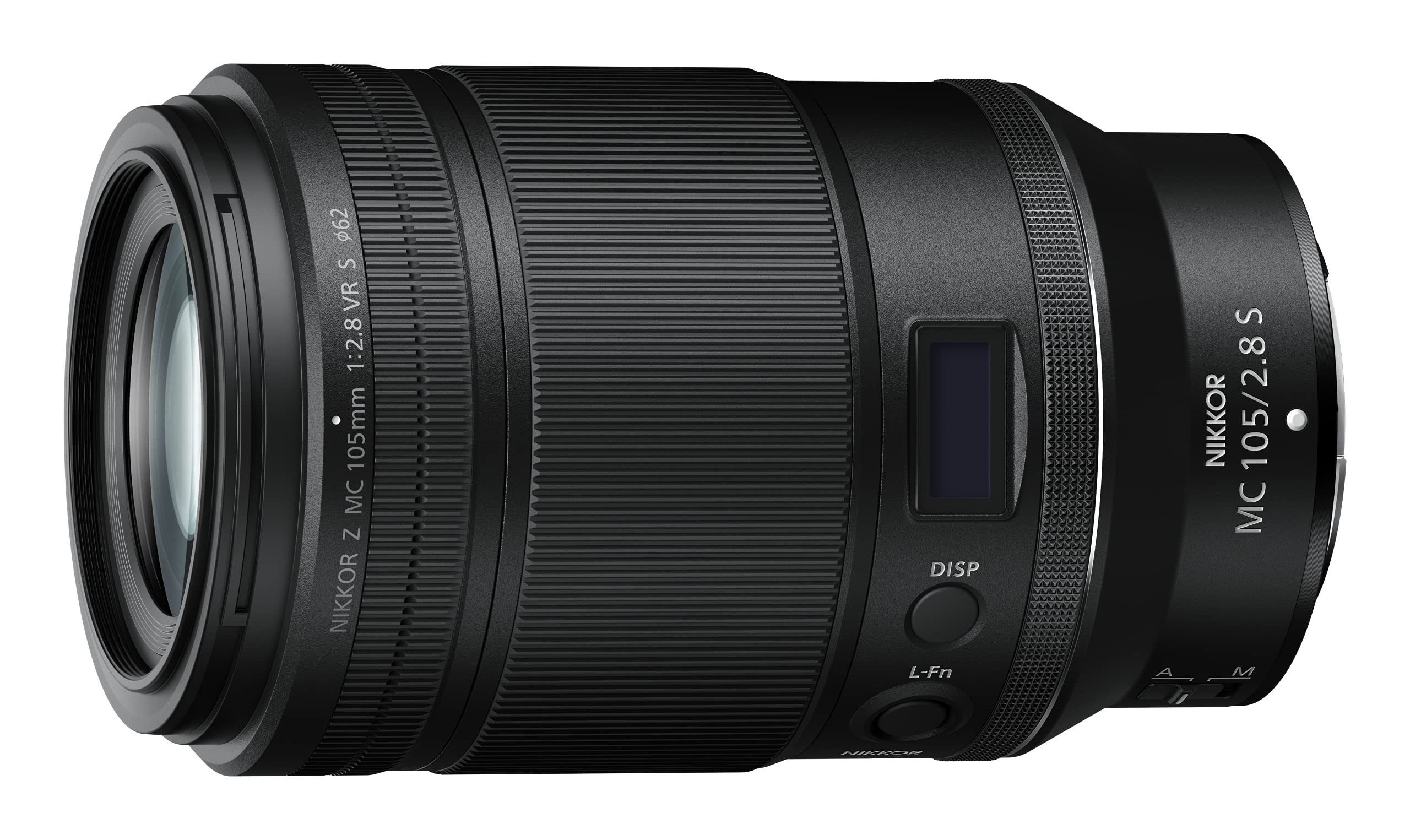
1. Nikon NIKKOR Z MC 105mm f/2.8 VR S
Our pick — over 4.5★ from 400+ verified ratings; the strongest balance of quality and price.
The Z-series lens that turns handheld macro shots into tack-sharp keepers, with reach to spare.
You can leave the tripod at home with this lens, and that’s why Nikon shooters rave about it. The 105mm focal length gives you a comfortable working distance for insects, while the Vibration Reduction (VR) works with the camera’s in-body stabilization to keep handheld shots steady — buyers report it’s “remarkably hand holdable even at lower shutter speeds if you’re in a pinch without a tripod.” At 1.4 pounds, it’s light enough for all-day carries, which is a big deal for a full-frame macro.
The sharpness is what wins people over, with lens quality and sharpness being the most-praised aspects by a wide margin. It’s also a dual-purpose tool: the 105mm focal length is flattering for portraits, so you get two lenses in one. The autofocus is the one trade-off — it’s occasionally slow, though as owners note, precise macro shots are usually done with manual focus anyway. The f/2.8 aperture lets you blur backgrounds beautifully while shooting in dim light.
Weather sealing on all moving parts keeps moisture and dust out, so you can shoot dewy leaves and morning insects without fear. This is the sharpest all-rounder for Nikon Z shooters needing macro and portrait reach.
for macro purists: Nikon Z50, Z5, Z6, Z7, or Z9 owners who want the sharpest all-rounder for macro and portraits.
on a budget: your priority is handheld sharpness; keep a tripod mindset only for the most critical 1:1 work.
2. OM SYSTEM Olympus M.Zuiko 30mm F3.5 Macro
A tiny lens that punches above its size class with 1.25x magnification and a pleasing bokeh.
You can slip this budget-friendly macro into a jacket pocket, yet it out-magnifies many full-frame lenses. The 1.25x image magnification (which equals 2.5x in 35mm terms) lets you fill the frame with subjects smaller than a dime, and owners mention “1.25× magnification is quite good.” It’s a 30mm lens on Micro Four Thirds — a short focal length that forces you close, but that’s exactly why it excels at wildflowers and flat product shots where you want a unique background perspective.
The sharpness and fast focus get consistent praise, and it doubles as a walk-around lens for everyday shots. The catch is the working distance: at 30mm, you need to be very close, so skittish insects will flee. Owners also note it hunts for focus in low light or backlit scenes unless the assist beam is on, so budget for extra lighting. The closest focus distance is 0.095 meters, which is impressively near.
This is the perfect entry into serious macro for OM-D and PEN shooters who want a specialized tool without a specialized price tag. It’s cheaper than the 60mm macro and delivers a distinct perspective you can’t get any other way.
for travel macro: choose this if you shoot flowers, coins, or product details and want an affordable, portable macro.
need more reach: you chase live insects — the 105mm options above keep a safer distance.
3. Pentax WG-90 Blue Waterproof Camera
The rugged all-in-one that takes macro shots underwater, in mud, and at -10°C.
This rugged all-in-one is waterproof to 14 meters and needs no interchangeable lenses. It’s built to shoot underwater down to 14 meters for up to two hours, survives a fall from 1.6 meters, and keeps working at temperatures as low as -10°C. For macro, the a neat extra is the six LED Macro Lights arranged around the lens barrel, giving you bright, uniform illumination for close-ups even in dark water or shade.
The 16-megapixel back-illuminated CMOS sensor delivers a top ISO of 6400, and the PENTAX-original Digital Microscope mode captures detail you can’t see with the naked eye. The included Macro Stand maintains a minimum focusing distance of one centimeter — that’s a full centimeter from your subject. Owners love it as a “perfect camera for a reckless family,” praising the long battery life and how easy it is to just have on hand.
The honest trade-off: photo quality gets mixed feedback, with owners saying auto mode makes poor choices about aperture vs shutter speed, so you’ll get the best results in manual mode. This isn’t a professional macro tool, but nothing else here can go free-diving with you and come back with sharp close-ups.
for outdoor use: you need a waterproof, drop-proof, freeze-proof camera for outdoor adventures and underwater macro.
need pro quality: you want maximum image quality — a dedicated lens on a mirrorless body beats this in pure detail.
4. Canon EF 100mm f/2.8L IS USM Macro (Renewed)

One of Canon’s finest, refurbished to near-new condition for a fraction of the cost.
This renewed classic delivers pro-grade L-series sharpness at a fraction of the new-lens price. It delivers 1x maximum close-up magnification at a closest focusing distance of 0.3 meters, letting you fill the frame with a life-size subject. The 100mm focal length gives you that comfortable working distance that’s so important for insects and small creatures, and the f/2.8 aperture lets you shoot in lower light and blur backgrounds into creamy bokeh.
What buyers consistently praise is the focus performance and the condition — multiple owners note it “appears brand new” with no damage or scratches upon arrival. The ring-type ultrasonic motor (USM) gives you fast, quiet autofocus with full-time manual override, so you can fine-tune focus without flipping switches. The 15 elements in 12 groups include a UD element to control chromatic aberration, keeping edges sharp.
The trade-off is that this is an EF lens, designed for Canon DSLRs — if you’ve moved to an RF mirrorless body, you’ll need an adapter. But for DSLR users, this is arguably the best macro value on the list: a pro-grade L-series lens at a renewed price.
for value seekers: Canon DSLR owners who want pro-level macro and portrait performance without paying new-lens prices.
want new gear: extender and close-up lens compatibility is limited — plan to shoot this lens on its own.
5. Sony FE 90mm F2.8 Macro G OSS

The E-mount workhorse that balances edge-to-edge sharpness with silky bokeh for portraits.
This is the macro lens Sony full-frame shooters reach for when they want one tool for both bugs and people. At 90mm with a bright f/2.8 aperture, it flatters portraits while delivering 1.0x maximum magnification at a minimum focus distance of 0.28 meters. The Optical Steady Shot image stabilization keeps handheld shots sharp, and the 9-blade circular aperture creates that gorgeous, smooth bokeh that makes subjects pop. It weighs 602 grams (21.3 ounces), which is substantial but balanced on an α7 body.
The Direct Drive SSM (DDSSM) motor gives you quiet, precise autofocus, though owners note it can hunt slightly in low light — a common macro trait. The Nano AR coating suppresses reflections and ghosting, and the weather-resistant design means you can shoot dewy mornings without worry. The push-to-lock manual focus ring is a favorite feature, letting you switch to precise manual control instantly for critical focus.
It’s a brilliant all-rounder for Sony shooters who want macro detail and portrait sharpness in one compact package.
for Sony shooters: Sony α7 and α7R owners who want a single lens for macro and portrait work with excellent stabilization.
prefer lighter: it runs dark for macro — a small ring light helps with insect shots.
6. Canon RF100mm F2.8 L Macro IS USM

The world’s first medium telephoto macro with 1.4x magnification and a bokeh control ring.
This is a lens with a genuine world-first claim: the first medium telephoto macro lens with a maximum magnification of 1.4x. That means you can fill the frame with subjects 40% larger than life-size, capturing detail that 1:1 lenses can’t reach. The bright, fixed f/2.8 aperture keeps images sharp in low light, while the Optical Image Stabilizer delivers up to 5 stops of shake correction — a huge advantage for handheld macro work. The Hybrid IS compensates for both angular and shift camera shake, which is exactly what you need when you’re inches from a subject.
You can dial in the look of your background blur with the Spherical Aberration (SA) Control Ring, which adjusts bokeh from dreamy soft to razor-harsh. It’s a creative tool, though owners have mixed feelings: some find it “gimmicky” and lock it at the default, while pros appreciate the option. The autofocus is fast and accurate, a clear improvement over the older EF version, and image quality is superb at every aperture, with a balance around f/8 to f/16.
At 730 grams, it’s substantial, and it’s fully weather-sealed for field work. This is the definitive macro for R-series shooters who want the highest magnification without bolting on a teleconverter.
for serious macro: R-series owners get 1.4x macro plus portrait bokeh in one weather-sealed lens.
budget limited: the SA ring is a niche tool — most owners low-maintenance in favor of standard bokeh.
7. Nikon COOLPIX P1000 Superzoom
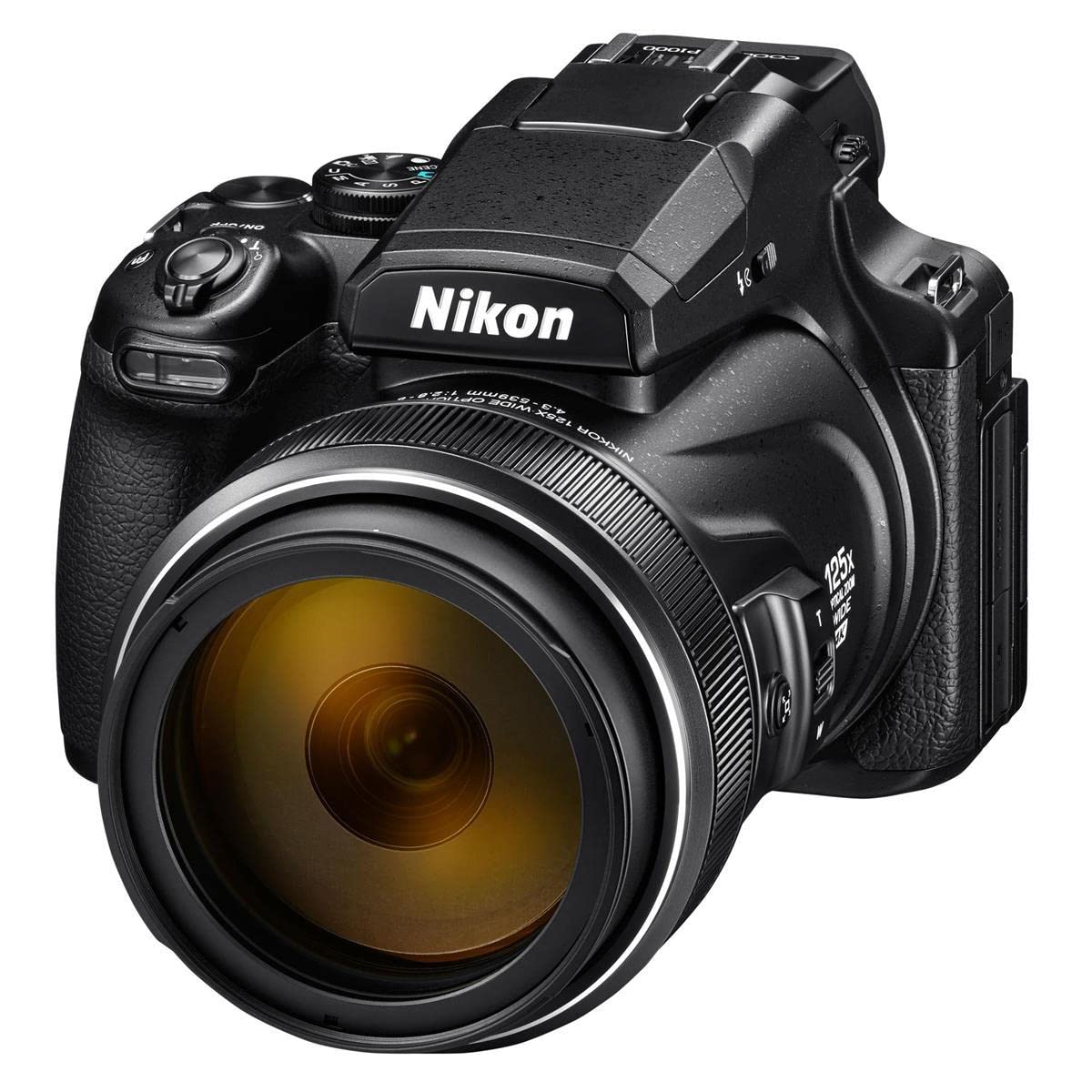
A 3000mm optical zoom that also focuses 1 centimeter away — one camera, two extremes.
This all-in-one pairs a record 3000mm optical zoom with a 1cm macro mode. But it’s also a macro camera, with a close-up mode that focuses at approximately 1 centimeter at the wide-angle position. That means the same camera that photographs a bird across a lake can also capture the texture of a leaf from a centimeter away. It’s a wildlife photographer’s dream and a macro enthusiast’s secret weapon.
The 16-megapixel sensor captures 4K UHD video, and the dual-detect image stabilization keeps things steady given the extreme zoom range. Owners love the “phenomenal” 24-3000mm range — it lets you see beyond binoculars — while noting the autofocus can be slow and the image quality doesn’t match a DSLR at high ISO. The 3.2-inch vari-angle LCD and electronic viewfinder make composing macro shots easy from awkward angles.
The catch is the size and weight — owners consistently note it’s “HUGE” and heavier than expected, half-again bigger than a compact mirrorless body. This isn’t a pocket camera; it’s a bring-it-because-you-need-it tool. But if you want one camera for both distant wildlife and extreme close-ups, nothing else here does both.
huge zoom range
- 3000mm optical zoom captures subjects you can’t even see with binoculars
- Macro mode focuses at 1 centimeter for extreme close-ups
- 4K UHD video with an accessory hot shoe for serious filming
bulky design
- Large and heavy — it’s a dedicated carry, not an everyday companion
- Handheld shots get blurry past 1500mm without a tripod
- Small sensor limits low-light image quality
for versatility: travelers and wildlife watchers who want extreme reach plus macro in a single all-in-one body.
need portability: you want maximum macro image quality — a dedicated lens on a bigger sensor wins on detail.
8. OM SYSTEM Olympus M.Zuiko 90mm F3.5 Macro IS PRO
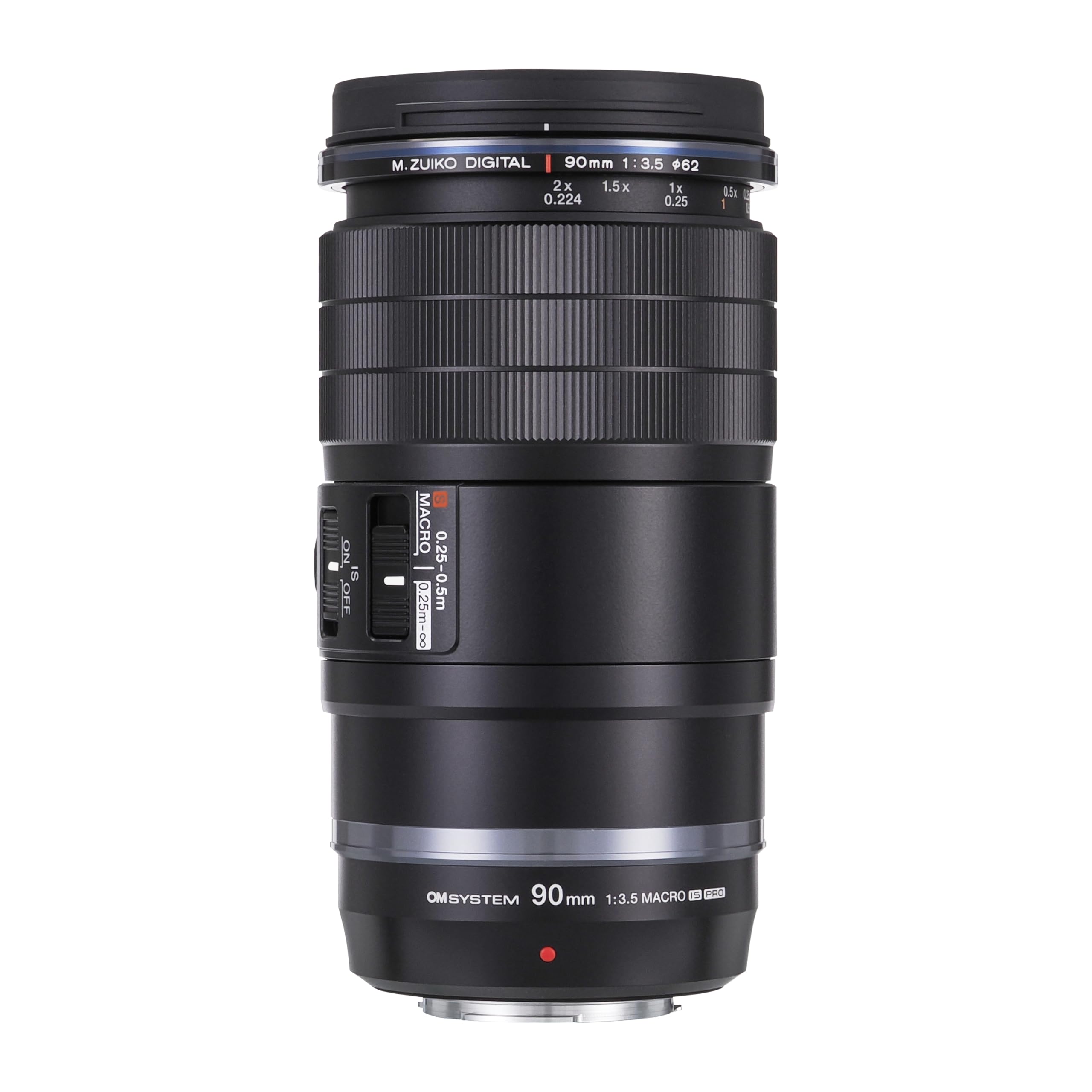
A 2x macro powerhouse that photographs a dragonfly’s eye without making it flinch.
This 2x macro lens is OM System’s flagship for extreme close-up detail. It offers up to 2x magnification natively — that’s 4x in 35mm equivalent terms — which means subjects appear twice life-size on the sensor. Add the optional MC-20 teleconverter and you hit 4x magnification (8x equivalent), a level of detail that reveals a microscopic world invisible to the naked eye. The 90mm focal length provides a working distance that doesn’t spook subjects, which is why owners call it perfect for bird and insect photography.
The autofocus is class-leading for a macro lens — fast, precise, and quiet — and the IP53 splash-proof, dust-proof performance means you can shoot in light rain without worry. The MF Clutch lets you switch between auto and manual focus with a quick pull of the ring, which is essential for precise macro work. At 453 grams, it’s remarkably light for a 2x macro, making handheld shots feasible even at extreme magnifications.
Owners describe it as “the best there is” for macro, with sharpness that holds even stopped down to f/18. The minimum shooting distance of 0.224 meters gives you room to work. The trade-off is that you need to be an OM System or Panasonic Micro Four Thirds shooter to use it — but if you are, this is the definitive macro lens for your system.
for Olympus pro: OM-1, OM-5, and Lumix G shooters who want the highest native macro magnification available.
need small kit: anyone without a Micro Four Thirds body — this is a system-specific investment.
9. Sony FE 70-200mm F4 Macro G OSS II

A telephoto zoom that doubles as a half-macro lens — perfect for a one-lens travel kit.
This zoom offers 0.5x macro across its full range, ideal for a one-lens travel kit. At 0.5x magnification, you can’t fill the frame with an insect’s eye like the dedicated macros above, but you can capture stunning detail from inches away. Add the 2.0x teleconverter, and it shoots life-size 1:1 macro at all focal lengths — a creative superpower.
The optics are serious: AA and aspherical elements deliver corner-to-corner resolution, while three ED and one Super ED element suppress chromatic aberration for clean, sharp images. The circular 9-blade aperture produces that exquisite full-frame bokeh you expect from Sony’s G series. Four high-thrust XD linear motors drive the focus, making autofocus extremely fast and accurate — owners praise it as “lightning-fast AF” and note the macro ability is a bonus on top of a versatile zoom.
At 1.7 pounds, it’s compact and light enough for a sling bag, which is a rare trait for a 70-200mm. The trade-off is the f/4 aperture — it’s a stop darker than f/2.8 options, so you’ll need higher ISO in cloudy shade, as some owners found. But if you want a lens that does both wildlife reach and close-up detail without swapping glass, this is remarkably clever.
for all-in-one: Sony shooters who want a portable telephoto with macro bonus, ready for travel and events.
need low light: half-macro isn’t true 1:1 magnification — buy a 2x teleconverter if you need life-size shots.
10. Canon EOS R10 Kit with RF 35mm Macro
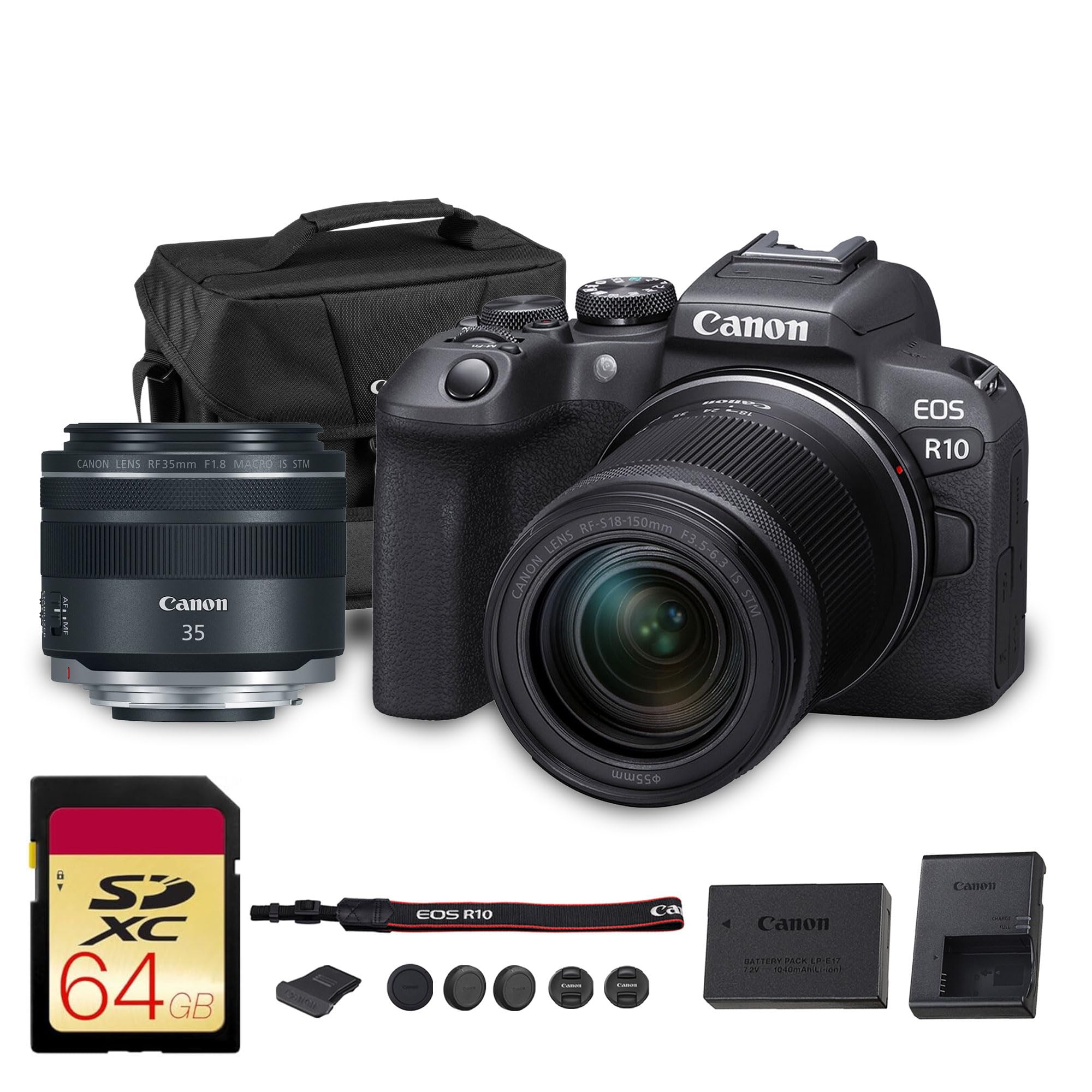
A full mirrorless system in a box — body, zoom, macro prime, and accessories — ready to shoot.
This kit bundles the R10 body, two lenses, and accessories for a complete mirrorless start. It pairs the Canon EOS R10 body with a 24.2MP APS-C sensor and bundles two lenses: the versatile RF-S 18-150mm zoom and the RF 35mm f/1.8 IS Macro STM. That macro prime is the star for close-up work, offering 1:2 magnification — half life-size — with hybrid IS stabilization that keeps handheld macro shots sharp. It’s not 1:1, but for street, travel, food, and everyday close-ups, it’s a fantastic start.
The body is genuinely modern: 4K UHD video oversampled from 6K, with Full HD 120p slow motion for dramatic clips. The Dual Pixel CMOS AF II tracks people, animals, and vehicles intelligently, so your autofocus keeps up with moving subjects — a huge step up from older cameras. As owners say, “it feels like it reads my mind.” The kit also includes a 64GB memory card and a Canon shoulder bag, so you have everything you need from the start.
This is the right choice if you want to step up from smartphone photography and explore macro without committing to a specialized lens system. The 35mm f/1.8 gives you a bright aperture for low light, while the 18-150mm zoom covers everything from wide landscapes to telephoto detail.
for first macro: beginners who want a complete Canon system with real macro capability and modern video features.
need pro features: serious macro shooters who need 1:1 or beyond — the bundled prime tops out at 1:2.
Understanding the Specs
Magnification Ratio
This tells you how large a subject appears on your camera’s sensor. A 1:1 ratio means life-size — a 1cm bug fills 1cm of your frame. A 2x lens shows it twice life-size, while a 1:2 lens shows it at half size. Bigger magnifications reveal more detail but often require closer working distances or specialized glass.
Working Distance
The space between your lens front and the subject at minimum focus. A 105mm or 100mm lens keeps you far enough away that insects don’t flee. A 30mm or 35mm lens forces you close, which works for flowers and static objects but scares off living subjects.
Image Stabilization
Also called VR (Nikon), IS (Canon), or OSS (Sony). It shifts lens elements or the sensor to counteract your hand shake, keeping handheld macro shots sharp at slower shutter speeds. In-lens and in-body stabilization often work together for even better results, like the Nikon 105mm pair with Z-series bodies.
Aperture (f-number)
The lower the f-number, the wider the lens opens and the more light it lets in. A bright f/2.8 lets you shoot in dim conditions and blurs backgrounds into creamy bokeh. Macro lenses often need stopping down to f/8 or f/16 for maximum depth of field, so a wide maximum aperture helps you compose in bright view.
FAQ
What magnification ratio do I need for macro photography?
What is the difference between 1:1 and 1.25x or 2x magnification?
Will a 30mm macro lens work for photographing insects?
Do I need image stabilization for macro photography?
What is the difference between a macro lens and a close-up camera?
How close do I need to be with a 105mm macro lens?
Is a renewed or refurbished macro lens a good idea?
Can I use macro lenses with teleconverters for more magnification?
What is the best macro lens for video?
Is a waterproof macro camera worth it over a lens?
Final Thoughts: The Verdict
For most Nikon Z shooters, the close up camera winner is the Nikon Z MC 105mm f/2.8 VR S because it pairs exceptional handheld sharpness with portrait versatility — the crowd favorite holds a 4.8-star score across hundreds of owners. If you want budget-friendly entry into macro, the OM System 30mm delivers 1.25x magnification for a fraction of the price. And for Sony shooters who want the absolute best, the FE 100mm GM with its 1.4x reach and silent AF is the one to reach for.
How We Picked
We do not accept paid placement. Every pick is matched to a real buyer and a real use-case; we do not hands-on test units.
Sources & Methodology
Specifications: manufacturer listings and product documentation. Review insights: verified customer reviews, as of August 2026. Pricing: not shown on this page (it changes often); check the current price via the retailer link.
As an Amazon Associate, FitlyFast earns from qualifying purchases. This does not affect which products we feature.