
Our readers keep the lights on and the weekend projects moving. As an Amazon Associate, I earn from qualifying purchases.
Specs are compiled from manufacturer listings and verified buyer reviews and can change over time — please confirm the key details on the product page before buying.
Bare patches in your lawn usually mean one thing: the soil beneath is too tired to support new grass. The right compost feeds the soil, holds moisture around the seed, and gives young roots a foothold. This guide compares the top composts for seeding a lawn so you can pick the one that turns patchy grass into a thick, green carpet.
I’m Rikta — the founder and writer behind FitlyFast. This guide is built by comparing the manufacturers’ published specifications and the patterns across verified customer reviews, so you get each pick’s real strengths and trade-offs instead of marketing spin.
Your grass seed will only thrive if the compost for grass seed you spread has the right texture, balanced nutrients, and no rocks or debris that can smother tender new shoots.
Our Picks at a Glance

How To Choose The Best Compost For Grass Seed
Compost is not fertilizer, and knowing the difference saves your lawn. Fertilizer feeds the plant directly; compost feeds the soil so the plant can feed itself over time. For grass seed, you want a product that is fully decomposed, fine in texture, and free of large chunks that would block tender shoots.
Texture and debris — the real dealbreaker
New grass seed needs soil contact to germinate. A compost full of rocks, sticks, and bark leaves gaps around the seed, drying it out and stopping growth. Look for “finely sifted” on the label, and check reviews for complaints about twigs and stones. The best bags are uniform, dark, and crumble easily in your hand.
Nutrient ratio and “will not burn”
A compost’s N-P-K ratio (nitrogen, phosphorus, potassium) tells you how intense it is. A balanced, slow-release product around 0.5-0.5-0.5 feeds seedlings gradually without scorching delicate roots. Fresh or half-composted manure can burn young grass, so trust labels like “fully composted” or “aerobically composted.”
Organic vs. plant-based vs. manure
Manure composts, such as cow manure or worm castings, pack more nutrients and work great for lawns, but you might prefer a plant-based blend if you want to avoid animal products. Either type works for grass seed as long as it is fully mature and has no smell. So pick a manure boost for a nutrient kick, or a gentler plant-only mix for a cleaner feel.
Quick Comparison
| Model | Best For | Volume | N-P-K Ratio | Form | Amazon |
|---|---|---|---|---|---|
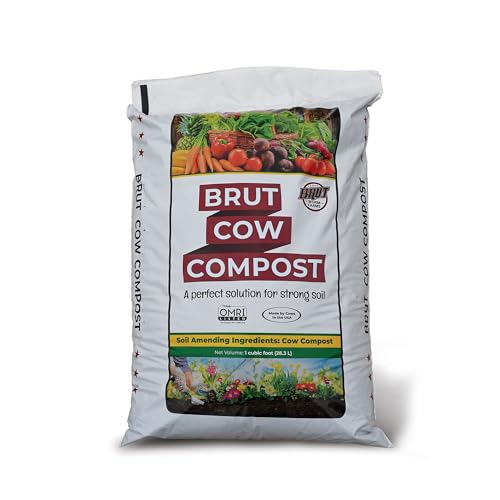
| Brut Cow Compost★ Best Overall | Seedling-safe, odor-free seeding | 1 Cubic Ft | — | Finely Sifted Granules | Amazon |
| Black Kow 35 lbLawn Saver | Bare-spot lawn repair | 560 Ounce | 0.5-0.5-0.5 | Bagged | Amazon |
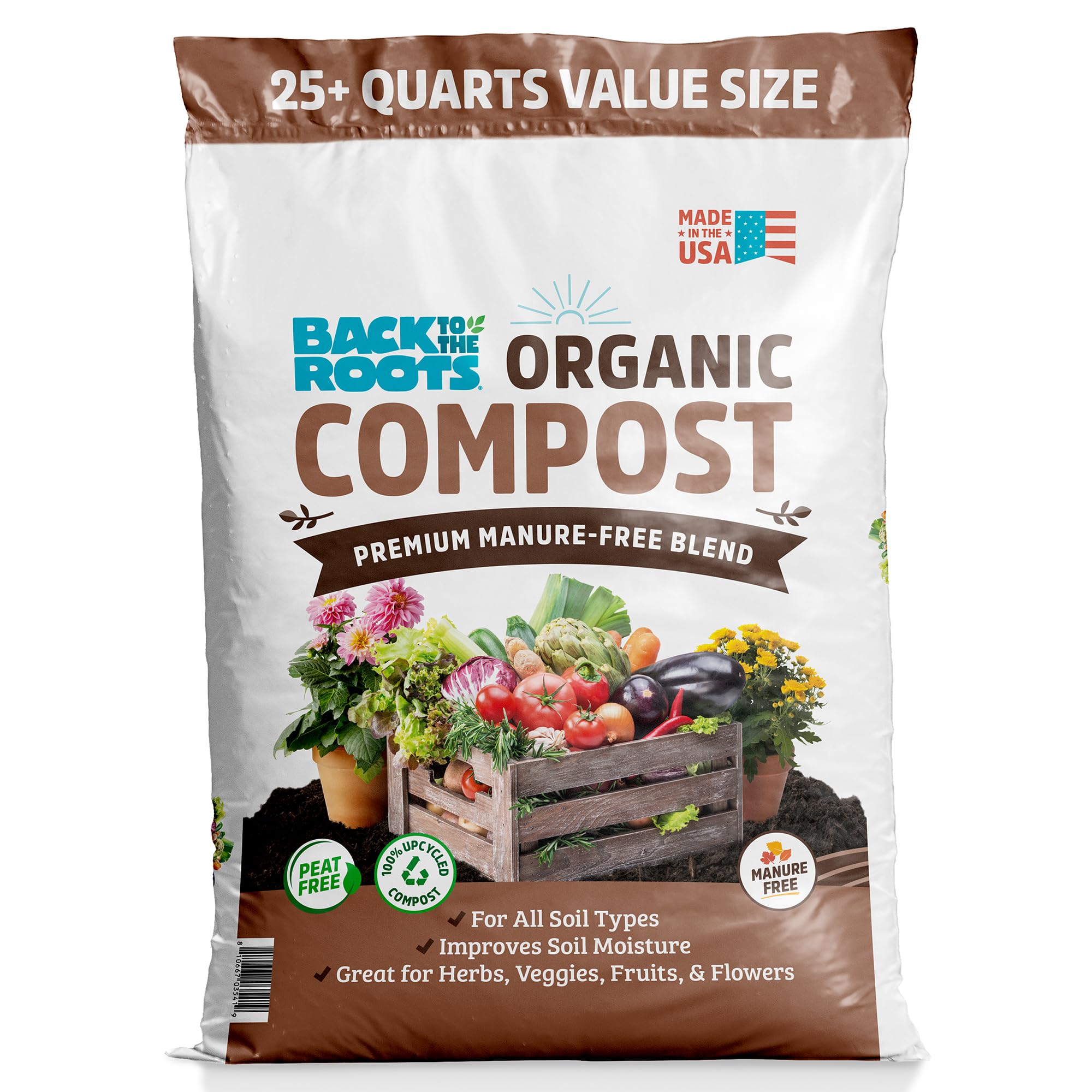
| Back to the RootsPeat-Free | Peat-free organic planting | 822.4 Ounce | — | Compost Mix | Amazon |
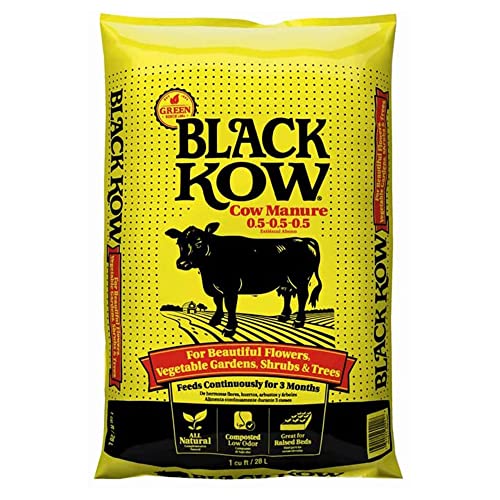
| Black Kow Nitrogen Phosphate | Improving clay or sandy soil | 946.79 Fluid Ounces | 0.5-0.5-0.5 | Solid | Amazon |
| Mikey’s Worm Poop | Vermicompost soil conditioning | 1 Count | — | Granules | Amazon |
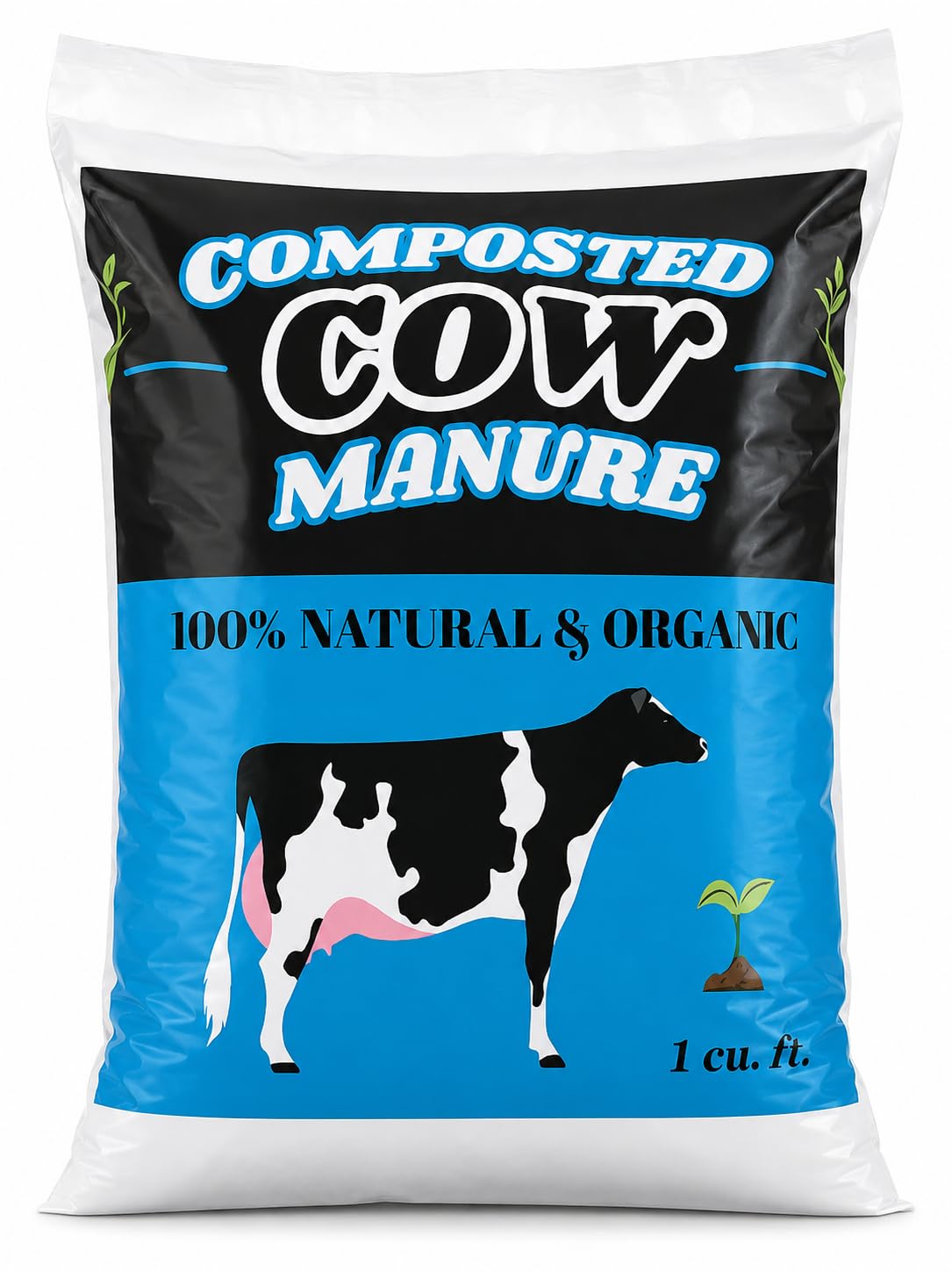
| Home and Country USA | Versatile all-plant feeding | 160 Ounce | — | Compost | Amazon |
| Old Potters Organic | Indoor and outdoor planting | 768 Fluid Ounces | — | Nutrient-rich | Amazon |
| Malibu Bu’s Blend | Compost tea brewing | 12 Quart | — | Granules | Amazon |
| Michigan Peat Garden Magic | Top-dressing new grass seed | 0.75 Cubic Feet per bag | — | Compost & Manure Blend | Amazon |
In-Depth Reviews
1. Brut Cow Compost
Our pick — over 4.5★ from 250+ verified ratings; the strongest balance of quality and price.
The finely sifted, seedling-safe compost that won’t shock new grass — just feeds it.
The standout here is the texture. This compost comes as finely sifted granules, which means no big chunks to block tender grass shoots as they push through. It is also certified OMRI and listed by the CDFA, so it is fully composted and gentle enough for seedlings without the risk of burning delicate new roots. The brand calls out that it is additive-free, with no fillers, so what you spread is pure compost.
Owners consistently rate the quality highly — quality is the single most-praised aspect — and the recurring theme is that plants respond fast. One gardener noted seeing signs of growth on plants shortly after applying, while another used it on roses and saw new growth within about a week. The odorless reputation matters too: buyers report it has no smell, which makes top-dressing a lawn far more pleasant than working with raw manure.
The honest trade-off is the texture isn’t perfectly uniform. A few owners mention finding 2-3 small rocks in the bag and needing to sift it, plus some clumping that requires hand-breaking before spreading. That is minor for a 1-cubic-foot bag, but if you want pure pour-and-spread convenience, budget for a quick crumble first. The mix of quality, safety, and no-farm-smell makes it the most reliable choice for seeding.
Why It Wins The Lawn
- Finely sifted granules cover seed evenly without blocking growth
- Odor-free texture makes top-dressing comfortable
- OMRI Certified and seedling-safe, so it won’t burn new grass
Before You Spread It
- An occasional small rock appears and needs sifting out
- Clumpy spots require hand-breaking for an even layer
Reach for this if: you’re sowing new grass or overseeding bare patches and want a safe, odor-free compost that won’t shock young shoots.
Know going in: plan to break up a few clumps and pick out the occasional stone before you spread it.
2. Black Kow Composted Cow Manure 35 lb Bag
The 35-pound bag that fills bare lawn spots without burning the grass.
Black Kow is a household name in compost for one reason: it is a slow-release fertilizer that will not burn. The 0.5-0.5-0.5 N-P-K ratio (equal parts nitrogen, phosphorus, and potassium) feeds new grass gradually, which is exactly what fragile seedlings need. At 560 ounces in a single bag, you get generous coverage for patching a patchy lawn.
The real-world proof is in the lawn repair stories. Customers note that after spreading it, bare spots filled in quite quickly, and one owner noted two professional reseeding attempts had failed before this compost finally did the job. The quality and effectiveness are the two most-discussed positive aspects, with gardeners praising how well their plants did after mixing it in.
The catch is the bag is genuinely heavy — one owner joked they needed their son to haul it from the porch. Delivery is also pricey, and buyers do flag the value as a negative, saying it feels overpriced once shipping lands. Compare it to the Brut Cow Compost above: that one costs less per delivery and is lighter to handle, but Black Kow’s reputation and volume make it a strong choice for larger lawn projects.
Best for big patches: the 35-pound bag gives you the volume to cover multiple bare spots, and the slow-release formula protects new seed from burning.
Plan for the weight: this is a heavy bag, so arrange help or a cart before it arrives at your door.
3. Back to the Roots 25.7qt (1 Cubic ft) Organic Premium Compost
The plant-based, peat-free compost for growers who want zero manure in the mix.
This is the one for anyone who specifically does not want animal waste in their soil. Back to the Roots is 100% organic and peat-free, built on upcycled plant matter and wood fines from the United States. It adds yucca extract for moisture control, dolomitic limestone for pH balancing, and gypsum for better water absorption — three real benefits for grass seed, which needs consistent moisture to germinate.
Quality is the top-praised aspect here, and buyers are loyal to the brand’s consistency. One reviewer specifically chose it because it does not contain human waste like other brands, while another mixes it with coco coir, perlite, and vermiculite to build their own potting soil. For direct seeding, the recommendation is to mix it 50-50 with the top 3 inches of soil, and reviewers point out seeds sprouting in about a week with healthier, more vigorous plants.
The trade-off is the woody character. Feedbacks on composition are mixed, with some buyers reporting sticks and twigs in the bag. That means for a fine lawn finish, you may want to sift before top-dressing.
The planting win: no manure means no smell and no worries, and the moisture-control additives help seed beds stay damp.
The woody reality: expect some twigs, so give it a quick sift if you want a smooth top-dressing layer.
4. Black Kow Nitrogen Phosphate Composted Cow Manure
An all-natural enhancer that fixes hard clay and sandy soil before you even drop a seed.
This Black Kow version focuses on rebuilding poor soil rather than quick top-dressing. The maker claims it holds 10x more nutrients than standard garden soil, and it targets two lawn-killing problems: it helps sandy soil retain water and nutrients near roots, and it breaks up hard, clay-type soil to improve drainage and oxygen flow. On compacted ground, that is the difference between seed that rots and seed that roots.
The 0.5-0.5-0.5 slow-release ratio is aerobically composted, so it feeds without the risk of root burn. At 20 pounds and nearly 947 fluid ounces of volume, it is a workhorse bag for amending a whole bed before planting grass. Buyers are enthusiastic, with one owner buying 4 bags in a single spring season and calling it the best fertilizer they can purchase for big, healthy plants.
It is chunkier than the sifted Brut Cow Compost, so it works best tilled into the top few inches rather than sprinkled as a final top-dressing. If your lawn’s problem is the dirt itself — hard, rocky, or sand — this is the pick. If you just need a fine mulch over fresh seed, look at the sifted options instead.
Fix the ground first: this shines when your real issue is compacted clay or thirsty sand that drains too fast.
Not a fine finish: use it as a soil builder tilled in, not as a smooth cover layer over seed.
5. Soil Seed & Water Mikey’s Worm Poop Organic Dairy Vermicompost

Concentrated worm castings that pack serious soil health into a modest 9-pound bag.
Worm castings are a different league of compost — they are the most concentrated, microbe-rich amendment you can buy. Mikey’s is made from composted dairy manure, is OMRI listed and CCOF certified organic, and the brand positions its 9-pound bag as superior to standard compost. You do not spread it thick like manure; the guidance is 2 inches of worm poop tilled into 4-6 inches of topsoil, or a 1:1 mix with potting soil for containers.
Buyers describe the consistency as excellent — even a desert gardener in the Sonoran Desert praised how well it balanced drainage and moisture retention in raised beds. The smell is “fresh,” earthy rather than offensive, which is what you want when working it into a lawn. For seed starting and root development, the specific uses on the label cover exactly what new grass needs.
The catch is the cost per volume. This is the most concentrated option here, so the 9-pound bag covers less ground than the 35-pound Black Kow, and it is priced similarly. That makes it a premium choice for small, precious areas — a new flower bed or a tiny patch of lawn — rather than a whole yard. For full-lawn coverage, a cheaper bulk compost stretches further.
Think small and mighty: this is the pick for tiny patches, container grass, or any spot where you want maximum microbial life per handful.
Watch the coverage: at 9 pounds, it disappears fast on a full-size lawn, so match it to a small area.
6. Organic Cow Manure Compost (Home and Country USA)
A small but potent organic bag that first-time growers swear by for launching seeds.
This compost is a 100% organic cow manure product sourced from sustainable US farms, sold at 160 ounces or 1 cubic foot. What it lacks in bag size it makes up for in punch — buyers describe it as small but potent, with a nice, not-too-dry consistency that mixes into soil easily. The review pages call it exactly what flower seeds needed, with seeds growing into beautiful flowers.
The positioning is versatility: the label lists vegetables, flowers, shrubs, seedlings, and lawns, so it works whether you are starting a new grass patch or feeding a raised planter. For grass seed specifically, the easy add-mix-go approach means you can work it into the top inch of soil before sowing. The lack of farm smell is a bonus shoppers say, so it is comfortable to handle.
The recurring criticism is the value. Buyers flag the bag as smaller than expected and overpriced for the size, and the texture can run chunky, requiring crumbling for small pots. That makes it a fine choice for testing a new lawn patch or a small garden bed, but for covering meaningful ground, the larger Black Kow or the sifted Brut options deliver more volume for similar money.
Small-space star: ideal for a first-time veggie grower or a modest new lawn strip where you value organic sourcing.
Budget reality: the cost per cubic foot stings, and chunky spots need a hand-crumble before spreading.
7. Old Potters Organic Compost
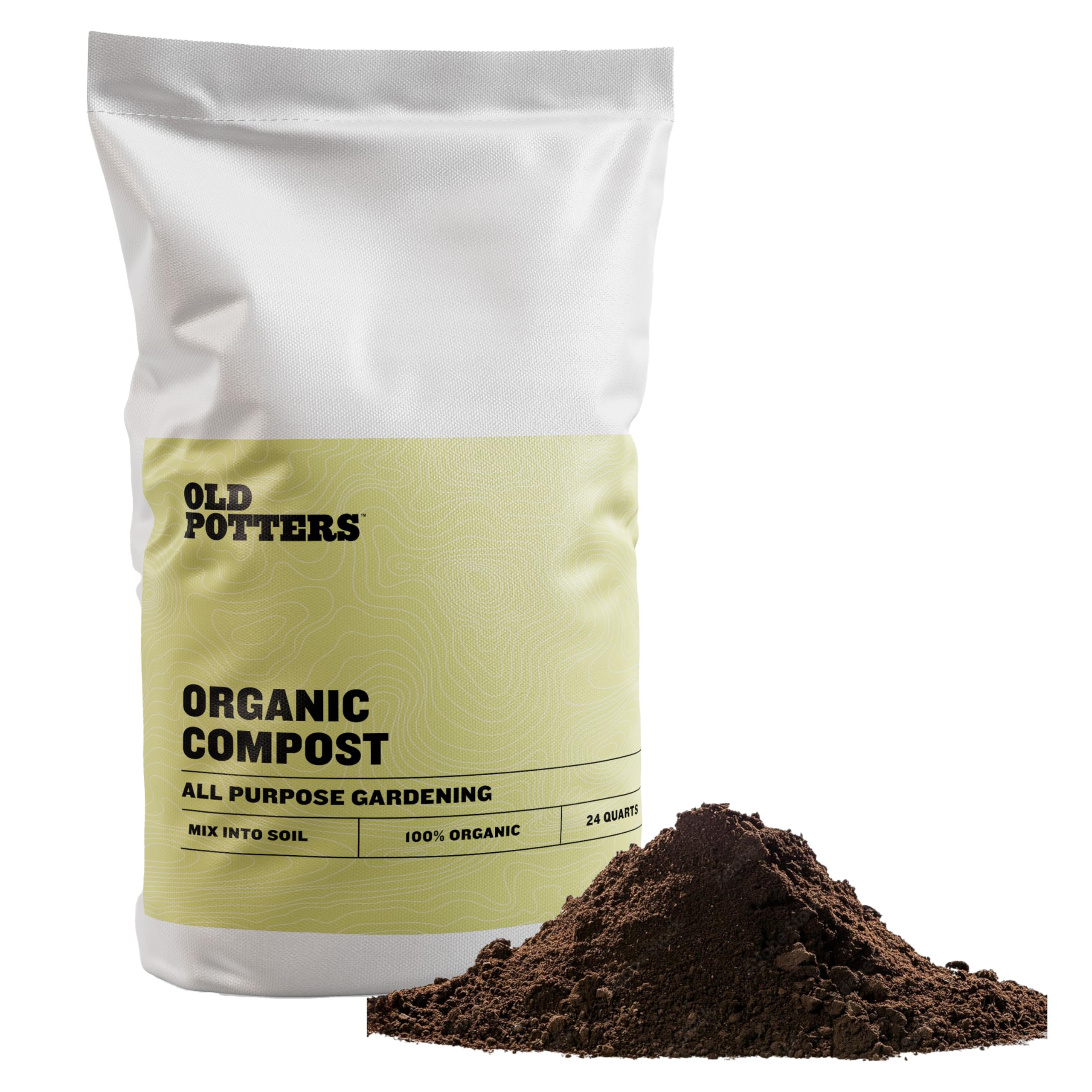
A heavily praised plant-based compost that wins over even difficult clay and rocky soil.
Old Potters earns the most enthusiastic owner base of any non-manure option here, with quality and plant growth dominating the feedback. It is 100% organic and chemical-free, built from natural plant-based materials, and the brand claims it improves aeration, water retention, and nutrient availability. At 768 fluid ounces, it is a generous mid-size bag for amending a lawn bed before seeding.
The proof is in the tough conditions. A gardener in harsh West Virginia zone 7a clay and rocky soil reported all five rose varieties bloomed with no root burn, calling it safe compared to animal composts. Another revived a struggling indoor banana plant. Seedlings sprout up quickly, the soil turns dark green after watering, and buyers appreciate the appropriate moisture content right out of the bag.
The honest caveats are two: the smell and the texture. A few buyers describe a strong odor even while sealed — though one balanced that by rating the efficacy a 10 out of 10 — and others note the clumps can be clayish and need manual crumbling. For grass seed, plan to break it up before top-dressing and let it air out briefly. The plant-based purity and strong growth results make it a compelling alternative to manure.
The Growing Proof
- Thrives in tough clay and rocky soil where other composts fail
- No root burn, safe around delicate seedlings
- Rich, appropriate moisture content right from the bag
The Practical Gripes
- Strong odor that lingers even when the bag is sealed
- Clayish clumps that need hand-crumbling before spreading
Best for tough yards: if your lawn sits on heavy clay or rocky ground, this is the compost that proved it can break through.
Give it air first: open the bag and let it air out, and budget time to crumble clumps before you spread.
8. Malibu Compost Bu’s Blend Biodynamic Compost, 12 Quart

A living, biodynamic compost that gardeners rely on for brewing potent compost tea.
Malibu Bu’s Blend is not just a soil amendment — it is a soil ecosystem repair kit. The brand describes it as repairing your soil’s ecosystem, saving water, and serving as a source of humus. At 12 quarts, it is a compact bag, but its real reputation is built on compost tea brewing: gardeners steep it in water to make a liquid feed that revitalizes container gardens and lawns alike.
The quality and effectiveness are the most-praised aspects, and buyers report it is a living compost — the manure is fully composted and won’t smell, which signals maturity. For seeding, working a thin layer into the top soil gives new grass a biodynamic boost.
The trade-offs are value and chemistry. The price draws mixed feedback — some call it worth the cost, others find it expensive for 12 quarts. One buyer also flagged that it contains langbeinite (a potassium mineral), which can be toxic to plants if your soil already has sufficient potassium. If you want a straight, additive-free compost, that is a real consideration; if you want a premium living compost for tea and soil repair, this delivers.
For the compost-tea crowd: this is the bag to brew, with a reputation for visibly happier plants.
Check your potassium: the added langbeinite means it is not a plain compost, so test soil that already reads high in potassium.
9. Michigan Peat Garden Magic Odor-Free Compost & Manure Blend, 40 lb, 2-Pack

A two-bag blend of reed sedge peat and composted manure built for covering new seed.
This is the product most directly designed for the grass seed job. It is a blend of natural, organic reed sedge peat and composted animal manure, sold as a 2-pack of 40-pound bags, with each small bag covering 0.75 cubic feet. The brand explicitly calls out top dressing on lawns as a primary use, which makes it the most lawn-targeted option in this lineup.
The germination results speak for themselves. Owners mention using it to cover new grass seed in a shaded area and watching it hold moisture while the seed germinated very well. Another owner had struggled through two failed professional reseeding attempts on bare spots before this top dressing finally worked. Quality and effectiveness are the two most-praised aspects, and the odor-free blend makes it comfortable to handle across a whole yard.
The honest catch is debris. At least one buyer found too many 1-inch rocks and large pieces of bark and twigs, calling it overpriced for what you get. That is a real hit-or-miss factor with a peat blend like this. If you get a clean batch, it is the ideal seed cover; if you get a rough one, you will be picking out debris. For guaranteed fine texture, the sifted Brut Cow Compost is the safer bet.
Made for seeding: if your whole job is covering fresh grass seed, the moisture-holding reed sedge peat is exactly the right tool.
Batch luck matters: some bags arrive with small rocks and bark, so inspect before spreading on a fine lawn.
Understanding the Specs
N-P-K Ratio
The three numbers on a compost bag stand for nitrogen, phosphorus, and potassium. Nitrogen grows green leaves, phosphorus builds roots, and potassium strengthens overall plant health. For grass seed, a balanced slow-release ratio like 0.5-0.5-0.5 feeds young shoots gradually without burning them. Fully composted material releases these nutrients slowly, which is exactly what new lawns need.
OMRI and CCOF Certifications
OMRI (Organic Materials Review Institute) listing means the product is approved for use in organic production. CCOF is a similar organic certifier. When a bag carries these marks, it has been verified free of synthetic additives. For a family lawn where kids and pets play, choosing a certified organic compost is an easy way to keep the yard chemical-free.
Cubic Feet and Bag Volume
Compost is sold by volume or weight, and the numbers vary wildly between bags. A 1-cubic-foot bag covers roughly 12 square feet at 1 inch deep, while a 35-pound bag may cover less because it is denser. Check the stated volume — not just the pound weight — when comparing. More pounds does not always mean more coverage.
Composted vs. Raw Manure
The difference between these two is the difference between feeding your lawn and frying it. Raw manure is hot — it releases ammonia that burns grass roots and can carry pathogens. Composted manure has been aged and heated until the material is stable, dark, and odor-free. Always look for “composted,” “aged,” or “fully composted” on the label before spreading it over new seed.
FAQ
How much compost do I need to cover grass seed?
Can I use cow manure compost directly on new grass seed?
What is the difference between compost and fertilizer for a lawn?
Will compost with sticks and rocks hurt my grass seed?
Is plant-based compost better than manure compost for lawns?
Should I mix compost into the soil or just spread it on top?
How long does compost take to improve grass growth?
What does “will not burn” mean on a compost bag?
Final Thoughts: The Verdict
For most people, the winner for compost for grass seed is the Brut Cow Compost because its finely sifted, odor-free, seedling-safe texture handles the seeding job with the least fuss. If you want the raw reputation and volume of a classic manure compost for patching bare spots, grab the Black Kow 35 lb bag. And for a moisture-holding top dressing purpose-built for covering fresh seed, the Michigan Peat Garden Magic 2-pack is the one to reach for.
How We Picked
We do not accept paid placement. Every pick is matched to a real buyer and a real use-case; we do not hands-on test units.
Sources & Methodology
Specifications: manufacturer listings and product documentation. Review insights: verified customer reviews, as of August 2026. Pricing: not shown on this page (it changes often); check the current price via the retailer link.
As an Amazon Associate, FitlyFast earns from qualifying purchases. This does not affect which products we feature.