
Our readers keep the lights on and the weekend projects moving. As an Amazon Associate, I earn from qualifying purchases.
Specs are compiled from manufacturer listings and verified buyer reviews and can change over time — please confirm the key details on the product page before buying.
A full day on the mountain hinges on one small thing: socks that stay up, keep your feet dry, and squeeze your calves just enough to fight fatigue. The key trade-offs are fit, warmth, and graduated compression—tighter at the ankle, looser higher up—to boost circulation. Here is how to pick the pair that will actually survive a season of lift lines and deep powder.
I’m Rikta — the founder and writer behind FitlyFast. This guide is built by comparing the manufacturers’ published specifications and the patterns across verified customer reviews, so you get each pick’s real strengths and trade-offs instead of marketing spin.
Ready to find your perfect pair of compression ski socks that keep you warm, dry, and comfortable from first chair to last run.
Our Picks at a Glance

How To Choose The Best Compression Ski Socks
Compression ski socks do two jobs at once: they keep your lower legs warm, and their snug fit helps reduce the heaviness you feel after hours of carving. A well-fitted pair stays put and feels like a second skin, while a poor fit causes bunching, slipping, or painful calf pressure.
Compression Level and Fit
Look for a sock that feels firm but never painful, with pressure that is noticeably stronger around the ankle and softer near the knee. A sock that is too tight can leave marks and feel uncomfortable; one that is too loose will slide. Check the sizing table against your shoe size and calf circumference, because a medium for one brand can run larger or smaller in another.
Fabric: Why Merino Wool Matters
Merino wool is the gold standard because it insulates when wet and pulls moisture away from your skin, so your feet stay dry instead of clammy. Many ski socks blend merino with synthetics like nylon or Lycra for stretch and durability. The higher the merino content, the better the warmth and odor resistance, but the more delicate the sock tends to be in the wash.
Height and the Non-Slip Cuff
Over-calf length ensures the sock sits above the boot line and doesn’t slide down during aggressive turns. A non-slip cuff is the detail that keeps the sock in place all day, preventing that annoying bunching under your foot that can cause blisters.
Quick Comparison
| Model | Best For | Compression Style | Key Material | Height | Amazon |
|---|---|---|---|---|---|
| OutdoorMaster Adults Ski Socks★ Best Overall | All-day warmth and durability | Mild squeezing action | 30% Merino Wool blend | Over-calf | Amazon |
| Compression Ski Socks Merino Wool (Pure Athlete) | Second-skin comfort and support | Graduated compression | Premium Merino Wool | Over-calf (OTC) | Amazon |
| Merino Wool Compression Socks 15-20 mmHg | Circulation and all-day wear | 15-20 mmHg | 30% Merino Wool, 50% Viscose from Bamboo | Calf-height | Amazon |
| OutdoorMaster Kids Ski Socks | Young skiers needing snug warmth | Mild squeezing action | Merino Wool blend | Over-calf | Amazon |
In‑Depth Reviews
1. OutdoorMaster Adults Ski Socks
Our pick — over 4.5★ from 650+ verified ratings; the strongest balance of quality and price.
The all-day workhorse that earned its place as the crowd favorite with proven warmth and a fit that refuses to budge.
What wins people over here is the build quality, plain and simple. The 30% Merino Wool blend is lightweight and breathable, and it actively wicks moisture so your feet don’t end up soaked and cold by the second run. Owners describe wearing them for months of daily use with no signs of wear, and the over-calf design with a non-slip cuff means you are not yanking them up mid-lift-line.
The gentle squeeze supports calves and feet without feeling like a medical wrap. Owners with size 9 feet and a 165lb build report the fit runs tight — “very tight” in their words — but they’ve worn them for about three months with no issues. One size 9.5-10.5 owner found the medium (listed for 4-6.5) fits perfectly, so sizing up is a safe move if you want a looser feel.
The real-world payoff is that they stay up and don’t make you sweat, even on warmer days. Owners praise the moisture-wicking for keeping feet dry, and the extra shin padding protects against boot pressure without adding bulk. At a 4.6-star average with over 650 ratings, this is the pair that keeps showing up in review pages as the one that just works.
What Owners Rave About
- Quality and fit are the most-praised traits, with quality leading the pack
- Warmth holds up in 30ish degree temps, per owner reports
- Stays up all day with no slouching or bunching
What to Watch For
- Runs tight, so consider sizing up if you prefer a relaxed fit
- Some owners note the compression is stronger than expected
Reach for these if: you want a durable, warm, all-day sock that won’t slide down and can handle daily winter wear.
Look elsewhere if: you want a truly light squeeze — these lean firmer than the label suggests.
2. Compression Ski Socks Merino Wool (Pure Athlete)
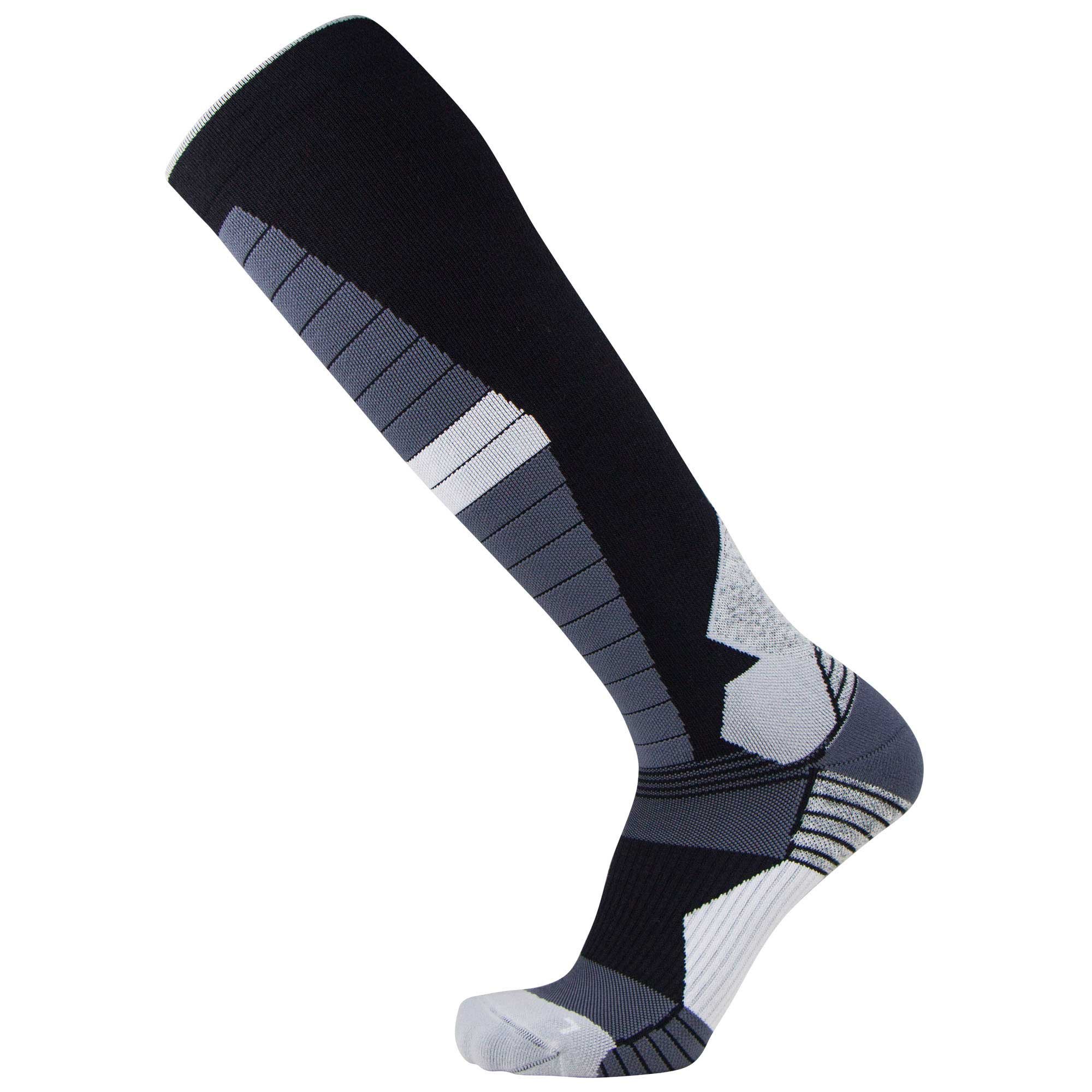
The budget-friendly pick that delivers second-skin comfort and real calf support for long days in ski boots.
Comfort is the story here, and it’s not close. Owners consistently report these socks feel soft and warm while providing good compression that alleviates tired feet — many say they skied all day without the usual leg achiness. The second-skin fit is designed to form perfectly with your legs and feet, and the premium merino wool handles moisture and odor naturally.
In a direct head-to-head, owners who tested this pair against four other compression socks found it the best of the bunch — a 5-hour deep powder session left feet warm and dry with no foot or calf cramping. The size M fits a shoe 9.5 with large calves perfectly, stays up all day through 7 hours of skiing plus driving, and retains its fit after multiple washes.
The honest caveat is durability. The overall experience is positive, but some buyers report seam fraying in the upper part of the sock after use, with the thread count compromised by the design pattern. It is the most-mentioned negative, so treat the seams gently and you’ll likely avoid it, but it’s a real risk at this price point.
Where it shines: The compression-to-comfort balance is the standout. Owners describe it as comfortable, soft, and warm with a great length that stays put through a full ski day.
The trade-off: Seam quality is the one recurring complaint, so expect to handle them with care.
Pick these for: a value-minded skier who wants real compression benefits and all-day warmth without paying premium prices.
Skip if: you need maximum durability on a rough-and-tumble schedule, as the seams are the weak link.
3. Merino Wool Compression Socks 15-20 mmHg
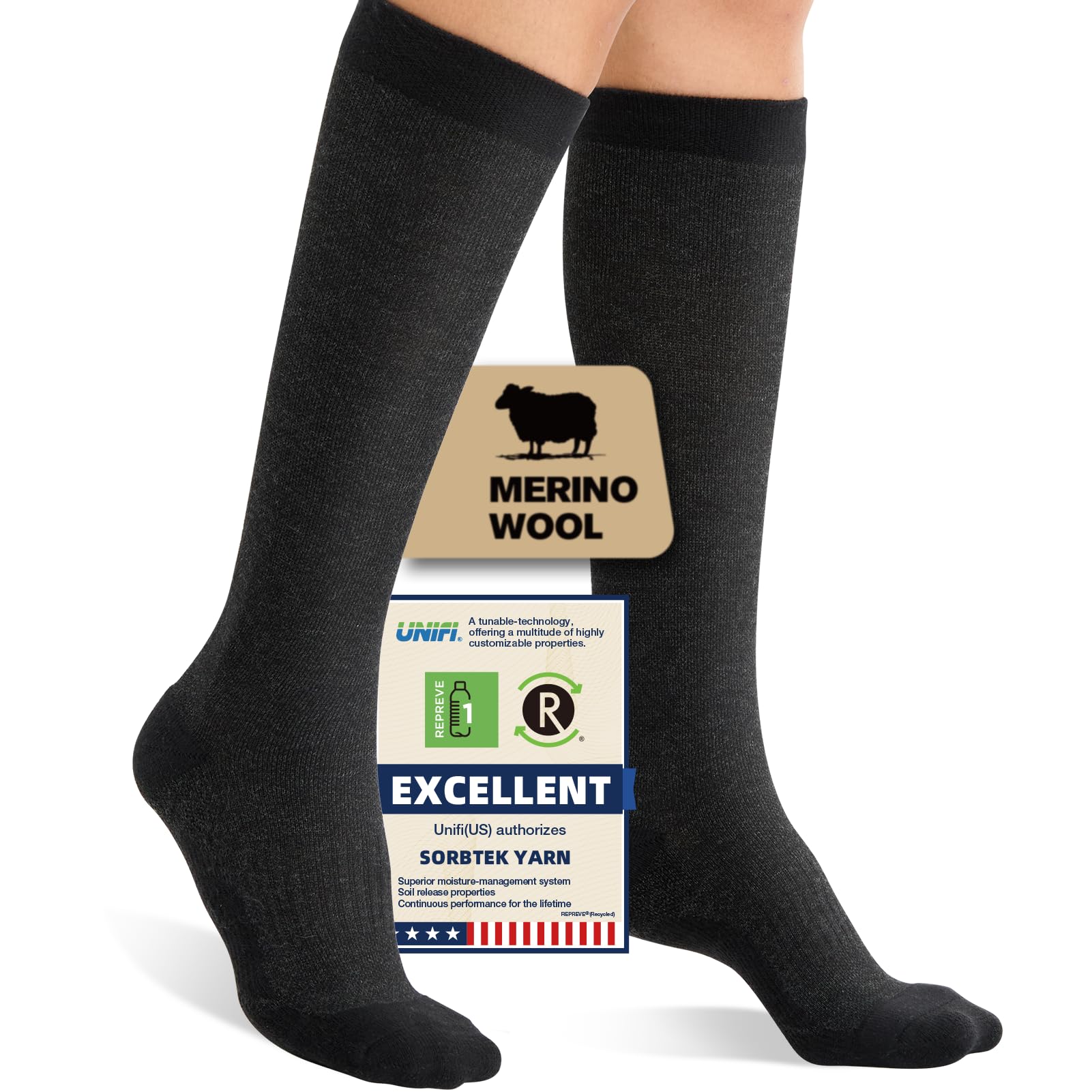
The multi-sport chameleon with a specific 15-20 mmHg squeeze that owners say feels like it’s not even on.
This one is for anyone who wants a precise, measurable compression level. The 15-20 mmHg rating—a standard pressure measurement—provides mid-range compression that reduces fatigue and pain without cutting circulation. The blend is 30% Merino Wool and 50% Viscose from Bamboo, which gives it a softness that owners repeatedly call out as feeling like it’s not even on.
It shines beyond the ski slope. Owners mention wearing them on an 11-hour flight and feeling a big difference in how their legs felt, and nurses use them for 12-hour shifts. The wide-calf-friendly design means no digging or rolling, and the moisture-wicking fabric prevents smelly feet — a common complaint with synthetic socks. Customers note it’s “soft and comfortable lambs wool but enough elastic to stay up.”
The catch is getting them on. The snug fit that makes them so supportive also makes them a little hard to pull on, and the toe seam can feel bulky for some. They are also slightly pricier than similar brands, but owners consistently say they’re worth it for the quality and comfort. The wool insulates well, making them a favorite for chilly morning runs as well as long travel days.
The Highlights
- Quality is the most-praised aspect, leading the review counts
- Soft, non-itchy fabric ideal for sensitive skin
- Cushiony soles with a perfect heel and ankle fit
The Drawbacks
- A little hard to get on due to the firm squeeze
- Thicker than some prefer, and the toe seam is noticeable
Best suited for: skiers who double as travelers, nurses, or hikers and want one sock that does it all with a specific compression rating.
Think twice if: you dislike a firm pull-on process or prefer a thinner sock inside your boot.
4. OutdoorMaster Kids Ski Socks
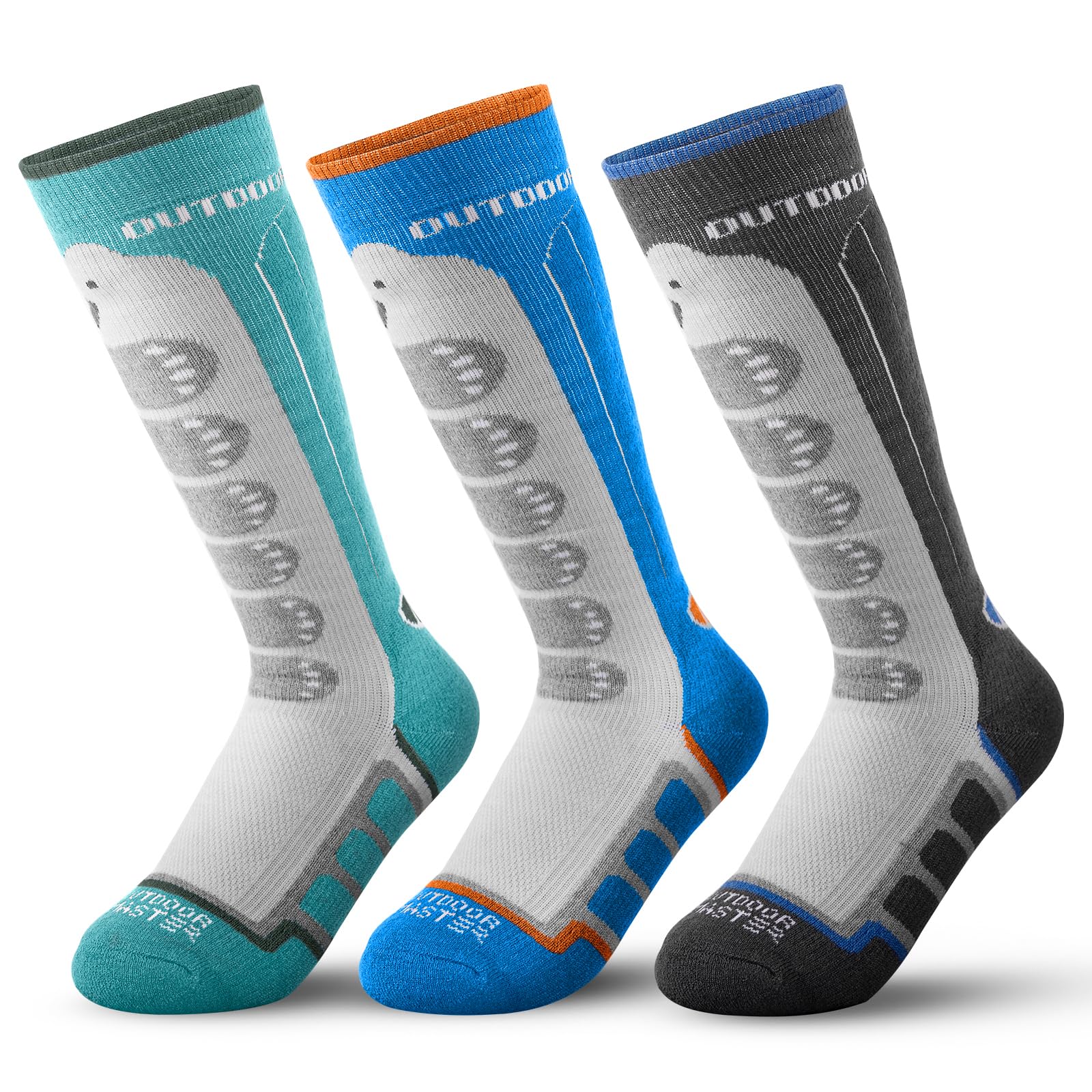
The pint-sized pick that keeps young skiers warm, dry, and blister-free through a full day of lessons.
For the little skiers in your life, this is the pair that parents report as a clear favorite. The merino wool blend is lightweight and breathable, preventing the build-up of smell while moisture-wicking properties keep a child’s feet fresh all day. The mild compression enhances circulation without restricting movement., and the thickened design around the ankle, arch, and achilles tendon offers all-round protection during active play.
The fit gets particular praise. A medium fits a US 7 perfectly, with an ideal height that sits about 3 inches above the boot line — high enough to stay put, not so high that it bunches. Owners note they’re not too thick, making them easy to slip into ski boots, and the non-slip cuff ensures they don’t slide down mid-run. Parents report the compression is strong enough to prevent blisters from friction while keeping legs warm in the snow.
One interesting owner note: the simple pattern is a feature, not a bug. Because there are fewer design threads on the inside, there’s less bulk against the skin compared to more decorated socks. At a 4.7-star average, this is the highest-rated pick here, though with a smaller review base than the adult options above.
What parents love: The over-calf height (reaching above your calf) and non-slip cuff keep the socks in place, so you won’t stop mid-run to pull them up. Reviewers also note the low-profile inner seam sits flat, which means no rubbing or blisters on long runs.
The honest note: These are sized for kids, so check the sizing chart against your child’s shoe size — a medium stretches to fit adult feet, but it’s built for smaller calves.
Ideal for: active boys and girls who need warm, blister-free feet from first run to last.
Not ideal for: parents hoping to share one pair with the whole family — this is strictly a kids’ fit.
Understanding the Specs
Compression Level (mmHg)
A compression rating tells you how much pressure the sock applies to your leg, measured in millimeters of mercury (mmHg). For ski socks, a mild to moderate squeeze is ideal — enough to boost circulation and reduce fatigue, but not so tight that it feels like a medical wrap. The 15-20 mmHg range is a popular mid-point for all-day wear.
Merino Wool Content
Merino wool is prized because it regulates temperature and wicks moisture away from your skin, keeping feet dry even when you’re working hard. A 30% merino blend is a common, solid choice that balances warmth with durability and easy washing. Higher percentages add softness and odor resistance but can be more delicate.
Over-Calf Height and Non-Slip Cuff
Over-calf socks rise above the boot line, which prevents the top of the boot from rubbing against your skin. A non-slip cuff — often a silicone or elastic band at the top — keeps the sock from sliding down inside the boot, which is the #1 cause of bunching and blisters. This spec is the key differentiator between a good and a great ski sock.
Moisture Wicking
Wet feet get cold fast, and that’s what moisture-wicking fabric prevents. It pulls sweat away from your skin to the outer surface of the sock, where it can evaporate. This keeps your feet dry and warm, and it also reduces the build-up of odor-causing bacteria — a real benefit on a multi-day ski trip.
FAQ
What does mmHg mean in compression socks?
How tight should compression ski socks feel?
Will compression ski socks help with tired legs after a full day of skiing?
Can I use compression ski socks for other activities?
How do I wash merino wool compression ski socks?
Do compression ski socks prevent blisters?
How do I choose the right size for compression ski socks?
What’s the difference between a ski sock and a regular compression sock?
Are thicker ski socks always warmer?
Why do my ski socks keep falling down?
Final Thoughts: The Verdict
For most skiers, the compression ski socks winner is the OutdoorMaster Adults Ski Socks because it delivers the best combination of warmth, durability, and a stay-put fit that owners consistently praise. If you want a specific 15-20 mmHg compression level for all-day comfort on and off the slopes, grab the Merino Wool Compression Socks. And if you’re shopping for a young skier, the OutdoorMaster Kids Ski Socks are the crowd favorite for keeping little feet warm and blister-free.
How We Picked
We do not accept paid placement. Every pick is matched to a real buyer and a real use-case; we do not hands-on test units.
Sources & Methodology
Specifications: manufacturer listings and product documentation. Review insights: verified customer reviews, as of August 2026. Pricing: not shown on this page (it changes often); check the current price via the retailer link.
As an Amazon Associate, FitlyFast earns from qualifying purchases. This does not affect which products we feature.