
Our readers keep the lights on and the weekend projects moving. As an Amazon Associate, I earn from qualifying purchases.
Specs are compiled from manufacturer listings and verified buyer reviews and can change over time — please confirm the key details on the product page before buying.
If you’re shopping for compression socks to ease varicose veins, the single biggest mistake is picking a pair that looks right but delivers the wrong squeeze. The number that matters is the mmHg rating — that’s the unit of pressure the sock applies. This guide breaks down nine top-rated pairs, translating each spec into what it actually feels like on your legs all day.
I’m Rikta — the founder and writer behind FitlyFast. This guide is built by comparing the manufacturers’ published specifications and the patterns across verified customer reviews, so you get each pick’s real strengths and trade-offs instead of marketing spin.
Here are the best compression socks for varicose veins, ranked by real-world fit, pressure accuracy, and all-day comfort so you can finally find relief without the guesswork.
Our Picks at a Glance

How To Choose The Best Compression Socks Varicose Veins
Before you click buy, you need to know that not all compression is created equal — and the label doesn’t always tell the truth. The most important thing is finding a sock that applies real, graduated pressure that matches your needs. Here’s what to check.
Start with the mmHg rating — and be realistic about it
Compression strength is measured in mmHg, which stands for millimeters of mercury — the same unit used for blood pressure. For varicose veins, 15-20 mmHg is the mild, everyday range that helps with tired, aching legs. The stronger 20-30 mmHg range targets more noticeable swelling and is the level doctors often prescribe for varicose veins.. The catch: some budget pairs claim a high rating but actually deliver much less, so read owner feedback about whether the pressure feels real.
Measure your calf — twice
Fit is everything with compression socks. A sock that’s too loose slides down and does nothing; one that’s too tight digs into your leg and can cause new discomfort. Every serious brand publishes a size chart based on calf circumference and shoe size, not just S/M/L. Take a tape measure around the widest part of your calf and the narrowest part of your ankle, then match those numbers to the chart. When in doubt, most brands tell you to size up.
Decide between open-toe and closed-toe
Closed-toe socks, like the ones most people picture, keep your whole foot warm and are great for work or cold weather. Open-toe or toeless styles leave your toes free — a huge relief if your toes swell, if you have sensitive feet, or if you want to wear sandals or toe socks underneath. The trade-off is that open-toe socks can slip unless they fit your foot’s shape well.
Quick Comparison
| Model | Best For | Compression | Material | Weight | Amazon |
|---|---|---|---|---|---|
| Bropite 3/4 Pairs Plus Size★ Best Overall | Wide calves & daily wear | 20-30 mmHg | 85% Nylon, 15% Spandex | 11.36 oz | Amazon |
| NEENCA ProfessionalTop Performer | Heavy-duty shifts & concrete floors | 20-30 mmHg | 65% nylon, 20% spandex, 8% polyester, 7% cotton | 2.89 oz | Amazon |
| QUXIANG Best MedicalBest Value | Mild everyday support | 15-20 mmHg | — | 13.91 oz | Amazon |
| Doctor’s Select Copper Toeless | Toeless comfort & flip-flop wear | 20-30 mmHg | — | — | Amazon |
| TOFLY Open Toe | Swelling relief with open toes | 20-30 mmHg | — | 2.12 oz | Amazon |
| Benirap Breathable 2-Pack | Travel & all-day breathability | 15-20 mmHg (20-30 in listing) | — | — | Amazon |
| LEVSOX Open Toe | Gentle pressure & toe freedom | 20-30 mmHg | — | — | Amazon |
| Ailaka Zippered | Easy on/off with limited hand strength | 15-20 mmHg | 75% Nylon, 25% Spandex | 2.82 oz | Amazon |
| JOBST Relief | Trusted brand & roomy fit | 15-20 mmHg | — | 3.04 oz | Amazon |
In-depth Reviews
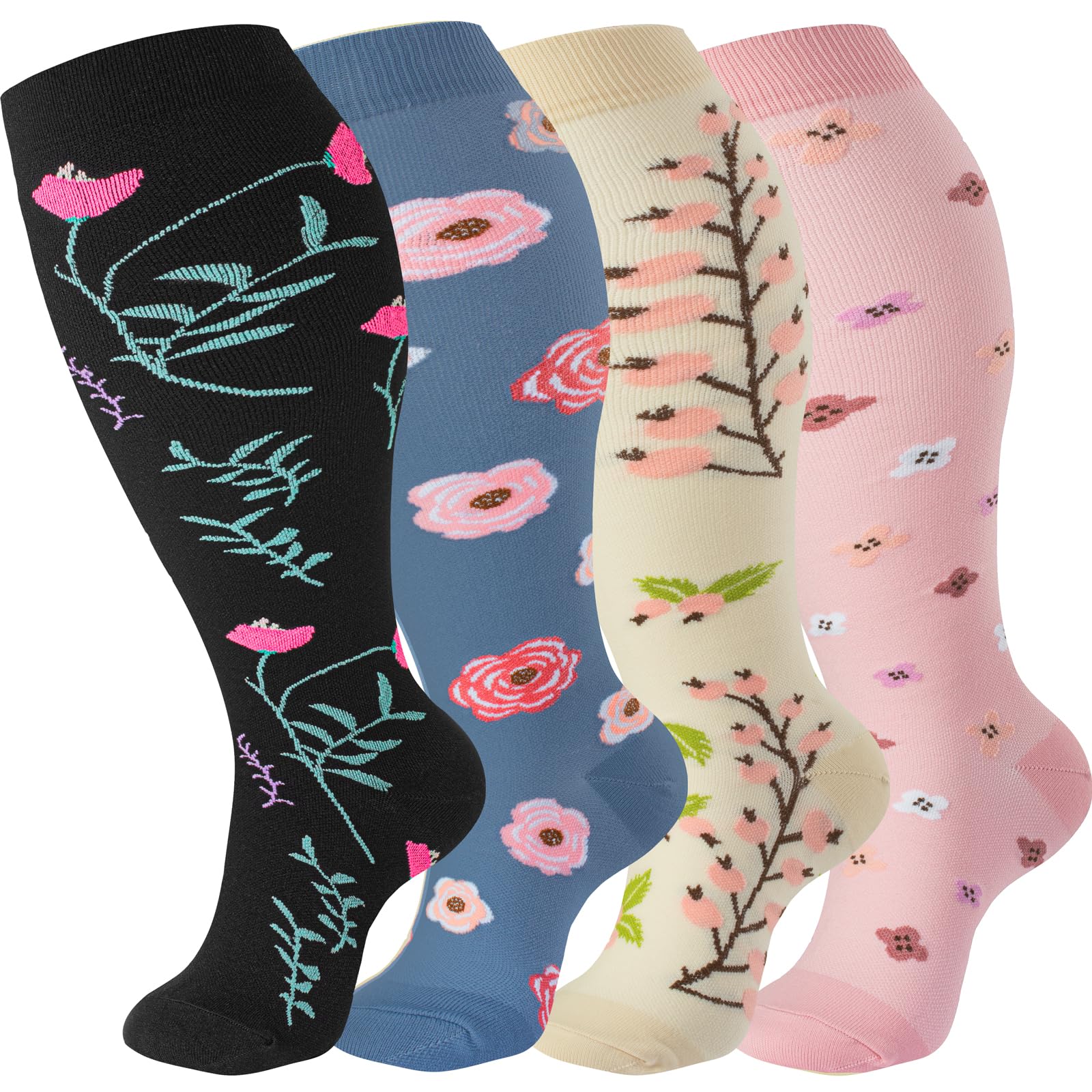
1. bropite 3/4 Pairs Plus Size Compression Socks for Women & Men 20-30 mmHg
Our pick — 4.5★ from 900+ verified ratings; the strongest balance of quality and price.
The wide-calf hero that finally fits bigger legs without cutting off circulation.
The defining strength here is real estate in the calf. These are built specifically for large and wide calves, so if you’ve ever felt that familiar pinch of a too-tight top band, this is the sock that solves it. They’re made from a durable 85% Nylon, 15% Spandex blend that stretches to accommodate bigger legs while still holding a graded 20-30 mmHg compression from ankle to knee, engineered to maintain steady blood flow without restricting circulation..
Fit is what wins people over — it’s the single most-praised feature among owners, followed closely by the quality that holds up through washes without stretching out. The prints are a genuine crowd-pleaser too: “colors hold fast in the wash” and the designs hide the medical look entirely, so they read as fashion, not therapy. At 11.36 ounces for the pack, they’re noticeably the heaviest option here — a solid, substantial feel rather than a featherweight one.
There’s one honest caveat that surfaced repeatedly, and it matters if you’re buying specifically for strong varicose vein pressure: a fair number of owners say the squeeze feels lighter than the label claims — more like 8-15 mmHg than the stated 20-30. That same ease of pull-on is a blessing for arthritic hands, but it means the compression is gentle, not medical-grade firm. If you need true 20-30 pressure, this may run soft for you; if you want comfortable, all-day support that’s easy to get on, it’s a fantastic multi-pack value.
What wins owners over
- Genuinely roomy through the calf for plus-size wearers
- Stays in place all day without digging into the leg
- Fun prints that wash well and hide the medical look
- 4-pair pack at a value-friendly price point
The honest trade-off
- Some owners feel the pressure is lighter than 20-30 mmHg — more like a light everyday sock
- Heaviest option in this lineup at 11.36 oz per pack
- 2X length runs short, sitting above the knee cap for taller wearers
Reach for these if: you have wide calves and want an easy-on, all-day sock with real (if gentle) graduated compression and a bit of style.
Look elsewhere if: you need firm, true-to-label 20-30 mmHg pressure for significant varicose vein swelling — the squeeze here trends soft.
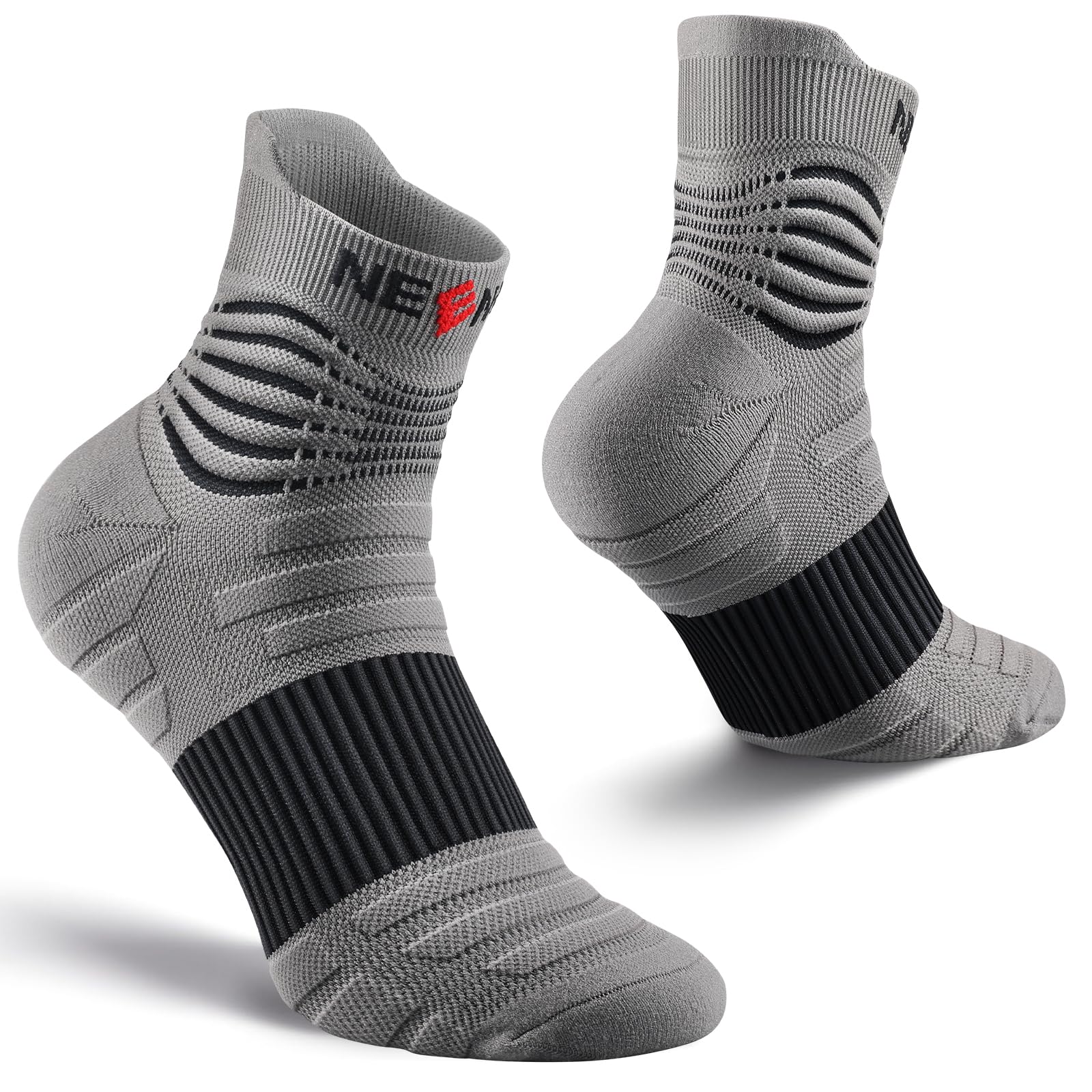
2. NEENCA Professional Compression Socks 20-30 mmHg
The featherweight workhorse that gets you through 20,000-step days on hard concrete.
This is the pair for people whose legs take a beating. It’s a Class 1 Medical Device, regulated as medical equipment, not just an athletic accessory.. The compression is the thing owners rave about most — a genuine 20-30 mmHg squeeze that’s backed up by a patented “Ankle Tuck” design using six compression rings around the ankle and reinforced arch support to speed up blood flow and protect during exercise.
At just 2.89 ounces, it’s featherlight compared to the bropite pack’s 11.36 ounces — a nearly four-fold weight gap, so this is a sock you’ll forget you’re wearing even on long shifts. Buyers report it’s the ONLY sock that gets them through days on cement or 20,000 steps, with flat feet and arthritis in the mix. The material blend — 65% nylon, 20% spandex, 8% polyester, 7% cotton — is breathable and fast-drying, and the non-slip fabric stays up all day without bunching or sliding.
The honest catch is fit: the size genuinely runs small, and the first few times putting them on takes real effort. Some owners find them too tight, and there’s minor pilling after a few washes that a fabric shaver easily fixes. If you’re between sizes, go up. The reward is a sock that eliminates post-shift leg and foot pain for people who stand all day — the recurring verdict is that a little struggle getting them on is worth the relief they provide.
Why it earns its keep
- Class 1 Medical Device delivering true 20-30 mmHg pressure.
- Ankle Tuck design with 6 rings targets the foot and ankle area
- Featherweight at 2.89 oz — easy to forget you’re wearing them
- Non-slip fabric stays up through all-day wear
Know before you buy
- Runs small — order up unless you’re right in the middle of the size range
- Hard to pull on the first few times as the fibers break in
- Minor pilling after washing
Your best bet if: you stand on hard floors for hours or walk tens of thousands of steps daily and want real medical-grade pressure that holds up.
Who should pass: anyone who wants a slip-on-easy sock without any tugging — these demand some effort to get on.
3. QUXIANG Best Medical Compression Socks 15-20 mmHg
The mild-and-mighty pick that delivers noticeable relief without the stiff, clinical feel.
If you’re new to compression or your varicose veins cause more aching than swelling, this is a smart place to start. At 15-20 mmHg it’s the lighter end of the therapeutic range — a “mild squeezing of warmness” that boosts circulation without the intense tightness of stronger socks. It’s a full 33% gentler than the 20-30 mmHg pairs in this lineup, and for many people that’s exactly the right amount: enough to help prevent pain, fatigue, swelling and cramping, but soft enough for all-day, every-day wear.
What stands out in the owner feedback is how warm these socks are without being sweaty — one owner happily ditched the plan to layer wool socks over them in winter. They’re described as thin, comfortable and non-hot even when working on a metal roof on an 80-degree day. Quality and comfort are the two most-praised aspects, and the firm-but-supportive feel earns repeated praise from people working 12+ hour hospital shifts on their feet.
A few notes on fit: the sizing guide runs generous, so a shoe size 6.5 might find even the Small/Medium roomy in the foot. There’s extra room in the toe box for narrow feet, and opinions split on thickness. The brand leans into everyday comfort over maximum squeeze — so if you need heavy-duty pressure for significant swelling, the higher-mmHg NEENCA above is the stronger choice; if you want to ease into compression comfortably, this is your pair.
The everyday strengths
- Comfortable 15-20 mmHg support that’s easy to wear all day
- Warm in winter without overheating — no sweaty feet
- Easy to pull on and stays in place through long shifts
- Trusted by hospital workers on their feet for 12+ hours
Keep in mind
- Runs large in the foot — small feet may find extra room
- Mild pressure won’t be enough for significant swelling
- Opinions are mixed on the thickness
Grab these if: you want gentle, comfortable compression for tired, aching legs and a sock that doesn’t scream “medical.”
Think twice if: you have pronounced varicose-vein swelling that needs the firmer 20-30 mmHg range.
4. Doctor’s Select 3 Pairs Copper Toeless Compression Socks 20-30 mmHg
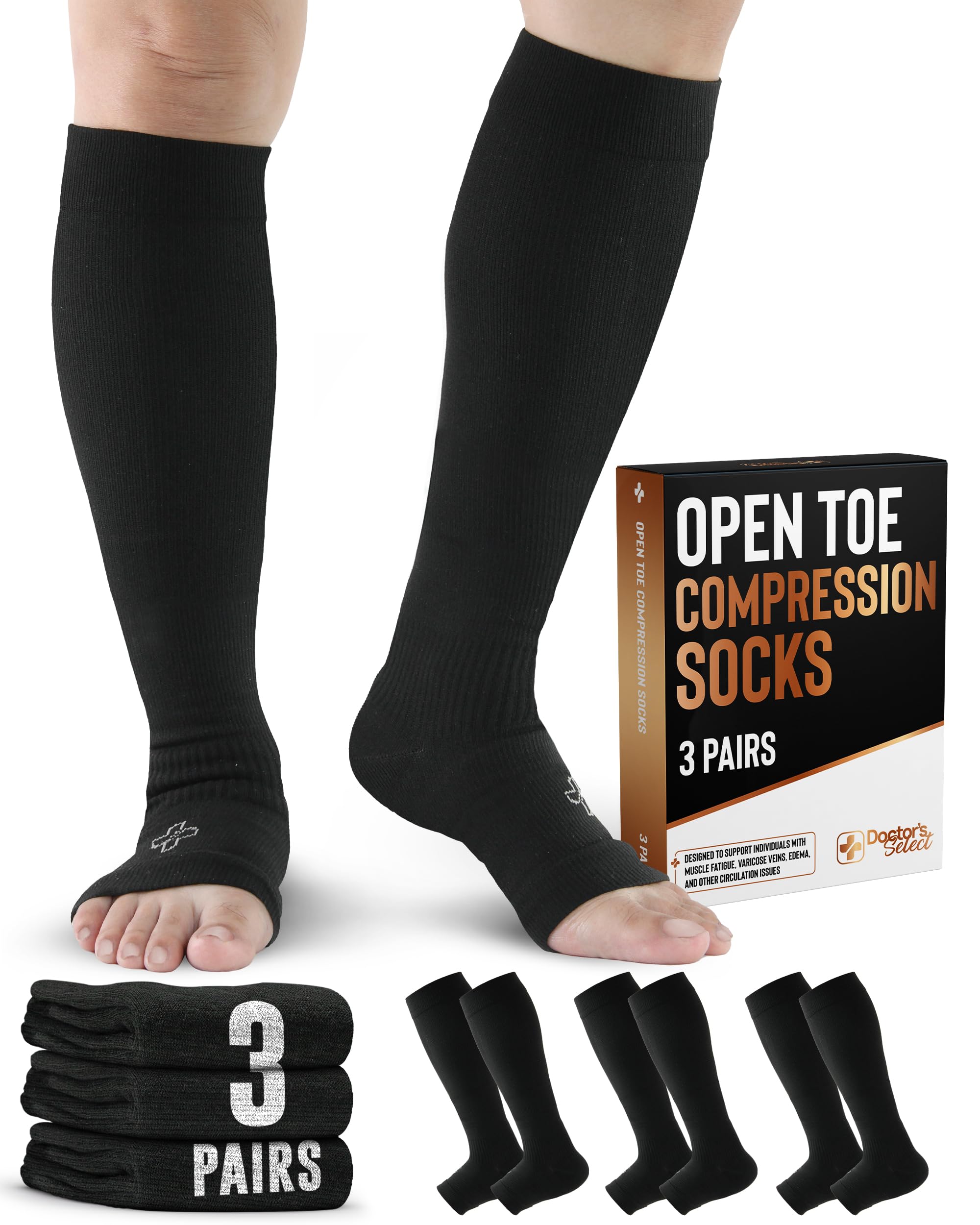
The toeless three-pack that pairs with flip-flops and treats your toes right.
The open-toe design is the whole point here, and it solves a real problem: if your toes swell, get sore, or you simply hate the feeling of squeezed toes, this sock leaves them free. It’s why owners describe these as “more comfortable than a stocking” — you get full knee-high graduated 20-30 mmHg compression through the calf and ankle, but the foot ends before your toes begin. That foot freedom even lets you wear flip-flops and sandals while still getting therapy, which is a rare trick.
Quality is the most-praised feature by a wide margin, with owners noting the compression feels like a true 20-30 rating and the socks stay durable through months of hand-washing without snags, elasticity loss or fading. The fabric’s copper-infused design holds color and shape. A full-calf reach also wins points — one owner switching from below-calf socks found these finally reach the knee, and after heart surgery the swelling came down to normal size.
The trade-offs are worth knowing: the foot portion runs long for some — a size 10.5 woman found the toe opening longer than her toes. And like most open-toe socks, they can slip unless your foot presses down on them, so they work best inside shoes rather than loose around the house. One owner noted the oversized packaging is wasteful, but the socks themselves held up perfectly for six months with no heel blowouts.
Toe-free relief: The open-toe design gets the most consistent praise — owners with sensitive or swollen toes say it beats any closed-toe sock they’ve tried.
The fit caveat: Measure your foot length too; the foot portion runs long, and the toeless style needs footwear to stay put.
Ideal for: anyone with tender toes, or who wants compression that works with sandals and flip-flops.
Not for: barefoot lounging — without shoe pressure, the open-toe style can slip.
5. TOFLY 20-30 mmHg Open Toe Compression Socks

The toeless, smooth pick that targets varicose veins with five zones of pressure.
This pair takes the “graduated” in graduated compression seriously. Rather than one uniform squeeze, it uses five zones of graduated pressure across the leg, each tuned to a different level — which is exactly how medical compression is supposed to work: strongest at the ankle, easing up as it moves toward the knee. That gradient is what pushes blood back toward your heart and reduces swelling in the ankles, feet and legs. Owners confirm the compression is the most-praised feature and that it feels like a legitimate 20-30 mmHg — “not like tube socks.”
The toeless design adapts to different foot shapes, and the smooth knit means no irritating seams rubbing against your skin. It’s ideal for running, gym work, hiking, and pregnancy, plus jobs that keep you on your feet — nurses, teachers, retail workers. The soft top band prevents digging into your calf. At 2.12 ounces it’s one of the lightest options here, barely noticeable under work pants or athletic wear.
The honest feedback has a few recurring notes. The socks run about 2 inches too short for some — a concern if you have long legs or want full knee coverage. They’re also snug to get on; that’s the sign of real compression, but it means the first minutes require some tugging. One pregnant owner noted they roll below the knee and run long on a size 7.5 foot. The proof of real pressure: owners compare them favorably to prescription hose at a fraction of the cost.
Real graduated pressure: the 5-zone 20-30 mmHg gradient is the standout — owners confirm it delivers genuine compression, not a fashion sock.
Two fit notes: runs about 2 inches short for taller legs, and the snug fit makes them a bit hard to pull on at first.
Choose this if: you want real 20-30 mmHg graduated pressure in a lightweight, toeless, smooth design for sports or long work days.
Pass if: you’re tall with long calves — the shorter length may sit below the knee.
6. Benirap Breathable Compression Socks 15-20 mmHg, 2 Pairs
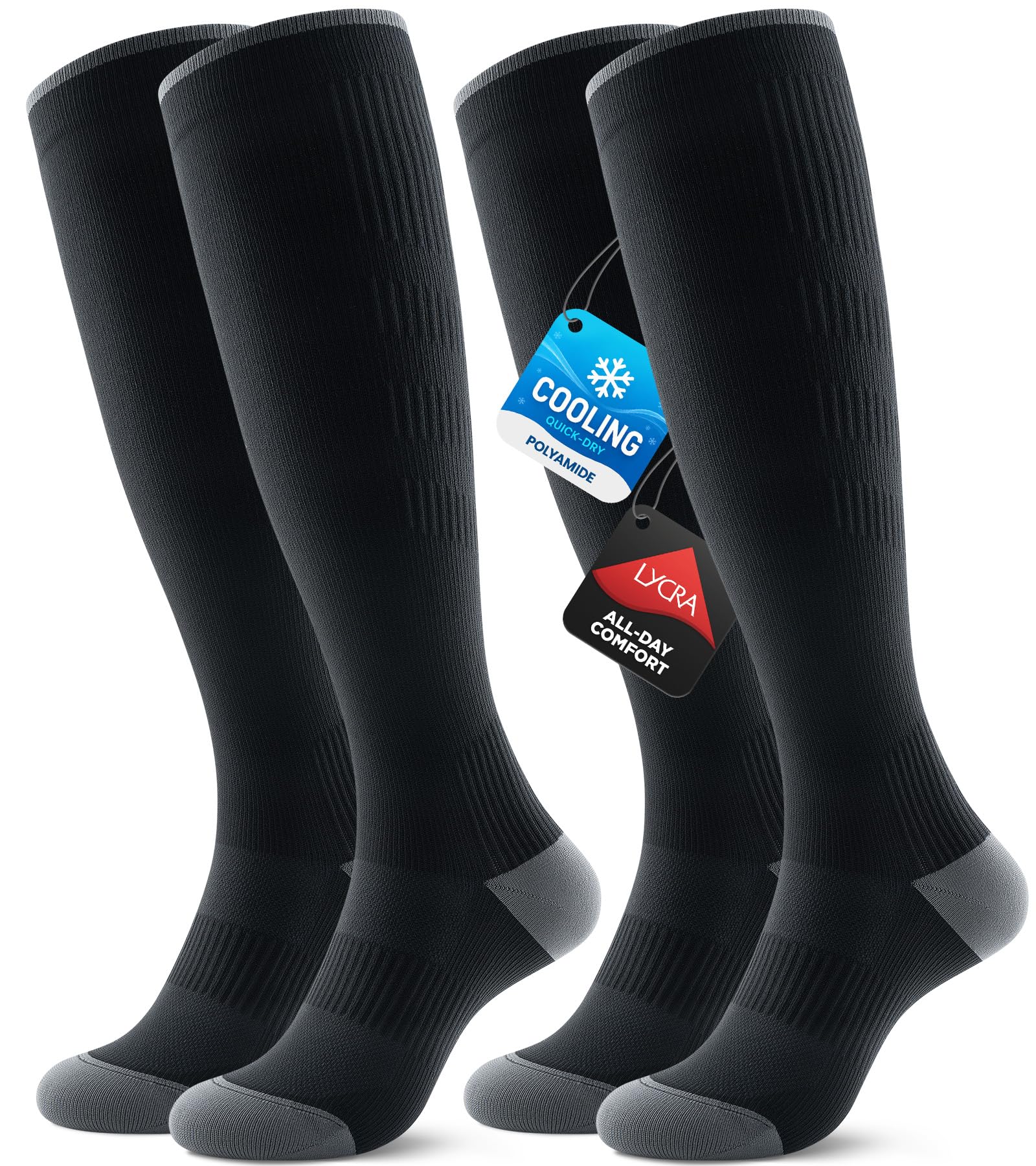
The breathable two-pack that fights swollen ankles on long flights and standing shifts.
For travel and all-day wear, breathability is the make-or-break feature — and it’s what owners mention most after overall quality. These socks are designed to let air through so your feet stay cool and dry rather than clammy inside tight compression. The listing carries both a 15-20 mmHg and 20-30 mmHg reference depending on where you look, but the consistent owner takeaway is firm, supportive compression that stays put without feeling like a vice.
The fit security around the calf earns particular praise: owners say they stay in place all day without rolling down, which is the classic failure mode of cheaper compression socks. They’re soft, flexible, easy to pull on, and hold their shape through washing. The 2-pack setup at this price point makes them a strong value for travelers, runners, and anyone who stands for long stretches — you can rotate one pair while the other’s in the wash.
The one clear watch-out: shorter wearers. Owners under about 5’1″ found the socks too tall, with the top band rolling down and even causing a cut under the knee. If you’re petite, size carefully or consider a shorter style. Also note — one owner ordered the largest size and still found them too small and hard to get on, so the sizing runs snug overall; when in doubt, follow the calf measurement chart rather than assuming bigger is easier.
Why owners stick with these
- Secure calf fit that stays up all day without rolling
- Breathable, moisture-wicking knit for long days
- 2-pack value for travel and daily rotation
- Firm support without feeling too tight
Before you order
- Runs tall — a problem for shorter wearers under 5’1″
- Sizing runs snug; measure your calf first
Best for: travelers, runners, and standing workers who want breathable, stay-put compression in a convenient two-pack.
Skip if: you’re on the shorter side or have very long legs — the height may not sit comfortably at the knee.
7. LEVSOX Open Toe Compression Socks 20-30 mmHg

The hug-you-gently sock that delivers real pressure without the squeeze.
Compression is the most-praised feature here — 135 owners call it out — but the tone of that praise is what’s interesting. Buyers describe it as a “gentle hug,” effective pressure that doesn’t bite. That balance comes from a design that compresses the leg and ankle firmly while the open-toe style gives your toes room to spread naturally. One owner with a venous insufficiency diagnosis called it an immediate mobility boost, and others wear it overnight without irritation.
The open toe is a genuine feature, not a gimmick. It lets you wear toe socks underneath, allowing toes to spread and stay comfortable during long hours on your feet, and it fully eliminates the toe-seam irritation that plagues closed-toe versions. It’s also sandal-friendly. The dressy, fun color options (including a “fun colored medical type” blue) make it a pair you’ll actually want to be seen in — owners noted wearing them in 90°F heat with sandals.
Fit feedback is genuinely mixed, so size carefully. Some find them true to size; others say they run small. The guidance from experienced owners is clear: use your actual calf and shoe measurements, not your usual shoe size. One owner who ordered Large vs Medium got only light compression as a result. There’s also occasional pilling on the exterior and slight interior fabric balls after washing that hand-washing and hang-drying helps manage. And if you have swollen toes, the sock end can dent at the toe base — the open design helps some but not all.
The gentle-glow strengths
- Real 20-30 mmHg compression that feels like a hug, not a clamp
- Open toe lets toes spread naturally and pairs with toe socks
- Comfortable enough for overnight wear
- Fun colors that don’t look medical
Size with care
- Fit runs small for some owners — measure before ordering
- Occasional pilling after washing
- Swollen toes may still feel the sock edge
Pick these if: you want firm 20-30 mmHg support that feels comfortable all day and lets your toes breathe.
Look elsewhere if: you hate fussing with size charts — this one genuinely requires precise calf and shoe measurements.
8. Ailaka Medical Compression Socks with Zipper 15-20 mmHg

The zipper saves the day for anyone who can’t wrestle a tight sock over their heel.
This is the pair that solves the single biggest frustration with compression socks: getting them on and off. The full-length YKK zipper opens the sock wide so you can slide your foot in without the usual battle. Owners describe it as a revelation — a 95-year-old puts them on herself, a husband manages his own knee-high socks without help, and the extended zipper handle makes it doable one-handed. The heavy-duty zipper (from YKK, the same brand known for reliable zippers) stays snug and holds up to daily use.
The inner fabric under the zipper protects your skin from rubbing against the metal, so you get the convenience without the irritation. At 15-20 mmHg, this is a moderate compression that provides “just-enough” squeeze — enough to promote blood flow back toward the heart and help with varicose veins, edema, and swelling, while the open-toe style gives you roomy wiggle room for your toes. The sheer nylon look (75% nylon, 25% spandex) has a dressier, more polished appearance than chunky athletic socks.
The recurring theme in owner feedback is gratitude — “Problem solved” is a phrase you see more than once. One owner with edema from congestive heart failure wears them every day and gave up on every other brand. The main caveat is fit: it runs long for some, and one 91-year-old user found the sock comes up behind the knee causing discomfort. Measure your calf and leg length carefully. If the zipper’s appeal is for someone with limited hand strength or mobility, this is the pair that restores independence.
The independence win
- YKK zipper makes on/off genuinely easy — no wrestling required
- Skin-protective fabric under the zipper prevents rubbing
- 15-20 mmHg “just-enough” support for swelling and varicose veins
- Open-toe style with roomy toe allowance
Check before buying
- Runs long — may reach behind the knee for shorter users
- Size chart needs careful calf measurement
Get these for: anyone — yourself, a parent, a partner — who struggles to pull on compression socks due to arthritis, limited mobility, or just frustration.
Not ideal if: you want a sock that disappears under low-cut shoes — the zipper adds a bit of bulk around the ankle.
9. JOBST Relief Knee High Compression Socks 15-20 mmHg

The name-brand therapy sock that wins over even picky, large-calf wearers.
JOBST is among the most recognized names in medical compression, and this Relief line brings that credibility at a moderate price point. The construction uses a 3-D knit structure with air-covered spandex yarn, which translates to a soft, comfortable hand-feel that’s pleasant against the skin all day. The closed-toe style is designed with a roomy toe for extra “wiggle room” — a thoughtful touch if your toes swell. And it’s latex-free, so it’s safe for people with latex allergies.
The 15-20 mmHg gradient is the everyday therapeutic standard — enough to relieve tired, aching legs and help with varicose veins, without the intense firmness of stronger medical hose. The effectiveness is what owners praise most, with a 45-year-old diabetic struggling with edema in calves and ankles rating these “highest of any” brand tried. The roomy fit through the calf is a big reason: one buyer’s father with large calves wears them comfortably with no problem, and they even help him sleep.
The caveats are mostly about fit and durability. Owners mention the socks can slip down for some, are genuinely hard to get on and off (a common trait of proper compression), and — the most common complaint — they don’t last as long as some would like. The sizing runs small, so measure carefully and consider sizing up. If you need a dependable brand for mild-to-moderate varicose vein support and you have larger calves that other socks squeeze, this is a top-tier choice that justifies its higher price point.
Brand buy: JOBST’s medical reputation shines through — owners with diabetes, edema, and post-ankle-surgery swelling consistently rate these among the best they’ve tried.
The catch: expect a struggle getting them on, and watch durability — some owners find they wear out sooner than they’d like.
Choose this when: you want a trusted medical brand with a roomy, comfortable fit for larger calves and mild-to-moderate swelling.
Look elsewhere if: you want something easy to pull on — even with the soft knit, the compression makes these a wrestling match at first.
Understanding the Specs
What mmHg actually means
mmHg stands for millimeters of mercury — the same unit used for blood pressure readings. In compression socks, higher numbers mean a stronger squeeze. 15-20 mmHg is mild, everyday support that helps tired, aching legs. 20-30 mmHg is firmer, the level doctors typically recommend for pronounced varicose-vein swelling.. The sock should feel tightest at the ankle and ease up toward the calf — this gradient helps push blood back toward your heart..
Material matters more than you think
Most compression socks are a nylon-spandex blend — nylon for durability and shape, spandex (often called elastane) for the stretch that creates compression. Some add cotton for softness or polyester for moisture-wicking. A higher spandex percentage usually means a snugger, more responsive fit, while more cotton means softer, more absorbent but less durable fabric. Thinner materials breathe better in summer, while thicker knits suit colder months.
Open-toe vs closed-toe
Closed-toe socks warm your whole foot and protect toes inside shoes — the standard choice for cold weather and most work environments. Open-toe or toeless styles leave toes exposed, giving swollen or sensitive toes room to breathe and letting you wear sandals or toe socks underneath. The trade-off: open-toe socks can slip without shoe pressure to hold them in place, and the foot portion needs to fit your foot’s length precisely.
The fit is the feature
With compression socks, fit is everything. Measure the widest part of your calf and the narrowest part of your ankle with a tape measure, then match those exact numbers to the brand’s size chart. Never guess by shoe size alone. A too-loose sock slides down and delivers no therapy; a too-tight one digs into your leg and causes new discomfort. When between sizes, nearly every brand tells you to size up.
FAQ
How tight should compression socks feel for varicose veins?
Is 20-30 mmHg better than 15-20 mmHg for varicose veins?
How many hours a day should I wear compression socks?
Why does my compression sock roll down at the top?
Can I wear compression socks for varicose veins in summer heat?
Why are the compression socks in this list labeled differently than what I feel?
Should I measure my calf or just buy my shoe size?
Can I wear open-toe compression socks with sandals or flip-flops?
How do I make compression socks easier to put on?
What compression level do nurses and people who stand all day need?
Final Thoughts: The Verdict
For the majority of shoppers, the compression socks varicose veins winner is the bropite 3/4 Pairs Plus Size because it delivers genuinely comfortable 20-30 mmHg support in a roomy wide-calf fit at a value-friendly 4-pair price — and its fit is what owners praise most by a wide margin. If you stand on concrete floors all day and need real medical-grade pressure, grab the NEENCA Professional. And for anyone who struggles to pull on socks at all, the Ailaka Zippered is the one to reach for — it restores independence and makes daily compression actually manageable.
How We Picked
We do not accept paid placement. Every pick is matched to a real buyer and a real use-case; we do not hands-on test units.
Sources & Methodology
Specifications: manufacturer listings and product documentation. Review insights: verified customer reviews, as of August 2026. Pricing: not shown on this page (it changes often); check the current price via the retailer link.
As an Amazon Associate, FitlyFast earns from qualifying purchases. This does not affect which products we feature.