
Our readers keep the lights on and the weekend projects moving. As an Amazon Associate, I earn from qualifying purchases.
Specs are compiled from manufacturer listings and verified buyer reviews and can change over time — please confirm the key details on the product page before buying.
The daily grind of long shifts, long flights, or just long hours on your feet can leave your legs feeling heavy, achy, and swollen. That’s the exact problem compression stockings are built to tackle, and the right pair can make the difference between dragging yourself home and still having energy left. This guide cuts through the jargon to find the compression stockings for varicose veins that actually hold up, feel good, and deliver the firm support your legs crave.
I’m Rikta — the founder and writer behind FitlyFast. This guide is built by comparing the manufacturers’ published specifications and the patterns across verified customer reviews, so you get each pick’s real strengths and trade-offs instead of marketing spin.
We’ve matched every pick to the right compression level—from gentle 15-20 mmHg to firm 20-30 mmHg—so you can choose with confidence and find relief that lasts all day.
Our Picks at a Glance


How To Choose The Right Compression Stockings
Finding the right pair isn’t about picking the tightest sock on the shelf. It’s about matching the pressure to your daily routine and your leg’s specific needs, then making sure the fit is right so you’ll actually wear them.
Start With the mmHg Rating
The mmHg number tells you how much pressure the sock applies. A 15-20 mmHg pair offers mild, everyday support that’s great for travel, light swelling, and general fatigue. A 20-30 mmHg pair delivers firmer, medical-grade pressure that’s a common choice for nurses, pregnant women, and people managing more noticeable varicose veins or swelling. If you’re unsure which is right for your situation, a quick conversation with your doctor is the smartest first step.
Measure Before You Choose a Size
Compression socks only work if they fit properly. The two measurements that matter most are your shoe size and the circumference of your calf at its widest point. Many brands list specific ranges for these, so grab a soft measuring tape and check both before you order. A sock that’s too loose won’t provide the pressure you need, and one that’s too tight can be genuinely uncomfortable to get on and off.
Quick Comparison
| Model | Best For | Compression | Pairs | Key Material | Amazon |
|---|---|---|---|---|---|
| Best Medical★ Best Overall | All-Day Comfort | 15-20 mmHg | 1 | Soft Stretch Knit | Amazon |
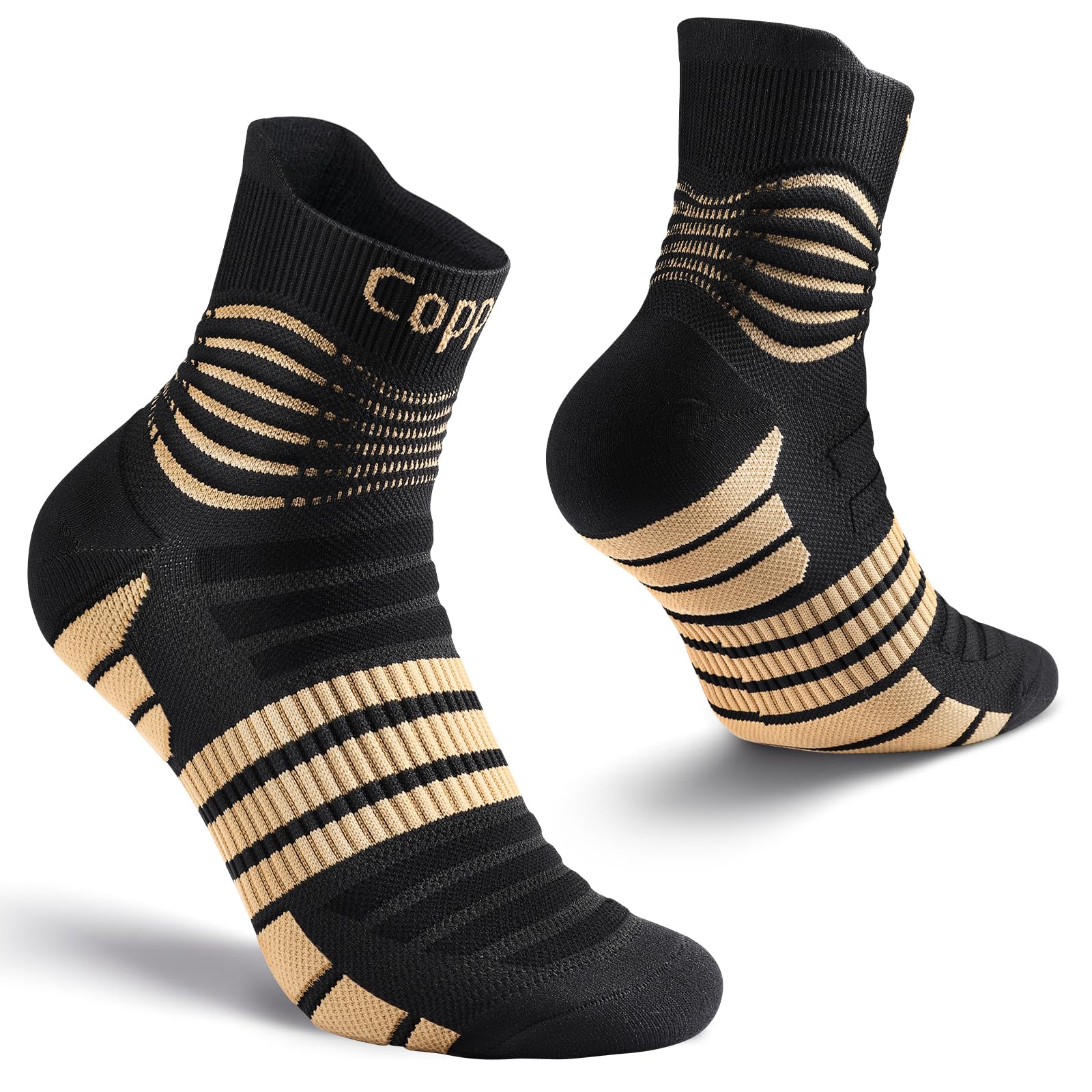
| NEENCAFirm Support | Firm Medical Support | 20-30 mmHg | 1 | Copper-Infused Fiber | Amazon |
| FITRELL3-Pack Value | Multi-Pack Value | 20-30 mmHg | 3 | Full Cushioned Sole | Amazon |
| Physix Gear | Rugged Durability | 20-30 mmHg | 1 | High-Quality Fabric | Amazon |
| TOFLY | Open-Toe Preference | 20-30 mmHg | 1 | Medical-Grade Knit | Amazon |
| Benirap | Breathable Travel | 15-20 mmHg | 2 | Moisture-Wicking | Amazon |
| WAKEFEET | Scented Comfort | 20-30 mmHg | 3 | Breathable Texture | Amazon |
| Merino Wool | Warm Weather Wear | 15-20 mmHg | 1 | 30% Merino Wool | Amazon |
| BBFREY | Premium Construction | 20-30 mmHg | 3 | Microfiber Nylon | Amazon |
In‑Depth Reviews
1. Best Medical Compression Socks 15-20 mmHg
Our pick — 4.5★ from 800+ verified ratings; the strongest balance of quality and price.
The crowd-pleasing everyday sock that turned leg-ache complaints into a chorus of “I’m buying more.”
The thing that wins people over here is the overall quality — it’s the most-praised feature by a wide margin, with comfort close behind. Owners consistently describe these as firm but supportive, and the fact that they come in black, white, and gray means you’re not stuck with a clinical look. The gentle 15-20 mmHg compression is enough for long workdays without feeling like a tourniquet, and many note they’re surprisingly warm in winter without making feet sweat.
You can trust these on your longest shifts—one nurse reports wearing them for a 12+ hour shift on a busy floor and immediately planning to order more. Another owner with very narrow toes found a little extra room in the toe box but otherwise said they fit “like a glove.” A few folks with smaller feet (like a women’s 6.5) found the Small/Medium ran a bit large, so if you’re between sizes, that’s something to weigh.
Reviewers also note these are easy to put on and they stay in place all day, which is half the battle with compression wear. The recurring consensus is that they reduce swelling and leave legs feeling less tired., all at a price that makes them a genuinely great buy.
Why It Wins Fans
- Quality is the #1 praised feature, with comfort a close second
- Warm in cold weather without trapping heat or sweat
- Firm but supportive—ideal for long hours on your feet
Things to Weigh
- Small/Medium can run large for petite feet
- Some owners find the socks on the thinner side
Reach for this if: you want a proven, comfortable everyday sock for 15-20 mmHg support without the medical look.
Look elsewhere if: your feet run smaller than a women’s 6.5, since the smallest size may feel roomy.
2. NEENCA Professional Compression Socks 20-30 mmHg
A featherlight 3.84 oz sock packing serious 20-30 mmHg pressure—and a patented ankle-tuck design.
NEENCA stands out for its material science: a blend of 24% copper-infused fiber, 62% nylon, and 14% spandex. That copper isn’t just a gimmick—the brand uses a patented “Ankle Tuck” technique with 6 compression rings at the ankle and reinforced arches for targeted pressure. At just 3.84 ounces, it’s significantly lighter than the Best Medical pair (which weighs 13.91 ounces), making it a barely-there option for all-day wear.
Buyers report improved circulation and better-managed varicose veins with this sock.—One user found it effective for a 96-year-old mother, keeping her ankle and foot normal.. Another, working 12-hour shifts, A 12-hour shift worker said it “helps reduce neuropathy pain.” and that their feet feel much better by day’s end, even if they’re ready to remove the socks when the shift is over. The firm compression is praised as “perfect constriction” for stimulating blood flow..
It’s not without its quirks. Fit is a mixed bag in the reviews—some find the 20-30 mmHg too tight at the top and had to trim it. And while the majority praise durability and no-fade color, a handful note the socks can feel tight and show wear after multiple washes. If you need firm medical-grade pressure and want a lighter sock, this is a strong contender.
Standout Spec: The 6 compression rings at the ankle deliver targeted, graduated support that owners say keeps swelling in check.
Honest Caveat: The firm 20-30 mmHg pressure can feel too tight at the top band for some legs, so sizing up may be wise.
Best suited to: nurses, travelers, and anyone wanting firm 20-30 mmHg support in a remarkably light sock.
Think twice if: you prefer a gentler squeeze—this one means business from the moment you pull it on.
3. FITRELL Compression Socks 20-30 mmHg (3 Pairs)
Three pairs of solid 20-30 mmHg support for roughly the cost of one premium sock—genuine value.
With thousands of owners behind it, FITRELL is a proven workhorse. The 3-pack means you always have a clean pair ready, and the full cushioned sole adds comfort that reviewers notice right away. The 20-30 mmHg compression is described as medium-to-high and comfortable enough for a full nursing shift, surviving regular washing and drying without losing its squeeze.
Travelers love these for long flights and road trips, reporting legs feel better and the socks stay put without overheating. A nurse who works 10-hour shifts says they help a lot, though the top band can leave a mark that’s a bit uncomfortable by day’s end. One owner with a shoe size between 8.5 and 9 and a 14-inch calf found the S/M a perfect fit.
The honest trade-off: a few buyers feel the compression runs weaker than the claimed 20-30 mmHg, and one noted fragile ankle stitching.
The Value Pitch
- 3 pairs of knee-high 20-30 mmHg socks in one box
- Full cushioned sole adds all-day underfoot comfort
- Survives machine washing and drying without losing compression
Know Before You Buy
- Some owners feel the compression is lighter than 20-30 mmHg
- The top band can leave a mark after very long shifts
Who it’s for: budget-conscious buyers and anyone who hates doing laundry daily—three pairs covers a full work week.
Who might skip: anyone needing certified, precisely-calibrated medical-grade pressure for a specific condition.
4. Physix Gear Compression Socks 20-30 mmHg

The nurse-endorsed sock that holds its shape wash after wash—durability is its defining trait.
Physix Gear has earned a massive following for one simple reason: these socks last. The quality is the single most-mentioned positive by a huge margin, and comfort follows close behind. Nurses report the thick, soft material is easier to put on than cheaper alternatives and that ankle swelling is noticeably reduced even after long shifts. The 20-30 mmHg graduated compression provides true, measurable squeeze without the knee pain some firmer socks cause.
One owner with foot drop (a condition affecting the muscle that raises the foot) found these socks slow the swelling in the toes and ball of the foot, allowing them to stay on their feet far longer. Others praise the sturdy fabric, noting no visible wear after 6 months of daily use and 20+ washes.
The catch is fit—it’s the most-discussed mixed point. Some find the sizing runs large, and one owner with shorter legs found the length reached the knee bend and wrinkled at the ankle. They’re also known to be among the harder socks to pull on at first, though most say it gets easier with practice. For a durable, high-quality workhorse that stands up to the toughest schedules, this is a top pick.
Why It’s a Workhorse: The sturdy fabric and true graduated compression hold up through months of daily wear and washing—rare in this category.
Fit Note: Sizing runs large for some, and shorter legs may find the length excessive—measure your calf before ordering.
Choose this if: you want a durable, high-performance sock that survives the toughest shifts and repeated washing.
skip it if: you’re between sizes or have shorter legs, since the fit is the main variable here.
5. TOFLY 20-30 mmHg Open Toe Compression Socks

A toeless design with 5 zones of graduated pressure—built for those who can’t stand a cramped toe box.
Open-toe compression socks are a specific need, and TOFLY nails it. The toeless design adapts to various foot shapes and is a relief for anyone with sensitive toes, bunions, or simply a preference for free-moving toes. The 20-30 mmHg graduated compression uses 5 zones to create a pressure gradient that owners confirm is “legit”—not the fake, stretchy compression some cheap socks offer.
For varicose veins and swelling, this is a solid performer. A pregnant owner found the medium fit great and reported excellent results managing varicose veins and swelling., though the sock ran long and had to be rolled below the knee. Another standing 8+ hours daily says the socks are easy to wear and the compression around the thickest part of the calf is exactly what you’d expect from a proper compression sock.
The main complaints center on length and ease of use. The socks run about 2 inches too short for some, and getting them on and off takes real effort—which, as one owner points out, is actually a sign of true compression. They’re also thicker than a lightweight hose, making them less breathable in warm weather, but that’s a fair trade for the support.
The Open-Toe Advantage
- Toeless design frees up toes and adapts to different foot shapes
- True 20-30 mmHg graduated pressure across 5 zones
- smooth knit prevents friction and blisters
What to Expect
- Runs about 2 inches short for taller wearers
- Truly hard to pull on and off—proof of real compression
Perfect for: anyone who wants firm 20-30 mmHg support but can’t tolerate a closed toe box or cramped toes.
Not ideal if: you have longer legs (the length runs short) or want a sock that’s easy to slip on and off.
6. Benirap Breathable Compression Socks 15-20 mmHg (2 Pairs)
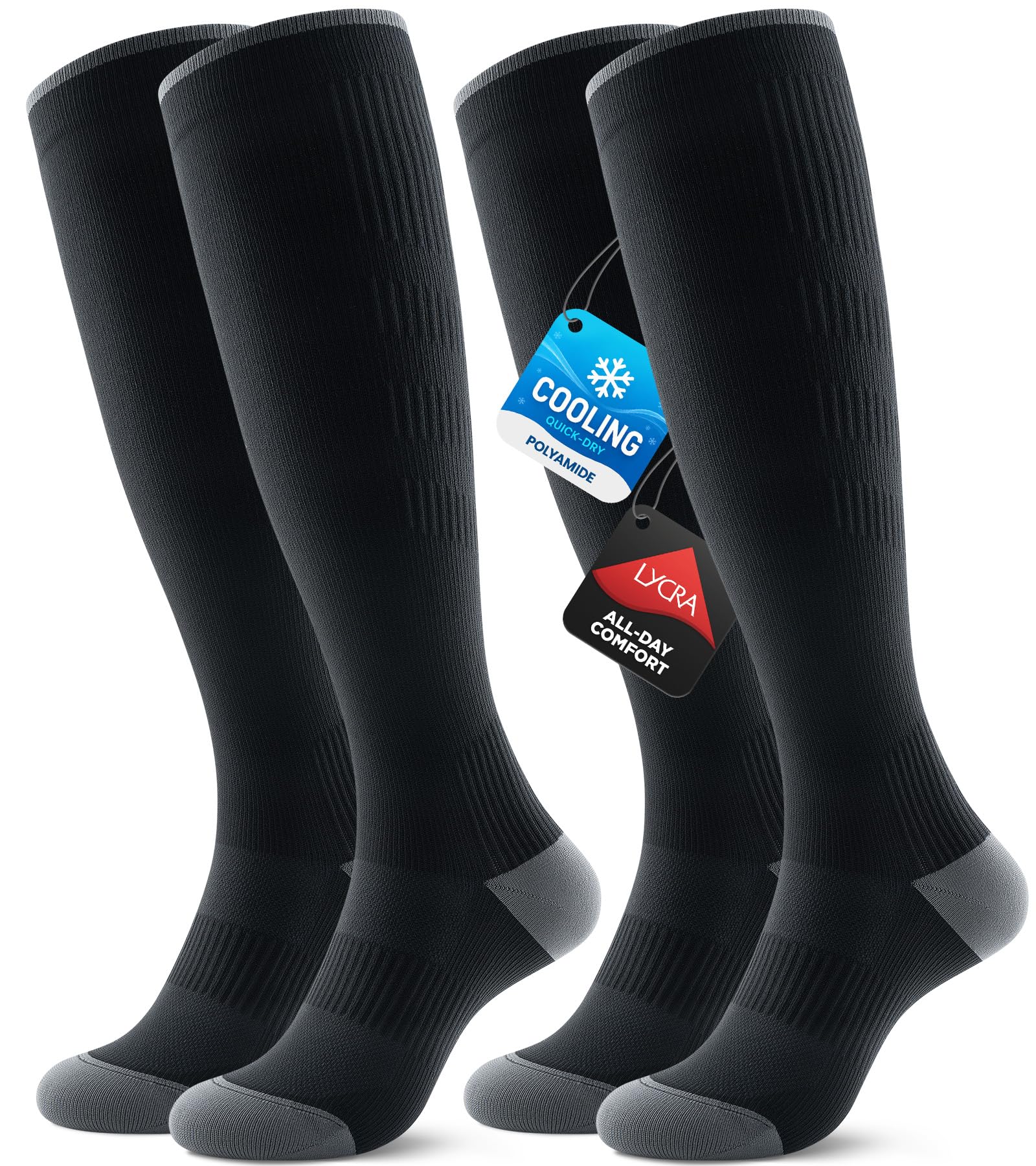
A cool, breathable knit with a calf-hugging fit that stays put—built for long flights and hot days.
Benirap’s defining quality is breathability. The moisture-wicking fabric is the standout feature, keeping feet cool and dry even on long days, which is a huge plus for travel and warm-weather wear. The 15-20 mmHg compression offers gentle, supportive pressure that owners say is firm yet flexible—not too tight, but definitely working. The fit around the calf is the second most-praised feature, with buyers noting the socks stay in place all day without rolling down.
As a 2-pack, this offers solid value for travelers and runners who want a rotation. Owners mention the socks hold up well in the wash and remain soft and comfortable. One specific note: they compress well and are stretchy and easy to put on, which is a relief compared to firmer models. The main caveat comes from shorter wearers—one person under 5’1″ found them too long, causing them to roll down and leave a cut line under the knees.
The overall verdict from owners is enthusiastic, with one declaring them “the best compression socks available” and praising their softness, coolness, and durability. For a mild, breathable, all-day option that disappears under your clothes, this is a very strong choice.
Best Feature: The breathable, moisture-wicking knit keeps feet cool and dry—a rare quality in compression wear.
Heads Up: Taller cuts mean shorter wearers (under 5’1″) may need to roll them down or choose a shorter style.
Grab these for: flights, summer travel, and anyone who finds most compression socks too hot and sweaty.
Consider another if: you’re petite and need a shorter sock length.
7. WAKEFEET Compression Socks 20-30 mmHg (3 Pairs)
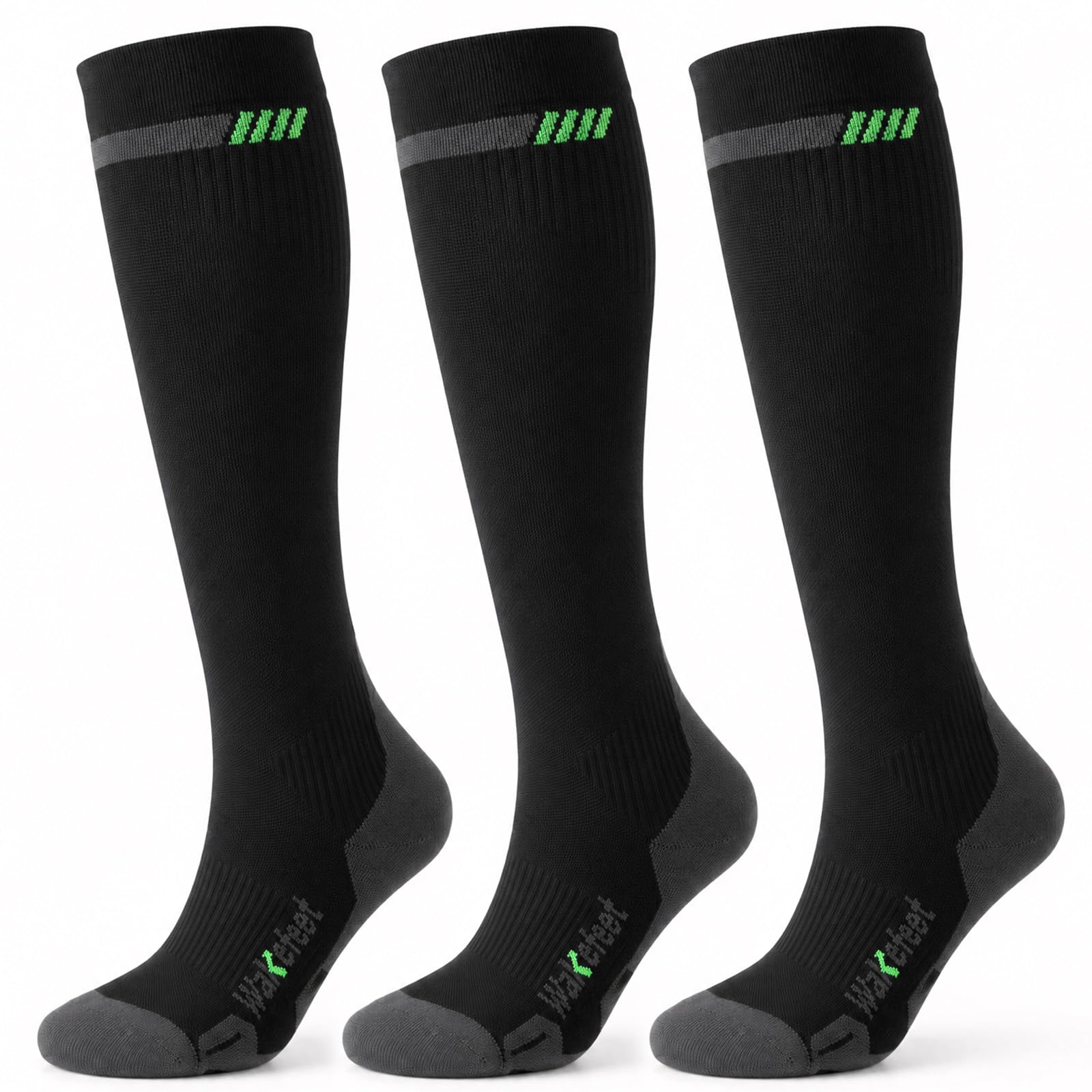
Three pairs in a gift-box with scents like lavender and pine—compression that doesn’t forget the details.
WAKEFEET brings a thoughtful touch to the category: the 3-pack arrives in an elegant gift box with a choice of delightful scents like strawberry, pine, lavender, lemon, and bluebell. The socks themselves deliver 20 mmHg at the calf with stronger support at the ankle, giving you true graduated pressure. The smooth toe closure reduces friction and helps prevent blisters, making them comfortable for all-day wear.
Owners are consistently pleased with the fit and feel, with one saying the top band “doesn’t roll or cut in”—a common pain point with compression socks. Another notes they go on relatively easily and, crucially, “they don’t itch,” which is a frequent complaint with synthetic materials. The breathable design keeps feet dry during workouts, and the thick knitting around the sole and heel adds cushioning for smoother movement.
The honest feedback: fit and ease of use are mixed. Some find them too tight and uncomfortable by the end of the day, and one owner had a genuine issue with the top band cutting off circulation. A few buyers also note they’re difficult to put on. But for the price of a 3-pack with this level of design thought, the majority find them well worth it—one repeat buyer says the first set “wore out” from daily use and they came back for more.
What Makes It Special
- 3 pairs in a gift-ready box—great for sharing or rotating
- High-elasticity cuff fits a wide range of calf sizes without slipping
- Smooth toe closure and cushioned sole add all-day comfort
Fair Warning
- Some find the 20-30 mmHg pressure too tight and uncomfortable by day’s end
- Fit and ease of put-on get mixed feedback
Best for: anyone who wants a complete rotation of 3 pairs and appreciates a little sensory delight (lavender, anyone?) in their medical wear.
Not for: those who need a gentler squeeze or have very sensitive calves.
8. Merino Wool Compression Socks 15-20 mmHg
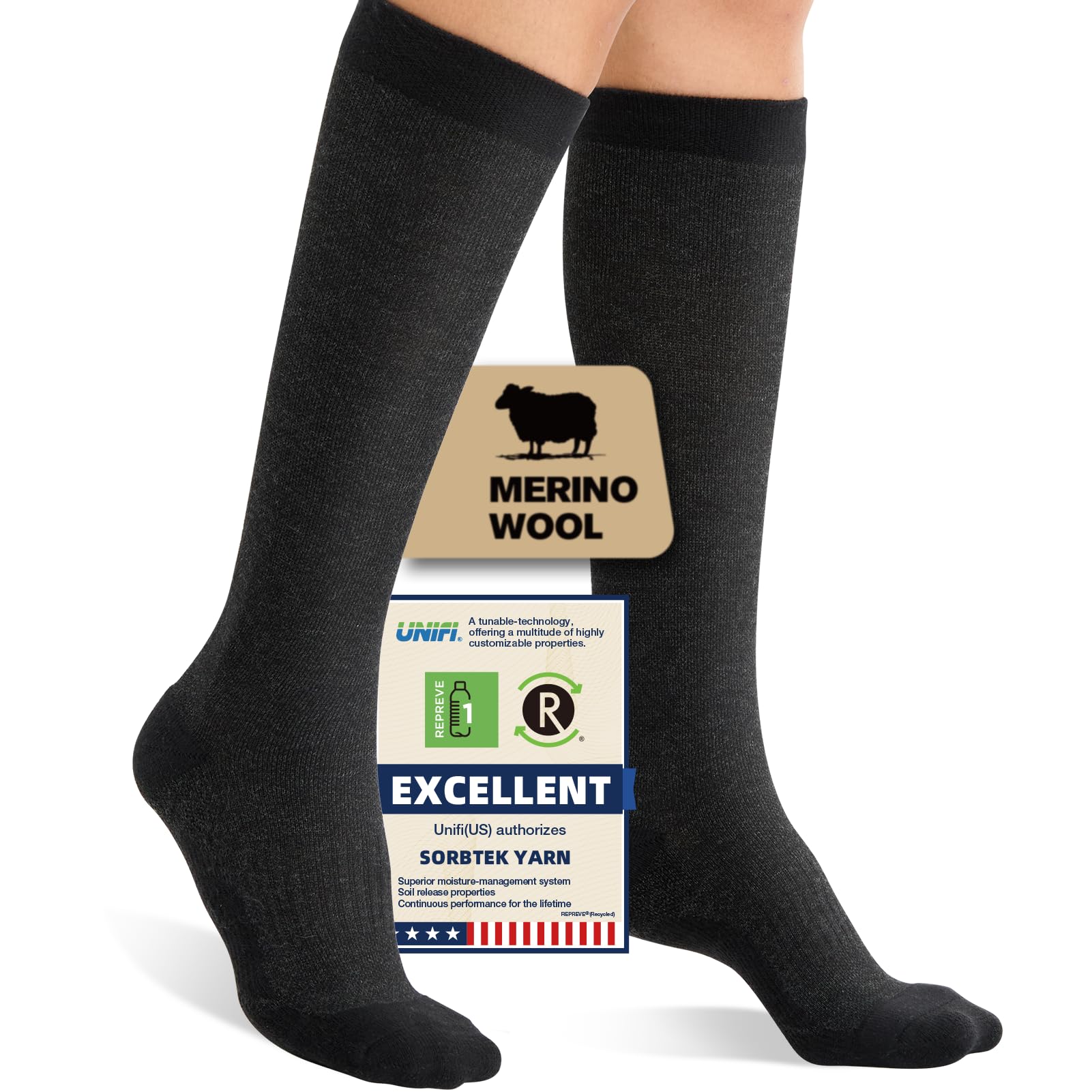
A natural-fiber marvel—30% merino wool keeps legs warm while 15-20 mmHg keeps swelling down.
If your legs get cold on top of being tired, this is the sock for you. The blend of 30% merino wool, 50% viscose from bamboo, 15% Repreve Sorbtek, and 5% Lycra creates a sock that’s soft, warm, and non-itchy—even for sensitive skin. The warmth is a defining feature, with one owner calling it “perfect for chilly morning runs.” Unlike wool socks that can feel bulky or sweaty, this knit manages to insulate without overheating.
The quality is the clear standout, praised far more than any other feature, with fit a close second. Customers note the snug fit effectively reduces fatigue and pain., and the soft merino feels genuinely comfortable against the leg. One traveler wore them on an 11-hour flight and said it “made a big difference in how my legs felt,” even wearing them through Alaskan excursions where they kept feet and legs warm.
The trade-off is warmth and bulk. Because the merino knit is thicker than standard compression socks, they may not fit into snug shoes—one owner specifically advises making sure your footwear is wide enough. The toe seam is also slightly bulky for some. But for cold-weather wear, travel, and anyone who lives in cooler climates, the warmth-plus-compression combination is a genuine win.
Standout Quality: The wool blend provides natural warmth and softness that synthetic socks can’t match—ideal for chilly runs and flights.
Consider This: The thicker knit needs wider shoes, and hand-washing is recommended to preserve the wool.
Choose this if: you need 15-20 mmHg compression and want your legs to stay warm and cozy while you get it.
pass on it if: you wear snug-fitting shoes or live in a hot climate where extra warmth is the last thing you need.
9. BBFREY Medical Compression Socks 20-30 mmHg (3 Pairs)
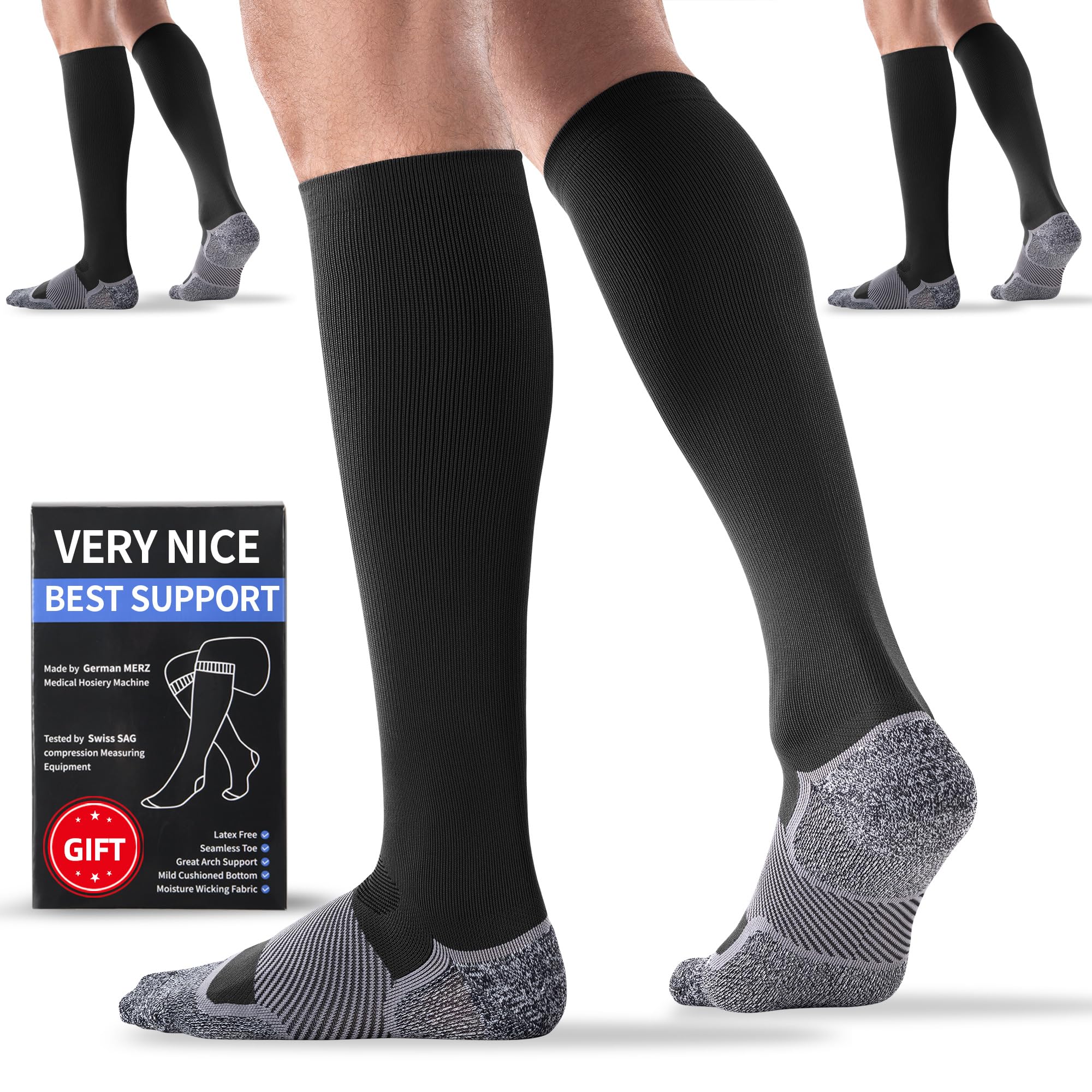
Engineered on German medical sock machines, this 3-pack delivers premium pressure that rivals socks twice the price.
BBFREY takes compression seriously. Made on German medical sock machines with rigorous pressure testing, these socks use a unique inlay knitting method that ensures long-lasting pressure and durability. The 20-30 mmHg compression (a firm medical-grade pressure level) is the real deal—owners repeatedly say it matches or beats socks costing far more. The ergonomic design even includes left-right fit with a smooth toe, which prevents blisters and feels more like a premium athletic sock than a medical device.
The quality is the most-praised feature by a huge margin, with compression close behind. A teacher who stands all day found them “perfect,” praising the soft feet and supportive calves. Others highlight the reinforced arch and foot support, with one owner saying their feet and legs feel fresh all day with no knee band pain. The light cushioning in the toe and heel adds comfort without bulk, and the socks work with all shoe types.
The main hurdle is getting them on. The firm 20-30 mmHg pressure and precise fit make them genuinely hard to pull on and off, particularly for elderly or frail users—one reviewer with a bad back found them “near to impossible” and wouldn’t recommend them for that situation. But for everyone who manages the effort, the payoff is clear: “better than the more expensive compression socks” is a recurring theme in the reviews.
The Premium Advantage
- German-engineered inlay knitting for durable, long-lasting pressure
- Left-right anatomical fit with smooth toe prevents blisters
- Owners consistently say they outperform brands costing over twice as much
The Real Challenge
- Genuinely hard to pull on and off—a real barrier for those with limited mobility or back issues
- Firm pressure takes some getting used to
Worth it for: anyone who wants premium 20-30 mmHg construction and can handle the effort of putting them on.
Not for: anyone with a bad back, limited grip strength, or mobility challenges—getting these on is a workout in itself.
Understanding the Specs
What mmHg Compression Really Means
The mmHg number is the pressure the sock applies to your leg, measured in millimeters of mercury. A 15-20 mmHg sock provides mild, everyday support—great for travel, mild swelling, and general fatigue. A 20-30 mmHg sock delivers firmer, medical-grade pressure that’s a common choice for nurses, pregnant women, and those managing more noticeable varicose veins or swelling. Always talk to your doctor about which level is right for your specific condition.
Graduated Compression vs. Uniform Squeeze
True compression socks use “graduated” pressure, meaning the squeeze is strongest at the ankle and gradually decreases as it moves up the calf. This graduated design pushes blood back toward the heart, reducing swelling and fatigue.. A sock that simply feels tight all over isn’t doing the job—look for descriptions that mention graduated or gradient compression to be sure you’re getting the real thing.
FAQ
What is the difference between 15-20 mmHg and 20-30 mmHg compression socks?
How do I measure my calf to get the right compression sock size?
Should I wear compression socks for varicose veins all day?
Why do my compression socks feel so hard to get on and off?
Can I wear compression socks while sleeping?
What is the difference between open-toe and closed-toe compression socks?
How many pairs of compression socks do I need?
How should I wash my compression socks to make them last?
Are compression socks safe for everyone with varicose veins?
Final Thoughts: The Verdict
If you want one dependable pick, the compression stockings for varicose veins winner is the Best Medical Compression Socks because its proven quality and comfort make it the easiest pair to wear every single day. If you want the firmest medical-grade pressure for long shifts, grab the NEENCA for its targeted ankle support. And for the best value in a multi-pack that covers your whole week, the FITRELL 3-Pack is the one to reach for.
How We Picked
We do not accept paid placement. Every pick is matched to a real buyer and a real use-case; we do not hands-on test units.
Sources & Methodology
Specifications: manufacturer listings and product documentation. Review insights: verified customer reviews, as of August 2026. Pricing: not shown on this page (it changes often); check the current price via the retailer link.
As an Amazon Associate, FitlyFast earns from qualifying purchases. This does not affect which products we feature.