
Our readers keep the lights on and the weekend projects moving. As an Amazon Associate, I earn from qualifying purchases.
Specs are compiled from manufacturer listings and verified buyer reviews and can change over time — please confirm the key details on the product page before buying.
Orchids fail when their roots suffocate in a regular pot, not from watering mistakes. The right container provides root airflow, excess-water drainage, and—with clear walls—root visibility to prevent rot. This guide breaks down the best containers by material, ventilation, and size so you can match the pot to your orchid and your watering habits.
I’m Rikta — the founder and writer behind FitlyFast. This guide is built by comparing the manufacturers’ published specifications and the patterns across verified customer reviews, so you get each pick’s real strengths and trade-offs instead of marketing spin.
Choosing the right container for orchids means balancing root airflow, drainage, and visibility to prevent rot and encourage healthy growth.
Our Picks at a Glance
How To Choose The Best Container For Orchids
Orchids are epiphytes—in the wild they cling to tree bark, not soil. Their roots are used to air washing over them and rain draining away instantly. So the ideal container mimics that: it holds the bark or moss mix in place while letting oxygen reach the roots and letting water escape fast. Here’s what to look at before you buy.
Material: Clear Plastic vs. Ceramic vs. Terracotta
Clear plastic lets you watch root color and moisture levels, which is a huge help for beginners. Ceramic is heavier and prettier, but it holds moisture longer, so you water less often. Unglazed terracotta is the most breathable—it actually wicks moisture through the walls, drying out faster and preventing overwatering, but it means you’ll water more frequently.
Ventilation: Side Holes vs. Bottom Drainage Only
Orchid pots almost always have bottom drainage, but the best ones add side slits or holes. Those openings pull fresh air across the roots and let water run out sideways, not just down through the bottom. If you tend to overwater, more side holes are your friend; if you forget to water, a pot with fewer openings slows things down.
Saucer and Size Fit
A saucer that’s deeper than a standard drip tray catches the excess water so you don’t drip on the table. Size matters more than you’d think: a pot that’s too big holds too much wet medium around the roots, which invites rot. Most growers move up only about one inch in diameter when repotting.
Quick Comparison
| Model | Best For | Material | Size | Drainage | Amazon |
|---|---|---|---|---|---|
| Phoenix Vine Clear Acrylic Set★ Best Overall | Root visibility & beginners | Acrylic | 3.5″ x 4 pots | Multiple holes + deep saucer | Amazon |
| pavtner Ceramic Orchid PotDesign Pick | Mini orchids & display | Ceramic | 4.13″ x 1 pot | Side holes + bottom hole | Amazon |
| vensovo Terracotta 3-PackBest Value | Airflow & repotting | Terracotta | 6″ x 3 pots | Side holes + bottom hole | Amazon |
| JGB Clear Plastic 9-Pack | Multi-orchid collections | Plastic | 7″ x 9 pots | Side slots + bottom hole | Amazon |
| Orceler Terracotta 3-Pack | Classic look & sturdy build | Terracotta | 6″ x 3 pots | Side holes + bottom hole | Amazon |
| JNYONG Clear Nursery 60-Pack | Variety of pot sizes | Plastic | 3.5″ to 7″ x 60 pots | Bottom drainage holes | Amazon |
| BUYMAX Ceramic 2-Pack | Style + value combo | Ceramic | 5″ & 6″ x 2 pots | Leaf-shaped side holes | Amazon |
| HERDUK Terracotta Pot | Single premium repot | Clay | 6″ x 1 pot | Side holes + tray | Amazon |
| W&W Glazed Ceramic Pot | Statement piece for big plants | Ceramic | 9.7″ x 1 pot | Drainage holes + saucer | Amazon |
In-Depth Reviews
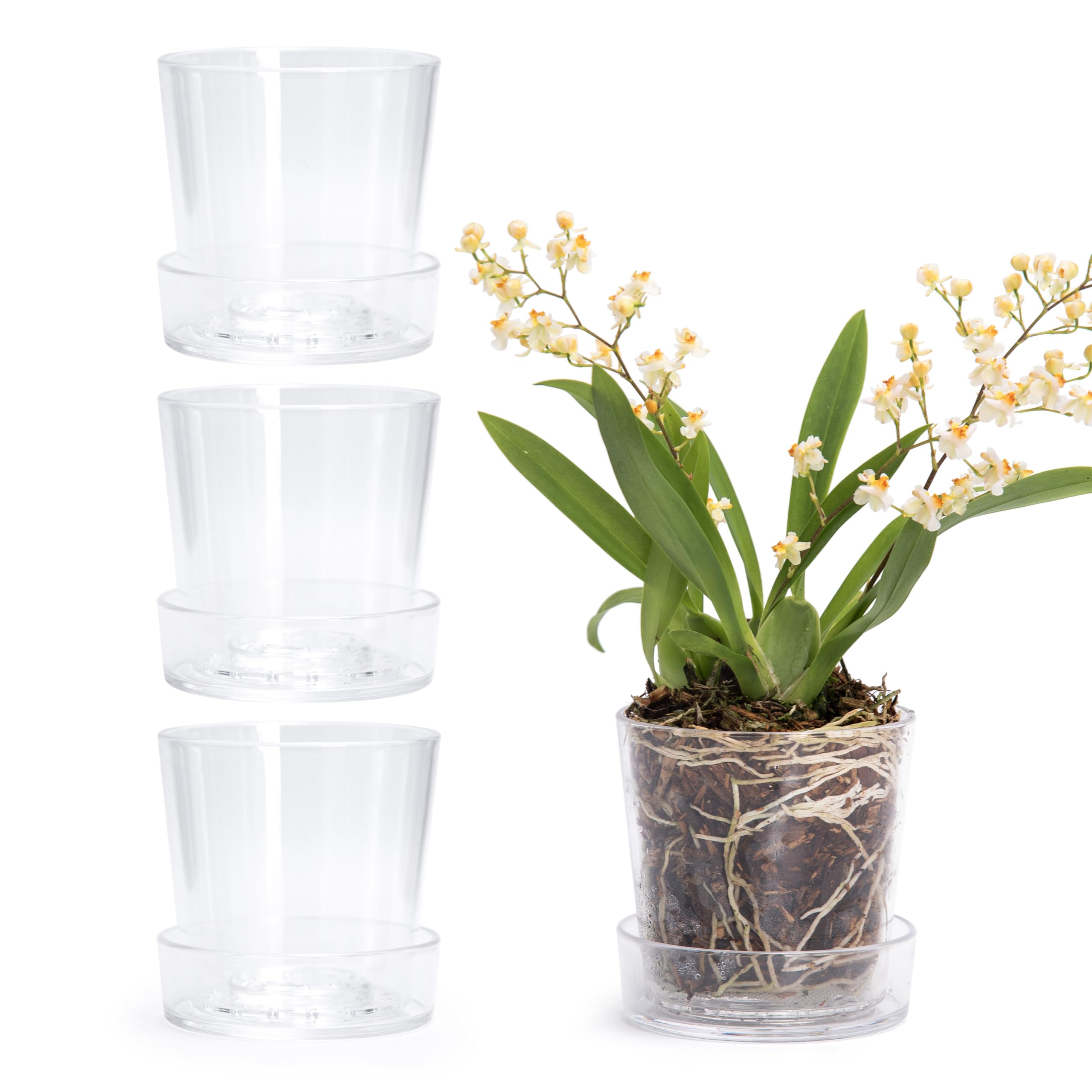
1. Phoenix Vine 3.5 Inch Clear Acrylic Planter Pot Set
Our pick — over 4.5★ from 450+ verified ratings; the strongest balance of quality and price.
The see-through acrylic set that turns root checks into a quick glance, not a dirt-digging mission.
This pick is the crowd favorite—4.8 stars across 400+ owners—and the reason is simple: you can see exactly what’s happening below the surface. The clear acrylic walls mean you spot healthy white roots or early rot signs without pulling the plant out. Buyers report the material as “clear, thick, sturdy plastic” that feels far stronger than a flimsy nursery pot, and the 3.5-inch size is called ideal for rooted cuttings and small orchids.
What wins people over is the drainage setup. Multiple holes in the bottom let water escape freely, and the deeper saucer catches the runoff so you can bottom-water and let the plant soak upward. That combo—visibility plus controlled watering—is the fastest way to avoid root rot, which is what kills most indoor orchids. The acrylic is also lighter than glass or ceramic, so it’s safe on shelves and windowsills.
One trade-off: at just 3.5 inches, this is a smaller pot meant for mini orchids or young plants, not a big mature phalaenopsis. The quality reputation is strong—it’s the top aspect buyers praise by a wide margin, with appearance and sturdiness close behind—so if your plant is in that size range, this is the one to grab.
Why it wins over owners
- crisp walls make root and soil checks easy
- Thick, break-resistant acrylic that feels durable
- Deep saucer supports bottom watering
Who should hold off
- Small 3.5-inch size suits mini orchids only
- Not the right scale for a large, mature plant
Reach for this if: you’re a new orchid grower or you baby small plants and want to watch roots grow without guessing.
Look elsewhere if: you have a big phalaenopsis that needs 6 inches or more of room.
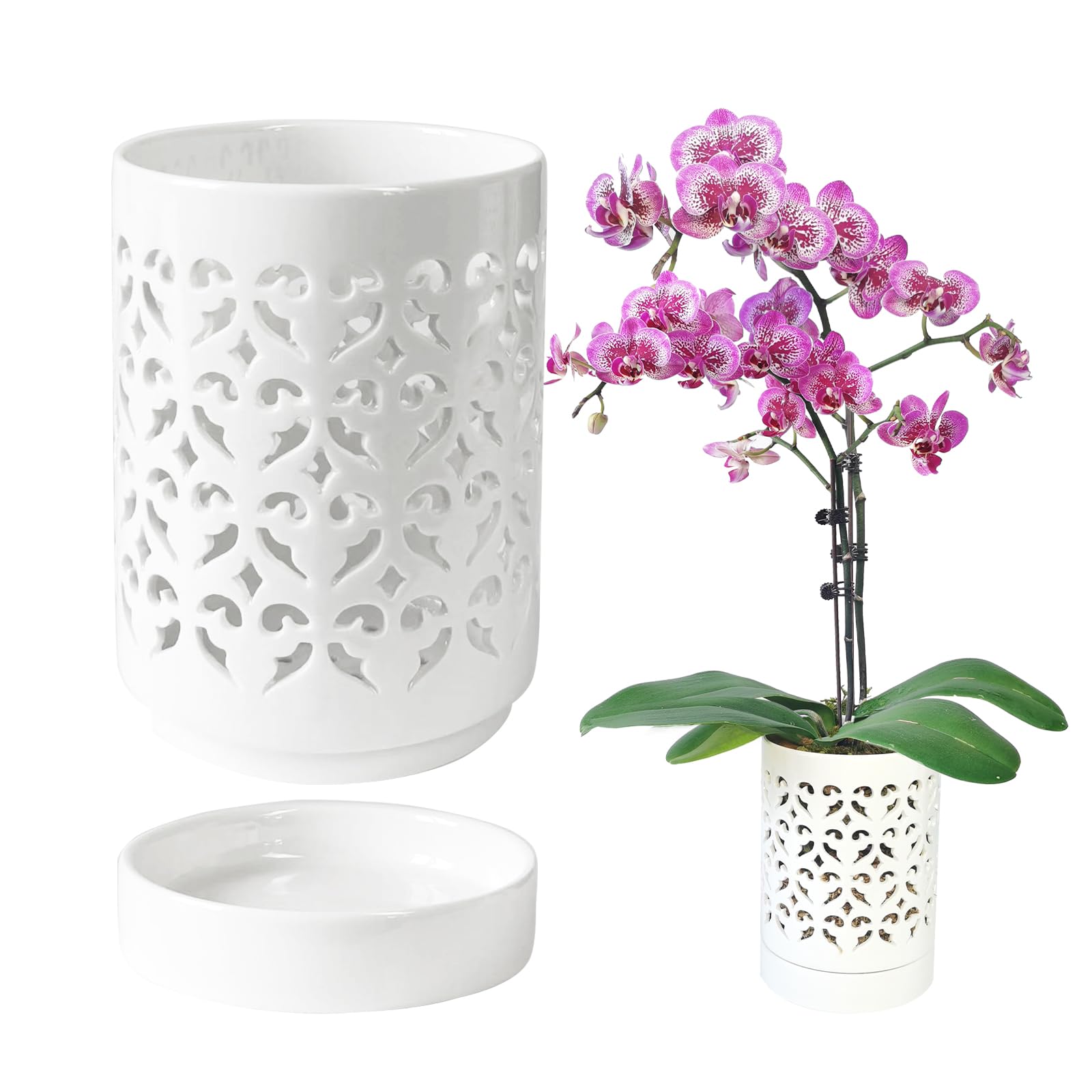
2. pavtner 4 Inch Ceramic Orchid Pot
A hand-glazed ceramic stunner that keeps mini orchids happy and your shelf looking expensive.
If your orchid lives somewhere guests actually see it, this is the pot to beat. The glossy hand-glazed finish comes in rich colors—buyers specifically rave about the vibrant deep teal and a “nice bold color” orange—and it’s fired at high temperatures so the ceramic is crack-resistant. At 4.13 inches across the top and 5.92 inches tall, it’s sized perfectly for miniature orchids with a bit of room to grow.
The side is covered with holes that pull air across the roots, and there’s a drainage hole in the bottom. The attached saucer catches the drips and keeps your table clean. Buyers call it “a wonderful alternative to plastic,” and the appearance is clearly the star—it’s the most-praised aspect, with quality a strong second. One owner summed up the watering reality: water does come out the side holes, but “what did people expect? It’s a pot full of openings all around.”
The real catch is that side runoff. The saucer doesn’t catch water that leaks from the side holes, so you’ll want to water it in the sink or over a towel and let it drain fully before putting it back on display. Owners find this easy—just a small habit shift. If you love a pretty pot and don’t mind a little care, this one delivers the looks without sacrificing root health.
What stands out: the hand-glazed finish turns an orchid pot into décor, and the side holes keep roots aired out.
The habit to adopt: water in the sink because the saucer only catches bottom drips, not side runoff.
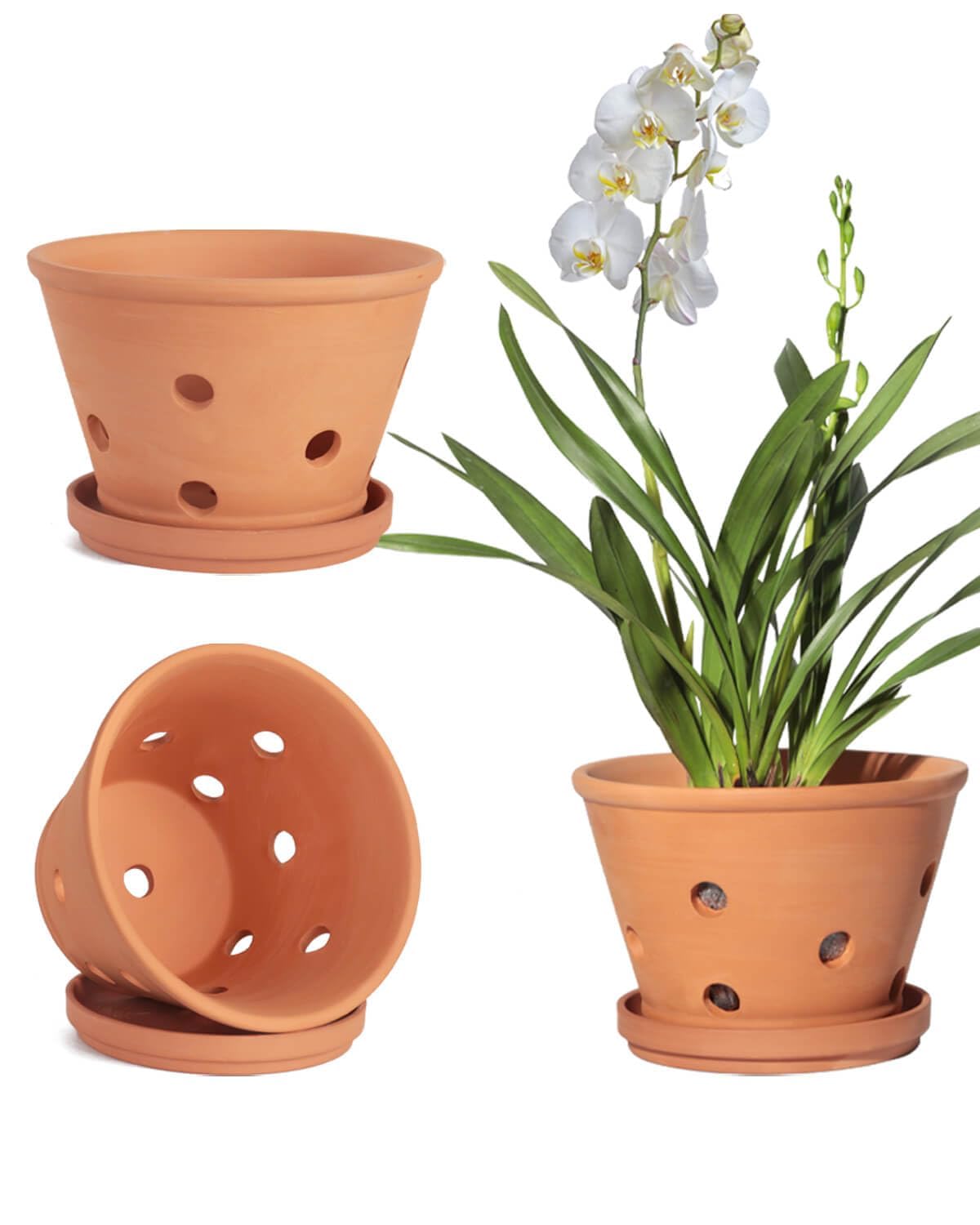
3. vensovo 6 Inch Terracotta Orchid Pots 3-Pack
Three breathable clay pots that let roots breathe like they’re back in the jungle.
These are the pots for growers who want the classic terracotta look and the moisture-wicking magic that comes with it. Baked at 1796°F, each pot has a 6-inch outer diameter and 4-inch bottom diameter, with side holes all around plus a drainage hole at the base. Unglazed clay actually pulls moisture through its walls, so the root zone dries out faster—a lifesaver if you tend to overwater. Owners mention their orchids “love their new home” after the switch from plastic.
Compared to the plastic JGB pack below, these terracotta pots are about airflow first; the plastic pots win on seeing roots. But they hold their own on value: buyers call the three-pack “a good value and price point,” and the packaging earned repeated praise for arriving intact—everyone’s fear with clay. The quality is the top-mentioned aspect, with “suitable for orchids” close behind, which tells you this isn’t just a generic flower pot.
You’ll water more often with these terracotta pots because they dry out faster than plastic or ceramic—a classic clay trade-off. As with any clay, an occasional saucer can arrive cracked in transit. If you’re repotting a few medium orchids and want even moisture control, this three-pack gives you the best value per pot.
The things owners praise
- Breathable clay prevents waterlogged roots
- Three pots with saucers for one sensible price
- Secure packaging—a real relief with clay
What to plan for
- Dries out faster, so watering happens more often
- An occasional saucer can arrive chipped
Pick these if: you overwater your orchids and want a material that forgives you by drying out quicker.
Think twice if: you travel often and need a pot that holds moisture longer.
4. JGB 9 Pack 7 Inch Clear Orchid Pots

Nine clear slotted pots that make repotting your whole orchid shelf a one-afternoon job.
For anyone who’s amassed more orchids than they planned, this 9-pack is the efficient move. Each 7-inch pot is made of thick PP plastic that customers note is “sturdy and easy to use,” with side slits that pull in air and a bottom drainage hole that lets water flow into the saucer. The clear design means you can check root moisture at a glance—a feature the reviews call easier for controlling how much you water.
Owners love that these slot right inside any decorative outer pot: “they can fit right inside any fancy pot you choose.” That’s the hidden strength—you get the function of a clear slotted pot and the look of a pretty cachepot by double-potting. The side holes also make it easy to soak-water by submerging the whole pot, which buyers do regularly for a thorough root drink.
The honest notes: the holes are sized so smaller growing medium can slip through, so some owners add a coffee filter or paper liner to slow things down. And quality is praised most, but a small number report plastic cracking under pressure—so handle them gently when watering. For the price per pot, this is the most economical way to outfit a whole collection.
Why it earns a spot: nine pots for the cost of one or two ceramic ones, with clear walls and side slots doing the real orchid work.
The fit note: fine bark holds fine, but loose medium may escape the side slots—a liner helps.
5. Orceler 6 Inch Terracotta Orchid Pots 3-Pack

Solid, heavy terracotta that gives mature orchids a sturdy home that won’t tip.
This trio is for growers who want a pot with real presence. Fired at a hotter 1922°F, these clay pots measure 4.7 inches tall and 6 inches wide, and buyers describe them as having “good weight and thickness”—heavy enough that your orchid won’t topple over when you bump the shelf. The side holes are substantial, which owners say provides real air movement to the roots, and each pot comes with a saucer that’s 0.98 inches deep and 4.6 inches across.
Owners consistently describe these as the right size for mature phalaenopsis and a direct upgrade from the plastic nursery pots supermarket orchids arrive in. The reviews use words like “solid,” “heavy,” and “durable,” and the quality is the most-praised aspect by far. One owner even noted these match local nursery quality for a lower price, with packaging that felt “pretty close to bulletproof.” The drainage holes do their job and let you water on a weekly schedule without worrying about rot.
The one thing to watch: the side holes are on the larger side, so you’ll want a chunkier orchid bark mix so the medium doesn’t fall out. And if you prefer a clear pot to watch roots, this won’t offer that—it’s the trade-off for the classic clay look. For a reliable, handsome, no-nonsense terracotta pot, this is the one.
What seals the deal
- Heavy, thick walls that resist tipping over
- Substantial side holes for serious airflow
- Matches pricier nursery quality
Before you buy
- Large holes need a chunky bark mix
- No root visibility through clay walls
Choose this if: you want a handsome, sturdy terracotta pot that looks great and won’t tip.
Pass if: you rely on watching your roots to decide when to water.
6. JNYONG 60 Pack Clear Nursery Pots
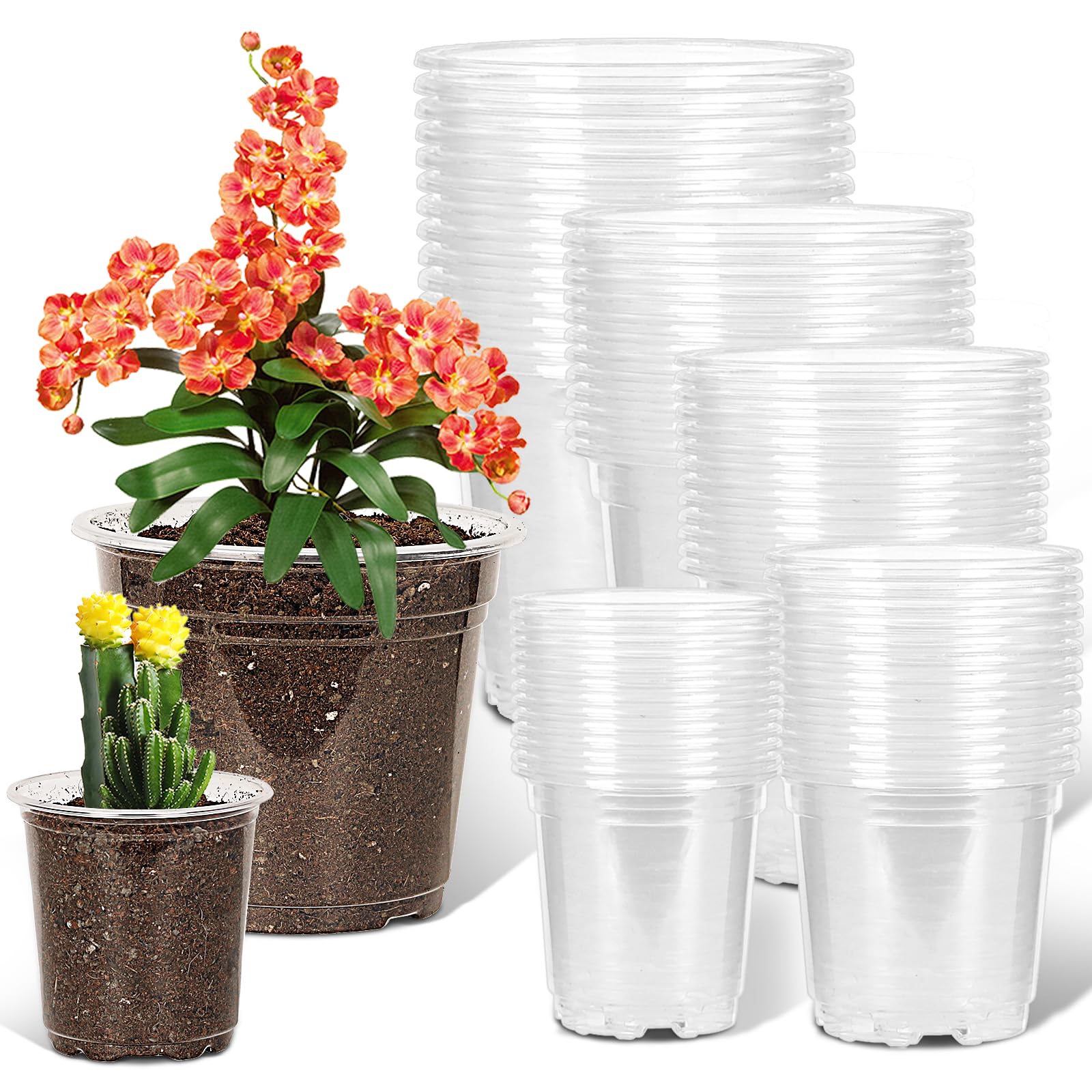
Sixty clear pots in five sizes, so every plant in your collection finally gets the right fit.
This is the ultimate starter stash: 12 pots each in 3.5, 4, 5, 6, and 7-inch sizes, all clear PP plastic with drainage holes in the bottom. For someone who propagates, seeds, or just keeps a mixed shelf of houseplants, having every size on hand means you never repot into a pot that’s too big again. Buyers call the plastic “way sturdier than I expected for the price” and note it’s perfectly transparent for checking roots and soil moisture.
Owners use them to repot orchids, snake plants, and seedlings alike, and they highlight that the clear walls make it easy to see when the soil has dried out. The pots stack neatly for storage, which is essential when you buy sixty at once.
The honest catch: because they’re nursery pots, there are no side slits—just bottom drainage—so they’re not the most aerated option for orchids in particular, and some reviewers point out pots sticking together when stacked, occasionally cracking while separating. If you’re specifically growing a large orchid collection, the JGB slotted pots above are more purpose-built; this set is the practical, all-around workhorse for a mixed plant family.
The big win: a five-size variety pack that ends the “wrong size pot” problem for pennies each.
Keep in mind: bottom-only drainage and occasional stack-sticking are the trade-offs at this scale.
7. BUYMAX Ceramic Orchid Pots 2-Pack

A two-pot ceramic set with leaf-shaped cutouts that look as good as they aerate.
This pair is the smart-money play for looks and function: you get a 5-inch and a 6-inch ceramic pot with matching saucers—what the brand calls “2 orchid pots for the price of one 6 inch pot.” The design is the talking point: leaf-shaped ventilation holes ring the side, pulling air to the roots while draining excess water from the bottom. Owners say the pots are “well-made and pretty” and that the color options are pleasing enough to keep on display.
Compared to the single W&W pot farther down, this duo gives you two functioning pots instead of one statement piece, making it the more practical buy if you’re repotting a couple of plants at once. Shoppers say their orchids thrive when potted in bark or sphagnum moss, and the detachable saucer is a plus because it lets water drain away after watering. Quality is the most-praised aspect, with orchid suitability and size close behind.
The durability scores are genuinely mixed—some arrive flawless, others with a chipped edge or saucer. It’s shipping risk more than design flaws, but it’s worth checking the box on arrival. If you want a beautiful, functional ceramic pot without paying boutique prices, this set is the balance you’re after.
Why it earns its spot
- Two sizes cover more of your collection
- Leaf-shaped holes add style and airflow
- Detachable saucers make drainage easy
The shipping gamble
- Ceramic can arrive with a chipped edge
- Check each pot carefully on arrival
Grab this if: you want an attractive ceramic pair without paying for a single designer pot.
Be ready for: the slim chance of a chipped piece from transit.
8. HERDUK 6 Inch Clay Orchid Pot

A heavy-duty terracotta pot that serious orchid keepers trust for their whole collection.
This single 6-inch clay pot is built for growers who take their orchids seriously. It weighs in at 2.5 pounds, which tells you the walls are thick and the craft is real—owners call it “heavy-duty, great quality.” The side holes and bottom drainage work together to prevent waterlogging, and the unglazed clay naturally wicks moisture away from the roots. One owner moved all 20+ orchids to these pots with a leca and lava stone mix and reports every one thriving.
The classic terracotta look is a big part of the appeal, and buyers specifically praise the “traditional looks” and how well the pot fits into a succulent or cactus collection. The quality is the most-praised aspect, and owners note the packaging was “phenomenal”—one kept the box for fragile storage afterward. The saucer is well-made too and matches the pot’s proportions.
The trade-off is the same one that comes with any unglazed clay: it’s porous, so it dries out faster and demands a more consistent watering schedule. And because you’re buying a single pot, owners who need several will pay per unit. If you’re repotting one prized orchid and want the best traditional material you can find, this is that pot.
The defining trait: real, heavy terracotta at 2.5 pounds that feels like it will outlast your plant.
The commitment: porous clay equals more frequent watering, and you get one pot per order.
9. W&W Glazed Ceramic Orchid Pot, Blue 9.7 Inch
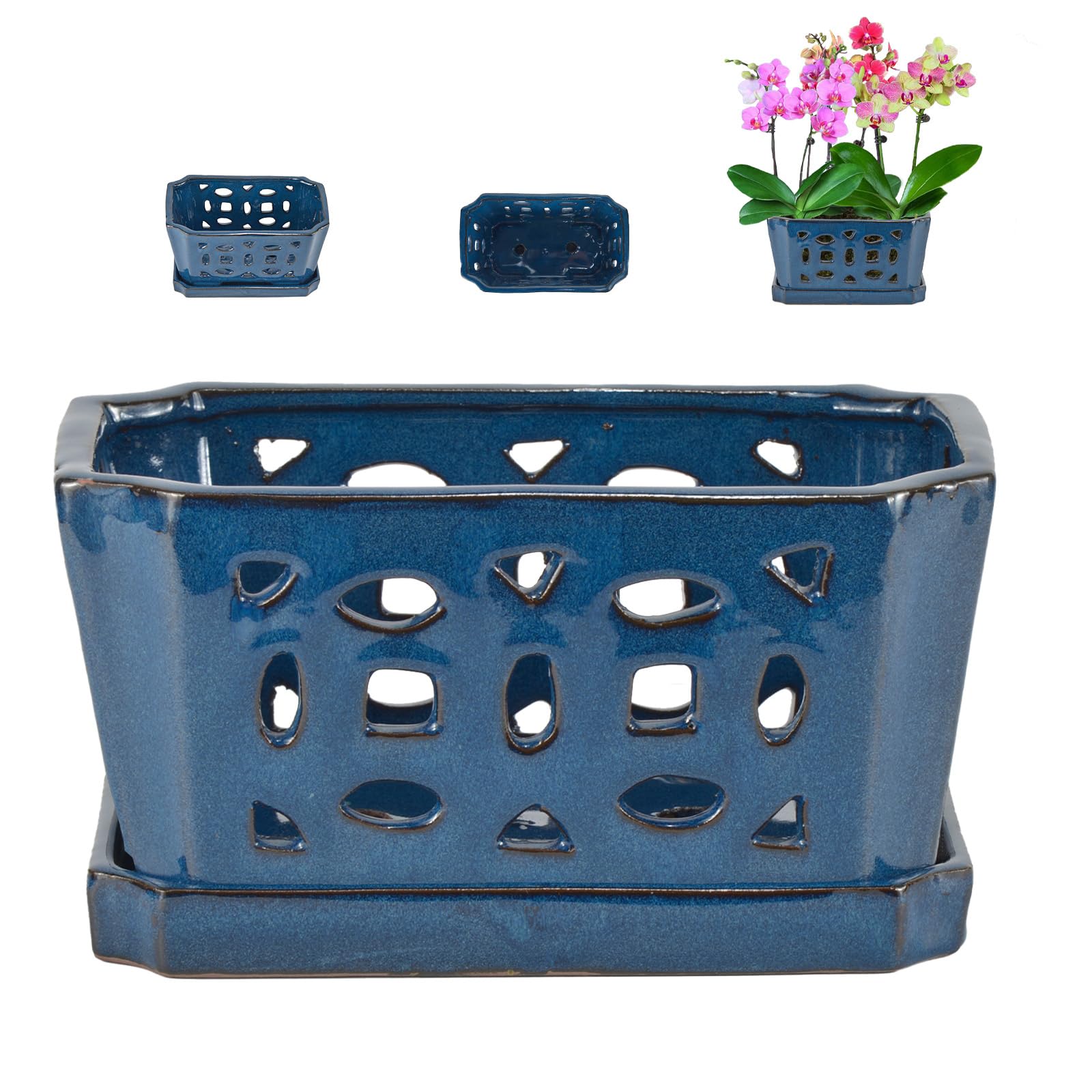
A glossy blue showpiece that holds two or three orchids and steals the room.
This is the pot you buy when your orchid deserves to be the centerpiece. At 9.7 inches wide, it’s the biggest container in this lineup, with a glossy dark blue glaze that buyers can’t stop complimenting—the appearance is the most-praised aspect by a landslide. It’s built to hold two or three smaller orchids together, and owners say it works well even for rehabbing struggling plants. The drainage holes keep the large volume from turning into a swamp.
Compared to the BUYMAX ceramic pair above, this is the opposite philosophy: one big, gorgeous statement piece instead of two practical pots. Buyers report the quality as “not thin and cheap” and say their orchids are “blooming again” after the move. The size is great for grouping miniatures, and the glazed finish means it won’t wick moisture or stain the way unglazed clay can.
The honest notes: some owners wish it were even bigger, and the large drainage holes can let loose medium escape unless you line them with sphagnum moss. Durability reviews are the weakest point, with occasional reports of broken pieces in transit. If you want one beautiful pot that anchors a display, it’s worth the premium—just inspect it carefully on arrival.
The wow factor
- Bold glossy blue finish that draws compliments
- Huge 9.7-inch size fits multiple orchids
- Sturdy ceramic that holds up over time
What to watch
- Large holes can spill loose bark medium
- Transit breakage happens occasionally
Buy this if: you want a single gorgeous pot that turns your orchid into a room centerpiece.
skip it if: you’re repotting several plants and need the best value per pot.
Understanding the Specs
Drainage: Side Holes vs. Bottom Only
Orchid roots hate sitting in water. A pot with only a bottom hole drains downward, but a pot with side holes or slits also lets water escape sideways and pulls fresh air across the roots. That airflow prevents root rot, the top orchid killer. More side openings help overwaterers by drying faster, but underwaterers lose moisture quicker.
Material: Clear Plastic, Ceramic, Terracotta
Clear plastic reveals root color and soil moisture, essential for beginners. Ceramic is heavier and prettier, holding moisture longer so you water less. Unglazed terracotta wicks moisture through walls, drying fastest and forgiving overwatering but needing more frequent watering. Choose based on how often you actually remember to water.
Saucer Depth and Fit
A deeper saucer enables bottom watering, letting the plant soak water from below. A saucer that’s too shallow will overflow fast, especially with a large pot. Match the saucer to your pot diameter so it actually catches what drains out.
Pot Diameter vs. Root Ball
Orchids prefer snug pots. A container that’s too large holds too much wet medium around the roots, which can lead to rot. Most growers step up only about one inch in diameter when repotting. The right pot is one where the root ball fills most of the space, leaving just a little room to grow.
FAQ
Why do orchid pots need holes in the sides?
What is the best material for a beginner growing an orchid?
Does a clear pot really help prevent root rot?
Does terracotta dry out faster than ceramic?
What size pot does a phalaenopsis orchid need?
Can one large orchid pot hold multiple plants?
Why does water leak from the side holes of my orchid pot?
How often should I water an orchid in a breathable terracotta pot?
Is it better to repot an orchid into a clear pot or keep the decorative outer pot?
Final Thoughts: The Verdict
For the majority of shoppers, the container for orchids winner is the Phoenix Vine Clear Acrylic Set because it combines the root visibility that helps beginners the most with the sturdy build owners rave about. If you want classic breathability and own several plants, the vensovo Terracotta 3-Pack is the value choice that forgives overwatering. And if your orchid is the centerpiece of the room, the W&W Glazed Blue Pot turns it into a showpiece. Match the pot to your watering habits and your plant’s size, and your orchid will thank you with new growth.
How We Picked
We do not accept paid placement. Every pick is matched to a real buyer and a real use-case; we do not hands-on test units.
Sources & Methodology
Specifications: manufacturer listings and product documentation. Review insights: verified customer reviews, as of August 2026. Pricing: not shown on this page (it changes often); check the current price via the retailer link.
As an Amazon Associate, FitlyFast earns from qualifying purchases. This does not affect which products we feature.