
Our readers keep the lights on and the weekend projects moving. As an Amazon Associate, I earn from qualifying purchases.
Finding a living centerpiece that thrives inside your home starts with understanding that an indoor bonsai tree is not a disposable houseplant but a long-term companion that demands specific light, water, and pruning rhythms. The wrong choice leads to yellowing leaves and a stressed plant that never develops that mature trunk character you actually wanted.
I’m Rikta — the co-founder and writer behind FitlyFast. I’ve spent years analyzing live plant sourcing, soil composition, and beginner failure patterns to separate species that genuinely adapt to indoor life from those that wilt before their first repotting.
This guide breaks down real grower feedback, age-specific maturity, and pot quality so you can pick the right indoor bonsai tree for your light conditions and skill level without guessing based on marketing photos.
How To Choose The Best Indoor Bonsai Tree
Indoor bonsai selection starts with matching a species’ light and humidity tolerance to your home’s actual conditions. A juniper placed on a dark shelf will decline fast, while a ficus or jade succulent adapts to moderate indirect light. Beginners often ignore this and end up with a tree that looks great for two weeks then sheds every leaf.
Species Adaptability for Indoor Living
The most reliable indoor performers are Ficus microcarpa (Golden Gate Ficus), Portulacaria afra (Dwarf Jade), and Schefflera arboricola (Hawaiian Umbrella). These species tolerate lower light, central heating dry air, and inconsistent watering schedules. Junipers and pines need outdoor seasonal chilling periods and generally fail long-term indoors unless you have a cold window and a grow light setup.
Age, Trunk Thickness, and Shaping Potential
A three-year-old bonsai has a thin, flexible trunk that requires years of wiring and pruning to develop a mature silhouette. A seven-year-old tree arrives with a woody, tapered trunk and established branching — closer to the traditional bonsai aesthetic. Starter kits with seeds produce a sapling, not a bonsai, and demand five to ten years of work before you see a recognizable miniature tree.
Pot Quality and Drainage
Ceramic bonsai pots with drainage holes and humidity trays prevent root rot, which is the number one killer of indoor bonsai. Plastic pots retain too much moisture for species like jade and ficus. Check that the pot has feet or a tray that lifts the base off surfaces so excess water can evaporate.
Quick Comparison
On smaller screens, swipe sideways to see the full table.
| Model | Category | Best For | Key Spec | Amazon |
|---|---|---|---|---|
| Brussel’s Golden Gate Ficus | Pre-grown Specimen | Long-term indoor enthusiasts | 7 years old, 8-16 in tall | Amazon |
| Brussel’s Dwarf Jade | Succulent | Absolute beginners | 3 years old, 5-8 in tall | Amazon |
| Brussel’s Hawaiian Umbrella | Tropical | Office desk aesthetics | 3 years old, 5-8 in tall | Amazon |
| Costa Farms Miniature | Assorted Variety | Quick decorative table centerpiece | 12-15 in tall, plastic pot | Amazon |
| LUOJIBIE Starter Kit | Seed Kit | Gifting and family projects | Wood box, 4 seed varieties | Amazon |
| AVERGO Starter Kit | Seed Kit | Budget experimentation | 5 seed varieties, coco coir | Amazon |
| Dwarf Juniper (Generic) | Outdoor-Needed | Decorative gift display | 6 years old, ceramic fisherman | Amazon |
In‑Depth Reviews
1. Brussel’s Bonsai Golden Gate Ficus
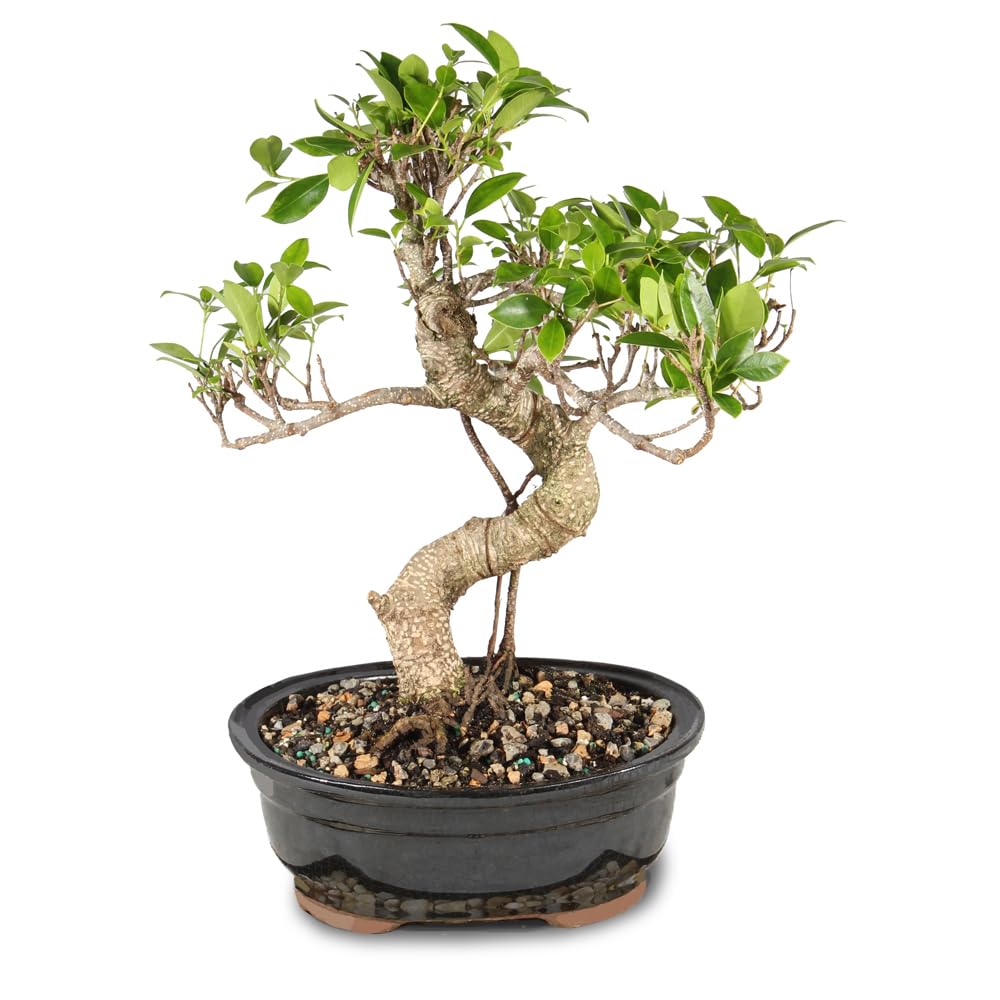
At seven years old, this Golden Gate Ficus arrives with a spiraling woody trunk and dense dark foliage that immediately reads as a mature bonsai, not a young cutting. The ficus microcarpa species is famously forgiving of indoor light fluctuations and low humidity, making it the best long-term bet for a home or office that gets bright indirect light for part of the day. Multiple verified buyers report the tree bouncing back after shipping stress and leaf drop, which confirms its resilience.
The ceramic pot includes drainage and fits a standard humidity tray, which is essential for maintaining root health during winter months when indoor air dries out. At roughly one foot tall, it fits desks and shelves without overwhelming the space. Buyers note that packaging sometimes lacks orientation markings, leading to soil spillage, but the tree itself consistently arrives healthy and well-shaped.
If you want a pre-grown specimen that can be pruned and wired into traditional forms without waiting five years for trunk thickness, this is the most reliable pick. It rewards consistent weekly watering and occasional misting with vigorous new growth and a calming presence that matures beautifully over years.
Why it’s great
- Mature seven-year trunk base allows immediate shaping
- Ficus microcarpa is the most indoor-adaptable species
- Ceramic pot with proper drainage included
Good to know
- Packaging may arrive upside-down; open carefully
- Needs bright indirect light — not for dark corners
2. Brussel’s Bonsai Dwarf Jade
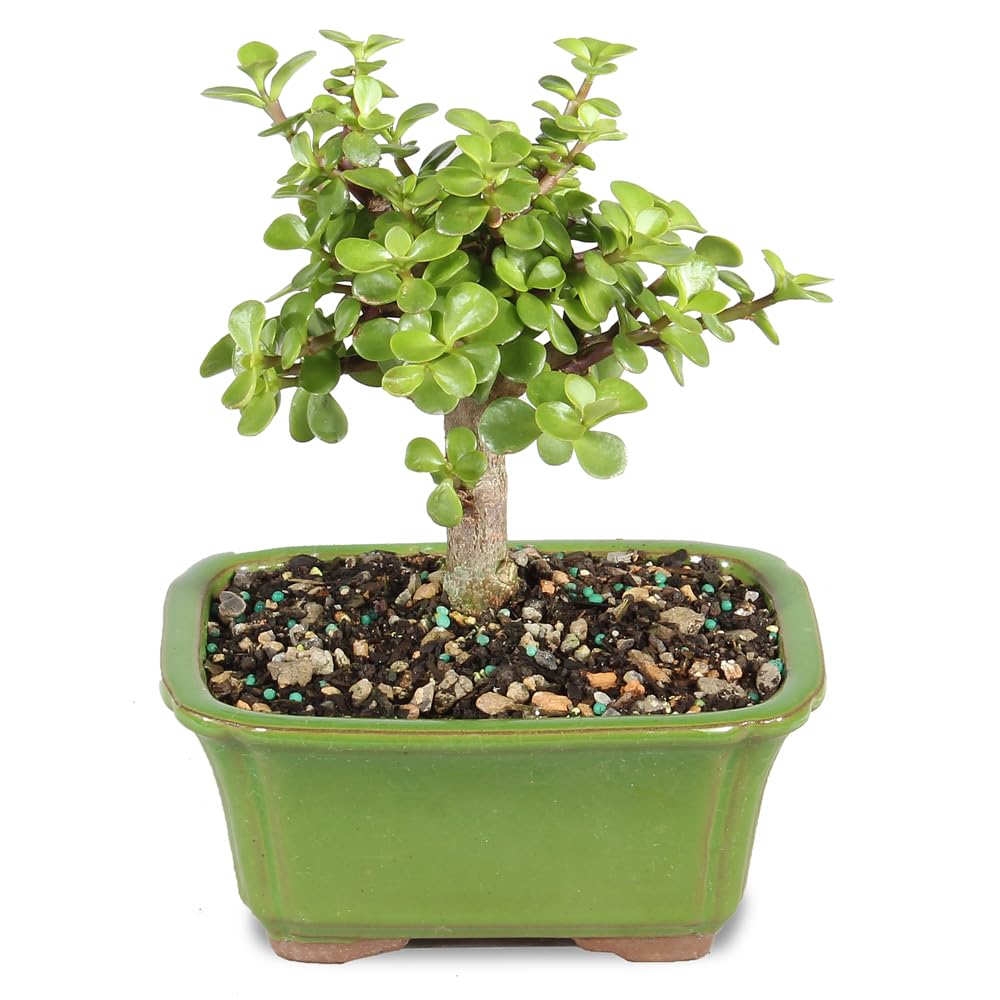
The Dwarf Jade (Portulacaria afra) is technically a succulent, which means it stores water in its thick leaves and trunk making it the most forgiving species for anyone worried about overwatering or forgetting a watering cycle. This three-year-old tree stands five to eight inches tall with a visibly woody trunk and small glossy leaves that give it a convincing miniature tree appearance despite its young age. Buyers consistently praise the packaging quality — the plastic-wrapped pot and foam peanuts prevent branch breakage during shipping.
One concern that appears in reviews is the soil composition: some units arrive with heavily peat-based soil that stays wet too long and can cause root stress. If the soil feels soggy upon arrival, repotting into a grittier succulent mix with perlite or lava rock is a smart move. The ceramic pot is functional but over time you may want a deeper container to support root development.
For absolute beginners who want a live bonsai they can keep alive without daily fuss, this jade is the lowest-risk option. It tolerates lower light than ficus and communicates thirst clearly — leaves slightly wrinkle when dry — so you learn your plant’s rhythm quickly.
Why it’s great
- Succulent physiology forgives erratic watering
- Visible woody trunk at three years old
- Secure packaging with minimal leaf loss
Good to know
- Some arrive with overly moisture-retentive soil
- Slow grower; trunk thickening takes patience
3. Brussel’s Bonsai Hawaiian Umbrella
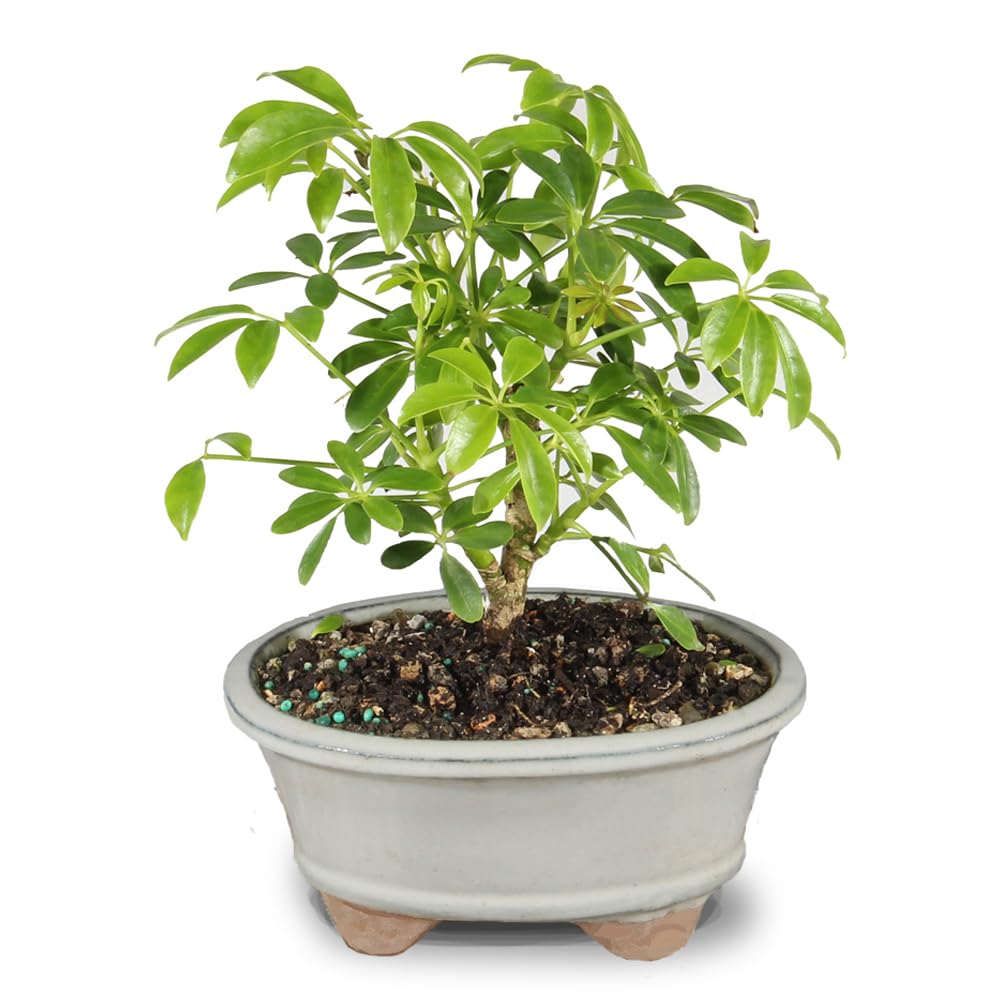
The Hawaiian Umbrella bonsai (Schefflera arboricola) produces distinctive umbrella-shaped leaf clusters that create a dense, full canopy even when the tree is only three years old and five to eight inches tall. This species thrives in the low humidity and stable temperatures of office environments, and buyers note that the tree arrives with new green shoots and healthy roots despite shipping stress. The rock pot adds a natural, grounded aesthetic that looks intentional on a desk.
A recurring pattern in feedback is that the included soil depletes nutrients after about two months, causing leaf yellowing and wilting if you do not apply liquid fertilizer or repot. The tree is not difficult, but it does need a consistent feeding schedule to maintain its vibrant color. Some buyers received units with blackened, dry leaves, which suggests that shipping conditions — specifically prolonged cold or drying — can damage the canopy if nighttime temperatures dip too low.
For anyone who wants a lush-looking tree that fills visual space quickly and can handle the artificial light of a cubicle, this is a strong choice. Just budget for a liquid bonsai fertilizer from day one and be prepared to transition to a richer soil mix after a few months.
Why it’s great
- Dense leaf canopy looks full immediately
- Adapts well to standard office light conditions
- Attractive natural rock pot design
Good to know
- Soil depletes nutrients fast; needs regular fertilizer
- Cold-sensitive during shipping below 50°F
4. Costa Farms Bonsai Miniature Tree

Costa Farms ships a live bonsai that stands twelve to fifteen inches tall in a decorative plastic pot, making it the tallest option in this lineup for anyone who wants immediate desk presence without the seven-year price tag. The variety is assorted — you might get a ficus, a money tree, or another tropical species — so you cannot guarantee the exact species before purchase. Verified buyers who received a healthy tree report attractive twisted stems and fast growth, while others received dry, stressed plants that shed leaves within days.
The plastic pot retains moisture longer than ceramic, which can be a double-edged sword. In a dry office it helps maintain hydration, but in a humid home it increases root rot risk if you overwater. The tree needs immediate watering upon delivery — several buyers lost their plant within the first week because they delayed the first drink for one or two days. The decorative pot is lightweight and less stable than a ceramic bonsai container, so accidental tipping is possible on busy desks.
This option works best for casual plant owners who want an affordable living accent piece and are comfortable with some species uncertainty. If you care about specific species or long-term training, the Costa Farms tree is more of a decorative houseplant than a traditional bonsai project.
Why it’s great
- Taller stature for immediate visual impact
- Lightweight plastic pot easy to move
- Affordable entry point for casual buyers
Good to know
- Assorted variety; species not guaranteed
- Plastic pot holds moisture; careful watering needed
5. LUOJIBIE Bonsai Tree Starter Kit

This all-in-one starter kit packs four seed varieties, wooden planters, soil discs, and basic tools into a giftable wood box that has become a popular white elephant and family project item. Buyers consistently report three of four seed types sprouting successfully, with the red fire variety being the most temperamental. The kit includes a clear instruction sheet that helps first-time growers understand the germination and early seedling care process without prior experience.
Keep in mind that this kit produces seedlings, not bonsai trees. You are starting from essentially zero — these are young sprouts that will require three to five years of training, pruning, and root management before they resemble a miniature tree. Several buyers mention that the project sparked a serious bonsai hobby, leading them to invest in grow lights, heat mats, and proper tools. The wooden box is attractive but not weather-resistant, so store it away from moisture when not in use.
For families, gift-givers, or anyone who enjoys the process of growing from the very beginning, this kit delivers a satisfying experience with a reasonable success rate. Just set expectations: you are buying a growing journey, not a finished tree.
Why it’s great
- Multiple seed varieties increase success rate
- Beautiful wood box presentation for gifting
- Clear instructions simplify the first steps
Good to know
- Produces seedlings, not a trained bonsai
- Not all seed varieties germinate reliably
6. AVERGO Bonsai Tree Kit Classic
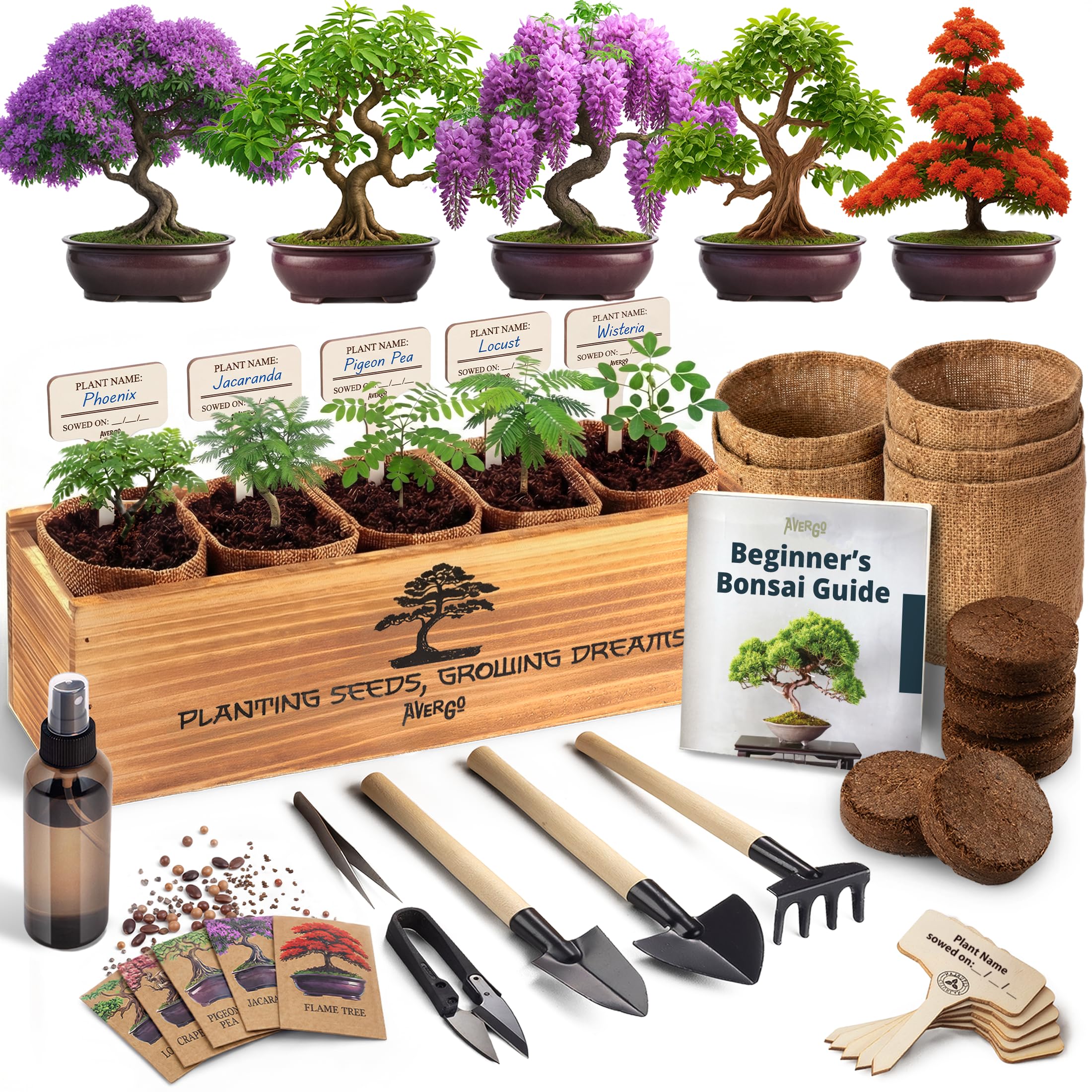
AVERGO’s kit offers five seed types including Wisteria, Flame Tree, and Blue Jacaranda, with extra seed packets included to compensate for lower germination rates. The coconut coir soil base provides better aeration than standard potting mix, which helps seedlings avoid damping-off disease during the early weeks. Multiple buyers confirm that this kit works well as a family activity — children enjoy planting the seeds and tracking daily growth, and the clear instructions make it accessible to adults with no gardening background.
The main limitation reported across reviews is that Wisteria seeds often fail to sprout or develop mold, though extra seeds give you a second attempt. The wooden planter and basic tools are functional but not heirloom quality — expect them to serve well for one growing cycle before you upgrade to proper bonsai containers. Even with good germination, the trees will need several years of care before they take on a bonsai shape that you can prune and style.
This is the right choice for families, classrooms, or anyone who wants to experience the full lifecycle from seed to sapling while learning about different tree species. The price is entry-level, but the time investment you must commit after germination is substantial.
Why it’s great
- Extra seed packets compensate for poor germination
- Coconut coir prevents seedling root rot
- Engaging family activity with visible daily growth
Good to know
- Wisteria seeds frequently mold or fail
- Long wait before you can prune or shape
7. Live Dwarf Juniper with Fisherman

This six-year-old Dwarf Juniper comes with a cute ceramic fisherman figurine and a glazed ceramic pot that creates an instantly charming display piece. The juniper foliage has that classic needle texture and blue-green tint that people picture when they think of traditional bonsai. Buyers who received a healthy specimen describe it as beautiful and well-packaged, with the tree surviving shipping without broken branches.
The critical truth about junipers is that they are outdoor plants — they require winter chill periods, direct sunlight, and good air movement to survive long-term. Indoor placement will keep the tree alive for a few months, but without seasonal cold exposure the needles will gradually brown and the tree will decline. Even experienced gardeners in the reviews describe this as a high-maintenance plant that does not belong in a beginner’s indoor collection. The artificial moss adds visual appeal but can trap moisture against the soil surface, increasing fungal risk if overwatered.
This tree works beautifully as a short-term decorative gift for someone who has an outdoor patio or balcony where it can live most of the year. If your recipient wants a true indoor-only bonsai, steer toward the ficus or jade options instead.
Why it’s great
- Charming fisherman figurine adds character
- Six-year-old tree has a substantial trunk
- Classic juniper foliage aesthetic
Good to know
- Needs outdoor winter chill to survive long-term
- High-maintenance even for experienced plant owners
FAQ
Can a juniper bonsai live indoors year-round?
How often should I water an indoor ficus bonsai?
Why are my bonsai leaves turning yellow and dropping?
Final Thoughts: The Verdict
For most users, the indoor bonsai tree winner is the Brussel’s Golden Gate Ficus because its mature seven-year trunk and forgiving ficus species give you a real bonsai experience with realistic indoor care demands. If you want a low-maintenance succulent that forgives beginner mistakes, grab the Brussel’s Dwarf Jade. And for a family project that teaches the full seed-to-sapling process, nothing beats the LUOJIBIE Starter Kit.