
Our readers keep the lights on and the weekend projects moving. As an Amazon Associate, I earn from qualifying purchases.
Bedrooms often suffer from one major design challenge: a serious lack of natural light. North-facing windows, deep shelves, and shady corners can feel like dead zones for greenery. But the right foliage doesn’t need a sun-drenched windowsill to flourish. The plants in this guide actively prefer the subdued conditions of a typical bedroom, turning your lowest-light nooks into living, breathing sanctuaries.
I’m Rikta — the co-founder and writer behind FitlyFast. I’ve analyzed thousands of customer reports and horticultural specifications to isolate exactly which houseplants deliver real visual impact and consistent growth without demanding high foot-candles or direct sun.
The challenge is separating the true low-light performers from the common houseplants that merely tolerate shade for a few weeks then decline. This guide reviews seven proven, shoppable options that will genuinely thrive in the dim conditions of your bedroom, curated as the definitive low light bedroom plants buying guide.
How To Choose The Best Low Light Bedroom Plants
Not every plant labeled “low light” can handle a real bedroom corner miles from a window. The selection criteria that matter most are the plant’s native understory genetics, its leaf morphology, and its tolerance for dry indoor air during sleep hours. Beginners often overestimate light levels—a “bright” room to the human eye is still deep shade to a succulent. Focus on proven survivors that thrive on indirect ambient light and can handle a missed watering session without dropping leaves.
Foliage Density & Variegation Ratio
Plants with predominantly dark green leaves have more chlorophyll per cell, which means they capture and convert light more efficiently in dim conditions. Heavily variegated types (white, yellow, or pink patches) contain less chlorophyll and require more light to photosynthesize. For a true low-light bedroom, choose solid-green or lightly variegated specimens. The Maranta and Peace Lily in this guide offer variegation that won’t fade, while the Cast Iron Plant’s deep green leaves make it a top-tier shade performer.
Watering Tolerance & Dormancy Patterns
Low light significantly slows a plant’s water uptake because transpiration rates drop. Overwatering in a dim bedroom is the number one killer of low-light plants. Look for species that evolved to handle dry cycles—Spider Plants and Cast Iron Plants store moisture in their fleshy roots. Peace Lilies will dramatically droop when thirsty, giving you a visual signal before any root damage occurs. Avoid plants that demand consistently moist soil unless your bedroom has high humidity from a bathroom connection or a humidifier.
Humidity & Airflow Considerations
Bedrooms often have lower humidity than living spaces, especially if the door is closed and the heating or air conditioning runs overnight. Plants with thin, delicate leaves like ferns struggle here. The Parlor Palm and Prayer Plant appreciate occasional misting but adapt well to average indoor humidity if placed near other plants. The Cast Iron Plant practically ignores humidity levels entirely, making it the most forgiving choice for a dry bedroom environment.
Pet Safety & Allergen Profile
If your bedroom doubles as a pet’s sleeping area, every plant you introduce must be non-toxic. Many popular houseplants like Pothos and Philodendron are toxic to cats and dogs if ingested. All seven plants in this guide are recognized by the ASPCA as safe for pets, with the Prayer Plant and Parlor Palm being especially popular among pet owners. Additionally, none of these species produce significant airborne pollen or strong floral scents that might disrupt sleep quality.
Quick Comparison
On smaller screens, swipe sideways to see the full table.
| Model | Category | Best For | Key Spec | Amazon |
|---|---|---|---|---|
| Cast Iron Plant | Evergreen | True neglect-proof low light | 6-inch mature pot size | Amazon |
| Red Prayer Plant | Foliage | Night-time leaf movement | Red veining on green leaves | Amazon |
| Peace Lily | Flowering | Air purification + blooms | 4-inch grower pot | Amazon |
| Parlor Palm | Palm | Feathery texture in dark corner | 5-8 inch height at ship | Amazon |
| Spider Plant Variegated | Trailing | Established instant display | Full size in 4-inch pot | Amazon |
| Lemon Lime Maranta | Foliage | Vibrant color without sun | 12-16 inch established height | Amazon |
| Pothos N’joy | Vining | Budget-friendly starter plant | Variegated white-green leaves | Amazon |
In‑Depth Reviews
1. American Plant Exchange Cast Iron Plant
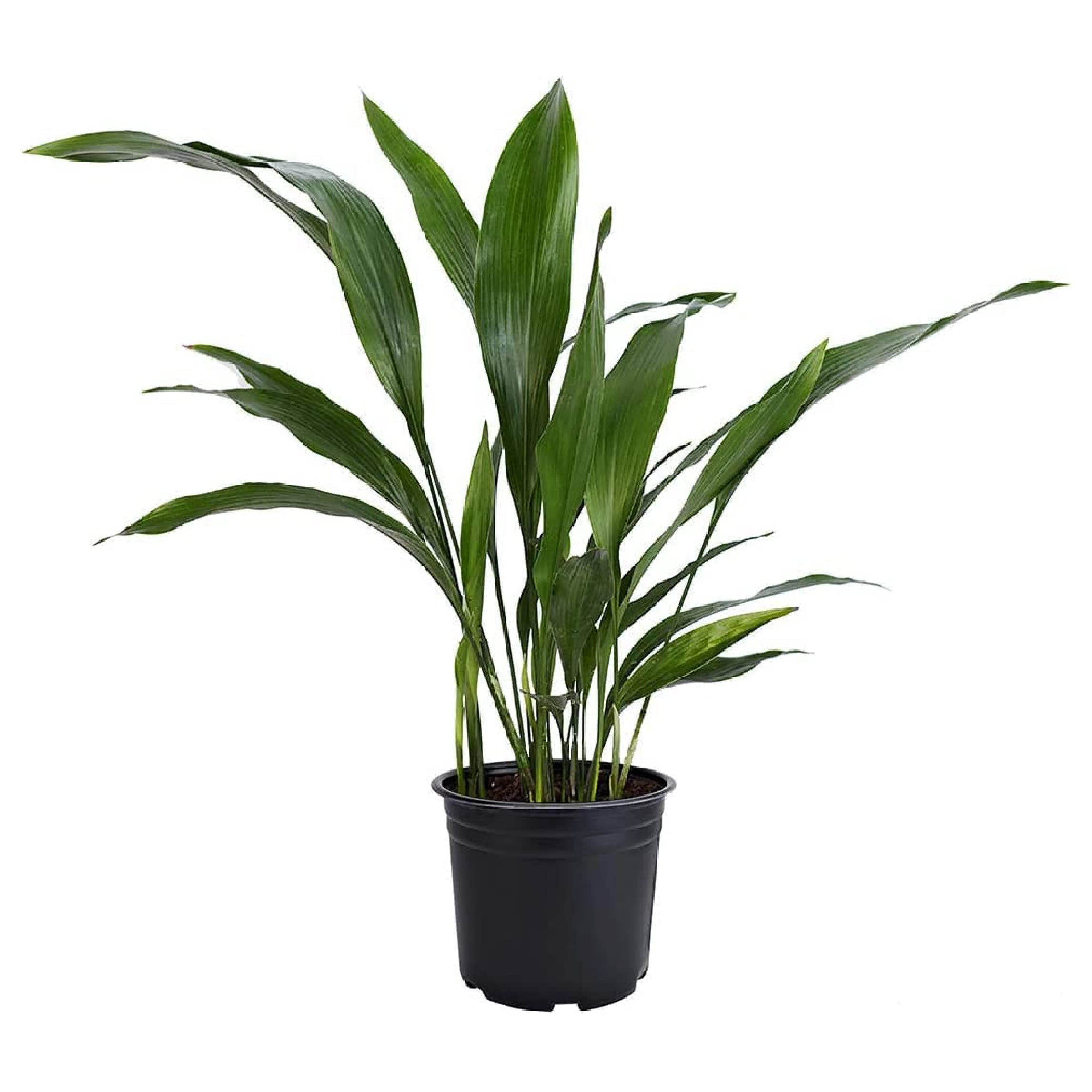
The Cast Iron Plant earns its name from an almost absurd tolerance for neglect, drought, and — most importantly for a bedroom — deep, deep shade. Shipped in a 6-inch nursery pot with broad, deep green evergreen leaves reaching around 16 inches tall, this is the most physically substantial plant on the list. It requires minimal watering; you can let the soil dry out completely between waterings without any leaf browning. For a bedroom corner that receives only ambient light from across the room, this plant will maintain its color and form for years with almost zero intervention.
Customer reports consistently note that this plant thrives in conditions that kill other houseplants. One verified buyer described it as “legit thriving on neglect,” while another who received a slightly damaged pot praised the extremely healthy root system upon repotting. The plant is also recognized as pet safe by the ASPCA, making it a worry-free choice for bedrooms shared with cats or dogs. The only notable negative from a small subset of reviews involved damaged packaging during shipping, which is a risk with any live plant delivery, but the seller’s warranty covers damage within three days.
Compared to the other options here, the Cast Iron Plant offers the highest forgiveness margin. It handles dry air, irregular watering, and darker conditions than any other species in this guide. The trade-off is that it grows slowly and won’t produce flowers or dramatic trailing vines. If your priority is a bulletproof green presence that requires almost nothing from you, this is the definitive choice.
Why it’s great
- Thrives in genuine deep shade where most plants fail
- Extremely drought tolerant — safe for forgetful waterers
- Large 6-inch pot gives immediate visual impact
Good to know
- Growth is very slow compared to other houseplants
- No blooms or variegation — strictly solid green foliage
2. Thorsen’s Greenhouse Red Prayer Plant
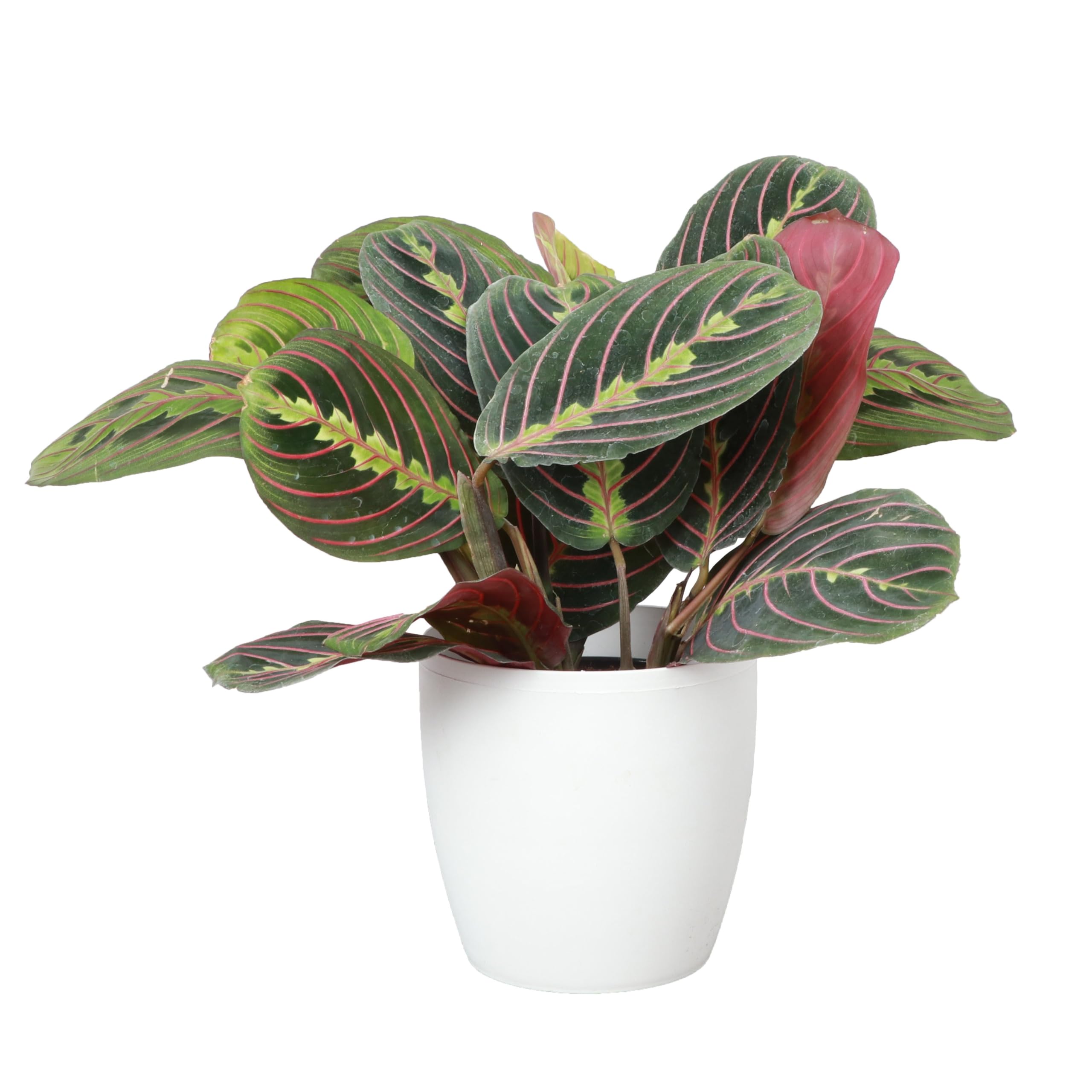
The Red Prayer Plant (Maranta leuconeura) brings a dramatic visual element to low-light bedrooms that most shade-tolerant plants lack. Its deep green leaves are laced with bright red veining, and the undersides of the leaves are a striking burgundy. The most fascinating feature is nyctinasty — the leaves fold upward at night as if in prayer, then flatten out during the day to catch available light. This living rhythm adds an interactive, calming presence to a bedroom, especially visible in the evening when the leaves lift.
This plant arrived in a 4-inch diameter pot and stood approximately 5-8 inches tall at shipping. Customer feedback is overwhelmingly positive, with multiple buyers noting that the packaging was exceptional and the plant arrived in perfect condition with vibrant colors already showing. One reviewer mentioned that within a week of placing the plant 4-5 feet from a bright window, two new leaves unfurled. Prayer Plants are ASPCA-listed as non-toxic, safe for pets, and their growth habit tends sideways rather than upward, making them ideal for hanging pots or elevated shelves where their trailing form can be appreciated.
The Red Prayer Plant does require slightly more attention than the Cast Iron Plant — it prefers moderate humidity and should be watered when the top inch of soil feels dry. It also needs indirect light rather than deep shade; a spot near an east or north-facing window is ideal. If your bedroom has a bit of ambient light and you want a plant that offers rich color and dynamic movement without any direct sun, this is a top-tier option.
Why it’s great
- Stunning red veining and burgundy undersides
- Leaves move throughout the day — interactive and calming
- Grows sideways, perfect for hanging baskets on shelves
Good to know
- Prefers a bit more ambient light than true deep-shade plants
- Appreciates occasional misting for humidity
3. Generic Peace Lily
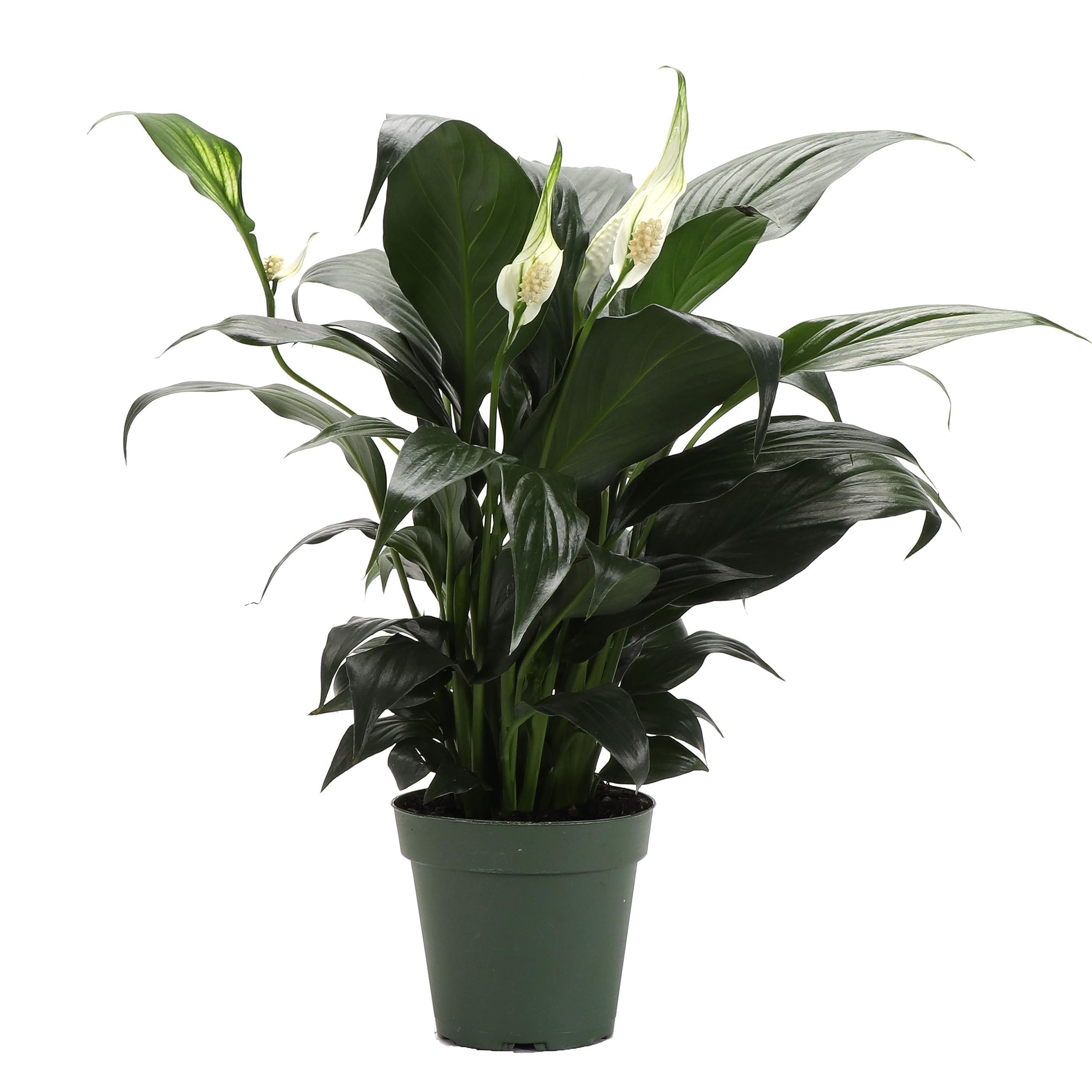
The Peace Lily (Spathiphyllum) is one of the few flowering houseplants that will reliably bloom in low-light conditions. Its elegant white spathes rise above glossy dark green foliage, and the flowers emit a subtle, sweet scent that won’t overwhelm a bedroom. Beyond aesthetics, Peace Lilies are famously air-purifying; NASA studies identified them as effective at filtering benzene, formaldehyde, and trichloroethylene from indoor air. For a bedroom where you spend eight hours breathing recirculated air, this functional benefit is significant.
This specific listing ships a plant in a 4-inch diameter pot, with the foliage typically ranging from 6-10 inches tall. Customer reviews are strong, with buyers praising the plant’s health upon arrival and its quick adaptation after repotting. One reviewer noted that the plant arrived with moist soil and no shock signs, while another who received a damaged initial shipment reported excellent customer service from Thorsen’s Greenhouse with a prompt replacement. The Peace Lily is also a drama queen — it will droop dramatically when thirsty, giving you a clear visual signal before any permanent damage occurs.
Peace Lilies prefer low to moderate indirect light and consistent moisture, but they will bounce back quickly even if you let the soil dry out occasionally. The main consideration is toxicity — Peace Lily sap contains calcium oxalate crystals that are toxic to pets and humans if ingested, so this is not the best choice if your cat likes to chew on leaves. For a pet-free bedroom, however, it offers an unbeatable combination of low-light tolerance, flowers, and air purification.
Why it’s great
- Produces white blooms repeatedly in low-light conditions
- Droops when thirsty — foolproof watering indicator
- Scientifically validated air purifying capabilities
Good to know
- Toxic to pets and children if ingested
- May not have blooms present at time of shipping
4. Thorsen’s Greenhouse Parlor Palm
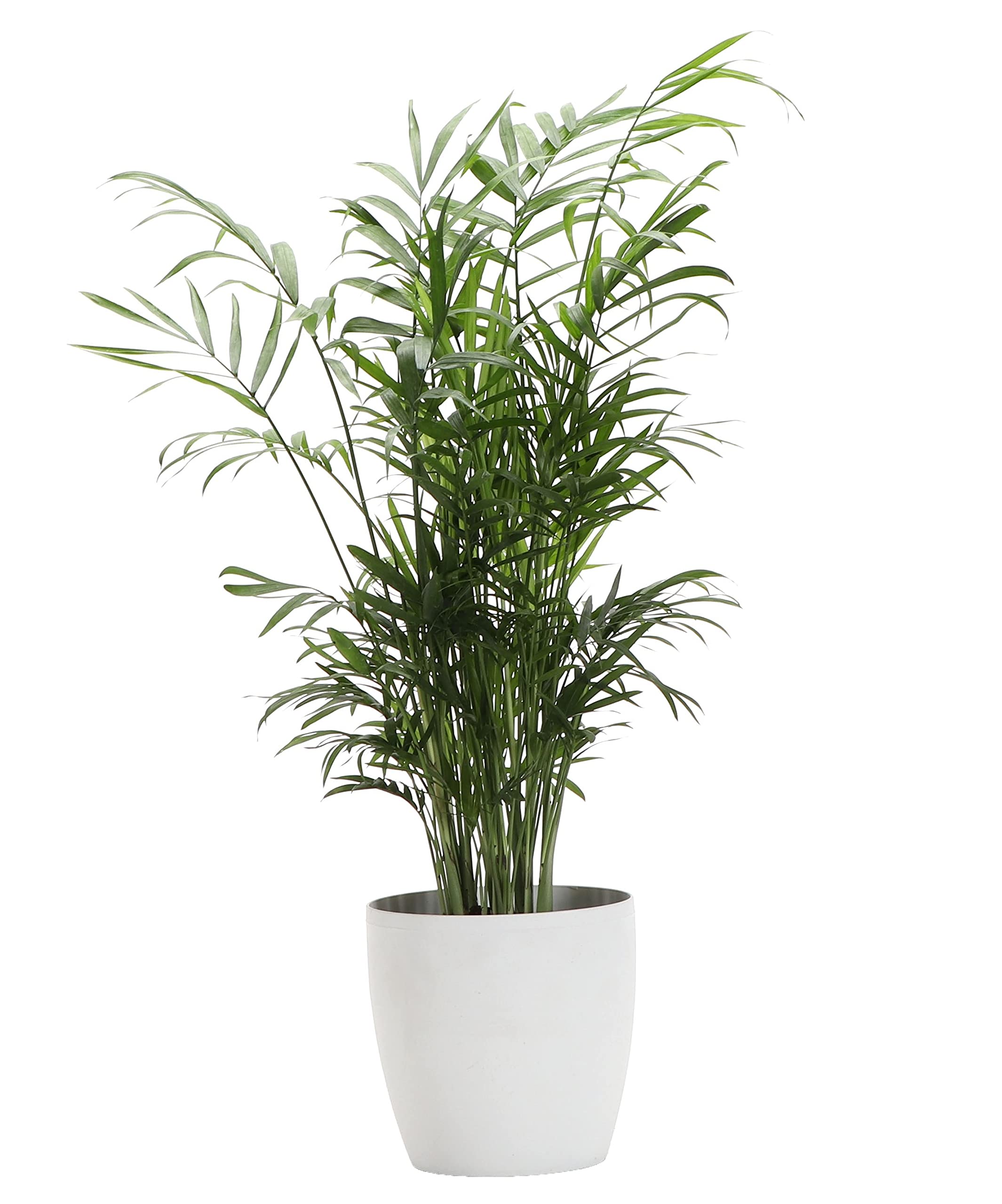
The Parlor Palm (Neanthe Bella Palm) has been a staple of indoor gardening since the Victorian era for good reason — it thrives in low to moderate light and maintains a compact, elegant silhouette without outgrowing its space. Each stem produces feathery, arching fronds that create a soft texture perfect for filling an empty corner or a nightstand. The plant shipped here measures approximately 5-8 inches tall in a 4-inch pot, with a dense, bushy form that looks fuller than most starter houseplants.
Verified buyers consistently describe the plant as arriving healthy, green, and well-packaged despite sometimes rough shipping conditions. One customer whose box arrived “properly mangled” reported that the plant remained in excellent shape thanks to the protective packaging. The Parlor Palm is recognized as non-toxic for pets by the ASPCA, making it a safe choice for bedrooms with cats or dogs. It also requires minimal maintenance — just water when the top inch of soil dries out and keep it away from direct sunlight, which will scorch its delicate fronds.
Compared to the Cast Iron Plant, the Parlor Palm grows slightly faster and offers a more delicate, tropical aesthetic. It does prefer slightly higher humidity than the Cast Iron Plant, so placing it near other plants or using a humidity tray helps keep the fronds looking lush. If you want the look of a palm tree scaled down for a desk or shelf, this is the best option.
Why it’s great
- Feathery fronds add soft texture to dark corners
- Pet safe and non-toxic for cats and dogs
- Compact size fits on desks, nightstands, or shelves
Good to know
- Smaller than expected for some buyers at 5-8 inches
- Appreciates occasional misting in dry bedrooms
5. Easy to Grow Spider Plant Variegated
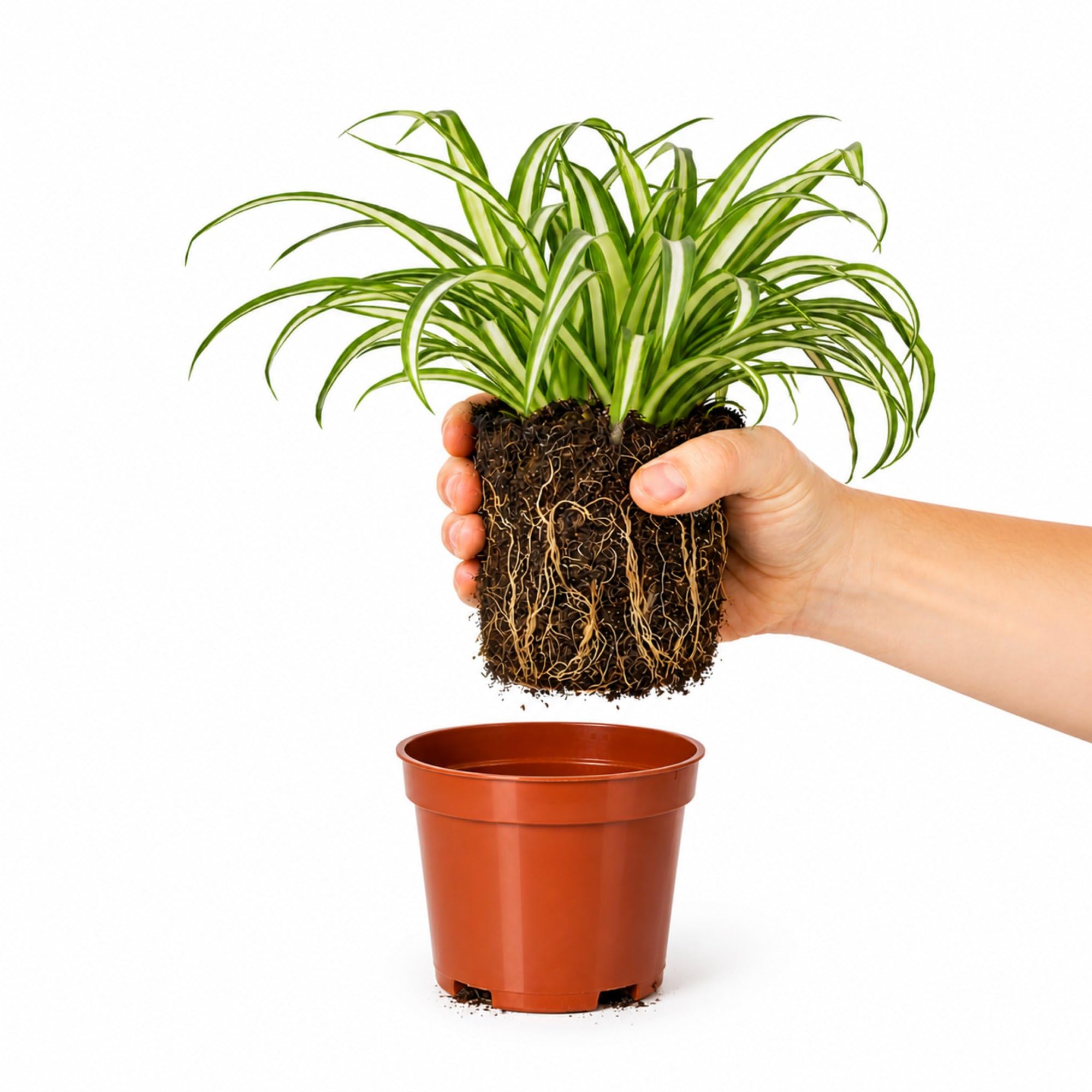
Spider Plants (Chlorophytum comosum) are legendary for their resilience, but the “starter plug” size sold in big-box stores often requires months to look full. This listing from Easy to Grow ships a fully rooted plant in a 4-inch pot, meaning you get an instant display of arching variegated leaves rather than a baby plug. The variegation is white and green, which adds brightness to a dim room without requiring extra light to maintain — the dark green sections handle photosynthesis efficiently while the white edges provide visual contrast.
Customer reviews highlight the exceptional root system and overall health of the plant upon arrival. One buyer noted that after transplanting, all leaves remained green and new growth emerged within three weeks — a strong sign that the plant was not stressed by shipping. The Spider Plant is non-toxic to pets and produces baby “spiderettes” that can be propagated easily, making it a great choice for anyone who wants to expand their collection for free. It also tolerates a wide range of light conditions, from bright indirect light to the low ambient light of a bedroom corner.
Watering needs are moderate — allow the soil to dry out between waterings, and the plant will reward you with vigorous leaf production. This is a faster-growing option than the Cast Iron Plant, so you’ll see visible change in your bedroom over weeks rather than months. The only minor drawback is that the leaves can become floppy if overwatered, but a simple adjustment to watering frequency resolves this quickly.
Why it’s great
- Fully established plant in a 4-inch pot — not a starter plug
- Propagates easily from baby spiderettes
- Non-toxic and safe for pets
Good to know
- Leaves can become floppy if overwatered
- Prefers bright indirect light for best variegation
6. Hopewind Lemon Lime Maranta Prayer Plant

The Lemon Lime Maranta brings a burst of tropical color to dim bedrooms with its bright lime-green leaves brushed with dark-green veins. Unlike many colorful houseplants that fade in low light, the Maranta’s pigmentation remains vivid because its natural understory habitat is shaded forest floors. This plant ships at 12-16 inches tall in a 4-inch pot, making it one of the larger plants in this guide on arrival. Its leaves also fold upward at night like praying hands, creating a living connection to your sleep-wake cycle.
Customer reviews are remarkable — multiple buyers described it as the healthiest plant they’ve ever ordered online. One verified purchaser bought eight plants and called them “the healthiest plants I have ever ordered online,” praising their air-purifying properties and vibrant appearance. The Lemon Lime Maranta is also ASPCA-certified as non-toxic and safe for pets, removing any worry for pet owners. The plant prefers bright indirect light but adapts well to the moderate ambient light of a bedroom, and it should be watered when the top half of the soil feels dry.
This variety of Prayer Plant is more forgiving of lower light than its heavily variegated cousins because the lemon-lime leaves retain enough chlorophyll to photosynthesize efficiently. It does benefit from occasional misting to maintain humidity, especially in air-conditioned rooms. If you want a plant that combines pet safety, vivid color, and dramatic nightly leaf movement, this is the strongest candidate in the guide.
Why it’s great
- Large 12-16 inch height gives instant visual presence
- Vibrant lime-green color holds in low light
- Leaves fold at night — adds a calming living rhythm
Good to know
- Needs moderate humidity — benefit from occasional misting
- Prefers bright indirect light rather than deep shade
7. Hopewind Pothos N’joy
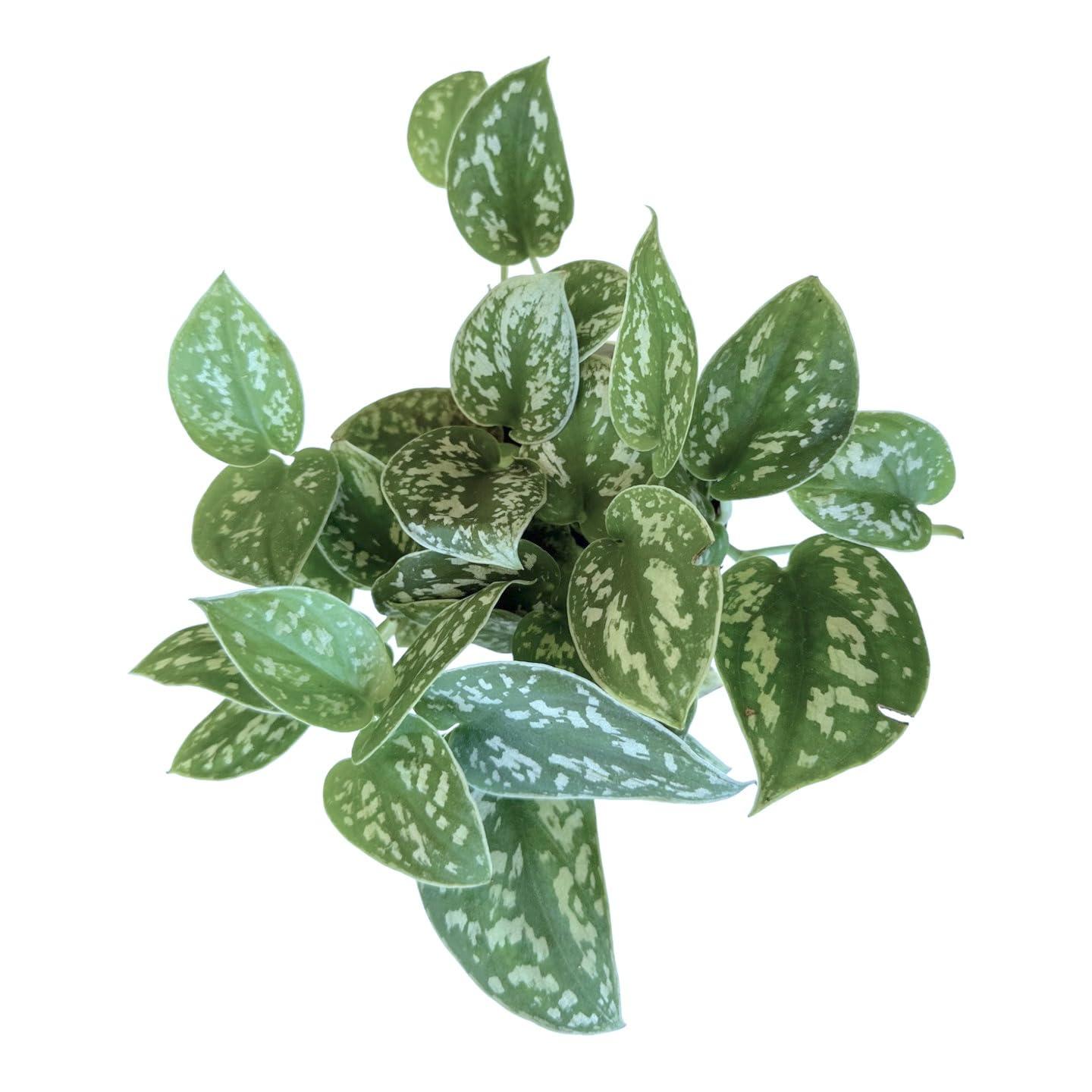
The N’joy Pothos (Epipremnum aureum ‘n’joy’) is a compact, variegated pothos variety with striking white and green leaves that brighten a low-light space without requiring extra sun to maintain its pattern. Pothos are famously easy to care for, but N’joy is particularly well-suited to bedrooms because its smaller leaf size and controlled growth habit mean it won’t take over the room like a standard Golden Pothos. This plant arrives in a 4-inch pot and can be grown as a trailing vine from a shelf or trained to climb a small moss pole.
Verified buyers consistently note the plant’s strong rooting system and vibrant coloration upon arrival. One customer described it as “heartier and healthier than expected” and praised the seller’s packaging and care. Another first-time online plant buyer said it was “the best online plant buying experience” they’d had. The N’joy Pothos prefers bright indirect light but will survive in lower light — the variegation may become less pronounced in very dim conditions, but the plant will continue to grow. Watering is straightforward: let the top two inches of soil dry between waterings.
The main consideration with this plant is that while it tolerates low light, it truly thrives in bright indirect light. If your bedroom has a north-facing window or a bright shelf, this plant will reward you with rapid growth and crisp variegation. In a very dark corner, the growth will slow and the leaves may revert to more green. It’s also worth noting that Pothos are toxic to pets if ingested, so this is not the safest choice if your cat nibbles on leaves. For a budget-friendly, low-maintenance bedroom plant with beautiful variegation, this is a solid entry point.
Why it’s great
- Compact size won’t overtake a small bedroom
- Beautiful white and green variegation
- Very forgiving of irregular watering schedules
Good to know
- Toxic to pets if ingested
- Variegation may fade in very low light
FAQ
Can low light bedroom plants survive without any direct sunlight?
How often should I water plants in a low light bedroom?
Which low light bedroom plants are safest for cats and dogs?
Will these plants improve air quality in my bedroom?
What causes a Peace Lily’s leaves to turn yellow in low light?
Final Thoughts: The Verdict
For most users, the low light bedroom plants winner is the American Plant Exchange Cast Iron Plant because it survives the darkest corners and the most inconsistent watering schedules with zero fuss. If you want dynamic color and nightly leaf movement that turns your bedroom into a living exhibit, grab the Thorsen’s Greenhouse Red Prayer Plant. And for a pet-safe, air-purifying option that delivers consistent blooms in shade, nothing beats the Peace Lily.