
Our readers keep the lights on and the weekend projects moving. As an Amazon Associate, I earn from qualifying purchases.
Slouching at a desk, staring at a screen, or rounding your shoulders while walking doesn’t just look bad—it tightens your neck, strains your upper back, and eventually creates a forward-head posture that’s hard to reverse. A good brace acts as physical feedback, training your shoulders to sit back and your spine to align naturally without constant mental effort.
I’m Rikta — the co-founder and writer behind FitlyFast. I’ve spent years analyzing how material density, strap geometry, and support rod placement separate a brace that actually builds muscle memory from one that just digs into your armpits for an hour.
Whether you need invisible support under a work shirt or a full-coverage brace for lower back relief, this guide breaks down the seven most effective options to help you find the right posture brace for your body and daily routine.
How To Choose The Best Posture Brace
Not all posture braces feel the same. The wrong one will slide up your back, chafe under your arms, or provide so little resistance that your shoulders round right back the second you move. Here are the three specs that matter most when narrowing your options.
Support Rod Count & Flexibility
Most braces use flat ABS rods sewn into the back panel. Four rods is the standard sweet spot: two along the shoulder blades to pull them back and two flanking the spine for vertical alignment. Five-rod designs add an extra strip for deeper lumbar reinforcement. Flexible rods conform to your body shape without poking, while rigid rods can create pressure points if your torso is short or curved. Always look for removable rods if you want to machine-wash the brace without metal or plastic pieces rattling around.
Armpit Clearance & Strap Geometry
The most common complaint about posture braces is underarm digging. Wider shoulder straps (2 inches or more) distribute tension over a larger surface, reducing pinching. A Y-shaped or X-shaped strap system that routes around the armpit rather than straight across it prevents the brace from riding up when you lean forward. Bras with built-in correction often use a racerback layout; independent braces use crossed straps that you can adjust individually for each shoulder. If you have a short torso, look for a brace with a smaller vertical panel (around 40 cm or less) to keep the waist belt from rolling upward.
Breathability & Discreet Profile
You cannot wear a brace consistently if you sweat through your shirt by lunch. Premium braces use a honeycomb mesh or perforated neoprene that vents body heat while still providing structure. The fabric should be thin enough to hide under a t-shirt or button-down without visible bulges—look for a total thickness around 0.25 inches. Hook-and-loop closures allow micro-adjustments without removing the brace, which is essential for finding that “reminding you to stand straight but not restricting breathing” level of tension.
Quick Comparison
On smaller screens, swipe sideways to see the full table.
| Model | Category | Best For | Key Spec | Amazon |
|---|---|---|---|---|
| Babaka Posture Corrector | Premium Women’s | Invisible daily wear under tops | 360° surround wrap, 57% spandex blend | Amazon |
| BigRose DualGuard Pro | Premium Full Support | Senior & midlife daily movement | Dual-layer lumbar, open-back alignment | Amazon |
| LifeLove Adjustable Brace | Premium Unisex | Tall users & long desk hours | 40 cm contoured panel, 105 cm shoulder | Amazon |
| Vicorrect Invisible Bra | Mid-Range Women’s | Low-profile support under clothes | Dual Y-straps, 2 flexible rods | Amazon |
| KNXWALT Posture Corrector | Mid-Range Unisex | All-day comfort for desk workers | 4 reinforced rods, ventilated mesh | Amazon |
| Kepwaa Back Brace | Mid-Range Support | Full upper/lower back stability | 5 flexible ABS rods, wide midriff | Amazon |
| URSEXYLY Back Brace | Budget Unisex | Entry-level posture correction | 4 support bones, bidirectional stretch | Amazon |
In‑Depth Reviews
1. Babaka Posture Corrector for Women
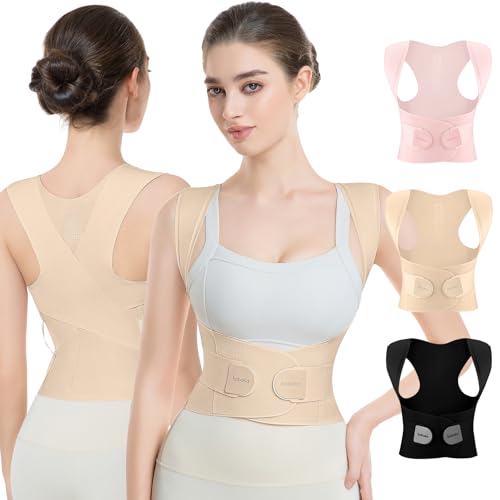
The Babaka uses a 360-degree surround wrap that contours specifically to the female frame, which solves the “rides up when I bend over” problem common in unisex braces. The material is 57% spandex—noticeably stretchier than standard nylon mesh—so it moves with your torso rather than resisting every twist. Multiple users who tested it for desk work and light workouts said it disappeared under their clothing after five minutes of wear.
What sets this brace apart is its armpit-friendly construction. Instead of broad straps that cut in, the design uses a full-back panel with tension distributed evenly across the shoulder blades. The hook-and-loop waist closure allows you to tighten or loosen the lower band without touching the shoulder straps, which is critical for getting both lumbar support and upper-back retraction in one device. The beige color blends well with most skin tones, making it a genuinely invisible option under white or thin tops.
The support comes from the wrap itself rather than removable rods, so there is no way to increase resistance as your posture improves. For anyone needing a light, discreet daily reminder rather than aggressive correction, this brace delivers exactly that balance.
Why it’s great
- Ultra-soft, stretchy spandex blend stays invisible under all clothing
- 360-degree wrap prevents the brace from rolling or sliding upward
- Separate waist and shoulder adjustments allow custom upper/lower tension
Good to know
- Not suitable for users needing aggressive support or rigid rod reinforcement
- Compression fabric may feel restrictive for wider shoulders or larger chests
2. BigRose DualGuard Full-Back Support Pro
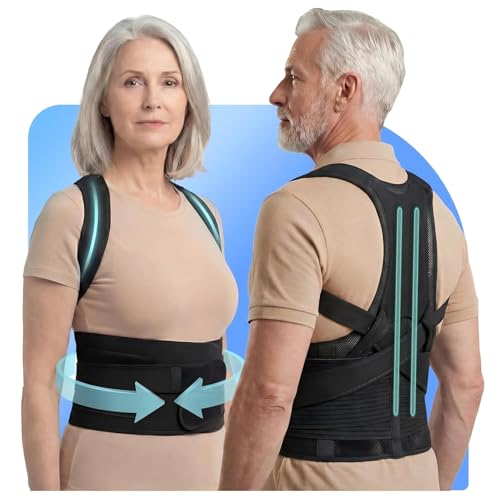
The BigRose is engineered specifically for midlife and mature users who need both upper-back shoulder retraction and lower-back lumbar reinforcement. Its dual-layer waist strap cinches the abdomen while a separate shoulder-pull mechanism opens the chest—a combination that directly addresses the forward-slump posture common after years of sitting. The breathable mesh fabric keeps you cool during household tasks, walks, and extended desk sessions.
What makes this brace stand out for older users is how easy it is to put on independently. The wide hook-and-loop panels attach at the front, so you do not need to twist or reach behind your back. The underarm clearance is generous—users with arthritis or limited shoulder mobility reported no struggle getting the straps situated. The open-back design also means the central spine area stays free of padding, which reduces heat buildup and prevents that sweaty-panel feeling.
The main limitation is that this brace is built for support rather than subtlety. It is slightly thicker than most other options due to the dual-layer lumbar panel, so visible lines may show through fitted clothing. Some users also noted that the waist belt can shift upward if you sit in low-backed chairs. For everyday comfort, stability, and the ability to maintain alignment while bending or walking, this is the most complete support system in the lineup.
Why it’s great
- Dual-layer lumbar band stabilizes the lower back during bending and walking
- Front-attachment design eliminates the need to reach behind your back
- Open-back structure prevents overheating and keeps the spine area dry
Good to know
- Slightly thicker profile may appear under fitted shirts or thin fabrics
- Waist belt can migrate upward in chairs with short or sloped backs
3. LifeLove Adjustable Posture Support Brace
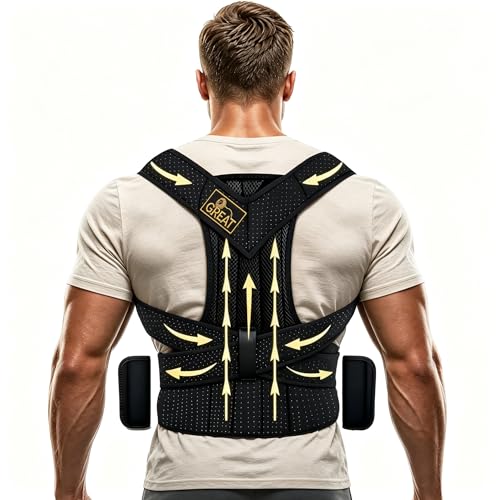
The LifeLove is the only brace in this roundup that explicitly accommodates taller users, with shoulder loops reaching 105 cm and a waist band stretching to 115 cm. The contoured 40 cm central panel runs longer than the typical 30–35 cm back section, which means it stays anchored against your spine rather than riding up toward your neck. The fabric blend includes neoprene, giving it a slight wetsuit-like compression that stays put even during standing desk shifts or walking errands.
A standout feature is the pair of detachable underarm cushions. If you have ever worn a posture brace that rubbed your armpits raw by hour three, these foam inserts add a buffer layer between the strap edge and your skin. The tension straps are distributed evenly across the panel rather than pulling from a single point, so the feedback feels like a gentle reminder rather than a forced tug. One user who switched from a competitor’s brace reported that the cushion design eliminated the chafing that had made previous braces unwearable.
The downside is that the neoprene blend is less breathable than an all-mesh construction, so you may notice some warmth during summer wear or prolonged indoor sessions. The one-size-fits-most approach works for the stated dimensions, but shorter users (under 5’4”) may find the panel hangs too low and bunches at the tailbone. For the tall desk worker who needs consistent all-shift support without constant adjustment, this brace fits like it was made for that frame.
Why it’s great
- Extra-long 40 cm panel and 105 cm shoulder loops suit users up to 200 cm tall
- Detachable underarm cushions eliminate rubbing and pressure points
- Neoprene compression fabric stays anchored during movement and standing
Good to know
- Neoprene blend runs warmer than full-mesh alternatives
- One-size cut may be too long for users shorter than 5’4”
4. Vicorrect Adjustable Posture Corrector
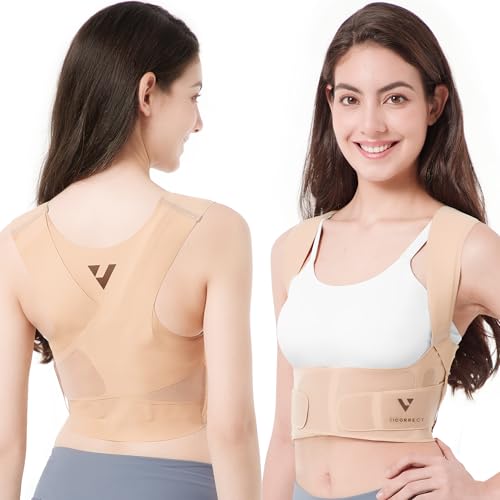
The Vicorrect is designed specifically for women who want a brace that looks like part of their outfit rather than a medical device. The ultra-thin seamless build uses an X-shaped traction layout with two built-in flexible rods that pull the shoulders back without creating bulky edges. The cushioned shoulder straps are curved to follow the natural slope of a woman’s shoulders, which prevents the strap from sliding off the deltoid during typing or walking.
One of the most practical features is the recommended ramp-up schedule printed in the manual: 35–40 minutes on day one, increasing by 20 minutes each day until you reach a comfortable 4-hour wear window. This structured approach helps you avoid muscle soreness from suddenly being held in a corrected position after years of slouching. Multiple users noted that after completing the 28-day training period, they maintained improved posture even on days they did not wear the brace.
The main compromise is that two rods provide less structural reinforcement than the four-rod or five-rod competitors. If you have significant thoracic kyphosis (hunchback) or need strong lower-back support, this brace will feel too gentle. It also uses a soft hook-and-loop closure that may lose grip after several months of daily wear. For casual slouch correction and comfortable training during desk work, the Vicorrect hits a smart balance between effectiveness and forgettable comfort.
Why it’s great
- Ultra-thin seamless profile hides completely under any fitted top
- Cushioned curved straps prevent sliding off women’s narrower shoulders
- Structured 28-day ramp-up schedule builds muscle memory gradually
Good to know
- Only 2 rods provide lighter correction not suited for severe hunchback
- Soft hook-and-loop closure may lose holding power over extended daily use
5. KNXWALT Posture Corrector
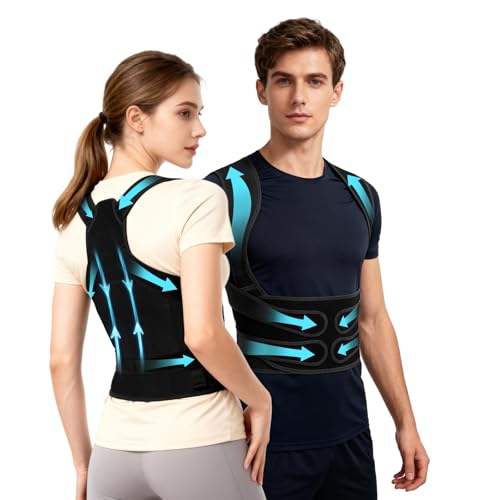
The KNXWALT strikes a near-ideal balance between support intensity and comfort for the eight-hour desk worker. Four reinforced ABS rods run vertically along the spine and shoulder blades, providing enough structure to prevent slouching without the rigid “straightjacket” feel that makes some braces unwearable past lunch. The ventilated mesh fabric passes the sweat test—users reported staying dry even during warm office environments or light walks.
What surprised testers was how little the brace interfered with chair backs. The low-profile back panel is thin enough that leaning into an office chair does not create a pressure bump between your spine and the cushion. The adjustable shoulder straps use a Y-shape layout that sits flat under a button-down shirt without creating a noticeable hump. One reviewer who wore it for 10-hour shifts said the brace became background noise after the first hour—the highest compliment you can give a posture device.
The rods are not removable, so machine washing requires a laundry bag and gentle cycle to prevent poking. Some users also noted that the medium size runs small—if your waist measurement is at the top of the size chart range, sizing up prevents the waist band from rolling. For anyone who spends most of their day seated and needs consistent, breathable, non-bulky support, the KNXWALT is the most practical option in this mid-range tier.
Why it’s great
- Four rods provide strong correction while remaining flexible and comfortable
- Ventilated mesh keeps the back dry even during extended 8-hour wear
- Low-profile design does not create pressure points against office chair backs
Good to know
- Non-removable rods require careful hand washing or a laundry bag
- Medium size runs small; check waist measurement carefully before ordering
6. Kepwaa Back Brace Posture Corrector
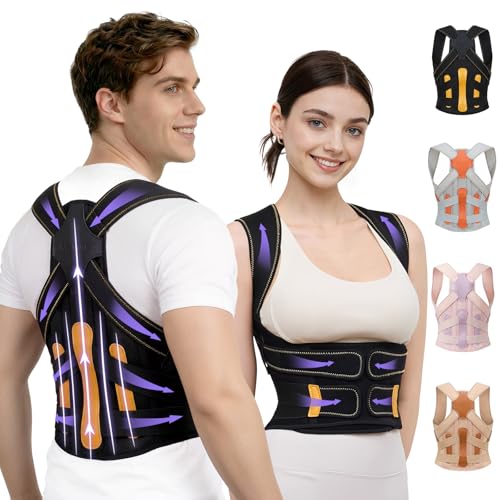
The Kepwaa is the only brace in this lineup with five ABS support rods, adding an extra central rod that reinforces the lower thoracic area where many users experience the most rounding. The wide midriff panel extends further down the torso than competitors, giving it a more stable anchor point that prevents the brace from rolling up when you sit. This is the brace to reach for if your posture problem is not just hunched shoulders but a full upper-to-lower back slouch.
The build quality stands out—the Velcro closures use industrial-grade loops that do not fray after repeated attaching and detaching, and the polyester fabric has a stiffness that holds its shape even after weeks of wear. Users who tried multiple braces before the Kepwaa reported that the five-rod layout finally gave them the lower-back feedback other braces lacked. One reviewer specifically noted that the wide lumbar band prevented the belt-bulge effect that happens when a narrow brace cinches only the midsection.
Breathability is the compromise here. The thicker material that provides such stable support also traps more heat, with several users noting increased sweating even during winter wear. The shoulder straps also require some trial-and-error adjustment before they sit without digging—it takes a few wears to find the Goldilocks tension. For users who prioritize correction intensity over temperature regulation, this brace delivers the most structural reinforcement in the mid-range category.
Why it’s great
- Five-rod design provides stronger lower-thoracic and lumbar support than 4-rod braces
- Wide midriff panel prevents rolling up and creates a stable anchor
- Heavy-duty hook-and-loop closures withstand frequent daily adjustments
Good to know
- Thicker polyester fabric runs warm and may cause sweating in hot environments
- Shoulder straps require a few adjustment sessions to prevent digging
7. URSEXYLY Back Brace Posture Corrector
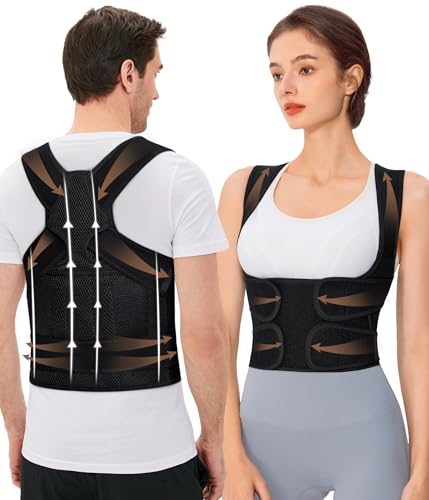
The URSEXYLY is the entry-level pick that proves you do not need to spend a lot to get functional posture correction. It uses four support bones (plastic strips sewn into the back panel) that provide the same basic shoulder-retraction and spine-alignment action as braces costing twice as much. The bidirectional stretching fabric tightens across the back while the lower band cinches the abdomen, offering both upper and lower support in a single device.
Customer feedback consistently highlights how breathable this brace is—the mesh design prevents the sweating and overheating that plagues many budget braces. The widened shoulder straps wrap comfortably without constricting blood flow, and the hook-and-eye closure is secure enough for all-day wear. A particularly impressive real-world test came from a reviewer who reported the brace fit both a 5’3” woman and a 6’3” man with simple strap adjustment, demonstrating the range of the sizing system.
The trade-offs become apparent after several weeks of use. The support bones are less rigid than the ABS rods in mid-range braces, so they flatten out faster if you consistently wear the brace at maximum tension. The lower-back hook-and-loop panel is shorter than that of premium competitors, which means it may slide up on taller users or during bending motions. For someone testing whether a posture brace fits their lifestyle, this is a low-risk, effective starting point that will show you whether the category works for you.
Why it’s great
- Breathable mesh prevents sweat buildup even in hot environments
- Bidirectional stretch fabric tightens both upper back and lower abdomen
- Wide shoulder straps distribute tension without pinching or constricting
Good to know
- Support bones are less rigid and may lose shape faster with daily heavy use
- Shorter lower-back panel may ride up on taller users during bending
FAQ
How many hours per day should I wear a posture brace when starting out?
Will a posture brace weaken my back muscles over time?
Can I wear a posture brace under a dress shirt or thin top without it showing?
What is the difference between a posture brace with 4 rods and one with 5 rods?
Final Thoughts: The Verdict
For most users, the posture brace winner is the KNXWALT Posture Corrector because its four reinforced rods and ventilated mesh strike the best balance between correction intensity, all-day breathability, and discreet wear under clothes. If you want invisible support that feels like a second skin, grab the Babaka Posture Corrector. And for full upper-to-lower back stability during active daily movement, nothing beats the BigRose DualGuard Pro.