
Our readers keep the lights on and the weekend projects moving. As an Amazon Associate, I earn from qualifying purchases.
Indoor training has evolved beyond the noisy, imprecise wheel-on trainer of the past. The modern direct-drive unit ditches the friction roller for a freehub that accepts your bike’s cassette directly, delivering precise power measurement, realistic gradient simulation, and a quiet ride that won’t disturb your household. But with power accuracy claims from ±1% to ±3%, variable resistance limits that top out between 1,500 W and 2,500 W, and an ecosystem of apps like Zwift, Rouvy, and TrainerRoad to consider, picking the right trainer means comparing specs that directly affect your workout quality.
I’m Rikta — the co-founder and writer behind FitlyFast. Over years of studying smart trainer hardware, I’ve analyzed power meter electronics, flywheel inertia dynamics, and wireless protocol stability to understand what separates a reliable training tool from a frustrating one.
This guide breaks down 11 models ranging from entry-level direct-drive units to flagship machines with WiFi connectivity and dynamic road feel, helping you match the right smart bike trainer to your training goals and budget.
How To Choose The Best Smart Bike Trainer
Direct-drive trainers have become the standard because they remove the tire slip and power inconsistency of wheel-on models. Your choice comes down to power accuracy, gradient range, connectivity stability, and how closely the ride feel mimics the road. The most important decision is which tradeoffs align with your training style.
Power Accuracy: The Metric That Defines Training Quality
A trainer’s power meter is the heart of your structured workout. Units rated at ±1% accuracy, like the higher-end Wahoo and Garmin models, allow you to trust wattage targets in ERG mode and track progress precisely. ±2% accuracy is acceptable for most recreational riders, while ±3% models work for casual Zwift riding but introduce enough drift to compromise interval-based training.
Maximum Gradient and Maximum Power
If you live in flat terrain but want to train for mountain stages, look for a trainer that simulates at least 18% incline. Models topping out at 10% are adequate for general fitness but won’t prepare you for steep climbs. Peak wattage matters for sprinters — 1,500 W is enough for most riders, but powerful cyclists pushing 2,200 W need a unit that won’t cap out mid-effort.
Connectivity and Ecosystem Compatibility
ANT+ FE-C and Bluetooth FTMS are the minimum standards for app compatibility. WiFi connectivity, found on premium units like the Wahoo KICKR V6, eliminates Bluetooth interference and dropouts in dense signal environments. Confirm that the trainer supports your preferred platform (Zwift, Rouvy, TrainerRoad, MyWhoosh) before purchasing, and check whether virtual shifting is a built-in feature or requires a separate shifter accessory.
Quick Comparison
On smaller screens, swipe sideways to see the full table.
| Model | Category | Best For | Key Spec | Amazon |
|---|---|---|---|---|
| Wahoo KICKR V6 | Premium | Competitive Training | ±1% Power, 2,200 W, WiFi | Amazon |
| Garmin Tacx Neo 2T | Premium | Road Feel Realism | Virtual Flywheel, 32 Magnets | Amazon |
| Wahoo KICKR CORE 2 | Mid-Range | Ease of Setup | Integrated WiFi, 1,800 W | Amazon |
| Saris H3 | Mid-Range | Quiet Operation | 59 dB, 12-Speed Compatible | Amazon |
| Elite Direto XR | Mid-Range | Optical Torque Sensor | ±1.5%, 24% Max Grade | Amazon |
| CYCPLUS T2 | Mid-Range | Portable Design | Folded 11.8 inch, 20% Grade | Amazon |
| CYCPLUS R200 | Mid-Range | Budget Brushless | 80 N·m Torque, 2,200 W | Amazon |
| ThinkRider XXPRO | Mid-Range | Self-Powered Use | ±1%, No Power Cord | Amazon |
| ThinkRider X2Max | Entry-Level | Budget Direct-Drive | ±2%, 18% Grade, 2,000 W | Amazon |
| Tacx Flux S | Entry-Level | Budget Premium Brand | ±3%, 1,500 W, 10% Grade | Amazon |
| XPLOVA NOZA V | Mid-Range | Vibration Damping | ±2%, 2,200 W, 18% | Amazon |
In‑Depth Reviews
1. Wahoo KICKR V6

The Wahoo KICKR V6 is the benchmark for serious indoor training, combining a high-inertia flywheel with KICKR AXIS feet that mimic side-to-side movement for a ride feel that closely replicates outdoor road dynamics. Its 2.4 GHz WiFi connection ensures stable data transmission even in crowded Bluetooth environments, a significant upgrade over earlier generations.
With resistance accurate to within ±1% and a peak power of over 2,200 W, this trainer handles everything from low-cadence hill climbs to max-effort sprints without power capping. The automatic calibration eliminates manual spin-downs, and the unit is exceptionally quiet for its power capability, with most audible noise coming from the bike’s drivetrain rather than the trainer itself.
The main drawback is weight and bulk — this is not a trainer you will casually move between rooms. Setup requires a dedicated space, and the premium price reflects its flagship status. For cyclists who want race-grade power data and seamless integration with Zwift, TrainerRoad, or Wahoo SYSTM, the KICKR V6 delivers the most complete package available.
Why it’s great
- WiFi connectivity eliminates Bluetooth dropout issues
- ±1% power accuracy with automatic calibration
- AXIS feet provide realistic lateral movement
Good to know
- Heavy and not easily portable
- Premium price reflects top-tier status
2. Garmin Tacx Neo 2T

The Tacx Neo 2T stands apart by using 32 neodymium magnets to create resistance without a physical flywheel, using a virtual flywheel algorithm to simulate inertia, downhill coasting, and road textures like cobblestones.
Power accuracy holds within ±1% and requires no calibration, with a maximum resistance of 2,200 W and gradients up to 25%. The unit’s ability to simulate road surface vibrations adds genuine immersion during app-based rides, and the foldable frame makes storage more manageable than its 47-pound weight suggests. It includes adapters for thru-axle and quick-release standards, plus a freehub compatible with Shimano/SRAM 9-12 speed.
Some users report that the virtual flywheel takes a few rides to adjust to — the spin-down feel is different from a physical steel flywheel. The built-in cadence and power meters are accurate, but occasional ANT+ signal interference has been noted in dense urban environments. For riders who prioritize silence and realism over raw connectivity features, the Neo 2T is unmatched.
Why it’s great
- Near-silent operation via electromagnetic resistance
- Realistic road texture simulation
- No calibration needed, ±1% accuracy
Good to know
- Virtual flywheel feel differs from steel flywheel trainers
- Heavy at 47 pounds
3. Wahoo KICKR CORE 2
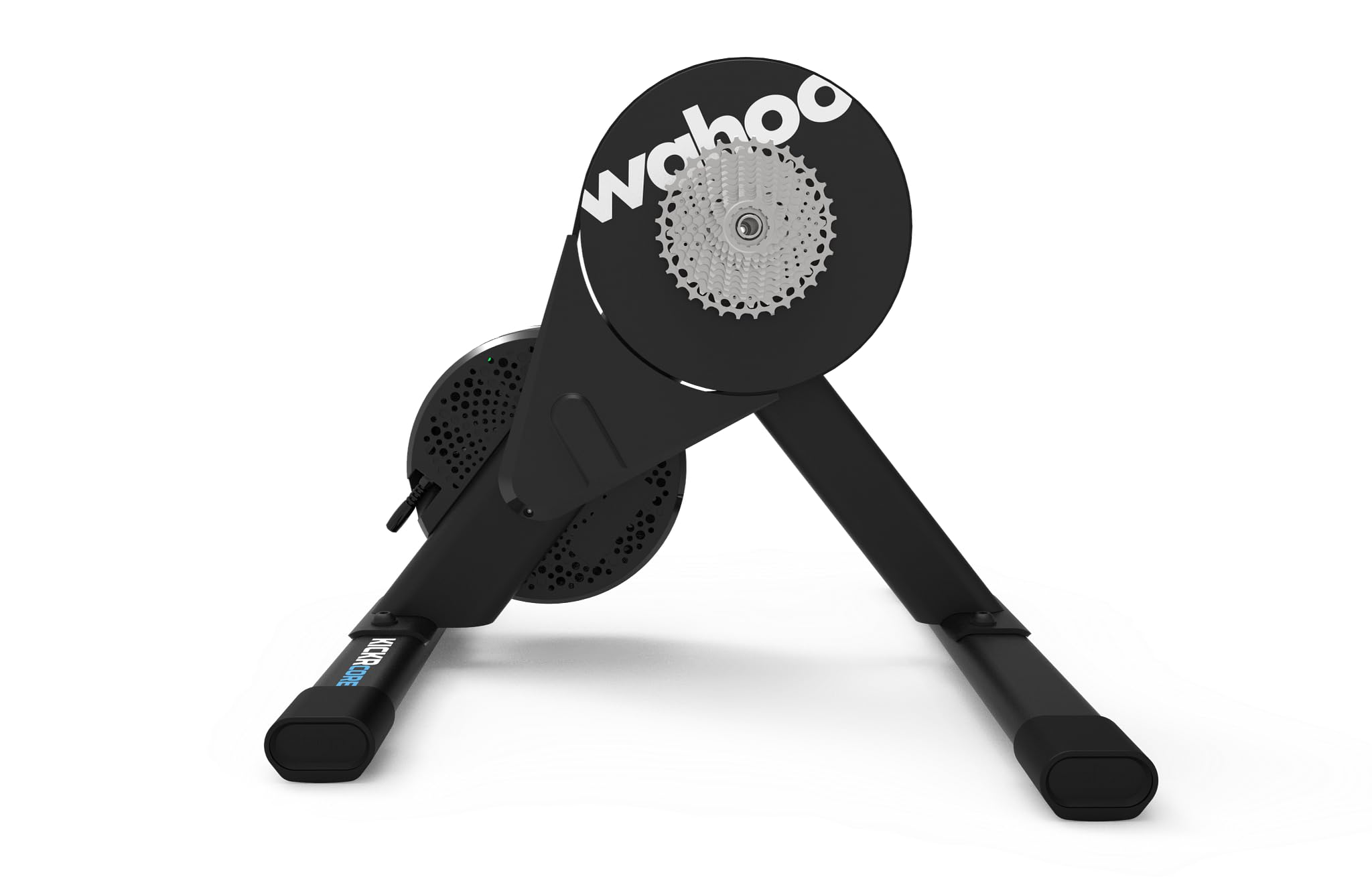
The KICKR CORE 2 brings WiFi connectivity and a faster processor to the mid-range segment, offering the same road-like resistance feel as the flagship KICKR but in a more compact package. The integrated WiFi enables automatic firmware updates and stable app pairing without relying on Bluetooth, which is a major convenience for Zwift users who previously dealt with dropouts.
Peak power reaches 1,800 W with a maximum gradient of 16%, sufficient for most structured workouts and virtual climbing. The unit ships with an 11-speed cassette installed, saving a setup step, and the direct-drive interface accepts 9-, 10-, 11-, and 12-speed drivetrains with the included spacer kit. Setup is genuinely tool-free — the legs fold out, and you mount your bike in under five minutes.
While the 16% max gradient falls short of trainers that simulate 20% or more, the overall stability and quiet operation make it a reliable daily driver. The lack of side-to-side movement (no AXIS feet) means the ride feel is stiffer than the KICKR V6, but at this price point, the tradeoff is reasonable for most riders.
Why it’s great
- WiFi for stable connections and auto updates
- Comes with 11-speed cassette pre-installed
- Fast, tool-free setup
Good to know
- Maximum gradient limited to 16%
- No lateral movement side-to-side
4. Saris H3

The Saris H3 delivers exceptional quietness at 59 dB, making it one of the most discreet trainers for shared living spaces. Its direct-drive design uses an electromagnetic resistance unit that tracks power within ±2% accuracy, with a maximum resistance of 2,000 W and gradient simulation up to 20%. The steel chassis is notably heavy at 52 pounds, which contributes to its rock-solid stability during standing sprints.
Compatibility extends to 12-speed drivetrains out of the box, and the included 8-11 speed freehub covers older standards. The unit pairs via dual ANT+ FE-C and Bluetooth FTMS, connecting reliably to Zwift, Rouvy, and TrainerRoad. Owners report that the cadence calculation can lag momentarily during rapid gear shifts, but this is a firmware quirk rather than a hardware limitation.
The main downside is customer support responsiveness, with several users noting slow replies from Saris for axle adapter inquiries. The trainer itself is built like a tank and delivers consistent performance over thousands of miles, but the heavy weight makes it a permanent installation rather than a portable option.
Why it’s great
- Very quiet at 59 dB for apartment use
- Stable steel frame for high-power efforts
- 12-speed drivetrain compatible out of box
Good to know
- Heavy at 52 pounds, not portable
- Cadence reading can lag during shifts
5. Elite Direto XR
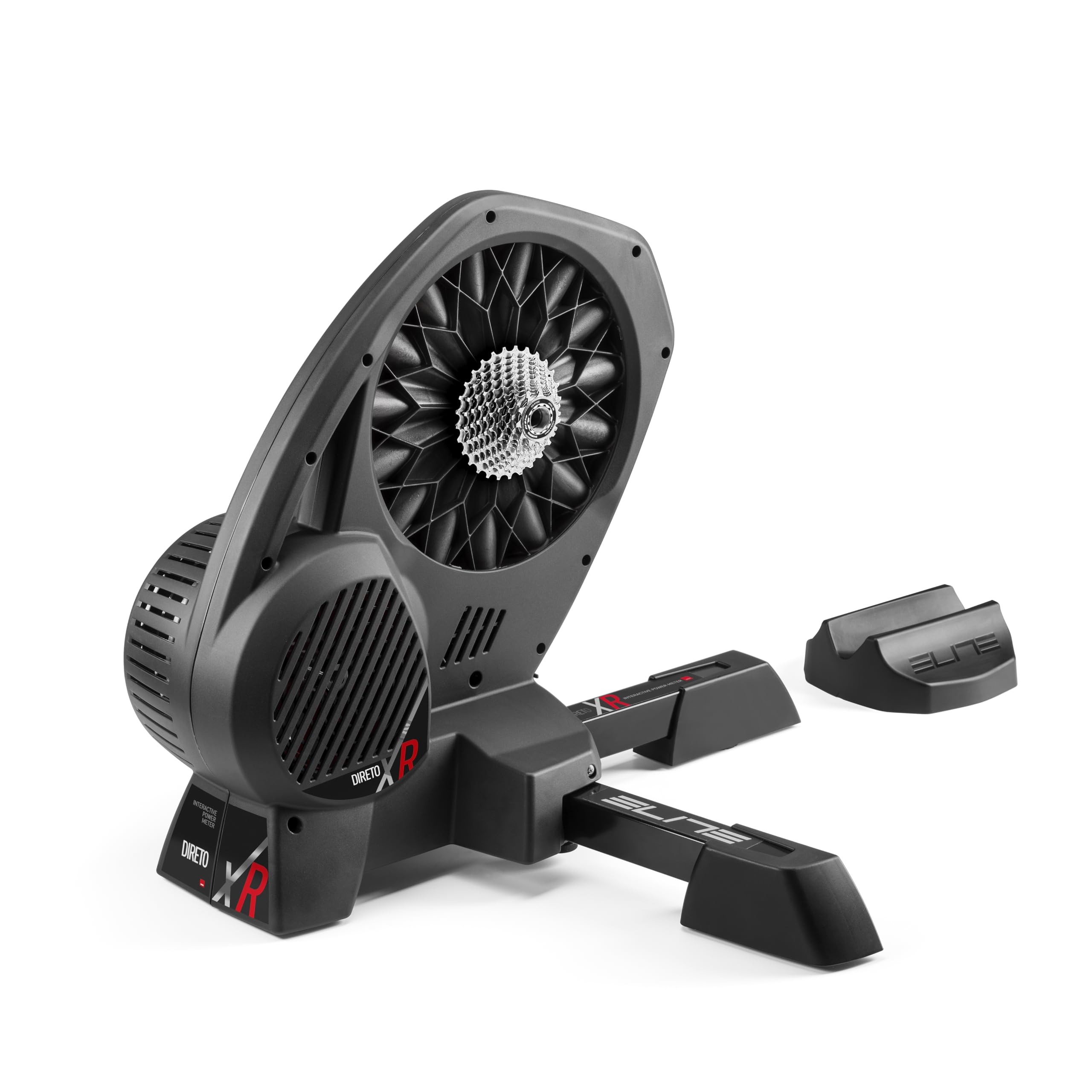
The Elite Direto XR uses an optical torque sensor rather than a traditional strain gauge, delivering power accuracy within ±1.5% without needing manual calibration. This sensor technology responds quickly to changes in pedaling force, making it responsive during interval transitions and sprint efforts. The trainer simulates gradients up to 24%, enough for the steepest virtual climbs in Zwift’s Alpe du Zwift or Rouvy’s mountain stages.
Compatibility covers most road, gravel, and mountain bikes via included quick-release and thru-axle adapters. The freehub accepts Shimano/SRAM 9-11 speed, Shimano 12-speed road, and SRAM NX/SX Eagle 12-speed, with Campagnolo freehubs available separately. The included one-year subscription to Elite’s My E-Training app provides structured workout plans, though the 1080p video limitation can feel dated compared to modern platforms.
Noise levels are moderate — quiet enough for a dedicated training room but noticeable in close quarters. Some units have experienced circuit board failures after extended use, though warranty support is generally responsive within the one-year period. For riders who want premium accuracy and high gradient simulation at a discount price, the Direto XR offers strong value.
Why it’s great
- Optical torque sensor with ±1.5% accuracy
- 24% maximum gradient for steep climbing
- Includes one year of My E-Training
Good to know
- Moderate noise level
- Circuit board reliability concerns over long term
6. CYCPLUS T2
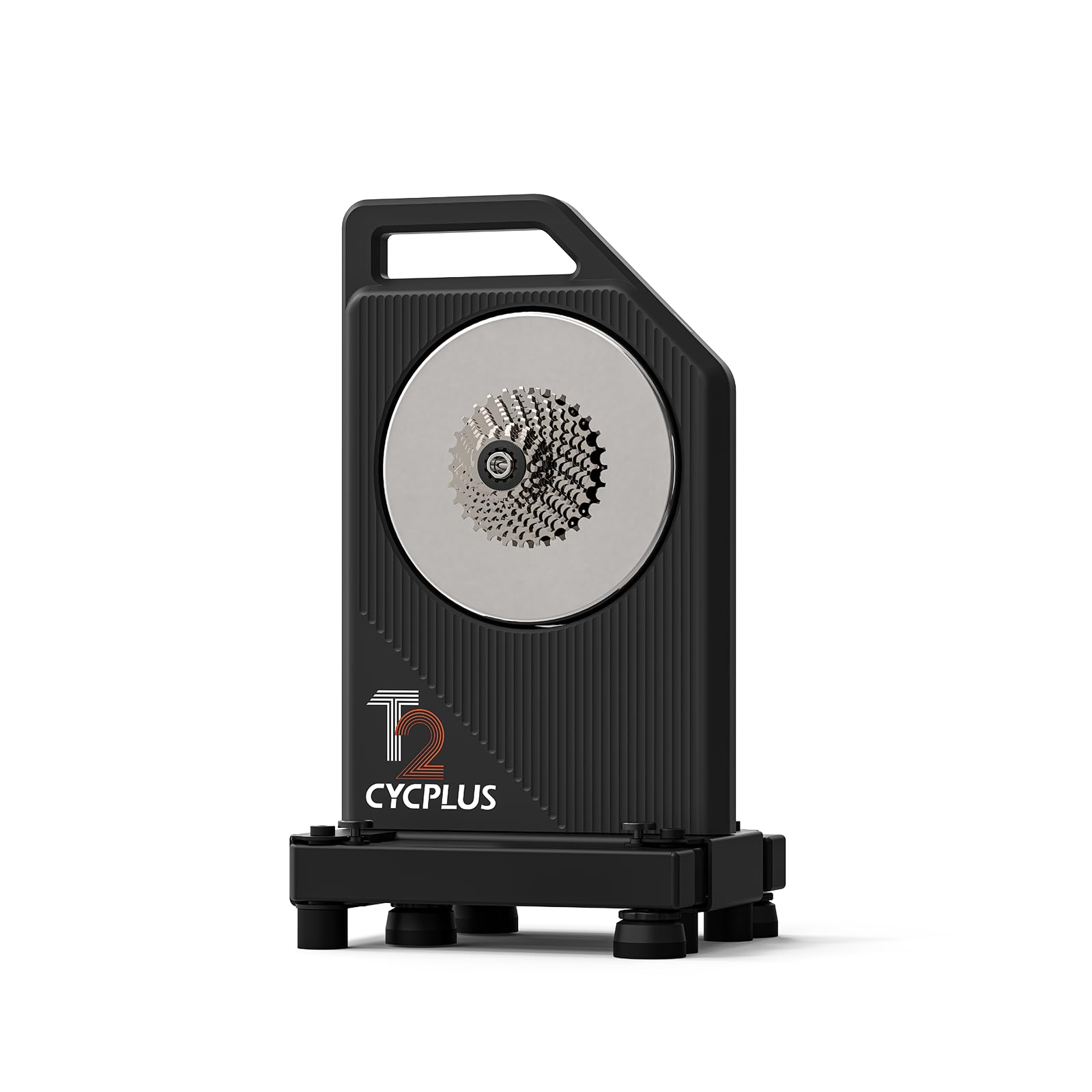
The CYCPLUS T2 packs a brushless motor capable of 2,200 W peak power into a frame that folds down to 11.8 inches wide, making it the most transportable option in this lineup. The slim 2.1-inch folded profile and integrated carry handle mean it fits in a suitcase or car trunk, appealing to travelers who want to train on the road.
Gradient simulation reaches 20% with automatic adjustments synced to app terrain, and the triple-layer noise reduction keeps operation under 60 dB. The brushless motor delivers ±1% power accuracy without calibration, and the dual-fan cooling system prevents overheating during sustained high-output sessions. Virtual shifting is supported but requires the separately sold CYCPLUS BC2 shifter, and the T2 is not compatible with ERG mode when using virtual shifting.
Some users have noted that the Bluetooth connection can occasionally drop during long rides, requiring a quick app re-pair. The included accessories cover quick-release and thru-axle standards, but a cassette is not included. For frequent travelers or those with limited storage space, the T2’s portability is a genuine advantage over heavier competitors.
Why it’s great
- Folds to 11.8 inches for easy transport
- Brushless motor with ±1% accuracy
- Dual-fan cooling for sustained sprints
Good to know
- Virtual shifter sold separately
- No cassette included
7. CYCPLUS R200
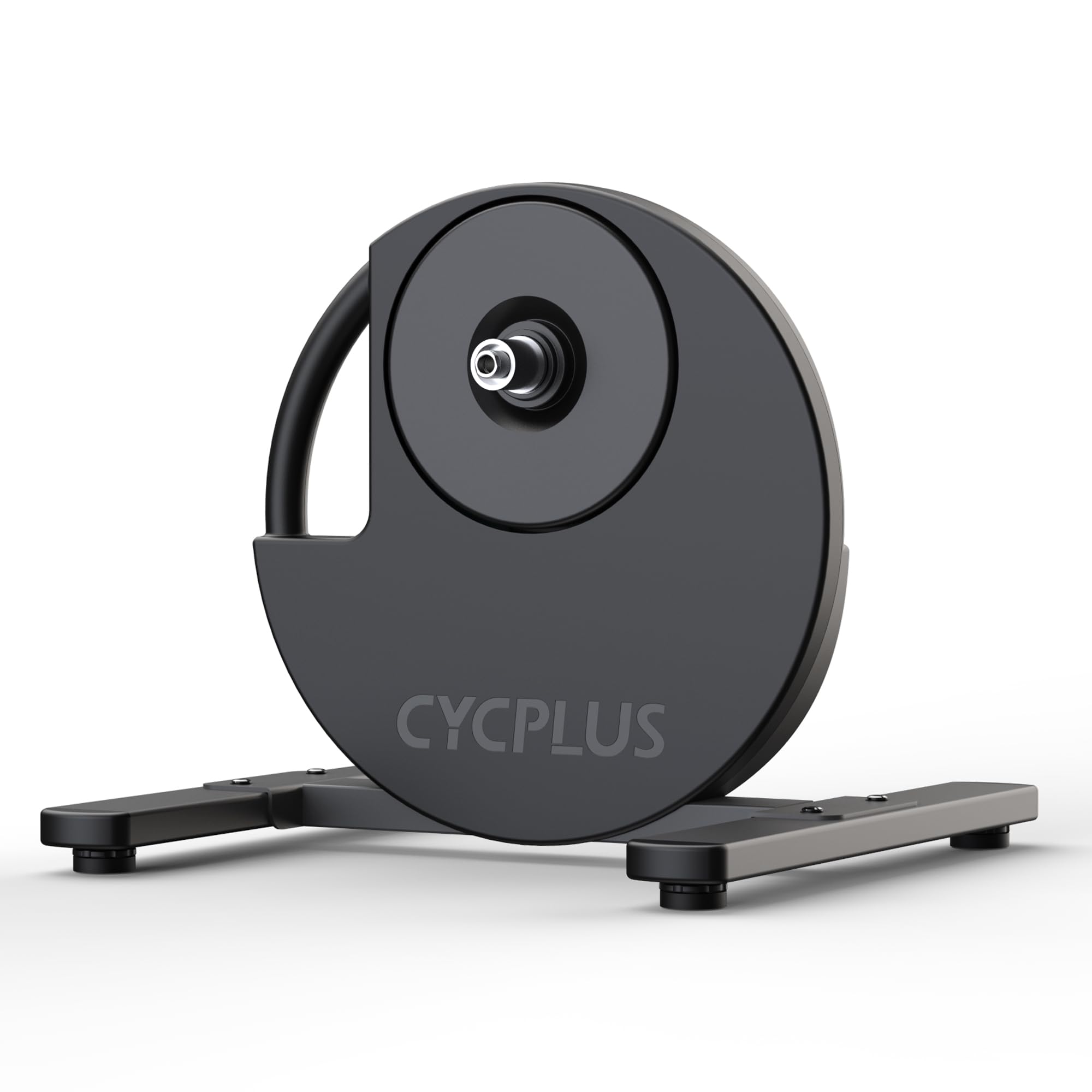
The CYCPLUS R200 is one of the most affordable brushless motor trainers available, delivering 80 N·m of torque and 2,200 W peak power for aggressive sprint training. Its 19% gradient simulation covers steep climbing needs, and the built-in cooling fan with optimized airflow ensures the motor doesn’t overheat during extended ergometer sessions.
Dual-mode BLE and ANT+ connectivity provides broad app compatibility, and the CYCPLUS app allows multi-dimensional parameter customization including rider weight, bike weight, and downhill coefficient. The R200 requires a separate cassette and the CYCPLUS BC2 shifter for virtual shifting, and it is not compatible with ERG mode when virtual shifting is active — a significant limitation for structured workout fans.
Customer service experiences have been split: one user reported a unit failure after one hour that was replaced under warranty, while others note heat-related brake drag after longer rides. The two-year warranty provides some assurance, but potential buyers should weigh the attractive price against these reliability concerns, making this a good choice for light to moderate use rather than daily heavy training.
Why it’s great
- Affordable entry into brushless technology
- 80 N·m torque for realistic hill resistance
- Customizable ride parameters via app
Good to know
- Separate shifter needed for virtual shifting
- Some heat-related performance issues reported
8. ThinkRider XXPRO

The ThinkRider XXPRO stands out for its self-power generation capability — the motor generates electricity as you pedal, eliminating the need for a wall outlet during use. This makes it genuinely portable, usable in a garage without nearby outlets or even outdoors under cover. Downhill simulation is also included, with the motor automatically adjusting resistance to replicate descending gradients for a more realistic terrain experience.
Power accuracy is rated at ±1% with no calibration needed, and maximum output reaches 2,500 W with a 25% gradient simulation, matching the specs of trainers costing significantly more. The direct motor drive provides smooth, quiet operation, and compatibility covers ANT+, Bluetooth, and GPS bike computers. The unit ships with a one-year warranty, and the included power adapter is only needed for initial setup or firmware updates.
Assembly requires attention to spacer placement for the cassette, and the quick-release spacer may need adjustment for thru-axle bikes. Some users report that the included screws for the cross rails are too short, requiring a trip to the hardware store. The overall ride feel is comparable to premium Wahoo and Tacx units, making this a strong contender for budget-conscious riders who want near-flagship performance.
Why it’s great
- Self-powered, no outlet needed during rides
- ±1% power accuracy, no calibration
- 25% gradient for extreme climbing training
Good to know
- Minor assembly hardware issues
- Cassette spacer setup can be tricky
9. ThinkRider X2Max

The ThinkRider X2Max is the most affordable direct-drive trainer in this guide, offering a DEPT dynamic electromagnetic torque power meter with ±2% accuracy and 2,000 W peak power. The 18% gradient simulation covers most Zwift climbs, and the I-beam triangular frame structure provides stable support during out-of-saddle efforts. Noise is rated at 58 dB at 30 km/h, which is genuinely quiet for a budget unit.
Compatibility includes BLE and ANT+ dual-mode protocols, connecting seamlessly to Zwift and MyWhoosh. Setup takes under five minutes, and the 35.2-pound weight is manageable for occasional relocation. The unit does not include a cassette, and you will need to supply your own quick-release or thru-axle adapter depending on your bike standard.
The firmware update process has been a pain point for several users — the provided QR code leads to a dead page, and the ThinkRider Tools app’s firmware update feature is non-functional for some. Documentation is sparse but sufficient for basic setup. For riders on a tight budget who want to experience direct-drive performance, the X2Max delivers the core functionality at a price that leaves room for accessories.
Why it’s great
- Lowest entry price for direct-drive functionality
- Quiet operation at 58 dB
- Stable I-beam frame for standing climbs
Good to know
- Firmware update process is problematic
- No cassette included; sparse documentation
10. Tacx Flux S

The Tacx Flux S is an older-generation direct-drive trainer from Garmin that offers a proven platform at a discounted price. Its ±3% power accuracy is the least precise in this group, and the 1,500 W maximum resistance with 10% max gradient limits its appeal for serious climbers and sprinters. However, for general fitness Zwifting and casual structured workouts, the performance is adequate.
The direct-drive design removes tire-slip issues, and the unit is nearly silent in operation — most audible noise comes from the drivetrain. Setup is straightforward with an 11-speed cassette, and the trainer integrates with Zwift, Tacx apps, and most third-party software via ANT+ FE-C and Bluetooth. The sturdy steel frame allows standing pedaling without wobble, and the 51-pound weight provides a planted feel.
The 10% gradient limit is the most restrictive spec here — you cannot simulate anything steeper than a moderate hill, which may be a dealbreaker for mountain stage training. The unit also lacks an on/off switch, requiring you to unplug it after use. For riders who prioritize low cost and brand reliability over top-tier specs, the Flux S is a functional entry point into the Garmin ecosystem.
Why it’s great
- Proven Garmin/Tacx reliability
- Near-silent operation for home use
- Stable steel frame for standing efforts
Good to know
- Limited to 10% gradient and 1,500 W
- ±3% power accuracy is less precise
- No on/off switch
11. XPLOVA NOZA V

The XPLOVA NOZA V focuses on reducing vibration transfer to the bike and rider, using four rubber feet plus front and rear stabilizers to absorb road buzz. This makes for a noticeably smoother ride during long training sessions, reducing fatigue transmitted through the frame. The unit provides 2,200 W peak power with 18% gradient simulation and ±2% power accuracy, hitting solid mid-range specs.
The electromagnetic motor delivers smooth load fluctuations for climbing and downhill simulation, and the folding front leg improves storage compared to bulkier competitors. Compatibility covers ANT+ and Bluetooth for app pairing, and the unit works with Zwift, TrainerRoad, and other platforms. The 39.6-pound weight is manageable for occasional repositioning.
Reliability concerns appear in user feedback — some units experience Bluetooth connection drops during rides, and heat-related load reduction has been reported during summer months when ambient temperatures are high. The dedicated app’s workout builder only allows 5% load adjustment increments, which is too coarse for precision interval training. For riders who prioritize vibration damping and smooth road feel over absolute reliability, the NOZA V offers a unique feature set.
Why it’s great
- Four rubber feet and stabilizers absorb vibration
- 2,200 W power with 18% grade simulation
- Folding front leg for easier storage
Good to know
- Bluetooth connection can drop during rides
- Heat-related load reduction in warm conditions
- App workout builder limited to 5% increments
FAQ
Do I need a cassette with my new direct-drive trainer?
What is the difference between wheel-on and direct-drive trainers?
Can I use a 12-speed cassette on a trainer with an 11-speed freehub?
How important is WiFi connectivity in a smart trainer?
Final Thoughts: The Verdict
For most users, the smart bike trainer winner is the Wahoo KICKR V6 because its WiFi connectivity, ±1% power accuracy, and realistic side-to-side movement via AXIS feet deliver the most complete indoor training experience available. If you want near-silent operation with unmatched road texture simulation, grab the Garmin Tacx Neo 2T. And for budget-conscious riders who still want direct-drive reliability with solid gradient simulation, nothing beats the ThinkRider X2Max.