
Our readers keep the lights on and the weekend projects moving. As an Amazon Associate, I earn from qualifying purchases.
If your feet get cold during a snowshoe hike, the rest of your day is basically over before it starts. The right pair of boots keeps your toes warm, your feet dry when you step into a hidden creek, and your ankles stable on uneven packed snow — all without feeling like you are lifting lead weights with every step. This guide walks you through six of the best options, each rated for snowshoe compatibility, waterproofing, and real insulation performance.
I’m Rikta — the co-founder and writer behind FitlyFast. This guide is built by comparing the manufacturers’ published specifications and the patterns across verified customer reviews, so you get each pick’s real strengths and trade-offs instead of marketing spin.
Whether you are breaking trail in deep powder or sticking to groomed park paths, these six boots have the grip, warmth, and snowshoe-compatible soles you need. This is your straightforward look at the best snowshoeing boots for women based on real specifications and honest buyer feedback.
How To Choose The Best Snowshoeing Boots For Women
Snowshoeing is different from casual winter walking — you need a boot that flexes enough to walk naturally but stays rigid enough to keep a snowshoe binding securely strapped on. Beyond that, your biggest decision is how much insulation you actually need versus how much weight you are willing to lift with each step. Here are the three factors that matter most.
Insulation weight (measured in grams)
The insulation number (200g, 400g, etc.) tells you how much synthetic fill is packed inside the boot. For snowshoeing where you generate body heat from movement, 200g is enough for temperatures down to around 20°F. For standing still on an ice fishing trip or snowshoeing in sub-zero wind chills, you want 400g or a polar-rated liner system. More grams means more warmth, but also more bulk and a heavier boot.
Waterproofing and the bootie construction
A seam-sealed membrane bootie (think of it as a waterproof sock bonded inside the boot) keeps snowmelt from soaking through the leather or textile upper. The bootie should extend up the shaft at least to the ankle bone. For snowshoeing, where you occasionally posthole into deeper snow, a tall shaft (10 inches or more) that you can cinch with a drawstring collar is a serious advantage.
Sole stiffness for binding compatibility
Snowshoe bindings grip around the toe and heel. If the boot’s sole is too soft and flexible like a running shoe, the binding can slip forward or twist sideways. Look for boots with a defined heel welt, a thick rubber outsole, and noticeable stiffness when you try to bend the toe up toward the tongue — that rigidity keeps the binding locked in place.
Quick Comparison
On smaller screens, swipe sideways to see the full table.
| Model | Category | Best For | Key Spec | Amazon |
|---|---|---|---|---|
| The North Face Chilkat V 400 | Premium | Deep snow and extreme cold | 400g insulation | Amazon |
| Baffin ICEFIELD Tall | Premium | Sub-zero polar conditions | Polar-rated inner boot | Amazon |
| Baffin Sage | Premium | Snowshoe-specific hikes | Tundra-rated insulation | Amazon |
| The North Face Thermoball Progressive Zip Up II | Mid-Range | Light snowshoe trips | Waterproof zip-up design | Amazon |
| Columbia Ice Maiden II | Mid-Range | Everyday snow and ice | 200g insulation | Amazon |
| Columbia Moritza Shield | Budget | Wet slush and mild cold | Omni-Heat reflective lining | Amazon |
In‑Depth Reviews
1. THE NORTH FACE Women’s Chilkat V 400 Waterproof Snow Boot

400g of premium insulation (twice that of many mid-range boots like the Columbia Ice Maiden II) makes the Chilkat V 400 the top pick for women who snowshoe in serious winter conditions — think single-digit temps, deep powder, and miles of uneven terrain — directly translating into hours of warmth without needing chemical toe warmers.
The waterproof build keeps snowmelt out even when you punch through a crust layer, and at just 1.63 pounds per boot, you are not hauling dead weight on every stride. Buyers report that the boot is “super warm, comfortable, super light weight, great for wide feet” and that it holds up across multiple winters without the sole delaminating or the waterproof layer failing.
One honest catch: the boots run small, so reviewers consistently recommend ordering a full size up, and a few note they are not fully waterproof if you submerge them past the ankle in deep puddles. But for snowshoeing where you stay on top of the snow, this is the boot that balances extreme warmth with the light feel you need to move all day. This is the boot for the dedicated snowshoer who faces real cold and long days.
Why it is great
- 400g insulation is 2 times the warmth of a 200g boot like the Columbia Ice Maiden II, so your toes stay warm in single-digit temps.
- Extremely lightweight for the insulation level at 1.63 pounds, meaning less fatigue on long hikes.
- Wide-friendly toe box accommodates thick wool socks without squeezing your toes.
Good to know
- Runs small — order a full size up.
- Not fully waterproof above the ankle line in deep slush.
2. Baffin Women’s ICEFIELD Tall Waterproof Lightweight Polar-Rated Snow Boots
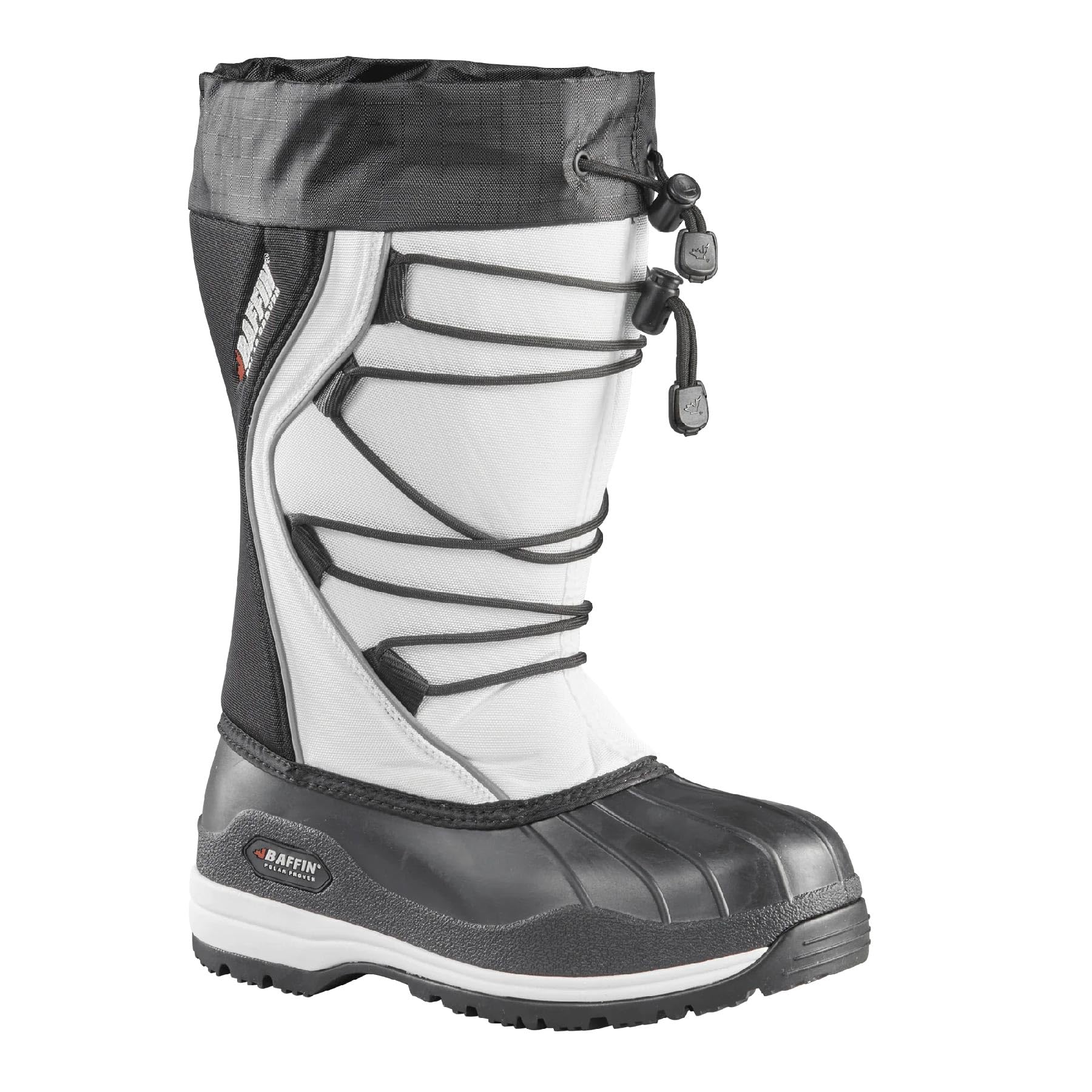
Where the Chilkat leads on pure insulation grams, the Baffin ICEFIELD beats it for extreme-cold endurance — this boot is said by the brand to have been field-tested at both the North and South Poles, so if your snowshoe route crosses an exposed ridgeline in sub-zero wind chills, this is the boot that keeps your feet functional.
The multi-layer system includes a removable inner boot with B-Tek Heat layers and a Vapourized Aluminum Membrane that reflects your body heat back at you, all inside a 12-inch tall nylon shell with a locking drawstring collar that stops snow from trickling down the top. One buyer who ice fishes in negative Fahrenheit temperatures says these boots are “INCREDIBLY WARM” and kept her feet warm on the ice for hours without needing to move constantly.
The catch: the toe box runs narrow, so if you have wider feet you may need to size up more than one full size, and the 4-pound total weight per pair is noticeable compared to lighter boots. Choose the ICEFIELD when your snowshoeing involves long stationary periods (ice fishing, photography, birding) or temperatures that would make a lesser boot’s insulation feel like a thin sock.
Why it is great
- Polar-rated for extreme sub-zero conditions, meaning your feet stay warm when temperatures drop below zero.
- Removable multi-layer inner boot for deep insulation: you can take it out to dry or swap for a thinner liner.
- 12-inch tall shaft with locking snow collar that stops powder from getting in at the top.
Worth noting
- Heavier than standard snow boots at 4 pounds total, so each step lifts more mass.
- Toe area runs narrow, which can be uncomfortable for wider feet.
3. Baffin Women’s SAGE Waterproof Insulated Slip-Resistant Mid-Height Snowshoe Compatible Winter Sports Snow Boots
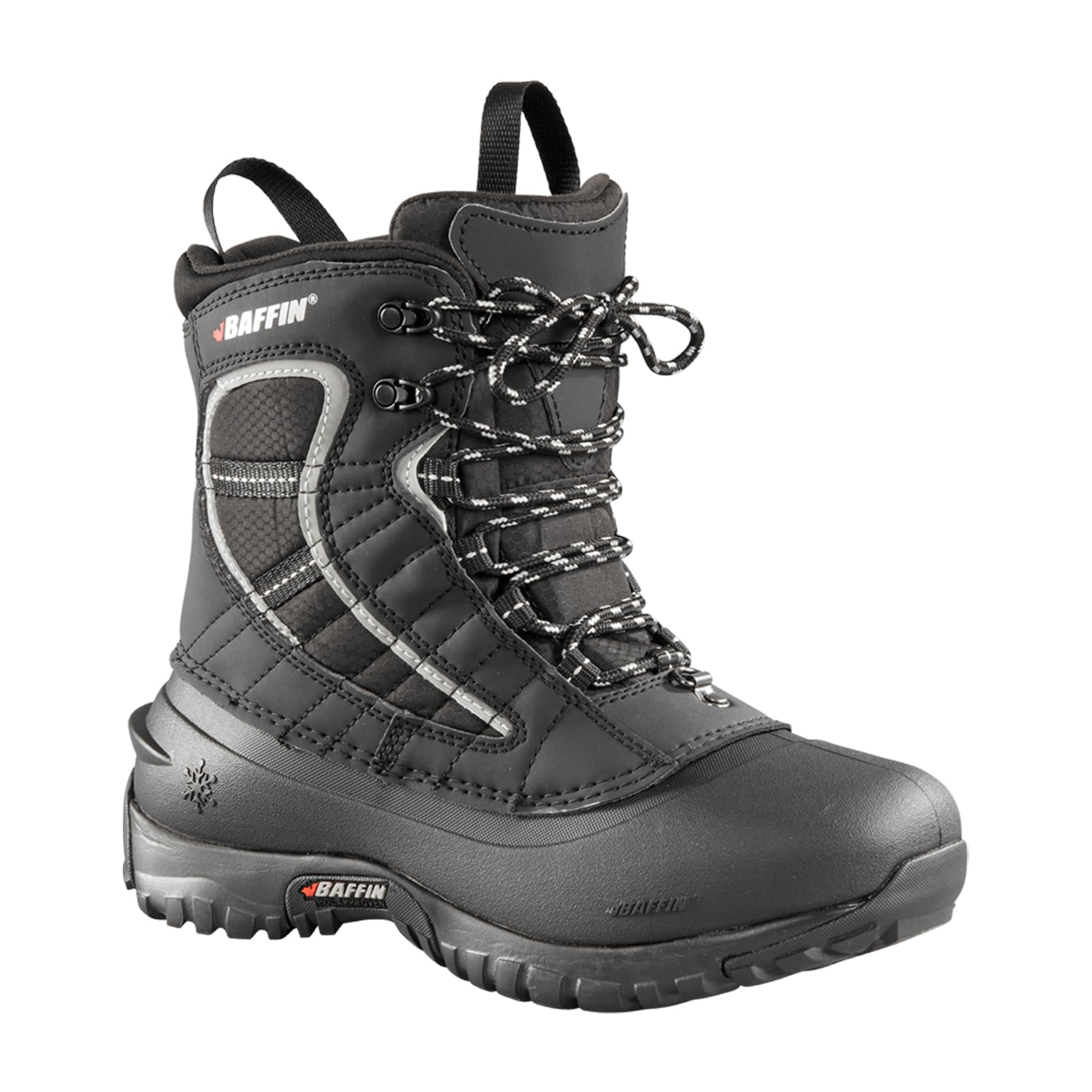
You are a woman who hikes or snowshoes regularly and wants a boot that feels more like a hiking boot than a clunky winter boot, with a sole stiff enough to hold a snowshoe binding securely. The Baffin Sage is the only boot here marketed by the brand as “snowshoe compatible,” and its mid-height cut gives you ankle support without feeling like you are wearing a firefighter’s boot. At 1.1 pounds per boot, it is lighter than the Chilkat (1.63 pounds) while still offering serious cold-weather protection.
The Tundra-rated insulation system uses removable liners that trap heat efficiently, and the Polar Rubber outsole stays flexible in extreme cold so you do not lose grip when temperatures drop. One reviewer bought these for hikes and snowshoeing, saying they are “very lightweight and comfortable” with a small footprint that makes strapping into bindings easy, while also being warm enough with just a light sock.
The standout detail is the pull-on lacing with a locking snow collar — you can get them snug around your calf without a complicated lace loop, though multiple owners mention the boot runs a full size small and the opening is tight if you have wider calves. If you value a true hiking-boot feel for snowshoeing, the Sage delivers it, and at 1.1 pounds per boot it is the lightest snowshoe-compatible pick in this guide.
Why it is great
- Engineered specifically for snowshoe binding compatibility, so your bindings stay put.
- Removable insulation liners for flexible warmth: wear them in or take them out for milder days.
- Very lightweight at 1.1 pounds per boot, lighter than the Chilkat V 400’s 1.63 pounds.
The trade-offs
- Runs small and narrow — size up at least one full size.
- Tight calf opening may be difficult for some, especially with thick pants.
4. THE NORTH FACE Women’s Thermoball Progressive Zip Up II Snow Boot

The single number that matters most in this category is the weight: these boots feel like wearing sneakers, which matters when you are snowshoeing for hours and each ounce of boot weight compounds over a thousand steps. Buyers in snowy New Hampshire say the boots “feel like I am wearing sneakers” and keep feet warm and dry without the bulk of a traditional winter boot.
The downside is the insulation level — while the Thermoball synthetic fill is efficient, it does not match the gram-for-gram warmth of the Chilkat or the polar-rated Baffin models. These are a great choice for mild snowshoeing days (20°F and above) or for quick trips where you are moving hard enough to generate your own heat.
The zip-up side entry is a clever convenience that makes getting them on and off fast, though some reviewers warn the zippers are stiff initially and could be frustrating for anyone with limited hand mobility. In terms of price-to-performance for recreational snowshoeing, the Thermoball Progressive delivers a comfortable, agile ride without overkill insulation.
Why it is great
- Sneaker-like feel with no break-in period, so comfort is immediate.
- Convenient zip-up entry for quick changes at the trailhead.
- True to size for most buyers, so no guesswork on sizing.
Keep in mind
- Less insulation than the 400g Chilkat or polar-rated options — not for extreme cold.
- Zippers can be stiff at first, requiring effort to operate.
5. Columbia Women’s Ice Maiden II Snow Boots

At this lower price, you get the Columbia reliability stamp — 200g insulation, a seam-sealed waterproof bootie (a waterproof liner sewn inside the boot), and the Omni-GRIP rubber outsole that handles packed snow and ice — for a price that undercuts the premium picks while still delivering genuine winter performance.
Where the price difference shows is in the insulation: at 200g, you get half the warmth of the Chilkat V 400, which means these boots are best for snowshoeing in conditions above 20°F or when you are moving continuously. One reviewer says they are “comparable to boots” and kept her feet warm in 30°F weather with wool socks, which lines up with what you should expect from this insulation level.
The leather and textile upper with a suede-like finish looks more like a stylish winter boot than a technical piece of gear, so these pull double duty as an everyday cold-weather boot. If you only snowshoe a few times a season and want one pair of boots that works for shoveling, commuting, and the occasional trail, the Ice Maiden II is the perfect budget buyer for that versatile, everyday winter boot that can handle light snowshoeing.
Why it is great
- Classic Columbia quality with proven waterproofing to keep feet dry.
- True-to-size fit with comfortable toe width, so no sizing headaches.
- Versatile style that works for daily wear and trails, saving you from buying two pairs.
A few caveats
- 200g insulation limits use to milder winter conditions — not for sub-zero temps.
- Suede material may show color shifts in different light, per some reviews.
6. Columbia Womens Moritza Shield Omni-Heat Insulated Snow Boot
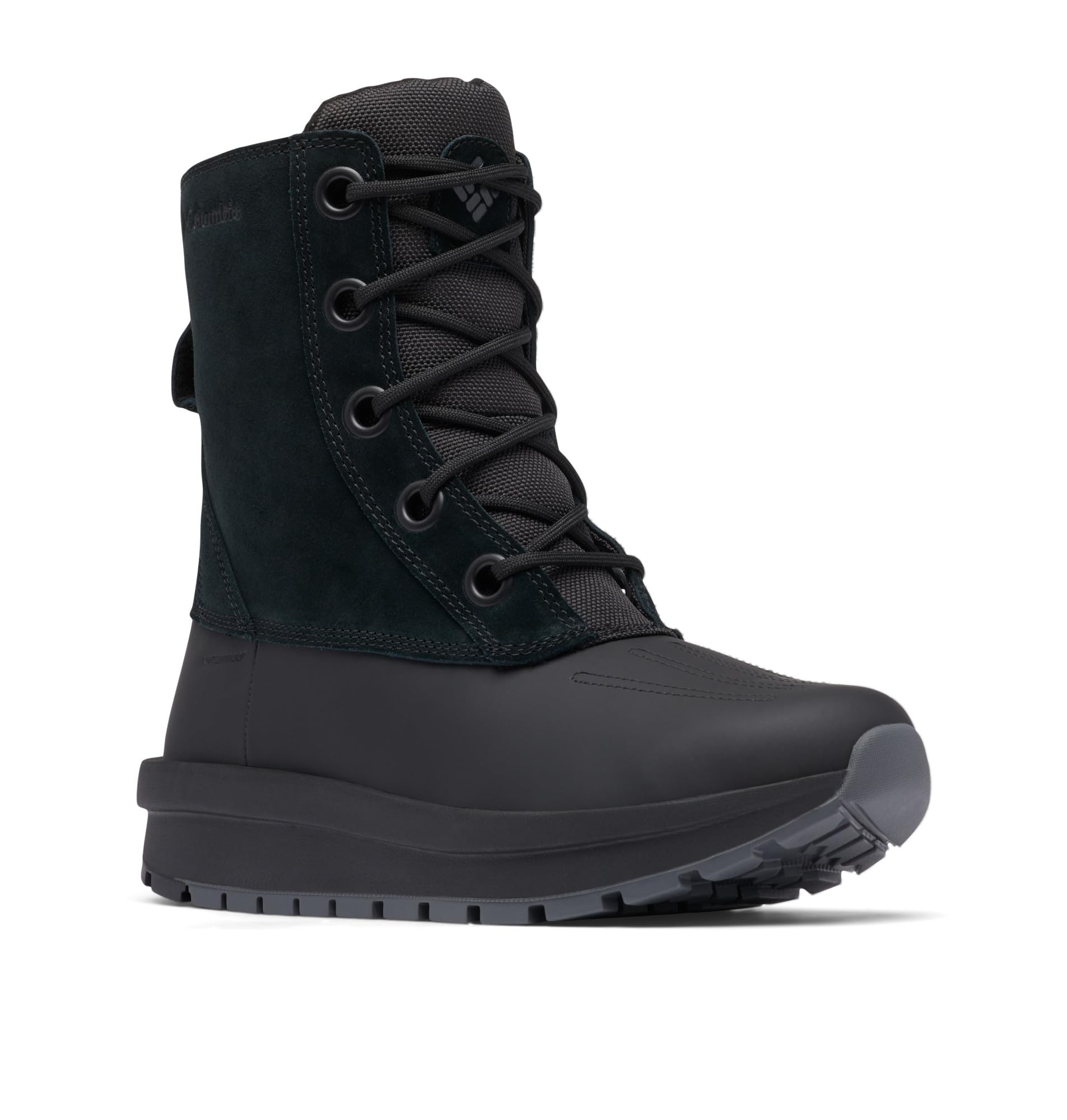
This boot is for the budget-conscious weekend warrior who snowshoes in mild weather and wants a good value without sacrificing agility.
On the budget end of the spectrum, the Moritza Shield is a surprisingly capable light-duty snowshoe boot that relies on Columbia’s Omni-Heat reflective lining (a metallic dot pattern that bounces body heat back at you) instead of a heavy layer of insulation to keep you warm — a clever approach that keeps the boot light and nimble. What you give up is the sheer warmth of a 400g boot: the Omni-Heat lining works best when you are generating your own heat through movement, so standing still in single-digit temps will leave you cold faster. But for active snowshoeing, one buyer says the boots are “lightweight, warm in blizzard with low-cut socks” and stayed dry and pain-free after three hours of shoveling heavy snow.
The sticky rubber sole provides excellent traction on wet surfaces, and the fleece interior adds comfort without bulk. These are perfect for the casual snowshoer who hits the trail on weekends, keeps moving, and wants a boot that works for rain and slush too — without spending premium money. Just keep in mind that for the same price, the Ice Maiden II offers more insulation, so compare if warmth is your priority.
Why it is great
- Very lightweight with reflective Omni-Heat warmth that works well during active hiking.
- Excellent grip for slush and packed snow, per reviewers.
- Budget-friendly without sacrificing waterproofing, so your feet stay dry.
Before you buy
- Runs small — plan to size up half a size.
- Not meant for extreme cold or stationary use — best when you are moving.
Understanding the Specs
Insulation weight (grams)
This number tells you how much synthetic fiber is used to trap warm air inside the boot. A 200g boot keeps you warm down to about 20°F during active movement, while a 400g boot handles single-digit temps and longer stationary periods. For snowshoeing, match the insulation to your climate and activity level — more grams means more warmth but also more weight and bulk.
Waterproof membrane and bootie
A seam-sealed bootie is essentially a waterproof liner that runs from the sole up around your foot, creating a barrier that snowmelt cannot penetrate. It is more reliable than a simple spray-on waterproof coating. Look for “seam-sealed membrane bootie construction” or “waterproof membrane” in the product description — that is the gold standard for keeping your feet dry all day.
FAQ
Can I use any winter boot for snowshoeing or do I need a special sole?
Should I size up for snowshoeing boots?
Final Thoughts: The Verdict
For most buyers, the best snowshoeing boots for women winner is the THE NORTH FACE Women’s Chilkat V 400 because it delivers 400g of insulation in a lightweight 1.63-pound package, giving you the warmth you need for serious winter trails without weighing you down. If you frequently snowshoe in sub-zero conditions or stand still for long periods, grab the Baffin Women’s ICEFIELD Tall. And for casual weekend snowshoeing in milder temps at a budget-friendly price, the Columbia Womens Moritza Shield offers a solid value proposition for its Omni-Heat lining.