
Our readers keep the lights on and the weekend projects moving. As an Amazon Associate, I earn from qualifying purchases.
If your feet get cold or wet halfway through a snowshoe hike, the whole day is ruined. The right snowshoeing boot stops that from happening by keeping your feet warm, dry, and stable on icy, uneven ground. This guide breaks down the six best boots for snowshoeing, focusing on what actually matters: waterproofing that lasts, insulation that matches the temperature, and a sole that grips snow and ice so you don’t slip.
I’m Rikta — the co-founder and writer behind FitlyFast. This guide is built by comparing the manufacturers’ published specifications and the patterns across verified customer reviews, so you get each pick’s real strengths and trade-offs instead of marketing spin.
For most people, the KEEN Revel 4 Mid is the one worth buying: it keeps your feet warm down to -25°F with 200g (1.4 oz) of recycled insulation per boot, but weighs just 20.32 oz (576g) so you can hike all day without heavy legs. Here are the best options for finding your next pair of snowshoeing boots.
How To Choose The Best Snowshoeing Boots
Snowshoeing puts unique demands on a boot. You need it to keep your feet warm during long periods of low activity, but also breathable enough to manage sweat when you are climbing. Here is what to look for.
Insulation Weight: The Gram Rating
Insulation is measured in grams — the higher the number, the more warmth the boot holds. For snowshoeing in mild winter conditions (around 20°F to 32°F), 200g of insulation is usually enough. For deep cold (single digits or below), you will want 400g or more. Remember that a boot with heavy insulation can make your feet sweat quickly if you are moving fast, so match the gram weight to how cold it really gets where you hike.
Waterproofing: Membrane vs. Coating
A waterproof membrane (a sealed inner layer like KEEN.DRY that stops liquid water but lets sweat vapor out) keeps water out while letting moisture escape from inside, so your feet stay dry even when you step into deep snow. A simple water-resistant coating (a spray or outer treatment) only repels light moisture and will fail in wet snow or slush. For snowshoeing, always look for a boot with a sealed membrane, not just a spray-on treatment.
Snowshoe Binding Compatibility
Not every boot works well with snowshoe bindings. A boot with a stiff sole, a heel ledge (a ridge at the back of the heel), or a defined tendon guard (a raised section above the heel that the strap hooks around) helps the binding strap stay secure. Soft, flexible hiking boots can slip out of the binding, making every step unstable. Check if the manufacturer explicitly mentions snowshoe compatibility — if they do, the sole is likely stiff enough.
Fit for Thick Socks
Your snowshoeing boot should fit snugly with one pair of medium-to-heavy wool socks, but not so tight that it restricts blood flow. A tight boot means cold toes, no matter how much insulation you have. Many owners mention that boots like the Baffin ICEFIELD and the Baffin SAGE run small, so sizing up half to a full size is common advice. Look for a boot that gives your toes room to wiggle after you put on your thickest winter socks.
Quick Comparison
On smaller screens, swipe sideways to see the full table.
| Model | Category | Best For | Key Spec | Amazon |
|---|---|---|---|---|
| KEEN Revel 4 Mid | Best Overall | All-day winter hikes and snowshoeing | 200g insulation, rated to -25°F | Amazon |
| Baffin ICEFIELD Tall | Extreme Cold | Polar-level cold and deep snow | 12″ shaft, rated to -100°C | Amazon |
| North Face Chilkat V 400 | Premium Insulation | High-output activities in cold weather | 400g Premium Insulation | Amazon |
| Baffin SAGE Mid | Lightweight Warmth | Cold-weather hikes and snowshoeing | Tundra Rated, lightweight build | Amazon |
| Baffin ZONE Boots | Active Sport | Marathon-level winter activity | EVA midsole, Polar Rubber outsole | Amazon |
| Baffin BOREALIS Boot | Versatile Hybrid | Fall through spring use | Removable insulated liner | Amazon |
In‑Depth Reviews
1. KEEN Women’s Revel 4 Mid Height Polar Insulated Waterproof Snow Boots

20.32 oz (576g) per boot and 200g of recycled PET insulation that keeps feet warm down to -25°F make the KEEN Revel 4 Mid the top pick for anyone who wants a single pair for regular winter hikes, snowshoeing, and icy trail walks.
Customers note it is “warm, waterproof, and built for real weather,” and the KEEN.POLAR TRACTION outsole (rubber with microscopic shards that dig into ice) earned top marks from a Canadian winter lab test, according to the brand. The 5mm multi-directional lugs (deep treads) dig into snow and slush, and the three-layer Heat Trapolator underfoot pushes warmth up from the ground. Compared to the North Face Chilkat V 400, the KEEN has half the insulation (200g vs 400g), so it is better suited for moderate cold rather than extreme polar conditions.
The only real trade-off is a snug toe box — several reviewers point out it runs narrow, especially for wide feet. If your feet are on the wider side, consider sizing up. Verdict: the most balanced, trail-ready snowshoeing boot for everyday winter use.
Why it’s great
- Excellent grip on ice and snow with Polar Traction outsole
- Lightweight at just over 20 oz per boot
- Waterproof KEEN.DRY membrane keeps feet dry all day
Good to know
- Toe box runs narrow for wider feet
- 200g insulation is best for mild to moderate cold, not extreme deep cold
2. Baffin Women’s ICEFIELD Tall Waterproof Lightweight Polar-Rated Snow Boots
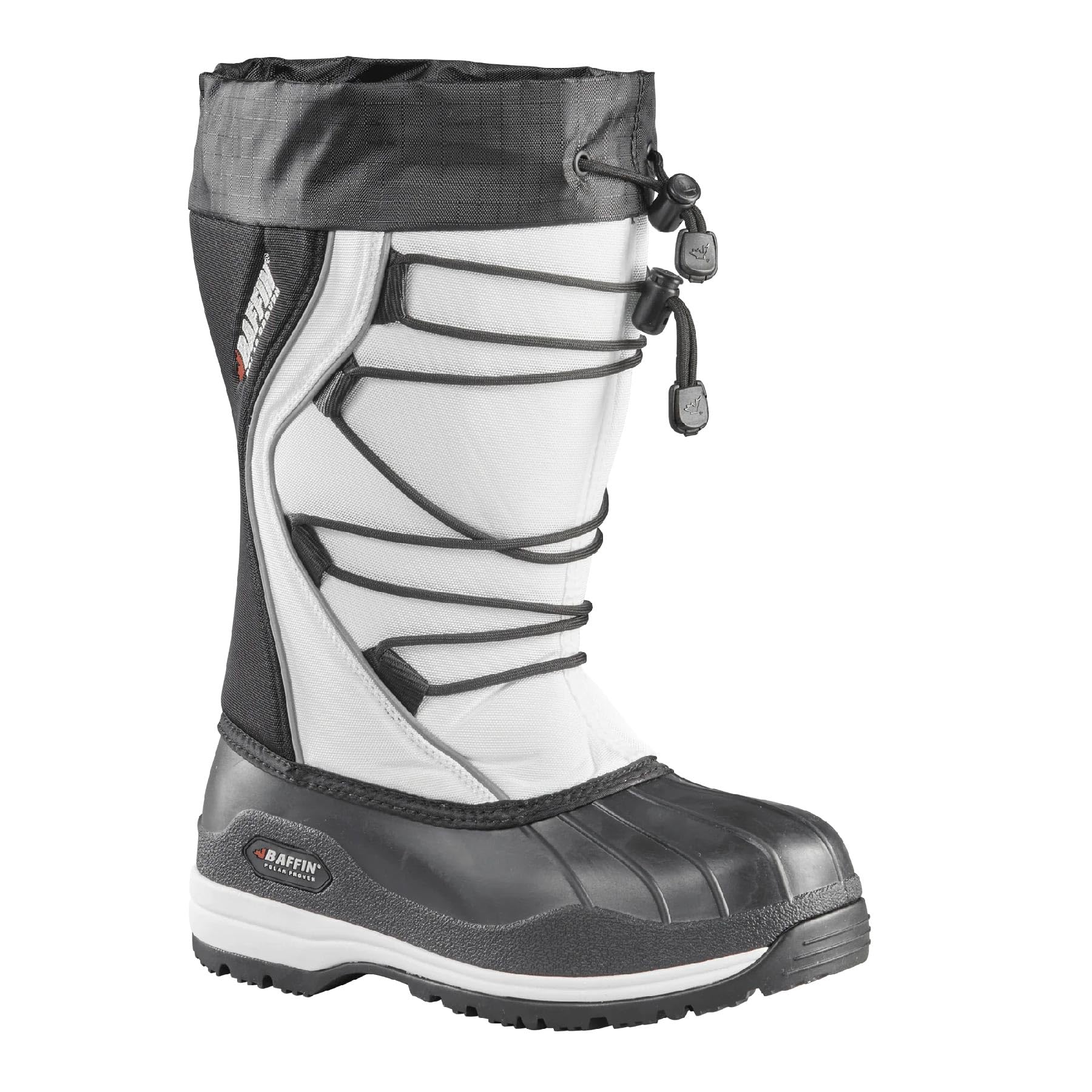
If the KEEN Revel 4 is your everyday winter boot, the Baffin ICEFIELD is the heavy lifter for true arctic conditions — it carries a polar rating to -100°C (-148°F) that buyers confirm keeps feet incredibly warm even in negative temperatures. The multi-layer inner boot uses B-Tek Heat insulation (a hollow-fiber synthetic layer), a vaporized aluminum membrane (a thin metal-like sheet that reflects body heat), and a waffle-comb footbed (a grid pattern that traps warm air) to hold warmth.
Shoppers say it is “extremely warm” with a -100°C rating, yet still feels lightweight and not bulky. The 12-inch tall nylon shaft locks out deep snow with a drawstring collar, and the Polar Rubber outsole (a special compound that stays flexible in extreme cold) does not crack in sub-zero temperatures. Compared to the North Face Chilkat V 400, which has 400g of insulation but received complaints about warmth fading after 60 minutes in 15°F wind, the Baffin ICEFIELD is built for prolonged exposure without getting cold.
This boot is for the snowshoer who spends hours in extreme cold — ice fishing, polar treks, or deep-winter expeditions. The toe area does run narrow even when you size up, and the tall shaft can feel tight around slender calves. Choose this over the KEEN or North Face if you face single-digit temperatures for hours at a time.
Where it shines
- Extreme polar-rated warmth for sub-zero conditions
- Lightweight for a tall boot at 4 pounds
- Excellent ice tread with Polar Rubber outsole
Worth noting
- Toe area runs narrow, even when sizing up
- Tall shaft may be tight for slender calves
3. THE NORTH FACE Men’s Chilkat V 400 Waterproof Snow Boot

Imagine you are snowshoeing in 20°F weather with a steady wind, and you want a boot that keeps your feet warm without overheating — that is exactly where the North Face Chilkat V 400 shines. It packs 400g of premium insulation, which is twice the amount found in the KEEN Revel 4 (200g), making it a stronger choice for colder conditions and high-output activities where you want warmth locked in.
Buyers describe it as “crazy comfortable, warm, waterproof,” and the non-PFC DWR finish (a water-repellent coating without perfluorinated chemicals) sheds snow and slush on the trail. The sole is wide enough for most bindings, and the compression-molded foam midsole gives a stable platform for snowshoes. However, some reviewers report a “cold in 60 min at 15°F snow blowing” experience, suggesting the 400g insulation may not be enough for truly extreme wind chills.
The standout spec here is the 400g insulation paired with a comfortable, sneaker-like fit — a combination that is rare in snow boots.
What stands out
- 400g insulation provides strong warmth for cold weather
- Very comfortable like a running shoe for all-day wear
- Wide enough for wider feet
The trade-offs
- Some users find it not warm enough in windy, single-digit temps
- Runs small — order half to full size up
4. Baffin Women’s SAGE Waterproof Insulated Slip-Resistant Mid-Height Snowshoe Compatible Winter Sports Snow Boots, Tundra Rated
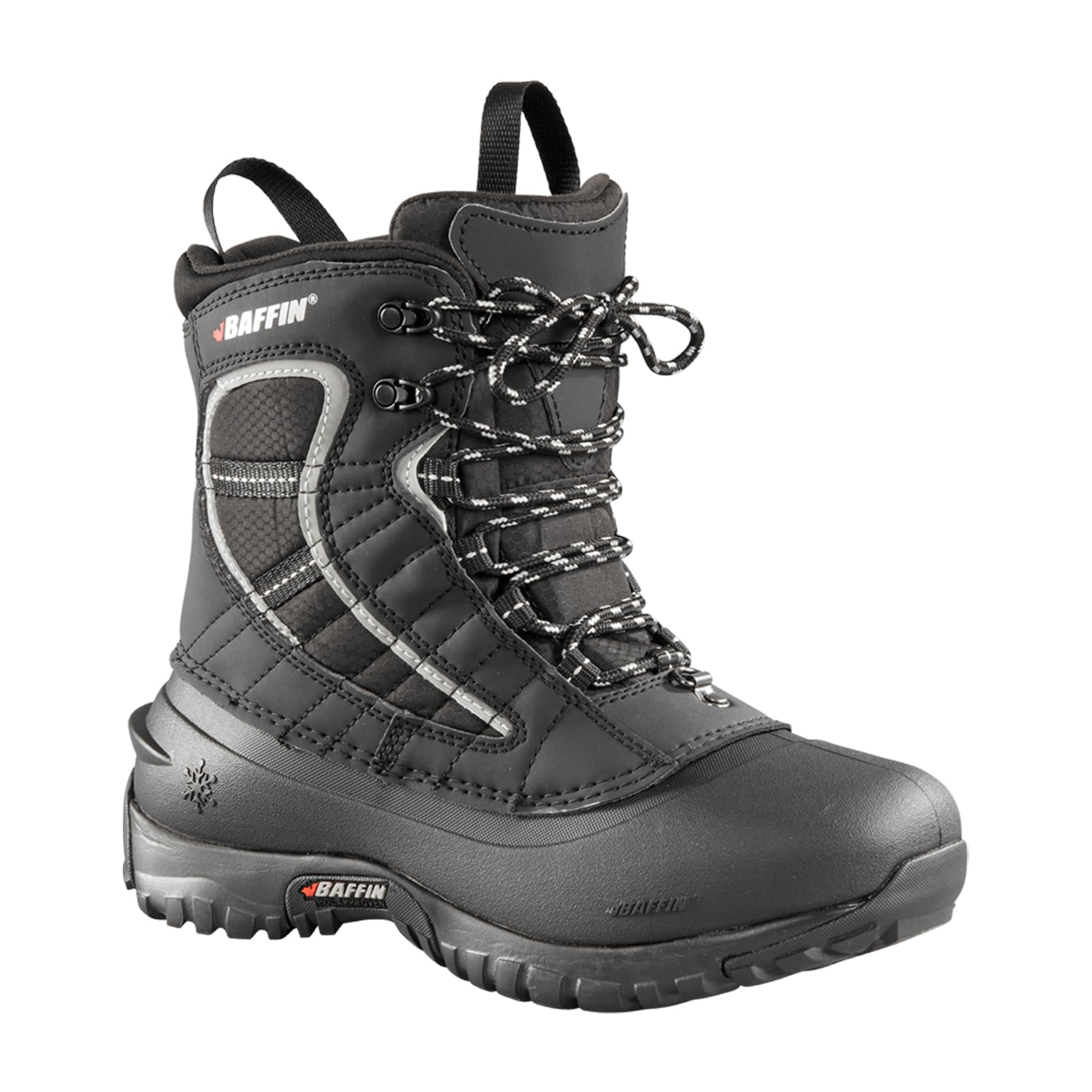
1.1 pounds per boot: that is the single number that matters most in this category, and this boot scores impressively light—feeling closer to a heavy hiking boot than a bulky winter boot—while still delivering Tundra Rated extreme cold performance that buyers confirm keeps toes with circulation issues warm in 10°F.
The catch is a snug fit: nearly every reviewer warns that it runs at least one full size small and is narrow, especially through the toe box, so if you have wide feet or plan to wear thick wool socks, sizing up significantly is essential. The Polar Rubber outsole provides solid traction on snow and ice, and the mid-height shaft makes it easier to strap into snowshoe bindings compared to taller boots.
This boot is a strong mid-range value pick: it offers Baffin’s proven warmth technology at a more accessible price than the flagship ICEFIELD or BOREALIS models, giving you a clear price-to-value read—just be prepared to order a larger size than usual.
The upsides
- Excellent warmth-to-weight ratio for active use
- Great traction on ice and snow
- Snowshoe-compatible design with a small footprint
Keep in mind
- Runs very small and narrow — size up significantly
- Not suitable for wide feet
5. Baffin Men’s ZONE High-Performance Lightweight Insulated Waterproof Cold-Weather Snow Winter Boots for Snowshoeing & Hiking

What do you actually get at this lower price? A boot tested during marathons and ultramarathons in both the Arctic and Antarctic, according to the brand — the Baffin ZONE, built for high-output winter activity where you want lightweight warmth and aggressive traction, not bulk. The EVA midsole provides cushioning for extended movement, and the Polar Rubber outsole gives maximized grip on slippery surfaces.
Buyers report it “performed flawlessly” in Northern Greenland at -5°F with two sock layers, and it fits MSR snowshoes easily thanks to the tendon guard and ledge at the back. The speed-lace system makes quick adjustments on the trail, and the fixed-fit inner boot system uses B-Tek Heat hollow-fiber insulation for breathability during high exertion. At 1.7 pounds, it is light enough for day hikes but falls short for multi-day camping — one reviewer notes it saturates from sweat and freezes solid overnight at 8°F.
This is the boot for the active snowshoer who wants a performance-focused, lightweight option that handles aggressive movement and fits standard bindings. The downside: it is not insulated enough for stationary use in extreme cold, and it may not stand up to multi-day winter trips without drying out overnight — the exact budget buyer it is perfect for.
Why we’d pick it
- Lightweight and performance-oriented for active winter sports
- Excellent traction on ice with Polar Rubber outsole
- Tested in extreme arctic conditions
A few caveats
- Not suitable for multi-day winter camping (sweat freezes overnight)
- Runs large — sizing down may be needed for a snug fit
6. Baffin Men’s BOREALIS Boots | Waterproof Vegan Winter Sport Hiking Boots with Removable Insulated Liner | Snowshoe Compatible
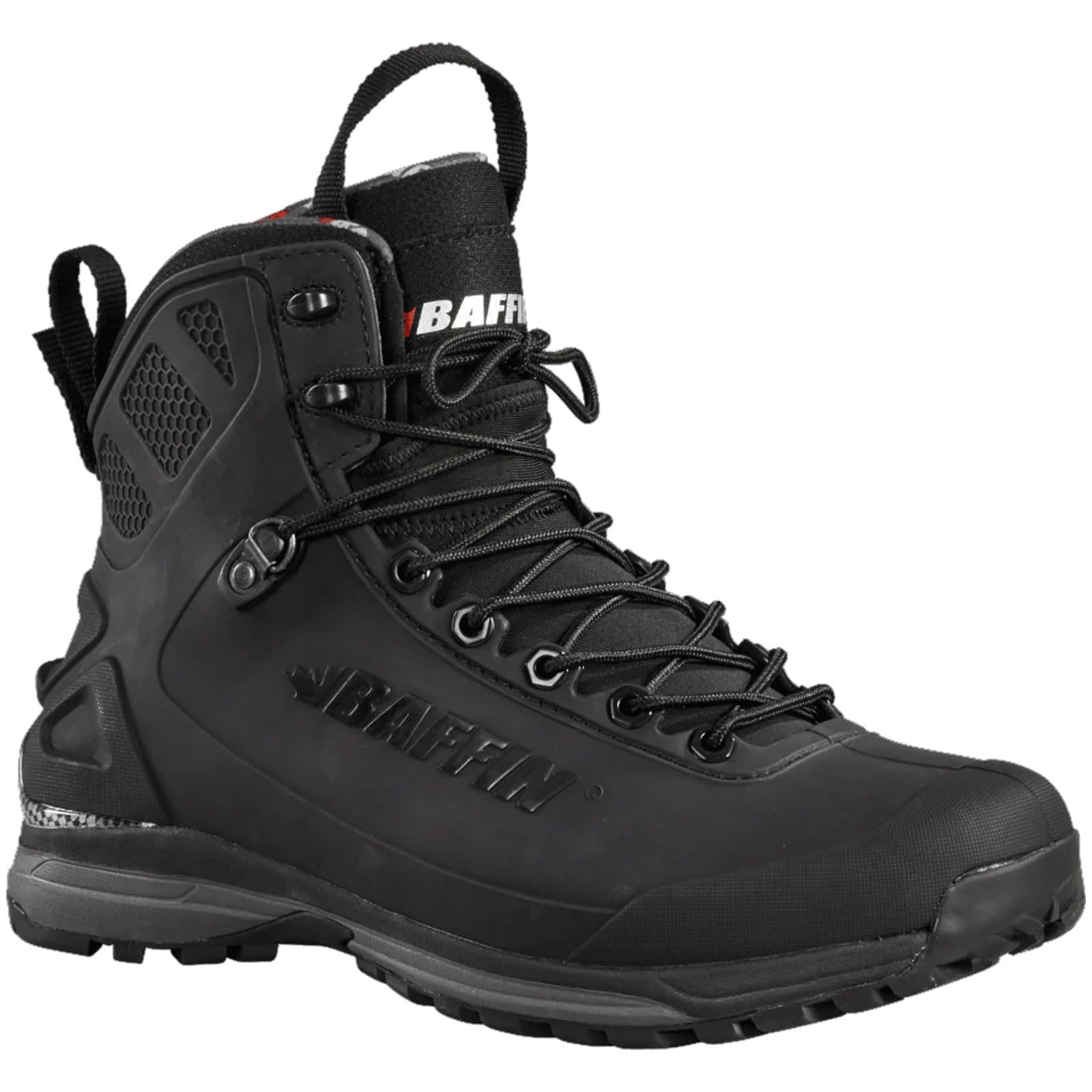
The Baffin BOREALIS is perfect for the multi-season outdoor enthusiast who wants one boot to handle everything from fall hikes to deep-winter snowshoeing, without buying separate footwear for each season.
Its removable insulated liner is the standout feature—buyers call it “genius,” with a sewn tongue, nylon loop for easy entry, and an elastic band that keeps the liner secure. After two months of daily wear in snow, ice, and sub-zero temperatures, one reviewer reports feet were “never wet, cold, or overheated.” The waterproof membrane and a lace lock via snap ring add everyday convenience. At 1.69 pounds, it is light for a winter boot, and the shell holds up well in single-digit cold.
One honest limit is the fit: buyers consistently say it runs at least one full size small, so you should size up. The boot is also not wide, though it offers enough volume for heavy socks. If you value versatility and want a boot that transitions from fall hiking to winter snowshoeing, the BOREALIS delivers more seasonal range than any other boot in this list—just be sure to order a size larger than usual.
Strong points
- Removable liner for three-season versatility
- Excellent waterproofing and warmth for sub-zero wear
- Innovative liner design for easy entry and fit
Before you buy
- Runs at least one full size small — order up
- Not a wide fit, though accommodates thick socks
Understanding the Specs
Insulation Weight (Grams)
The “200g” or “400g” on a boot label is the weight of the insulation material (usually synthetic fibers) used inside. More grams trap more warm air, but they also add weight and reduce breathability. For snowshoeing, match the gram rating to your local winter temperature: 200g works for mild cold (above 20°F), while 400g is better for deep cold (single digits).
Waterproof Membrane (e.g. KEEN.DRY)
A membrane is a thin inner layer that stops liquid water from getting in while letting water vapor (sweat) escape. This is different from a Durable Water Repellent (DWR) coating, which only makes water bead off the surface. For snowshoeing, where you step into deep snow, a sealed membrane is essential — DWR alone will eventually wet out.
Polar Rubber Outsole
This is a special rubber compound that stays flexible in very cold temperatures, unlike standard rubber that hardens and loses grip. Baffin’s Polar Rubber outsole is designed to maintain traction on ice and snow even in sub-zero conditions, which is critical for snowshoeing on icy trails.
Snowshoe Binding Compatibility
Look for a boot with a stiff sole, a defined heel ledge (a ridge at the back of the heel), and a tendon guard (a raised section above the heel that a strap hooks around). These features keep the binding strap from slipping off the boot. Many manufacturers — including Baffin and KEEN — explicitly state snowshoe compatibility in their product descriptions.
FAQ
How much insulation do I need for snowshoeing?
Can I use regular winter boots for snowshoeing?
Should I size up for snowshoeing boots?
Are waterproof and water-resistant the same thing?
Final Thoughts: The Verdict
For most snowshoers, the snowshoeing boots winner is the KEEN Revel 4 Mid because it balances warmth, weight, and traction for everyday winter hikes and snowshoeing. If you face extreme sub-zero cold for hours at a time, grab the Baffin ICEFIELD Tall. And for high-output winter sports where you want lightweight performance, the Baffin ZONE is the lightest and most active-friendly option in this list.