
Our readers keep the lights on and the weekend projects moving. As an Amazon Associate, I earn from qualifying purchases.
Choosing the wrong thickness, material, or closure type can rob you of pounds on the bar and leave you fighting an ill-fitting strap mid-set.
I’m Rikta — the co-founder and writer behind FitlyFast. I’ve spent hundreds of hours comparing lever, prong, and Velcro belt designs, digging through compression data, and analyzing real-user feedback across hundreds of lifts to identify which belts deliver max support without restricting your breathing or range of motion.
Whether you’re a powerlifter chasing a new PR or a weekend warrior protecting your lower back, this guide breaks down the seven best options on the market and explains exactly what specs matter. This is your complete resource for finding the best weightlifting belt.
How To Choose The Best Weightlifting Belt
The wrong belt can slip during a deadlift, dig into your ribs during a squat, or feel so stiff you can’t brace properly. Here are the three specs that separate a great belt from a frustrating one.
Thickness: 7mm vs 10mm
Thicker belts (10mm) offer more rigid support for maximal-effort squats and deadlifts because they create a harder surface for your abs to push against. Thinner belts (7mm) provide better flexibility and are more comfortable for Olympic lifts, front squats, and high-rep work where range of motion matters. If you compete in powerlifting, 10mm is the standard. If you do CrossFit or weightlifting, 7mm is often a better fit.
Closure Type: Lever vs Prong vs Velcro
Lever belts lock in place with a single click and deliver consistent tension throughout a session—ideal for powerlifters who want the same tightness every set. Prong belts (single or double) are more adjustable, letting you micro-adjust between exercises, but can loosen slightly during heavy reps. Velcro belts are quick on/off and best for dynamic WODs where you need to strip the belt between movements, but they lack the rigidity of leather for limit-strength lifts.
Material: Leather vs Nylon
Leather belts offer unmatched durability and load transfer because the stiff material doesn’t compress under heavy weight. Nylon belts are lighter, more portable, and require zero break-in, making them a solid choice for training on the go or for lifters who prefer a flexible feel. For serious powerlifting, triple-ply leather or suede-lined genuine leather is the standard. For general gym work, a nylon Velcro belt often provides enough support.
Quick Comparison
On smaller screens, swipe sideways to see the full table.
| Model | Category | Best For | Key Spec | Amazon |
|---|---|---|---|---|
| Iron Bull Strength 7mm Leather | Leather, Tapered | Olympic lifts & competition | 7mm thickness, IPF approved | Amazon |
| Mytra Fusion Genuine Leather | Leather, Prong | Heavy powerlifting | 10mm, dual-lock steel buckle | Amazon |
| Arsa Fitness Lever Belt | Leather, Lever | Consistent tension setup | 10mm, micro-fiber leather | Amazon |
| MRX Powerlifting Leather Belt | Leather, Prong | Budget powerlifting entry | 10mm, steel slide bar buckle | Amazon |
| Fitgriff Classic Leather Belt | Leather, Prong | Lifters wanting a traditional feel | 5mm, double prong buckle | Amazon |
| DEFY Weightlifting Lever Belt | Leather, Lever | Powerlifting on a budget | 10mm, single prong lever | Amazon |
| Bear KompleX 4″ Straight Belt | Nylon, Velcro | WODs and CrossFit | 4″, super firm Velcro closure | Amazon |
In‑Depth Reviews
1. Iron Bull Strength 7mm Leather Weight Lifting Belt
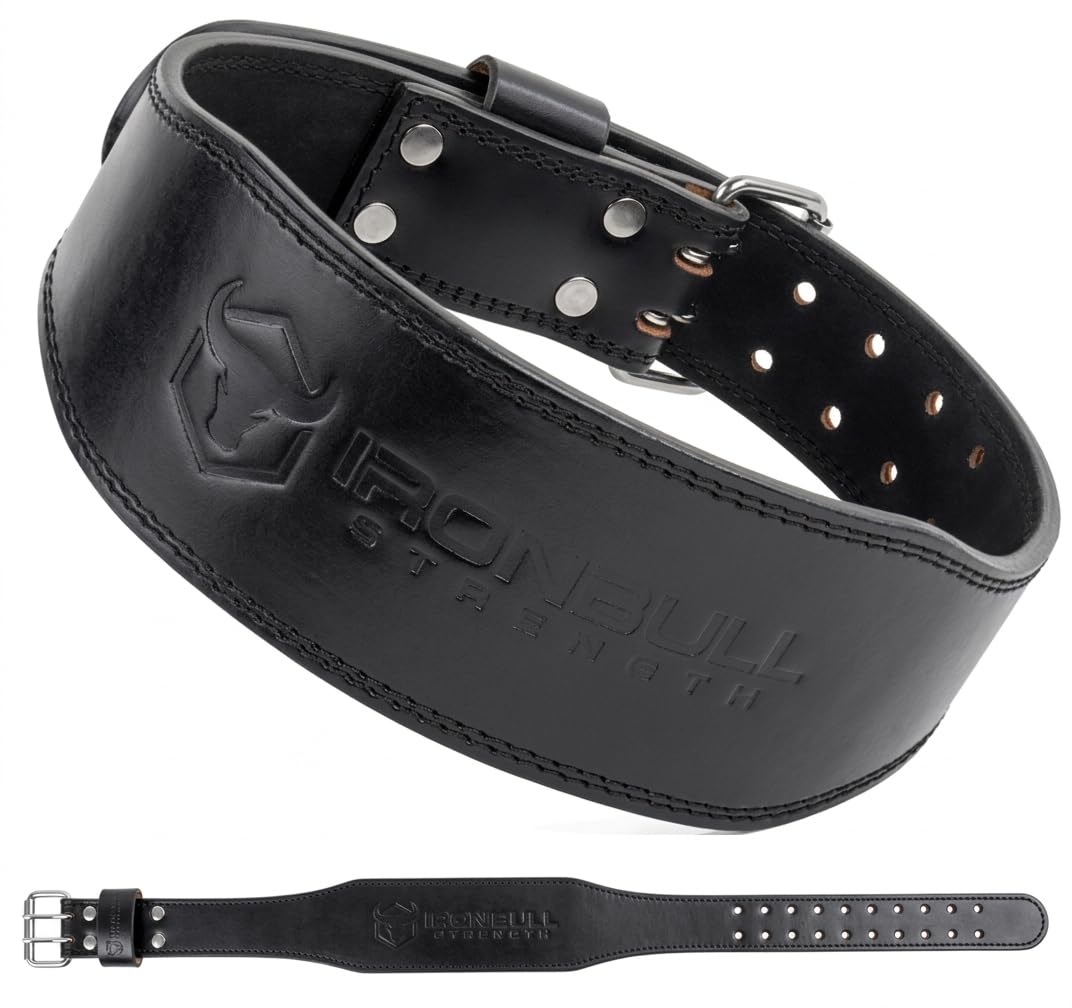
This belt is a standout for lifters who need competition approval without sacrificing flexibility. The 7mm A-grade leather provides enough rigidity for heavy squats and deadlifts while allowing enough give for Olympic movements like snatches and cleans where range of motion is critical. The 4″ to 2″ taper reduces pressure on the ribs during front squats—a detail that powerlifters and weightlifters both appreciate.
The double roller steel prong buckle is precision-coated and holds fast even when you’re sweating through a high-rep set. Unlike some 10mm belts that require weeks to break in, this 7mm construction feels comfortable right out of the box while still offering the stiffness needed to build intra-abdominal pressure. The suede lining adds grip against your shirt, preventing the belt from riding up during pulls.
Competition-legal with IPF, USAPL, USPA, IPL, USAW, and IWF certifications, this belt covers every major federation. The lifetime warranty against manufacturing defects gives confidence that this is a one-time purchase. The small included carrying case is a nice bonus for keeping the leather protected between sessions.
Why it’s great
- IPF, USAPL, USAW approved for competition
- 7mm thickness balances support and flexibility for all lifts
- Tapered design prevents rib pinching during front squats
- Comes with a lifetime warranty against defects
Good to know
- 7mm may feel too flexible for maximal-effort sumo deadlifters who prefer a 10mm
- Belt runs slightly small; measure your true waist before ordering
2. Mytra Fusion Weight Lifting Belt

If you want a single belt that handles your heaviest squats and deadlifts without breaking the bank, this Mytra Fusion is a top contender. The 10mm genuine leather offers the rigid, uncompressing wall your abs need to generate maximum intra-abdominal pressure on 1RM attempts. At 4″ wide, it provides even support across the lower back without digging into the hip bones during the bottom of a squat.
The HG Steel Duo locking system uses two points of contact to keep the belt snug set after set. The steel prongs are thicker than what you’ll find on budget belts, resisting bending even under 500+ lb loads. A couple of users noted the screws can loosen over time—a dab of thread locker resolves this in seconds. The embroidered logo is understated and holds up well against chalk and sweat.
After a 2-3 session break-in period, the leather molds to your torso shape, creating a custom fit that plastic-coated belts never achieve. The size range covers from small to double extra large, accommodating waist measurements from 28″ to 48″. For the combination of 10mm thickness, genuine leather build, and reliable hardware, this belt competes with models costing three times as much.
Why it’s great
- 10mm genuine leather provides excellent rigidity for heavy compound lifts
- Dual-lock steel buckle prevents slipping during intense sets
- Leather molds to your body after a short break-in period
- Value is exceptional for the build quality offered
Good to know
- Screws can back out; apply thread locker during initial setup
- Belt is stiff initially and requires 2-3 sessions to fully break in
3. Arsa Fitness Weightlifting Adjustable Lever Belt

The lever closure on this Arsa Fitness belt is its biggest advantage. Once you set the tension with the included screwdriver, each subsequent lift gets the exact same tightness—no fighting with a prong halfway through a heavy deadlift setup. The 10mm micro-fiber leather provides the stiffness required for powerlifting while being slightly more pliable than full-grain cowhide, reducing break-in time.
The rustic bolt aesthetic gives the belt a distinct look, but the real value is in the stainless steel lever mechanism. It locks into place with a definitive click and didn’t budge during repeated 400+ lb squat sessions. The 4″ uniform width offers consistent support across the entire lower back, though some lifters with shorter torsos may find it presses against their ribs during deep squats.
Reviews consistently note that the belt arrives well-packaged with a screwdriver for micro-adjustments. The main durability concern is the lever itself—while the stainless steel construction is robust, the screws that attach the lever to the belt can strip if overtightened. Replacing them with bolts from a hardware store solves this permanently. For lifters who prioritize consistent tension on every rep, this lever belt is a strong mid-range option.
Why it’s great
- Lever closure provides identical tightness on every set
- 10mm micro-fiber leather offers great support with faster break-in
- Easy micro-adjustment system with included screwdriver
- Secure locking mechanism holds tight under heavy loads
Good to know
- Lever screws can strip; consider replacing with bolts
- Uniform 4″ width may irritate ribs on very deep squats
4. MRX Powerlifting Leather Belt

This MRX belt proves you don’t need to spend a fortune to get a quality 10mm leather belt. The construction uses genuine leather with double stitching along the edges, and the stainless steel slide bar buckle is smooth to adjust and holds securely. Multiple users reported adding significant weight to their deadlift after switching to this belt, which is the ultimate test for any powerlifting belt.
The belt arrives extremely stiff—some users describe it as board-like. This is normal for a 10mm leather belt; expect to spend a 2-3 sessions bending it, stepping on it, and rolling it to soften the material to your body’s shape. Once broken in, it provides the rigid support needed for heavy squats without excessive bulk. The sizing is accurate, but the manufacturer advises measuring your waist rather than relying on pants size.
Available in six sizes from Small to 3XL, this belt accommodates a wide range of body types. The color options include black, red, blue, and pink, giving some aesthetic variety. For the price point, the stitching quality and hardware durability rival belts found at specialty powerlifting shops. It’s a strong entry-level option that can grow with you as your lifts increase.
Why it’s great
- 10mm leather offers excellent support for heavy compound lifts
- Steel slide bar buckle is smooth and stays secure
- Very affordable for genuine leather construction
- Multiple color and size options available
Good to know
- Extremely stiff out of the box; requires significant break-in
- Size up if you have a larger waist or prefer a looser fit
5. Fitgriff Classic Weight Lifting Belt

For lifters who prefer the feel of a classic single-ply lifting belt without the bulk of a 10mm powerlifting belt, the Fitgriff Classic hits the sweet spot. The 5mm thickness is notably thinner than most belts in this guide, making it ideal for general strength training where you want back support without the restriction of a thicker belt. The double prong buckle adds security over a single prong design, distributing the load across two points.
The 100% genuine cowhide leather has a three-layered construction that provides surprising durability for its thickness. It conforms to your body faster than a 10mm belt, which is a benefit for lifters who don’t want to deal with a prolonged break-in period. The 4″ uniform width gives consistent coverage across your lower back, though it’s not recommended for maximal-effort powerlifting where a thicker belt is required.
Fitgriff backs this belt with a 2-year guarantee, which is longer than most competitors offer at this price tier. The instructions included in the box cover proper breathing and bracing techniques—a thoughtful addition for newer lifters. If you’re looking for a belt for general gym work, bodybuilding, or lighter strength training, this is a comfortable and well-made option that doesn’t over-power your core.
Why it’s great
- Double prong buckle provides extra security over single prong designs
- 5mm thickness is comfortable for general strength training
- Genuine leather molds quickly to your body with minimal break-in
- Includes a 2-year warranty for peace of mind
Good to know
- 5mm is too thin for maximal powerlifting efforts
- May not provide enough support for very heavy deadlifts (>400 lbs)
6. DEFY Weightlifting Lever Belt
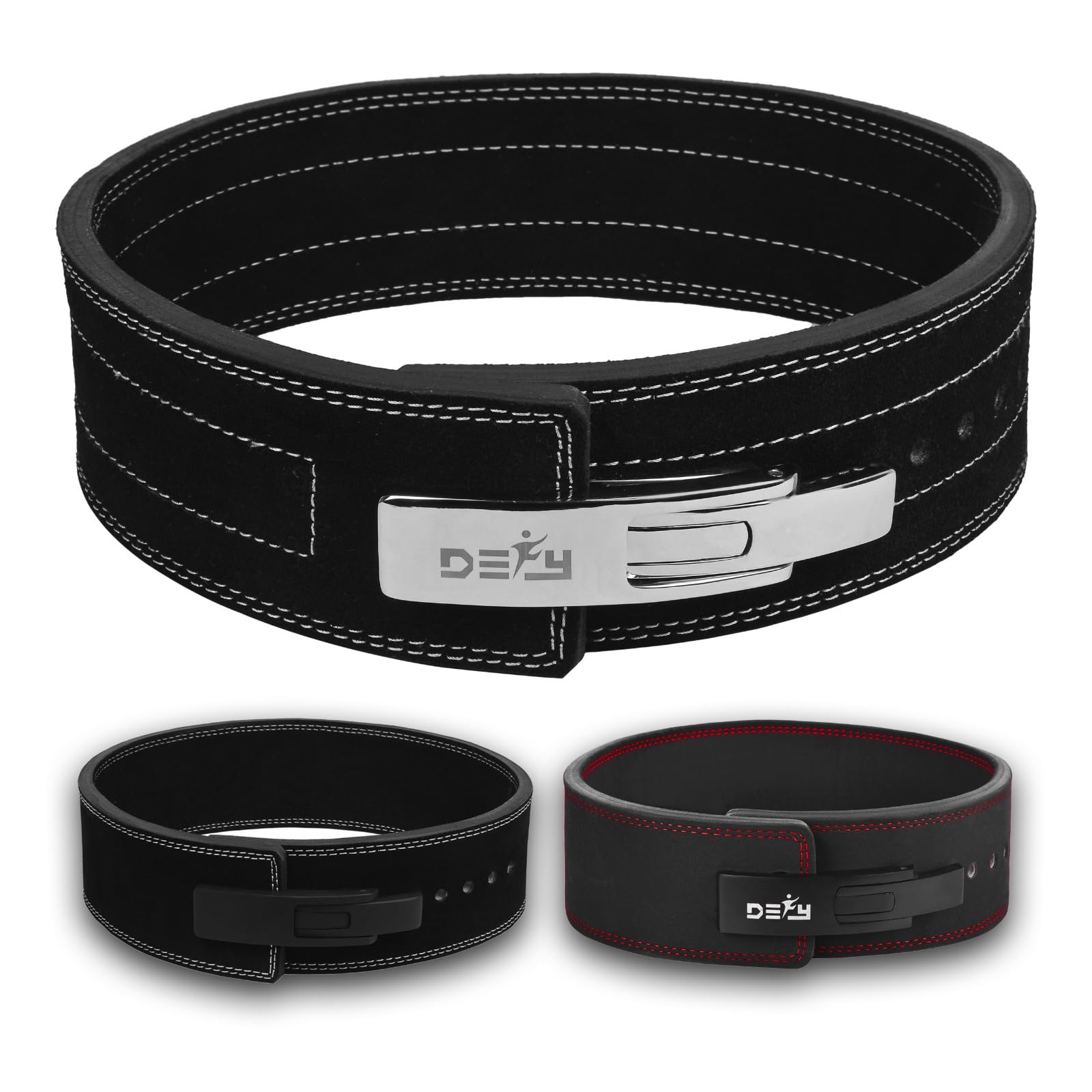
The DEFY belt brings lever-belt convenience to a price point usually reserved for prong-style belts. The 10mm oil-tanned cowhide leather provides the rigidity you want for squats and deadlifts, and the lever mechanism locks in place securely with no slippage during heavy reps. The lever is adjustable with a simple screwdriver, letting you fine-tune the tension to your preferred tightness.
The 4″ uniform width supports your entire lower back, and the dual stitching along the edges adds durability where belts commonly fail. A few users reported the lever screws arrived rusty, which is a quality control miss, but easily fixable by replacing them with stainless steel hardware. The belt is compliant with USPA, IPL, WPC, and GPC federations, making it suitable for most raw powerlifting competitions.
Sizing is a consideration here—several users recommend ordering one size down from your pants size for a snug fit. The belt provides immediate benefit for heavy squat and deadlift sessions, helping you brace harder and lift with better mechanics. If you’re looking to try a lever belt without committing to a premium price, this DEFY model is a smart entry point that performs well above its price tier.
Why it’s great
- Lever closure provides fast, consistent tightening between sets
- 10mm cowhide leather gives serious support for heavy lifts
- Approved by USPA, IPL, WPC, and GPC federations
- Very affordable for a lever-belt design
Good to know
- Some units arrive with rusty screws; budget for replacements
- Order a size down for a proper snug fit
7. Bear KompleX 4″ Straight Weightlifting Belt

This is the belt for high-rep WODs and metcons where you need to strip the belt between movements and re-tighten without losing time. The 4″ nylon construction is lightweight (just over 9 ounces) and rolls up to fit in a gym bag pocket, making it the most portable option in this guide. The super-firm Velcro closure uses a steel roller buckle that keeps the belt from slipping even during dynamic movements like box jumps and burpees.
Bear KompleX is an official sponsor of the CrossFit Games, and this belt reflects that pedigree. The straight design avoids the hip pinching that thicker leather belts cause during front squats and Olympic lifts. While it doesn’t provide the same rigid support as a 10mm leather belt for limit deadlifts, it offers enough stability to help you push through high-volume sets while protecting your lower back.
The adjustable Velcro lets you micro-adjust tension throughout a session, which is useful when you transition from overhead squats to deadlifts. The belt is available in multiple sizes from X-Small to XX-Large, covering waist measurements from 24″ to 48″. If your training is dominated by CrossFit, HIIT, or circuit-style lifting, this is the belt that will spend the most time around your waist without getting in the way.
Why it’s great
- Ultra-lightweight and portable for travel and fast-paced workouts
- Velcro closure with steel roller buckle stays secure during dynamic movements
- Zero break-in required—comfortable from the first use
- Trusted by CrossFit Games athletes and sponsors
Good to know
- Nylon doesn’t provide the same rigid support as 10mm leather for heavy singles
- Velcro can wear down over extended use; not as durable as leather belts
FAQ
Should I get a 7mm or 10mm weightlifting belt?
Do I need a lever belt or a prong belt?
How should a weightlifting belt fit?
Can I wear a weightlifting belt for deadlifts?
Final Thoughts: The Verdict
For most users, the best weightlifting belt winner is the Mytra Fusion because its 10mm genuine leather construction offers the ideal balance of support, durability, and value for powerlifters and general lifters alike. If you want competition-approved flexibility for Olympic lifts, grab the Iron Bull Strength 7mm. And for fast-paced WODs and travel-friendly training, nothing beats the Bear KompleX Velcro belt.