
Our readers keep the lights on and the weekend projects moving. As an Amazon Associate, I earn from qualifying purchases.
A dead grid during a storm doesn’t just mean cold coffee—it means a silent sump pump, a dark refrigerator, and a house that becomes a liability. A whole home generator is the difference between waiting helplessly and living normally when the lights go out, but picking the wrong one means wasting thousands on power you can’t actually use. The goal here is to match your actual electrical load—well pumps, HVAC systems, sensitive electronics—to a machine that can carry it safely for days, not hours.
I’m Rikta — the co-founder and writer behind FitlyFast. This guide compiles months of cross-referencing manufacturer specs, owner experiences, and real-world test results to separate the machines that simply run from those that actually protect your home.
After analyzing fuel types, surge capacities, transfer switch compatibility, and noise profiles across nine leading models, I’ve assembled the definitive resource for the best whole home generators built to keep your household operational when the grid fails.
How To Choose The Best Whole Home Generators
Choosing a whole home generator starts with calculating your essential loads—fridge, well pump, furnace blower, lights, and a few outlets—then matching that to a generator’s running wattage, not its marketing peak number. Oversizing wastes fuel and money; undersizing risks tripping breakers at the worst moment.
Fuel Source and Runtime
Gasoline is widely available but degrades in storage and requires refueling every 8–16 hours under load. Propane stores indefinitely and burns cleaner but delivers slightly lower wattage than gasoline. Natural gas offers unlimited runtime via a piped connection, making it the gold standard for standby units, but it requires professional installation. Battery generators offer silent, fume-free operation and zero fuel storage, but recharging during a multi-day outage depends entirely on solar conditions or grid return.
Power Delivery: Inverter vs. Standard
Inverter generators produce cleaner power with total harmonic distortion (THD) under 5%, making them safe for laptops, smart home hubs, and variable-speed HVAC controls. Standard alternator generators are cheaper per watt but often push THD above 10%, which can damage sensitive electronics over time. If you plan to power anything with a circuit board, an inverter or a unit with automatic voltage regulation is non-negotiable.
Transfer Switch Compatibility
A manual transfer switch or interlock kit is the minimum safe way to backfeed your panel—never use a suicide cord. Automatic standby generators with integrated 200-amp transfer switches provide seamless, unattended power restoration within seconds of an outage. Portable units require you to wheel them out, connect fuel, and flip switches manually. Convenience and cost are the trade-off.
Quick Comparison
On smaller screens, swipe sideways to see the full table.
| Model | Category | Best For | Key Spec | Amazon |
|---|---|---|---|---|
| Generac Guardian 26kW | Standby | Permanent whole-house automation | 26,000W / 200A transfer switch | Amazon |
| EF ECOFLOW DELTA Pro Ultra | Battery | Quiet, zero-emission backup | 7,200W / expandable to 90kWh | Amazon |
| Honda EU7000iS | Inverter | Quiet, clean power for sensitive loads | 7,000W / 52–58 dB(A) | Amazon |
| Westinghouse WGen14500TFc | Tri-Fuel | Fuel flexibility on a large portable | 18,000W peak / tri-fuel | Amazon |
| DuroMax XP15000HX | Dual-Fuel | High-wattage dual-fuel value | 15,000W / 670cc engine | Amazon |
| Generac GP17500E | Gas Portable | Raw power for heavy electric loads | 17,500W / 992cc OHVI | Amazon |
| OSCAL PowerMax 6000 | Battery + Solar | High-watt battery with fast solar recharge | 6,000W / 120/240V split-phase | Amazon |
| Jackery HomePower 3600 Plus | Battery + Solar | Portable solar battery with easy setup | 3,600W / 3,584Wh LFP | Amazon |
| GROWATT HELIOS 3600 | Battery + Solar | Expandable solar battery for whole home | 3,600W / 36kWh max expandable | Amazon |
In‑Depth Reviews
1. Generac Guardian 26kW with 200A Transfer Switch
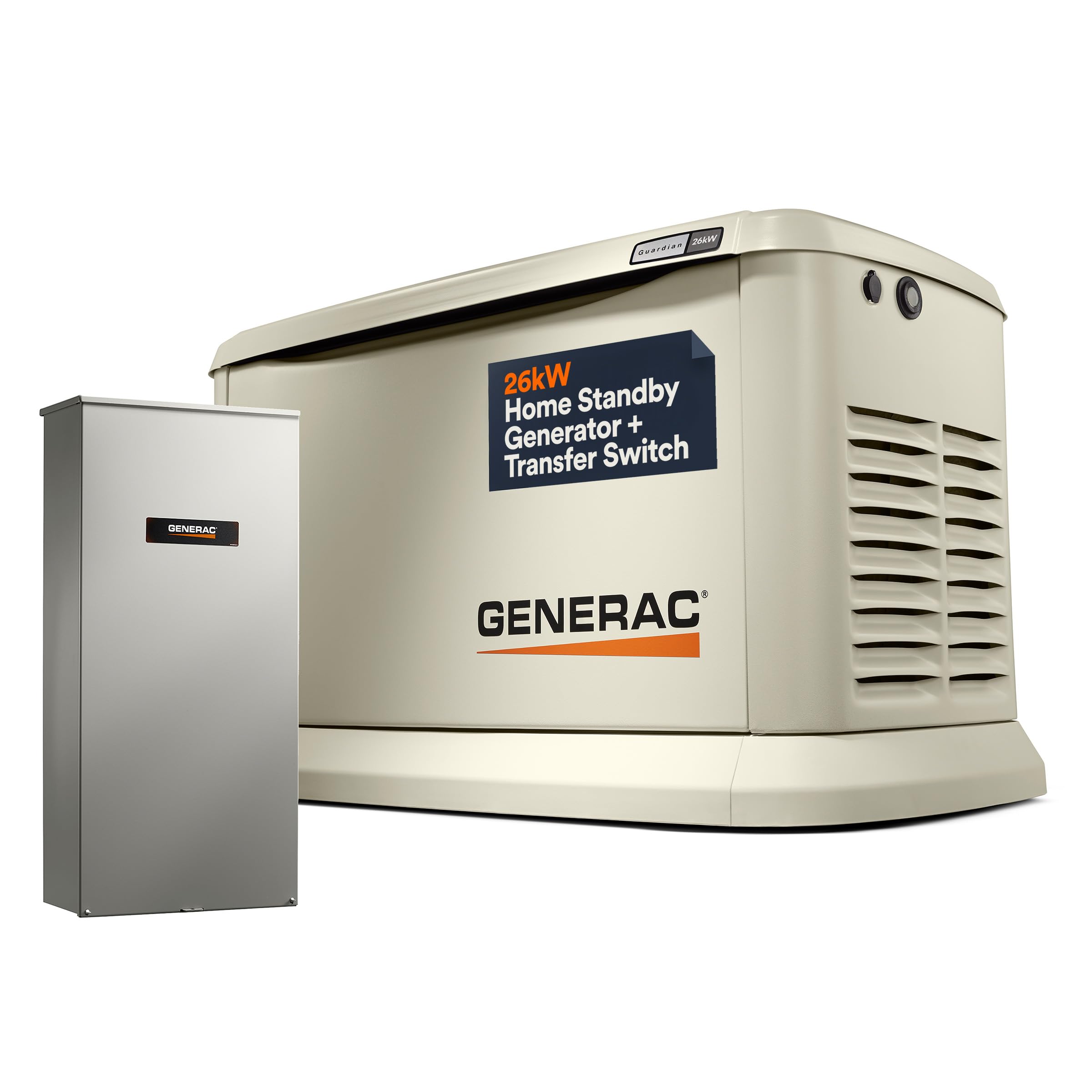
The Generac Guardian 26kW is the benchmark for automatic whole-house backup. It integrates a 200-amp transfer switch and a G-Force 1000 Series engine designed specifically for standby duty. True Power Technology keeps harmonic distortion under 5%, so your fridge, furnace control board, and home network all run without hiccups.
Wi-Fi-enabled Mobile Link lets you monitor status and run weekly exercise cycles remotely. The unit runs on natural gas or liquid propane, meaning no fuel degradation or refueling during a multi-day outage. At 26,000 watts on natural gas, it handles a 3- to 4-ton AC unit plus essential loads simultaneously.
Professional installation is mandatory, but once in place, it activates automatically within seconds of a grid failure. The 5-year limited warranty backs the investment, and real owners report reliable performance across multiple storms and years of service.
Why it’s great
- Automatic 200A transfer switch eliminates manual action
- Sub-5% THD protects sensitive electronics
- Unlimited runtime on natural gas
- Remote monitoring via Mobile Link app
Good to know
- Requires professional installation (not DIY)
- Heavy unit at 518 lbs
- Noise level is noticeable but tolerable
2. EF ECOFLOW DELTA Pro Ultra with 2x400W Panels

The DELTA Pro Ultra redefines battery backup by delivering 7,200W of continuous 120/240V split-phase power straight out of the box. That’s enough to start and run a 3-ton central air conditioner, well pump, and kitchen loads without fuel or fumes. The base 6,144Wh battery scales to 90kWh with additional batteries, covering over 30 days of essential power for a typical home.
Recharging the base unit takes just 2 hours via AC wall outlet, or you can pair it with the included 400W foldable solar panels for daytime solar top-ups. The panel design is rated IP68 waterproof, and the whole system operates silently—no exhaust to vent, no fuel to store.
Owners praise its seamless performance during blackouts and appreciate the ability to power sensitive electronics directly without worrying about dirty power. The included solar panels, however, are large and require steady repositioning for optimal angle, which some find cumbersome.
Why it’s great
- Silent, zero-emission operation
- Scalable from 6kWh to 90kWh
- 2-hour full recharge via AC
- 120/240V split-phase out of the box
Good to know
- Solar panels are large and require manual aiming
- High upfront investment per usable kWh
- Does not include a transfer switch
3. Honda EU7000iS Inverter Generator
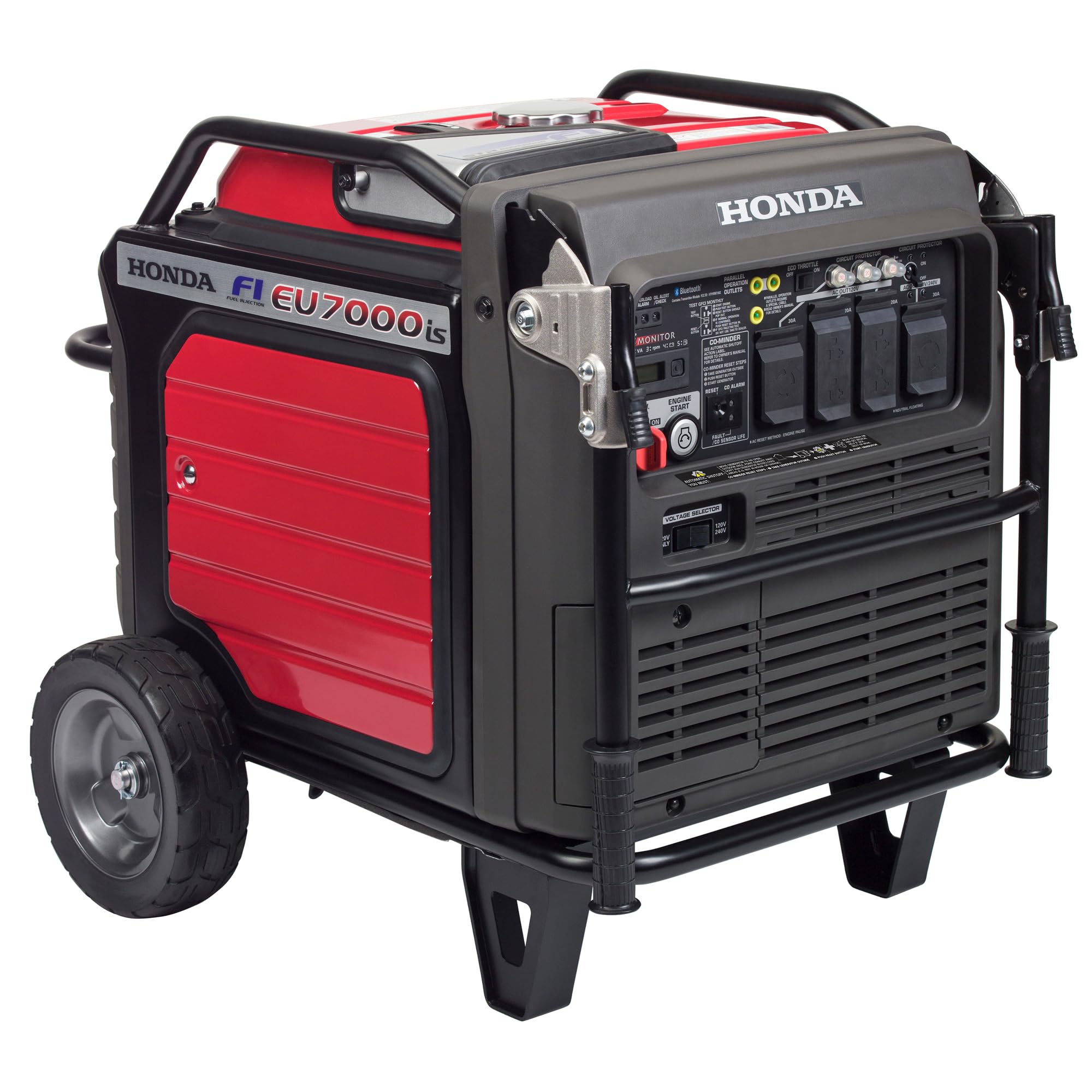
Honda’s EU7000iS sets the standard for inverter generator performance with ultra-clean power and whisper-quiet operation. At 52 to 58 dB(A)—quieter than a normal conversation—this unit runs a whole home’s essentials without disturbing neighbors or campers. The 7,000W output (7000W peak) powers refrigerators, well pumps, and window AC units.
The Eco Throttle system adjusts engine speed based on load, stretching the 5.1-gallon tank to 16 hours at light loads. The CO-MINDER carbon monoxide detection system automatically shuts down the generator if CO levels rise dangerously. Bluetooth connectivity through the My Generator app allows remote start/stop and service reminders.
Users consistently highlight reliability and build quality—many report flawless operation through multiple hurricanes. The trade-off is that 7,000W won’t power a large central AC or an electric water heater simultaneously, so load management is required.
Why it’s great
- Extremely quiet—under 58 dB(A)
- Clean inverter power safe for electronics
- Bluetooth remote start/stop
- Up to 16-hour runtime at 25% load
Good to know
- 7,000W may not run a large central AC without load shedding
- Gasoline-only fuel
- Battery may arrive partially discharged
4. Westinghouse WGen14500TFc Tri-Fuel Generator
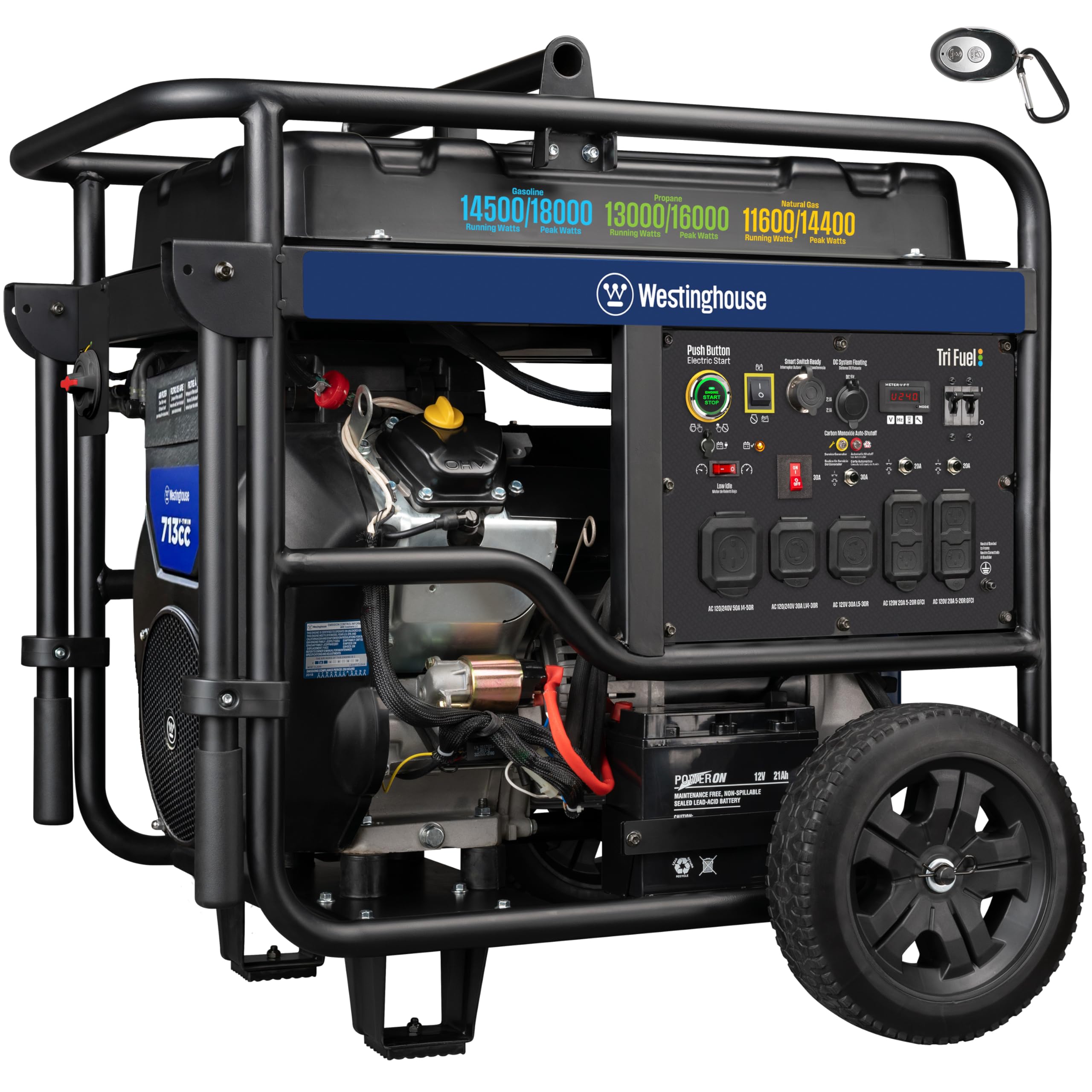
The Westinghouse WGen14500TFc offers unmatched fuel flexibility with gasoline, propane, and natural gas compatibility. On natural gas, it delivers 11,600 running watts—enough for a large home’s essential circuits without ever worrying about refueling. The 713cc V-Twin OHV engine is a proven workhorse that runs up to 16 hours on a 10.5-gallon gas tank at 25% load.
Total harmonic distortion remains below 5%, making this generator safe for sensitive electronics. The control panel includes a 50-amp 14-50R outlet for direct transfer switch connection, along with a 30-amp twist-lock and dual 20-amp GFCI outlets. Push-button and remote start make activation simple during stressful blackouts.
Real owners note that the unit is loud—typical for an open-frame portable of this size—and that the included natural gas hose is not supplied, so you’ll need to source one separately. The CO sensor provides automatic shutdown if dangerous fumes accumulate.
Why it’s great
- Tri-fuel: gas, propane, and natural gas
- Sub-5% THD for clean power
- 50-amp outlet ready for transfer switch
- 16-hour runtime on gasoline
Good to know
- No natural gas hose included
- Loud open-frame operation
- Heavy at 348 lbs
5. DuroMax XP15000HX Dual-Fuel Generator
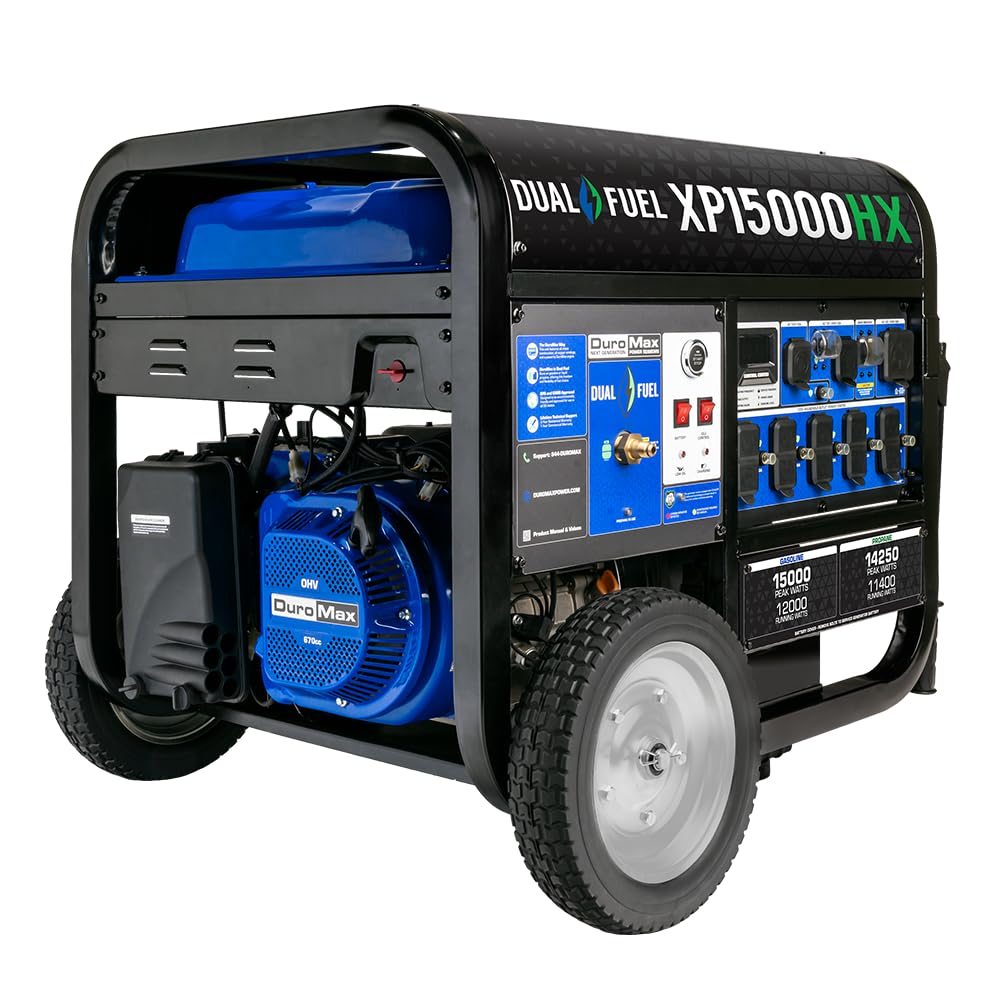
The DuroMax XP15000HX delivers massive 15,000 running watts from its 670cc OHV engine, making it one of the most powerful portable dual-fuel generators on the market. It runs on gasoline or propane, with a front-facing fuel selector that lets you switch in seconds. All-copper windings improve heat dissipation and longevity—a detail serious buyers check.
The power panel includes a 50-amp 120/240V outlet for direct connection to a transfer switch, plus five 120V GFCI outlets, a 30-amp twist-lock, and a digital multimeter that displays voltage, frequency, and run hours. The CO Alert system automatically shuts the unit down if carbon monoxide reaches dangerous levels. The remote start key fob adds convenience from inside the house.
Owners report reliable whole-house power through extended outages, though some note that the idle control switch can be problematic and that customer service responsiveness varies. At 345 lbs, it requires a sturdy wheel kit and a dedicated storage location.
Why it’s great
- 15,000W running wattage covers large homes
- All-copper windings for durability
- Dual-fuel flexibility with quick switch
- 50-amp transfer switch ready outlet
Good to know
- Some reported issues with idle control switch
- Heavy and loud during operation
- Customer service responsiveness varies
6. Generac GP17500E Gas-Powered Generator

The Generac GP17500E is a brute-force portable generator built around a 992cc OHVI engine with full pressure lubrication and an automotive-style spin-on oil filter. It delivers 17,500 running watts—enough to handle a 5-ton AC startup surge plus well pump, water heater, and kitchen appliances in a large home. The 1.25-inch steel-tube cradle and integrated lifting eye mean this unit is built for tough environments.
The large steel fuel tank includes a built-in gauge, and the hour meter helps track maintenance intervals. The low-oil shutdown protects the engine from damage. Covered outlets add protection from weather and debris. The unit is transfer switch ready via a 50-amp outlet.
Real owners confirm it’s a powerful, reliable machine that has run flawlessly through major storms for years. The trade-off is high fuel consumption—roughly 1 gallon per hour at moderate load—and significant noise. It’s also extremely heavy (450+ lbs), requiring a heavy-duty wheel kit or dedicated cart.
Why it’s great
- 992cc OHVI engine with pressure lubrication
- 17,500W running wattage handles heavy loads
- Spin-on oil filter for easier maintenance
- Rugged steel cradle and lifting eye
Good to know
- Very loud during operation
- High fuel consumption (~1 gal/hour)
- Heavy unit requires significant mobility effort
7. OSCAL PowerMax 6000 Solar Generator with 3x400W Panels
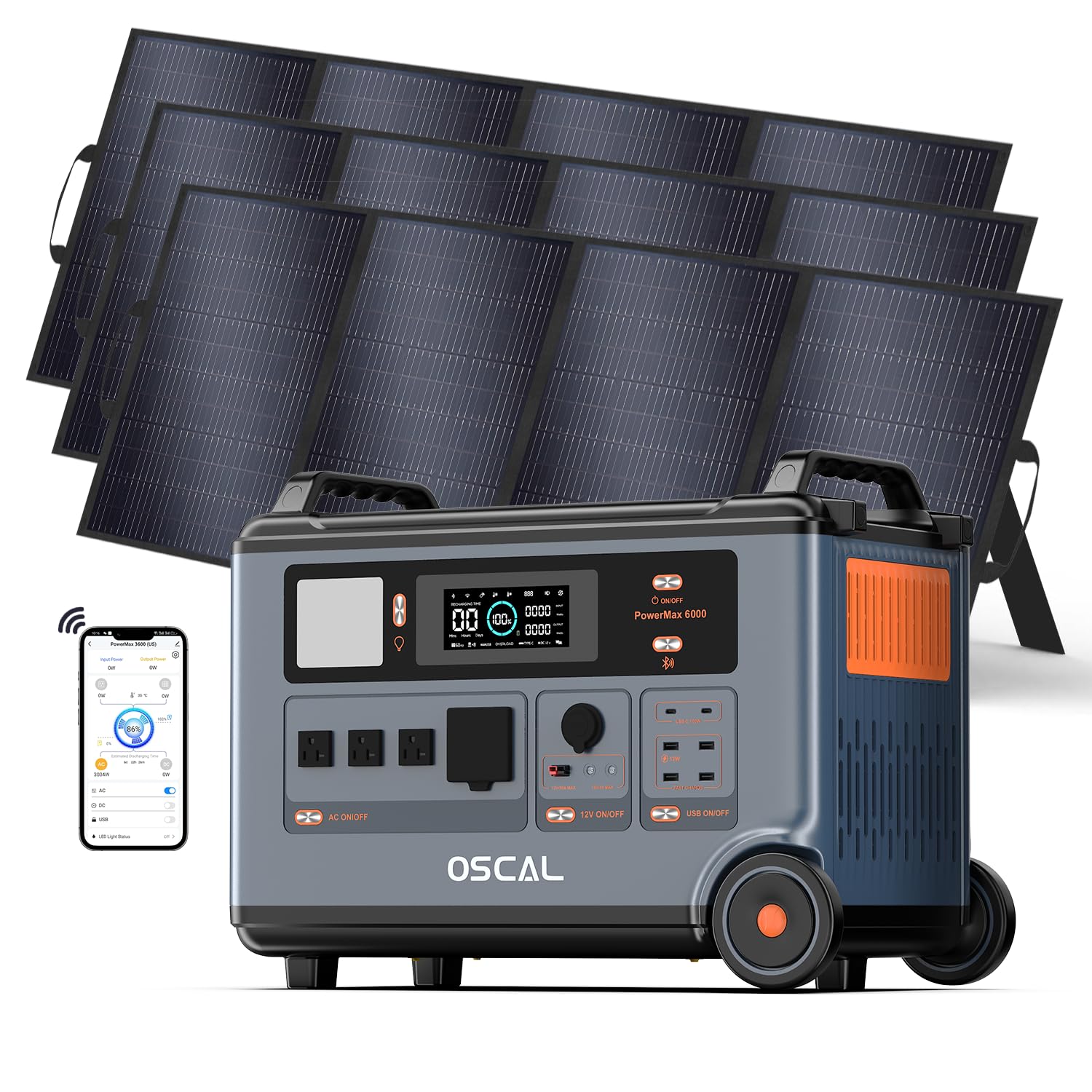
The OSCAL PowerMax 6000 brings 6,000W of split-phase 120/240V output from a 3,600Wh LiFePO4 battery pack, with the ability to surge to 9,000W for motor starts. The integrated bi-directional inverter supports both AC and solar charging, with a full 0–100% recharge in under 2 hours via a 2200W AC input. The included three 400W solar panels can top up the battery during daylight without grid power.
EPS switching happens in 5–8 milliseconds—fast enough to keep network equipment and computers running without interruption. The OSCAL app allows remote monitoring of power usage and battery status. The LFP battery chemistry is rated for 3,500 cycles, translating to roughly 10 years of daily use.
Some users note that achieving the full 6,000W continuous output may be limited by the included solar input capacity, and the included charging cables could be longer. Overall, it’s a capable high-wattage battery solution for homes that want solar recharge capability without fuel storage.
Why it’s great
- 6,000W split-phase with 9,000W surge
- 5–8ms EPS switching for sensitive loads
- 3,500-cycle LFP battery life
- APP remote monitoring
Good to know
- Some users report difficulty achieving full 6000W
- Solar panel MC4 branch connector needed for multiple panels
- Charging cable length may be too short for some setups
8. Jackery HomePower 3600 Plus with 2x200W Solar Panels
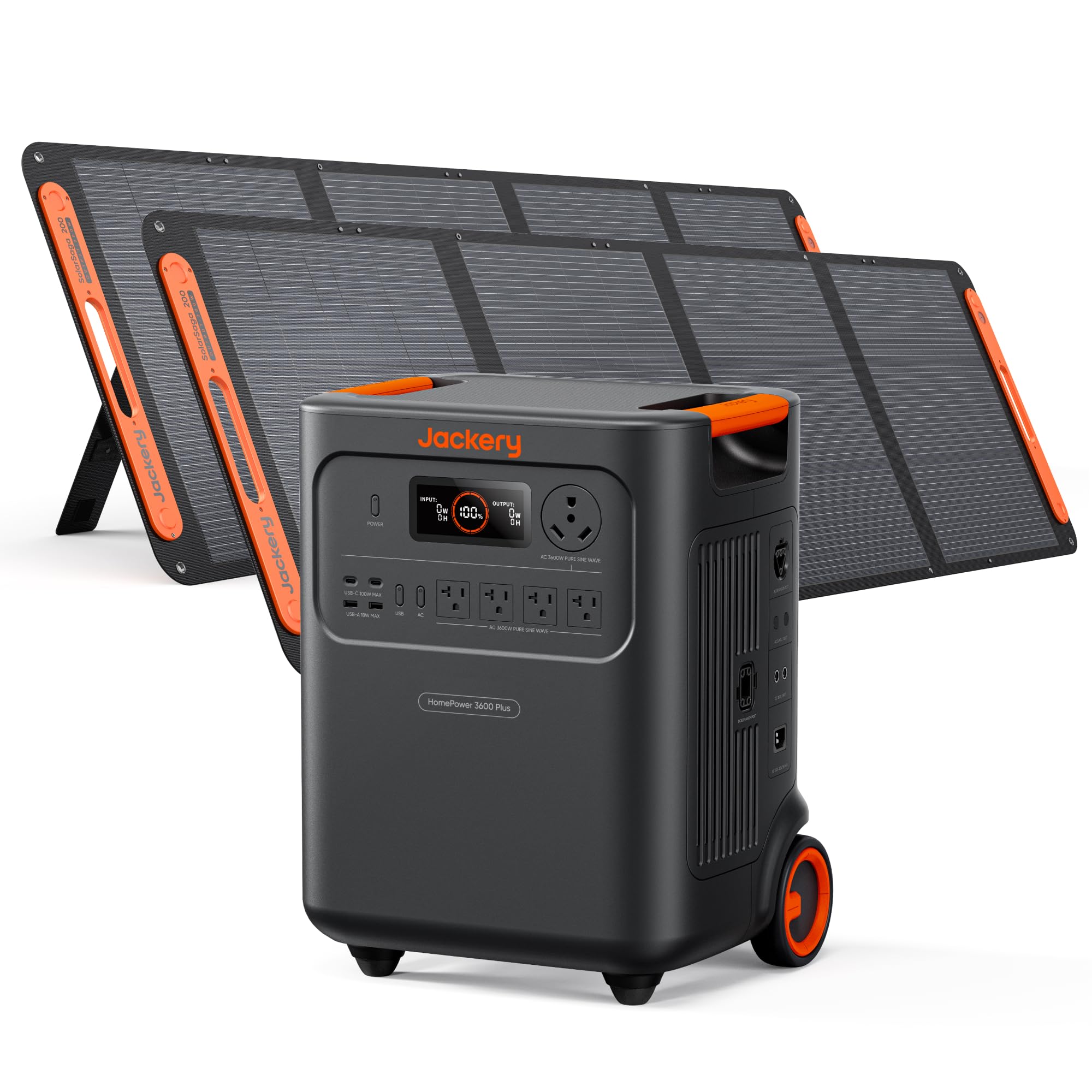
The Jackery HomePower 3600 Plus is the lightest 3.6kWh LFP power station in its class, thanks to automotive-grade CTB (cell-to-body) technology. It weighs 77 lbs and includes a telescopic handle and wheels for rolling from garage to kitchen. The 3,600W AC output can handle pumps, heaters, and dryers, and it expands to 21kWh per unit or 43kWh with multiple units for multi-day backup.
The ceramic membrane battery cells are tested at 302°F to prevent thermal runaway, and they operate in temperatures as low as -4°F. The unit charges from 0–100% in just 2 hours via hybrid AC+DC input, or 2.5 hours via AC alone. The included two 200W solar panels recharge the battery in about 4 hours of full sun.
Owners praise the plug-and-play simplicity—no installation required, just plug in and power on. The primary limitation is the 3,600W continuous output, which won’t run a large central AC. It’s best suited for essential circuits and smaller homes.
Why it’s great
- Lightest 3.6kWh LFP station with wheels
- Ceramic membrane cells for safety
- 2-hour hybrid fast recharge
- Expands to 21kWh per unit
Good to know
- 3,600W may not start a central AC
- Solar panels shipped separately
- No 240V output in single unit
9. GROWATT HELIOS 3600 with 2x200W Solar Panels
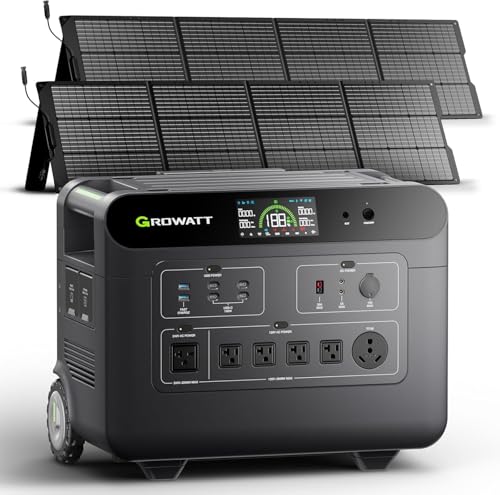
The GROWATT HELIOS 3600 pairs a 3,600Wh LFP battery with a 3,600W inverter that can be paralleled with a second unit for 7,200W at 240V—enough to run a whole house including a well pump. The system expands to 36kWh total capacity, supporting multi-day outages without needing to refuel. The included two 200W solar panels provide 2,000W solar charging, recharging the battery in about 2.5 hours in full sun.
The 15ms EPS switching speed keeps sensitive electronics online during transfer. The cold start technology operates down to -22°F, making it viable in harsh winter conditions. The smart APP allows time-of-use scheduling to prioritize solar charging and reduce electricity bills during normal grid operation.
Owners highlight the sturdy build and the ability to run an 8,000 BTU AC for several hours. Some report Bluetooth/WiFi connectivity issues with the app, and shipping may arrive in separate packages. The unit is heavy at 149 lbs but includes wheels for mobility.
Why it’s great
- Parallel connection for 240V / 7200W
- Expandable to 36kWh total capacity
- Cold start down to -22°F
- Smart APP with time-of-use scheduling
Good to know
- Bluetooth/WiFi connectivity may be unreliable
- Shipping can arrive in separate boxes
- Heavy at 149 lbs
FAQ
Can I run my central air conditioner on a portable whole home generator?
How do I choose between natural gas, propane, and gasoline for a whole home generator?
Final Thoughts: The Verdict
For most users, the best whole home generators winner is the Generac Guardian 26kW because it offers automatic, whole-house protection with unlimited natural gas runtime and clean sub-5% power. If you want silent, zero-emission backup with solar expansion, grab the EF ECOFLOW DELTA Pro Ultra. And for a portable tri-fuel powerhouse with extreme fuel flexibility, nothing beats the Westinghouse WGen14500TFc.