
Our readers keep the lights on and the weekend projects moving. As an Amazon Associate, I earn from qualifying purchases.
Winter boots live a brutal life—slush, rock salt, frozen mud, and hours below freezing. The wrong pair turns a commute into a misery of wet socks and numb toes, while the right one makes a blizzard feel like a brisk walk. The difference isn’t brand prestige; it’s the cold-weather engineering inside the shell.
I’m Rikta — the co-founder and writer behind FitlyFast. I spend my winters analyzing waterproof membranes, insulation grams, and outsole lug patterns to separate genuine cold-weather gear from glorified fashion boots.
Every boot on this list passed through a filter of real-world abuse—from icy pavement to deep snow drifts. This is the definitive, research-backed guide to the best winter boots for men that actually keep you warm and dry without breaking down after one season.
How To Choose The Best Winter Boots For Men
Selecting winter boots for men is not about picking a brand or a look. The three critical decisions are insulation weight, waterproofing construction, and outsole grip. Get these right, and you can stand in a snowbank for an hour without thinking about your feet.
Insulation Weight: Match to Your Temperature
Insulation is measured in grams. A 200g boot is fine for mild winters down to about 20°F. For extended time below 15°F or sedentary use, look for 400g insulation. Some pac-style boots use removable felt liners for extreme cold. Buying too much insulation means sweaty feet; too little means numb toes.
Waterproofing: Membrane vs. Coating
True waterproof boots use a sealed membrane (like Omni-Tech or a solid rubber shell) rather than a spray-on DWR coating. Waterproof ratings in millimeters (mm) indicate how much water pressure the fabric can withstand before leaking—10,000mm is a solid benchmark for slush and puddles. Boots without a membrane will wet through after ten minutes in wet snow.
Traction: Rubber and Lugs Matter
A winter outsole needs a rubber compound that stays flexible in freezing temperatures and lugs deep enough to bite into packed snow. Look for wider-spaced, chevron-pattern lugs at least 4mm deep. Shallow, tightly packed tread fills with snow and turns into a hockey puck on ice.
Quick Comparison
On smaller screens, swipe sideways to see the full table.
| Model | Category | Best For | Key Spec | Amazon |
|---|---|---|---|---|
| Columbia Bugaboot III | Premium | Daily commutes & deep snow | 200g insulation + Omni-Tech membrane | Amazon |
| Columbia Expeditionist Shield | Premium | All-day wear & icy sidewalks | Omni-Heat reflector + aggressive outsole | Amazon |
| Timberland White Ledge Mid | Mid-Range | Hiking & mixed winter terrain | Waterproof leather + rubber sole | Amazon |
| Sorel 1964 Pac Nylon | Mid-Range | Extreme cold & stationary use | Removable felt liner (rated to -40°F) | Amazon |
| Guide Gear Side Zip Duck Boots | Mid-Range | Wet slush & quick on/off | 400g insulation + waterproof rubber shell | Amazon |
| XPETI Crest Thermo High-Top | Budget | Mild winters & light hiking | All-rubber construction, lightweight | Amazon |
In‑Depth Reviews
1. Columbia Men’s Bugaboot III

The Bugaboot III is the benchmark for a reason. Its 200g insulation with an Omni-Tech waterproof membrane keeps feet comfortably dry in wet snow and slush, and the lace-up collar seals debris out effectively. Users report staying warm in temperatures down to about 15°F with midweight socks, and the boot holds up for multiple seasons without degrading.
Traction is a standout. The multi-directional lug pattern grips well on packed snow and icy pavement, though a few reviews note the boots run half a size small and lack a lace hook at the top for a fully snug heel lock. The rubber outsole stays pliable in freezing temps, which directly translates to less slipping on slick surfaces.
For commuters and weekend snow-shovelers who need a single boot that does everything well, the Bugaboot is the most balanced option here. The 200g insulation prevents overheating indoors, while the rugged shell handles deep puddles without any wet-through complaints.
Why it’s great
- Omni-Tech membrane delivers reliable waterproofing in slush and rain
- Lightweight for its class, making all-day wear fatigue-free
- Lug pattern provides superior grip on packed snow
Good to know
- Runs half a size small; order up for thicker socks
- Lacks a top lace hook for a secure ankle lock
- Insulation may not be enough for extended hours below 10°F
2. Columbia Men’s Expeditionist Shield
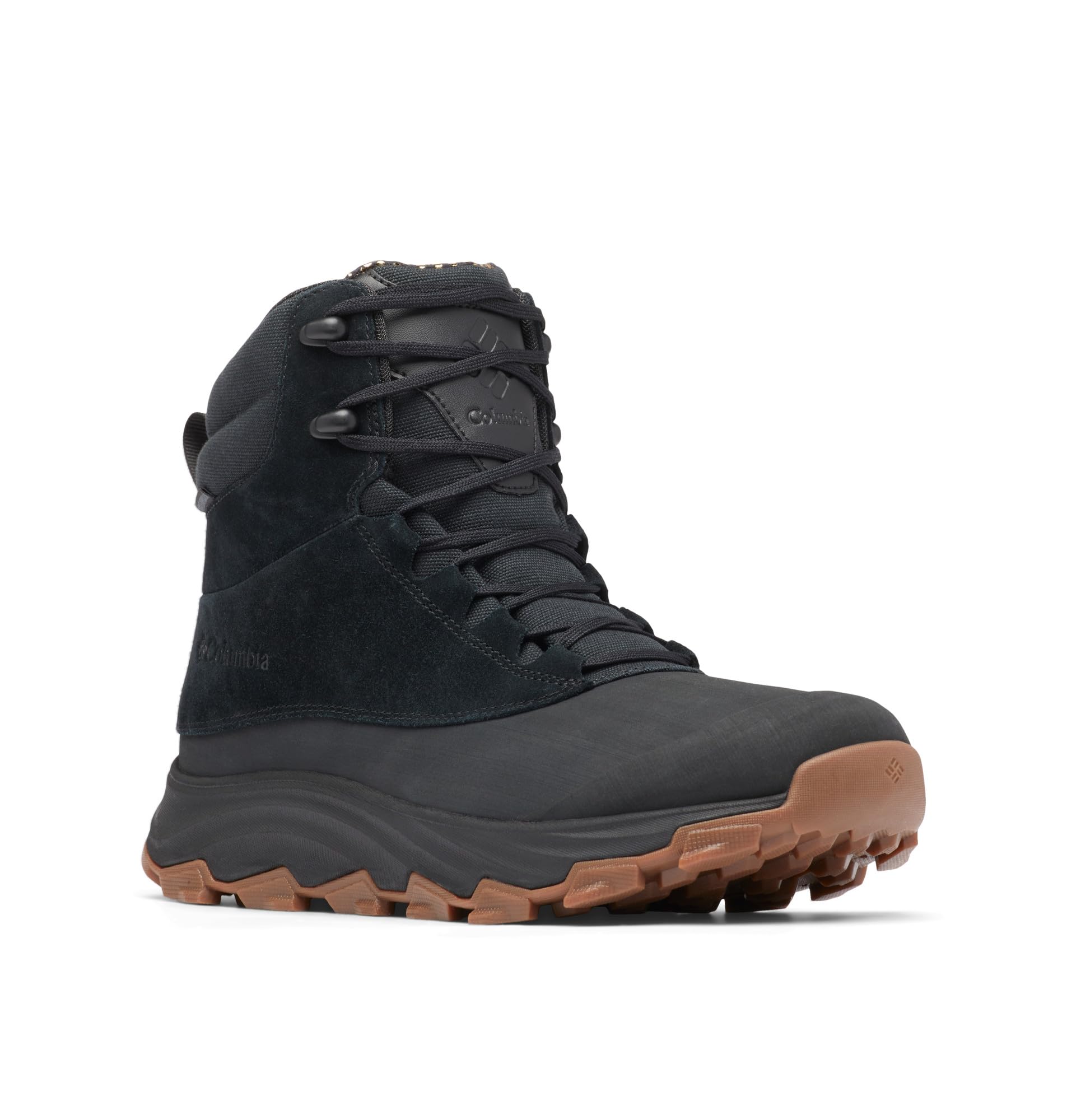
The Expeditionist Shield uses Columbia’s Omni-Heat reflective lining to bounce body heat back at your feet, which works exceptionally well for stationary use down to 10°F. It is lightweight like a hiking boot but has a burly outsole with wide-spaced lugs that shed snow rather than packing up. Multiple long-term wearers call it their “daily driver” for warm, dry comfort.
Where this boot differs from the Bugaboot is the aggressive tread depth—it brings in snow, salt, and sand if you don’t wipe your feet thoroughly before entering a car or home. The boot also runs half a size small, and the gold trim on the collar has been criticized for looking juvenile. The insole is thin and many users replace it with an aftermarket orthotic.
If you prioritize lightweight warmth and do not mind swapping the insole, this boot is a fantastic all-rounder for cold, wet winters. The Omni-Heat system genuinely reduces the need for heavy socks, and the compact mid-cut design makes it easy to pack and wear under rain pants.
Why it’s great
- Omni-Heat reflector keeps feet warm without heavy insulation
- Lightweight and comfortable for all-day wear
- Deep tread provides excellent traction on snow and slush
Good to know
- Not completely waterproof—resists water but can wet through in heavy rain
- Runs half a size small; order up
- Aggressive lugs trap snow and debris
3. Timberland Men’s White Ledge Mid Waterproof Hiking Boots

The White Ledge Mid is a classic waterproof leather hiker that crosses into winter territory. Its leather upper with sealed seams provides reliable splash protection, and the rubber outsole with multi-directional lugs handles hiking trails, packed snow, and wet rocks with confidence. Users consistently report that after a brief break-in period, the boots become extremely comfortable.
One caveat: the boot lacks thick synthetic insulation, so it relies entirely on wool sock layering for warmth in deep cold. This makes it better suited for active winter hiking (where your body generates heat) than for standing still on a frozen lake. The toe box is notably roomy, which works well for wider feet or heavy socks, but the lack of a steel shank means less torsional rigidity than dedicated mountaineering boots.
With regular care—applying mink oil to the leather and drying thoroughly after wet days—these Timberlands can last years. They are a solid choice for the man who wants a do-everything boot that transitions from winter hikes to casual wear without looking bulky.
Why it’s great
- Full-grain leather upper with sealed seams for reliable waterproofing
- Excellent grip on rocks, mud, and packed snow
- Roomy toe box accommodates thick socks and wide feet
Good to know
- No synthetic insulation; relies on sock layering for warmth
- Requires periodic mink oil treatment to maintain water resistance
- Runs slightly large; consider half size down
4. SOREL Men’s 1964 Pac Nylon Waterproof Boot
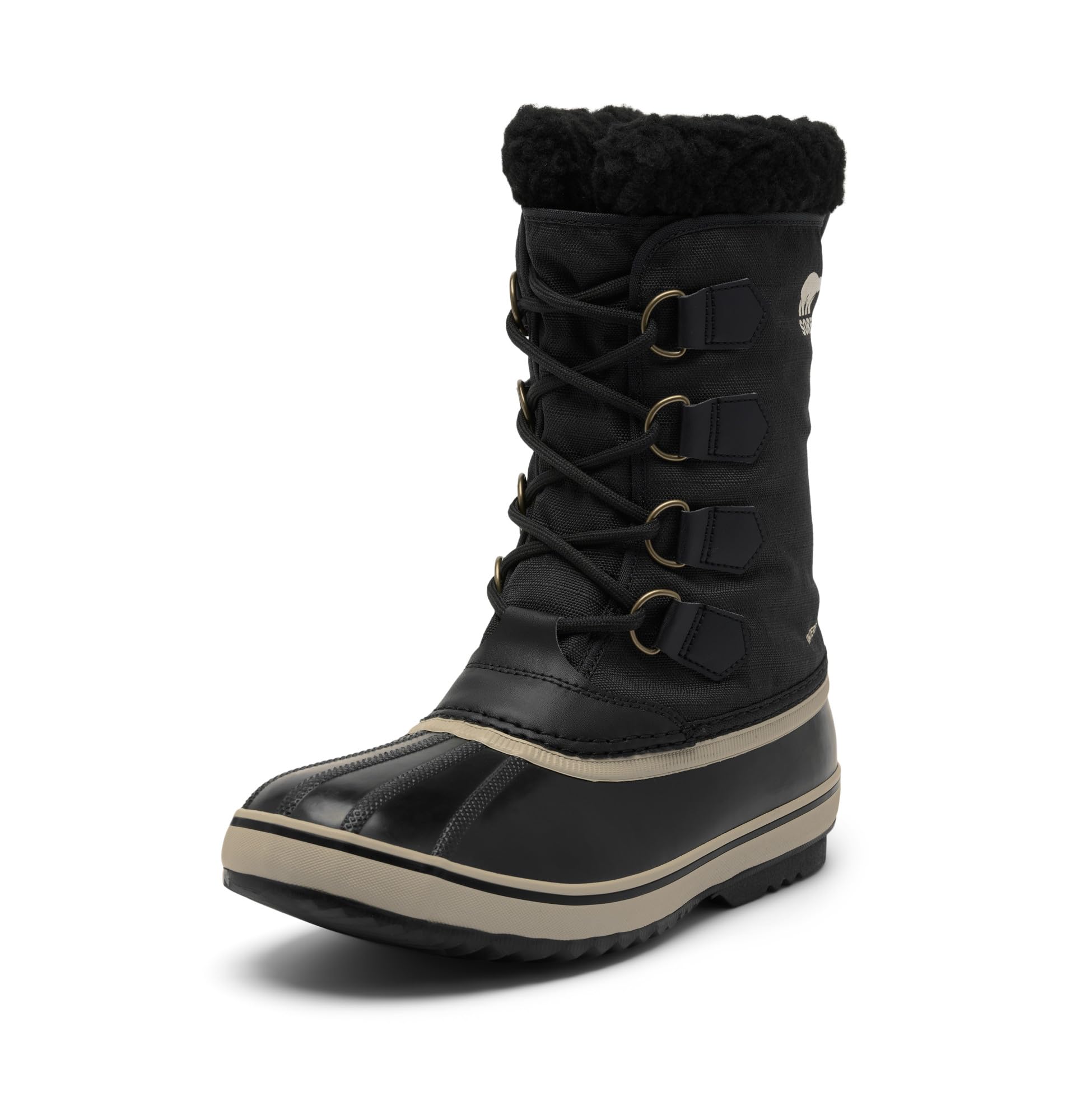
The Sorel 1964 Pac Nylon boot uses a classic pac-style construction: a waterproof rubber base with a removable felt liner. The rubber lower is completely impermeable, meaning you can stand in slush and puddles with zero risk of wet feet. The felt liner is rated to -40°F, which is genuine extreme-cold territory—verified by users wearing them in Fairbanks, Alaska, and on Search & Rescue operations.
The boot runs true to size for wide feet, and many users order one size larger to accommodate thick wool socks. The construction is simple and bombproof: the rubber shell cleans off easily, and the liner can be pulled out to dry overnight. The tradeoff is bulk and weight—these are not boots for running errands or driving. The tall shaft also takes time to lace properly.
If your winter demands spending hours stationary in temperatures below 15°F, this is the warmest option on the list. The Sorel name carries genuine legacy in the extreme-cold category, and the 1964 Pac Nylon lives up to it without gimmicks.
Why it’s great
- Removable felt liner provides extreme warmth down to -40°F
- Rubber base is completely waterproof in slush and puddles
- Bombproof construction lasts for many winters
Good to know
- Bulky and heavy; not ideal for driving or daily wear
- Order one size larger to accommodate thick wool socks
- Liner requires time to dry fully if it gets damp from sweat
5. Guide Gear Men’s Side Zip Insulated Leather Duck Boots

Guide Gear’s duck boot offers a waterproof rubber shell with 400g insulation, making it one of the warmer options for wet, slushy conditions. The side zipper is a genuine convenience—you can kick these off without touching the laces, which is appreciated when coming in from the snow. Multiple users report owning the same pair for years before any sign of failure.
The boot runs a half size large, which allows room for an orthotic but can feel loose with thin socks. Some reviews note the interior padding is modest—the 400g insulation is present, but the collar and tongue have less plushness than expected for extreme cold. These boots shine in wet conditions down to about 20°F rather than deep negative temps.
For the man who needs to step in and out of a warm truck throughout a workday and wants a boot that keeps slush out, the Guide Gear delivers where price-sensitive duck boots often fail. The rubber toe cap also protects against scraping on concrete during repetitive use.
Why it’s great
- Side zipper allows fast, easy on/off without unlacing
- 400g insulation provides real warmth in wet slush conditions
- Waterproof rubber shell stands up to puddles and snowmelt
Good to know
- Runs half a size large; consider sizing down if wearing thin socks
- Interior padding is modest; may not suit extreme cold below 15°F
- Bulky design can feel heavy for extended walking
6. XPETI Men’s Crest Thermo High-Top Winter Hiking Boots
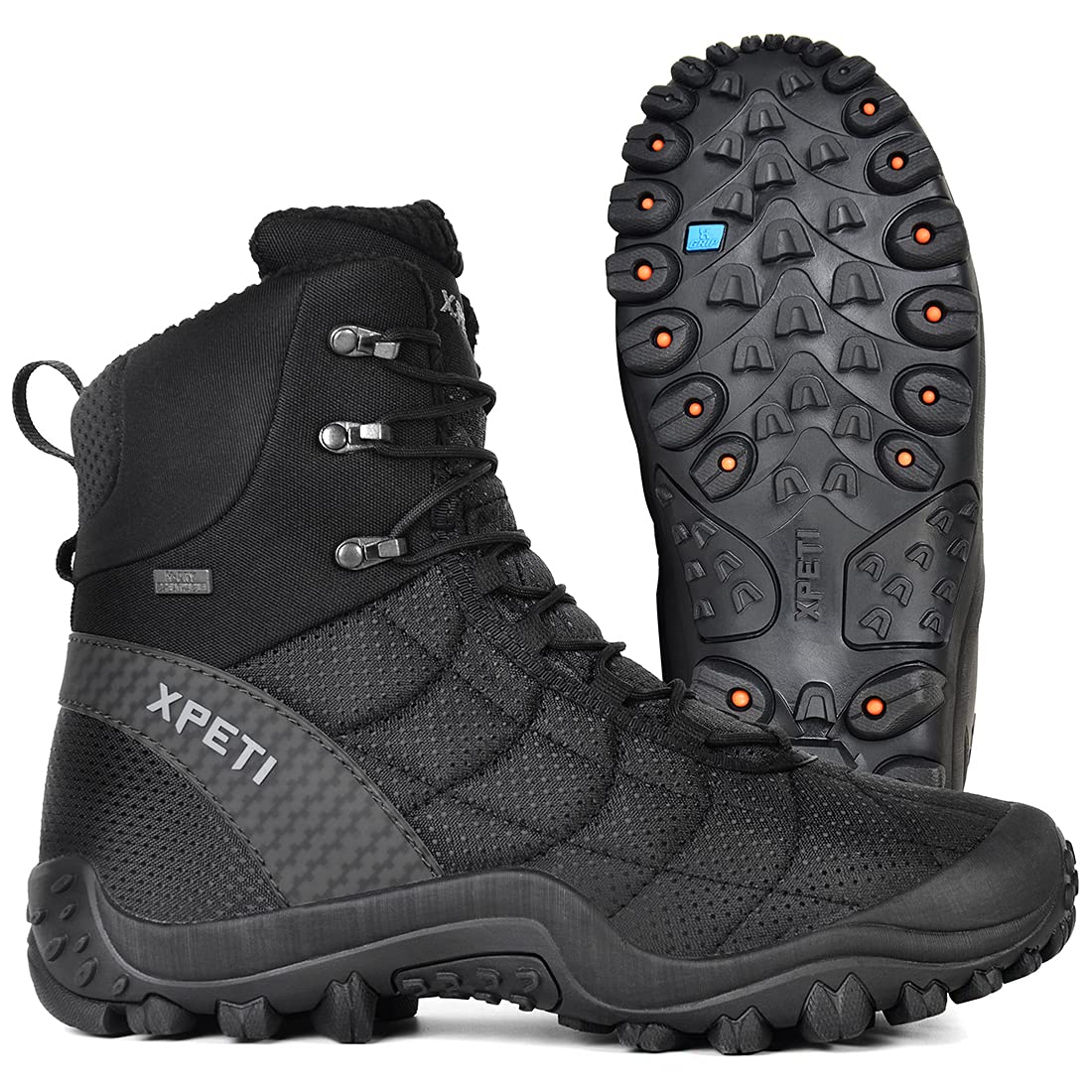
The XPETI Crest Thermo is a lightweight, all-rubber winter boot that prioritizes ease of use and a sleek profile over heavy insulation. The rubber construction makes it fully waterproof to the top of the shaft, and the outsole provides good grip on icy grass and mud. Users consistently praise the fit—especially those who need room for orthotics—and the fact that zero break-in is required.
The tradeoff is cold performance. Several users report that the insulation is insufficient for prolonged exposure in temps below freezing, particularly if snow sits on the foot for long periods and melts through the lace area. The bottom lace hook can also dig into the ankle bone during deep knee bends, which is a design oversight for an active-use boot.
For mild winters where temperatures rarely drop below the mid-20s and you need a waterproof boot for walking the dog or quick errands, the XPETI offers a budget-friendly entry point without feeling cheap. The rubber shell is easy to clean and resists thorns and brush well.
Why it’s great
- All-rubber construction provides complete waterproofing to the shaft
- Lightweight and requires zero break-in time
- Fits well with orthotic insoles and thick socks
Good to know
- Insulation is limited; not suitable for prolonged cold below 25°F
- Bottom lace hook can press into the ankle bone during motion
- Lace area is a potential leak point in deep snow
FAQ
Is 200g or 400g insulation better for average winter temperatures above 20°F?
How do I know if a winter boot runs true to size for thick socks?
Can I wear wool socks in a waterproof boot without causing blisters?
How often should I reapply waterproofing to leather winter boots?
Final Thoughts: The Verdict
For most users, the winter boots for men winner is the Columbia Bugaboot III because it balances waterproofing, warmth, and weight for daily winter life better than any single boot on this list. If you need extreme cold capability for hours below 15°F, grab the Sorel 1964 Pac Nylon. And for lightweight comfort on mild winter hikes, nothing beats the Timberland White Ledge Mid.